I Still Have to Get the Garbage Out

I’m going to keep this as short as I can. To start, let me just say that this past week was pretty rough, especially Tuesday. I’m not even talking about the election. I’m saddened by the results, for sure. And yet, as my friend and one of our faithful school teachers mentioned in the school hallway on Wednesday morning, “It’s a good thing my eternal hope isn’t in my government.” Amen to that. Kingdoms rise and fall. But the Kingdom of Christ is eternal. With that in our hearts, each day is brand new.

I won’t get into what made Tuesday particularly challenging. Suffice it to say, there are days when the world and the people in it more than prove humanity’s perpetual spiral into madness. In this case, that world went after my family, enough that some among us spent many hours crying.

When the world comes after me, personally, it’s no big deal. It hurts sometimes. Still, whatever. But when it’s my family, well, that changes the weight of things. Right or wrong, I heard myself whisper more than once this past week that the character Reverend Daniel Michaels didn’t come from nowhere. And yet, back here in reality, it seems there’s little anyone can (or even seems willing to) do in an online world to stop any of it. And so, inevitably, there you stand, staring at the wreckage, wondering what on earth could possibly happen next.

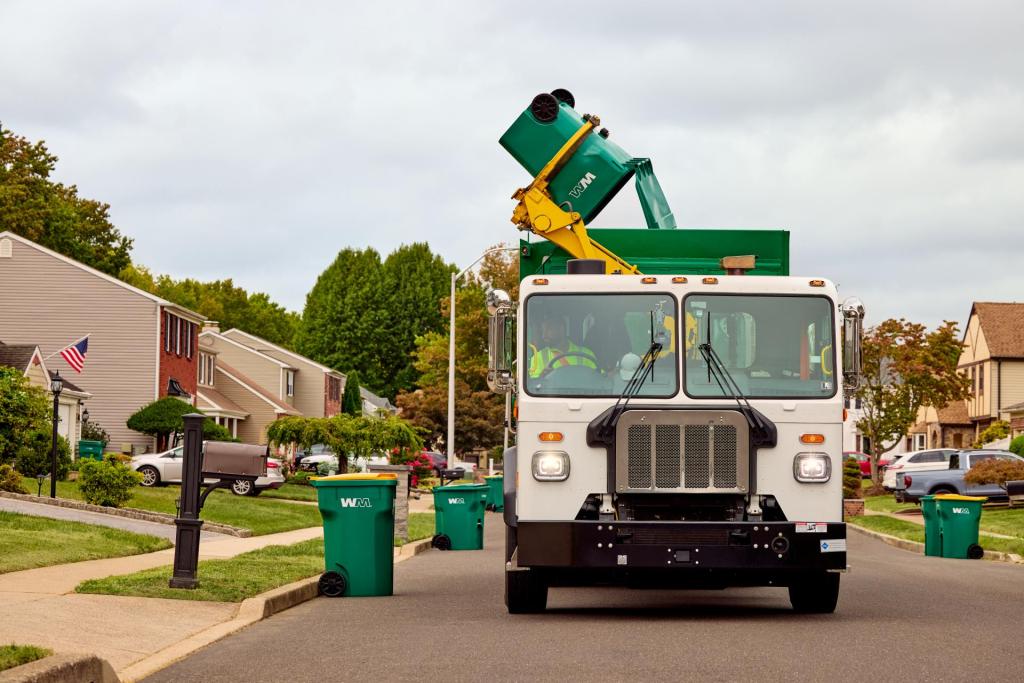
But here’s the thing.  As always, the sun set on Tuesday and rose again on Wednesday. And guess what. I still had to get up on Wednesday morning and take the garbage to the street. Imagine that. For the most part, the world treated me and my family like a punching bag all day on Tuesday. And yet, there I was, still hurting, but also dragging a trash can down the driveway.

You know me. There’s a lesson in everything if you’re willing to listen and think about it.

I suppose the first noticeable thing in all this is that life continues, even after a hard day. When I got up, I still needed to get a shower, get dressed, and eat some breakfast. When I was at the street with the garbage can, I noticed my neighbor still needed to take his dogs out to do their business. Leaving my subdivision and turning onto the main road, I passed a garbage truck headed toward another neighborhood. Apparently, the garbage truck wasn’t concerned with how badly anyone’s Tuesday went. It was still on its way to empty their trash.

Now, some might simply consider all of this the relentless indifference of life. I suppose there’s something to that. But Christians know something beyond such psychological terms. We know that the sun setting on Tuesday and rising on Wednesday are, as I already hinted at before, reminders of God’s loving care. It was the Prophet Jeremiah who wrote so encouragingly that God’s mercies are new every morning (Lamentations 3:22-23).

Of course, God’s Word has plenty of other encouraging texts. But even with just this one in my pocket, by the power of the Holy Spirit at work in and through it, everything about the day before me changes. Tuesday may have brought cruelty, but it has no authority over what God promises for Wednesday. Each day is a new day in Him. And in that day, by the same Gospel, courage is already waiting there for me when I awaken.

For the record, when I use the word “courage,” I don’t mean whatever sense is behind a guy charging into battle, his sword raised and his voice thundering above those who are most certainly his enemies. It can be that sometimes. But I’m here to say that most days it looks a whole lot more like a punch-drunk father and husband getting out of bed, saying a prayer, putting on his shoes, and rather than climbing into his Jeep and driving to Florida never to be seen again, he rolls the family garbage cans out to the street and then goes off to keep doing what God has called him to do. That’s at least a part of the kind of courage God imputes to each day. It’s the kind that already knows the Christian faith is remarkably well-equipped for days like Tuesday. I mean, as a Lutheran, my heritage isn’t a theology of glory, but rather a theology of the cross. Confessional Lutherans know something about suffering and loss and things that look and feel utterly hopeless. That’s because we know the Gospel keeps the preaching of Christ crucified at the center of all we are (1 Corinthians 1:23). We understand the last enemy, death, has already been destroyed (1 Corinthians 15:26) by the One who rose again and gave the spoils of His triumph to all believers (1 Corinthians 15:54-58).

In other words, there isn’t anything  that has happened or will happen on any day of any week in any year that can outweigh Good Friday and Easter Sunday. The worst any day can bring is mortal death. But the person and work of Christ assures us that the grave will never have the final word on any particular tomorrow, not even our eternal one.

That, my friends, is the Gospel’s import for every day. And it’s the reason Christians can move forward, even through tears and sleeplessness and whatever else the world might throw at us. Christ is risen. Our sins are forgiven. Death has been conquered. And by Holy Baptism, we’ve been joined to that victory.

Of course, none of this even guarantees that any particular day will ever be easy at all. It guarantees something infinitely better. It certifies that Christ is present in each of our days, just as He was with the Thoma family on Tuesday, and then again on Wednesday, then also Thursday, and so on—just as He will be when the Last Day finally arrives.

So, suit up. Pray. Serve your neighbor. Love your family. Get in the game and play hard. Do the work God has given for you to do. And if it’s Wednesday and you live in Linden, take the garbage to the street—because the Lord has died and risen to save you, and with that, there’s living to be done.

Now, one last thing before I go.

It just so happens I have the greatest family on the planet. My children really are best friends to one another, being inseparable in every way. Only a second or two at our dinner table and you’ll know. Add to this that Jennifer is par excellence as a Christian wife and mother, making her a daily prize I’m forever ready to win. Put all of these human beings (along with their significant others) into a room together, and I’m overwhelmed with gratitude to God for the privilege of loving them, standing beside them, and being their father and husband. I couldn’t have a better life in this regard, even if I designed it myself. And truth be told, the events of this past week, if anything, have only reaffirmed how precious my family is to me, and how grateful I am that they are immovable in their love for one another and their confession of Christ.

God be praised for this. Indeed, and amen.

Worship is Incarnational

Before I begin, a clarification is in order, if only because people asked for a recording of the hymn I described in last week’s eNews message.

For starters, yes, we do record our worship services. The audio recordings are kept and given to those who genuinely need them, which I’ll come back to in a moment. In the meantime, know that the device we use to capture the service is fed straight from our thousand-year-old microphones directly to a flash drive. In other words, the recordings are, by no means, a spectral capture in crisp Dolby stereo. Above and beneath and around the liturgy’s voice, there are a multitude of ambient sounds you’d expect in a room bearing several hundred people. Thankfully, the spoken word survives the ordeal reasonably well. You can hear the lector reading and the pastor preaching clearly enough, and without much annoyance. But what does not fare so well is the music. It sounds like it’s being performed and sung from inside a gigantic oil drum.

In short, the recordings do what they are meant to do, which is to preserve the Word of God preached and read. However, they do not showcase the liturgical experience—and I’m perfectly okay with that, for a couple of reasons.

One of the reasons we do not share our services with anyone other than shut-ins or other folks in genuine need became especially clear during COVID. Not long after so many in society became terrified, even as we gathered in person, I warned the Board of Elders that providing a virtual alternative would inevitably give people an excuse to stay away—not out of necessity, but out of convenience. And as it turns out, I was right. While it didn’t necessarily happen to us, plenty of studies have discovered it did, in fact, happen to countless others. Indeed, American Christendom experienced a significant shift. Duke Divinity School’s Faith & Leadership initiative found that most congregations that normalized virtual worship during COVID never fully regained their in-person attendance, ultimately returning to in-person worship with 10% fewer people than before. The COVID Religion Research Project found that as many as 25% of regular churchgoers in America now regularly rely on online worship as a viable substitute for in-person gatherings.

Gathering these things into a singular thought, my sense is that what began as an emergency measure became, for many churches, a long-term standard for deliberate displacement. People settled into watching rather than attending, observing rather than gathering.

And yet, the Bible does not treat worship in this way. That’s because it does not consider the actual assembly as optional (Hebrews 10:24-25). Christian worship is, by design, incarnational. We do it together, in person. It is God’s people gathered in one place to hear, confess, receive, and sing. We do this in one another’s presence. We’re the Body of Christ, and that’s how a body works, together with its other parts (1 Corinthians 12:12-27).

So, what about service recordings? Well, we record and share our services as a care for those who truly cannot be there—the shut-in, the homebound, those whose bodies no longer allow them to gather without real difficulty. These are exceptional cases of care. I’ve always considered the service recordings as functioning sort of like an artificial heart. It’s not ideal. It more or less sustains when what should be there cannot be. In the meantime, for the healthy among us, we resist broadcasting beyond this threshold because we do not want to train anyone to believe that artificial substitutes are equivalent to the real thing. Again, an artificial heart does not replace a healthy, living one. In the same way, virtual presence can serve in cases of genuine need, but it is not the same as real presence.

But there’s still more to this.

Returning to where I started, after last week’s note, more than a few people asked if I had a recording of the service. I was going to disregard everything I just said and share a short clip of “What Child Is This” from our Children’s Christmas service. I really was. But then I listened to the recording. As I did, I ran squarely into what I mentioned before.

Our service recordings are not very good—and I like that they’re not. Yes, the hymn as it was sung that night—the children’s voices, the organ, the words—all these parts were technically present in the recording. But at the same time, they weren’t. The recording did not capture the moment. To understand what I described last week, you had to be there. If you weren’t there, then, well, you missed it.

Along the same lines as what I’ve already written here, there’s something about being in the room. It’s something no microphone can seize, and no speaker can reproduce. I can only tell you about it—the way the sound moved, the way the congregation was pulled into carrying the lyrics, the way time seemed to slow during the second stanza of “What Child Is This,” as though its words really were pressing down on all of us with a theological weight you could actually feel. Sure, I could play the recording for you. You’d hear the music and singing. But you cannot experience the surge of a moment when truth lands heavily, and everyone in the room is caught in its blast radius.

That only happens incarnationally. It only happens when you are there.

This is not a critique of recordings. They serve a purpose. Again, we consider it a kindness to shut-ins, travelers, and those whose bodies or circumstances truly prevent them from gathering with their Christian family. Thanks be to God for such tools. But they were never meant to replace presence. They cannot. They do not.

Christian worship is far more than content delivery. It’s not something you consume efficiently while cleaning the kitchen or working in the garage. It is not background noise for Sunday morning coffee or something you “catch up on” later in the week. Christian Worship is a holy and deliberate interruption to everything else in your life. It is God gathering His people to Himself at a time and in a place to feed and sustain them with His gifts of forgiveness.

Even better, Christian worship is where the Word is not merely read but actually addressed to you personally—where the Sacrament of Christ’s body and blood is not something thought about but actually received. You open your mouth, and you eat and drink. It’s a place where forgiven hearts sing praises to God, and what they sing isn’t just sound, but it’s borne by the space itself—by breath and wood and pipe and stone and people standing shoulder to shoulder confessing and resonating the same truths together (Colossians 3:16).

The night we sang “What Child Is This,” the hymn was not so moving or impressive because it was technically flawless. It was powerful because, in a sense, it was inhabited. Indeed, Kantor Newman painted the text gloriously. And yet, the text was painted not only by him, but by the space, by the gathered Church, by the shared attentiveness of people who had come expecting God to do what He has promised to do. And He did (Isaiah 55:10-11). That’s something you cannot download and listen to during the car ride to work.

Now, may I say something plainly and pastorally?

As we stand on the doorstep of a new year, if you have been away from church, come back. If attendance has slipped into something occasional, make it deliberate again. I’m all about New Year’s resolutions. I’m already planning mine. Perhaps you could embrace and use the tradition to recommit to attending church.

Now, be careful. Don’t do it because you feel attendance somehow checks a box and proves your devotion. Don’t do it for any reason other than you know you need what God gives you there. You need to be where the hymnody—God’s Word put to music—is not just captured, but encountered. You need to be where your sins are forgiven out loud (John 20:22-23), where death is named from the pulpit and defied from the pews, where joy is shared by the rest of the Christian body who believe and confess the body’s head, Jesus Christ, together (Ephesians 1:22-23).

Quite simply, nothing compares to being present.

You know as well as I do that this coming year will bring its share of noise, distance, and disembodied substitutes for real life. Resist the lie that these are enough. The Christian faith has always insisted on incarnational truths. So go. Stand. Sing. Listen. Receive. Let the gathering of God’s people in holy worship do what it was always meant to do—which is not merely to pass through your ears, but rather, to take hold of you completely (Psalm 95:1-7).

I assure you, nothing compares.