
Pleading the Fifth. Oh, the Irony.

As you can see, this message—which I normally write and send on Sunday morning—is arriving a few days early. I’m leaving for the west side of Michigan tomorrow morning and won’t be back until Sunday evening. For anyone who cares, Jen and I plan to attend worship at Our Savior Lutheran Church in Grand Rapids. Maybe we’ll see you there. By the way, it’s not like I won’t have internet access. I will. It’s just that I’m not one to log into my online accounts using hotel Wi-Fi. So, I figured I’d just send something along today.

I suppose the obvious thing worth talking about is the Fauci hearing that happened yesterday. Did you watch any of it? I had it on while I was in my office. But I mostly listened to it while I was out and around. Admittedly, I found myself becoming uncomfortably angry, more so while watching than listening. And why? Because there Fauci sat beneath the Senate hearing room’s lights, confronted with this exhibit and that exhibit—all the facts—the documents, diary entries, prior testimony, and obvious contradictions in the record. Through all of it, Fauci remained relatively stoic, offering the same answer over and over again:

“On the advice of counsel, I respectfully decline to answer based upon my rights under the Fifth Amendment to the Constitution.”

Apart from being sworn in, this was the only thing he said throughout the entire hearing. It was his answer to every question, even those intended to expose the absurdity of his refusal, such as what day it was or what color the floor was. Interestingly, Fauci told CNN during an interview back in 2022 he would be “very happy to testify before any congressional oversight committee.” He insisted that he had “nothing to hide,” could “explain and validate everything” he had done, and would “cooperate fully.” Apparently, that willingness expired yesterday. I read that he invoked the Fifth Amendment 111 times. It felt more like a thousand to me.

Now, before I go any further, I’m going to offer the only qualifying statement I think Dr. Anthony Fauci deserves. (Eh-hem. That’s me clearing my throat.) Invoking the Fifth Amendment is not legal proof of guilt. The right against self-incrimination belongs to every American. It belongs to the innocent. It also belongs to the guilty.

There. Now to the obvious.

Yes, the Fifth Amendment is a shield against compelled self-incrimination. But I appreciate what Senator Rand Paul pointed out at the beginning of the hearing. The Fifth Amendment doesn’t erase facts. It doesn’t erase recorded testimony. It doesn’t erase the exhibits sitting on the table right in front of Fauci during the hearing. I would add that it also doesn’t certify a man’s level of honesty. It most certainly doesn’t require any onlooking American to pretend they cannot see what they’re seeing. It doesn’t require us to ignore why the Fifth Amendment shield is being raised. That’s because it also doesn’t erase common sense or basic human discernment.

Quite simply, to any normal human being, a man who repeatedly refuses to reconcile documentary evidence with countless statements he’s already previously made under oath doesn’t imply innocence. It suggests guilt. Again, any normal, thinking human being knows this. The logic plainly suggests that when Fauci won’t even acknowledge what he has already confidently acknowledged in the past, the visual here becomes that he was lying before, and now, he fears where admitting to what he previously said might lead.

Unfortunately for Fauci, with each invocation, the spectacle only got worse. And regardless of the Democrat committee members who attempted to run a block for Fauci by misdirecting the hearing’s aim with wild tangents, all the normal people watching knew that while Fauci kept silent, the evidence was talking. The documents were talking. His diary was talking. His previous testimony was talking.

Now, add the pardon to the calculus. Biden (purportedly) gave Fauci an unprecedented presidential pardon. It’s unprecedented because it was extraordinarily broad, covering all offenses related to anything he did between January 1, 2014, and January 19, 2025. It’s also unprecedented because it was preemptive. By definition, the word “pardon” requires an offense that needs forgiving. And so, pardons are ordinarily given after someone has been convicted. But Fauci was never charged for anything, much less convicted. So, why did he need a pardon?

That makes all of this look even worse.

Personally, I think Fauci made a mistake by accepting the pardon. Whatever legal protection it provided, it also created the unmistakable impression that he needed protection from something. Now, with the documentary record already contradicting so much of what he has said, every substantive answer risks exposing him further. And so, all he can really do is drone on and on from behind the Fifth Amendment to keep from colliding with evidence that already suggests conduct serious enough to warrant presidential pardon-level protection.

But regardless of Fauci’s tap dancing, I’m guessing most Americans can see right through it. Most Christians I know certainly can. But then again, Saint Paul instructs us to “test everything” and “hold fast what is good” (1 Thessalonians 5:21). That means, innately, we’re not required to surrender our God-given reasoning merely because an authority pleads the Fifth confidently. In the end, when testimony contradicts documents, and today’s claims contradict yesterday’s, recognizing the contradiction is not uncharitable. It’s Godly discernment. Discernment already knows that Fauci’s unprecedented pardon cannot protect him from perjury committed during a Senate hearing held on July 29, 2026. Fauci knows this, too. He knows Wednesday’s words create Wednesday’s liability. And so, he’s pleading the Fifth Amendment to keep from being convicted for previous lies spoken under oath.

It angers me to see him use the law to get away with all this. But until someone offers a lawful workaround, I’m more interested in the glaring irony hovering like a fog above all of this.

Set aside everything else that was said in the hearing and remember that no one present argued against Fauci being the architect for the COVID response. The Republicans criticized him for it. The Democrats praised him, calling him a hero. And yet, both agreed he was responsible for the framework that ultimately suspended the constitutional rights of hundreds of millions of Americans.

Of course, he didn’t design every community’s procedure. He didn’t need to sign every closure order. He didn’t need to lock every church door personally. The architect doesn’t need to swing the hammers on the job site. There were plenty in government in every community ready to swing hammers for him. The point is that his pronouncements and nearly omnipresent authority in all things COVID-related supplied the moral, scientific, and governmental cover for those people to do what they did.

2020 wasn’t that long ago. I remember all of it. I remember even the littlest things—like being shamed by a church member for posting a video showing how smoke particles, which are bigger than COVID, moved right through the masks Fauci was demanding we wear. I remember when I heard about a surfer in California, the only guy on the beach, who was arrested for being out on the waves during the lockdowns—and the horror!—he was on his board at an empty beach without a mask! I remember how Parks Departments around the country put makeshift wooden caps on outdoor basketball hoops to keep anyone from using them. I remember how so many businesses here in Michigan went bankrupt while establishments that performed abortions, sold liquor and lottery tickets, or in some way kept state revenue flowing were deemed essential. I remember how the government strangled religious liberty. I remember how unelected officials appointed to health department boards somehow presumed to decide that the preaching of God’s Word, the reception of the Sacrament, and the consolation of fellow believers was non-essential. I remember how churches were labeled super-spreaders and how Christians were forbidden from gathering for public worship. I remember how countless clergy stood in empty naves and sanctuaries preaching into cameras.

Unfortunately, I also remember how easily so many pastors and churches went along with this nonsense. I remember how more than a year past the lockdowns, at least 40% of Michigan’s churches were still closed, and how for many that were open, they still refused to admit Christians to worship without a mask. No mask, no entry. I remember how they called this love for the neighbor. Candidly, it deserved, and still deserves, another name: heresy. Any church that imposed a human rule barring believers from the in-person preaching of God’s Word and the reception of His gifts crossed an uncrossable line. They obstructed the First Table of God’s Law—the command to love God with all one’s heart, soul, mind, and strength (Commandments 1 through 3)—while pretending to uphold the Second Table’s command to love the neighbor (Commandments 4 through 10).

But Romans 13! But Dr. Fauci and the CDC!

Despicable heresy.

Beyond even these dreadfulnesses, don’t forget that Fauci’s framework and influence also kept families from elderly parents and grandparents dying in nursing homes. Forbidden from entering, they could only press their hands against windows while their loved ones died without familiar voices, a pastor’s prayers, or the touch of someone who loved them. And then those same families were obliterated by ideology. They argued over masks, vaccines, travel, holidays, and whether grandparents could hold their grandchildren. Here in Michigan, Governor Whitmer offered incentives that encouraged neighbors to report one another. We were “loving thy neighbor” when we regarded one another as biological threats and reported those not wearing masks or sitting within six feet of others at Thanksgiving dinner.

And have we forgotten Fauci’s recommendations for schools? Have we forgotten the generation of children who spent their formative years behind masks, never once receiving a hug from their teacher or seeing that same teacher smile? Countless struggled through remote classrooms well into the 2020-21 school year while school administrators pretended that a glowing rectangle was an adequate substitute for human presence. In our school here at Our Savior in Hartland, we kept the masks off, preserved the classroom as a place of genuine human contact, and refused to teach children that every face, breath, and touch was a threat. Interestingly, we were fine. No one got sick. And no one died. Of course, we had to deal with threats from local health officials on occasion. Still, the gratitude of our parents was overwhelming. Again and again, they thanked us for allowing their children to remain children.

Unfortunately for too many school communities around us, anxiety and depression only deepened. It’s also no surprise that suicide rates went through the roof nationally. The children were taught to fear everything—faces, voices, touch, singing, playgrounds, classrooms, and one another. Then the adults who taught them these things acted surprised when loneliness and despair flourished.

I could go on and on about everything I remember. I certainly did back when it was all happening. In the meantime, the point here is that Fauci openly and regularly defended stripping so many rights away, and he did so with the language of necessity. America’s constitutional rights had to yield. Questions had to wait. Dissent was dangerous, and opposing speech was villainized and punished. But obedience was called compassion. All the while, those being crushed beneath the rules were expected to accept that Fauci and his experts were doing what was best because they simply knew better. “Trust the science” gradually began to exclude a person’s right to examine the evidence, and instead began to mean, “Do what you’re told.”

The irony here is that now, suddenly, Anthony Fauci is quite fond of the Constitution’s protections. Now he wants its shelter from those in power sitting before him in the hearing. He wants the Fifth Amendment’s centuries-old insistence that the state may not compel a man to furnish his own harm. He wants precisely the kind of constitutional protection that the rest of us—the ordinary Americans—were told was reckless, selfish, and uncaring.

Fauci is entitled to invoke the Fifth Amendment. But he and his lawyer are fooling themselves if they think the revoltingly obvious disparity is going unnoticed. When Americans pleaded for their constitutional rights, Fauci’s answer was effectively, “Obey.” But when Anthony Fauci fears for his untouchable status, his answer is immediately, “I have rights.” The Constitution, it seems, was negotiable when it stood between the government and ordinary folks. It became sacred the moment Anthony Fauci needed it personally.

I’ve already gone on long enough, which I freely admit happens sometimes. I suppose I’ll simply return to where I started. I began by saying the more Fauci repeated his Fifth Amendment statement, the angrier I got. But here’s the thing. It’s okay to be angry. Saint Paul says pretty plainly, “Be angry” (Ephesians 4:26). Of course, the whole verse is, “Be angry and do not sin.” That means we can be angry, but we ought not let the anger steer us, dominating our every action or emotion, even when it seems like the villain is getting away with murder. Our anger must lead us into faithfulness. That means speaking the truth, maybe even disobeying the government sometimes to resist evil, seeking justice, and praying for an evil doer’s repentance. It may even mean trusting that when Fauci ultimately gets off scot-free—which he probably will—the One who comes again in glory to judge both the living and the dead, Jesus Christ, will do so in perfect righteousness.

Men may conceal the truth, governments may abuse their authority, and earthly justice may arrive slowly or not at all. Nevertheless, Christ is still in charge. Nothing is hidden from Him. The Constitution may or may not actually restrain rulers. Strangely, in this circumstance, it may even protect someone who appears worthy of what happened at Nuremberg. But in the end, it’s Christ—not Fauci, not the government, and not the spirit of the age—who will have the last word. I’m counting on it. I hope you are, too.

Christian Rage?

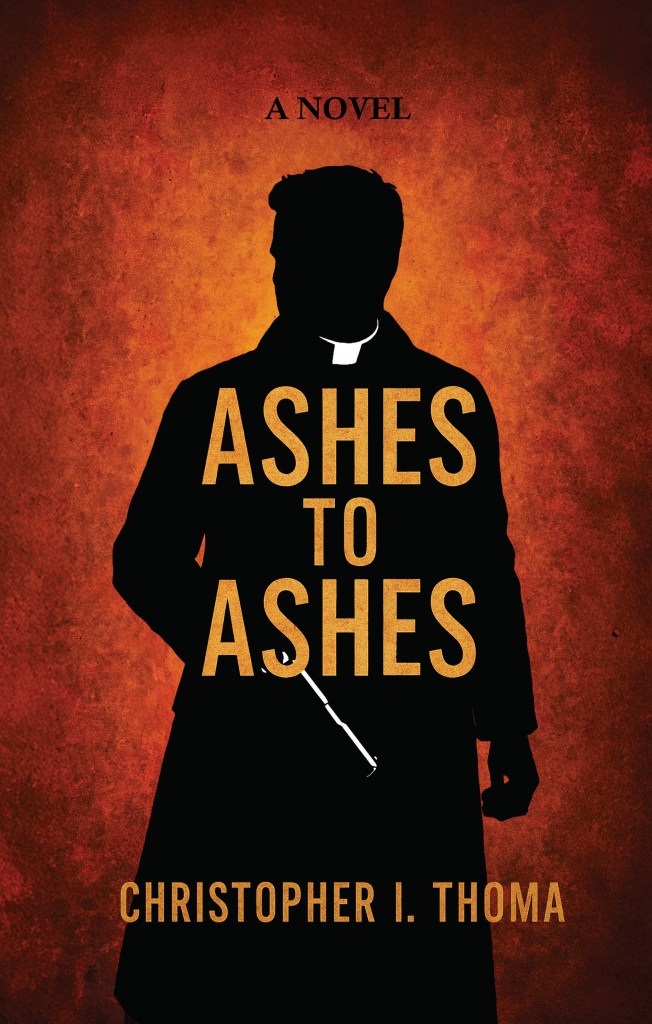
I’m going to let you in on a little secret, if only because I feel like writing about it. In short, I’ve had a few interesting conversations about my new novel, Ashes To Ashes, with some folks in Hollywood. But that’s not necessarily the interesting part. What stood out in those conversations is that, after reading the book, they all reached back to me with varying versions of the same conclusion. Essentially, they’ve determined that the novel fits the time. In other words, it fits the national zeitgeist, tapping into something raw and unresolved in the public soul.

What they mean is that people are angry.

By angry, they don’t mean the performative kind of anger that burns hot on social media and then disappears by the next news cycle. They mean the deeper kind—the kind that settles into the chest when dreadful things keep happening over and over again at the highest levels, and yet, no one ever seems to get arrested or brought to justice.

I say this as I consider the obvious examples. For starters, the State of Minnesota is riddled with as much as nine billion dollars in fraud, nearly all of it played out among its Somali community. And lest anyone seem racist or anti-immigrant, no one appears to be getting into much trouble for it—at least, not the actual orchestrators. Or consider the Epstein files. There’ve been years of whispers, sealed documents, but also unsealed documents with redactions that hide 99% of the content—all of this leading to dead ends and a gazillion unanswered questions. Everyone knows something happened. Everyone knows there’s a list somewhere. Dark-intentioned people who use other people always maintain the upper hand. They keep lists. They protect audio and video files. We’ve learned that, especially within the last few years, relative to the release of certain CIA files. However, in this case, nothing has happened. There’s likely some really big names on these lists and in these videos. And yet, no one has paid for their crimes. In the end, transparency and accountability remain entirely elusive.

If you’ve read Ashes to Ashes, then you’ll know that frustration with injustice is an element in the topsoil from which it emerges, which is why the folks out in Hollywood responded as they did. The main character, Reverend Daniel Michaels, finds himself in a dreadful situation, ultimately owning some significant evidence. Unsure of whom to trust, when he scans his immediate horizon, he discovers people and organizations that appear immune to consequences. He also learns the cost of inaction paid by ordinary people—young girls being abused and then traded, or simply moved and slaughtered, like cattle. And while ill-willed insiders so easily use the system to their benefit, he steps into the fray and starts taking names. And it gets messy. Very messy.

Now, please understand, that’s not an endorsement of vigilantism. I’m simply making the connection to the original comments while also acknowledging a reality. I had a conversation in my office this past Monday about the book. Essentially, I said that while we might not want to admit it, when justice feels theoretical, people start fantasizing about other ways of leveling the field. When wrongs are endlessly explained away, when excuse after excuse is given for why justice is so slow, anger begins looking for a body to inhabit.

Again, the Somali fraud in Minnesota and the Epstein files are prime examples of the zeitgeist’s growing conviction. They’re stories that land, not as once-in-a-while scandals, but as recurring symbols throughout America’s immediate history. Even worse, they reinforce a growing suspicion that there are two systems of justice—one for the elite, and one for everyone else. Christopher Wray and James Comey can demonstrably weaponize the justice system and get away with it. Hillary Clinton can have hundreds of thousands of classified documents on a private server, then provably bleach that server, and remain untouched. Someone like Hunter Biden can owe mountains in back taxes, purchase a gun while on drugs, even video-record his behaviors, and leave his proceedings with a relative slap on the wrist. And yet, if I were to make the slightest modification to my home without the proper permits, or make the tiniest mistake on my tax forms, I’d risk massive fines and, in some cases, maybe even time in jail.

It’s these inequities that, when left unchallenged or untreated, curdle into citizen rage. That rage is what Reverend Daniel Michaels embodies for a little less than four hundred pages. And because of this, as the character’s creator, hear me when I say that while he’s not the book’s villain, he’s also not a hero, even though you’re likely to discover yourself rooting for him. He simply isn’t clean. That makes him an anti-hero in the purest sense. In this case, he’s what happens when people stop believing that truth will surface on its own. He’s the product of a world where “wait and see” has turned into a permanent sentence—the only reply to chronic injustice.

And so, America’s current zeitgeist. But here’s the thing.

For Christians, we have a very important filter for discerning these things. For one, God’s Word never denies the reality of injustice. The Bible is brutally honest about corrupt judges, dishonest rulers, and systems that are weaponized against the powerless. But it is equally honest about the limits of human retribution. “Vengeance is mine,” the Lord says (Deuteronomy 32:35 and Romans 12:19)—not because injustice doesn’t deserve an answer, but because we are not created to carry that weight around without being deformed by it. Only God can bear it. In that sense, for an honest reader, Daniel Michaels serves as a mirror, not a model. He shows us what happens when trust collapses, and despair reaches up and out from its goop.

That said, the Christian answer to injustice will never be blind faith in broken systems, which seems to be what far too many in the Church prefer to believe. It’s also not some sort of monastic disengagement from society entirely, which is another preference for far too many in Christendom. Christians need to be in the game and playing it hard. But as we do, we remember what the scriptures reveal—that God is not confused or compromised or unaware. He does not lose files. He does not accept bribes. He does not forget victims. He does not need leaks or whistleblowers to know what’s going on in His world. Nothing He sees has redactions. Every hidden thing is already open and accessible to Him—not symbolically, but actually. Even better, as I like to mention on occasion, the divine lights will eventually come on for all of us, too. I’m not saying we’ll know everything about everything. I’m simply saying what the scriptures say—that the day is coming when all things hidden will be revealed.

In the meantime, what does our Lord require of us? I’ll let the Prophet Micah answer that one: “He has told you, O man, what is good; and what does the Lord require of you but to do justice, and to love kindness, and to walk humbly with your God” (Micah 6:8). In other words, we are not called to burn the world down in order to set it right. Instead, we are to be others-focused. We are to stand in the breach—telling the truth, protecting the vulnerable, refusing to excuse evil, all the while being humble enough to remember that God is the finisher, not us. We must trust that He will be God.

Of course, that trust does not deny that violence may occur in a fallen world (Ecclesiastes 3:8), nor that, in extreme circumstances, its use may be tragically necessary to restrain greater evil or defend the innocent (Genesis 9:6, Psalm 82:3-4, Romans 13:4). Scripture itself acknowledges this grim reality. But even then, violence is never something to be pursued eagerly or confused with righteousness itself (Matthew 26:52). It remains a last resort in a broken world, and, as best as possible, carried out soberly and with moral clarity, never forgetting a Christians accountability before God (Luke 14:31, Nehemiah 4:14).

In the end, justice will not be done because a character like Reverend Daniel Michaels—real or imagined—goes around taking names with his 1911 Colt. It will be done, ultimately, because Christ already knows the names of both the perpetrators and the victims, and He has promised not to allow injustice to be the last word in any circumstance.

I suppose, as Christians going forward into another relatively early week of a brand new year, perhaps the most countercultural resolution any of us can make is not louder outrage against this world’s evils. It’s not necessarily pointing out how that foolish girl who tried to run over the ICE agent and got shot and killed “had it coming to her.” It’s true, idiocy has consequences. Still, perhaps the better resolution is a sturdier trust behind the outrage—to actually know what we believe and why we might have a reason to get angry in the first place.

By the way, keep in mind that such faithfulness is rarely dramatic. In fact, it looks rather ordinary. It looks like ordinary obedience practiced consistently. It’s built by showing up to church even when we’re tired. It’s sitting beside others in study instead of alone at home on our screens. It’s praying when we’d rather vent on social media. It means giving, serving, confessing, forgiving, and staying rooted in Christ when it would be so much easier to just let oneself drift in the cultural current of “That person has it coming and I’m going to get him for what he’s done.”

None of the things I’ve mentioned are grand gestures, but they are formative. If anything, they’re more than capable of recreating a person’s habitus, which is, by definition, “the way a person perceives and reacts to the world.” It’s what I mean when I talk about seeing the world through the lens of the Gospel. Indeed, a sturdier devotional life—one that trains itself to see through the person and work of Jesus Christ—is one that has little room for the perpetual unrest stoked by vengeful rage. I’m not saying rage won’t be there sometimes. Of course it will. We’re all sinners, and sinners are prone to dreadfulness. But it will be less likely. And that’s a good thing.

And so, again, what better way to continue into a new year than by acknowledging that the stubborn work of Christian faithfulness is an exceptional path. And of course, we pursue that path knowing that in Christ, we always have hope. Only in Him will we find the strength to endure through and into the Day of Days when the divine lights come on, and everything is set right by the One who saw, knew, and was actively working all along.

Who knows. Maybe 2026 is the year the Lord returns. And so, the Church cries out, “Come quickly, Lord Jesus” (Revelation 22:20).

A Warning About “Ashes To Ashes”

Ashes to Ashes – The Author’s Exposition

For starters, as a clergyman, I knew I’d take some heat for the book. I knew those scenes of extreme vigilante violence—moments when a man in a clerical collar arrives to erase the most vicious among us—I knew this would send some spinning into a fever.

Honestly, I’ve really only read one critical sentence about the book from an advanced reader, and the expressed observation didn’t surprise me. He noted something I did intentionally. Beyond this, it seems most folks, once they picked up the book, couldn’t put it down until they finished it.

Nevertheless, two individuals reached out to me privately with concerns. While separate, their concerns were essentially the same. I’ll attempt to paraphrase their thoughts. But before I do, you should know the book’s premise.

Essentially, Ashes to Ashes follows Reverend Daniel Michaels, a small-town Lutheran pastor who, while visiting one of his members, is somehow knocked unconscious, and when he awakens, he finds the church member dead. From there, the story steers toward a human trafficking network operating under the cover of a nearby church-run women’s shelter. With the possibility of law enforcement being compromised and the guilty hiding in positions of authority—right out in plain sight—Daniel shoulders the unbearable burden of both grief and responsibility. What follows is a harrowing descent into vigilante justice—brutal in every way—scenes as messy as they are decisive. Daniel wages war against predators in their homes, alleys, and shady motels, each encounter leaving more blood on his clerical collar than before. However, threaded through the brutality is a much deeper conflict. I won’t reveal too much, except to say the novel builds inexorably toward a pile-up collision between repentance, vengeance, vocation, hope, redemption, damnation, right and wrong, Law and Gospel, ultimately leaving readers scorched along the way by some of the best narrative writing I think I’ve ever produced in my entire life.

Seriously. I’m so proud of this book. I immersed myself in Reverend Daniel Michaels’ world, and I employed every ounce of my creative faculties to bring the reader into it, too.

All of this said, and to paraphrase a concern: “Isn’t it dangerous to put a clergyman that close to this stuff? It seems unbecoming of a guy like you to write something this.”

I hear the concern. The question is serious. It deserves a serious reply.

First, take note that there’s no swearing in the book. Also, no sex or nudity. There is one scene in which an abused girl is noted as naked, and yet, Reverend Michaels, after he deals with the man in the room abusing her, and before he moves on to other rooms with the same fury, he covers her up, brushes her blood-stained hair, and tells her she’s going to be okay. His gentleness with the victims is markedly profound. He cares.

Second, admittedly, there is gore. And yet, the book isn’t about glorifying the results of a pastor’s rage. It’s about putting vocation into the most severe of circumstances—into the refiner’s fire—and watching what burns away, and what does not.

If you felt a shiver reading that, good. You were meant to. The book is a meditation on the threshold of talk and action—the proximity of hero to villain, prayer to fury, genuine justice to unbridled vengeance. Daniel prays before and after; the words are “always crisp.” And yet the soundtrack in his head is Johnny Cash’s The Man Comes Around, a cracked, apocalyptic psalm about a God who, whether or not we want Him to, does, in fact, come around. And He chooses how He’ll do it.

So, how does He use us in the process? Where do we fit in? The book never lets the reader relax into easy answers, because the context isn’t easy.

In one of the two messages I received, I was told I “put the man in the collar too near the sword.” That comment was referring to Romans 13—the government’s bearing of the sword.

My reply: Yes, I did—and on purpose. Not to baptize vigilantism, but to force an honest Christian reading of Romans 12 and 13. Paul’s words are prescriptive, not descriptive. And so, what does that mean exactly in a world where “the powers that be” can be both God’s servants for good and, at times, participants in harm. For example, when a nation sanctifies the slaughter of its own unborn children, that is not righteousness—it is evil dressed in legality. Evil doesn’t become less monstrous because it is legal or convenient. It remains blood crying from the ground (Genesis 4:10), and the Church’s unwillingness to confront it makes us complicit in the very silence that lets it thrive.

There’s a funeral sermon in the novel that walks that blade’s edge aloud. Daniel proclaims, “‘Vengeance is mine,’ saith the Lord, ‘I will repay,’” then warns that we too often hear the verse only as comfort for victims and not as a warning to the evildoers. And so, Daniel preaches, “Do not mistake God’s patience for apathy… He will act.”

But, again, what’s our role?

Whatever the answer, you’ll notice in that same sermon—in the same breath—Daniel wrestles himself back to the Gospel’s center. He preaches the Lamb who ultimately bears vengeance in His own body so that sinners might become sons and daughters. We are transformed into those who can take action when action is required.

If, while you’re reading the book, you feel the tension in these things, then the story’s doing precisely what it’s supposed to be doing. I refused to rest in the cheap catharsis of tidy judgment or pious quietism, both of which are a pestilence in the Christian Church today. Instead, I chose to walk Daniel straight into the furnace and keep him there until the sparks started flying and you, the reader, flinched.

Ashes to Ashes isn’t tidy, because life isn’t tidy. Evil certainly isn’t. It’s raw, relentless, and sometimes terrifyingly close to home.

And so, in this world’s darkest pages, what must we bring to moments like these?

One of the comments I received was that in the moments of confrontation, Reverend Michaels offers no grace to the villains. I suppose I’d ask, is grace the appropriate first response in every situation? I’m one to say no. Hopefully, there’d be time for grace in any normal situation. But first, evil needs to be subdued and the victims protected. Unfortunately, sometimes that means making a mess. Sometimes that mess is bloody, and the villains ultimately lose out on grace’s opportunity.

Another comment said straightforwardly that this book “could scandalize the weak.” That concern is baked into the book’s DNA. The dedication page itself anticipates readers who’ll “see autobiography where none exists.” In the end, it’s fiction, though painfully plausible fiction, and if a reader can’t figure that out, they probably shouldn’t be reading it to begin with. Also, it is not a sermon in disguise. In fact, the story risks discomfort precisely to protect Christian preaching from naïveté. In other words, keep it simple, and remember: if we will not name evil, no matter its form, our sermons deserve to be taken less seriously by those in the pews who’ve likely already experienced what we refuse to see.

Another paraphrased comment: “It valorizes anger.” No. It interrogates it. Daniel’s anger is understandable, but it is also corrosive; he knows “refinement and ruin come from the same flame.” His most powerful moments are not when his fist is clenched and the Colt 1911 is raised to judge, but when his conscience is pierced. He is repeatedly pulled back to his calling, to the Gospel, even as judgment drums in his ears. The novel’s best question isn’t “How far will he go?” but “What will the fire leave behind when it’s done with him?”

If someone reads Ashes to Ashes and comes away thinking, “Pastors should punch harder,” then they read carelessly. The arc is faithfulness-shaped: a parade of revelations that corner the reader with the same double-bind that corners Daniel—do something and don’t become someone else while you do it. In that corner, you discover why he wears the collar while doing what he does. It’s not to bless sin, not to cosplay a crusader, but first, to let the demons know who’s coming for them; and second, to do everything he can to hold on to who he is—to Whom he belongs—when the room is filling with smoke.

I suppose I should add my own concerns at this point.

If anything, the Church needs two kinds of courage right now. It requires the courage to be clear and the courage to act. Mercy without either of these leaves victims unprotected. It turns us into the thing we hate. In a little town—Linden, Michigan—a place that smells like spring and looks “peaceful and quiet,” evil was buying time and gaining strength because the only thing opposing it were people wearing piety’s mask of politeness. The book tears the mask off and demands that the Church, and I suppose, all of society, look in the mirror.

It demands, “Do something. Stop sitting idly by and do something.”

So, to those who wrote to me with worried words: I’m with you in the worry. You should know I wrote Ashes to Ashes to earn that worry—not to dismiss it. But I’m also asking you to step into the furnace with me for close to four hundred pages. Watch what burns. Watch what stubbornly will not. And when you’re done, preach Christ crucified like it matters for victims and perpetrators alike. Then go to the altar and receive what we cannot manufacture: genuine mercy that doesn’t blink in the face of horror, and the holiness that can stand and act in any circumstance without losing one’s soul along the way.

If you want a copy, visit https://www.amazon.com/Ashes-Christopher-I-Thoma/dp/1955355053/.

Deterrence

A lot is happening in our world right now. It has me thinking of the saying that goes something like, “Men are not hanged for stealing horses, but that horses would not be stolen.” I don’t remember who said it. I just know it makes sense viscerally right now.

For starters, and in a somewhat positive sense, it seems that many aspects of American life that had become chaotic are being restored. Criminals are being caught and punished. Documents are being unsealed, and truths are being made known. Wasteful fraud is being uncovered, and cuts are being made. But there’s something else happening, too. Many are relearning a seemingly long-forgotten factor relative to justice. It’s not merely about trials and verdicts leading to punishment. It’s also about deterrence. Here’s what I mean.

If there’s one thing I’ve learned as a parent, it’s that consistent and clear consequences function like guardrails on a road. They don’t just punish bad drivers with scrapes and dents. They keep vehicles from veering off course. Remove those guardrails, and people plummet off cliffs. Dismantle them, and the dividing lines between opposing lanes disappear. Sooner or later, someone crosses over and causes destruction. In this sense, deterrents are not merely judicial but protective. They don’t just correct individual behavior; they preserve societal peace by restraining chaos before it can even start.

This point was driven home again just this past week. Jennifer and I were watching the evening news when a segment came on about Venezuelan gang members being ordered back into the country after deportation. Without prompting, Jennifer asked, “What does it say when a federal judge orders the immediate return of violent criminals who’ve already been deported?” Less than ten seconds later, a guest on the segment echoed the same concern. They both recognized the same truth: that law and order don’t merely punish the wicked. They communicate to observers what will be tolerated and what won’t. They warn. They deter.

This is the precise situation that seems to be getting reset. Rather than enforcing the law and holding wrongdoers accountable, America has been seemingly overrun by emotionalized justice—punishing or pardoning not based on guilt or innocence but on political allegiances and ideological sympathies. Of course, we’re not out of the woods yet.

Take, for example, the ongoing vandalism and destruction of Teslas, a rage not driven by any wrongdoing of the vehicle’s owner but by hatred for Elon Musk and his efforts relative to DOGE. The idea that someone’s private property becomes fair game for destruction simply because of an ideological disagreement betrays an aspect of societal devolution. When this is the way a populace operates, it isn’t getting better. It’s getting worse. I have high hopes for Kash Patel and Pam Bondi, if only because they’re tough and because we’re living in a time when a man can execute an insurance company executive in broad daylight only to be cheered on by influencers and media personalities. Naturally, the result is that other potential villains see this, are emboldened, and the overall dreadfulness escalates. This is exactly why deterrents matter.

When the justice system demonstrates that wrongdoing will be tolerated, excused, or even praised by judges, legislators, media, or culture, wickedness is fostered.

In a conversation with my son, Harrison, about the federal judge ordering the return of the gang members, I told him I could accept how someone with a cognitive deficiency or a mental illness might be confused concerning the right and wrong of this situation. Nevertheless, for most normal people dealing with functioning moral faculties (because for believer and unbeliever alike, morality is written into the human heart [Romans 2:15, Jeremiah 31:33]), no matter how the narrative is framed, the facts are not complicated. These deportees are not struggling asylum seekers fleeing oppression in search of the American Dream. They are brutality-minded reprobates intent on terrorizing others. Even in their own words, they’ve come to inflict pain and suffering while perpetuating anything and everything (drugs, sex trafficking, and countless other dreadfulnesses) that destroy American families and culture. One gang member proudly described his tattoos, saying, “You only get these when you kill.” Still, the liberal progressive mind remains a strange one at this intersection. Led by the loudest among their bunch—people like Alexandria Ocasio-Cortez, Elizabeth Warren, Maxine Waters, and others—protests erupt over the Trump administration’s efforts to capture and deport these monsters. Most honest, everyday citizens observe these protests and wonder at the insanity. They can’t figure out why the Democrat Party would foster such ridiculousness.

To find the answer to the “why” question, my first inclination is to lean into the “cognitively deficient” argument I made before. As I said, cognitively deficient people cannot discern distinctions between right and wrong. However, it’s likely they do know the difference; it’s just that they willfully reject right and wrong altogether, maybe even refusing to believe they really exist (which I’ll come back to in a minute). When this is the case, logic is disrupted, and emotions fill the vacuum. With this, they inevitably virtue-signal, minimizing complex issues that they really don’t understand, ultimately interpreting and then naming their overall efforts as pro-immigrant, pro-choice, pro-LGBTQ, and such.

If this isn’t the answer to the question, then my second inclination is to assume they actually do understand the complexity of what’s going on, and if so, then something James Lindsay said to me makes sense.

As a parent, when I let my child do whatever he wants without consequences, I invite household chaos. Is it possible that someone would do this purposely? Well, if the person wanted to make home life so unbearable that it destroys his marriage, freeing him to replace his wife with another woman, he might. If you want a society’s current structure to slide into disarray so that you can replace it with something else, get rid of disarray’s deterrents. Don’t punish crime. Allow or even encourage and maintain it. The thing is, it’s almost as if some of our leaders are doing this. When Maxine Waters encourages protesters to accost opponents in restaurants and at their homes to ensure they have no rest, when a federal judge orders a plane deporting thugs to return to the United States, or legislators press for open borders and an illegal alien’s right to vote, or a former president pits his justice department against parents fighting to keep boys out of women’s locker rooms, the only logical reason for these behaviors that undermine stability is to perpetuate destabilization. What else could it be?

Before I forget, I said I was going to come back around to a point I was making before. Referring to progressive-minded people, I wrote above, “Cognitively deficient people cannot discern distinctions between right and wrong… maybe even refusing to believe they really exist.” What I really meant by “cognitively deficient people” was radical individualists. Radically individualized people, while they may pay lip service to law and order, inherently do not view it as beneficial but as oppressive. Radical individualism does not understand personal responsibility as objectively good but as outdated. And because a radically individualized person believes he can be, say, or do anything he wants without consequence (people can be cats, men can menstruate and have babies, and other mentally ill thoughts), any actual consequence, natural or imposed, is by default deemed unfair.

In a world where this is the rule, chaos reigns supremely. In such a world, people burn cars not because they have been wronged but because they can do so without fear of punishment. In that world, violent criminals are shielded from deportation while law-abiding citizens live in fear. In that world, dreadfulness leads to reward, and goodness is smothered. In that world, horses are stolen not because men are desperate but because they know that no one will stop them.

Christians, you know better.

I sent a private message to someone close to me last week. The person claims Christianity and yet shared an article that favored abortion. In the private message, I wrote, “A Christian man sharing a post in support of abortion is like a firefighter advocating for arson. The Christian faith upholds the sanctity of life from conception (Psalm 139:13-16, Jeremiah 1:5), while abortion is the deliberate taking of innocent life.”

Why did I send the message? First and foremost, a Christian’s responsibility in this world is not to remain silent when falsehood runs amok in the “household of faith” (Galatians 6:10). Beyond Christian fellowship, Christ calls His believers to be “the salt of the earth” and “the light of the world” (Matthew 5:13-14). We preserve truth. We are bright-beaming beacons in falsehood’s darkness. Of course, the Lord is referring specifically to the Gospel. Still, the Gospel is truth’s source because Christ is the Gospel’s source (John 14:6). From there, the Holy Spirit at work by that Gospel doesn’t make the one He inhabits dormant. He stirs Christians to know and confess that abortion is murder—that the guardrail of God’s holy Law against it is not bad but good. In the same way, a Christian citizen does not abdicate the role God has given him in society. He becomes someone willing to “rescue those who are being taken away to death; hold back those who are stumbling to the slaughter” (Proverbs 24:11). He understands that “if you say, ‘Behold, we did not know this,’ does not He who weighs the heart perceive it?” (v. 12).

As all of this relates to what I’ve shared so far, a Christian understands that the biblical mandate to love the neighbor (Mark 12:31) does not mean enabling lawlessness but ensuring that justice prevails so that our neighbors can live in safety and peace. And there’s a very important reason for this. Saint Paul urges believers to pray for and intercede with “kings and all who are in high positions, that we may lead a peaceful and quiet life, godly and dignified in every way” (1 Timothy 2:2). He goes on to say, “This is good, and it is pleasing in the sight of God our Savior, who desires all people to be saved and to come to the knowledge of the truth” (vv. 3-4). In other words, the preservation of law and order is not simply about maintaining civility. It is about protecting the Church’s ability to proclaim the Gospel without interference to a world that desperately needs it. A world with no law and order is a world without religious liberty. A society in disarray naturally stifles the Christian witness. Churches are inevitably threatened, and the Gospel is silenced beneath disorder’s weight.

God ordains governments to dispel chaos. That’s important to the Two Kingdoms doctrine. In its prescriptive sense, God established government (the kind we can rightly call “good”) to punish evildoers and reward those who live uprightly (Romans 13:3-4). When a government abandons this ordination, the Church cannot be silent. She speaks and acts against the forces attempting to destabilize and destroy society by undermining this crucial estate.

From Genesis to Revelation, God’s Word reveals that order, justice, and truth are not merely societal values—they are divine imperatives. Government exists to serve the good, and the Church must speak when that purpose is subverted. In that sense, the Church herself stands as a fixed deterrent. And by the way, this is not a definitively conservative or liberal position. It is, quite simply, natural law. It is how God designed His world. And His way is best.