
Every year, about this time, I write something about summer’s departure. The folks here at Our Savior, the people who know me best, have come to expect it, if only because I know I can tell them such things. I keep very little hidden from them. They’re family. And it’s right around this time of year that I start to feel something they’re already expecting me to re-explain.
In one sense, I suppose people do certain things because the calendar says it’s time to do them. For example, when summer ends, you cover the patio furniture, maybe bringing a few deck items into the garage. While you’re in there, you may do a little cleaning. You notice the sun going down earlier. Maybe you start prepping your gardens. Or you finally decide to give the snowblower the lawn mower’s parking space.
If you’re me, you begin writing what amounts to a eulogy for June, July, and August.
I was talking with Jennifer about it on Wednesday. We were sitting on the front porch together watching the sunset. I confessed I’m starting to feel it. And by “it,” I mean the dread.
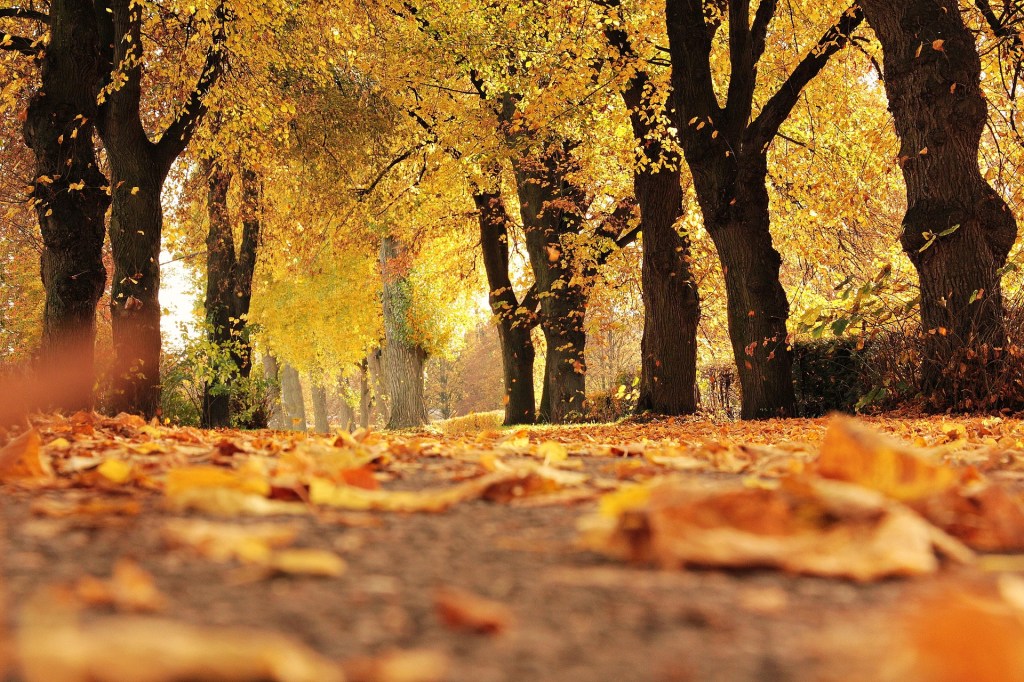
I tried to explain why the transition from summer to autumn is so difficult for me, even though I know the person I’m confessing to absolutely adores autumn. Yes, she’s one of the sensible people. The sensible people can look at the changing season and say Autumn is beautiful. Because it is. The trees are magnificent. The air is crisp. It means warm fireplaces, favorite blankets, cider and doughnuts, sweaters, and evening bonfires.
Yes. I know. But none of that helps.
Trying to explain the sensation to Jennifer, the closest comparison I could think of was being told by someone you love that she doesn’t love you anymore. I told her it feels like summer has sat across the table from me and said she’s leaving. But there was no fight. There was no scandal. I didn’t mistreat her. If anything, I showered her with devoted affection every single day. And yet, there she is, looking at me with that terrible calmness people sometimes have when they’ve already made up their mind before any substantive conversation could begin. She’s packed her things. She already has another place to go. And although I keep pointing out all the reasons she should stay, she’s not even listening anymore. In fact, even as I’m still pleading, she’s already gotten up from the table and is gathering the last of her things.
And here’s the worst part. I’m a sucker for her abuse. She’s going to come back to me. She does every year. And when she does, she’ll embrace me, and I’ll fall in love with her all over again. But then August will come, and once again, she’ll push me away.
For the record, I’m a relatively even-keeled guy. But this is my personal crazy. And just know, I do what I can to fight it. Indeed, I’m committed to resisting the seasonal sadness. I’ve tried sun lamps. Although to no avail. I have a fake palm tree in my office that somewhat helps. I’m looking at it right now. But notice I said it somewhat helps. Because there it is— pretending. Its green plastic leaves and its tropical ambition—all a manufactured defiance against Michigan’s very real autumn.
Jennifer bought it for me for Christmas a few years ago. It’s supposed to make the room feel more like summer. And, to a point, it works. Until I remember it’s fake.
Now, I’ve probably said enough on the topic already. But you need to know that what’s coming this Tuesday will make matters worse. Tuesday is when our church’s school begins its academic year. Most schools have already started, but ours hasn’t, which means I’m still living in a kind of disputed territory. Summer has filed for separation, but the decree isn’t final yet.
Tuesday is when the arbiter arrives. He’ll bring a bunch of papers issuing formal decrees that divide the property and mandate schedules and locations and times and so many other things. He’ll set the documents before me, and I’ll read them. The morning’s easier pace goes with summer. High-speed mornings and crowded, inflexible schedules, those come to me. The longer, unaccounted-for evenings, those go with summer. So do bare feet on the deck, open windows, and laugh-filled strolls up and down the hill in my side yard with my grandson in the wagon. Summer also gets custody of the fireflies and the croaking bullfrogs in the pond. She also gets to keep the strange freedom of stepping outside, even after a long day of visitations and meetings and whatever, and discovering by the sun’s position that there’s still an entire day waiting for you. The arbiter grants me darkness when I wake up and darkness before I leave the office.
The next thing you know, there I am, standing in the driveway while summer drives away with more than half of everything.
I know this all sounds so overly dramatic. But seasonal melancholy has never cared much about proportionality. And I warned you what to expect. Every August, my heart folds its arms and says, “I want July.”
But now, something else you should expect from me: the Gospel.
There’s a Christian difference between sorrow and despair. Christians are allowed to grieve departures. We are allowed to miss what’s good. We’re even allowed to cry about it. Jesus Himself wept at a tomb, even as He knew He was about to reverse the reason for sadness.
What I’m saying is that the answer to all of this is by no means that I just need to convince myself that I secretly love November. I don’t. And I likely never will. I’m built for summer. I’m wired for hot, sunny days. The answer is to remember “the earth is the Lord’s, and the fullness thereof” (Psalm 24:1). In other words, August belongs to Him. He also owns November. He owns the shortening days. The long ones belong to Him, too.
But there’s still more.
Christ, who is God in the flesh, is “the same yesterday and today and forever” (Hebrews 13:8). No matter the season, He doesn’t pack His things when the leaves start falling. He doesn’t somehow love me in June and lose interest in October. Or maybe better said (because I know plenty of folks who struggle with the kind of depression that extends well beyond any seasonal boundaries), my emotional condition at any given moment does not determine God’s feelings for me. In other words, when my corrupted and sinful heart tells me that everything is getting darker, colder, and farther away, the Holy Spirit works in me the knowledge that God’s promises remain exactly where He put them. In fact, He labors in ways to point me outside of myself to what’s actually true. He points me to Christ crucified and risen. He points me to my baptism. He points me to His Word. He points me to His wonderful supper. There, His verdict on everything has already been rendered. I am forgiven, redeemed, beloved, and most importantly, His. My sadness doesn’t make Him any less faithful. His promises remain true when the sun is shining at nine o’clock at night, and they remain true when it sets at 4:30 PM.
By the way, did you know studies have shown that people who go to church are happier? I wonder why that is. Oh wait. Could it be that the One who made us actually knows what we need?
I just looked back at some peripheral research I did for my doctorate. Believe it or not, I looked into this stuff. And the numbers are pretty remarkable. Gallup conducted a study on happiness levels among churchgoers and those who attend infrequently or not at all. They discovered that 67% of Americans who attend worship weekly describe themselves as “very satisfied” with their personal lives. If you remove the qualifier “very,” interestingly, the number jumps to 92%. In other words, nearly everyone who attends worship weekly reports being happier with life. Even better, more than two-thirds are willing to add the word “very.”
And by the way, it goes beyond simply asking people whether they’re happy. Harvard did a more generic survey a few years ago concerning long-term health data. They found there was 30% less depression in the church-going population. There’ve been a few other longitudinal studies that have found faithful church attendance equals less anxiety, hopelessness, and loneliness, while also being associated with a stronger sense of purpose and the ability to explain why that is.
Of course, statistics are not the Gospel. Not to mention, I know full well that Christians get depressed. I just spent the first half of this morning’s write-up telling you about how hard autumn is for me. Besides, I’m a pastor. I know darn well that Christians suffer terribly. I know darn well that Christians sit in pews with tears in their eyes and sometimes cannot explain why they hurt.
Now, I know correlation, as statistical science rightly reminds us, does not by itself prove causation. Still, I have to smile a little at the numbers. That’s because I know God’s heart. He loves me. And so, He gathers me to Himself in worship. A very important byproduct is that He puts me beside other sinners who need His merciful love just as much as I do. We receive His Word together. Even better, He gives us brothers and sisters who notice when we’re missing. In the liturgy, He gives us words to confess, prayers to pray, hymns to sing—all sentences we can speak when we simply cannot find the right words on our own. And in the middle of all of it, Christ is present. That’s the promise.
And so, the researchers come along with clipboards and spreadsheets and discover that, strangely enough, people immersed in all of this seem to fare better. Go figure.
So, to wrap this up, yes, summer is leaving me again. And yes, I’ll likely write another article next year that sounds an awful lot like this one. I’ll complain that the sun is setting too early. I’ll bristle at the thought of Michigan’s forthcoming cold. I’ll probably say something reminiscent of the arbiter who arrives every year to divide the possessions, and I’ll remember I’m getting the shorter end of the custody stick.
But am I really? Because I am keeping Christ. Or more accurately, Christ is keeping me. And unlike summer, He has promised never to leave me nor forsake me (Hebrews 13:5).
So, yeah, summer may leave. But she does so beneath a promise far superior to the season, which is that Christ doesn’t leave. With that, Ecclesiastes 3:11 makes a little more sense to me: “He has made everything beautiful in its time.” That includes Michigan’s autumn. And why? Because Christ is the beauty in every season.

