Obviously, I’m still on vacation. And it’s been restful, for sure. Apart from a few excursions, the Thoma family’s goal has been just to be together. Although, my early-morning alone time has produced (as it always does) daily posts for Angelsportion.com. It’s been good to revisit the humorist hiding in my keyboard. Of course, knowing we’d be gathering with God’s people at Zion in Winter Garden this morning, I was thinking of you and hoping all was well back home among God’s faithful people at Our Savior.
You should know that having taken a gamble and visited with my email this morning, I was nudged by a thought that may be of some value to some of you, while for others, it may only be worth putting into your pocket for later. It has to do with forgiveness.
I’ve always thought that forgiveness costs the offended so much more than the offender, and by this, it will forever be an incredibly imbalanced exchange. Indeed, the one who bears the scars of attack must also be the one to rise from the pain to give a comforting word to a penitent enemy who, at the victim’s expense, may even have made personal gains by his dark deeds. But you must know that while we are promised plenty of challenging experiences in life, the sacred exchange of forgiveness between the offended and the offender is one of the few that truly tests the courage of both involved.
One must be brave enough to admit the behavior and its shame. The other must be courageous enough to let it pass by while facing off with the innate desire for retribution, which is to wrestle with one of the darkest parts of the human condition.
These being true, I’ll go further and say I’m not one to agree with those who’d wander the perimeter of this exchange repeating what pop-psychology teaches—which is that for peace of mind, the offended must come to terms with an unrepentant enemy by forgiving them in one’s heart.
I could be wrong, but I don’t think that’s a teaching of Christianity.
Real forgiveness does not move from one sphere to the other without the avenue of repentance. Even as it meets with our Lord’s work on the cross, He paid the full price that accomplishes absolute forgiveness for all of Mankind’s past, present, and future atrocities. Forgiveness is there. It is available. And yet, no one receives even an atom-sized drop of heaven’s storehouses of forgiveness apart from faith. Faith is born of the Gospel, and as it is birthed, its bearer’s eyes are opened to the inescapable dreadfulness of his sinful condition. From there, trust in the sacrifice of Christ as the only rescuer is engaged. The ultimate One offended—God—works this humble faith in the offender, and in that moment, the floodgates of forgiveness are opened, and the sinner is drowned in the mercies of His divine love.
An unrepentant offender remains divided from forgiveness. Apart from forgiveness, the truth is that nothing is reconciled and the two live in completely different spheres leading to vastly different consequences.
I know some might contend that texts like Luke 7:47 and Matthew 6:14-15 are clear cut examples of the Lord instructing us to forgive everyone no matter the circumstances. With regard to Luke 7, I’d argue that we ought to pay closer attention to the love the Lord describes in that particular verse before leaning on such a loose interpretation. With regard to Matthew 6, I’d suggest an important text that comes before it: Matthew 5:43-48. It’s there Jesus describes with precision how we are to relate to devoted enemies and persecutors. The word for forgiveness isn’t used, but rather the Lord calls for us to show them genuine love and to pray for them. Christ is pressing His Christians to deeds of kindness that will serve as markers leading others to the one true merciful God awaiting the lost with open arms. By the way, you may recall He already began describing this at the beginning of the sermon in Matthew 5:16. In a way, He’ll describe the glory of the whole thing later on in Luke’s Gospel when He tells the story of the prodigal son (Luke 15:17-24).
And so, boiling all of this down to relationships in general…
Did your husband cheat on you? Has he recognized and admitted to his wrongdoing and returned to seek your forgiveness? No? Then I’m not so sure you can just declare him forgiven and move on. From a Christian perspective, how would that lead him to Christ? What would that teach the children?
Did someone tell a dreadful lie about you, one that has spread like wildfire and devastated your reputation among others you once considered friends? Again, has this person come clean with you, doing what she can to amend and repair the damage? No? Again, I’m not so sure you can blanketly offer her forgiveness. How would that display for her the deeper value of forgiveness to be had from God?
I know all of this may sound somewhat controversial, especially as it seems to leave one person in the relationship to suffer. But that’s not it at all. None of this is to say you must move on from such challenging circumstances completely devoid of inner peace. God has given a way for going forward. For one, He has promised to comfort and uphold you in times of trouble (Deuteronomy 31:8; Job 5:11; Psalm 27:1; Psalm 46:1; Matthew 5:4; John 16:33; 2 Corinthians 1:3). Even better, He has already drawn you to Himself by the forgiveness He has bestowed in your life, and by this, you can go from day to day with the knowledge that you are not at war with the One who matters most, but rather you exist at peace with Him (Romans 5:1-15). It’s there you can know that no matter the offending behavior of other human beings in this awful world, be it big or small, as much as it depends on you, you can speak and act in ways that have the potential for leading your persecutors toward genuine peace with God (Romans 12:18).
With that, I pray the Lord’s blessings for you this morning, namely that you’ll be richly upheld in penitent faith by His wonderfully abundant grace given through Word and Sacrament in holy worship.
I’ll just start off by saying that last week was a bit challenging on a personal level. A lot happened in my allotted portion of the globe. Although, I’d say Vacation Bible School, being the starting pistol to each morning that it was, had me launching into each day by way of an invigorated sprint. As it is every year, I was called upon to lead the children (100+ in all) in the opening devotion, taking about twenty minutes or so each morning to sing some fun songs and share a little about the day’s Bible lesson. It’s always a busy exchange, but it’s also refreshing.
I don’t know about you, but I’ve always been a people-watcher. I’ve always been the kind of guy who could go to any particular event—a basketball game, parade, social gathering, or whatever—and find just as much, or even more, entertainment by watching the crowd. It’s the same with Vacation Bible School. Even as I may be leading the children, I’m observing them, too, and as I do, I’m forever being reminded that children perceive things much differently than adults.
For example, on Tuesday of last week, just before leading the children through the first song of the morning, I took a quick moment to teach the children how and why a Christian might make the sign of the cross before praying, and as I did, I joked about being careful not to poke oneself in the eye while attempting to do it for the first time. Most of the kids laughed, but I noticed one little girl in the front row nodding her head and leaning toward a friend to say with all seriousness, “I’m going to be very careful when I do this.” And she was careful. She took what I said literally and really rather earnestly.
I see things like this and I’m prompted to consider the bracing simplicity within a child’s heart.
Do you know who did a great job with capturing such scenes literarily? Lewis Carroll. A writer of children’s stories, Carroll masterfully captured by his characters the childlike matter-of-factness that can be had in everyday conversations between people. That moment on Tuesday morning brought to mind a comical moment between Alice and the White King in Carroll’s Through the Looking Glass:
“I see nobody on the road,” said Alice.
“I only wish I had such eyes,” the King remarked in fretful tone. “To be able to see Nobody! And at that distance, too! Why, it’s as much as I can do to see real people by this light.”
Children operate this way. Not only do they have the potential for taking hold of our words and actions, ultimately revealing to us that each is a stand-alone piece with precise implications, but they often surprise us with just how naturally easy it is for them to do it. Interestingly, in Matthew 18:1-3, Jesus refers to children as the greatest in the kingdom of heaven because of this uncanny ability, namely in relation to faith.
“At that time the disciples came to Jesus, saying, ‘Who is the greatest in the kingdom of heaven?’ And calling to him a child, he put him in the midst of them and said, ‘Truly, I say to you, unless you turn and become like children, you will never enter the kingdom of heaven.’”
Jesus wants the adults—the ones who, in most circumstances, think they know better by their reason and sensibility—to hear and believe the Gospel as a child hears it. He wants them to hear Him in the same way the White King heard Alice—simply, uncomplicatedly, unquestionably.
When a child hears that Jesus loves her, she doesn’t necessarily ask why. An adult is more likely to need a good reason. An adult is more likely to establish a sensible scale of “right” and “wrong,” “good” and “bad,” and from there gauge his or her value to Jesus. Unfortunately, this can leave a person wondering how it is that Christ can actually love such a scoundrel; or worse, set a person up to think that the Lord’s love is due to an exceptional life of good deeds.
But Jesus loves you because that’s who He is. It doesn’t begin with you. It begins with Him. And that’s a good thing.
Being around the VBS children this week has served my heart well in this regard. Each day began with a recalibrating glimpse into the simple joys found in being God’s child. As a result, I was better able to meet the week’s challenging work, not so much inclined toward worrying about how I was going to fix this or navigate that, but rather I was ready at every turn to say, “I am your servant, Lord. I trust you. Lead me, and I’ll follow.”
One last thing to keep in mind…
Knowing that our children so intuitively hear and see what we say and do and then trustingly run in the direction we are leading them, imagine the implications of regular swearing in front of our kids. Imagine the implications of cruel words or actions to a spouse. Imagine the implications of lying, or shredding someone’s reputation, while the kids are listening. Perhaps worst of all, imagine the implications of using excuse after excuse to justify time away from Christ in worship.
I wrote and shared a post on my Facebook page a while ago affirming just how difficult it can sometimes be for parents with children in worship. Interestingly, the children themselves are often the excuse used by parents for staying away. The little ones get antsy, and they struggle to behave. But the point of the post was to make clear what I’ve already shared above. For all the things kids have trouble doing, there’s one thing in particular they do very well: They imitate adults.
But they can’t learn to imitate what we won’t display. Keep in mind that the secular world never sleeps in this regard. It’s always ready to lead our children. One thing I’ve learned as a parent who’s aware of the secular world’s influence is that the more exhausted I become with the process of raising my children to be Godly people, the firmer my resolve and the greater my courage must be in the fight for their eternal futures. I know that a mere portion of a Sunday morning in comparison to the never-ending stimuli bombarding our children the rest of the week doesn’t seem like much. But remember: Don’t overcomplicate things. Just believe Jesus. Remember the Sabbath by keeping it holy. There are infinite blessings attached to this loving mandate. Keep in mind that your time in worship with Him is a powerful portion fitted with otherworldly might. The secular world has nothing on God in this regard. You can be sure that not only will you and your family be blessed, but as your children are engaged in it with you—watching and listening and learning from your displayed devotion to the Savior—they’ll note by their God-given intuitiveness your distinct contrast to the world around them. They’ll learn what’s most important as you display it. They’ll know to trust and follow who you trust and follow. The implications to be had by this are boundless.
Believe it or not, even though I typically write and send these notes very early in the morning, I’m not necessarily a morning person. It’s just that putting my thoughts into words best happens in the morning. I can’t say for sure, but I’m guessing it may have something to do with the effects of light and darkness on me as an individual.
There’s a whole different feeling to being “up and doing” (as Longfellow described it) at 5:30am in the summer sun, especially in comparison to the winter months when, at this same hour, the sun is still laboring on the other side of the world. In the sunshine, there’s a sense of eager vibrancy that mutes any sense of isolating dreariness, especially here in the church facility. By dreariness, I really mean loneliness, because by the time I usually arrive here any given morning, it’s likely I won’t see another person for several more hours. During the summer, the absence of people—of life-filled motion—seems less arresting, less empty. I can go from room to room doing what I need to do without even turning on lights. There’s no need for artificial illumination. The windows throughout become light bulbs, each with the sun itself serving as the incandescent filament. The loneliness dissipates even more so when, through those same windows, I see the trees, the birds on their branches, the two resident rabbits I’ve affectionately named Frank and Betty scurrying through the yard, and so many other life-filled happenings.
The 5:30am hour during winter is something altogether different. It promises darkness.
For the most part, what’s happening outside remains invisible, and the inner spaces of the facility feel a bit more cavernous. Turning on the artificial halogen lights doesn’t seem to help all that much, and what little I may have been able to see of the outside’s darkened landscape becomes lost in their cold cathode reflection. Even worse, the unnatural light glaring throughout the enormous building carries a feeling of staleness—of dreadful isolation—that only comes unraveled when the sun finally rises and life begins arriving through the visiting people.
I suppose I don’t want to be too allegorical with this stuff. Nevertheless, I think summer and winter both communicate truths about light and darkness. Speaking of truth, I think the deeper we dig into the imagery, the more we get a sense of the differences between truth and falsehood, too.
The Bible is fluent in its comparisons of light and darkness. Of course our Lord refers to Himself as “the light of the world,” reminding His listeners that whoever would follow Him “will not walk in darkness, but will have the light of life” (John 8:12). Saint Peter refers to Christians as a chosen people called “out of darkness into his marvelous light” (1 Peter 2:9). Saint Paul reminds his readers on countless occasions regarding their former status as people born of darkness (Ephesians 5:8), but then he is sure to encourage us to know our new identity as “children of light” by faith, no longer “of the night or of the darkness” (1 Thessalonians 5:5). He so joyfully announces that God “has delivered us from the domain of darkness and transferred us to the kingdom of his beloved Son” (Colossians 1:13). From such grace-filled announcements, Paul can ask rhetorically regarding the Christian life, “For what partnership has righteousness with lawlessness? Or what fellowship has light with darkness?” (2 Corinthians 6:14). He asks this aware of what—or even better who—most prefers the darkness: Sin, Death, and the devil. They are the ones he’s identifying when he speaks of the “cosmic powers over this present darkness” with which we wrestle each day as Christians (Ephesians 6:12). These are the ones who labor to impose the pitch blackness of unbelief that “blinds the minds of the unbelievers, to keep them from seeing the light of the gospel of the glory of Christ” (2 Corinthians 4:4). These are the ones born from lies, who have “nothing to do with the truth” (John 8:44). But these are also the ones who, by the life, death, and resurrection of Jesus Christ, have already been judged, convicted, sentenced, and will eventually be brought to nothing (John 12:31; 16:11).
These biblical texts alone help interpret the uneasy feelings that often come with actual darkness. But they also interpret by comparison the comforting warmth we feel in the sunlight. Even better, as these words arise from the source of real light—the Holy Scriptures—they relay the genuine sense of wellbeing we get from the sun in comparison to artificial lighting. I think that’s the connection to be made in relation to truth and falsehood.
There are plenty of halogen-like lights in our world promising peace from various artificial sources. We all know how companies try to assure our happiness if only we’ll buy their product. But the idea goes deeper still. I read an article already this morning about how the U.S. Secretary of Health and Human Services under the Biden Administration, Xavier Becerra, believes that if children are troubled in their sexuality, they should be allowed to transition to their preferred gender. Even worse, he thinks our tax dollars should pay for it. Becerra believes it’s the duty of all Americans to help these kids embrace and follow through with the desired change in order to find the peace of mind every human deserves. First of all, we Christians know better than to think humans deserve anything. It was human sinfulness that made this world what it is. It’s only by God’s grace that He offers His care, allowing the sun to shine, the rain to fall, and the world to continue spinning. Secondly, and unfortunately for Mr. Becerra, the statistics are against him. Suicide rates are already high among youth struggling with gender dysphoria, but they only get higher among the groups that actually follow through on the transition. Why? Because most end up regretting the change and all of the physiological complications that come with it.
Gender reassignment surgery is a false promise born from counterfeit light. In short, what Becerra is proposing is the devil’s business, and Satan certainly loves to masquerade as bogus light (2 Corinthians 11:14).
Christians know what they know because God’s Word is real light providing real truth. As the Psalmist declares, “Your Word is a lamp to my feet and a light to my path” (Psalm 119:105). He speaks this way already knowing that God—the One who desires that all would be saved and brought to the knowledge of the truth (1 Timothy 2:4)—is the source of its light, and so the Psalmist says as much when he joyfully scribes, “For it is you who light my lamp; the Lord my God lightens my darkness” (Psalm 18:28).
I was visiting with our congregation president, Jeff Hoppe, by phone in the parking lot this past week regarding our employee policy handbook when a quotation from Lyndon Johnson came to mind. Johnson said something about how the hardest task is not necessarily doing what’s right, but rather knowing what’s right. Johnson was talking about his role as president, but I think the wisdom applies in this circumstance, too. Christians are bombarded with right and wrong scenarios every day. In the category of what seems to be “right” there is the avalanche of sensible opinion after sensible opinion that ultimately forms practices. Much of it seems virtuous on the surface, but only through the lighted lens of God’s Word do we see the pocked surfaces and realize some have been misidentified as “good.”
Take for example Critical Race Theory (CRT), which is a hot topic these days.
CRT claims so virtuously to stand against racism, having birthed the “Black Lives Matter” movement. Standing against racism sounds great. I mean, who wouldn’t want to do that? Better yet, who could legitimately defend the position that black lives don’t matter? Of course they matter! Still, in the spotlight of God’s Word, the claims of CRT and its subsequent branches prove to be false narratives traveling a one way street.
The Bible teaches that all have sinned and fallen short of the glory of God (Romans 3:23). No human being is untouched by Sin’s curse. With the same conclusiveness, Christ’s sacrifice on the cross met the curse and its cost. By faith in Jesus, a believer stands forgiven and free to live according to this forgiveness. In contrast, one of the fundamental teachings of CRT is that redemption from inherent racist tendencies isn’t possible. It teaches that while every race may be capable of discriminatory thoughts or actions, primarily only whites (of European and Asian descent), Christians, most males, and anyone who holds to traditional western values cannot escape it. They are, by default, unforgivably and immutably racist. Everyone else, by default, is morally innocent in this regard. For Christians who have a handle on God’s Word, it’s not hard to see how a position like this betrays an influence of devilish darkness.
Christians who regularly rest in the Word of God are also more likely to be able to predict the outcomes of such ideologies. The devil has always been the one at the wheel of such militant Marxist dogmas. And he’s always ready to drive the machine to its extreme—which is why I’d say that CRT’s only logical endgame is the same as the Nazis of the early twentieth century. Anyone who has ever taken aim at a utopian society has always been found in need of a “final solution” to its ungovernable problems. This should sound terrifyingly familiar when considering Nazi Germany, because it means eliminating the problem and its influences by force, and ultimately, extermination.
Along these lines, Ibram X. Kendi, one of the foremost leaders in the Critical Race Theory arena, insists that “there is no such thing as a not-racist idea.” He goes on to say there are only “racist ideas and antiracist ideas” and that encouraging different groups to love each other accomplishes little to nothing. He’s even more adamant that while diversity education is good, it can’t solve what he claims is an inherent problem. From his perspective, the only real way to defeat racism is to completely destroy the Western capitalist system and to further the Marxist dogmas that employ more racism. His words precisely:
“The only remedy to racist discrimination is antiracist discrimination. The only remedy to past discrimination is present discrimination. The only remedy to present discrimination is future discrimination.” (How to Be an Antiracist, p. 287)
What he means is that those he believes are innately racist must be met by an equal force of racism (more virtuous, of course) in order to subdue their inclinations and bring society into balance.
Kendi’s light of truth is horribly halogened. It is a false light guiding toward a dreadful end. But people are buying into it because it’s being sold as righteous. Interestingly, President Joe Biden is fully behind it. This isn’t surprising since a recent poll showed that 85% of democrats favor CRT even as almost 60% of Americans see it as unfavorably dangerous. Still, Joe Bidenhas been very open about wanting CRT to be taught in our schools, governing our workplaces, and steering our military. I don’t mean to be cruel, only honest, which is why I’ll say I suspect this is only true of Biden because he lacks the cognitive abilities for actually sorting out CRT’s endgame as he’s led along by halogenic handlers. Unfortunately, as it is with the radical LGBTQ agenda, your kids are likely already incredibly immersed in this stuff at school, online, through the movies and TV shows they watch, and so many other avenues of influence in life.
This is all the more reason for staying connected to worship and Bible study! Equipped with God’s Word, Christians are clad in the “armor of light” (Romans 13:12), and as such, are made ready for marking, avoiding, and fighting against these dangerous untruths. Kept apart from God’s Word, we can only expect to walk in darkness.
Indeed, there’s light and darkness, and for the most part, neither are all that difficult to discern. But within the category of “light,” there’s the need to distinguish between real light and fake light. That’s a little harder. With that, look to the Word of God. It’s there you’ll be equipped for discerning such things. It’s there you’ll realize that fake light doesn’t belong in the category of light at all, but rather it belongs to darkness. It’s by the real light—the Word of God—that you’ll be better equipped for measuring anything and everything according to the revealed will of God. It’s there you’ll meet the One who is the Light of the world—the embodied fulfillment of God’s will for Man—the One who is for us the precise emanation of “the tender mercy of our God, whereby the sunrise shall visit us from on high to give light to those who sit in darkness and in the shadow of death, to guide our feet into the way of peace” (Luke 1:78-79). Summarizing this beautiful little text, it’s God’s will that we would know our Sin, believe in the One who delivered us from Sin, and walk in faithfulness to Him. This is the real sunlight of truth. Only by the power of the Holy Spirit through the Gospel for faith in Jesus Christ given by the verbal and visible Word of God (Word and Sacrament ministry) will you “know the truth,” and that truth “will set you free” (John 8:32).
I suppose that with the beginning of summer comes changes to routine. In this particular instance, I fully embrace the change. With anything else, however, I struggle with disruptions to routine. I’m a perpetual preschooler in the sense that I prefer to know what’s next. If you don’t know what I mean by that statement, ask a preschool teacher to explain it. Better yet, ask a substitute preschool teacher. Such a person will likely have experienced what happens after accidentally introducing an unexpected change to a classroom regimen. My guess is you’ll hear the nightmarish tale of having been tied to the craft table and circled by a mutinous band of rage-filled three-year-olds chanting, “It’s music time at nine o’clock, and then we have our morning snack. You skipped music time! You skipped music time! You skipped music time!”
Since I appreciate routine, you probably guessed I’m not a big fan of surprises, either. One example worth sharing as it meets with my job as a pastor: I don’t like cryptic requests for future discussions. In other words, I get a little worked up when people approach me saying they have something very important they need to discuss but they can’t tell me what it’s about. That usually leaves me in a psychological dead space that can (and likely will) be filled with just about anything.
“Maybe she’s angry with me about something,” I begin thinking. “I wonder what I did.”
“Perhaps he’s going to corner me with a big investment opportunity,” I ponder uneasily. “Doesn’t he know I’m pretty much broke?”
“I’ll bet they’re aliens,” I guardedly wonder, “and they’re planning to get me alone in a room so they can eat, digest, and then mimic me.”
Who knows?
Now before I free-think myself too far away from any of this being even a little bit worth your while, when it comes to surprises imposing upon routines, ironically, I was actually pleasantly surprised to identify a particular routine occurring in my life that I didn’t know about. I recognized it when Jennifer observed, “You can’t just sit still and relax, can you? You always need to be doing something.”
A minute or two after her remark, I realized she was right. (Of course, I didn’t tell her she was right. Every husband knows to limit how many times a day he admits such things.) I was surprised by the realization that much of the gratification I get in life is found in the process of doing rather than actually reaching the destination of completion.
Don’t get me wrong. The joy that comes with a completed project is nice. But as a person whose primary task is to minister to people, the hard truth is that I rarely enjoy a series of completed projects. Almost everything I do is an on-going process, which is why I rarely complain about tasks like mowing my lawn or repairing things around the house; or why I’ve even been known on occasion to mop the floor of the church or scrub a carpet stain in the narthex. Seeing something actually begin and end provides occasional fulfillment. But strangely, just as Jennifer inadvertently suggested, the fulfillment achieved by completed tasks is often short-lived for me, which is why when a project is done, I’m almost always on to something else. I can’t sit still and relax. I must get about the process of doing.
The point I think I’m making is that I realized one of my fundamental routines is to exist in a perpetual state of pursuit. The more I think about this, the more I realize the good and bad aspects of it.
A good side to this is that I’m never bored enough to ask, “What’s the use in living?” I’m too busy mining life for its gems to be worried about asking what life has in store. Look around. There’s plenty to keep any and all of us busy.
Another positive aspect to such a routine is the strengthening of determination and the gladness that eventually ensues. The more I experience obstacles to my aspirations, the more I feel the need to find ways to break through, occasioning an even greater measure of gladness when I finally arrive at the prize. Success is certainly sweetest when all along it seemed impossibly out of reach.
But there are negative aspects to this routine, too. It can slowly boil you into false narratives.
To dwell in single-minded pursuit of anything has the potential for seeing a person distracted from far greater blessings happening on the periphery. This can be detrimental to family, friendships, and so much more. The typical example of this can be found in the parent who’s always working and never has time for the children. Such a person misses out on a lot, much to the injury of those they love. Another real-world example that comes to mind involves my wife’s grandfather who spent most of his days building a seawall at his home in Florida. While Jennifer’s grandmother (wheelchair-bound) passed the time doing various things indoors, my thought was that he was missing valuable time with her as he worked on the wall day after day, adding layer after layer of concrete. I’m guessing he died preparing to mix another bag of cement, convinced that just one more day of laboring on his seawall would result in its perfection.
Stepping from this particular image, I suppose another dangerous aspect to a routine of always doing and never resting is the prospect of human effort becoming the sole determiner for success not only in this life, but also for the life to come.
When it comes to eternal life, we would never want to be deceived into thinking God is recording a tally sheet of our good deeds. And lest you think that’s the point of Jesus words in Matthew 25:34-40, take another quick look:
“Then the King will say to those on his right, ‘Come, you who are blessed by my Father, inherit the kingdom prepared for you from the foundation of the world. For I was hungry and you gave me food, I was thirsty and you gave me drink, I was a stranger and you welcomed me, I was naked and you clothed me, I was sick and you visited me, I was in prison and you came to me.’ Then the righteous will answer him, saying, ‘Lord, when did we see you hungry and feed you, or thirsty and give you drink? And when did we see you a stranger and welcome you, or naked and clothe you? And when did we see you sick or in prison and visit you?’ And the King will answer them, ‘Truly, I say to you, as you did it to one of the least of these my brothers, you did it to me.’”
Consider the word “inherit” which occurs right at the beginning of the King’s proclamation. An inheritance isn’t something you earn. It’s something you receive because of who you are in relation to the giver. A son does not inherit from his father because he worked hard, but rather because he was his son. By faith, we are sons and daughters of the king (Galatians 3:26), and as such, we are inheritors of the kingdom.
So, why then does the King recall the things the inheritors have done?
Because these are the naturally-occurring proofs of family membership. These are the customs—the traditions and culture—of the citizens of the kingdom. Notice that the inheritors don’t really even remember what the Lord is describing. And why? Because they weren’t performing the deeds in a calculated way, one intent on seeing them worked into some sort of divine ledger used to tally their credits toward the forthcoming reward. Instead, they simply did them because of who they were by nature of faith.
This is not a text teaching works righteousness, but rather an accounting of the eternal reward given to those who trust in Christ for salvation.
Martin Luther weighed in on this, saying things like, “If the saints did their good works in order to win the kingdom of heaven, they would never win it. Rather, they would be counted among the wicked, for they would be considering with evil eyes their own good…” (On The Enslaved Will, 163 f.).
In particular, and because we’re heading into the new routines of summer, this takes aim at one very important theme behind God’s mandate regarding Sabbath rest. Being the gifted Old Testament exegete that he was, Luther explains the mandate very simply in his Small Catechism:
“Remember the Sabbath Day by keeping it holy. What does this mean? We should fear and love God so that we do not despise preaching and His Word, but hold it sacred and gladly hear and learn it.”
In other words, an important thrust of the Third Commandment is to keep us connected to the source of God’s perfect labors on our behalf. We can work all we want at so many other things in life, and we’ll likely experience a multitude of successes as we do. But when it comes to considering human effort as an all-encompassing factor in the narrative of Man, we should stop and take a contemplative breather. We should understand that we do not deserve nor can we even begin to earn our place in God’s presence. It’s by God’s grace—by His work—that we take our place before Him, whether here on earth or in heaven. Here in this sphere, He reaches to us by His Word both in worship and study. That’s Sabbath rest—a time set aside for God to engage us in some extraordinary ways. This is one reason why Lutherans (at least LCMS Lutherans) refer to holy worship as the “Divine Service.” The tendency is to think that Christians gather for worship simply to praise God, but it’s really the other way around. God is gathering us in order that He might serve us—that He might care for us. We rest in the arms of God’s wonderful love in worship as He serves us with His abundant mercy and wonderfully rich grace through Word and Sacrament ministry. He speaks and works, and by the nature of faith, we listen and reply with thanksgiving and praise. Keep these things in mind as the new summer routines take hold. Spend the extra time in the summer sun doing and then doing some more. But then be sure to stop doing and relax. Go to church. Rest in the arms of your Savior in worship, recognizing there’s nothing you can do for Him that He needs, but instead, you need everything He has promised to do for you.
As always, I pray all is well with you and your family, and that as we make our way toward summer, you are beginning to receive some relief from winter’s grip.
When I say grip, I mean it. Michigan winters are long. I grew up in central Illinois. Until I moved here in 1994, I was ignorant to the fact that it’s all but guaranteed that eight of Michigan’s twelve months will deliver a measure of frigidity. It’s a truth that tips its bowler cap reminiscently to the British notion that there’s only one way to ensure summer in England and that’s to have it framed and hanging in the living room.
And yet Michiganders press on, we endure, knowing that when summer does finally arrive in our state, there will be few other places in America that can capture our hearts for home in comparison.
Although, “endure” is an interesting word to use in relation to something we love, isn’t it?
As a pastor, even as I’ve needed to endure troubling people, places, and things, I’ve also been on the scene to watch other people endure, too. About thirty-six hours ago I was sitting at gate B16 in the McNamara Terminal at Detroit Metropolitan Airport on my way to St. Louis, and across the way at gate B15 was a family enduring their restless two-year-old. Come to think of it, we were all enduring the toddler. I’m sure they love their son, but I have to imagine that in that particular moment they were doing what they could to get through the oncoming hours of travel, ultimately hoping for the peace that comes with arriving at their final destination—which appeared to be Knoxville, Tennessee.
Observing those folks (not gawking, of course), I’d say they were doing a stellar job of receiving the disdain-filled stares of the folks around them, while at the same time managing their own inclinations to put a red tag on the kid and check him as extra baggage at the door of the plane before boarding because they knew they wouldn’t get away with stuffing him into the overhead bin.
I’ve learned over the years that the way people endure struggle often reveals more about them than the actual thing being endured. I was reminded of this rather vividly earlier this week when I was called to the scene of an unexpected death. There were family members of the deceased who claimed faith in Christ, and yet were completely inconsolable—more so than I’ve ever seen before—wailing and calling out that life was now over, that all hope was lost, that God was their enemy, that they hated Him, that He was punishing them even as they’d been so faithful to Him in church attendance and prayer and giving. (For the record, I found out later after talking to their pastor they weren’t actually as faithful as they’d claimed.)
Over the course of the hour after I arrived, other Christian family and friends arrived, too. I didn’t learn of their faith in Christ by asking, but instead beheld them embracing the inconsolable ones and offering them the reassurance that hope was not lost, that God was not doling out injustice, that He was not scheming to harm or destroy them.
To be clear, I’m not belittling anyone’s moment of grief. I’ve been in and around it enough to know that it’s different for everyone. And besides, it truly was an unfortunate scene. Still, when it comes to relationship status, I’d say that for the most part, everyone in the room held equal shares of the burden of the moment. But for some reason, one group in particular seemed capable of finding their way in the darkness, of believing that even amid the coldness of Death, the summer of eternal life through faith in Christ was approaching on the horizon. They were proving a deep trust that the sadness would eventually pass, that the Day of Days was coming. It was only a matter of time. Armed with this knowledge, they were going to press forward displaying a different kind of grief, one that emitted hope and was capable of shepherding others in the same.
Paul said something about this in 1 Thessalonians 4:13-14:
“But we do not want you to be uninformed, brothers, about those who are asleep, that you may not grieve as others do who have no hope. For since we believe that Jesus died and rose again, even so, through Jesus, God will bring with him those who have fallen asleep.”
Those who fall asleep in Jesus are brought along with Him. In the moment of their passing, no matter how dark it might seem to be, they are immediately carried to where He is. This is true by virtue of His unarguable power over Death.
Saint Paul’s words are Easter words. Easter owns them. I’m here to tell you that it’s no coincidence that God established Easter in the springtime. Spring steps forth from the grave of winter with its heart set toward summer, the sunlit upland of new life in full bloom.
Until then, indeed, the need to endure is rarely an easy thing. Just look around. But as you do, I’d caution those of you expecting to discover nothing but hopelessness unfolding throughout the world that you’ll likely see Christians continuing to prove the engine of endurance being fed by the Gospel of hope. History itself testifies to this. In a sense, you are enjoying the benefits of this verity. Fellowship in the Christian congregation you call home exists in part because the Christians who were tossed into dens filled with lions endured. The faith you are laboring to pass along to your children and grandchildren continues because Christians staked by Nero endured. The Bible—the Word of God for faith is even now in your hands because the Apostles who went out with a willingness to be crucified—even upside down—endured. The world has continued year after year to pit itself against Christianity, and yet countless generations continue in the way of salvation. Why? Because that which is the power of God unto salvation—the Gospel (Romans 1:16)—continues to endure, just as the Lord said (Matthew 16:15-20). And so, like those who’ve gone before us, we are not fearful as the world is fearful. We do not grieve as the world grieves. We do not endure unpleasantness and struggle and suffering and pain as the world endures. We have hope. We have that which has reached into us from the divine spheres and kindled our hearts with the warmth of a joy that can withstand the temperatures of mortal struggle that fall below freezing.
We know the summer of eternal life is coming. It’s not that we think it’s coming, but rather by the power of the Holy Spirit alive in us, we know it. That being true, and all of our senses being so attuned by faith to this Gospel reality, we cannot help but invest in its inevitability, ultimately letting it be visible to the people around us.
I know I don’t always do this as I should, which is why I need to continue to prepare.
I don’t know about you, but I dedicate time in the spring to preparing for summer. I clean up the yard. I trim back bushes. I prepare flower beds. I test sprinkler heads. I swap the snow blower in the garage with the lawn mower in the shed. (Michigan being what it is, sometimes I learn that I’ve made the swap a little too early.) I do countless things to make sure all is in order. I’m sure the Christians who are faithful in worship will make the appropriate connection here. They don’t need help understanding that because Christ fully accomplished our redemption, there isn’t anything we do for God that somehow plays a part in winning the unending summer of heaven. And yet, they also understand that the same Savior calls for us to prepare. He urges us to a readiness that doesn’t doze off so easily, but rather remains aware, that actively engages in order to keep itself well-stocked and complete for the Day’s arrival when we will be brought into Christ’s presence (Matthew 24:42-44; 25:1-13 ).
Christians know that holding “unswervingly to the hope we profess” means “drawing near to God” where He locates Himself (Hebrews 10:22-27). They know God’s divine prompting for readiness means being with Him in worship, together with other Christians, to receive as one like-minded, supportive, and believing family His gifts of Word and Sacrament that feed the flame of faith for running the race (Hebrews 12:1-2) and enduring until the end (James 1:12).
Have you ever had one of those days when no matter how hard you tried to interpret life through the lens of positivity, there was an itinerant itch of crankiness that just wouldn’t let it happen? Of course you’ve had such days. You’re a human being. I know I’ve had days like that. I just had one last week, which I guess is why I’m bringing it up—and why I’m about to examine it.
I remember feeling the grouchy cogs begin to turn when I heard that we were likely to get a few inches of snow. I know for a fact I whispered the words, “I want to move to Florida.” Following those words with a bit of daydreaming, I was so easily undercut by the harsh reality that I have neither the funds nor the general flexibility for being in Florida for any great length of time beyond the twelve or so days we, the Thoma family, enjoy there each summer. The futility of this harsh realization began draping my world in negative hues almost immediately, and the subsequent events of the day bore witness to it.
I was easily frustrated by other drivers on the road. Little mistakes in my everyday labors became sizable. I lost interest in things that might normally bring me joy. I found myself scrutinizing humanity with far less grace. For example, I found myself in conversation with a fellow clergyman regarding Church and State issues. As we talked, I recalled silently the familiar thought that dialogue is indeed dead, that general conversation involving differing viewpoints has become illusionary, that the modern exchange of ideas has evolved into little more than crisscrossing monologues between people incapable of actually listening to anyone but themselves.
I don’t like feeling this way. I don’t like viewing the world this way. It’s a hard way to go about life, and in the end, it can do little more than to devolve into sadness. So, how does one get free from this?
Well, for me it wasn’t anything I was able to do, but rather the doings of others. It was an unexpected email from a friend offering some encouragement. A little later that afternoon, it was an unanticipated and bright-eyed “Hey, Pastor!” coupled with a high-five from one of the second-graders passing in the school hallway. That night it was an enjoyable conversation during a game of pool with my son, Harrison. Before bed, it was an exceptionally tight and lengthy hug and “I love you” from my daughter, Madeline, followed by the same from Evelyn.
In a sense, I didn’t find a way out of the gloom. I was lifted out.
There is the saying that there is no tomorrow when a friend asks today. This means that when a friend is in need, there is nothing in our future that we can’t put off until we’ve attended to that friend. But sometimes that friend can’t ask. Sometimes he doesn’t even know he needs to ask. Sometimes he is unaware he’s been slow-boiled into his darkest identity, and with this, he doesn’t realize the identity is consuming him.
We all know people like this, folks whose essential personalities were one way, but then when we encountered them again after some time apart, they were noticeably different. They had changed. Their happiness had somehow become muted and the vibrancy of their light had become a little dimmer.
I wonder if this is becoming more common in a society shaped by digital communication and social distancing. Well, to be honest, I’m certain it is. While plenty of studies have provided mounds of data inferring it, as a pastor, I can see it for myself. I don’t really need the studies to confirm what’s right in front of my face. Having interacted with people here at Our Savior who, previously, hadn’t been out of the house or come to worship in over a year, it was easy to see the change. Yes, they were glad to be back, but it was a reserved gladness held in check by a foreign specter—almost as if it had convinced them to reconnect only because the inevitable “death by virus” was better than insanity in seclusion.
You may question this interpretation, which is fine, but I’m here to tell you that if you thought the world was becoming a negative place before the pandemic, COVID has hit the gas pedal on society’s emotional downturn toward instability.
Thinking back to what raised me from my own melancholy sulk, it was the people around me who did the heavy lifting. From that casual example, I sure hope you realize just how much you need to be with other people on a regular basis—how humans need not only to see each other’s faces, but to experience each other’s physical presences. Regular togetherness is no small thing to God, and so He urges His Church to gather for worship, making sure we’re not “neglecting to meet together, as is the habit of some, but encouraging one another, and all the more as you see the Day drawing near” (Hebrews 10:25). Of course He does this for the sake of giving Himself to His people through the richest of fare—Word and Sacrament ministry. But there are other reasons hovering in the realm of practicality that He has in mind, too.
We’re human. He knows what this means better than we do. He scribbled togetherness into our framework. Individuals were not designed to be alone in seclusion (Genesis 2:18). We’re meant to be out and among others. And why? Well, it’s the reason that before Adam gave Eve her formal name, God called her “helper.” God knows that when we’re together—whether it be in a marriage, a family, a friendship, a bible study group, serving on a board at church, or any other situation involving human togetherness—there will always be those around us who are in tune with our real selves and who will be ready to reach out to lift us up when they sense we are falling. In fact, God said this very thing about togetherness rather precisely in Ecclesiastes 4:10: “For if they fall, one will lift up his fellow. But woe to him who is alone when he falls and has not another to lift him up.”
I didn’t expect that email from the friend who sent it. But he noticed something about me on Sunday that left him thinking he should. I get tight hugs from my daughters all the time, but I didn’t expect the tight hug from Madeline that lasted three-times as long as normal. In that moment, for some reason, she was moved to give me a little extra love, and it helped. And as God would so generously provide through such faithful Christians, these happenings arrived at just the right moment, ultimately beginning the Lord’s divine effort to begin holding back the wave of negativity that was making its way toward my spiritual shore and, quite possibly, pull me out into the inescapability of deeper waters.
I pray you’ll consider these words and take them to heart. The first of which to take in is that if you sense someone is falling down or slipping away, reach out to help them. A gentle word will do. An act of kindness will help, too. A confident explanation of the courage Christ gives will prompt.
Second, if you’ve been away from your church family for a while, maybe it’s time to start making your way back. At the time of this writing, it’s been over four-hundred days since the first of the lockdown and mask mandates. It’s been over four-hundred days since a smile and a friendly embrace have been openly available between people without shame. It’s been over four-hundred days since people started unnaturally touching elbows instead of reaching out to make bare human contact by shaking hands. It’s been over four-hundred days since almost everything humanly personal about mankind since the beginning of time was relegated to the impersonal and dead-spaced world of Zoom meetings and virtual learning. Maybe it’s time to reconsider what’s separating you, not only from the places and means by which God is pleased to dwell and operate, but from the ones God has put into place as the hands and feet of His care and intended community in your life. Maybe it’s time to admit that perhaps—just perhaps—God isn’t a fan of what the last four-hundred days has produced: skyrocketing depression, a spike in suicides and domestic violence, and so much more. Perhaps God isn’t happy about what the last four-hundred days has so easily convinced us to accept as either virtuous or shameful, of the division the last four-hundred days has produced among His people, a body of believers who claim to confess Christ and the certainty against Death that faith by the power of the Holy Spirit gives. That’s what Easter is all about—which means that, if anything, you’re in a church season that is most certainly nudging you in this regard right now.
Yes, get vaccinated if you want. Wear a mask—or two, even. Social distance. Do whatever. But maybe consider that it’s time to come back.
Whatever conclusion you come to, I can assure you that you’re missed, even if you’ve somehow convinced yourself you’re not. We have on average about 250 people here in worship every Sunday, and I promise they are asking about and missing those who’ve been away. The negative feelings suggesting you need to continue to stay away or that you haven’t been missed are nothing more than slow-boiled changes in your identity. The devil is fooling you. They’re most certainly not anything being emitted by your church family.
Come back. Be together with the rest of us. Know that when we see you, it’ll stir the joy you’d expect from Christian friends intent on drawing you close and not pushing you away. And on your part, be ready to be overwhelmed with the delight such a reunion will provide. It truly is a magnificent elation that togetherness in the Lord unleashes. Plenty have experienced it. I bet you will, too.
For those whose Easter is little more than an annual go-round with chocolate rabbits and painted eggs, the fanfare of the celebration has come and gone. Not so for the Christian Church. For us, it remains. We actually live each day in the wake of the ultimate enemy’s defeat.
Death has been conquered. Jesus has done it. Therefore, Death no longer has standing among us. No room for mastery. No room for terrorizing. No room for demands. No room for negotiation. It really is finished. Easter is the proof. And now through faith in Christ, we are His and He is ours. Living in that redemption, what’s left to frighten us?
Nothing.
The more I experience life in this fallen world, the more and more I become glad for this wonderful reality born from a Gospel of great power. It’s a Gospel that changes me. It changes the way I see the world. It changes the way I understand people. It changes the way I maneuver from task to task each new day. It changes the way I suffer during struggle. It alters the way I endure hatred from others.
By the loving promise of Death’s defeat, I can steer into all of these knowing that while I might not pass through them unscathed, I won’t go into them or come out on the other side without hope. Christ has cemented my hope, and with that, I can be content. I can have joy.
Before this contentment took root in me, it wouldn’t have been uncommon for me to get worked up in caustic situations. Not so much anymore. Take for example a recent circumstance in which my reputation was being maligned by deliberate deceit. In the past I might have run headlong into the fray to defend myself. Not so much anymore. I don’t feel the need to do so. I have a dominance in those situations that’s hard to unseat.
Yes, dominance.
There’s a saying that people only talk behind the backs of those who are dominant. Whatever that proverb might mean to the world, for me it has been reinterpreted by the Gospel. Yes, I am in a seat of dominance. But it’s a dominance that has been granted to me—a dominance of contentment in Christ. It’s a certainty that drives away worry, leaving me to know I’m completely surrounded by the Lord’s loving care. Even as I’m behind His flag, He’s also covering any and all of my exposed flanks. With this assurance in hand, I really can say, “World, do your worst.” I am content to live according to the promise of the Easter Gospel. This means that even when things seem their darkest and I begin to feel the blunt end of injustice, even if things don’t turn around in this life, one thing remains true: I’m not an inheritor of this world. I’m an inheritor of the world to come—an inheritance won by Jesus, one in which He is sure to flip the switch of the divine lights and expose all things done in darkness. In the meantime, I can be at peace in all circumstances, strengthened for continuing forward in faithfulness.
Once again, the resurrection Gospel imputes this. It imputes it today. It’ll be there imputing it again tomorrow. And the next day. That’s the promise. If the last enemy, Death, has been conquered, what else is there to concern or harm us?
Believers know the answer to this question as they go about their lives in the perpetual sunshine of Easter, and the world will squirm with frustration around us as we do.
I want you to know that when I go to the altar of God this week at Our Savior to pray privately for His people, this will be the precision of my petitions. I will pray on your behalf, asking God that in the coming days, by the power of the Holy Spirit, He will grant for you to remember these things. My prayer will be for you to be emboldened by the same Gospel that emboldens me, that you will have taken into yourself the joyful promise of the Lord’s mighty resurrection for your justification before the Heavenly Father, which is also an ultra-confident—nay, dominant—slap in the face of Death itself.
By faith, all of this is certainly yours for the taking.
Holy Week is upon us. God’s plan has been exacted.
His plan for our redemption—which included the cosmic annihilation of Sin, Death, and the power of the devil—was established long ago. Its forthcoming object destined for impact was first announced in the Garden of Eden shortly after the fall into Sin.
He told the serpent that a Savior would land in his newly acquired dominion. In that moment, God established the event as the center point of history, charting the forthcoming object’s course as His Word told and retold of the inevitable arrival.
The Savior’s divine origins would prove the all-encompassing span of His reach. The momentum and trajectory of His work would be unstoppable. No human being would be spared from the blast radius of His love. No Sin-sick atom or darkly spirit feeding the flesh or its powerful lords—Eternal Death and Satan—would be safe from His terrible reach.
The worldwide flood and the rescue of eight believing souls in the ark would be a hint (Genesis 7—9:13). The testing of Abraham would provide a taste (Genesis 22:1-18). The betrayal of Joseph by his brothers, his rise to power, and his generous grace would foreshadow its contours (Genesis 37—50). The deliverance of Israel from bondage through the Red Sea would offer a substantial glimpse (Exodus 14:10-15:1). On and on from these, moments in history involving the likes of David, Isaiah, Jeremiah, Jonah, Job, Daniel, Shadrach, Meshach, and Abednego would all whisper a foretelling of His impending and powerful arrival.
He would make His way into our orbit through the words of an angel to a lowly virgin girl (Luke 1:26-38). He would enter our atmosphere nine months later on a cool night in the miniscule Judean town of Bethlehem (Luke 2:1-20). He would speed toward the surface with unrelenting force, all along the way burning up the constricting stratosphere of hopelessness through the preaching and teaching of the Gospel. He would vaporize the dusty debris of blindness, deafness, muteness, hunger, leprosy, dropsy, demon possession, paralysis, mortal Death itself, and so much more (Matthew 14:15-21; Mark 8:28-33; John 5:1-15; John 11: 1-46; and the like).
And then He would strike.
On Good Friday, the Savior—Jesus Christ—would render His life as He crashed into the earth’s surface by way of the cross. He would do this with a force equal to and more than what was needed to cleanse the world of its horribleness. The initial concussion—one of inconceivable magnitude—would see the rocks split, worldwide darkness, the temple curtain brought to tatters, and the dead shaken from their tombs. The shockwaves from Calvary’s crater would move out in all directions, rolling across the landscape of creation, going backward and forward in time, leaving nothing untouched.
The devil and his own would be scorched and left dying. Humanity would be given life, reconciled, made right with God.
Shortly thereafter, the smoky haze from the Lord’s sin-killing encounter would dissipate, and the bright-beaming light of hope would begin shining through to the planet. A completely new air of existence would breeze through and into the lungs of Mankind. A tomb would be empty, its former inhabitant found alive, and all who believe in Him would stand justified before the Father and destined for the same resurrection triumph.
All of this makes for the centrifugal and centripetal astronomy of Holy Week, the Triduum (Maundy Thursday, Good Friday, the Vigil of Easter), and Easter Sunday. I urge you to make these times in worship your own. Go to church. Be present where God dispenses the benefits of the world-altering event of His love. Hear His Word. Take in the preaching. Receive the Lord’s Supper. Be found standing in the crater of Christ’s victorious work—His cataclysmic demise and unbounded resurrection becoming your justifying right to eternal life in glory with Him forever.
It’s very early, 5:30am to be precise. I’m writing this note from Cantrall, Illinois. Again, to be precise, I’m at Camp CILCA, which is just outside of Springfield.
A summer camp I attended in my youth, I know this place well. Even better, I eventually became CILCA’s head counselor in the early nineties, having held the position for four consecutive summers. I should add that during those same years I was also the head lifeguard, music leader, sports director, and weekend maintenance assistant to a wonderful man I’ll forever consider a friend, Derald Sasse, may his soul rest in peace.
I stayed here at CILCA this weekend, having spoken last night at the camp’s annual banquet at Our Savior Lutheran Church in Springfield. I received a kindly invitation last fall from the current Camp Director, Reverend Joshua Theilen, to be the banquet keynote speaker. I was certainly glad to accept. And of course, the topic being something along the lines of Christian engagement in the public square, I was certainly ready to drive down and prattle on about such things. I pray my words last night were of benefit to the people in attendance.
Interestingly, I’m staying in the Christian Growth Center here at the camp, which back in my day, was the only building on the camp property with air conditioning. The funny thing is, in all my years here at CILCA, I never once spent a night in this building. I maintained it. I helped clean the rooms for various groups that came through. I fixed broken windows and repaired faulty electrical outlets, but I never actually enjoyed the fruits of my labor. And yet, here I am twenty-five years later. Life is weird that way, I guess.
As soon as I finish typing this note, I’ll be hopping into the Jeep and heading back to Michigan. To get here to Illinois, I took the backroads. I’ll probably do the same thing going home. I like driving the backroads. While they’re pleasantly uneventful, there’s plenty to see. Driving along through the sleepy farmlands provides more than enough opportunities for thoughtful observation. Thinking back to these travels a few days ago, I can think of at least two things I remember pondering.
The first thing I spent some travel time thinking about was the Old Testament reading from Genesis 22 appointed for the Fifth Sunday in Lent, which tells the story of God commanding Abraham to take his son, Isaac, to a yet undisclosed place and sacrifice him. I’d call this event dreadful if I didn’t already know its substance and ultimate conclusion. As a father, could I follow through as Abraham did? And yet, if the listener is paying attention as Abraham speaks, the comfort of trust in the promises of God is woven into the narrative. Once Abraham and Isaac arrived at the place God commanded, Abraham told the servants who journeyed with them that he and his son were going to go and worship God and then return to them.
That moment is a clue as to what Abraham knew would happen. He would unreservedly follow God’s commands already knowing something of God.
God promised Abraham that Isaac would be the one through whom the Messiah would come. God assured Abraham of this. Abraham knew that God doesn’t break His promises, and so no matter what approached from the horizon, Isaac would be fine. Abraham trusted this. If you doubt this analysis, then take a look at Hebrews 11:17-19. The writer to the Hebrews acknowledges this as he digs a little deeper into Abraham’s faith, describing him as knowing full well that if he was indeed forced to follow through with the frightful deed, God would give Isaac back to him alive. He’d have to. God would reverse Death, and preserve Isaac’s life.
This is a very rich moment, both emotionally and theologically, especially as we prepare to wrap up Lent and rejoice in the Easter celebration of Christ’s resurrection. I suppose that thinking about these things probably influenced the second thing I remember pondering along the way.
While tooling along through the farmlands of Indiana and Illinois, I noticed something familiar to each of the little towns along the way. They all have conspicuous cemeteries.
Now, you might be thinking that just about every city or town in America has a cemetery. Believe it or not, they don’t. But these backroad towns do, and each is noticeably prominent, often pitched on a hill at the edge of the city, perhaps adorned with an elderly oak tree or two. And if the cemetery isn’t standing guard at the edge of town, it’s situated somewhere along the town’s main street, making it impossible for anyone to miss while passing through. In either, the collection of headstones is a community of both old and new, and from a reasonable distance, against a setting sun, their mutual silhouette looks almost city-like.
I remember when I was a kid in the seventies and eighties, my friends and I would hold our breaths when passing a cemetery. The lore was that by breathing, there was a chance we might make a wandering spirit jealous. Another version of the myth claimed that you might accidentally inhale a spirit and become possessed. Silly, I know. Good thing I know better, because now that I’m far from those youthful fooleries, I passed a particularly lengthy cemetery on Saturday evening near Lincoln, Illinois as I was making my way to Cantrall from Morton, Illinois, where my parents and sister live. Had I held my breath as I passed, I might have ended up unconscious and in a ditch. Or worse, in a cemetery.
And yet, having said this, the fact that every town has its cemetery is a reminder that at some point, my body will end up in one. There’s no avoiding it. Read the poets. Christian or not, they get the inevitability of Death. Percy Shelley called Death the veil that is finally lifted during the deepest sleep. John Donne described Death as mighty and dreadful, and yet without pride, portraying it as simply doing what it does almost boringly even as it is unstoppable. Robert Browning describes the knowledge of unavoidable Death as motivation for living life fully. Emily Dickinson, of course, is famous for portraying Death as unstoppable, being the carriage that will one day arrive for all. And when it knocks at your door, you will be unable to keep from opening it.
Since I’ve suddenly shifted to considering the poets this morning, I’ll admit to appreciating Lord Tennyson’s description of Death:
Sunset and evening star,
And one clear call for me!
And may there be no moaning of the bar,
When I put out to sea.
Tennyson doesn’t describe Death fearfully. Instead, he sets it before his reader as something of a story’s ending. It’s the sunset to an eventful day. It is an open sky with a view to the evening star. It is a clear call of his name, and a drawing to a vessel setting sail into the open sea, a place that he loved.
I don’t know what influenced Tennyson’s perspectives on things, but I’ll say his consideration of Death is comforting. It evokes the Lord’s even more so reassuring words throughout the Gospels.
Now, don’t misunderstand the Lord’s position on Death. Jesus knows full well it’s a big deal. He knows it isn’t pretty. He knows Death is an ugly ordeal, that it’s a terrorizing power. Following His lead, Saint Paul describes it as the worst of all enemies of Man. But pretty much all of the biblical writers go out of their way to make sure we know that through faith in Christ, we don’t need to be afraid of Death. We don’t need to be fearful because Christ has defeated it. Like Abraham, we can face off with its dreadfulness with the promises of God well in hand. And so the Lord can say to Lazarus’ sisters that whoever lives and believes in Him, will live even though he dies. Saint Paul can mock Death, courageously poking at it with the Word of God’s promises, asking, “Where is your sting?” Job can speak so joyfully that even in the midst of Death, at the last, he will stand and behold God with his own eyes of flesh.
I like Tennyson’s description because he has this similar verve. It’s almost as if he’s equipped with the knowledge of faith, which we as Christians know by the power of the Holy Spirit through the Gospel enables us to see Death for what it has now become for the believer: a turning from one page to the next.
And the next page holds an unending chapter that is far better than any that came before it.
I like that. And again, the season of Lent is certainly teaching this very point, making sure we’re ready to fully embrace the significance of the Lord’s resurrection—His conquering of Death—all for us!
To use Tennyson’s imagery, Easter is the clear call. Easter doesn’t allow for moaning of the bar. Easter sets sail for the unending horizons of eternal life through faith in the One who was crushed and killed for our iniquities, and yet was found alive on the third day, having wrestled Death and won.
Here in a few moments I’ll be packing up my car and making my way back to Michigan. I’ll be passing many of those same cemeteries I encountered on the way here. I won’t be holding my breath when I pass, just as I won’t be looking on them as fearful markers signifying hopelessness. I’ll observe them as Abraham looked upon Isaac. God is faithful to His promises. He is our hope in the midst of Death. Through that lens—the lens of faith—each of the tombstones whizzing past me will herald particular truths. The first is that unless the Lord returns first, I will die someday. There’s no way of getting around that fact. The second is that even as Death would come calling, it is not my master. Christ has won my eternal life. I am not consigned to the grave forever, but rather with my last breath, I will set sail into the joys of eternal life with my Lord at the helm.
The season of Lent is a powerful time in the Church Year. Throughout its forty days, if there’s one thing in particular it draws out and defines with its penitential crispness, it’s the authenticity of human guilt.
Guilt is an incredibly palpable thing, isn’t it?
It’s thick. It’s strong. It’s voracious.
A terrible task-master, guilt binds its victims, keeping them in chains, all the while haunting every square inch of its chosen domain. As a pastor, I’ve learned to recognize guilt in people—and not because I exist in some sort of sphere of unimpeachable innocence, but because I know and have met my own dreadfulness of thoughts, words, and deeds. I am very familiar with guilt’s shape and stamina, and like you, I can be found wrestling with it, too.
As a pastor who is fully prepared to admit this, that means I’m a lot harder to fool when it comes to guilt.
It’s so often easy enough to see it peering back from its victim’s eyes like a shadowy knight in the watchtower of a guarded fortress. It can be sensed in a person’s physical presence. It disturbs human posture and is betrayed by facial expressions. On the phone or in person, its grip alters the human voice. By email or text message, it chooses certain words and repeats certain phrases that reveal its in-dwelling.
Guilt is by no means shy in these regards. It isn’t necessarily concerned by the possibility of its own notoriety. Admittedly, however, it would prefer to dwell in the peace of secrecy, hoping its host will deny its existence and thereby miss the telltale traces of its acidosis. This is true because it knows that to deny its presence is to preserve and protect the master that planted it—Sin. The denial of Sin’s guilt is the embracing of wickedness. It is to justify it, and to find the license for willfully employing it.
But again, for guilt’s host to be aware of its existence is just as acceptable, too. It quite enjoys its castle adorned in the paraments of hopelessness, fear, anxiety, and depression.
Whether it’s outright disavowal or fearful seclusion to avoid being found out, guilt is happy to live in the pitch black darkness of either. It will do anything to protect its domain, anything to smother the approaching lantern of Truth’s messenger, anything to prevent the invasion of a better, chain-shattering, Lord.
From purely a human perspective, Shakespeare’s Hamlet is a great place for seeing the examination of these two natures of guilt. For example, Queen Gertrude says so frankly of strong denial, “The Lady doth protest too much, methinks” (III, ii). This is hinting that to so boldly defend one’s absolute incorruptibility—to make excuses for or justify one’s bad behavior—is itself evidence of self-deception in relation to guilt. Further into the play, Shakespeare takes aim at the futility of concealing guilt for fear of being found out, saying that eventually it “spills itself in fearing to be spilt” (Act 4, Scene V). In other words, the continued filling of guilt’s ever-swelling balloon can only last for so long before it bursts, ultimately spattering its gore across the landscape of a person’s life. Things will get messy. Little episodes will become big. Plans will come undone.
So, what to do?
There’s a reason Jesus said on occasion, “He who has ears to hear, let him hear” (Matthew 11:15). He knows that the Word of God—namely, the proclamation of the Gospel—brings what’s needed for Sin. This cure is also, by God’s design, a medicine for the ousting of paralyzing guilt. The first pill in its prescribed regimen of truth is big and hard to swallow, and yet it delivers directly to our insides the very important knowledge-filled remedy that “all have sinned and fall short of the glory of God” (Romans 3:23).
The course continues along in a way that moves from concern to sweetness, first urging us not to deny or be fearful of our guilt (1 John 1:8). Both are self-deceptions leading to eternal harm. Instead, we are invited to confess our truest selves and our failings, knowing that God is faithful and just, and He will wash the guilt away (1 John 1:9). His faithfulness is embodied by Jesus, who did not come to condemn us, but to save us (John 3:17). Through faith in Him, we have full access to the throne of God’s grace in every time of need (Hebrews 4:16), being certain that God will receive us—that He will not shame us in our guilt, but rather will help us by taking it away (Isaiah 50:7; Psalm 103:12).
This wonderful routing of guilt from the fortress of Man is on full display in the person and work of Jesus Christ—His cross and empty tomb. It’s there that we see our guilt being heaped upon His shoulders. It’s there that we see our fear and shame infused with His divine body. It’s there that our hope is born, and by faith in His sacrifice and victory, the gates of fault’s domain are kicked open and guilt is dragged to its eternal demise.
You don’t have to be afraid to say you’ve done wrong. God forgives. And by the power of the Holy Spirit at work in His people, offended Christians are prepared to forgive in return.
Let this Gospel be of comfort to you. Better yet, be empowered by it to put away the need to hide your guilt. And whatever you do, don’t deny its existence. Besides, God already knows it’s there, and He desires for us to own this truth, too. Even better, He doesn’t want to leave us in it. He would have us look to and know the One He sent for our rescue—Jesus Christ—and in Him discover the mettle for coming clean, for real repentance, for the real receiving of the mercy won for us on Calvary’s cross. It is by confession of Sin and faith in Christ that guilt’s shame is turned back on itself and made into nothing.
Lent is teaching us these things. Lent is leading us to Good Friday and Easter—those eternal moments on the mortal timeline that seal the deal on this wonderful news.






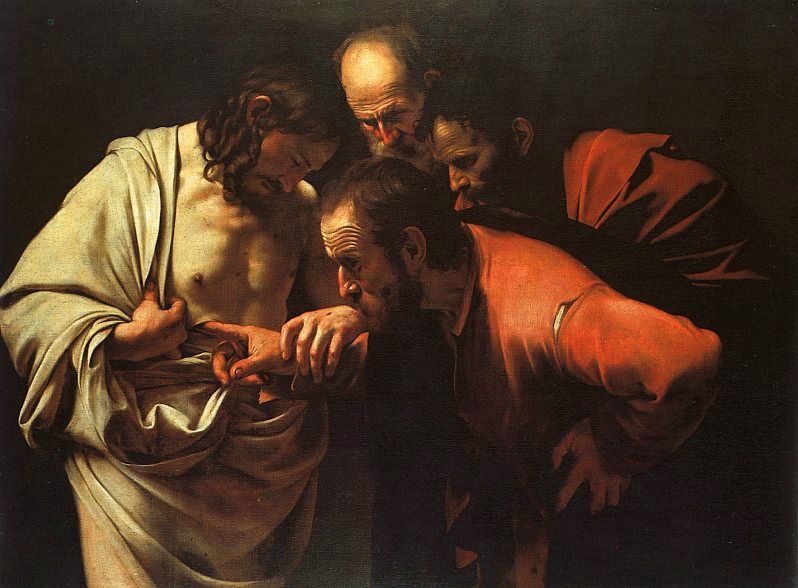
 Holy Week is upon us. God’s plan has been exacted.
 It’s very early, 5:30am to be precise. I’m writing this note from Cantrall, Illinois. Again, to be precise, I’m at Camp CILCA, which is just outside of Springfield.
 The season of Lent is a powerful time in the Church Year. Throughout its forty days, if there’s one thing in particular it draws out and defines with its penitential crispness, it’s the authenticity of human guilt.
