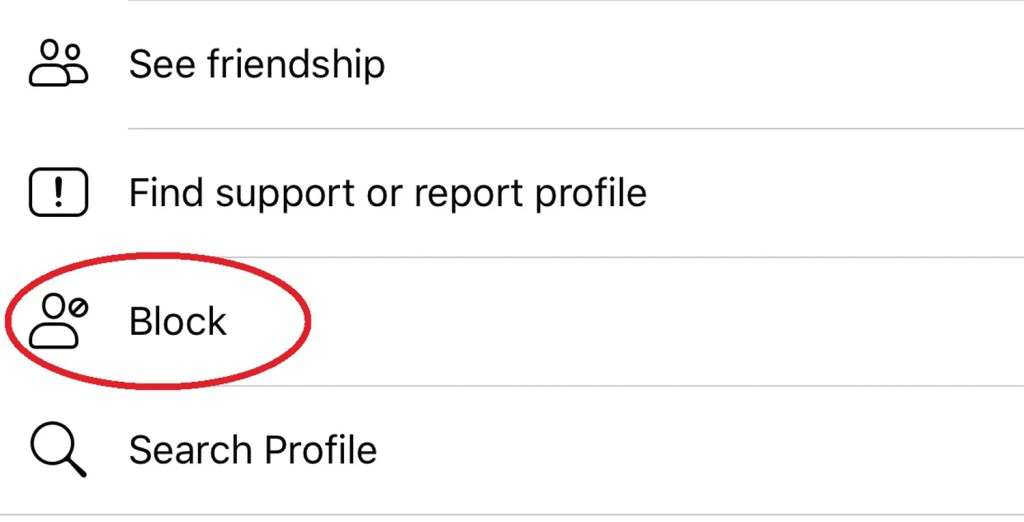
I try very hard not to block people. I really do. I can tolerate disagreement, argument, and even a fair amount of foolishness. But when someone shows up with a chip on his shoulder and a disposition aimed mainly at stirring the pot, and when he offers nothing that helps anyone understand the matter more deeply than before he arrived, such a visitor becomes tiresome. Even further, if a person continues to perpetuate the lies told about Charlie Kirk—the lies that helped make the hatred that got him killed seem permissible—that has become an absolute line for me. I have no obligation to keep handing a microphone to slanderers, no matter who they are. Again, I can tolerate disagreement. I can even put up with trolls for a little while. However, I am entirely uninterested in pretending that slandering my friend is conversation.
I’ve unfriended or blocked a bunch of folks in the last few days. Crazy stuff. I don’t know about you, but I used to do everything I could to avoid unfriending or blocking anyone. Admittedly, however, it has gotten much easier—and much more frequent. I suppose that’s because I’ve finally shared a drink with and listened to the “me” who’s willing to do it without hesitation. He convinced me that there are certain conversation characteristics that are sort of begging to be blocked.
Let me tell you what he told me.
He told me that if you come to a post to lecture rather than converse, there’s a good chance you’ll get blocked. If you speak as though you alone possess all wisdom and the rest of us are merely students in your classroom, you’re probably going to get blocked. If you twist words, assign motives, or argue with the person you’re imagining rather than the one who is actually speaking, expect to get blocked.
If you mistake mockery for wit or cruelty for truth-telling, assume right away you could get blocked. If you derail every conversation into the same tired arguments, no matter the conversation’s nuances, there’s a chance you’re going to get blocked. If you cannot disagree without showing contempt, you’ll probably get blocked. If it’s obvious that you did not read in completeness what was written before replying, speaking only for myself, you’re definitely a candidate for getting blocked. Skimmers are the worst.
The last thing he said made a lot of sense. He told me that if you believe that access to someone’s words entitles you to their time, their attention, pestering access through private messaging, or response after well-crafted response to every demand you fire at them, you’re all but pleading to get blocked.
Wow. That makes sense.
In the end, I told him that none of these behaviors should surprise either of us. I’ve acknowledged countless times that writing for public consumption is a risky business. The moment you put words out in the open, you invite not only conversation, but distortion, bad faith, and the peculiar breed of person who’s more than willing to treat others like lessers—or like a customer service desk.
But then he came right back at me with something else worth considering. He told me that when these things happen, conversation is no longer conversation. It becomes noise. It becomes more about posturing and endless circular fights that produce nothing but irritation for the one posting, along with the good-faith readers who reply.
Again, wow. He’s right.
With that, I appreciate what the other “me” told me. I think he’s onto something here, and I intend to take it to heart, both in the giving and receiving of online content.