Unknown's avatar

About AngelsPortion

REVEREND CHRISTOPHER I. THOMA is a husband, father, and Lutheran pastor in Michigan. He is allergic to sharks, has a 4th-degree black belt in Monopoly, is bored by scary movies, and drives a Jeep Wrangler he pretends is the Millennium Falcon.

Live and Let Live?

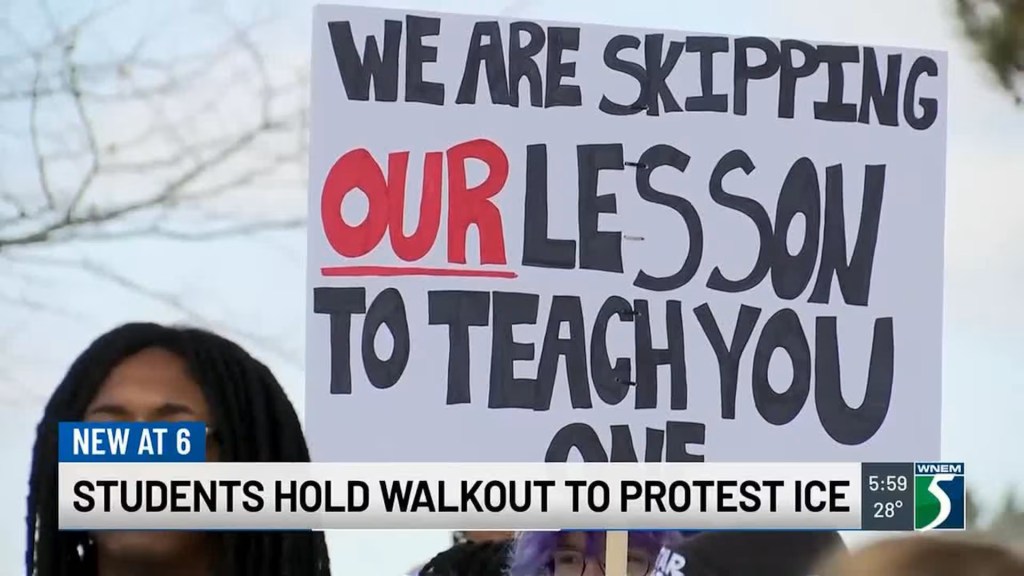
Unsurprisingly, what I wrote about last Sunday played out similarly this past week when protestors stormed a church in Minneapolis, demanding that the Christians within embrace their obnoxious crusade against ICE. And when they didn’t, they were shouted down and shamed. Like rainbow armbands in sports—an ideological symbol being imposed in this or that form, all with the threat of punishment if refused—the demands placed on the Christians in that church followed the exact same pattern.

I hope New York’s new mayor, Zohran Mamdani, is watching this stuff. These two scenarios—the athletes refusing to comply and the Christians in Minneapolis doing the same—while different on the surface, reveal the same underlying dynamic. The shunning common to both betrays collectivism’s innermost spirit. Mamdani did say he intended to replace the frigidity of rugged individualism with the warmth of collectivism. Well, we’re watching historic Marxist collectivism being paraded in real time.

Essentially, forcing anyone under threat of punishment to submit to ideologies and their symbols is a distinctly Marxist, and therefore a readily socialist, impulse. Mamdani is an avowed socialist. He believes that the “warmth of collectivism” is the subordination of the individual conscience to the demands of the collective, and it must be enforced not by persuasion but by institutional pressure. Marxist warmth, in practice, always comes with enforcement, because collectivism only works when dissent is treated as a problem to be punished.

Taking this a step further, what I’m really thinking about right now is the symbols themselves. What’s the harm in wearing a rainbow patch on your jersey? What’s the trouble with a church’s pastor raising a fist alongside protestors to stem trouble? What’s the trouble with driving a company car with a BLM or an ICE-out sticker on its bumper?

Well, for starters, the first thing I’ll say is that every movement in history revealed its true ambitions not first through laws, but through symbols. In that sense, symbols are rarely neutral. You know as well as I do that they train the eye and discipline the conscience. Symbols have a way of testing allegiance long before force is ever required. That’s why armbands, flags, and gestures matter, even before they are compulsory. They are never just a thing.

Since I’ve already sort of wandered near to what I was concerned about last Sunday, you’ll remember that rainbow armbands, jerseys, and other such things have been forced into soccer, basketball, volleyball, football, and so many other sports. When I say forced, I mean it. They’re always framed as harmless signs of “tolerance.” And yet, the countless stories of athlete after athlete being shunned or punished for refusing to wear one expose the deeper truth. Tolerance, by definition, allows dissent. But what we’ve witnessed is enforcement against dissent. Participation is no longer optional. If a person refuses, he or she becomes an example of moral failure and must be shamed accordingly. The only way forward for such a reprobate is total annihilation in the form of cancellation.

History teaches us to pay attention when ideological movements do this—especially when they migrate from persuasion to enforced uniformity. The comparison to past regimes is uncomfortable, but symbols worn on the arm (or, thinking back to COVID, maybe on one’s face) have long functioned as tools of social sorting. Everyone is identifiable. The ones wearing the symbols of compliance are safe. The ones without it are suspect. Again, the purpose is not merely expression but visibility.

But I think it gets even worse still.

I’ve long thought that the LGBTQ, Inc. movement’s use of a flag was bad news. The same goes for the BLM flag. This is true because flags never really originated as tools of personal expression. They were militaristic. They began as tribal identifiers—markers of people, allegiance, and territorial claim. They were carried by nations and armies not just to establish sovereignty, but often to impose that sovereignty’s will on others. Historically, when a flag was raised where another flag once flew, it signaled conquest—one culture replacing another, one authority displacing a rival. When I saw that Minnesota had changed its state flag, making it eerily similar to Somalia’s flag a few years ago, I wondered about displacement. When I started to hear about the billions in fraud orchestrated by the Somali community, to which the Minnesota government largely turned a blind eye, the flag’s redesign made a little more sense. It was a quiet announcement of who’s now in charge in the state.

Of course, in the modern age, flags have been repurposed for everything from corporations to clubs, but that does not erase their original meaning. A flag still signals a collective identity that believes its vision and mission, good or bad, must be announced and then carried into the world, and maybe in ways that will assure it finds a footing as the governing one. Even General Motors would love to see its flag being flown at a Ford building.

But what if it suddenly became a cultural expectation that Ford must fly GM’s flag? That would be extremely telling.

When a group’s flag moves from voluntary display to institutional expectation—on school walls, corporate labels, in movie and TV scripts, on government buildings and athletic uniforms, or wherever and whatever—it stops functioning as a gesture of tolerance and becomes an advancing army’s sovereign demand for submission instead. I spoke in terms of war in last week’s note. Indeed, when what I described starts happening, you know a very real conflict is underway. It’s no longer a debate, but instead, warfare is underway, and territories are being taken. The occupying nation now marks its seized lands. In these territories, dissent can only be treated as resistance.

I think this is a crucial distinction often obscured in public debate. And so, again, I think one of the best forms of resistance is to refuse to display the LGBTQ Inc. flag, which more and more people are choosing to do, especially among the youth—most assuredly among young men. In one sense, I think that’s happening because common sense is making somewhat of a comeback. On the other hand, “Not the Bee,” the Babylon Bee’s source for non-satirical news, reported a study suggesting Americans are pretty much sick of the LGBTQ, Inc. agenda. America has grown tired of the stuff being shoved down our throats day in and day out. The study noted that most Americans seem to have realized it was never about “live and let live.” It was always about something more. One line in the article stood out. It said, “[Young people] have been told they are ‘bigots’ if they believe [unnatural sexual relations are not okay] … but even if they tried not to be ‘bigots,’ they were told they were bigots anyway…” Maybe another way to think of this is to say, as I already did, that common sense is making a comeback. Common sense knows that a person can affirm human dignity while also rejecting ideological compulsion. The former is humane. The latter is totalitarian and dehumanizing.

From another perspective, I should return to that “live and let live” thought. It sure seems most ideologies seeking dominance began by insisting they merely wanted to be left alone, when that’s not at all what they really wanted. The eventual enforcement of their imposed symbols made it clear.

And so, I suppose the question before us is no longer about tolerance and treating people with respect. The question is whether any movement, however well-intentioned it claims to be, has the right to force individuals and institutions to accept its ideology publicly. The Minneapolis church and the shunned athletes sure seem to suggest that this question is no longer theoretical but is already being answered in practice. The moment you are required to display allegiance before you’re allowed to belong, you are no longer living in a free society. You are living under occupation.

A Temporary Disruption, Not A Pattern

This weekend’s forecast is shaping up to be one for the record books. The temperatures are, right now, in the negatives, and we’ll remain in this state-sized walk-in freezer well into next week. That’s not an inviting thought. And some people wonder why I long for Florida. I was just joking with Jennifer about how the sky is an unobstructed blue today, adding that even the clouds have finally given up and gone south to the coast. The kind of cold we get here in Michigan makes a guy like me question every decision that requires opening the front door, let alone climbing into a car and driving just about anywhere.

That said, Our Savior Evangelical Lutheran Church in Hartland has never once in its 71 years canceled a scheduled worship service. In my 27 years in this place, I’ve seen some pretty dreadful weather, resulting in attendance challenges in worship. During the snowpocalypse back in 2014 (at least, I think that was the year), there were a few services with only four or five of us in a nave that seats 500. Still, the doors were open, the lights were on, the heat was cranked, and the pulpit, lectern, and altar were occupied. Indeed, where two or three are gathered, the Lord said.

You should know that the anti-cancelation precedent was set long before me. And to the credit of Pastor Pies senior and Pastor Pies junior, it came well before heated garages, remote starters, and online everything. When I was called as the congregation’s pastor, I committed to maintaining the standard. It is a good practice. Nothing will get in the way of worship, so long as I’m here. Not even protestors (wink-wink).

Of course, this instinct is far older than Our Savior in Hartland. For two thousand years, Christians somehow managed to fill houses of worship in every imaginable climate, condition, and challenge. That’s because God’s people gather in His house, just as He mandates. And so, by the power of the Holy Spirit at work for faith, the Christians first instinct isn’t to ask, “What’s the minimum requirement for faithfulness?” We want to go. And we’re bothered when we can’t.

With that in mind, it is entirely understandable that church members, for one reason or another, may not always be able to make it to worship. When it comes to what we’re enduring right now, for the elderly, if they have no one to help them through the wintry mess, it may mean risking a slip-and-fall. For families with young children, it may mean battling the latest seasonal illness rampaging through the house. For those who serve in the civil sphere, it may mean being on duty precisely when the rest of us are free to gather. These are all real situations, not excuses.

But once again, we should also be honest about the cultural air we breathe. We live in an age that trains people to look for reasons not to show up—reasons to stay home, opt out, postpone, or substitute convenience for commitment. What once required devoted sacrifice is now measured against the comforts we might lose if we go. Over time, this forms some really bad habits that feel justified, and maybe even, in some cases, virtuous. COVID was an example. People felt they were being godly by mandating barriers between God and His people, even suggesting that those who stayed home from worship were the better, more loving Christians. What nonsense.

Now, before I stray from my original thought this frigid Friday afternoon, just know that faithfulness remains possible, even when there are genuine challenges that can keep us away—and this is precisely why the earlier point matters. The real danger is not necessarily that people sometimes cannot come. It’s that, over time, they forget how to be Christians who are genuinely bothered when they can’t come. They learn to see attendance as negligible.

So, how do we fight this forgetfulness?

Well, I say, when you cannot be here, have a plan for being faithful right where you are. For the LCMS Lutherans reading this, that doesn’t necessarily require online streaming. If you have your hymnal, you have pretty much everything you need. For example, just grab your Lutheran Service Book, gather the family in the living room—sickos and all—and open up to page 219, the Office of Matins. If your child attends our school, then I can promise they already know the service by heart. Even the preschoolers can sing through it, leading the way. And what joy it will be! It is a wonderful service just oozing with God’s Word. And that’s the point—to be fed, to receive the Word, to pray, to give thanks to God for His abundant mercies. What’s more, if you’re not participating in online giving, you can still set aside this week’s offering and place it in the plate next week, along with next week’s offering. In every way possible, let the absence be exactly what it is: temporary. Let it be a momentary disruption, not a new pattern.

I guess what I’m saying is that faith, by its very nature, has a goal. It longs to be with Jesus more, not less. And so, when a legitimate reason keeps it away, it abides in God’s promises nonetheless, all the while longing to return to the place where Christ has elected to administer His gifts of forgiveness, life, and salvation through the verbal and visible Word—His wonderful Means of Grace!

I know it’s going to be really cold on Sunday. Still, I hope that if you’re going to venture out for anything this weekend, it’ll be to join your Christian family in worship.

A Strange But Obvious Imbalance

This past Thursday morning, since our school was closed due to the snow, leaving both the church and school offices vacant for most of the morning, I sat in my office and did a little reading. I found myself chewing on a few stories about professional athletes in various parts of the world who’ve refused to wear team-sponsored rainbow armbands, jerseys, and such before, during, or after competition. The articles mentioned situations going back to 2018. Some of the athletes named gave no particular reason for refusing. Others insisted that competition should be about the sport, not political ideologies. Several noted religious objections.

Interestingly, one hundred percent of the Christians who refused, no matter the country, were reprimanded by their teams and ultimately labeled as bigots by activist organizations. The Muslims who refused, however, experienced no such reaction. In particular, two relatively recent stories stood out.

Back in 2024, Sam Morsy, the captain of Ipswich Town, a professional soccer team in England, refused to wear a rainbow armband. He cited Islam’s prohibition. Team leadership supported his position. LGBTQ Inc. did not push back. In that same year, Noussair Mazraoui, a player for Manchester United, refused to wear a team jacket specifically designed to show support for the LGBTQ community. Like Morsy, he cited Islam’s prohibition. The club ultimately scrapped the jackets entirely, so no one on the team had to wear one. Again, the usual suspects were relatively quiet in reply.

I suppose the first thing I’m inclined to say to the athletes who refused to comply is, “Bravo.” I say this regardless of their reasons. What they did required courage, if only because they gambled their own futures based on principle. Still, the obvious remains. Why were the Muslims able to escape public shaming, and the Christians were not? How is it that the Muslim players suffered very little harm to their careers, while the Christian athletes took significant hits?

Interesting, isn’t it, because what unfolded in most cases seemed to be a selective application of moral pressure. If you were a Christian, you were attacked. If you were a Muslim, you were left alone.

I don’t know about you, but the disparity exposes something altogether troubling to me. What appears to be being enforced is not some sort of universal moral standard, but it’s more of a power calculus. Christian beliefs are manhandled. Muslim beliefs, by contrast, are probed with gentleness. I doubt it’s because of some newfound respect for religion. It’s because of something else entirely.

At a minimum, it’s the fear of being considered Islamophobic. At most, it’s risk management. It’s an unspoken acknowledgement of the potential for violent extremism. I can only imagine what would happen if a crowd of LGBTQ activists went screeching through one of the more balkanized Muslim neighborhoods in London, calling out the religious community as shameful and unloving. You can get away with such things in Christian communities. But that’s because Christians don’t have a history of driving trucks through gatherings or blowing themselves up in the middle of crowds. And so, to demonize Christian athletes for their religious apprehensions but not the Muslim athletes has an air of risk management.

The irony in all of this, of course, is that such selective outrage undermines the very claims of diversity and tolerance and acceptance and fairness and inclusion and all the other buzz words that LGBTQ Inc. claims it desires. And yet, if conscience is only respected when it belongs to some and not others, then the movement isn’t being honest about its real agenda.

What all of this suggests—uncomfortably, but plainly—is that Christianity itself is the real target. But why? Because, in the end, as my friend Charlie Kirk so often insisted, the issue is not necessarily cultural or political but spiritual. In principle, there’s no need for LGBTQ Inc. to attack Islam. The enemy of my enemy is my friend. Seen through that lens, the pattern starts to make a little more sense.

In any war, effort is always concentrated where the real enemy exists. You don’t waste resources battering positions that want the same things you do. You certainly don’t provoke like-minded forces that are stronger than you for fear they might fire back. You focus instead on the fronts that can open into the lands you want to conquer. Christianity occupies that space.

That’s why Christian conviction draws the real fire. It really is the last major moral framework in the West that openly challenges the reigning cultural orthodoxy while refusing to play by its rules of power and intimidation. And perhaps what makes it so appetizing is that Christianity has no doctrine that encourages or glorifies violence, insisting that by killing others, the divine is pleased enough to reward the killer.

That said, violence is sometimes thrust upon Christians. When it is, we have every right to self-defense, which could lead to a persecutor’s messy end. Still, we do not seek it out. We do not believe God rewards us when we kill others. We live as Saint Paul insisted: “If possible, so far as it depends on you, live peaceably with all” (Romans 12:18). Knowing this about us marks us as relatively low risk but potentially high reward. And so, from there, the assumption is that once the Christian front collapses, the rest of the cultural terrain will fall into line on its own. Beyond that, what replaces Christianity is almost beside the point. Who cares, so long as Christ and His followers are crushed. That’s a spiritual agenda, more so than anything else.

But here’s the thing. The Lord wondered rhetorically, “When the Son of Man returns, will He find faith on the earth?” (Luke 18:8). And yet, even as the Church might not grow but shrink, Christ promised that the Gospel would never be conquered, and the gates of hell would never prevail against the Church (Matthew 16:18). Christianity will stand to the End of Days. Those promises reframe everything. They remind us that the pressures being applied right now are by no means new, nor are they unexpected. The Bible has not hidden from believers that faithfulness would be costly, that allegiance to Christ would eventually put us at odds with whatever spirit happens to rule the present age. That said, what is new is the packaging. Right now, it seems the ruling spirit looks like activists jackbooting to the tune of tolerance and inclusion while finding every conceivable way to justify Christian exclusion and moral coercion.

Nevertheless, whatever the persecution—regardless of its form or the generation in which it’s being exacted—none of it changes the Christian trajectory. The Christian response is not panic or retreat. It’s certainly not bitterness or rage. It’s courage—quiet, steady, and unyielding courage—rooted in the confidence that Christ will have the last word, whether the persecuting crowd approves of that word or not.

Faithfulness has never meant safety. But it has always meant trust. Empowered by the Holy Spirit for such trust, we can go into any challenge with the otherworldly capability to confess Christ clearly and without hatred. What’s more, we can do this without fear because we know to whom we belong, and that He is worth the cost—or as the sign in front of our church here in Hartland reads at this very moment: “Christ is worth more than what you fear losing because of Him.”

Let Life Sound Like Life

I did something unusual on the drive to my office this morning. After a minute or two of familiar music, I turned it off and drove the remaining twenty-three minutes in silence. Not necessarily quiet, but silence.

Actually, my actions may not have been entirely accidental. Yesterday, two things happened. First, a friend wrote a post about leaving social media. It made perfect sense to me because I have the same feelings fairly regularly. Second, as I always do, I led my congregation’s monthly Ladies Guild Bible study group here at Our Savior. It’s a fantastic group of ladies who are devoted to Christ and His Word. The topic of the study was peace—what it is, what it isn’t, and how, from a Christian perspective, it has little if anything to do with our circumstances. Admittedly, the study’s conversations stayed with me, too. And so, here’s what I mean.

I drive a black two-door Jeep Wrangler. I’ve driven several Wranglers in my lifetime. The one I have now has a hard top. It’s slightly lifted by about two inches. The tires are also a bit larger than stock. Anyone who’s driven a Jeep Wrangler knows they’re not necessarily serene vehicles. Put a soft top on it, which I’ve owned before, and “not necessarily serene” becomes a massive understatement. They become wind tunnels. Maybe the newer models aren’t so bad. But the ones I’ve known were never quiet. Even with a hard top, wind slips through where it can. The road hums. Things creak. At seventy miles an hour—at least that’s the pace I’m going to admit—the whole thing speaks in resonance and vibrations.

And yet, for one reason or another, this morning’s ride was rather peaceful by comparison to most.

Usually, all my Wrangler’s sounds are buried beneath something else—music, podcasts, and news clips from various sources. Apparently, I’m inclined to drown out the natural sound every day, and to do so as a matter of habit. But not this morning. Today was wind, asphalt, engine, motion, a Buick in the passing lane slowing everyone else’s pace, a truck hauling who knows what to who knows where, the rhythm of rain (that would eventually become snow) tapping against the windshield and being sent away for a few seconds by the wipers before returning. All of this was happening.

I don’t want to get too philosophical here. However, there is a lesson to be learned. There’s a lesson in everything, if only we’re willing to consider the possibility.

Concerning my morning drive, I wondered how much of life we miss because we’re always piping something else into it. We insulate ourselves from the ordinary textures of being alive. I get why we do it. Real life isn’t polished, and perhaps worse, it doesn’t flatter us. In that sense, the real world is noisy in ways we’d never willingly choose. I mean, who wants a life that rattles and hums, whether literally or figuratively? And so, for one reason or another, we do what we can to cover it up, choosing instead to curate our surroundings. I listen to music and such while driving to pass the time. But is passing the time always best? Well, when someone or something else is thinking for me, maybe not. But regardless of the reason, I suppose one of my concerns is that, when we pipe so much extra stuff into our lives, we risk losing our bearings. In other words, we risk forgetting where we are, what we’re supposed to be doing, and maybe even who we’re with because we’re always somewhere else listening to that somewhere else’s noise.

Does that make sense? Maybe not. Again, I don’t want to be too philosophical. In the end, I’ll simply say that sometimes it’s good to turn things off and unplug—not because the anticipated silence will be actual quiet, but because it’ll be an opportunity to let life sound like life. And by the way, regardless of how some might ultimately define peace, only Christians know what peace truly is when life is making a racket. But again, even in a superficial, everyday sense, even mortal peace doesn’t always come from hearing what we prefer. Sometimes it comes from hearing what’s been there all along. I suppose a Jeep Wrangler, absent all artificial sound, traveling noisily down US23, is sometimes just the place to learn that lesson.

The Author Always Knows

I’m guessing a teacher or professor can assign a book and ask questions about it in class or on a test to determine whether students actually read the material. Unfortunately, a teacher can do this and still get duped because students often learn to answer in generalities, maybe even formulating summaries based on context clues from the surrounding class discussion. I know students do this not only because I’m a teacher but also because I’ve done it as a student.

But imagine if the book’s author stepped into the room and started asking the questions. I can promise you he wouldn’t be so easily duped.

By contrast, the author knows the inner logic of the work better than anyone else—the themes, the turns of thought, the intentional elements, the moments that simply cannot be paraphrased because they require precise items from the characters’ lives and details from the story’s landscape. The teacher might have a grasp of it. But the author created and knows it. It is of and from him.

With that in mind, and as I read reviews and participate in interviews, I must confess that an author always knows when an interviewer or reviewer has actually read the book. In a sense, the author is not necessarily looking for information, but rather a spirit of encounter—of an immersion in the world he has created.

And so again, what inevitably emerges from a review or interview reveals whether someone has inhabited the text, absorbing what’s there (even if it isn’t entirely understood), or has merely skimmed its surface. Unfortunately, both possibilities occur in the world of books. Literary inhabitants and skimmers labor side by side to detail a book’s good or bad qualities for others.

So far, the reviews for “Ashes to Ashes” have all been complimentary. I’m glad for that. Still, I should add that not all have come from genuine encounters. Some are the work of skimmers. How do I know? Because the author always knows.

Take Care You Aren’t the Bad Guy

I am under no obligation to pretend Renee Good was morally virtuous. By all accounts, she lived in ways entirely contrary to what I believe actually is virtuous. I also get the sense that she and her “wife” delighted in provocation, which is why they said and did the things they did in the place they were. As such, I think such behavior played a role in the dreadful situation our nation is currently enduring. But even so, as a human being—as a Christian—regardless of any disagreements I might’ve had with Good had I known her personally, I would never want or cheer for her death. Why? Because Christians do not traffic in such things. We pursue life—even for those we believe are squandering it, even for those we don’t know, even for those with whom we disagree.

Indeed, what happened is terrible. That said, if you’re glad she died, if your first thought was, “Good riddance,” or perhaps more, you’re rooting for other protestors to die, then you are missing the mark entirely, and you’re playing right into the hands of those who actually do want things to get worse. What’s more, you’re pushing the ideological continents further apart, and you’re giving those on the other shore a very good reason to point the finger and say, “See! This is what your convictions produce!”

Stand against what you will. Side with whomever. But at least do so with integrity. Repent and resist the temptation to be glad about someone else’s harm (Matthew 5:44). It fosters devilry, brings only despair, and is one sure way to mark you as the bad guy, even if your position is the better one.

Christian Rage?

I’m going to let you in on a little secret, if only because I feel like writing about it. In short, I’ve had a few interesting conversations about my new novel, Ashes To Ashes, with some folks in Hollywood. But that’s not necessarily the interesting part. What stood out in those conversations is that, after reading the book, they all reached back to me with varying versions of the same conclusion. Essentially, they’ve determined that the novel fits the time. In other words, it fits the national zeitgeist, tapping into something raw and unresolved in the public soul.

What they mean is that people are angry.

By angry, they don’t mean the performative kind of anger that burns hot on social media and then disappears by the next news cycle. They mean the deeper kind—the kind that settles into the chest when dreadful things keep happening over and over again at the highest levels, and yet, no one ever seems to get arrested or brought to justice.

I say this as I consider the obvious examples. For starters, the State of Minnesota is riddled with as much as nine billion dollars in fraud, nearly all of it played out among its Somali community. And lest anyone seem racist or anti-immigrant, no one appears to be getting into much trouble for it—at least, not the actual orchestrators. Or consider the Epstein files. There’ve been years of whispers, sealed documents, but also unsealed documents with redactions that hide 99% of the content—all of this leading to dead ends and a gazillion unanswered questions. Everyone knows something happened. Everyone knows there’s a list somewhere. Dark-intentioned people who use other people always maintain the upper hand. They keep lists. They protect audio and video files. We’ve learned that, especially within the last few years, relative to the release of certain CIA files. However, in this case, nothing has happened. There’s likely some really big names on these lists and in these videos. And yet, no one has paid for their crimes. In the end, transparency and accountability remain entirely elusive.

If you’ve read Ashes to Ashes, then you’ll know that frustration with injustice is an element in the topsoil from which it emerges, which is why the folks out in Hollywood responded as they did. The main character, Reverend Daniel Michaels, finds himself in a dreadful situation, ultimately owning some significant evidence. Unsure of whom to trust, when he scans his immediate horizon, he discovers people and organizations that appear immune to consequences. He also learns the cost of inaction paid by ordinary people—young girls being abused and then traded, or simply moved and slaughtered, like cattle. And while ill-willed insiders so easily use the system to their benefit, he steps into the fray and starts taking names. And it gets messy. Very messy.

Now, please understand, that’s not an endorsement of vigilantism. I’m simply making the connection to the original comments while also acknowledging a reality. I had a conversation in my office this past Monday about the book. Essentially, I said that while we might not want to admit it, when justice feels theoretical, people start fantasizing about other ways of leveling the field. When wrongs are endlessly explained away, when excuse after excuse is given for why justice is so slow, anger begins looking for a body to inhabit.

Again, the Somali fraud in Minnesota and the Epstein files are prime examples of the zeitgeist’s growing conviction. They’re stories that land, not as once-in-a-while scandals, but as recurring symbols throughout America’s immediate history. Even worse, they reinforce a growing suspicion that there are two systems of justice—one for the elite, and one for everyone else. Christopher Wray and James Comey can demonstrably weaponize the justice system and get away with it. Hillary Clinton can have hundreds of thousands of classified documents on a private server, then provably bleach that server, and remain untouched. Someone like Hunter Biden can owe mountains in back taxes, purchase a gun while on drugs, even video-record his behaviors, and leave his proceedings with a relative slap on the wrist. And yet, if I were to make the slightest modification to my home without the proper permits, or make the tiniest mistake on my tax forms, I’d risk massive fines and, in some cases, maybe even time in jail.

It’s these inequities that, when left unchallenged or untreated, curdle into citizen rage. That rage is what Reverend Daniel Michaels embodies for a little less than four hundred pages. And because of this, as the character’s creator, hear me when I say that while he’s not the book’s villain, he’s also not a hero, even though you’re likely to discover yourself rooting for him. He simply isn’t clean. That makes him an anti-hero in the purest sense. In this case, he’s what happens when people stop believing that truth will surface on its own. He’s the product of a world where “wait and see” has turned into a permanent sentence—the only reply to chronic injustice.

And so, America’s current zeitgeist. But here’s the thing.

For Christians, we have a very important filter for discerning these things. For one, God’s Word never denies the reality of injustice. The Bible is brutally honest about corrupt judges, dishonest rulers, and systems that are weaponized against the powerless. But it is equally honest about the limits of human retribution. “Vengeance is mine,” the Lord says (Deuteronomy 32:35 and Romans 12:19)—not because injustice doesn’t deserve an answer, but because we are not created to carry that weight around without being deformed by it. Only God can bear it. In that sense, for an honest reader, Daniel Michaels serves as a mirror, not a model. He shows us what happens when trust collapses, and despair reaches up and out from its goop.

That said, the Christian answer to injustice will never be blind faith in broken systems, which seems to be what far too many in the Church prefer to believe. It’s also not some sort of monastic disengagement from society entirely, which is another preference for far too many in Christendom. Christians need to be in the game and playing it hard. But as we do, we remember what the scriptures reveal—that God is not confused or compromised or unaware. He does not lose files. He does not accept bribes. He does not forget victims. He does not need leaks or whistleblowers to know what’s going on in His world. Nothing He sees has redactions. Every hidden thing is already open and accessible to Him—not symbolically, but actually. Even better, as I like to mention on occasion, the divine lights will eventually come on for all of us, too. I’m not saying we’ll know everything about everything. I’m simply saying what the scriptures say—that the day is coming when all things hidden will be revealed.

In the meantime, what does our Lord require of us? I’ll let the Prophet Micah answer that one: “He has told you, O man, what is good; and what does the Lord require of you but to do justice, and to love kindness, and to walk humbly with your God” (Micah 6:8). In other words, we are not called to burn the world down in order to set it right. Instead, we are to be others-focused. We are to stand in the breach—telling the truth, protecting the vulnerable, refusing to excuse evil, all the while being humble enough to remember that God is the finisher, not us. We must trust that He will be God.

Of course, that trust does not deny that violence may occur in a fallen world (Ecclesiastes 3:8), nor that, in extreme circumstances, its use may be tragically necessary to restrain greater evil or defend the innocent (Genesis 9:6, Psalm 82:3-4, Romans 13:4). Scripture itself acknowledges this grim reality. But even then, violence is never something to be pursued eagerly or confused with righteousness itself (Matthew 26:52). It remains a last resort in a broken world, and, as best as possible, carried out soberly and with moral clarity, never forgetting a Christians accountability before God (Luke 14:31, Nehemiah 4:14).

In the end, justice will not be done because a character like Reverend Daniel Michaels—real or imagined—goes around taking names with his 1911 Colt. It will be done, ultimately, because Christ already knows the names of both the perpetrators and the victims, and He has promised not to allow injustice to be the last word in any circumstance.

I suppose, as Christians going forward into another relatively early week of a brand new year, perhaps the most countercultural resolution any of us can make is not louder outrage against this world’s evils. It’s not necessarily pointing out how that foolish girl who tried to run over the ICE agent and got shot and killed “had it coming to her.” It’s true, idiocy has consequences. Still, perhaps the better resolution is a sturdier trust behind the outrage—to actually know what we believe and why we might have a reason to get angry in the first place.

By the way, keep in mind that such faithfulness is rarely dramatic. In fact, it looks rather ordinary. It looks like ordinary obedience practiced consistently. It’s built by showing up to church even when we’re tired. It’s sitting beside others in study instead of alone at home on our screens. It’s praying when we’d rather vent on social media. It means giving, serving, confessing, forgiving, and staying rooted in Christ when it would be so much easier to just let oneself drift in the cultural current of “That person has it coming and I’m going to get him for what he’s done.”

None of the things I’ve mentioned are grand gestures, but they are formative. If anything, they’re more than capable of recreating a person’s habitus, which is, by definition, “the way a person perceives and reacts to the world.” It’s what I mean when I talk about seeing the world through the lens of the Gospel. Indeed, a sturdier devotional life—one that trains itself to see through the person and work of Jesus Christ—is one that has little room for the perpetual unrest stoked by vengeful rage. I’m not saying rage won’t be there sometimes. Of course it will. We’re all sinners, and sinners are prone to dreadfulness. But it will be less likely. And that’s a good thing.

And so, again, what better way to continue into a new year than by acknowledging that the stubborn work of Christian faithfulness is an exceptional path. And of course, we pursue that path knowing that in Christ, we always have hope. Only in Him will we find the strength to endure through and into the Day of Days when the divine lights come on, and everything is set right by the One who saw, knew, and was actively working all along.

Who knows. Maybe 2026 is the year the Lord returns. And so, the Church cries out, “Come quickly, Lord Jesus” (Revelation 22:20).

It’s Not That Complicated

There are appointments you do not miss. You do not “get around to” a court appointment. If you’ve been summoned, you do not elect to stay home because you stayed up too late the night before or because something else suddenly came up that you decided would be more enjoyable.

You go. You show up.

The same is true for so many other things in life. I don’t have cancer. But if I did, I couldn’t imagine just not showing up to my scheduled treatments. I mean, are there any cancer patients out there reading this who’d honestly skip a cancer treatment because it was maybe scheduled too early in the morning, or because it was further away than you’d prefer to drive, or because you felt like doing something else instead, like maybe fishing or gardening or whatever? Of all the people in the world, I’m sure cancer patients epitomize exhaustion, especially during treatment. And yet, none would shrug and say, “Something else came up,” or “I’m just too tired,” as though what they were facing, and the appointments in place to deal with it, were no big deal.

We show up when something is important to us—when we believe we need to be there.

You know where I’m going with this, don’t you?

Before I do, let me first say to those who’d say outright they don’t need to be in church because they can be “spiritual” without it, feel free to sit this one out. I’m not really talking to you. You’ve already made clear you will not allow the Bible to serve as an external authority to govern you. You already live by a standard of picking and choosing based on preference. And so, you’ll do “spiritual” things when you prefer, maybe when it fits your inner sense of meaning, and you won’t when it doesn’t. By the way, I don’t mean to commend you, but I suppose I’m willing to applaud your consistency at least. You are reliable in that sense.

I should make another quick clarification. For example, we just offered an Epiphany service here at Our Savior on Tuesday, January 6. Forty people attended. That’s only about 15% of what’s typical of our regularly scheduled Sunday morning service attendance. I’m not writing to the faithful Christians in our midst who could not attend our Epiphany service. I say this because even Luther acknowledged in his explanation of the Third Commandment in the Large Catechism that “there should be worship daily; however, since this is more than the common people can do, at least one day in the week must be set apart for it.” In other words, I’m not speaking to those who simply cannot attend the special services for life’s various reasons.

But what I am writing here is addressed to those who deliberately stake a public claim in Christianity and yet see no reason to attend worship with any regularity.

In short, if you confess that Christ is Lord, then I’m assuming you believe His Word. I’m also assuming you realize that the Bible explicitly commands faithfulness in worship (Hebrews 10:24-25, Acts 2:42, and 1 Corinthians 14:26). What’s more, it is thoroughly assumed throughout the rest of the scriptures. There’s no question it was an Old Testament pattern. God expected His people to assemble (Leviticus 23:3, Deuteronomy 16:16, Psalm 122:1, Psalm 84:10, Nehemiah 8:1–3, 16, and others). And for the record, Jesus maintained the pattern (Luke 4:16, Matthew 18:20; I suppose it can be assumed also in Matthew 5:23-24 and John 4:23-24). It was also maintained by the newly emerging Church (Acts 20:7, Acts 13:44, and others).

Beyond even these things, if a reader is being honest, Saint Paul more than betrays the standard of regularly scheduled worship in 1 Corinthians 11:18 when he writes “when you come together as a church” (συνερχομένων ὑμῶν ἐν ἐκκλησίᾳ). First of all, not if but when. Next, the first word in that phrase—συνερχομένων —has in its root the sense of traveling to a place to be together. Where is this traveling bunch going? The destination is ἐκκλησίᾳ—church. But couldn’t this just mean that when they are traveling together to Cedar Point in Ohio, even then, they are the Church, that is, the body of Christ in the formal sense? Of course. All believers in Christ, at all times and in all places, comprise the Church. But that’s not the point here. Paul is already talking about things that happen in worship, namely, the administration of the Lord’s Supper. In this context, Paul is casually indicating that normal Christians (so long as they are not physically incapable because they are sick, elderly, in prison, or something of that sort) travel to a place to occupy it—to be in it. The preposition ἐν does not mean “as.” It means “in.” In other words, “as” the Church, they travel to be together “in” a church.

Add to this the other reasons why Paul would encourage the Church to gather. Mutual edification is one that seems rather important to him (Ephesians 4:15-16, Colossians 3:16, Romans 12:4-5, and others). But even beyond this, God’s Word does not hide the warning of what can happen when we drift from faithful attendance in worship. Our hearts are more easily hardened (Hebrews 3:12-13), spiritual decline occurs (Judges 21:25), and we become more vulnerable to sin and Satan’s snares (Ecclesiastes 4:9-12).

For the Lutherans reading my words, consider your creedal and confessional heritage. Again, Luther reminds us in his explanation of the Third Commandment in the Large Catechism that “God insists upon a strict observance of [regular Sabbath worship] and will punish all who despise his Word and refuse to hear and learn it, especially at the times appointed.”

For those less familiar with Luther and more inclined toward others in mainstream evangelicalism, consider Billy Graham, who said so very plainly that “if you are a Christian, you should go to church.” And why? He continued that a Christian “has no right to neglect the church. It is God’s plan for the nurture and strengthening of His people.” And in another place, Graham wrote, “The church is the place where believers are fed, encouraged, and strengthened to face the world.”

Now, if Billy Graham isn’t enough for you, consider others from across the Christian spectrum—folks like John MacArthur, who said, “If a [church member] shows prolonged negligence in gathering with God’s people… how can he say he loves God?” Or maybe even someone like Dwight Moody, who insisted that “Church attendance is as vital to a disciple as a transfusion of rich, healthy blood to a sick man.” Or Paul Washer, who preached, “A believer who refuses the local church is a contradiction.” Or John Piper, who maintained, “The corporate gathering of believers is the single most important event in the life of the Church.”

Apart from Luther, I’m not in strict theological unity with any of the above preachers I just mentioned. And yet, it sure seems that faithfulness in worship is one thing that has not slipped through any of our theological divides. That’s because it’s a pretty straightforward standard that can only be set aside deliberately.

In the end, it’s really not that complicated. If Christ is real, and He is truly preeminent in your life, then none of the above proofs could ever be suggestions. Instead, they are divine appointments. Sure, we may not feel like keeping the appointments. Still, we know they’re important—and they’re good for us—and so, we show up. And so, our deliberate disregard or neglect of these things could never be interpreted as neutral behavior. Instead, it reveals something else altogether, and it does so rather crisply. Compared to the other practical examples I shared, it shows that, functionally, Christ is less significant to you. It reveals that forgiveness of sins, life, and salvation are nice, but not as nice as, perhaps, one’s bed after a long Saturday night of this and that with friends.

As a pastor, the saddest part here is that deliberate disregard for worship is a public demonstration of unbelief. Maybe not necessarily unbelief in the sense of open denial, but, at a minimum, it is unbelief expressed in practice. Both are public. The first is at least honest. The second is simply hypocritical. It is an observable contradiction, sort of like Washer pointed out. By staking a claim in Christianity, one assumes devotion to God and His body, the Church. And yet, there is no desire to show up as part of that body. So, what gives?

Well, belief orders life. What we choose and what we neglect reveal what we do and do not truly believe or consider valuable. To absent oneself so carelessly can be nothing less than to declare that God means very little to you by comparison to all the other appointments in life you’d never in a million years consider blowing off.

Again, no one would say, “I believe my cancer treatments are crucial, but I’ll only go when it feels convenient.” No one would ever say, “Your honor, I respect you and all, but I have some friends coming over this morning that I haven’t seen in a long time, so I’ll have to catch up on this court case a different time.” No one would ever call a beloved daughter right before her wedding and say, “I know it’s important for me to be there, but I haven’t been to my cabin up north in a while, so I’m not going to be able to make it.”

Do these things, and see what happens. Actually, I can just tell you what will happen. There will be trouble.

Shunning

I want to begin this first Sunday in the new year by telling you a story that, on its surface, might seem somewhat trivial. It’s the tale of an awkward social exchange. I only share it because, first, it’s a new year, and second, after spending a month or so simmering with it, I realize that what happened reveals something far more serious about the spirit of our age than I first imagined—and the realization is ripe for New Year’s resolutions.

About a month and a half ago, Jennifer and I attended a small local event together. As we walked into the room, I noticed two former members of Our Savior already seated a few rows from where we’d entered. For clarity, they’re not “former” because of a personal conflict with another member in the church, or because I offended them by skipping over them at the communion rail by mistake. They left because they were offended by the kind of message you’re reading right now—the same kind I’ve been writing and sharing every Sunday since 2014. Within each, my cultural and theological conservatism, along with the moral convictions it produces, is laid bare without apology. Some people appreciate the messages. Some don’t.

As I said already, it was a small event. Therefore, the space was relatively empty, leaving no ambiguity about what followed. We saw one another clearly. I waved, smiled, and said hello. They turned away. Attempting ordinary human decency, I called out a brief question, nothing cumbersome, just the sort of small talk people use to acknowledge one another’s presence. One did respond with a relatively disinterested gesture, but he did so without looking at me. That was all. No eye contact. No further acknowledgment of my presence as a fellow human being.

The very next week, the same scenario repeated itself, almost theatrically so. This time, I was alone. I entered the room through the same door. The same couple came in immediately behind me. I greeted them again. This time, there wasn’t even an awkward acknowledgment. They simply ignored me. Moments later, as a handful of couples filed in and found seats beside them, I watched and listened as they warmly greeted others—smiling and calling out hellos to people by name—leaving me to feel the sting of their dismissal and the sense that, for them, I did not even exist.

Now, before we rush to psychologize motives or nurse grievances, let me at least explain that what follows is not about wounded pride. I already know I’m despised by plenty. It goes with the pastoral territory. And unfortunately, I’m used to it. That means I can do what I do without coming undone when someone fails to be polite. Funny thing—Jennifer and I just went out to lunch together last week and we talked a little about the flak I catch for things I write and share publicly. She is perpetually amazed that I continue to subject myself to the inevitable scorn. From my perspective, as a Christian, I am called to endure far worse than social coldness. I mean, what I experience is nothing like what’s happening to Christians in Nigeria on a daily basis. Countless are being killed for their confession of Christ. And so, it’s easy enough for me to write and share a personal observation or cultural critique—and maybe why they matter, especially among Christians.

This morning, I’m examining something I’m pretty sure most folks have experienced. Essentially, it was the cold and corrosive behavior of shunning.

I suppose, in a clinical sense, shunning means treating someone as if they are unworthy of basic acknowledgment, not necessarily because they have done harm, but because they believe differently from you. It’s a way of saying, “You’re beyond the borders of my tribe, and therefore, are not owed my kindness.”

I dare say that, in our current cultural moment, shunning has become a favored tool for pretty much everyone. I catch myself doing it on occasion, too. For the most part, I think many do it to avoid confrontation. I get why that might happen. And maybe that was true in this case. Although my kindly greetings on both occasions should have implied friendliness rather than contention, which suggests another way people wield it. They shun, not to avoid confrontation, not to correct wrongdoing or pursue truth, but to punish dissent and signal some sort of superiority in the relationship. And, of course, it conveniently shields them from the burden of actual engagement, which could lead to reconciliation and peace. If you have no interest in these, then shunning is essential.

Knowing these things, here’s where genuine Christian analysis should probably step in.

I’d say the first step in the analysis is to deal with our excuses. In other words, I know there will be some who immediately jump to texts like Ephesians 5:11-14. Saint Paul tells the Church not to “participate in the unfruitful works of darkness,” but instead to “expose them” (Ephesians 5:11-14). Perhaps assuming the reader already knows that Jesus called His people “light” in this dark world (Matthew 5:14), Paul goes on to say that darkness is exposed by light (v. 13). With this in our theological pockets, Paul’s point is not complicated. He doesn’t want God’s people associating (συγκοινωνεῖτε—binding to something) with sin in ways that condone or accommodate it. In other words, a Christian would not want to attend a gay relative’s wedding lest they be considered supportive of such things.

Now, for those who remain desperate to write off someone with whom they disagree, try to notice what Paul did not say. He did not say to act as though anyone with whom a Christian disagrees does not exist. He did not say to write that relative out of your life completely. Instead, he told the Christians to do what light does. It shines in the darkness. Darkness cannot be overcome by a light that withdraws to another room. If light is going to disperse darkness, it must be present to do what light does.

And so, I suppose the second step in the analysis is to admit the extremes of this truth, which is that God’s Word is unambiguous about how we are to treat those who despise or oppose us. Jesus commands us to love our enemies, bless those who curse us, and pray for those who persecute us (Matthew 5:44). Saint Paul exhorts believers to live peaceably with all, so far as it depends on you (Romans 12:18). Even when church discipline is required—which is a rare and serious matter—it’s never enacted through petty contempt or silent scorn. It’s done openly, soberly, and with the goal of reconciliation and restoration (Matthew 18:15-17, Galatians 6:1, and 2 Thessalonians 3:14-15).

What I encountered was none of that. What I encountered was a posture that says, “Your very presence is a problem for me, and as such, your worth is negotiable.” That posture does not come from Christ. It stirs in sin’s darkness. Tragically, many Christians absorb this posture without realizing how thoroughly it contradicts the faith they profess.

I guess what I’m saying is that the Church and her Christians should know better. The Christian faith does not permit us to reduce people in this way. Certainly, at a minimum, it absolutely does not excuse discourtesy, let alone allow it to be demonstrated publicly so that it teaches the watching world something about Christianity. And what’s being taught exactly? That Christians believe some people are not worth basic human kindness.

But Christians do not believe that. The ones who do should check themselves carefully.

As usual, I’ve made New Year’s resolutions. I know some folks dog the idea. Well, whatever. I prefer to be more contemplative and deliberate with my life. Having just passed through 2026’s front door a few days ago, I find myself returning to moments like these, not with bitterness, but with resolve. Observing these things through the lens of the Gospel, as I prefer to do, they nudge me toward a more focused faithfulness. If the culture is growing colder, then I want to grow warmer. If silence is being used to wound, then I want my words and gestures to heal. Again, darkness is scattered by light, and Christians are children of that light (1 Thessalonians 5:5 and Ephesians 5:8).

Relative to the moments I shared with you, what does all of this mean specifically? Well, it means I am resolved to offer a friendly wave toward someone who’d much rather back over me with his or her car. I will continue to smile. I will continue to say hello. Not because it is easy. Not even because the kindness will be returned. But because Christians are not called to mirror the culture’s contempt. We are called to resist it. And sometimes, that resistance looks as small as refusing to pretend another human being doesn’t exist.

Now, for those who may be looking at me right now in their rearview mirror while revving their engines, know that even as my enemy, you mean something to me. And if there’s a chance we could be friends, I’m game to make it possible. Again, that’s one of my resolutions for the new year. I promise I’m going to be more deliberate in the effort.

New Year’s Day 2026

I wasn’t going to write and send anything out today. But then, here I am at my computer, tapping away. This morning’s worship service isn’t until 10:00 a.m., and so, apart from other preparations, I guess I do have some time. Besides, it felt wrong not to reach out and at least share something that might help with your first day of 2026.

I suppose I can start by telling you that the first words out of my mouth when I woke up this morning were a prayer of thanksgiving. I thanked the Lord for my family. I thanked the Lord for the congregation I serve. I thanked the Lord for all the blessings He has granted to me—both known and unknown in my past, present, and future. Then I got up, took a shower, got dressed, and headed out into the familiar but unpleasant Michigan tundra.

Waking up and praying is always a good way to start one’s day. But my first meal, that was something else. Despite my secret intentions for the new year, which is to try eating better, the first thing I consumed was a greasy hashbrown from McDonald’s at 5:55 a.m., followed later by my usual bowl of cereal here at my desk. Most mornings, a bowl of cereal in my office is part of my routine before I get started on anything else. But I don’t usually eat McDonald’s hashbrowns. However, I saw that the Hartland McDonald’s was open, so I stopped for coffee. The hashbrown sounded good. With that, I slid backward in my intentions before I even got started. So much for a perfect start. Well, we win some and lose some. Although anyone who thinks personal growth means instant consistency has never tried to live faithfully for more than a few hours at a time. Saint Paul understood this well when he spoke of the conflict within us—the desire to do what is good, set against the pull of the flesh that resists it (Romans 7:15-19).

And yet, Paul’s point isn’t perfection. It is a right knowledge combined with willful direction. It is choosing, again and again, to fight against the worst desires and to embrace the better ones. Paul writes that the flesh and the Spirit are opposed to one another. (Galatians 5:16-17). He doesn’t share this critical detail so we can excuse our failures. He wants us to be aware. Awareness allows for preparation and action. For starters, it grants that the Christian life is not the absence of temptation, but the daily, often quiet decision to walk by the Spirit rather than surrender to what comes most naturally. When, by the power of the Holy Spirit, we’re aware of the sinner/saint struggle, we can embrace prayer before complaint. We can lean toward obedience before personal comfort. We can know to do the better thing even when we don’t feel like doing anything at all. I suppose in one sense, sometimes faithfulness looks less like complete victory and more like simply showing up and trying, all by God’s grace, of course (Romans 8:1-4).

It is also worth remembering that even this willingness—to try, to lean in, to turn toward what’s better—it’s not something we manufacture. Again, it’s the Holy Spirit who creates willing hearts. And He does so by the Gospel (Philippians 2:13, Romans 10:17).

Now, you know what I’m going to say next, don’t you? Well, since you already know, I won’t dress it up.

Go to church. Being present where the Gospel gifts are given matters more than anything else at any time of any given year. God has promised to strengthen and sustain His people through His visible and verbal Word. That means if one really wants to step in and fight the flesh, being where Christ is preached and His gifts are administered should not be a second thought but a priority all year long (Hebrews 10:24-25).

So, if your year has already begun imperfectly, take heart. The only flawless beginning or ending we require is securely located in Jesus Christ, the crucified and risen Savior. By His person and work, the perfection that saves was accomplished. Through faith in Him, by the power of the Holy Spirit at work through the Gospel, our hearts are recrafted to trust Him, and thereby to receive the merits of His incredible work.

And then into the daily struggle we go. As we do, we remember that while the outer self may scrap against the sin-nature, God is at work within us, shaping endurance, humility, and hope right there in the middle of the fight (2 Corinthians 4:16). Indeed, “it is God who works in you, both to will and to work for his good pleasure” (Philippians 2:13).

With that, I encourage you not to become downhearted in the new year when you fall short. Remember, an all-important muscle in the struggle is repentance itself. Keep choosing the better things. Keep turning toward what’s good. And when you stumble, don’t quit. Repent, receive Christ’s forgiveness, and then rise and keep going, mindful of the divine encouragement, “Let us not grow weary of doing good, for in due season we will reap, if we do not give up” (Galatians 6:9).

I’m praying for you. I trust you’ll be praying for me, too.

A blessed New Year to you!