I Was Not Disappointed

It looks like I’m a little late to the party on this one. Really, I should be concerning myself with other things right now. I have a sizeable conference happening in six days. Still, I was asked by a friend last night if I was disappointed concerning the rapture date that came and went this past week.

No, I wasn’t disappointed. And here are my three reasons why.

First, I believe what the Bible teaches, which means I do not believe that God speaks to His people outside of His Word. He does not employ modern prophets. He does not give special revelations to anyone. If you say to me something like, “God spoke to me and told me I should be doing such and such,” regardless of my expression, you can pretty much guarantee I’m recoiling on the inside. Everything we need to know about God and His work to save us has already been revealed. And so, whenever someone stands up and claims otherwise, it’s by no means harmless zeal. It’s dangerous. And why? Because how do you know what’s being shared is from God and not prompted by Satan?

The Bible warns that Satan operates in this way (2 Corinthians 11:14). What’s more, he delights in twisting God’s Word and offering counterfeit revelations (Genesis 3:1). But he does more than that, too. Moses knew this. He gave a sobering caution in Deuteronomy 13:1–3, reminding Israel that even if a prophet or dreamer seems to perform signs, if his message leads you away from God’s Word, it is a test—and you are not to follow him. To seek or trust in “new words from God” beyond what has been given in Scripture is to invite deception (1 John 4:3). And Christ Himself makes this painfully clear: “Beware of false prophets, who come to you in sheep’s clothing but inwardly are ravenous wolves” (Matthew 7:15). They don’t simply mislead in minor matters. They lead people to embrace false christs. That’s why Jesus warns in the same passage that on the Last Day many will cry out, “Lord, Lord,” only to hear Him say, “I never knew you; depart from me” (Matthew 7:22–23). In other words, false claims of special revelation aren’t just theological mistakes. They’re devilish snares set with one goal in mind—to draw us away from the true Christ and His sure promises, and to leave us clinging to a counterfeit christ who cannot save.

My second reason is that rapture theology is very plainly a sham. How can I say this? Again, because I believe the Bible, and the doctrine of the rapture (as many seem to know it) isn’t in it. It was invented by the Anglo-Irish theologian, John Nelson Darby, a self-proclaimed prophet, in the 1830s, who claimed to receive special revelation from God apart from the Bible. He then proceeded to take three Bible texts (all three about the Lord’s second coming, two specifically referring to the resurrection of the dead on that day) and twisted them beyond meaning’s threshold. In other words, he built an entire theological movement on a false teaching—a doctrine that remains fantastically popular among Christians today. It’s not because they’re unintelligent or insincere. It’s because they earnestly long for Christ’s return. That desire is not wrong—it’s biblical (Philippians 3:20–21). But when it’s infused with falsehood, it can turn into despair, confusion, or even shipwrecked faith. That’s why it matters that we trust the Scriptures themselves, not speculation, for our hope.

And yet, speculation has been the lifeblood of rapture teaching for nearly two centuries. Its most famous modern champion was Tim LaHaye, author of the Left Behind series. Like the false teachers before him, when pressed for biblical proof, he pointed to Matthew 24:40–41, which reads, “Then two men will be in the field; one will be taken and one left. Two women will be grinding at the mill; one will be taken and one left.”

Sounds like a rapture, right? Well, hold on a second. Don’t forget about the recent outrage from folks concerned about others taking Charlie Kirk’s words out of context? The point here is that we should show the same concern for our Lord and His words. To do this means keeping Matthew 24:40-41 with what came before it in verses 37 through 39. So, together, the text reads:

“For as were the days of Noah, so will be the coming of the Son of Man. For as in those days before the flood, they were eating and drinking, marrying and giving in marriage, until the day when Noah entered the ark, and they were unaware until the flood came and swept them all away, so will be the coming of the Son of Man. Then two men will be in the field; one will be taken and one left. Two women will be grinding at the mill; one will be taken and one left.”

At the very center of the image the Lord presents is the phrase οὕτως ἔσται καὶ—“so it will be” or “it will also be the same.” With those words, Jesus draws a direct parallel between what happened in Noah’s day during the flood and the Lord’s return. The ones taken in Noah’s day were those swept away in judgment. The ones left behind were the faithful who were preserved from destruction. The grammar makes the meaning plain. According to the Lord’s imagery, being left behind in the field or at the mill when the final trumpet sounds is a good thing. They’re the inheritors of the new heaven and new earth. The ones taken are delivered into judgment.

The third reason for my lack of disappointment at a passing rapture date is, like the first and second, because I believe the Bible. Anyone who actually reads the Scriptures knows that predicting the Lord’s return is not only foolish, it’s flat-out ungodly. Our Lord Himself said in Matthew 24:36, “But concerning that day and hour no one knows, not even the angels of heaven, nor the Son, but the Father only.” That’s not vague. That’s not a maybe. That’s Jesus Christ—God in the flesh—saying plainly that not even He was given that information in His earthly ministry. If Christ Himself deferred to the Father on the timing of the end, what business does any man have trying to pin it to a calendar?

Saint Paul warned the Thessalonians about being unsettled or alarmed by people claiming special knowledge about the Lord’s return (2 Thessalonians 2:1–3). He told them not to be deceived, that it would happen according to God’s timing. Likewise, Saint Peter, in faithfulness to Jesus, all but repeats the Lord’s words in 2 Peter 3:10, saying that “the day of the Lord will come like a thief.” In other words, it will be sudden, unexpected, and impossible to chart out on a timeline, no matter how clever we think we are.

And yet, here we are again—people circling dates on calendars, skipping college exams, quitting their jobs, selling their cars, giving away their houses to total strangers, whipping up anxiety in others, and then acting surprised when the sun rises the very next morning.

The ridiculousness of it isn’t just in the failed prediction. It’s in the arrogant presumption that anyone can call themselves a modern prophet or apostle, stand onstage, and claim to share special revelations from the same God who already said He doesn’t do such things.

Hebrews 1:1-2 insists that God used to speak through prophets, but now He speaks to us by His Son. Saint John tells us plainly that the Son is the Word made flesh (John 1:14). To confess that God speaks through His Son is to confess that God speaks through His Word. And as Christ is the authority, so also His Word alone carries final authority for faith, life, and practice (Colossians 1:18).

That is why when the writer to the Hebrews declares that God has spoken by His Son, he means the Word. The Bible is it. Done. No more special revelations. Throughout history, Christendom has consistently maintained this. Chrysostom explained Hebrews 1 as emphasizing the finality of Christ’s voice, saying, “The prophets spoke in fragments, but the Son spoke all. Not one truth remained that was not spoken by the Son.” In Augustine’s On Christian Doctrine, he draws together John 1 and Hebrews 1, insisting that Christ, as the incarnate Word, is the measure of all revelation and, therefore, the Scriptures that testify of Him are sufficient for the Church. In his On the Incarnation, Athanasius does the same, labeling as heretical anyone seeking or believing any revelation apart from the Son, who he shows is the Word given in and through the Scriptures.

Still, people come along claiming to have received new revelations, even claiming to know something God has explicitly said no one knows.

The point is that all such claims will always be a denial of Scripture in the worst way, all beneath a rented tent and the illusion of special, namely, divine self-appointed authority. Anything that sets itself above (or even alongside) God’s Word as an authority is not merely in error but active rebellion against the very Christ who is the living Word and who alone has preeminence (again, Colossians 1:18).

I suppose I should wrap this up by saying that when it comes to genuine Christianity’s eschatological view, the Bible’s message is never to “calculate the day.” It’s “be ready every day.” Jesus said in the same breath in Matthew 24:42, “Therefore, stay awake, for you do not know on what day your Lord is coming.” Notice, not if He’s coming, but that He is—and that the certainty of what He has revealed in the Bible, not a false prediction, is where our comfort should be found resting.

So, no, I wasn’t disappointed. And when the modern prophets were once again proven false, I chuckled. Then I prayed for them and for the people who drank in their poisonous words. After that, I went right back to not being disappointed because my hope is not tethered to human speculation. My hope is tethered to Christ, the gift of His real presence and promises located in His verbal and visible Word (1 John 5:6-8; Hebrews 10:15; 2 Timothy 3:16; 1 Corinthians 2:13; John 14:26; 15:26–27; Hebrews 3:7). This is the One who said that when He comes, it will be in His time, in His way, and unmistakable to all. Until then, we’re not called to guess the day. We’re called to assume every day could be the one, while at the same time living faithfully in each He’s already given.

Not A Barrier. A Bridge.

As you may already know, I was asked to give the opening prayer and speak a few words at the rally for my friend Charlie Kirk on the steps of the Capitol in Lansing last Monday. Regardless of the resulting criticisms, both from some in my own ranks who believed I shouldn’t have participated and from those in the progressive media who broadcast my words, stirring a plethora of vulgar comments against me online, I considered it a privilege.

Indeed, it was a genuine honor to stand before thousands and speak of the hope we have in Christ (1 Peter 3:15), while at the same time urging all to take up truth’s torch and go forth with courage. This was something I was compelled to do—something I needed to do—if only because I owed it to Charlie.

And yet, there’s another debt I owed to Charlie. Not only was it the debt of friendship, but also the responsibility of being seen and accessible in public, as he always was. Charlie never hid from the people he knew needed him, and in his own way, he taught so many to step forward with the same openness, to stand where those who are searching might actually find them. I’ve tried to follow that same pattern of visibility, even when it sometimes comes with risks.

And yet, there is a memory from this past Monday that will stay with me forever.

Long before I stood atop the steps at the microphone, I learned my better destiny on Monday was down among the brokenhearted (Psalm 34:18). During the forty-plus minutes before the event started, a handful of men and women—not many, just a few, but still complete strangers to me—saw me near the Capitol steps and wanted to talk.

A few were heavy with grief. Some were burdened by anger. One was carrying both to extremes. But all wanted to know the “why” behind what happened to Charlie. They wanted answers. They wanted hope.

But here’s the thing. How did they know to talk to me? These people who approached me didn’t know me from the next person. They didn’t know my role in the event. Still, they felt somehow that they did know me, that they could step forward and ask to talk, to ask me for help with whatever burdens they were experiencing.

How was this possible? Before I answer that question, let me tell you what happened during those private interactions.

One-on-one, each told me his or her story, and I responded with God’s Word. I gave the Gospel. I reminded each that death does not get the final word, that Charlie’s faith was not in vain, and that for all who dwell in Christ, there is victory over the grave (1 Corinthians 15:54–57). Those conversations—private interactions near the Capitol steps—are what I remember most.

This brings me closer to an answer to the question. But still, a little more first.

Not all that long ago, a brother pastor shared with me an August email from his LCMS District President discouraging pastors from wearing the clerical collar. In his own words, he suggested that clerical collars create “the wrong kind of distance” between pastors and people, and that perhaps a suit, tie, or even casual clothes would be better—maybe even more approachable.

I couldn’t disagree more. To diminish or even discard the pastoral uniform—the visible sign of the pastoral office—is to hide the very thing that helps the hurting and the searching find us when we’re out and about in the world.

Maybe think of it this way. If someone is in crisis and they need a police officer, they don’t want to guess who in the crowd might be one. They look for the badge, the hat, the uniform. In the same way, the clerical collar doesn’t confuse us with the rest of the crowd. It doesn’t conceal. It’s not necessarily concerned with approachability. People will find every excuse imaginable to avoid anyone for any reason, anyway. But the only way to know to approach or avoid is first to find.

That said, I do recognize that for some, the sight of a clerical collar does not bring comfort but instead stirs painful memories of being hurt by someone who once wore it. And yet, the uniform’s meaning is apart from the wound. In the same way, one corrupt police officer does not redefine the badge for every officer, nor does one corrupt person in uniform—whether a doctor, a soldier, or anyone else—undo the purpose of the uniform itself. The failures of individuals do not erase what the uniform is meant to signify, nor do they invalidate the faithful who continue to wear it rightly. For those who would never know us from the next man in the crowd, the collar gives a clear answer. It identifies us, unmistakably, as shepherds of Christ, and that is often all the invitation a suffering soul needs to step forward.

Admittedly, in today’s America, a pastor’s findability (if that’s a word) can be a dangerous thing. For example, I was with a group of pastors in Washington, DC, several years ago. I was the only one wearing a clerical collar. Passing near a group of protestors in front of the Supreme Court building on our way to the Capitol, I was the only one in the group that the protestors chose to spit on. Yes, it was a dreadful thing in the moment. And yet, I know why it happened. They could see me. And like it or not, they knew whose servant I was and what I stood for just by looking at me (John 15:18–19). The other pastors were not similarly persecuted, but that’s because they were entirely indistinguishable.

But even in those kinds of moments, the Lord has sometimes turned what was meant for harm into something surprisingly good. More than once, the hostility directed my way has ended up sparking conversations with people who would otherwise despise Christianity from a safe distance. They approached me precisely because they could tell who I was, and while some came ready to argue, others stayed long enough to hear the Gospel. Those exchanges, often uncomfortable, would never have happened if I had simply blended into the crowd.

This past Monday in Lansing demonstrated the best of these possibilities, certifying for me that wearing the clerical collar is valuable all the time, because you just don’t know. And so, I wear the collar everywhere I go. I always have, if only to be found in a crowd by whoever needs to find me. Contrary to the discouragement my friend’s district president mentioned before, the collar doesn’t put distance between me and the people. It actually closes the distance. It signals, immediately and unmistakably, that I represent Christ. It’s a sign that Christ still sends His servants into the world. Like Him or hate Him, like me or hate me, it doesn’t matter. Here I am. Let’s talk (Romans 10:14).

By the way, regardless of what people think the collar means, for generations, the pastor’s clerical collar has always been this kind of visible sign. Although at one time, Christians were more literate in this regard and didn’t need the explanation. Traditionally, the clerical collar was and is a wordless sermon. The black garment represents sin, death, and the brokenness of this fallen world—our human condition. The white tab or ring at the collar represents Christ and His righteousness, surpassing all the darkness. But even better, the collar is near the pastor’s throat, indicating the Gospel message that is to be preached and taught from that same man’s throat to a world in dreadful need of rescue. What’s more, even as the man speaking is covered in the black garments, showing his equal need for a Savior, that white collar insists that when he speaks as a called and ordained servant in faithfulness to Christ, regardless of his frailties, it is not ultimately his voice you are hearing, but Christ through him (Luke 10:16; 2 Corinthians 5:20).

Those who approached me before the event had no idea who I was, but they saw the collar and knew I was an emissary of Someone who could help. If I had been dressed like any other man in the crowd that day, they might have walked past, their grief locked inside. But because they could tell just by looking at me, they didn’t pass by. They stopped. They cried. We prayed. They received the comfort of God’s powerful Gospel (Romans 1:16). And by God’s grace, they left with the only kind of hope that will see them through this life’s storms, even ones of national import.

And so, as you can see, the most memorable part of that day was not necessarily speaking to thousands in memory of Charlie but consoling a handful in service to Jesus. But it only happened because, regardless of what you’ve been told, the clerical collar was by no means a barrier, but rather a bridge—a silent invitation to come and be comforted by Jesus.

Hypocrisy

Charlie Kirk’s death is still very raw for me. I can’t even begin to describe the strange mixture of anger and sadness I’ve experienced over the last few days. I’ve known Charlie for a long time. I keep making it clear to folks that it’s not like we were besties. Lots of people all over the world called him a friend. Still, he read and endorsed my books, called when he needed my help, flew Jennifer and me to his conferences, spoke at our “The Body of Christ and the Public Square” (BOCPS) conference pretty much any time I asked—all things that friends do for each other.

I remember at his “People’s Convention” in Detroit last summer, Charlie hosted a clergy gathering the night before the main event. Of course, I went. I was already in the room when he arrived. When he walked in, he saw me a few rows away and waved, mouthing, “How are you?” I nodded and mouthed back, “Well. You?” He gave me a thumbs up and then turned to give his respectful attention to the person on stage. When he finally took the microphone, of all the local pastors and leaders in the room—and there were many—he pointed only to me, calling me out by name and telling everyone in the room how thankful he was for what I was doing in Michigan and how glad he was to call me a friend.

Admittedly, it was a proud moment. And yet, I was also somewhat embarrassed. I’m just doing what pastors are supposed to do. I’m engaged in the world around me—representing the Church’s concerns in the realm of Caesar.

Before I go further, I should admit that Charlie’s death has torn open old wounds. For years, I’ve endured sneers from fellow LCMS pastors and laypeople who were critical of my partnership with him. Their jabs—sometimes private, sometimes very public—still sting. I’m sore from it. They made my friendship with Charlie into a liability, as though being friends with a brother in Christ who wasn’t Lutheran was somehow scandalous. Even now, as I wrestle with my own sadness, I feel the old irritation rising. It’s not the grief alone that’s raw. It’s the hypocrisy and the sanctimony of those who should know better, but don’t.

I wrote a few weeks ago about a cardinal I’ve heard singing outside my office window. Well, he was back this morning. At least, I think it was him. Either way, his song was familiar, and as before, he was unwaveringly defiant against the noise of the world as he welcomed the dawn. And yet, I also imagined how strange it would be for that crimson bird’s song to shift midstream suddenly—how hypocritical it would be for his melody to change from one that welcomed the sunrise to one that condemned it.

The day before Charlie’s death, I received an unfriendly email—much like the jabs I’ve been getting this year for re-inviting Dr. James Lindsay to BOCPS.  I shouldn’t have been surprised by these things. Every year, in the month leading up to BOCPS, the usual suspects emerge from the shadows to criticize my efforts in the public square. For example, a few years ago, a fellow LCMS pastor blasted me for my friendship with Dinesh D’Souza. When I pushed back, he unfriended me. Another called to complain about my partnership with Ben Shapiro—because he’s Jewish—then unfriended and blocked me. Three years ago, an LCMS district president attempted to cancel me after I highlighted CRT’s presence in our own Lutheran circles, including a BLM rally hosted at Concordia University in Ann Arbor, where the school’s chief administrator spoke. Two years ago, a group of conservative pastors launched a vicious series of online threads criticizing me for working with Tim Ballard, a Mormon, to address child sex trafficking.

Now, before I light the fuse on what I really want to say, let’s get something straight. What I do with BOCPS is not complicated. It is well within the boundaries of “Two Kingdoms” theology. Essentially, I engage in what the Church has long called “cooperation in the externals.” In short, Christians may share a stage, or even a cause, with unbelievers in matters of the public square that affect both Church and society. What we may not do is share an altar or pulpit with a foreign confession. That line has always been clear. What I am doing belongs to the first category, not the second.

And so, the cardinal. I think of that bird and how strange it would be if his song welcoming the morning suddenly turned against it. This is to say, I behold such dissonance in much of what I’ve described so far.

One pertinent example: I find it perplexing that several of those expressing concern also openly support organizations like 1517 or the Institute of Lutheran Theology (ILT)—institutions that trade directly in theology, and in ways far more concerning than anything connected to someone like James Lindsay, who is not even attempting to speak as a theologian. One of my most vicious critics touts his confessional Lutheran authorship and professor status at ILT.

By the way, the distinction between cooperation in externals and fellowship in theology is not without precedent. The Scriptures give us several examples. God used Cyrus, a pagan king, to send His people back to Jerusalem to rebuild the temple (Isaiah 45:1; Ezra 1:1–4). Nehemiah appealed to Artaxerxes, another unbelieving ruler, for letters of safe passage and timber to reconstruct Jerusalem’s walls (Nehemiah 2:1–8). Paul himself claimed the rights of his Roman citizenship to preserve his ministry (Acts 22:25–29). In each case, God’s people worked with unbelievers in outward matters to accomplish the concerns of the Church. They did this without ever inviting them to share in the altar or the pulpit. That line was never blurred.

The difference must be made plain. BOCPS is a cooperation in the externals. James and I share a stage and its microphone to address matters in the public square that impact both Church and society, but we do not share an altar, pulpit, or confession, which makes what I’m doing with James far more appropriate than those in fellowship with 1517 or ILT. Supporting those groups does not constitute cooperation in external matters. It is a fellowship in theology. That is a different thing altogether.

Yet the line is equally clear in another critical direction. To say that a flawed or unbelieving voice can still reflect truth in the public square is not to say that a disqualified pastor should be preaching or teaching in the Church. Not only have 1517 and ILT wandered into dangerous theologies, but they also platform voices who should no longer be preaching or teaching God’s Word. The Church has its own God-given standards for those who do these things. Those standards are not negotiable (1 Timothy 3:1–7; Titus 1:5–9). Any man removed from office because of, let’s say, adultery, or perhaps embezzlement or sexual abuse, or some other extraordinary public sin, is no longer fit for that office, regardless of his eloquence or credentials. And yet, he cannot be barred from speaking in the marketplace of ideas.

This is not complicated.

And so, it is entirely appropriate to work with someone like James Lindsay in the public square. James is an agnostic and does not claim Christian faith, let alone to the office of preacher or teacher in Christ’s Church. He does not stand in our pulpit or at our altar. He stands at a microphone—and then afterward, is welcomed into my home to enjoy dinner with my Christian family, and then he and I head to the bar in my basement, where I share the best whiskies I can offer—while our conversation, of course, steers into matters that include the Christian faith. In every instance, he analyzes and exposes the corrosive ideologies of our time, and I do, too. Together, we offer one another insights that can be applied in defense of both the Church and society. To receive that help is no more a compromise of faith than Paul quoting pagan poets in Athens. And yet, as it was for Saint Paul, so also for me. My words are Gospel-infused, making them the most potent in the discussion.

In the end, all of this reveals that the issue for some of my critics is not really about partnerships or purity. The problem is selective condemnation. When the alliances are their own, they are sanctified. When the alliances are mine, they are scandalous.

I genuinely wonder why that is. Knowing most of these men personally, I’m more inclined to think it’s because they believe they are gatekeepers. If you are not one of the boys in their group, not tethered to the right circle of approved voices, then your work is immediately suspect.

In the meantime, I mentioned in my sermon last Sunday a quote from Ralph Waldo Emerson. He said, “We do what we do, and we call it by the best names.” The point was to highlight how easy it is for us to justify our own behavior with noble labels while condemning the same behaviors in others.

Uh-oh. I quoted from Emerson, a poet who, like Lindsay, was unwilling to accept the deity of Christ. In fact, also like James, he rejected the authority of Scripture altogether. Still, when Emerson described the frustrating dissonance that sometimes exists between what humans allow for themselves compared to what they allow for others—what they defend and what they condemn—he was absolutely right. And the Scriptures agree with him (Romans 2:1; Matthew 7:3–5; Matthew 23:27–28; James 1:22–24; Isaiah 29:13).

Since I’ve referenced Emerson, a man of ungodly belief and yet capable of, on occasion, reflecting certain sunbeams of truth through his cracked window pane, remember that the Apostle Paul argued that truth can flicker even in unlikely places, and to reject every beam of light just because the window is cracked is foolish.

But again, the real soreness of this moment is the more striking inconsistency of those who once condemned me for my friendship with Charlie, and who now, in the wake of his death, are posting tributes that call him a martyr. How could a man they kept at arm’s length suddenly be worthy of such a holy title? How could the same men who derided me for walking beside him in life be so eager to claim him in death?

The public square will always be noisy and unpredictable. The Church will be, too. But there is no license in either for hypocrisy.

It seems even a cardinal has this figured out. His song is consistent. He would never think to condemn in one moment what he welcomed in another. Instead, he chirps the truth of the one true God who made the morning. He may even do it while sharing a branch with a very different bird. That bird may not sing the same notes, or even understand the sunrise in the same way, but natural law’s branch still holds them both. And natural law’s dawn still comes, unconcerned by their theological differences.

Ashes To Ashes

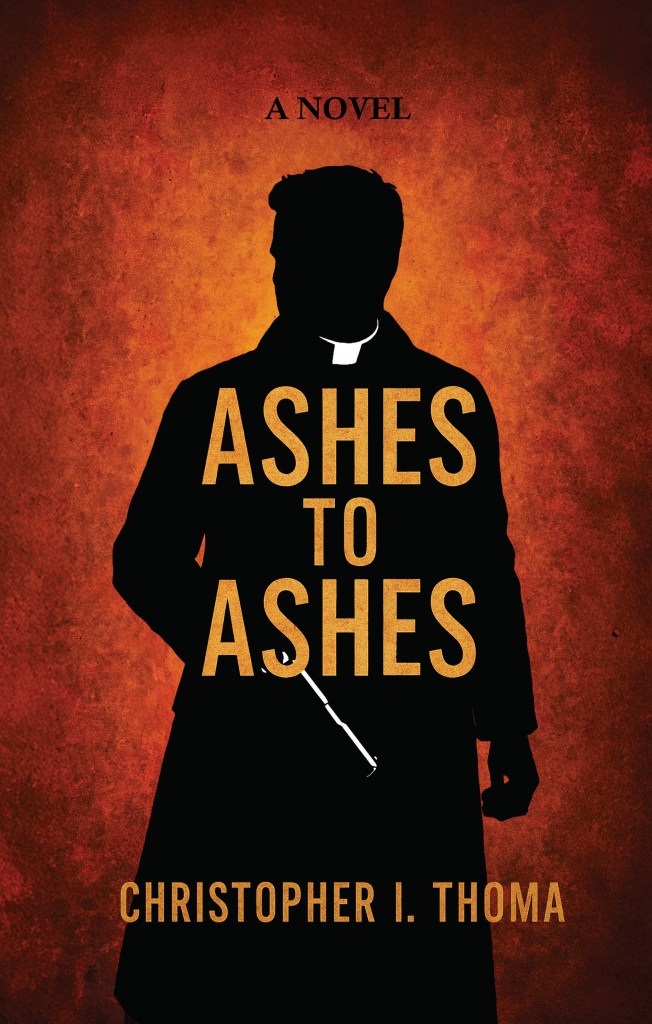
For starters, I knew I’d take some heat for the book. I knew those scenes of extreme vigilante violence—moments when a man in a clerical collar arrives to erase the most vicious among us—I knew this would send some spinning into a fever.

Honestly, I’ve only read one critical sentence about the book from an advanced reader, and the expressed observation didn’t surprise me. He noted something I did intentionally. Beyond this, it seems most folks, once they picked up the book, were unable to put it down until they finished it.

Nevertheless, two individuals reached out to me privately with concerns. While separate, their concerns were essentially the same. I’ll attempt to paraphrase their thoughts. But before I do, you should know the book’s premise.

Essentially, Ashes to Ashes follows Reverend Daniel Michaels, a small-town Lutheran pastor who, while visiting one of his members, is somehow knocked unconscious, and when he awakens, he finds the church member dead. From there, the story steers toward a human trafficking network operating under the cover of a nearby church-run women’s shelter. With the possibility of law enforcement being compromised and the guilty hiding in positions of authority—right out in plain sight—Daniel shoulders the unbearable burden of both grief and responsibility. What follows is a harrowing descent into vigilante justice—brutal in every way—scenes as messy as they are decisive. Daniel wages war against predators in their homes, alleys, and shady motels, each encounter leaving more blood on his clerical collar than before. However, threaded through the brutality is a much deeper conflict. I won’t reveal too much, except to say the novel builds inexorably toward a pile-up collision between repentance, vengeance, vocation, hope, redemption, damnation, right and wrong, Law and Gospel, ultimately leaving readers scorched along the way by some of the best narrative writing I think I’ve ever produced in my entire life.

Seriously. I’m so proud of this book. I immersed myself in Reverend Daniel Michaels’ world, and I employed every ounce of my creative faculties to bring the reader into it, too.

All of this said, and to paraphrase a concern: “Isn’t it dangerous to put a clergyman that close to this stuff? It seems unbecoming of a guy like you to write something this.”

I hear the concern. The question is serious. It deserves a serious reply.

First, take note that there’s no swearing in the book. Also, no sex or nudity. There is one scene in which an abused girl is noted as naked, and yet, Reverend Michaels, after he deals with the man in the room abusing her, and before he moves on to other rooms with the same fury, he covers her up, brushes her blood-stained hair, and tells her she’s going to be okay. His gentleness with the victims is markedly profound. He cares.

Second, admittedly, there is gore. And yet, the book isn’t about glorifying the results of a pastor’s rage. It’s about putting vocation into the most severe of circumstances—into the refiner’s fire—and watching what burns away, and what does not.

If you felt a shiver reading that, good. You were meant to. The book is a meditation on the threshold of talk and action—the proximity of hero to villain, prayer to fury, genuine justice to unbridled vengeance. Daniel prays before and after; the words are “always crisp.” And yet the soundtrack in his head is Johnny Cash’s The Man Comes Around, a cracked, apocalyptic psalm about a God who, whether or not we want Him to, does, in fact, come around. And He chooses how He’ll do it.

So, how does He use us in the process? Where do we fit in? The book never lets the reader relax into easy answers, because the context isn’t easy.

In one of the two messages I received, I was told I “put the man in the collar too near the sword.” That comment was referring to Romans 13—the government’s bearing of the sword.

My reply: Yes, I did—and on purpose. Not to baptize vigilantism, but to force an honest Christian reading of Romans 12 and 13. Paul’s words are prescriptive, not descriptive. And so, what does that mean exactly in a world where “the powers that be” can be both God’s servants for good and, at times, participants in harm. For example, when a nation sanctifies the slaughter of its own unborn children, that is not righteousness—it is evil dressed in legality. Evil doesn’t become less monstrous because it is legal or convenient. It remains blood crying from the ground (Genesis 4:10), and the Church’s unwillingness to confront it makes us complicit in the very silence that lets it thrive.

There’s a funeral sermon in the novel that walks that blade’s edge aloud. Daniel proclaims, “‘Vengeance is mine,’ saith the Lord, ‘I will repay,’” then warns that we too often hear the verse only as comfort for victims and not as a warning to the evildoers. And so, Daniel preaches, “Do not mistake God’s patience for apathy… He will act.”

But, again, what’s our role?

Whatever the answer, you’ll notice in that same sermon—in the same breath—Daniel wrestles himself back to the Gospel’s center. He preaches the Lamb who ultimately bears vengeance in His own body so that sinners might become sons and daughters. We are transformed into those who can take action when action is required.

If, while you’re reading the book, you feel the tension in these things, then the story’s doing precisely what it’s supposed to be doing. I refused to rest in the cheap catharsis of tidy judgment or pious quietism, both of which are a pestilence in the Christian Church today. Instead, I chose to walk Daniel straight into the furnace and keep him there until the sparks started flying and you, the reader, flinched.

Ashes to Ashes isn’t tidy, because life isn’t tidy. Evil certainly isn’t. It’s raw, relentless, and sometimes terrifyingly close to home. Behold what happened to Iryna Zarutska last week on the light rail train in North Carolina. She was sitting and scrolling on her phone when the man behind her, without warning, stood up and stabbed her. And worse, no one around her lifted a finger to help. Terror in her eyes and on her face, she bled out and died alone. It was absolutely dreadful.

And of course, there’s Charlie Kirk. Evil’s fingerprints are all over his death.

And so, in this world’s darkest pages, what must we bring to moments like these?

One of the comments I received was that in the moments of confrontation, Reverend Michaels offers no grace to the villains. Did grace belong in that moment on the train? Would it have belonged to the shooter, had someone discovered him in time? I’m one to say no. Hopefully, there’d be time for grace in any normal situation. But first, evil needs to be subdued and the victims protected. Unfortunately, sometimes that means making a mess. Sometimes that mess is bloody, and the villains ultimately lose out on grace’s opportunity.

Another comment said straightforwardly that this book “could scandalize the weak.” That concern is baked into the book’s DNA. The dedication page itself anticipates readers who’ll “see autobiography where none exists.” In the end, it’s fiction, though painfully plausible fiction, and if a reader can’t figure that out, they probably shouldn’t be reading it to begin with. Also, it is not a sermon in disguise. In fact, the story risks discomfort precisely to protect Christian preaching from naïveté. In other words, keep it simple, and remember: if we will not name evil, no matter its form, our sermons deserve to be taken less seriously by those in the pews who’ve likely already experienced what we refuse to see.

Another paraphrased comment: “It valorizes anger.” No. It interrogates it. Daniel’s anger is understandable, but it is also corrosive; he knows “refinement and ruin come from the same flame.” His most powerful moments are not when his fist is clenched and the Colt 1911 is raised to judge, but when his conscience is pierced. He is repeatedly pulled back to his calling, to the Gospel, even as judgment drums in his ears. The novel’s best question isn’t “How far will he go?” but “What will the fire leave behind when it’s done with him?”

If someone reads Ashes to Ashes and comes away thinking, “Pastors should punch harder,” then they read carelessly. The arc is faithfulness-shaped: a parade of revelations that corner the reader with the same double-bind that corners Daniel—do something and don’t become someone else while you do it. In that corner, you discover why he wears the collar while doing what he does. It’s not to bless sin, not to cosplay a crusader, but first, to let the demons know who’s coming for them; and second, to do everything he can to hold on to who he is—to Whom he belongs—when the room is filling with smoke.

I suppose I should add my own concerns at this point.

If anything, the Church needs two kinds of courage right now. It requires the courage to be clear and the courage to act. Mercy without either of these leaves victims unprotected. It turns us into the thing we hate. In a little town—Linden, Michigan—a place that smells like spring and looks “peaceful and quiet,” evil was buying time and gaining strength because the only thing opposing it were people wearing piety’s mask of politeness. The book tears the mask off and demands that the Church, and I suppose, all of society, look in the mirror.

It demands, “Do something. Stop sitting idly by and do something.”

So, to those who wrote to me with worried words: I’m with you in the worry. You should know I wrote Ashes to Ashes to earn that worry—not to dismiss it. But I’m also asking you to step into the furnace with me for close to four hundred pages. Watch what burns. Watch what stubbornly will not. And when you’re done, preach Christ crucified like it matters for victims and perpetrators alike. Then go to the altar and receive what we cannot manufacture: genuine mercy that doesn’t blink in the face of horror, and the holiness that can stand and act in any circumstance without losing one’s soul along the way.

If you want a copy, visit https://www.amazon.com/Ashes-Christopher-I-Thoma/dp/1955355053/.

Everything Has A Lifespan

I’ve been simmering in what I wanted to write about this morning since last Sunday. Essentially, after nearly 70 years, the congregation where I received my first call back in the 90s—where I also met my wife and got married—was closed. Needless to say, the closing service was a bittersweet one.

The sanctuary was full that morning, probably fuller than it’s been in a while. I think what got me the most was the bustling before the service. It wasn’t the regular bustle of a congregation preparing for just another Sunday. It was the noisier hum of memory. People who hadn’t seen each other in years—old friends, former members, even children now grown with families of their own—all were moving into and through the pews, greeting one another.

I moved around a little, too. Not a lot, but a little. I saw folks I barely recognized. And for some reason, I couldn’t sit still. I had to go to them. This would be the final benediction in a place that had shaped so many of us. There was joy, of course, in the greetings. There was joy in the memories that came from the brief discussions. The baptisms, the confirmations, the weddings, and funerals that stitched our lives together reappeared in those moments like smiling presences. It was impossible not to feel grateful for what had been.

But there’s more.

I won’t say that the ache of finality was absent. That was a hovering specter, too. The knowledge that this beloved place would no longer echo with hymns, that its altar would no longer receive faithful Christians at its rail, that the building’s doors would finally close—this thought hung heavily.

It is one thing to know that seasons change, but it’s something altogether different to stand in the very moment when one passes into another, to feel it slipping away while at the same time holding what it gave you.

If anything, the whole event was a reminder that everything, even a congregation, has a lifespan.

Like people, organizations are living things. Congregations are, too. They grow and mature, and as they do, they store up countless moments of both joy and sorrow. They have seasons of health and vitality and, sometimes, seasons of struggle. And eventually, as with all things under heaven, they reach their appointed end. To say these things is not to be negative. It’s to be honest.

We do well to remember this, if only for the sake of keeping a proper perspective relative to all things in this life. When we know that nothing here is meant to last forever, we learn to cherish what we have for as long as we have it.

There’s a song by Poor Man’s Poison that my wife, Jennifer, has taken a liking to. It’s called “Ireland Sky.” In it, there are the lines, “When you wake, just take it all in. Be sure to live for right there and right then. ’Cause we only have today, but tomorrow we may die. So let’s shout out loud to the starry sky.”

At first thought, you might think the song is hedonistic—or maybe epicurean in nature. But it isn’t. It’s born from an Irish blessing. It’s meant to wish you well along life’s way, trusting that as you go, the winds will always be at your back, even as you keep in mind life’s brevity. It’s meant to keep you from taking lightly what God has entrusted to us in the present. In other words, don’t hurry past today. It may seem ordinary, and yet, as the closing service last Sunday brought into crisp focus in a very unique way, even the ordinary things are gifts that will one day be remembered as extraordinary.

Of course, all of this is easier said than done. And admittedly, I’m the worst offender. I go along from day to day at top speed, missing so much more than I likely realize. Still, moments like last Sunday have a way of landing right in front of me, slowing me down, if only for a while. They demand that I stop and take notice. They remind me that the things I so easily label as “routine” are in fact the very things that are likely shaping me most profoundly.

Parents, I can’t even begin to describe the profoundness of this relative to children. What we might be tempted to brush off as routine—Sunday after Sunday of getting the kids ready for worship, only to traipse out the door when you’d much rather go back to bed. And when you get there, a hymn sung a hundred times over, a liturgy you don’t even need the hymn book to follow. What glorious mundaneness! These are the stitches that, over time, hold together the fabric of a life rooted in Christ. These are the things that take deepest root in young hearts. Children may not always grasp the whole meaning in the moment, but they are absorbing more than we realize. They are learning the rhythms of God’s grace, the cadences of His Gospel, the shape of a cruciform life that’s fixed to the only One who remains immovable in this world’s winds.

Don’t fool yourself into thinking your children will pick these things up later when they get older or when life slows down. They won’t. Because they’re just like the rest of us. That means they need to be taught—led to participate alongside us now. The sights, sounds, and smells of it all. Yes, the Word! But I’d say even the sun through the stained glass, the creak of the family pew, a familiar friend’s voice, the smell of the extinguished candles. All of these things become part of the landscape of their souls. Even if they wander far, these things remain. They become landmarks, signposts pointing them home to something better.

This is all just one more reason why it matters so deeply to keep children connected to worship. Doing so is to invite them into the holy patterns of the Church’s life. When they see their parents kneeling, when they hear their grandparents singing, when they sense that they themselves belong to something larger and older and holier than their own small world—they are being catechized, quietly and intensely, in what it means to be the people of God.

I mentioned before that some of the people I saw last Sunday I barely recognized. That’s because they were children when I knew them. But they’re grown now. And their presence was proof that the foundation they received remains. The congregation may have reached its end, but what was established in those little hearts is still alive, still bearing fruit, still part of God’s larger story.

I suppose that is an aspect of the hope to be had in a congregation’s closing. Indeed, the Word of the Lord endures forever. What was preached, sung, prayed, and lived in that place is not lost. Instead, it carries on in the lives of those who were shaped there, most especially, the children.

Parents, with that in mind, don’t hurry past the ordinary mercies of today. Give your children the gift of showing up, of kneeling, of singing, of praying, of being present in the places where God promises to meet us. I can assure you that in these seemingly small things, eternity is breaking in.