After my previous article on the Carlson–Fuentes interview, only two concerns emerged, neither of which actually addressed the article’s premise. Still, I’d like to take a quick moment with them.
The first was theological—a defense of dispensationalism from a very small group. And by small, I mean that. That said, I’ll speak to this relatively quickly because, from my perspective, it is the lesser of the two. Quite simply, dispensationalism is a false doctrine. The Church has never confessed it, and history has not vindicated it. I laid out the evidence quite thoroughly in the original article and see no need to repeat myself. Some errors don’t deserve endless rehearsing.
The second concern (which, resulted in certain behaviors) is the louder one: platforming. It would seem that the process and content of the Carlson-Fuentes interview—and the watching and analyzing of that interview—is equal to amplifying evil. That claim came mostly from the finger-waggers—the “Shame on you!” crowd—who seemed more scandalized by the act of engagement than by ignorance itself. Interestingly, these are some of the same people I’ve seen criticizing modern journalism, saying it no longer serves its original design. But then, when someone actually does what journalism was meant to do—examine, question, expose—they recoil. It’s as though they prefer caricatures to clarity. Maybe even slogans to substance. The moment a journalist dares to enter the cave and shine a light on what’s inside, the guardians of propriety cry foul. They don’t want darkness examined. They want it ignored. “Don’t let it speak,” they say. “Leave it alone, and it will go away.” But ignorance doesn’t defeat evil. It unwittingly protects it. Besides, history has already disproved that strategy. When the world dismissed the early reports of a rising agitator in 1930s Germany as mere fringe ranting unworthy of serious attention, the result was not silence. It was slaughter. The monster eventually came out of the cave, and only those who’d investigated it while it was still in the cave knew what to do.
Something to keep in mind… Ultimately, journalism, theology, and moral reasoning all require engagement. Therefore, to analyze something is not to endorse it. A surgeon can study disease without becoming infected. A pastor can study heresy without believing it. And a podcast journalist can interview a reprobate without becoming one. We don’t preserve truth by closing our eyes. We preserve it by seeing clearly and speaking honestly.
From a “closer-to-home” LCMS perspective, there was the concern that seminarians are being drawn to Fuentes’ ideas. If that’s true, that’s tragic. But it’s also not an argument for ignoring those ideas. It’s an argument for confronting them, for doing it well, and for having a grasp on all its edges. It seems foolish to me to think that young men fascinated by extremism would be rescued from the danger by silence. They’re rescued by reasoned exposure, by the light of truth naming darkness for what it is. It’s a pastor’s responsibility to do this in his congregation. I’m doing that. It’s the LCMS college and seminary professors’ responsibility to do this in the pre-seminary and seminary programs. It seems the more important question for some is not, “Why is Tucker interviewing Fuentes?” but “Are the college and seminary professors doing their jobs?”
And perhaps this is a good place to remind readers of something I asked for at the very start of the original article. I asked for leniency in the communication process. Specifically, I asked the reader to be mindful of “communication missteps common to basic human interaction. Indeed, this topic demands more than care. It requires a listening ear already calibrated toward leniency—with a willingness to admit that not everything is communicated in the best or clearest way that meets everyone.”
I thought the point was a good one. Before I went into the analysis, I admitted that not every sentence can carry its full meaning to every set of ears. Some will hear tone where it was intentionally dry, or offense where there was only observation. Words are imperfect tools, and even careful ones can miss their mark. But the point was that when friends listen to and learn from one another, grace can (and does) fill the gaps that grammar cannot. If someone stumbled over phrasing, I hoped that the friendship would assure leniency. For some, it did. For others, it became the perfect opportunity to attack with a wagging finger.
All of this said, I have one more observation before I need to get going on my day.
I’ll start by saying, when I die, I suspect no one will remember anything I’ve ever said. But I hope they’ll at least remember something about me. They’ll at least be able to say I was never half-cocked in my observations—that I listened before speaking, that I analyzed thoroughly, was reasonable in my responses, did not reply from emotion, and I certainly never stalked the comment sections on Facebook to cry, “Shame on you!” If our age has lost anything, it’s that temperament—the quiet confidence that refuses to confuse emotional moral outrage with moral clarity.
Outrage is easy. Clarity takes work. Again, it’s why I started the original article the way I did. I began by saying, “Slow down. Don’t skim. Read it. We live in an age of headlines and half-quotes, of videos clipped at precisely the point where context and understanding begin. Read. Don’t let nuance be smothered by noise.” But skimming is precisely what many have done. Worst of all, some didn’t even do that. I’ve lost count of how many people I’ve asked, “Have you actually watched the interview?” or “Did you actually read my words?”—only to hear, almost proudly, “No, I didn’t watch it. I’m above that ilk.” Or “No, I didn’t read your words. You’re wrong for even trying.”
They didn’t read. They didn’t listen. They reacted. And they admitted this, still feeling as though they could pass judgment, to lecture others for doing what they themselves refused to do. That’s the irony of the age—outrage without observation, condemnation without comprehension. The same spirit that insists, “Don’t give evil a platform,” continues giving ignorance a pulpit. I would say that’s far more dangerous than a journalistic interview with someone holding terrible ideologies.
Anyway, that’s enough for one morning. I have two sermons to write, confirmation classes to prepare for, and a shut-in visit to make. I pray the Lord’s blessing upon your day. I hope you can pray for the same blessing upon mine.
This is likely to be a long one. Before anything else, I’d ask one thing of anyone reading it. Slow down. Don’t skim. Read it. We live in an age of headlines and half-quotes, of videos clipped at precisely the point where context and understanding begin. Read. Don’t let nuance be smothered by noise. Only in that space will you see what’s happening right now in the controversy surrounding Tucker Carlson. You may discover it isn’t as you’ve been told.
That said, I already know I’m going to upset some friends. But that group will mostly be made up of skimmers—the headline readers, the soundbite sharers, the ones who build entire opinions from fifteen-second clips or out-of-context quotes. And probably those who claim to know me but don’t really. The friends who take time to read thoroughly, to listen to interviews in their entirety, to think through the material—I suspect they’ll at least understand where I’m coming from, even if they don’t entirely agree. Those are also the folks who trust that I have no sinister intentions, and therefore, our friendship is sturdy enough to withstand alternate perspectives, and maybe even the communication missteps common to basic human interaction. Indeed, this topic demands more than care. It requires a listening ear already calibrated toward leniency—with a willingness to admit that not everything is communicated in the best or clearest way that meets everyone.
To start, when the news broke that Tucker Carlson had interviewed Nick Fuentes, it seemed that very few wasted any time in lumping Tucker and Fuentes together. To be fair, little of Fuentes’ most poisonous rhetoric actually appears in the interview itself. His ugliest statements—the ones that earn him regular condemnation—are found elsewhere in his own broadcasts and speeches. Carlson’s interview does not showcase those. There are hints along the way, such as a subtle nod of appreciation for Stalin, as well as specific terms used for Jews in Nazi Germany. Still, for as innocuous as the interview was overall, within hours of its release, my social media feed lit up with headlines branding Tucker as a “white nationalist sympathizer.” I’ve been reading, watching, and listening since then, and I think I understand why this happened. If I’m right, then the branding is unwarranted. Maybe even irrational.
I’ve watched countless clips, both before and after the interview. Tucker is no antisemite. In fact, I lost count during the interview (which I watched in its entirety twice) of how many times he expressed disdain for anyone who judges other human beings according to their DNA. But even beyond the interview, he endlessly condemns (and has for many years) racism and antisemitism. So, then, how did Tucker become the shamed stepchild among conservatives so quickly?
Strangely, it seems to have started with him simply doing what classical journalists are supposed to do. Interestingly, even during the interview, he admits he is at odds with Fuentes and his views. Still, he explained a willingness to explore how Fuentes arrived at those views, thereby giving the viewer a better understanding of Fuentes’ truest self. I’m glad I watched it. I learned a lot about how racists are made. Peripherally, by doing this, those of us who knew little to nothing about Fuentes were educated. This interview sent me searching. I now know more.
But there’s another perspective on this interview. It’s simply that Tucker gave Fuentes a platform, thereby amplifying his ungodly message. It’s a valid concern. But I also think it’s an inconsistent one. Tucker interviewed Putin, too, and the folks attacking him now had very little to say then. That’s revealing. It suggests that the outrage isn’t really about “platforming” at all. It’s about the target of Tucker’s criticism. Many on the right who oppose U.S. support for Ukraine were comfortable with the Putin interview because it fit their foreign-policy skepticism. But when Tucker’s critique ran straight through a cherished position, the same people suddenly discovered a moral objection to interviewing objectionable figures.
While he didn’t use the word, essentially, Tucker expressed theological dissent from dispensationalism and its inevitable political offspring, Christian Zionism. For clarity, Zionism in its plain sense refers to the movement for the reestablishment of a Jewish homeland in the land of ancient Israel. Christian Zionism, however, takes this political aspiration and attaches to it a theological mandate—asserting that the modern State of Israel represents a direct fulfillment of biblical prophecy and that Christians are therefore obligated to support it without reservation. It is this theological extension, not the Jewish people’s right to exist or defend themselves, that Tucker challenges.
Tucker referred to Christian Zionism as “heresy.” He said it very much in passing. Still, an honest listener could not glean from it (nor the context of its usage) that he is attacking the Jewish people themselves, nor the land of Israel. That’s because his critique was not ethnic or geographical. It may be for his opponents. But that’s most likely true because the people watching don’t know the difference between Zionism and Christian Zionism. They certainly don’t know its paternal doctrine, dispensationalism, or what it actually teaches. Tucker may not know the word, but apparently, he knows the difference. He extrapolated that difference repeatedly. I don’t know if he is a devout Episcopalian. But either way, he’s proven a mindful concern for a confused theology that has recast Christianity’s view of who exactly God’s people are.
To take from this interview what it actually gives requires more than clips from Lindsey Graham, Ted Cruz, Ben Shapiro, and so forth. It requires knowledge of what God’s Word has always confessed about Israel, the Church, and God’s promises in Christ.
The Bible, and the historic Church for that matter, have always confessed that the promises of God are fulfilled in Christ, not parceled out along ethnic or national lines. To divide God’s redemptive plan into separate peoples and parallel covenants is to rebuild walls that the cross has already torn down. From all I’ve read and seen, Tucker’s concern is not ethnic animus, but a theological defense of the Gospel’s unity against a relatively recent system that has confused it.
From its earliest days, Christ’s bride, the Church, has understood herself as the continuation and fulfillment of Israel—not its erasure. The Apostle Paul wrote, “For not all who are descended from Israel belong to Israel… It is not the children of the flesh who are the children of God, but the children of the promise” (Romans 9:6-8). That’s Tucker’s position. He’s said as much on countless occasions. He said as much during the interview.
But even beyond Saint Paul, the apostolic witness has never been subtle. The covenant promises to Abraham find their fulfillment in Christ and, therefore, in His Body, the Church, composed of Jew and Gentile alike. Peter preaches this in Acts 2:39 (“the promise is for you and for your children and for all who are far off”), extending Israel’s promise universally through baptism into Christ. The Early Church taught this, too. The Catechetical School of Alexandria (Origen and Cyril), Irenaeus of Lyons, Justin Martyr, Augustine, and later the Reformers all taught this same pattern. Luther taught it. It was taught by Zwingli, Calvin, Bullinger, the Westminster divines, and nearly every Reformed theologian from the 16th to 18th centuries. They all taught that the Church is the true Israel, not because she replaced the Jews, but because she is grafted into the one covenant vine that always pointed to Christ. Justin Martyr wrote in the Dialogue with Trypho: “For the true spiritual Israel… are we who have been led to God through this crucified Christ.” Saint Augustine wrote in City of God (Book 17) that the “promises made to Israel are fulfilled only in Christ; therefore, the Church is the Israel of God.”
Some call this “Replacement Theology.” I had a discussion with my friend Dinesh D’Souza about this the other day. I told him I’ve never liked that term. It has baggage that leads to misrepresentation. The better term is “Supersessionism.” The biblical picture is not replacement but expansion and, ultimately, fulfillment. The root remains Israel. The Gentiles are grafted to it (Romans 11). In fact, Paul reminds his readers explicitly not to forget this, saying, “Remember, it is not you who support the root, but the root that supports you” (Romans 11:18). Of course, Paul’s broader point remains that the tree is continuous. God did not plant a new one. He pruned and grafted, all the while expecting a flowering. Therefore, the Church’s confession of fulfillment could never be anti-Jewish. It’s profoundly inclusive. It invites all nations—including Israel, the root—to locate their identity in the Messiah, Jesus Christ, who came from them. Supersessionism, rightly understood, is not a claim of ethnic superiority, but one that affirms that salvation has always been by grace through faith, and that the wall separating Jew and Gentile has been entirely torn down by the cross.
By contrast, the system Tucker is criticizing—whether or not he names it dispensationalism—attempts to rebuild that wall. In fact, when it comes to racist theologies, dispensationalism is one of the worst. But I’ll get to that in more detail in a second.
In the meantime, just know that dispensationalism is a relatively new concept, and a fraction of a fraction of a fraction of Christians embraced it. It was born in the 1830s. It was another of John Nelson Darby’s concoctions. The Scofield Reference Bible popularized it. The Dallas Theological Seminary, because of its founder and Darby-devotee, Chafer, made it a doctrine. Tent revivals and prophetic speculation spread it. Its key idea was that God has two separate plans—one for Israel (an earthly, national destiny) and another for the Church (a heavenly, spiritual one). Of all the mainstream voices out there, Tucker seems aware that this dual-track theology fragments God’s Word—and ultimately God Himself. The result is false doctrine that equates modern political Israel with biblical Israel, and as such, insists that Christians support every action of political Israel as divinely mandated, no matter what those actions might be.
I support Israel. As a nation of human beings made in God’s image, they have every right to defend themselves. But that does not mean everything about the Israeli state itself carries divine sanction. For example, I read an article yesterday morning devoted to beating up on Tucker. Interestingly, the writer mentioned in passing that democratic socialists (Labor Zionism) founded the political State of Israel. When I dug a little deeper into the claim, I realized the author was right. Is democratic socialism, therefore, divinely sanctioned? It seems the system has largely eroded with time. Still, some of it remains. There are privileges that only ethnically Jewish citizens enjoy that other citizens do not. With that, do we have any reason to be upset that Mamdani, a democratic socialist, is the new mayor of New York City? I tend to think we should be very concerned about democratic socialism. It’s bad news, and we should never let it take hold in America. By the way, did you know abortion is an on-demand service in Israel? Is that divinely sanctioned, too?
Contradictions certainly abound. But consistency is better. Throughout the interview—and in plenty of others—Tucker openly and explicitly insists on consistency. What he appreciates, he supports. What he doesn’t, he criticizes. That’s consistency. And it’s honorable.
I should add that some claim that Carlson accused Israel of “genocide.” In fairness, that’s not quite accurate. A Wikipedia article claims, “During the Gaza war … Carlson … declared Israel guilty of war crimes.” But no evidence is available anywhere to substantiate this. In fact, the searches I did to find out whether this was true all came up as second- and third-hand sources, implying the position rather than sharing explicit transcript evidence. But that, of course, is all it takes these days to cancel anyone. In his interview with Fuentes, Tucker did say that Israel “sometimes acts in genocidal ways,” which is a strong moral indictment. But it’s not the same as declaring that Israel is committing genocide in the literal sense. Outside that exchange, I find no first-source public record of him using the word “genocide” to describe Israel’s actions. His broader criticism has centered on U.S. foreign policy and the moral inconsistency of unconditional support.
Having said all this, for now, Tucker’s relatively simple theological concern is that the barely two-century-old dispensationalism reintroduces the very distinction Christ demolished—the division of peoples before the cross. It recasts the Church not as the fulfillment of Israel, but as a kind of divine intermission until God resumes His “real plan” with ethnic Jews after the rapture (which is another of Darby’s made-up theologies).
The irony here is that those who accuse supersessionism of being racist are defending a theology that is itself inherently racially partitioned.
Repeating myself, dispensationalism explicitly maintains that God has two chosen peoples: the Jews (by race and land) and the Church (by faith). By re-erecting an ethnic boundary between Jew and Gentile, it makes biological descent a continuing theological category—a position the Bible and the Church have forever repudiated.
Again, Saint Paul’s declaration could not be more explicit. He wrote, “There is neither Jew nor Greek, slave nor free, male nor female, for you are all one in Christ Jesus” (Galatians 3:28). The Church does not replace Israel. She is Israel fulfilled, Israel made whole in her Messiah. In that light, supersessionism is not racist. In fact, it is the most comprehensive abolition of racism ever preached. It destroys the dividing wall and declares all nations equal at the foot of the cross. Dispensationalism, on the other hand, assigns continuing divine privilege to one ethnicity, maintaining two parallel paths of redemption. That is not equality in Christ. It is theological segregation—the same segregation Saint Paul set out to refute in so many places throughout his New Testament writings.
Tucker’s critique of dispensationalism’s child, Christian Zionism, then, is not about hating Israel or Jews. It is about rejecting a theology that distorts the Gospel and politicizes God’s covenant.
Now, here again, is where it gets sticky for some. There remains the “platforming” argument.
Because Fuentes traffics in racial hatred and antisemitism, Tucker’s willingness to interview him has allowed detractors to blur the line between theological debate and moral corruption. Indeed, it must be possible to see Fuentes’ hatred and Tucker’s theological critique as mutually exclusive, right? Again, the Church has always confessed that there is one covenant, one Israel, one Savior. I already mentioned Paul’s explanation that Gentiles are grafted into Israel’s tree (Romans 11:17-24). He affirms that unbelieving Jews can be grafted in only by faith. One tree, not two. Hebrews 8:6-13 makes plain that Christ mediates a new covenant, rendering the old fulfilled and therefore “obsolete.” Saint Peter, applying titles typically set aside for Israel, announces that Christians are “a chosen race, a royal priesthood… once you were not a people, but now you are God’s people” (1 Peter 2:9-10). Texts like these do not annul God’s faithfulness to ethnic Israel. They reveal its goal—the inclusion of all nations in Christ. The Church is not a replacement but a consummation. The promises to Abraham are extended to all who believe. Supersessionism is not a theology of exclusion but of inclusion. It’s the absolute opposite of racism.
Now, I thought I might wrap up here. But I have one more thing to say.
I just returned from teaching a Bible study. It was with a group of ladies that I truly admire. Indeed, they’re thinkers. Essentially, I bounced some of the ideas off of them that I’ve shared openly here with you. While doing this, it seems there was agreement that we live in a theologically illiterate world. Or maybe better said, we live in an age allergic to theological precision. But when a Christian is biblically rooted, he or she becomes theologically literate and, in most cases, historically aware. A theologically literate person is more likely to meet Tucker Carlson’s criticisms through the lens of the Gospel that requires the fullest context. What it will not do is settle itself in slander. When overt racists like Fuentes twist theology to serve their own idols of blood and soil, a theologically literate person will observe the same way, and they’ll discern and rebuke them with the same Word of God coupled with the same rationality.
If anything, the controversy surrounding Carlson and Fuentes is a mirror held up to our confused age. There’s no question that Fuentes believes God hates Jews, and he wants others to think as he does. Tucker understands this. Because of the interview, now many of us understand this, too. But take note that Tucker also disagrees with Fuentes. Now, with that obvious detail behind us, Tucker is asking an entirely different question. Tucker isn’t asking whether God loves Israel. He knows God loves Israel. He has said so countless times. The question is whether Christians actually believe what Jesus said about His flock, namely, “There is one flock, one Shepherd” (John 10:16).
So, to close, let there be no confusion about Fuentes. His views are abhorrent and antithetical to Christianity. If he’s being satirical, as some of his more ardent supporters try to suggest, then I’m completely lost on that humor. I don’t think it’s funny to refer publicly to Jews in derogatory terms or express admiration for Hitler, Stalin, and others who preached and practiced ethnic cleansing. These things are toxic and un-Christian, and they do not belong in our midst.
I don’t think that is in dispute here.
That said, Tucker’s theological critique of dispensationalism remains neither antisemitic nor racist. From what I can tell, his position is only provocative to those who don’t understand what he’s actually saying—or have been influenced by piecemeal snippet campaigns from his opponents. His actual critique is theological. It is nothing more than an extrapolation of the faith of the Church universal. The Church has long confessed that all of God’s promises (including the Old Testament) find their “Yes” and “Amen” in Jesus Christ alone (2 Corinthians 1:20).
That’s not antisemitism. That is the Gospel, plain and simple.
This past Thursday, while many of my dearest friends were gathering in Lansing for the March for Life—a trip I genuinely wanted to make—I found myself in places far less energizing: doctors’ office waiting rooms. I was in two different locations that day. One of the appointments I’d scheduled mid-summer. And it was one of those “you’d better not reschedule this” kind of appointments. The other was one I didn’t anticipate. Regardless, I’ll admit I felt a little restless sitting beneath the fluorescent lights and watching the time tick by, all the while thinking of the better effort in Lansing. Of course, I prayed that the march would be impactful.
At the “you’d better not reschedule” appointment—a cardiologist’s office—I ended up in a conversation with someone a few seats away. We somehow wandered into the topic of death. I think I know why. At one point, I mentioned a friend from High School who had died this past Tuesday, someone I still considered relatively young, barely fifty-one. The exchange set the tone for what’s on my mind this morning. You may or may not appreciate what I’m about to write. Although it’s my keyboard, so there’s that. But more importantly, what I’m going to tell you echoes some of what we talked about.
I’ll just state the premise plainly: When death visits, it has become all too common for sentiment to replace reality. Now, let me explain.
Imagine for a moment you’re at a funeral. There, before you in the casket, is the deceased. It’s someone who had no time or inclination for faith—or maybe even denied the faith outright. Nevertheless, in death, suddenly—almost magically—the deceased is a believer. Suddenly, everyone gathered around the casket is speaking and acting as though the person had a devout (but entirely undetectable) trust in Jesus. And so, “He’s in a better place,” someone says. Or “She’s with the angels now,” another whispers.
How does this happen?
I suppose one reason people speak this way (although not the genuine point of what I intend to say) is that so many want to believe death is good. We say things like, “Death was her friend at the end.” But the Scriptures never speak of death as a friend. Death is the enemy (1 Corinthians 15:26). It is sin’s wage (Romans 6:23). And it is final (Hebrews 9:27). It is the moment when the curtain falls between time and eternity, when what a person believed—or refused to believe—is laid bare before the living God. And when death comes, this enemy reports there are no do-overs. I imagine the people hovering around the casket are secretly hoping there will be. They’re hoping that death, in its supposed kindness, will go easy on them.
But no matter how we try to recraft the moment, no matter what we do to make the moment palatable, death remains what it has always been. It is the world’s final intruder. And to pass death off as some sort of friend who comes along to take a person’s hand, in the end, is to cheapen the Lord’s war against death on the cross.
Christ did not come to make death poetic. He came to destroy it. If this is true, then the moments when death confronts us deserve a clarity that matches its seriousness. In other words, it’s no time for pretending.
Regrettably, I think some pastors, caught in the strange nether space between compassion and conviction, are pulled into this gush. I’ve experienced the pull before. Not so much anymore. But I do remember in the earlier days of my ministry the urge to choose words, not necessarily for truth’s sake, but to avoid offending onlookers during a sensitive moment. And yet, when the Church and her pastors do this—ultimately confusing comforting sentiment with truth—we’re really just betraying both.
I guess what I’m saying is that when we do this, we pave the way for so many to go wandering off into vague spirituality. And forget for a moment syrupy sentiments like the deceased is “looking down from heaven.” I’m talking more about faith-identifying descriptors that would somehow imply that an unbeliever is “at peace” or “in heaven now.” In other words, too many speak as though heaven were a natural right granted to the well-meaning with relatively respectable qualities. But again, the Bible knows nothing of such generalities. Salvation is not the automatic destination of the nice, the kind, or the merely religious. It is the gift of God through faith in Jesus Christ alone (Ephesians 2:8-9). If you are not a believer, when you die, you are not at peace. You are in terrible suffering. And that place of suffering—hell—isn’t imaginary. It’s real, and it’s eternal.
I know that’s not easy to hear. I warned you at the beginning. But I suppose that’s also why I’m writing this. God’s standards are the ones that apply. Never our own. That means faith in Jesus is no small thing. That also means that funerals become unique opportunities for the living.
A few weeks ago, I happened to be sitting in a funeral director’s office near the facility’s front door when I heard an unfortunate conversation between a teenage girl and someone I’m guessing was her mother.
“Why are we here?” the young girl asked. “Funerals are stupid,” she continued, sounding half-annoyed, the way young people do when confronted with something they don’t understand. Her mother replied, “We’ll just stay for a little while and then go home.” I didn’t see the girl’s expression, but I’m guessing by her sigh that she rolled her eyes before adding, “I don’t want to be here. And who cares, anyway? He’s gone.”
Her words echo a world that no longer knows what to do with death. It doesn’t know what it means.
Of course, I don’t know the complexity of the girl’s relationship to the deceased. But let’s just assume the young girl meant exactly what she said. Had I been her parent, I would’ve shepherded her to a quiet corner and explained that of all places, a funeral is the time to know what’s true, not what’s comfortable. If there’s any moment when eternity should press in upon human hearts, it’s when we’re standing beside a casket. That’s when the thin veil between life and death is most real. It’s when our mortality is undeniable. Then I’d walk her to the casket. “Look in there,” I might say. “One day, that will be me. One day, that will be you. Then what?”
That’s the intrusive question no one wants to ask at a funeral, and yet it’s one of the only ones that matter. In one sense, funerals are mirrors held up to the living. They’re opportunities to strip away the noise of daily life and, if anything, to at least recall three very important things.
First, our time is unknown. Second, eternity is real. Third, what we believe—or refuse to believe—matters more than anything someone might say about us when we’re in the casket. A room full of mourners saying nice things and grasping at a hopeful but false future won’t make that future real. Not for the dead. Not for them.
I suppose that third detail brings me back around to where I started. When churches speak and act as if every soul is saved—as if everyone who dies is owed a Christian burial with Christian hymns, Christian prayers, and a Christian sermon, they teach the living that faith and its fruits don’t really matter, that repentance and trust in Christ are optional extras that can be conjured after the fact. This unclarity does not comfort the grieving. It anesthetizes them. It teaches them to believe in a sentimental fiction rather than in the Savior who conquered the cruelest enemy, death.
Plenty of folks have asked me what I like most about being a pastor. My first answer is always, “Baptizing babies!” I just love it. Next, I appreciate funerals. Funerals are where the rubber hits the road. If ever there was a time to proclaim the Law and Gospel clearly—the fact that we are sinners in need of a Savior, and that Savior is Jesus—it’s at a funeral.
At the same time, a funeral sermon is one of the heaviest burdens a pastor has to bear, especially when he somehow finds himself standing beside the casket of someone he knows was without faith. (And in case you think I’m “judging” someone’s heart, take a quick trip through the following texts: Matthew 7:16-20; Matthew 12:33-35; Luke 6:43-45; James 2:17-18; 1 John 1:6; 1 John 2:3-4; 1 John 3:9-10; Titus 1:16; Galatians 5:19-23.) Don’t get me wrong. Great care is needed when choosing one’s words in such situations. Still, there will be the temptation to believe that speaking truth in that moment is cruel and speaking falsehood is compassionate. But actually, the reverse will always be true.
To proclaim a false peace over the unbelieving dead is to rob the living of the Gospel’s urgency. It implies that Christ’s sacrifice was really no big deal—maybe even unnecessary—and that sin has no real consequences, and ultimately that heaven can be had without the narrow way of repentance and faith (Matthew 7:13-14). This kind of preaching might comfort for a moment in the funeral parlor, but in the end, it can only lead away from Christ and condemn for eternity.
A Christian pastor must lead the people to mourn honestly. He’s wasting oxygen when he points to the moral résumé of the deceased. His job is to point to the mercy of God in Christ—mercy which had been available to the one in the casket but is still available right now for the listeners. Doing this, the pastor is careful to communicate that God’s mercy is not cheap. It came at great cost to Christ. But He went into that combat supernal because He loves you, and He knew you could not defeat the last enemy, death.
That sits at the heart of the Gospel. When the Church loses this clarity, it loses its reason to exist. To be clear about these things is not cruel. It’s love. Real love.
Of course, Christians do not gloat over judgment. We grieve for the lost. But it’s a strange kind of grieving. It’s strange because we do it as ones who have hope (1 Thessalonians 4:13), but we know better than to hope in ourselves. Our hope is in Christ, who died for sinners. Holding to this hope, we are careful not to rewrite God’s Word to make the Gospel cheap, punching holes in it and then wiggling to fit every opinion through faith’s narrow gate.
The task of the Church is to proclaim what Christ has done, not to invent an easier gospel when death makes us uncomfortable. The world may prefer gentle lies. The Church must love her listeners enough to tell the truth.
For the record, I’d say my essential premise was not necessarily about being for or against observing the holiday, but rather that many Christians seemed more than willing to simply surrender the event to the secular world entirely, having somehow been taught that it wasn’t the Church’s to begin with—that it was a pagan holiday that the Church tried to baptize. And yet, in truth, it’s really the other way around. Halloween came from the Church’s sanctified imagination and was later hijacked by paganism. It was Christian, but then it was emptied of its Christian meaning and filled with the world’s nonsense.
That right there—the hollowing out of something holy until only the shell remains—maybe that’s the more critical point. I say that because it describes far more than just All Hallows’ Eve. It’s a pattern for our age.
In other words, we live in a world that memorializes things but forgets the reason we memorialize them in the first place. We still hang lights at Christmas, but fewer folks seem to remember that Christ, the light of the world, is the reason for those lights. We still gather for weddings, but we do so assuming that marriage is humanity’s idea. It isn’t. God started it. It was His idea. Nevertheless, holy spaces are exchanged for thematic wedding venues, and favorite rock songs replace sacred hymnody that proclaims marriage’s sanctity. I suppose even beyond the Church’s doors, we celebrate plenty of other civic holidays we no longer understand. Plenty have told me they appreciate Memorial Day, not for its solemn character, but because it extends their weekend.
All around us, the forms remain, but the meanings are gone.
But this is how the world works. It doesn’t always destroy. Sometimes it rewrites in order to repurpose. It keeps the rituals but drains them of their truth. It keeps the beauty but forgets beauty’s essence.
Here’s my concern. It sure seems like Christians are more often tempted to retreat in these situations. Overwhelmed by how corrupt something has become, rather than fight to take it back, they figure the only possible solution is to surrender the field and move on. I know folks who won’t wear a rainbow on their clothes because LGBTQ Inc. has hijacked the symbol.
But God’s people own that symbol. It’s ours. Still, it seems we’re more inclined to surrender it than reclaim it.
That’s precisely how we lost Halloween. And it’s how we’re losing nearly everything else.
For the record, one of the clearest places to see this is in worship. Somewhere along the line, the Church decided that the way to reach the world was to mimic it—that the key to filling the pews was to empty the sanctuary of everything that made it sacred. And in the process, the Church’s worship—its highest demonstration of theology—was rebranded as a form of evangelistic enticement, something meant to attract rather than feed. But that’s never been worship’s purpose. Worship’s purpose is not to entertain the unbeliever or to market the faith (Ecclesiastes 5:1-3; John 4:23–24; Galatians 1:10), but to carry Christians into a place where time and eternity meet—where God tends to His people personally, giving them the gifts of forgiveness that sustain them (Ezekiel 34: 11-16; Matthew 26:26–28; Luke 24:30–32; 1 John 1:9; Revelation 7:9–12).
The tragic irony is that in chasing cultural appeal, we lost something the world needs from us: transcendence. When the Church stops sounding like the Church and starts echoing the culture, she ceases to be a holy and distinct refuge from the noise.
But again, this isn’t merely about worship styles. It isn’t even a critique of instruments or melodies. It’s about forgetting where these good and holy things came from in the first place. The world borrows and bends what it never built. The world didn’t invent most of what it claims to have invented. It didn’t invent marriage. It didn’t invent human sexuality. It didn’t invent justice. It didn’t invent what’s beautiful. It didn’t invent charity. It didn’t invent education. All of these things are fruits from God’s soil, and as a result, are, by right, crops to be harvested from Christianity’s garden. I was just talking with a dear friend this past Tuesday about how the university itself began in cathedrals. It was a place to learn truth as an extension of God. Now the very institutions that exist because of the Church’s intellectual legacy would rather burn incense to the self and its ideologies than bow the knee to the actual Truth made flesh that made their existence possible.
Or take art. I shared with that same friend how the world still paints, sings, sculpts, and builds. But holy moly, it sure seems like it no longer knows why. For example, while walking on the treadmill recently, I was watching a documentary about the 80s band Devo. Essentially, the band members claimed to be a consolidation of art, music, film, and social commentary. At one point in the movie, a founding member noted how one of their goals was to rid the world of Christian influence. Then an audio clip from an early interview played. That same bandmate could be heard saying, “We never said we were opposed to the Church. We just said we’d rather have cancer than Christianity.”
I didn’t keep watching for much longer. It struck me that music, something meant to elevate the soul, is so easily wielded by the culture as a weapon to offend that same soul. Art, which once imitated divine order and beauty, is now used to desecrate. Masterpieces are defaced. Blasphemy is called boldness. Ugliness is praised as authenticity. Chaos is paraded as radical creativity. For me, these are just proofs that when God is removed from something, it doesn’t become better or, as some would insist, freer. It becomes grotesque.
Now, I don’t want to wander too far here, so I suppose part of my point is that anything emptied of holiness can only go in one direction. It can only collapse into mockery. This trajectory worsens wherever Christians give up ground in retreat.
And by the way, when I used the term “paganism” before, I didn’t mean people dancing around in robes in the woods performing animal sacrifices. I meant a worldview that cannot stand true transcendence. Paganism, ancient or modern, is really just an older name for what we now call secularism. Secularism is paganism in modern clothes. That said, it’ll forever be the same naked humanity trying to exist in creation apart from its Creator.
And that, I think, is why Christians must be very selective when counting their losses and choosing retreat. Every time the world steals something sacred—every time it hollows out what was ours and paints it in its own colors—our response shouldn’t necessarily be to abandon it. We should first consider how to reclaim and refill it. We should labor to turn the world back to what it once knew.
Marriage belongs to God, and so we do what we can to turn the world toward that truth. Life belongs to God, and so we head to the front lines intent on taking back that ground. Beauty, truth, and everything else I mentioned already belong to Him. And even when the world tries to rewrite the definitions, it can’t escape the reality that every good thing it holds remains a gift from a gracious Lord who “gives daily bread to everyone without our prayers, even to all evil people,” as Luther explains in the Fourth Petition of the Lord’s Prayer in his Small Catechism.
So, thinking back on what I wrote earlier this week about Halloween, maybe the appropriate follow-up question isn’t, “How did Halloween become what it has become?” Perhaps we should be asking, “Why do we continue to let the world steal all our stuff?”
Yes, the world has a way of spoiling things. Still, I tend to think that Christianity has a remarkable ability to let that happen. But there’s another, even better ability we possess. We have been empowered to re-sanctify what the world spoils. I mean, if we can take a cross—a dreadful device of torture and death—and put it into our sanctuaries as a foundational symbol of Christianity itself, we can figure out how to snatch back the rainbow from the LGBTQ mafia. I’d say we can even go wandering through the darkness on a cool October night dressed like a scary monster, all the while laughing in the devil’s face as we take back All Hallows Eve.
That’s our heritage—to reclaim, to remind, to re-infuse the sacred into what’s been stripped bare. Because in the end, the world can only paganize what God first sanctified. And if that’s true, then the call to the Christian forces shouldn’t be “Retreat!” but rather “Charge!” And by God’s grace, it’ll be ours to capture and reclaim.
I’ve seen the CBN article about Halloween that’s been going around. I’m always grateful when people care deeply about helping Christians think clearly and faithfully in the face of cultural confusion. I also appreciate concerns regarding the demonic realities at work in our world. Those are not things to dismiss or make light of.
That said, I should admit that I’m not a fan of CBN. It often drifts into the same kind of inflated, speculative theology that actually sits at the heart of my original concerns about Halloween. The article making the rounds could be just such an example. Its subject, a self-described former Satanist, certainly speaks with zeal, but his theology relies on experience-based mysticism rather than Scripture. What results is a fear-driven portrait of the world that is far closer to occult thinking than to actual Christian doctrine.
The first thing that comes to mind is that the article promotes an inflated and speculative demonology. The individual interviewed, Riaan Swiegelaar, says that “blood has a currency in the spirit world” and that neighborhoods celebrating Halloween become “satanic rituals.” Scripture gives no such description. Blood in the Bible is never a kind of mystical tender or exchange rate. It is the sign and seal of God’s covenant of life. From the sacrifices of the Old Testament to the cross of Christ, the shedding of blood points not to a spiritual economy but to the truth that “the life is in the blood” (Leviticus 17:11) and that sin requires death, which only God Himself can overcome.
In the Old Testament, blood sacrifices did not purchase divine favor. They bore witness to God’s promise of redemption through the coming Christ. In Christ, that promise was fulfilled once for all (Hebrews 9:11–14). Scripture indeed speaks of redemption as “buying back” (1 Peter 1:18–19), but this is not a barter in the spiritual realm. It is God Himself, in Christ, reclaiming His creation by bearing its judgment and paying the price of our sin with His own blood. The ransom is not paid to Satan. It is the victory of God’s mercy over sin, death, and the devil. Christ’s blood is powerful not because it outbids demonic forces, but because it is the blood of God Himself (Acts 20:28), shed once for all to make us His own (Titus 2:14). In that sense, Christ’s death is both ransom and victory—a purchase that frees, not a transaction that trades. The devil is not paid. He is defeated. And the redeemed are not commodities. They are sons and daughters restored to their Father. Swiegelaar treats it like magic. The Gospel is far greater than his make-believe accounting. God freely redeems us so that we may belong to Him—pure gift, pure mercy.
He also claims Halloween is the one day of the year with the most human sacrifices globally. I looked that up. Interestingly, I discovered that the day with the most murders (human sacrifices in a broad sense) has been and continues to be July 4. If we mean human sacrifice in the narrow sense, it occurs in various cultures around the world throughout the whole year, typically increasing in the spring, not the autumn. I won’t even go into the abortion statistics, which I believe is the truest system of human sacrifice—and it happens daily. Beyond that, there’s simply no verifiable evidence for Swiegelaar’s claim. It seems more like fear-driven speculation rooted in personal experience. But no matter the concern, Christianity is not built on rumor or hidden knowledge. It’s built on truth (Luke 1:1–4; 2 Peter 1:16). And so, sensational statistics misrepresent the devil’s actual work, which Scripture identifies primarily as deception, sin, and unbelief (John 8:44; 2 Corinthians 11:14).
I was also taken aback by his “one-night stand with the devil” comment. I know he’s aiming for shock value. Still, contextually, he’s implying that any Christian who participates in Halloween—however modestly—is committing spiritual adultery. But Scripture nowhere teaches that participating in civic or cultural events automatically unites a person with Satan. Moral discernment depends on faith and intent (Romans 14:5–6; 1 Corinthians 8). This kind of rhetoric replaces discernment with legalism and fear, denying Christian liberty under the Gospel (Galatians 5:1).
His “infestation in November” comment was interesting, too. It seems he links post-Halloween hardships—relationship or financial troubles—to demonic backlash. The Bible explicitly rejects drawing such causal lines (Luke 13:1–5; John 9:1–3). Suffering in a fallen world has many causes. To declare every trial a direct result of demonic retaliation is presumption, not faith. It’s not to say it can’t or doesn’t happen. I know it does. But to insist that it can be the only cause for bad things in November is deceptive, and it strays from the wider truth.
Another concern is his claim that “80 percent of Christians lack discernment,” implying that only those with his insider knowledge see the truth. That’s Gnostic elitism, plain and simple. It’s the very heresy that the Apostle John and Saint Paul wrote against in their epistles. True discernment doesn’t come from special experiences but from the faithful handling of Scripture (2 Timothy 3:16–17).
I get the sense Swiegelaar is also working with a form of Christianity that’s been sprinkled with Dualism. I could be mistaken. Still, he said, “In the spirit world there are only two things: the kingdom of God and everything else,” collapsing all creation into either divine or demonic categories. While there’s certainly no neutral spiritual allegiance (Matthew 12:30), creation itself, for example, while fallen (Romans 8:20-21), remains ontologically good (Genesis 1:31). God declared it so. Swiegelaar erases that distinction and turns the whole world into a haunted battleground—a worldview far more animistic than Christian. That’s Hinduism and Buddhism, not Christianity.
Perhaps most concerning (and also quite popular on CBN) is his advice for Christians to “pray and hear what God tells you about it,” suggesting that God speaks privately apart from His Word. That’s not how God operates. And that’s a hill I’m always willing to die on. God speaks definitively through His written Word. The Holy Spirit does not bypass Scripture with private revelations or inner voices. Once you start trusting “what God told me” apart from the Bible, you’ve opened the door to being fooled by voices other than God’s. If anything, the Reformation settled this long ago. If a person wants to hear God speak, all they have to do is open their Bible and read it out loud.
Now, to be fair—and because I know I’ve been quite critical—let me come back around and say that I think he has the right instincts in all of this, just the wrong framework. He gets a lot right: evil is real, the devil is active, and Christians should avoid glorifying darkness. But he expresses these truths through fear, folklore, and unverified “special revelations” instead of the calm certainty of Scripture. In my discussion of Halloween, I tried to draw Christians back to a more confident, historically grounded theology—one that remembers that Halloween was never pagan in origin. That’s pretty much it. It began as All Hallows’ Eve, the vigil before All Saints’ Day, when the Church gathered to thank God for the faithful departed and to proclaim Christ’s victory over death. The costumes and festivities began as joyful symbols of that triumph, not as flirtations with evil.
In the end, I get the point here. And I understand why people would push back on my tolerant concern for the holiday. Modern Halloween is a mess. Either way, I think CBN isn’t the best source for faithful biblical theology, and I think this article is an example. It invites Christians to live in fear. That’s often a telltale sign that false doctrine is in the room. Conversely, the Gospel brings calm. It invites us to stand firm. We are not under threat, not with Jesus. We are under grace, and there we can be sure of His care—the kind of care that fuels genuine discernment.
Again, I genuinely appreciate concern for spiritual clarity. I hope, between friends, folks can continue to tolerate mine. Whatever a person’s personal convictions about October 31, perhaps we can at least live with confidence that the victory has already been won. God’s Word rings true, now and always. The light shines in the darkness, and the darkness has not overcome it.
After a very brief discussion in our morning staff devotion concerning the origins of Halloween, I set out intently to scribble a quick rebuttal to the argument that Christians ought not participate in Halloween activities. Admittedly, my intentions were, at first, ill-motivated. I was frustrated by how easily Christians have been sold on the idea that Halloween is a pagan holiday. For me, it’s a knee-jerk thing—a perpetual reminder of Christendom’s distance from its own history. Even worse, it’s a seasonal recollection of how particular mainstream “Christian” perspectives have seemingly claimed the last word on the topic.
But after a moment of reflection, I thought, “How could Christians not think this way? Look at what Halloween has become.” Indeed, it is not what it once was. And as a pastor, it’s on me to help the Christians in my care to navigate the holiday.
That said, I humbly give space to friends—people I care about deeply—who insist Halloween ought not be celebrated and so they avoid it altogether. These are people I respect. And I would never want them to feel as though I was insulting their piety, especially when I’m certain it’s genuine. Genuine piety flows from faith. It marks and avoids in one’s life according to personal Christian discernment and conviction. So, how does that translate to Halloween? Well, if one chooses to abstain from Halloween festivities, let it be out of devotion, not dread. And if another chooses to participate, let it be from the same source of knowledge and confident discernment.
So, it’s from that particular vantage that I think it’s at least worth pausing to make an honest historical distinction, along with a few observations.
First of all, I’m no expert. But I’m also no historical slouch. I assure you that Halloween, or All Hallows’ Eve, is not a pagan festival that was “Christianized” by the Church. It is a distinctly Christian observance that was later paganized by culture. Its roots lie not in Samhain or Druidic rituals, but in the Church’s longstanding rhythm of commemorating the faithfully departed—those who rest in Christ and await the resurrection of all flesh. Even in English, the name itself says as much. Hallow means “holy.” And then, of course, “een” is a smooshed version of “evening.” With that, Halloween is All Hallows’ Eve, a date marking the night before All Saints’ Day.
As I mentioned before, I think most of the confusion among Christians comes when modernity gets too far away from genuine history. In the early centuries of the faith, Christians took great care to remember martyrs and saints, setting aside days to honor their witness. Those days are still celebrated. (For the record, I’ve crafted an overture for our forthcoming LCMS Convention, hoping we could add Charlie Kirk to the Synod’s calendar.) In the meantime, at one point very early on—like, in the second century if I’m not mistaken—these types of remembrances coalesced into a single day. November 1st became a day when the Church celebrated (all on the same day) all who’d gone before us in faith. As with any holy day, the evening prior was marked with vigil activity. This idea is similar to one of your favorites—Christmas Eve. Such celebrations were not superstitious, but sanctified.
Of course, centuries later, as is almost always the case, secularism loosened the Church’s grip on the calendar, and the evening before All Saints’ Day began to slip from its meaning. Even worse, history’s revisionists felt almost obligated to swap out a few details here and there, replacing them with pagan ones, lest the Christian calendar be allowed to dominate everything. When they did this, as they so often do, they kept the day but emptied it of its substance. Right around the end of the 19th century, this kicked into high gear, especially in a consumer-driven America.
Still, that doesn’t change the fact that, as far back as the Reformation (and maybe even earlier), particularly in places like Scotland and Ireland, the custom of “guising” was a well-established practice on All Hallows’ Eve. Essentially, children would dress in costumes. They’d wear homemade masks or paint their faces. They’d go door to door reciting Bible verses and singing songs. From what I know, the idea of trick-or-treating is a twist on that practice. It began as children performing small acts of kindness in exchange for food or coins, which, as I recall, were later given to the poor. As far as I know, it’s only when Americans took hold of Halloween that door-to-door activities became more associated with mischief. In other words, give me a treat or I’ll give you a trick.
In the end, while everyone has their opinions on Halloween, it sure seems to me that the point of its celebration and eventual activities from very early on was partly festive and partly symbolic. It was a playful remembrance of those who died in the faith. It even encouraged children to imitate them through guising and good deeds, inviting the whole community into the observance by going door to door.
Probably like you, I’ve heard others say that Halloween guising was meant to ward off evil spirits. But I’ve never actually read that anywhere—at least not from any sources I trust. But the sources I do trust insist that the costuming aspect of Halloween was definitely meant to teach, not terrify. Maybe that’s the real issue for most. What had been a night of remembrance became, in many ways, a night of make-believe that eventually turned south.
But remember, that’s on the world, not on the Christians.
Besides, this is nothing new. The same twistings have occurred with Christmas. Many of the trappings surrounding December 25th were eventually layered with cultural practices. And for as outlandish as elves and flying reindeer might be, Christians never abandoned the celebration. If anything, we started having just as much fun with it as anyone else. Why? Because we’re not joyless people who don’t know how to have fun. But also, because we know better. The day itself was never about any of that nonsense. Christian piety, born from genuine discernment, can separate letters to Santa from faith in the Savior. We know Christmas was, and remains, a commemoration of the incarnation of Christ, the Light entering the darkness. In the same way, Halloween’s Christian roots and message of victory over death don’t have to be surrendered simply because the world has tried to paint them in a different shade.
With that, I’m one to say that Christians must never give ground on what’s theirs by right. It’s why we have every right to speak about topics such as human sexuality and life—topics that plenty among us insist are political and not Christological. I disagree. We own those topics, and plenty more. When it comes to Halloween, I’ll stand by the conviction that the core of the observance remains Christian, and at a bare minimum, to hand it over in wholesale form as “pagan” is to completely misunderstand not only the day’s name, but the story it tells—a story that begins, not with Druids, but with disciples.
I suppose I’ll leave it at that.
Well, maybe not. One more thing.
I just searched and discovered an article I plan to add to my Halloween folder, if only because I appreciate its tactic. I get the sense that the author, like me, tries to observe everything through the lens of the Gospel.
Anyway, it’s an article from 1996 by James B. Jordan entitled “Concerning Halloween.” Essentially, Jordan turns the tables on the culture. He insists Halloween is not a night to fear, but, like everything else in this world, should be viewed through the lens of Christ’s triumph. Essentially, he argues that wearing costumes and laughing at the grotesque is not an imitation of evil, not even historically. Instead, it was done deliberately to mock evil. He compares it to the gargoyles carved onto medieval churches. Are they glorifying devilish monsters? Not at all. They were caricatures designed to jeer at the devil’s defeat. Jordan believes history shows that Halloween was an in-your-face opportunity for Christians to mock the impotence of hell. When Christians dressed like scary monsters, they were participating in an already centuries-old taunt against the grave, reminding the world that death and the devil have lost their sting.
I can get on board with that. The devil is a punk, and I have no problem mocking him.
Thinking back to what I wrote before, maybe what Jordan examined is the actual source of the “warding off of evil spirits” many of us have heard before. I’ll have to look into it further. Either way, while I can’t say I align with every detail of Jordan’s article, I do appreciate how he reclaims the evening as an echo of Easter’s laughter in the face of a defeated foe. That’s good stuff.
And who’s to say that, since Halloween isn’t going anywhere, this isn’t what we should be teaching our children about it?
I suppose a crucial point here is that Christians need not fear Halloween. But we’re also not to let ourselves be naively baptized into its cultural excesses. Like anything in this world, community or cultural celebrations offer both opportunity and caution. Still, Christians ought not be pietists. A particular cultural woe of any day is not necessarily the be-all and end-all reason to forbid something that sits in the realm of Christian freedom, especially when in reality, it was ours to begin with—and even more so when we know the light of Christ will forever pierce every shadowed night. In Jesus, for the discerning Christian, the costumes and candles, the knocking at doors, the sweets and the laughter, these all echo faintly of something born of a much better history than what most of us have been told.
So, I guess what I’m saying is, by all means, carve a pumpkin, greet the costumed neighbors, give out some candy—but do it as one who knows what the world has forgotten. Like so many other things this world tries to bend into misshapen ungodliness, All Hallows’ Eve belongs to us. It’s ours. And we can observe it accordingly without feeling as though we’ve wandered into forbidden spaces.
That’s my two cents on the topic. Take it or leave it. It’s certainly not anything I intend to impose on anyone else.
It’s been a while since I’ve read C.S. Lewis’s Mere Christianity. Believer or unbeliever, everyone should read it. In fact, it should be required reading in every school, if only for what it can teach about detecting truth and untruth.
My son, Harrison, started reading it recently. I gave it to him a long time ago. He finally took a chance on it. He admitted he wasn’t sure he’d like it at first. But before too long, he became engrossed. For me, it was an “I told you so” moment. I knew he’d appreciate it. He’s a thinker. He’s also a debater in search of capable opponents. While Dr. James Lindsay was with us a few weekends ago, he seemed to really enjoy Harrison’s company, insisting to me in private that he has a bright future ahead of him.
I don’t know if Harry has finished the book yet. I suppose I should ask. In the meantime, I intend to revisit it soon, too. I consider the volume a medicine of sorts. In the same way I need a few ibuprofen to endure a headache, I sometimes need an hour with a time-tested and clear-thinking observer like Lewis—just a few of Mere Christianity’s opening chapters—to interpret this world’s blaring noise. I need someone far smarter and more eloquent than I to make simple the fact that truth is immovable, no matter how loudly the world around me insists otherwise (Isaiah 40:8; John 14:6).
Looking back at what I just wrote, I took a moment to retrieve the volume. I flipped through it and landed on the following portion, which is one of many I have underlined in pencil:
“[The Law of Human Nature] certainly does not mean ‘what human beings, in fact, do,’ for as I said before, many of them do not obey this law at all, and none of them obey it completely. The law of gravity tells you what stones do if you drop them; but the Law of Human Nature tells you what human beings ought to do and do not. In other words, when you are dealing with humans, something else comes in above and beyond the actual facts.”
That short collection of sentences alone is a decent dosage. Lewis is preparing to show how truth is never waiting to be discovered by vote or consensus. It simply is, and it always has been (Psalm 119:89). And relative to it, somewhere beneath the static of this opinion and that alternate perspective, there remains a fixed point. By the phrase “what human beings ought to do and do not,” Lewis means there’s a discernible moral north that no amount of clever wordsmithing or philosophical opining can erase (Romans 1:18–20).
It might sound somewhat naïve to say, but I still struggle to understand how we, as a society, could be having the conversations we are at this moment—having to ask questions like, “What is a woman?” Believe it or not, there was actually a time when essential right and wrong, truth and untruth, were not up for debate. People may have differed in practice, but they shared the quiet assumption that a generation’s mood does not define what’s true and what isn’t.
But nowadays, subjectivity has eclipsed objectivity as the most virtuous approach. The thing is, even the Christians—people who supposedly herald the objective truth of Christ—fell for it (John 17:17; 2 Timothy 4:3–4).
Nowadays, we tell our kids that we want them to choose their own path, that we don’t want to force morality upon them, but rather that they discover their truest selves and a genuine love for the Faith. And so, we let them decide whether they even want to attend church (Hebrews 10:24–25). What’s more, we don’t dare restrict or monitor their friendship circles or express concern about the way they dress (1 Corinthians 15:33). We hand them mirrors instead of maps and call it guidance. And then, when they drift aimlessly away from Christ, ultimately folding under the world’s pressure and no longer able to discern right from wrong, we act surprised, as though confusion were not the inevitable harvest of our own parental cowardice.
In short, when we establish and exalt the subjective self and its personal truths as the beginning and ending of one’s moral compass, we should not wonder why that compass’s needle spins wildly, unable to find true north.
What I like about Lewis’s Mere Christianity is that, beneath the confusion brought on by our own failures, he makes clear that even as this is happening, a heartbeat remains, and then he points to its subtle pulse. For example, we get a sense for it when humanity still flinches at cruelty or shows admiration for courage. These are “conscience” things. And part of Lewis’s point is that while we might try to silence the human conscience, we’ll never be able to kill it. It’ll be there whispering, and the only way to avoid it is to pretend not to hear it.
Lewis goes on to explain that if morality were a matter of individual invention, such thinking would inevitably lead to murder, betrayal, and many other things being forbidden in some cultures but virtuous in others. And yet, not even the moral relativist can live as though that were true. I think we’re seeing this in real-time right now. I watched a video of an Antifa member screaming “Offense!” and calling for help after being thrown to the ground by federal agents. But this happened only after he’d thrown a massive brick at the same agents. I’ve heard college students shout for “justice for victims” while celebrating the killing of unborn children. I’ve watched public leaders condemn violence on the Tuesday before Charlie’s assassination, only to make excuses for it on the Wednesday afterward.
In the end, this tension betrays something deeper. And it’s simply that we know. Even when we deny it, we know. There is a law beneath the noise, written into our being. And even when we pretend otherwise, it remains.
Where does this knowledge come from? Not from textbooks. Not from governments. Not from culture. It existed before all these things. I gave a brief lesson in our Preschool a few Wednesdays ago. From my time there, I can assure you that even a child knows the difference between showing kindness and showing cruelty. I can assure you, the students knew it long before someone like me had to sit down and define it during circle time. This awareness lives deeper than instinct. It is a whisper from something else.
Christians know what that “something else” is. The Bible reveals that it’s God’s Law written on the human heart—the echo of the Creator’s own character within the creature (Romans 2:14–16). It’s why guilt for wrongdoing burns even inside unbelievers (John 16:8). It’s why repentance and reconciliation feel so good, almost like coming home, even for atheists (Luke 15:17–24). In other words, even when we don’t believe it, these sensations are proof that we’ve heard its voice.
But as I said before, the only way to get around it is to pretend we don’t hear it.
Admittedly, our age has grown clever in its deafness. Evil has become “necessary.” Good has become “oppressive.” Guilt is dismissed as a false construct, and repentance is described as emotional manipulation pushed by a cruel patriarchy. Now, we have an ever-growing generation of mindless nitwits running around shouting “Injustice!” about almost anything and everything, all the while incapable of actually defining it. But that’s because they were let loose to create their own standard of rightness apart from God and His objective standards. Maybe that’s the real tragedy of our time. They cannot escape the Law, but neither can they name its Giver. And yet, they will stand before Him at their last, just like everyone else, and they will do so according to His truth, not theirs.
I hope we can turn this around. Personally, I think one of the only ways to do it is for more to step up and invalidate the lies whenever and wherever they occur. I don’t think folks should necessarily go looking for such opportunities. I just think we should be ready to respond to lies in our everyday lives. If we find ourselves in a moment where the line between right and wrong, good and evil, is blurred, we should be ready to respond in a way that unblurs it (2 Timothy 2:25). If we just had more people willing to do that, things would likely get better.
But that will take courage, the kind that doesn’t necessarily shout louder, but instead, bows lower before truth’s sacredness than before anything else. Do we have that kind of courage? I don’t know. Some days I feel like we do. Others, not so much.
Either way, there’s one thing I do know, and it’s that objective truth does not belong to us. We belong to it (John 8:31–32). We did not invent it. We are not the authors of right and wrong. We are its witnesses and, at crucial moments along the way, its servants (Romans 12:1–2).
I suppose there’s something else I know, too. Big or small, every genuine tyranny in life exists in the spaces where fear of speaking the truth has taken root. If you are afraid to speak truth to lies, you are a loyal subject to lies, plain and simple.
Apparently, those among us who called it a social contagion were right.
That said, some will meet this moment with anger because the numbers undermine their narrative. Others will read them with sorrow, because it’s too late for people they know. And still others will exhale with relief, sensing that perhaps the edge of this storm has finally been sighted, and calmer seas are on the horizon.
If you have no idea what I’m talking about, then you’ve missed some very important news. A recent study showed that the number of students identifying as transgender or nonbinary has dropped from nearly 7 % in 2022/2023 to around 3.6 % in 2025. Regardless of how the media might spin the data, that’s not a statistical wobble. That’s pointing to a collapse.
Go figure. Truth, after all, is patient, and fads have a way of burning themselves out.
That said, we should be careful not to take a victory lap just yet. Too many lives have already been scarred, if not completely ruined, this side of eternity. Too many parents have lost children to this mess. Too many were shamed into silence by doctors, family members, and friends. And yes, too many pastors chose the comfort of quietism, deciding that inaction was courageous and engagement was heterodoxy. They hid behind pious phrases like “Just preach the Word and God will handle the rest,” as though the Word they preach never calls for the courage to act, let alone to speak plainly about or against the wolves devouring the flock.
I should stop right there. There’s no need to go further. The task now is not to point fingers, but to lock arms and bear witness. Our job is to bind up wounds. Just know that for some, that means to stand where they refused to stand before and speak truth into the ruins.
Admittedly, we do this remembering that when entire societies exchange truth for a lie, God sometimes gives up and gives them over to the “due penalty for their error” (Romans 1:18-32). I think that’s precisely what we’ve lived through—a due penalty. We landed here because, in part, a generation was catechized not by faithful pastors and teachers, but by algorithms. They were allowed to believe the body is moldable and that feelings are sovereign. The result was pain on a scale we will not fully grasp for a very long time.
But again, lies are brittle things. They can’t bear the weight of actual reality. And that’s what the entire LGBTQ, Inc.’s world is facing right now with this study. But when the fantasy does finally collapse for some, the Church needs to be ready, because they’ll find themselves wounded and wandering.
While eating dinner with Chloe Cole in our home a few weeks ago, everyone at the table learned intimately that for every young person who detransitions, there is a story of profound regret. However, Chloe herself exemplifies hope in the mess—or better said, faith rediscovered. Admittedly, the truth may seem a little slower than lies when reasserting itself, but eventually, it does.
If we are indeed witnessing the beginning of the end of this cultural mania, the Church should be careful not to respond with cynicism or self-congratulation. Honestly, I don’t think she will. It’s not what her Lord desires to accomplish through her. I think she’ll respond with compassion. But it can’t be as before. It must be compassion built on faithful conviction—the kind that is never afraid to say to anyone in any context what’s actually true. We can never be scared to say out loud and in public that male and female are not arbitrary categories. They are divine gifts. “From the beginning of creation, God made them male and female” (Mark 10:6). That truth is not subject to revision.
From this conviction, genuine compassion is born, the kind that understands that many of the children and families caught up in this wave were not villains but victims. They were misled by an age that despises God’s boundaries, preferring instead to worship the self. As I said before, many needed shepherds, but didn’t have them. Now more than ever, they need shepherds who will not flinch from the devilries this world imposes on humanity. But they also need shepherds who will not sneer at the fallen.
I’ll be honest with you. I was starting to think God was giving up. As I mentioned before, He does do that in certain circumstances. Well, I was beginning to think we were experiencing it firsthand—that we were venturing into a forsaken landscape that Luther warned about so long ago:
“Let us remember our former misery, and the darkness in which we dwelt. Germany, I am sure, has never before heard so much of God’s word as it is hearing today; certainly, we read nothing of it in history. If we let it just slip by without thanks and honor, I fear we shall suffer a still more dreadful darkness and plague. O my beloved Germans, buy while the market is at your door; gather in the harvest while there is sunshine and fair weather; make use of God’s grace and word while it is there! For you should know that God’s word and grace is like a passing shower of rain which does not return where it has once been” (LW 45:352).
Perhaps this study is proof that God has not yet abandoned this generation. The same Christ who stilled the storm is still speaking His Gospel to the winds and the waves of this culture, saying, “Peace, be still.” (Mark 4:39) It sure seems the chaos that claimed so many sons and daughters is not being given the last word.
In one essential sense, the study is not just data. It’s a mirror. It reflects a society that appears tired of pretending. Divine truth is interrupting a worldwide delusion—an ideology built on lies that delivered only despair and loneliness. And now, as the illusion collapses, as is almost always the case, a vacuum will form. Rest assured, the human soul cannot abide in emptiness for long. If the Church does not step in to fill the void with truth, another dreadfulness will rush in to fill it.
Rest assured, this moment will test us. Will God’s people seize the opportunity to engage with compassionate conviction? Will we speak mercy to the misled while refusing to avoid or soften what’s true? The time for polite silence has passed. In fact, I’d say it was never an option. Indeed, more than ever before, bold catechesis leading to an even bolder confession must fill the space left unattended.
The turbulence may be passing, but God’s mandate through Saint Paul remains. Even when the waters are still, he insists, “Be steadfast, immovable, always abounding in the work of the Lord, knowing that in the Lord your labor is not in vain.” (1 Corinthians 15:58). Through our continued labors, many in the world may yet come to see something better—that the cure for confusion was never self-creation through mutilation. The solution to every bit of the sin-nature’s confusion is to become a new creation through faith in the mutilating crucifixion of Jesus—His death for our redemption.
As many of you know, I prefer to post and ghost. In other words, I share something, and then I rarely return to read the comments, if only because I believe humans weren’t designed to receive 24/7 input from an endless crowd of digital judges. It’s not healthy to live beneath the constant gaze of the commentariat. Admittedly, 24/7 commentary goes with the territory for anyone who writes for public consumption, which I do. Still, I’m wise enough to know that the soul can wither when every thought must be defended and every sentence explained. It’s better, I think, to set one’s observations before readers, entrust it to the Lord, and then move on with the quiet confidence that truth doesn’t require
That said, sometimes I break my own rule.
Essentially, I shared an image of myself, Dr. James Lindsay, Father Calvin Robinson, Bishop Mel Williams, and William Federer enjoying pre-conference whiskies and cigars on my deck. It wasn’t long before Facebook reply notifications began arriving. Usually, I scroll past those notifications. But this time I didn’t. I clicked on one.
A passerby had expressed concern: “That doesn’t seem like the best example to set for young parishioners.”
Now, his words are a common enough sentiment. The supposition is that anything capable of misuse must be avoided altogether by Christians, lest someone follow the example and sin. This is Pietism in its most socially acceptable form: the attempt to preserve holiness by limiting someone else’s Christian liberty.
Attempting to be funny (but not really), I replied, “It was a heretical-pietist-free evening. Praise God for that!” Maybe I shouldn’t have. But I did. With that, the conversation grew, and with textbook precision. My counterpart immediately invoked the dangers of addiction and disease. I responded that not all enjoyments lead to sin and then offered the ancient liturgical phrase, “Τὰ ἅγια τοῖς ἁγίοις” (The holy things for the holy ones). In other words, God’s gifts are for those sanctified by Christ, not denied by fear.
The back-and-forth continued. He warned against “promoting potentially harmful behaviors.” Identifying this as classic Pietism, I took another quick moment to lay out the contrast between moral restraint and moralism:
“You are conflating personal abstinence with holiness and assuming that visible restraint equals moral superiority… you make ordinary Christian liberty (whisky and cigars) sin-adjacent, implying that the ‘holy’ choice is abstention.”
Of course, what I just shared with you was not my entire reply. In my much longer response, I invoked God’s Word and fundamental human reason, adding that the dangers of sugar, gluttony, and social media are by far statistically worse for health than cigars or whisky. My point was not complicated: true wisdom is not found in prohibition, but in discernment.
Still, he kept on. Clearly wounded by personal loss, he shared his father’s tragic battle with lung cancer. Yet even his heartfelt appeal that others should keep their “unhealthful affectations” private revealed Pietism’s blind spot. Pietism mistakes personal experience for universal moral law. In fact, is that not one of the great dreadfulnesses of our age—the confusion of subjective perception with objective reality? People no longer ask what is true, but rather what feels true to them. Truth has become elastic, molded to suit one’s emotion or experience. But someone’s subjective conviction, however sincere, cannot alter objective reality. Reality fragments when truth is privatized, its authority giving way to the tyranny of preference.
That’s the soul of Pietism. The objective Gospel is recast as personal sentiment rather than divine fact.
I know some might argue it, but I think my final (and rather lengthy) reply was both pastoral and theological, weaving together compassion, Scripture, and principle. I wrote, “Your experiences are tragic, and you have my sympathy… But in my home, I will not make your weakness my law. Christian liberty is not sin. Compulsion is.”
Then, as before, I anchored the argument in God’s Word—Titus 1:15, 1 Timothy 4:4, Psalm 104:15, Luke 7:34, Galatians 5:1. Each text underscores that the Christian life is not defined by what we abstain from, but by what we receive rightly. Certainly, one could say that Pietism was born of good intentions. Indeed, it was a 17th-century reaction to cold orthodoxy and a response to the particular woes of the day, alcoholism being one of them. But good intentions can be deadly when they elevate personal zeal above divine grace. In its essence, Pietism teaches that visible piety proves a person’s inner holiness. When it does this, it replaces the Gospel’s declaration, “You are free,” with the conscience’s suspicious questioning, “Are you holy enough?”
That’s not good. That’s flat-out dangerous to the soul.
Still, the Pietist goes further, imposing on others, “Do not drink, smoke, dance, or play cards, because these things might harm your witness.” But the Gospel says, “All things are lawful—not all are beneficial, but you are free” (1 Corinthians 10:23).
I suppose part of the irony in all of this is that Pietism sees danger everywhere except in itself. It replaces real sin with symbols of sin, preferring the optics of sanctity to the substance of faith. It is less concerned with the heart that trusts Christ than with the appearance that pleases observers.
Maybe even the more profound irony is that Pietism claims to protect morality but ends up birthing hypocrisy. It trains Christians to hide, to present a sanitized version of life, and to confuse the suppression of appetite with the cultivation of virtue. As it does this, it unwittingly revives the very Pharisaical spirit Christ so often condemned—the one that tithed mint and cumin but neglected mercy, freedom, and joy.
Against this, Saint Paul, and ultimately Confessional Lutheranism, have a proper understanding of these things, one that stands firm. And it’s simply that God’s creation is good, and when received with thanksgiving, it sanctifies rather than defiles. When Scripture warns against drunkenness, it condemns excess, not alcohol’s existence. When Paul tells Timothy to “use a little wine,” he affirms alcohol’s benefit, not vice. When Jesus turns water into wine at Cana, He not only dignifies holy marriage, but also Godly fellowship and festivity. You know one thing Jesus doesn’t do in Cana? Magnify abstinence.
Make no mistake, the theology of Christian liberty does not promote recklessness. It insists that the conscience be ruled by grace, not by fear. It says that a Christian’s freedom is not to be licentiousness, but rather faithfulness. In this context, a Christian can receive a cigar or a dram of whisky as a gift, not as a threatening vice or idol. A Christian can also choose to refrain, not because of superstition concerning one’s holiness, but according to Godly discernment.
I quoted Saint Paul’s words in my final response, saying, “If food makes my brother stumble, I will never eat meat” (1 Corinthians 8:13). For the record, that’s not self-contradictory, not in context. Paul is writing about charity, not control. He’s teaching about sensitivity, not censorship. Saint Paul would never forbid meat. To do so would make his other writings on the subject instantaneously hypocritical. In this instance, he forbids the sin of despising the weaker conscience. Still, Paul’s compassion never becomes compliance with false laws. And so, I also shared Saint Paul’s words that “to the pure, all things are pure” (Titus 1:15), and that “everything created by God is good, and nothing is to be rejected if it is received with thanksgiving” (1 Timothy 4:4). I noted that God Himself gives “wine to gladden the heart of man” (Psalm 104:15). I even reminded that Christ was accused of being “a glutton and a drunkard, a friend of tax collectors and sinners” (Luke 7:34), not because He was those things, but because He partook freely of God’s gifts within holy boundaries with others.
My opponent’s final plea—that such moments be kept private to avoid tempting the “impressionable”—revealed one of Pietism’s most corrosive features. Pietism’s instinct is to hide the very goodness of God’s creation. It imagines that holiness grows in secrecy, that joy must be concealed lest someone misunderstand. But remember, Christ’s first miracle at Cana was very public. His critics were the ones who scowled that He did the things He did so openly and so freely.
I should also add that to hide God’s gifts is not humility. It’s ingratitude. To pretend that the Christian life is tidy, risk-free, and maybe even unembodied is so far away from spiritual maturity. Perhaps worse, it’s a denial of the Incarnation itself. Indeed, God did not hover above creation as though holiness required distance from it. He dwelt bodily in it in ways that Pietism insists we distrust. To recoil from the tangible—food, drink, fellowship, and the bodily joys of this life—is to behave as though God erred in becoming man. It is to imply that holiness exists only in the abstract, not in the enfleshed grace of Christ who came as one of us—eating and drinking—for our salvation. The Word became flesh, not vapor.
In the end, I suppose the entire debate comes down to who sets the boundaries of holiness. Is it human fear or divine grace? I think Pietists fear liberty because they cannot control it. Pietists are closet tyrants. But Christians are free from such tyranny in every way. They are enabled by the Holy Spirit through faith to discern and embrace Christian liberty, ultimately trusting in Christ, the One who governs it.
“For freedom Christ has set us free,” Paul wrote, “do not submit again to a yoke of slavery” (Galatians 5:1). The Pietist, though well-meaning, forges a new yoke from his own fears and insists that it’s righteousness. But freedom—true Gospel freedom—is not the enemy of holiness. It is its foundation.
So, pour the whisky if you want. If it will lead to your demise, don’t. Light the cigar if you prefer. If it will harm your physical condition, discern the foolishness of your action and don’t. But whichever you choose, laugh with friends who love Christ. And do so not to provoke the weak, but to proclaim the strength of Christian liberty and its discernment. Proclaim that God’s gifts are good. His creation is not the problem, and holiness is found not in rejecting or hiding His generosity but in receiving it in faith with all joy.
You’ll rarely find me ready to admit that my brain has run dry of words. And yet, the busyness of the past few days was as a black hole pulling into its twirling mass every last particle of my energy, and with it, not just thoughts that popped into my mind that typically become a few paragraphs here and there, but also the will to actually form them. It was a kind of gravitational pull toward emptiness—a reminder that even those of us who trade in words can find ourselves staring at a blankness that feels alive, swallowing thought after thought.
For me, in order to reconcile all the supposed “good ideas” I may have lost to the void last week, I think the point is not necessarily to fear the situation, but to recognize it as part of the cycle. In one sense, it was a pause before creation, a stillness from which the next torrent of keyboard taps would eventually emerge.
And those taps are happening right now.
I should say I do remember one random thought from last week that managed to stay with me. It might seem silly in the scheme of things, but since it’s the only thing that comes to mind right now, I’ll share it.
There was a moment while driving when I wasn’t sure if I still liked Star Wars. Yeah, weird. I’m the guy in your feed with a life-sized Darth Vader in his basement. I also have a Stormtrooper costume on display, one that was sent to me by the gent at Shepperton Studios in England who designed the original molds for the 1977 film. The trooper is armed with a holstered E11 blaster and all standard-issue equipment. I have some, but not all, of my original Star Wars toys from the 80s, too. My AT-AT stands beside my bar. The Millennium Falcon hangs by wires from the ceiling above it, with Vader’s TIE fighter in pursuit of an escaping Han and Chewy. Among countless eye candies scattered throughout the space, I can assure you, I’m no ordinary Star Wars fan.
But here’s the thing.
Perhaps that strange realization that startled me while driving was because, for most of my life, the Star Wars saga has been a wellspring of imagination and awe. But since Disney took over, what was once rich and expansive has now been drained of its mystery. It seems almost every corner of the galaxy is retooled and franchised into ideological submission, and now a void is staring back. Disney’s current trajectory—with its insistence on imposing LGBTQ, Inc.’s nonsense, combined with prioritizing quantity over wonder, and spectacle over soul—has transformed a universe once supercharged with myth into a factory line of shallow narratives, each one closing doors instead of opening them.
Thinking this through right now on my keyboard, I suppose my disenchantment isn’t necessarily a betrayal of my younger self, but a natural response to watching a beloved story collapse into an insatiable gravitational pull, leaving me waiting for the emptiness to let go, and for creation to feel alive again.
That said, this is simply where we are as a culture.
And if that sounds abstract, it isn’t. The point has faces and names. Just last night, sitting at my dining room table with Dr. James Lindsay and Chloe Cole, our conversation turned to this very thing—the strange willingness of our age to normalize what is gross, confused, or destructive, while shunning what is good, true, and beautiful. We agreed that the inversion isn’t accidental. It’s become a cultural reflex. In so many ways, the very same pattern that gutted Star Wars—trading mystery for ideology, and reverence for rebellion—now governs how society decides what deserves its affection.
It’s a pattern that doesn’t stop at Hollywood or politics. It seeps into everything, showing itself to be a symptom of something far deeper.
I guess what I’m saying is that we live in an age where tradition—what’s sacred—is no longer cherished, but instead repackaged until nothing generationally transcendent remains. In other words, we’ve been slow-burning the inherent wonder that makes most anything worth loving in the first place. What has happened to Star Wars is a cautionary tale in that sense. It mirrors what we’ve done to our own world—draining meaning for sellable content, trading soul for profit or popularity, and leaving ourselves with universes that look full but feel strangely empty.
Again, that said, you may not like what I’m going to say next… but… well, whatever.
I’d say the Church in America has not escaped this same gravitational pull, especially when it comes to worship. More and more, mainstream evangelicalism mirrors the same logic that gutted Star Wars—a reliance on endless production, flashy effects, and emotional manipulation designed to keep an audience engaged rather than a people fed. The holy spaces have become stages, and the pastors are little more than TED Talk speakers. The liturgy, if there is one, is a syrupy playlist of songs that repeat the same three lines twenty times, sometimes without even mentioning the God the people claim to worship. Every moment must be filled with lights, sound, and extraneous distractions.
I have a theory about this.
Not long ago, I saw a video from a megachurch memorial service. The pastor was speaking, but just over his shoulder, in clear view of the camera, a keyboardist played soft music the entire time. Why?
The theatrics of emotional manipulation. What is theater without its soundtrack?
Unfortunately, this wasn’t anything unique. It’s just one example of a wider pattern in megachurch (and smaller wannabe megachurches) culture where reverence is replaced with stagecraft. My theory is that these churches deliberately avoid reverence—with its quiet, cruciform ponderance—because it risks exposing how thin they are in substance. We’re told they’re attempting to be relevant, but it looks and feels suspiciously like entertainment—like franchising—running the sacred through the machinery of consumer demand. Just as Disney ruined Star Wars by trading the mythical for market share, churches are trading the sacred for the secular, reverence for relevance, mystery for marketing, and the otherworldliness of what’s holy for trendiness. The tragedy is that in trying to be accessible (which proponents of the “attractant model” insist is necessary), they end up being disposable—thin words paired with even thinner ditties that fade with the next generation. Christianity becomes a gathering of generic platitudes that stir the senses for a moment but leave the soul unanchored for the moments to come.
But unlike Star Wars, what I’m describing isn’t fiction. It’s the very lifeblood of the Church being stripped of its substance and wonder and, ultimately, sold back to us as theater.
The plain truth is that churches that adopt this theology and practice are not the ones that survive the fires of time. I said as much during my speech at yesterday’s conference. Charlie Kirk agreed with me. Dr. James Lindsay affirmed that he did, and primarily because both know that history has long proven it. History shows these forms of religiosity rise for a time, swelling in number and noise, but like fast food, they fill a generational moment, ultimately leaving that generation’s people malnourished. And when the next cultural storm hits—whether persecution, political upheaval, or even just the slow burn of the same societal disillusionment that we’re experiencing now—the thin scaffolding of lights and slogans simply cannot hold. And again, why? Well, it’s the same inversion we talked about in my dining room last night—the reflex to applaud what deforms and to yawn at what sanctifies, which leaves people brittle precisely when meaning is most needed.
Simply put, syrupy Christianity isn’t up to the challenges brought by real suffering. In those moments, people actually need the God who is holy, transcendent, and present where He promised to locate Himself.
By the way, I have a theory about this, too. I think that in the end, the even more profound tragedy isn’t that churches like the ones I’ve described eventually disappear, but that in their wake they leave generations who think they’ve “tried” Christianity, when in truth they’ve only tasted a diluted version of it. And so, they walk away, not only from Christ, but from a franchise built in His name that they mistakenly think He commissioned. In other words, people having a false impression of what Christianity actually is, that, I fear, is a far greater problem than the fading cultural mythos of even something as beloved as Star Wars.
You may or may not agree with me. That’s okay. In the end, though, I suppose what matters is not whether the Church can keep pace with the culture or stay in step with the latest trend, but whether we are anchored to something that can actually withstand the storms. The world can afford for Star Wars to become disposable entertainment. It cannot afford for the Church to follow suit. When churches trade away their sacred identity—when they sacrifice reverence for relevance—they train their people to crave sugar instead of bread. When famine comes, they starve. What the world needs is not another franchise in God’s name, but the God who breaks into our shallow emptiness, exchanging this world with the sacredness of the world to come. Strip that away, and you may have a show. Keep it, and you have a Church. And that is the difference between extinction and endurance.








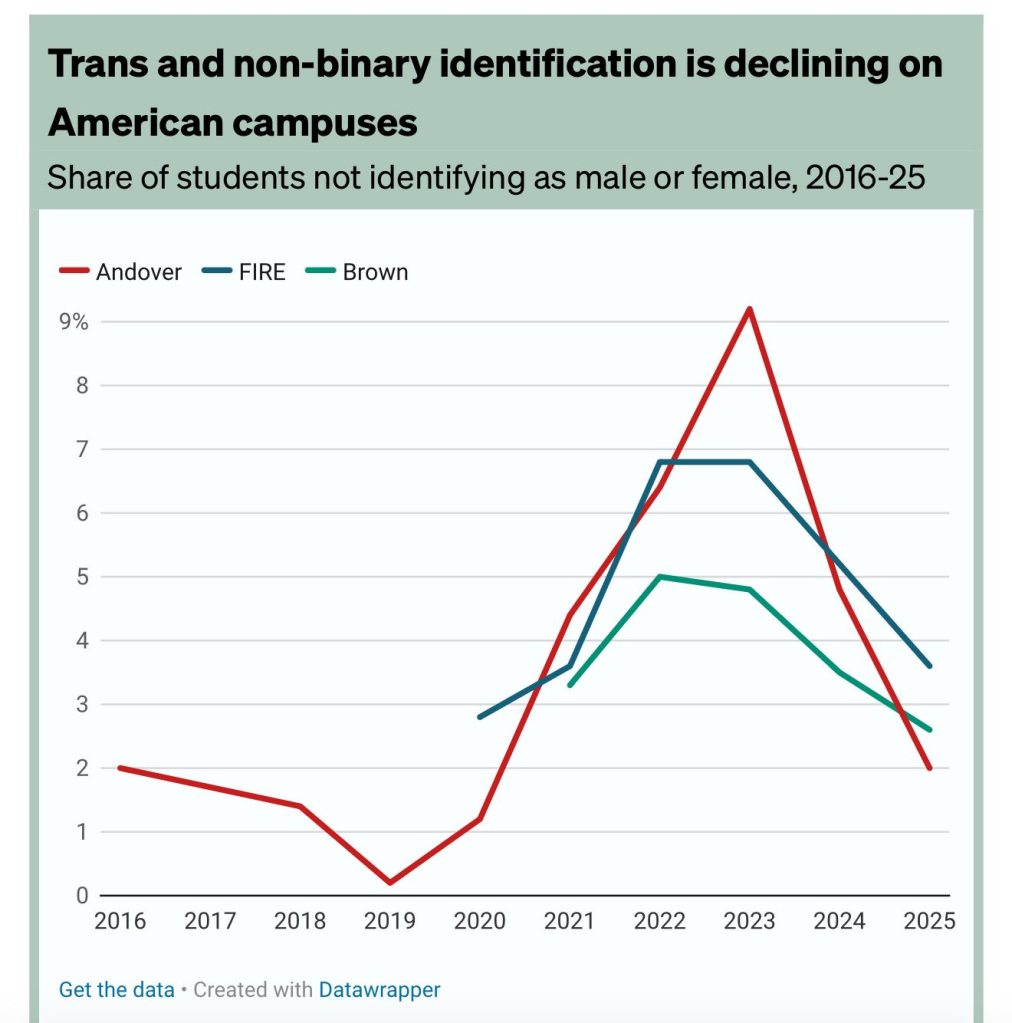

 Cruciform Stuff