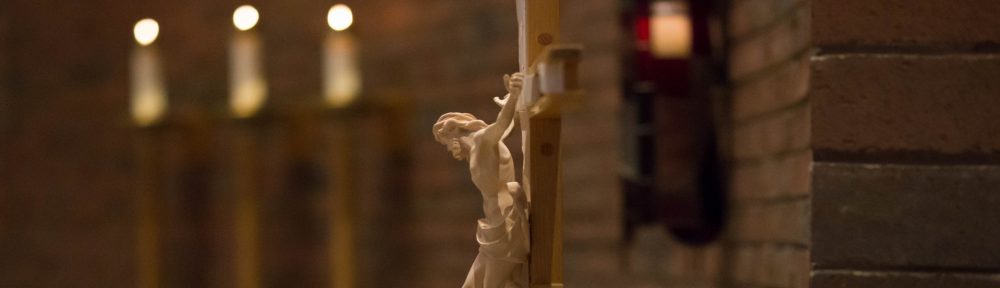
Not A Barrier. A Bridge.

As you may already know, I was asked to give the opening prayer and speak a few words at the rally for my friend Charlie Kirk on the steps of the Capitol in Lansing last Monday. Regardless of the resulting criticisms, both from some in my own ranks who believed I shouldn’t have participated and from those in the progressive media who broadcast my words, stirring a plethora of vulgar comments against me online, I considered it a privilege.

Indeed, it was a genuine honor to stand before thousands and speak of the hope we have in Christ (1 Peter 3:15), while at the same time urging all to take up truth’s torch and go forth with courage. This was something I was compelled to do—something I needed to do—if only because I owed it to Charlie.

And yet, there’s another debt I owed to Charlie. Not only was it the debt of friendship, but also the responsibility of being seen and accessible in public, as he always was. Charlie never hid from the people he knew needed him, and in his own way, he taught so many to step forward with the same openness, to stand where those who are searching might actually find them. I’ve tried to follow that same pattern of visibility, even when it sometimes comes with risks.

And yet, there is a memory from this past Monday that will stay with me forever.

Long before I stood atop the steps at the microphone, I learned my better destiny on Monday was down among the brokenhearted (Psalm 34:18). During the forty-plus minutes before the event started, a handful of men and women—not many, just a few, but still complete strangers to me—saw me near the Capitol steps and wanted to talk.

A few were heavy with grief. Some were burdened by anger. One was carrying both to extremes. But all wanted to know the “why” behind what happened to Charlie. They wanted answers. They wanted hope.

But here’s the thing. How did they know to talk to me? These people who approached me didn’t know me from the next person. They didn’t know my role in the event. Still, they felt somehow that they did know me, that they could step forward and ask to talk, to ask me for help with whatever burdens they were experiencing.

How was this possible? Before I answer that question, let me tell you what happened during those private interactions.

One-on-one, each told me his or her story, and I responded with God’s Word. I gave the Gospel. I reminded each that death does not get the final word, that Charlie’s faith was not in vain, and that for all who dwell in Christ, there is victory over the grave (1 Corinthians 15:54–57). Those conversations—private interactions near the Capitol steps—are what I remember most.

This brings me closer to an answer to the question. But still, a little more first.

Not all that long ago, a brother pastor shared with me an August email from his LCMS District President discouraging pastors from wearing the clerical collar. In his own words, he suggested that clerical collars create “the wrong kind of distance” between pastors and people, and that perhaps a suit, tie, or even casual clothes would be better—maybe even more approachable.

I couldn’t disagree more. To diminish or even discard the pastoral uniform—the visible sign of the pastoral office—is to hide the very thing that helps the hurting and the searching find us when we’re out and about in the world.

Maybe think of it this way. If someone is in crisis and they need a police officer, they don’t want to guess who in the crowd might be one. They look for the badge, the hat, the uniform. In the same way, the clerical collar doesn’t confuse us with the rest of the crowd. It doesn’t conceal. It’s not necessarily concerned with approachability. People will find every excuse imaginable to avoid anyone for any reason, anyway. But the only way to know to approach or avoid is first to find.

That said, I do recognize that for some, the sight of a clerical collar does not bring comfort but instead stirs painful memories of being hurt by someone who once wore it. And yet, the uniform’s meaning is apart from the wound. In the same way, one corrupt police officer does not redefine the badge for every officer, nor does one corrupt person in uniform—whether a doctor, a soldier, or anyone else—undo the purpose of the uniform itself. The failures of individuals do not erase what the uniform is meant to signify, nor do they invalidate the faithful who continue to wear it rightly. For those who would never know us from the next man in the crowd, the collar gives a clear answer. It identifies us, unmistakably, as shepherds of Christ, and that is often all the invitation a suffering soul needs to step forward.

Admittedly, in today’s America, a pastor’s findability (if that’s a word) can be a dangerous thing. For example, I was with a group of pastors in Washington, DC, several years ago. I was the only one wearing a clerical collar. Passing near a group of protestors in front of the Supreme Court building on our way to the Capitol, I was the only one in the group that the protestors chose to spit on. Yes, it was a dreadful thing in the moment. And yet, I know why it happened. They could see me. And like it or not, they knew whose servant I was and what I stood for just by looking at me (John 15:18–19). The other pastors were not similarly persecuted, but that’s because they were entirely indistinguishable.

But even in those kinds of moments, the Lord has sometimes turned what was meant for harm into something surprisingly good. More than once, the hostility directed my way has ended up sparking conversations with people who would otherwise despise Christianity from a safe distance. They approached me precisely because they could tell who I was, and while some came ready to argue, others stayed long enough to hear the Gospel. Those exchanges, often uncomfortable, would never have happened if I had simply blended into the crowd.

This past Monday in Lansing demonstrated the best of these possibilities, certifying for me that wearing the clerical collar is valuable all the time, because you just don’t know. And so, I wear the collar everywhere I go. I always have, if only to be found in a crowd by whoever needs to find me. Contrary to the discouragement my friend’s district president mentioned before, the collar doesn’t put distance between me and the people. It actually closes the distance. It signals, immediately and unmistakably, that I represent Christ. It’s a sign that Christ still sends His servants into the world. Like Him or hate Him, like me or hate me, it doesn’t matter. Here I am. Let’s talk (Romans 10:14).

By the way, regardless of what people think the collar means, for generations, the pastor’s clerical collar has always been this kind of visible sign. Although at one time, Christians were more literate in this regard and didn’t need the explanation. Traditionally, the clerical collar was and is a wordless sermon. The black garment represents sin, death, and the brokenness of this fallen world—our human condition. The white tab or ring at the collar represents Christ and His righteousness, surpassing all the darkness. But even better, the collar is near the pastor’s throat, indicating the Gospel message that is to be preached and taught from that same man’s throat to a world in dreadful need of rescue. What’s more, even as the man speaking is covered in the black garments, showing his equal need for a Savior, that white collar insists that when he speaks as a called and ordained servant in faithfulness to Christ, regardless of his frailties, it is not ultimately his voice you are hearing, but Christ through him (Luke 10:16; 2 Corinthians 5:20).

Those who approached me before the event had no idea who I was, but they saw the collar and knew I was an emissary of Someone who could help. If I had been dressed like any other man in the crowd that day, they might have walked past, their grief locked inside. But because they could tell just by looking at me, they didn’t pass by. They stopped. They cried. We prayed. They received the comfort of God’s powerful Gospel (Romans 1:16). And by God’s grace, they left with the only kind of hope that will see them through this life’s storms, even ones of national import.

And so, as you can see, the most memorable part of that day was not necessarily speaking to thousands in memory of Charlie but consoling a handful in service to Jesus. But it only happened because, regardless of what you’ve been told, the clerical collar was by no means a barrier, but rather a bridge—a silent invitation to come and be comforted by Jesus.

Family Matters Most

Yesterday was my daughter Evelyn’s 13th birthday, and I’m not kidding when I say she has been looking forward to the day for quite some time. Becoming a teenager is a memorable thing. It’s an even bigger deal for a girl who dearly loves her family and wants so much for them to share the moment with her.

Evelyn really is that kind of girl. If she is experiencing joy, she wants that same joy to be experienced by others. I think that’s one reason why she is so invested in her church family. She loves the Lord. He has blessed her through some pretty incredible challenges, and He’s done it in ways that have brought her tremendous joy. As a result, and firstly, she’s drawn toward being in worship with others in her church. What I mean is that even though she’s already in worship every Sunday, she also attends on Wednesdays—even though she doesn’t have to. When she was in midweek catechesis, she attended Wednesday evening worship by default because I brought her to school in the mornings, and then she’d stay through for her class, which happens right after evening worship. She’s confirmed now and no longer in midweek catechesis. But she still insists on staying with me all day to attend Wednesday evening worship. Secondly, she’s drawn toward making sure the place where worship happens is in good order—that the processional cross is in place, that the hymnals are straightened, that any scrap of out-of-place paper is removed. She wants the sacred spaces to be kept in a way that prevents others from being distracted from the joy God intends to give.

She’s also the kind of girl, as I said, who loves her immediate family—a family that, as the youngest in the bunch, she can see is beginning to spread its wings and fly in multiple directions, often making it difficult for everyone to be together. But she wants that togetherness. She so often wants nothing more than to have all of us in the same place at the same time. It bothers her when even one of us is missing. And rightfully so. Who wants to be apart from the ones they love the most? Not Evelyn. And her 13th birthday celebration all but guaranteed it. We’d all be there. And not only that, but we were all relatively commitment-free. She’d be able to spend the whole day at home with her family doing whatever she wanted, having set her sights on time with her siblings, the consumption of chili dogs (her requested meal), opening presents, and then plunging into some pie and ice cream a little later.

But then I got a call that threatened to jeopardize this greatest wish and a long-anticipated day.

The call came in on Thursday morning. I was asked to give the opening prayer at the Trump rally in Warren, Michigan, on Saturday afternoon. It was an honor to be asked, to be sure. It’s something that, if you say no, you never get asked again. I had a choice to make. I told the caller that I couldn’t say yes without checking on something else first, and I assured her I’d call her right back. As soon as I hung up, I called Jennifer. Like me, she knew the day belonged to Evelyn. With that, our conversation was brief. We agreed that while this was an incredible honor, whatever Evelyn preferred would determine my answer. She was most important to both of us, and quite simply, that was that.

I walked down to the school, peeked into Evelyn’s classroom, and motioned for her to join me in the hallway. Reminding her of something that needed no reminder—the arrival of her birthday in two days—I started to tell her about what I’d just been invited to do that same day. Before I could even begin to explain that she would have the final word and that I would be absolutely fine with saying no to the request, her eyes lit up, and she burst into, “Can I go with you?! Can I go?! Can I go?!” She took a quick breath and then, true to form, added, “Can we all go?! Can the whole family go?!”

“Of course, we can all go,” I said. “But it’s your birthday—and it’s an extra-special one. You’ve been looking forward to being home with the whole family and having an easy day. I want that to be what happens if that’s what you want. Whatever you want to do is what we’ll all do. Just know I intend to be with you on your 13th birthday. There’s absolutely no way I’d miss it.”

“Will I get to meet President Trump if I go?” she asked. “Can we all meet him together?” she continued, making sure the prospect of a unique birthday joy would be her family’s, too.

“Absolutely,” I said. “We’ll all meet the President together.”

“Really?!” she replied, sounding even more excited than before.

“Yes, really,” I said. “They’ll give our whole family special seats right up front. When it’s time, they’ll call me on stage to offer the prayer, and then sometime afterward, when President Trump arrives, they’ll come and get us and take us back to meet him before he goes up to speak. We’ll get to talk with him and take some pictures.”

“Oh, this is going to be the best birthday ever!” she exclaimed. “And we’ll all be together!”

And that’s pretty much where it ended. Evelyn gave me an incredibly tight hug, and then I shepherded her back to class. The rest is what it is. Walking back to my office, I called and said yes, even though I was fully prepared to say no and never to be asked again. With that, we all went together—sadly, except for Harrison. He had a very sore throat on Friday and felt terrible when he awoke on Saturday. He preferred to stay home and sleep. We all missed him, that’s for sure. Each of us said that more than once throughout the evening. Still, it was quite an eventful night. While waiting in the Green Room before my time on stage, I met and visited with a number of folks many of us only know from a distance—such as Mike Lindell and Margorie Taylor Green. One notable moment was spent with Dick Morris. Before the family and I were ushered back to meet the President, he leaned over to ask if I’d read Erik Metaxas’ book on Luther. I had. And so we talked somewhat superficially about its contents. Along the way, I mentioned Luther’s theology of the Two Kingdoms, and that led him to ask me to explain it. I did, and he seemed convinced. And why wouldn’t he? It is the best, most precise handling of biblical Church and State theology.

Still, and as Evelyn is likely to tell you with glee, the best moment for all of us is when she got a cheerful and welcoming “Happy Birthday, Evelyn!” from President Trump followed by a warm handshake and a few pictures together with her family.

Now, I suppose I felt moved to tell you about my initial interaction with Evelyn during school because it shaped what I would eventually say during the prayer before the more than 20,000 people in attendance. If you watched the broadcast, you’d remember that I prayed for many things—religious liberty and protection from unjust laws, courage among citizens, preservation of objective truth, an unraveling of the wickedness of abortion, and God’s mighty hand for crushing Proposal 3. I asked God for these things and more. But smack dab in the middle of visiting with these requests on paper, I was first moved to scribble that our gracious Lord would restore admiration for family. In essence, I asked that we, as a nation, would be reminded of just how wonderful the bond between a father, mother, and children truly is. I did this not only because I know very well the blessings that come from having a family of my own but because God is the generous architect of the human household, and He has put the estate of family in place as a fundamental underpinning for all societies of all time. When families break, communities get weaker. When families are redefined, institutions lose more of their grip on what is sure.

If a society is to endure, it must preserve families.

I’ve also written in other places that the human family forms the quintessential transmission lines for passing this knowledge along from one generation to the next. When families come undone, when these lines are torn down, again, societies lose touch with their very identities. Families are essential to a nation’s identity. Knowing this, if I can’t first choose my family over myself, I harm the ones I love and do my country and its future generations a terrible disservice. The decision to say yes or no to a request like this might not appear to be that impactful, but in the end, its blast radius reaches further into a future than any of us could ever know. The funny thing is, the love I have for my daughter and the love she has for me made it incredibly easy to see. The love my whole family has for each other made it even more apparent.

Remember that.

Wives, love your husbands. No matter what, choose them first. Husbands, love your wives. Prefer them above everything else. Parents, love your children. Embrace them before embracing the things you think might be most beneficial to you personally. Do these things and enjoy a sturdy family, a gift of the Lord well-protected from a culture seeking to divide it. Our floundering 21st-century society needs you to do this, now more than ever.

[To view the prayer, click here.]