

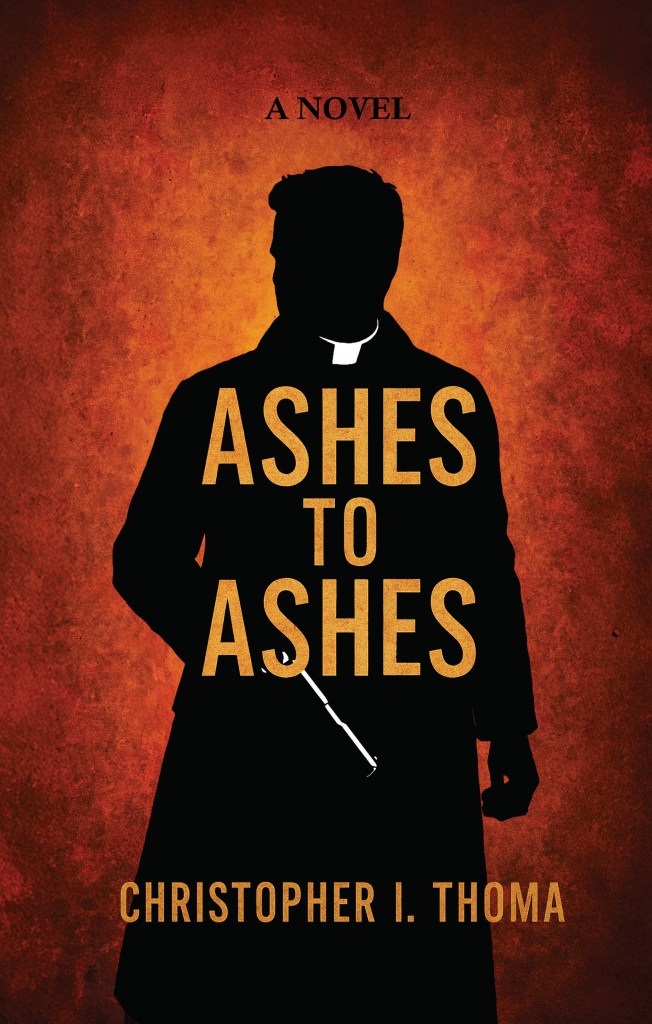
I’m going to let you in on a little secret, if only because I feel like writing about it. In short, I’ve had a few interesting conversations about my new novel, Ashes To Ashes, with some folks in Hollywood. But that’s not necessarily the interesting part. What stood out in those conversations is that, after reading the book, they all reached back to me with varying versions of the same conclusion. Essentially, they’ve determined that the novel fits the time. In other words, it fits the national zeitgeist, tapping into something raw and unresolved in the public soul.
What they mean is that people are angry.
By angry, they don’t mean the performative kind of anger that burns hot on social media and then disappears by the next news cycle. They mean the deeper kind—the kind that settles into the chest when dreadful things keep happening over and over again at the highest levels, and yet, no one ever seems to get arrested or brought to justice.
I say this as I consider the obvious examples. For starters, the State of Minnesota is riddled with as much as nine billion dollars in fraud, nearly all of it played out among its Somali community. And lest anyone seem racist or anti-immigrant, no one appears to be getting into much trouble for it—at least, not the actual orchestrators. Or consider the Epstein files. There’ve been years of whispers, sealed documents, but also unsealed documents with redactions that hide 99% of the content—all of this leading to dead ends and a gazillion unanswered questions. Everyone knows something happened. Everyone knows there’s a list somewhere. Dark-intentioned people who use other people always maintain the upper hand. They keep lists. They protect audio and video files. We’ve learned that, especially within the last few years, relative to the release of certain CIA files. However, in this case, nothing has happened. There’s likely some really big names on these lists and in these videos. And yet, no one has paid for their crimes. In the end, transparency and accountability remain entirely elusive.
If you’ve read Ashes to Ashes, then you’ll know that frustration with injustice is an element in the topsoil from which it emerges, which is why the folks out in Hollywood responded as they did. The main character, Reverend Daniel Michaels, finds himself in a dreadful situation, ultimately owning some significant evidence. Unsure of whom to trust, when he scans his immediate horizon, he discovers people and organizations that appear immune to consequences. He also learns the cost of inaction paid by ordinary people—young girls being abused and then traded, or simply moved and slaughtered, like cattle. And while ill-willed insiders so easily use the system to their benefit, he steps into the fray and starts taking names. And it gets messy. Very messy.
Now, please understand, that’s not an endorsement of vigilantism. I’m simply making the connection to the original comments while also acknowledging a reality. I had a conversation in my office this past Monday about the book. Essentially, I said that while we might not want to admit it, when justice feels theoretical, people start fantasizing about other ways of leveling the field. When wrongs are endlessly explained away, when excuse after excuse is given for why justice is so slow, anger begins looking for a body to inhabit.
Again, the Somali fraud in Minnesota and the Epstein files are prime examples of the zeitgeist’s growing conviction. They’re stories that land, not as once-in-a-while scandals, but as recurring symbols throughout America’s immediate history. Even worse, they reinforce a growing suspicion that there are two systems of justice—one for the elite, and one for everyone else. Christopher Wray and James Comey can demonstrably weaponize the justice system and get away with it. Hillary Clinton can have hundreds of thousands of classified documents on a private server, then provably bleach that server, and remain untouched. Someone like Hunter Biden can owe mountains in back taxes, purchase a gun while on drugs, even video-record his behaviors, and leave his proceedings with a relative slap on the wrist. And yet, if I were to make the slightest modification to my home without the proper permits, or make the tiniest mistake on my tax forms, I’d risk massive fines and, in some cases, maybe even time in jail.
It’s these inequities that, when left unchallenged or untreated, curdle into citizen rage. That rage is what Reverend Daniel Michaels embodies for a little less than four hundred pages. And because of this, as the character’s creator, hear me when I say that while he’s not the book’s villain, he’s also not a hero, even though you’re likely to discover yourself rooting for him. He simply isn’t clean. That makes him an anti-hero in the purest sense. In this case, he’s what happens when people stop believing that truth will surface on its own. He’s the product of a world where “wait and see” has turned into a permanent sentence—the only reply to chronic injustice.
And so, America’s current zeitgeist. But here’s the thing.
For Christians, we have a very important filter for discerning these things. For one, God’s Word never denies the reality of injustice. The Bible is brutally honest about corrupt judges, dishonest rulers, and systems that are weaponized against the powerless. But it is equally honest about the limits of human retribution. “Vengeance is mine,” the Lord says (Deuteronomy 32:35 and Romans 12:19)—not because injustice doesn’t deserve an answer, but because we are not created to carry that weight around without being deformed by it. Only God can bear it. In that sense, for an honest reader, Daniel Michaels serves as a mirror, not a model. He shows us what happens when trust collapses, and despair reaches up and out from its goop.
That said, the Christian answer to injustice will never be blind faith in broken systems, which seems to be what far too many in the Church prefer to believe. It’s also not some sort of monastic disengagement from society entirely, which is another preference for far too many in Christendom. Christians need to be in the game and playing it hard. But as we do, we remember what the scriptures reveal—that God is not confused or compromised or unaware. He does not lose files. He does not accept bribes. He does not forget victims. He does not need leaks or whistleblowers to know what’s going on in His world. Nothing He sees has redactions. Every hidden thing is already open and accessible to Him—not symbolically, but actually. Even better, as I like to mention on occasion, the divine lights will eventually come on for all of us, too. I’m not saying we’ll know everything about everything. I’m simply saying what the scriptures say—that the day is coming when all things hidden will be revealed.
In the meantime, what does our Lord require of us? I’ll let the Prophet Micah answer that one: “He has told you, O man, what is good; and what does the Lord require of you but to do justice, and to love kindness, and to walk humbly with your God” (Micah 6:8). In other words, we are not called to burn the world down in order to set it right. Instead, we are to be others-focused. We are to stand in the breach—telling the truth, protecting the vulnerable, refusing to excuse evil, all the while being humble enough to remember that God is the finisher, not us. We must trust that He will be God.
Of course, that trust does not deny that violence may occur in a fallen world (Ecclesiastes 3:8), nor that, in extreme circumstances, its use may be tragically necessary to restrain greater evil or defend the innocent (Genesis 9:6, Psalm 82:3-4, Romans 13:4). Scripture itself acknowledges this grim reality. But even then, violence is never something to be pursued eagerly or confused with righteousness itself (Matthew 26:52). It remains a last resort in a broken world, and, as best as possible, carried out soberly and with moral clarity, never forgetting a Christians accountability before God (Luke 14:31, Nehemiah 4:14).
In the end, justice will not be done because a character like Reverend Daniel Michaels—real or imagined—goes around taking names with his 1911 Colt. It will be done, ultimately, because Christ already knows the names of both the perpetrators and the victims, and He has promised not to allow injustice to be the last word in any circumstance.
I suppose, as Christians going forward into another relatively early week of a brand new year, perhaps the most countercultural resolution any of us can make is not louder outrage against this world’s evils. It’s not necessarily pointing out how that foolish girl who tried to run over the ICE agent and got shot and killed “had it coming to her.” It’s true, idiocy has consequences. Still, perhaps the better resolution is a sturdier trust behind the outrage—to actually know what we believe and why we might have a reason to get angry in the first place.
By the way, keep in mind that such faithfulness is rarely dramatic. In fact, it looks rather ordinary. It looks like ordinary obedience practiced consistently. It’s built by showing up to church even when we’re tired. It’s sitting beside others in study instead of alone at home on our screens. It’s praying when we’d rather vent on social media. It means giving, serving, confessing, forgiving, and staying rooted in Christ when it would be so much easier to just let oneself drift in the cultural current of “That person has it coming and I’m going to get him for what he’s done.”
None of the things I’ve mentioned are grand gestures, but they are formative. If anything, they’re more than capable of recreating a person’s habitus, which is, by definition, “the way a person perceives and reacts to the world.” It’s what I mean when I talk about seeing the world through the lens of the Gospel. Indeed, a sturdier devotional life—one that trains itself to see through the person and work of Jesus Christ—is one that has little room for the perpetual unrest stoked by vengeful rage. I’m not saying rage won’t be there sometimes. Of course it will. We’re all sinners, and sinners are prone to dreadfulness. But it will be less likely. And that’s a good thing.
And so, again, what better way to continue into a new year than by acknowledging that the stubborn work of Christian faithfulness is an exceptional path. And of course, we pursue that path knowing that in Christ, we always have hope. Only in Him will we find the strength to endure through and into the Day of Days when the divine lights come on, and everything is set right by the One who saw, knew, and was actively working all along.
Who knows. Maybe 2026 is the year the Lord returns. And so, the Church cries out, “Come quickly, Lord Jesus” (Revelation 22:20).

 Cruciform Stuff