Role Reversal

If you haven’t already heard, the U.S. military used our country’s infamous bunker-buster bombs yesterday to take out Iran’s nuclear sites. Whether one agrees with the decision or not, it’s a sobering reminder: the world our children are navigating is growing more perilous by the hour. That said, when I woke up this morning, I had already intended to write about a significant role reversal I experienced last week. I’m going to stay the course, yet I can already sense how this morning’s news will impact it.

Essentially, my daughter, Madeline, recently earned her private pilot’s license. As a Father’s Day gift, she took me on an hour-long flight. We departed from Bishop International Airport in Flint, flew to a small airstrip in Linden, landed and launched twice, and then returned to Flint. On approach into Flint, she performed a maneuver called a “slip.” I looked it up and found the following definition to be exactly as I experienced:

“A slip is an aeronautical maneuver that involves banking the aircraft into the wind and using opposite rudder to maintain a desired flight path while increasing descent rate or correcting for wind drift.”

In plain terms, Madeline banked us left, and yet, we didn’t turn. We slid sideways while descending rapidly. Just above the runway, she finally straightened the plane, leveled us out, and touched down as if we were angels gently descending from heaven.

She was amazing.

Now, I started by saying I experienced a significant role reversal. To frame all of this in the proper perspective, it really wasn’t all that long ago that Madeline’s life was in my hands in every way imaginable. Indeed, it’s as if only recently, I was tucking her into a car seat and securing the five-point harness, even adjusting the straps to fit her comfortably while ensuring maximum safety. I was the one who checked twice—sometimes three times—that every latch was secure, every buckle snug, because that’s what a father does to keep his child safe. He does things like hold her hand in public. He hovers behind her on staircases that she is still too small to climb. He steadies the handlebars on her first bike ride, jogging alongside her down the sidewalk, ready to catch her when she tips. Everything about her very existence—the entirety of her well-being—is entrusted to him.

But last Sunday—Father’s Day, no less—somewhere just beneath the clouds, the roles reversed, and I found my life was entirely in my daughter’s hands. I climbed into the copilot’s seat and fastened the belt, which she then refastened because I hadn’t done it correctly. She proceeded to adjust it accordingly. And then she was the one now glancing over the vehicle’s every dial, confirming each setting, running her hand along the controls, reciting the pre-flight checklist items with unbroken concentration. I did nothing. She captained the headset, talked with the towers, and guided me through what to expect.

I guess what I’m saying is that the magnitude of that transfer wasn’t lost on me. It was exhilarating, yes, but also profoundly humbling.

Still beaming a couple of days after the flight, while Madeline and I were driving together, I told her again how proud I was of her. I mentioned a quote that had resurfaced in my mind as we flew—something from C.S. Lewis’ The Four Loves. He wrote so profoundly, “To love at all is to be vulnerable.” I explained how placing my life in her hands had revealed something. It wasn’t just that I trusted her. It was more about the depth of love I have for her, the kind that knows just how much she loves me, too.

I’ve known Lewis’ words for a long time. I’ve reflected on them in the context of marriage, friendship, pastoral ministry, and countless other situations where love demands a certain measure of risk. But I’d never thought to apply them to my kids until now. And yet, there they were, soaring right beside us at 2,000 feet on Father’s Day.

I’m usually pretty good with words. But this morning, I’m feeling somewhat limited. The English language doesn’t really have the capacity for genuinely communicating the moment your parental life shifts from giving care to receiving it—from being the one at the controls, both literally and metaphorically, and then, in an instant, letting go of the illusion that I would always be the one doing the work to keep my child safe. That kind of vulnerability doesn’t come easily, especially for a dad. But it is, I think, a place where, if we’re looking through the lens of the Gospel, God shows us just how complete love can be in a family.

I suppose something else comes to mind in all of this, too.

I would imagine that most Christians are familiar with the text of Proverbs 22:6, which reads, “Train up a child in the way he should go; even when he is old, he will not depart from it.” Most folks see that verse in terms of instruction in moral grounding and right living. That’s not wrong. But it misses the heart of the verse.

Its primary aim is that we would raise our children in the “way,” namely, faith so that when they do climb into the cockpit of life, so to speak, they do so not only with competence but with wings outstretched for trust in Christ. In that sense, Proverbs 22:6 reminds us that even as our children’s hands might reach to ours for learning character, skills, and such, it is far more critical that they know to reach for the Lord’s hand in all things. Only then can they truly navigate both the clear skies and the storms with spiritual wisdom and poise. Only in Christ will they know how to take off, how to “slip” when necessary, and how to land with grace.

Anyone considering these things honestly will recognize something more.

Without question, the world my children are navigating is by no means the same one I inherited. Long before the latest news about Iran, the skies they were flying in were already far more turbulent. The voices buzzing through the coms are more confusing, almost unintelligible. The instrument panel in front of them, while more advanced, is almost entirely calibrated by a secular age that denies God’s existence altogether, calling His Word foolishness and insisting that truth itself should be wholly despised.

My point is that the role of Christian parenting cannot be passive in any of this. It cannot be content merely with getting one’s kid into a good college so that they are materially successful. All of that ends when they breathe their last. As I’ve often said from the pulpit, this world and everything in it carries an expiration date. You may not see it, but it’s there. That said, we are not just raising children to exist and survive among temporal things. We are raising them, as Luther said, “to believe, to live, to pray, to suffer, and to die” (LW, Vol. 47, pp. 52-53), which, by default, means we’re raising them to exist in this world with eternal things in mind. We’re raising them to stand, to speak, and to boldly hold the line when others around them are folding. We’re raising them to do these things, not with arrogance, but with conviction formed by the eternal Word of God.

That’s why Proverbs 22:6 matters so deeply. Indeed, to “train up a child in the way he should go” means to help position them for good character and success. But the “way” it mentions is not abstract. It is the cruciform road that leads through repentance and faith in Jesus. When we train our children in this way, we’re grounding them in the very mind and heart of God.

And they need this grounding. They’re already being told that truth is subjective and that steadfast Christian conviction is cruelty. Worst of all, the surrounding world insists that biblical godliness is an artifact of a bygone era. They are surrounded by cultural winds that do not merely blow—they howl. If they are to fly straight—if they are to correct for this world’s drift—they will need spiritual discernment. They will need courage calibrated by sound doctrine and faithful practice. They will need to be taught to see everything in this world through the lens of who they are in Jesus.

In a sense, the time has already come for me to realize that my kids are now flying and I’m not. If you haven’t yet arrived at the same realization, then just know that you’ll be there soon enough. The time is coming when your little ones’ hands will be on the controls, and your hands will be folded in prayer.

That time comes sooner than we think. Parents, the preparation begins now.

When the choice is between faithfulness to Christ and the world’s distractions, choose faithfulness, even when the child doesn’t want to. Lead the way. Even as they might kick and scream to get free from the car seat, strap them in and set out. Do this not only because you’re teaching them how to fly but why to fly. Do this, remembering your children will one day be at the controls, and they’ll be faced with circumstances you never imagined.

Still, when this happens, you’ll be okay, even if things appear to be going south. You’ll be confident that you did everything possible to keep them connected to Christ. You’ll be able to hope that, when it matters most, they’ll know to lean not on the wisdom of this world but on the One who will never steer them wrong. Even better, you’ll know that even though you’re not in the cockpit, Christ is, and regardless of what anyone’s bumper sticker might say, He’s no copilot.

Slipping Into Error

I’m sure you already know this, and yet, just in case you don’t, Israel launched preemptive strikes against Iran’s nuclear sites on Thursday. As expected, Iran responded. It was reported in the news that we knew those strikes were coming, even as America was attempting to broker a peace deal with Iran. However, Iran appeared to be doing what Iran always does, which is to make every excuse for not securing peace. Meanwhile, Israeli and American intelligence agencies reported that Iran was only days away from having enough enriched uranium to build a minimum of fifteen nuclear weapons, only one of which would be needed to turn Israel to glass. Used against the United States, millions here would die.

Is any of this news reporting accurate? Is the media telling us what’s true? It’s hard to tell these days.

On one hand, Iran’s supreme leader, Ali Hosseini Khamenei, has said they would pursue nuclear independence. He also said as recently as 2023 that “Death to America is not just a slogan. It is our policy.” And of course, Iran—the largest state sponsor of terrorism in the world—has made it a priority to rid the world of the Jews. That’s not breaking news. That’s an open and longstanding fact. What’s more, Iran’s desire for Israel’s destruction, some have said, is the only truly unifying principle that keeps the nation together. A largely tribal nation, Iran would likely come entirely undone if not for its leaders’ radical Islamic ideology.

On the other hand, nearly everything the news reported about COVID turned out to be false. Masks and social distancing absolutely did not accomplish anything, except to decelerate development in generations of children. It turns out that ventilators made the sick worse. Ivermectin, the Nobel Prize-winning medication prescribed to humans for decades, was negatively labeled a “horse dewormer” and called dangerous, ultimately getting doctors who knew better and prescribed it into heaps of trouble. And yet, it turned out to be wholly sufficient for treating the illness. If a person added vitamin D to his regimen, he would be good to go. Conversely, most news outlets insisted that the vaccine would protect from infection. They streamed Biden’s thank-you to the vaccinated while warning the unvaccinated to expect “a winter of severe illness and death.” And yet, the opposite was true. In fact, the rates of unexpected deaths have seen a sharp increase only among the vaccinated.

I read an article this morning from CBS News saying that the FDA is insisting Pfizer and Moderna “expand the warning labels on their COVID-19 vaccines about the risk of a possible heart injury side effect linked to the mRNA shots, primarily in teen boys and young men.” It goes on to talk about unusual spikes in myocarditis. A peripheral article warned of the same, but then added strange cancers and other diseases to the list of concerns, conditions that were never as prominent until after the COVID vaccines and boosters were so widely administered. One particular example shared was that sudden athlete deaths were off the charts by comparison to pre-COVID statistics.

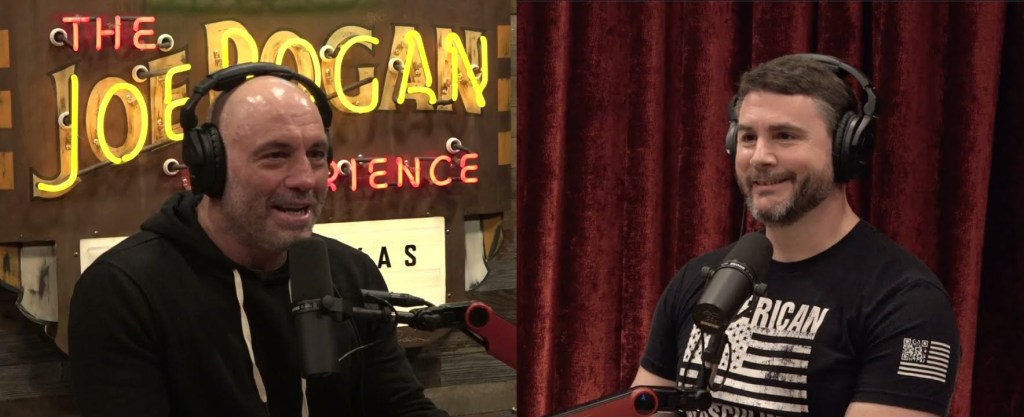
By the way, I should say I’m not surprised by the vaccine results. Dr. Mary Talley Bowden was recently on Joe Rogan’s podcast, and she mentioned that we now have five years of data stacks confirming the vaccine’s dangers. She essentially noted that anyone who received the vaccine is now, in a sense, permanently rewired—because what the news called a vaccine isn’t a vaccine. It’s an mRNA injection. It’s gene therapy. Gene therapy rewrites DNA. Vaccines, in theory, are designed to prompt and arm the body’s immune system. Gene therapy is designed to manipulate the body’s very DNA. It works at a genetic level.

Still, the public’s response to COVID proved how quickly fear and misinformation can bend entire societies—even churches—toward error. I say this as so many churches, even after the lockdowns, continued to forbid worshippers through the door unless they were masked, vaccinated, and sat two rows apart. This is an absolute violation of God’s Word, regardless of the government’s mandates! The same patterns are playing out again, just under different headlines.

However, I didn’t start writing this morning with COVID-19 on my mind. I was more concerned about the possibility of war. More precisely, I was thinking about how easily things come undone—or how easily human beings can steer into falsehood—when our handling of source material is faulty.

Concerning everything I’ve described so far? I suppose the only answer I can give is to say, “Read, read, and read some more.” As Christians, I encourage you to do this, remembering three things in particular.

First, understand that skimming content is rarely helpful. Dig in and digest, reading from various sources in order to get a topic’s fullest spectrum of perspectives. Second, pitch everything you read against the Word of God. In other words, let everything you take in pass through the filter of Scripture. God’s Word shapes our opinions, not the other way around. Third, make sure your doctrine is sound. Doctrine doesn’t just articulate what we believe about salvation. It provides necessary boundaries, becoming a primary tool for discerning everything we see and experience. If you claim the Bible, and yet your theology depends on the modern nation of Israel going to war with Iran as a fulfillment of end-times prophecy before Christ can return, then it’s likely the first two recommendations weren’t heeded. In other words, first, you aren’t all that familiar with the Bible’s actual contents; and second, your opinion has become your strongest filter. As a result, your doctrinal compass is misaligned, and you’re destined only to distort the source material—the Bible.

Now, I say this as someone who’s spent a lot of time wrestling with how theology and the public square intersect, particularly through the lens of Church and State, or the doctrine of the Two Kingdoms. What we believe about God’s rule and our role in the world carries consequences, both for faithfulness and for clarity during incredibly confusing times.

Be aware that confusion has a way of hardening into error.

You may have already noticed from what I wrote earlier about Israel and end-times prophecy that one particular distortion in times like these is Christian Zionism. It’s a theological framework that merges biblical language with modern political expectations, often assigning messianic significance to the nation of Israel. This confusion leads many to misapply sacred titles and divine promises in ways that seem patriotic or spiritually inspiring, but ultimately are biblically reckless and incredibly dangerous.

For example, Israel’s current offensive has been dubbed “Operation Rising Lion.” An online friend posted on Saturday an image of a lion with an Israeli flag blended into its face. The tagline read, “The Lion of Judah has risen.” The image made me cringe. Yes, I support the nation of Israel’s right to protect itself from annihilation. Still, the nation of Israel is not the Lion of Judah. The phrase “Lion of Judah” belongs to Jesus Christ alone (Revelation 5:5). Furthermore, it was posted by someone who assumes the modern nation of Israel still carries an unbroken divine mandate, simply by virtue of its geography or ethnicity.

To believe and confess this is to upend the fuller testimony of Scripture. It replaces Christ-centered fulfillment with nationalistic nostalgia and, in doing so, distorts God’s promises and perpetuates grave theological error.

This kind of misreading reflects the same pattern I’ve addressed already. Whether it’s Iran’s deception or the media’s COVID narratives, when we abandon faithfulness to God’s Word, we can only lose our bearings in life’s fog. Reality becomes distorted, and we are just as vulnerable to being swept away by falsehood as anyone else.

Of course, whenever someone challenges the notion that modern Israel holds a unique divine status, the charge of antisemitism isn’t far behind. Even as someone who supports Israel’s right to defend itself, I’ve borne that charge. But the accusation misses the mark entirely. I’ve written before that it is by no means antisemitic to say (alongside Saint Paul, the inspired writer and chief apostolic interpreter of Christ and the Old Testament Scriptures) that Christians are the “Israel of God” (Galatians 6:16). The Israel of God is not ethnic or a localized nation. Saint Peter clarifies it is “a chosen people, a royal priesthood, a holy nation, God’s special possession…” (1 Peter 2:9–10). And again, Saint Paul writes, “If you belong to Christ, then you are Abraham’s seed, and heirs according to the promise” (Galatians 3:29); and “For not all who are descended from Israel are Israel. Nor because they are his descendants are they all Abraham’s children… it is the children of the promise who are regarded as Abraham’s offspring” (Romans 9:6–8).

Children of the promise—Christians—are regarded by God as Abraham’s true offspring. Like Abraham, they believe in the promise (Genesis 15:6; Romans 4:3; James 2:23). And what is the promise? The One who was promised—Christ (Galatians 3:16; Luke 1:54–55; Luke 1:31–33; Acts 2:29–31; Hebrews 8:6–13; Romans 15:8–9; 2 Corinthians 1:20; and countless other texts). All who look to Christ in faith will be saved (John 6:38–40) and brought into the new Jerusalem—eternal life (Revelation 21–22; Psalm 46:4–5; Isaiah 65:17–19; and others).

To say that only believers in Christ are saved and given eternal life is not antisemitic, but it is fundamental to Christian theology, and it does show Christian Zionism’s error. If it were antisemitic, then the apostles were antisemites for believing and declaring, “Salvation is found in no one else, for there is no other name under heaven given to mankind by which we must be saved” (Acts 4:12). What’s more, Christ Himself would be an antisemite for saying in absolutist terms, “I am the way, and the truth, and the life. No one comes to the Father except through me” (John 14:6); and, “Whoever believes in [God’s Son] is not condemned, but whoever does not believe stands condemned already because they have not believed in the name of God’s one and only Son” (John 3:16–18).

It is right and godly to defend and protect anyone and everyone from persecution or attack. Long before the events of this past week, Iran and its proxies had launched over 500 ballistic missiles into Israel. Christians should support restraining Iran. To do so is to love one’s neighbor as oneself. But that doesn’t change the fact that Christian Zionism is a dangerously confused theology—a dreadfully miscalibrated doctrine—that must be avoided, if only because it corrupts the Gospel that can save everyone in both Israel and Iran.

I suppose in the end, my main point is to say that if Christians are not vigilant—biblically, and therefore doctrinally—we will find ourselves swept along by narratives that feel righteous but stand in contradiction to God’s revealed truth. Whether it’s the media rewriting science or Christians assigning eternal significance to things that do not deserve it, the temptation to trade discernment for ideological capture is only ever a step away.

This is why being in God’s Word is so important. I encourage you: make it a part of your everyday routine. And as I said, don’t skim. Even better, don’t search the Scriptures just to find proof texts that reinforce your existing political views or cultural assumptions. Instead, go there to be corrected, shaped, and grounded. Go there for truth. Go there to find Christ. He is enough, and His Word is sufficient. And the Church—His true Israel—must live and speak as though both of those things are actually true.

Summer Belongs to June

Welcome to June. It’s a little chilly. Nevertheless, it’s here.

Ever since I was a kid, summer always belonged to June. The poet, William Carlos Williams, scribbled, “In summer, the song sings itself.” Every kid knows he was right. When June came, that meant life’s doors were opening to easier days—summer days.

As a kid growing up in central Illinois, in the twilight hours, after we’d become bored with jumping ramps, climbing trees, playing hotbox, or anything else we felt like doing, we’d throw golf balls into the air to attract the bats. After an hour of watching them swoop and flitter and spin in this and that direction, and feeling like pitchers in our eighth inning, we’d head inside to watch whichever movie might be playing on whatever tunable station we could manage in our cableless house.

As an adult, the summer doesn’t necessarily promise me the same freedoms. Still, when June arrives, it seems the world starts loosening its collar. The daylight stretches further. Togetherness on the front porch or back deck lasts longer. Solitude’s silence hums with a kind of warmth that winter could never understand. Time itself seems to wander around barefoot.

Summer doesn’t ask for permission. It simply arrives and reminds us to live—that staying inside isn’t the only possibility. We can go outside, too.

A few weeks ago, I sat in a video conference with a publisher. I’ve been sitting on a handful of chapters for a children’s fantasy novel for more years than I can count. Only recently did a wind of inspiration hit me. In truth, it was my grandson’s birth. Inhaling the event’s freshness, I’ve been exhaling newness to the story. Contextually, I’d already been chatting with the publisher about crafting a religious liberty book, which I more or less completed last night. But this conversation was about the children’s book. Just for fun, I sent along the first six chapters, and with that, interest was sparked, and ultimately, encouragement to move forward followed.

Contextually, I began writing the story as a means to help my son, Joshua, navigate the challenging waters of my full-time seminary training. He was four years old when I began what would be three long years of commuting to and from Fort Wayne, Indiana. I would drive down on Sunday night and return to Michigan on Friday night. Meanwhile, even as a full-time student, I would also maintain my full-time Director of Christian Education (DCE) duties here at Our Savior, doing what I could to manage long-distance responsibilities, while also holding regular office hours and participating in activities on weekends.

To prevent the loss of Josh’s childhood along the way, we started writing a story together. The routine was fairly simple. Before I left on Sunday night, we’d sit together to talk about the story. In between classes and paper-writing that week, I’d add to the story based on what we talked about. When I returned the following Friday, not only was he happy to see me, but he also wasn’t dreading my Sunday departure because he knew I wouldn’t share the new material with him until just before leaving. And once again, after reading what I’d crafted, we’d talk about what should happen next, and then I’d go back to Fort Wayne and repeat the process.

In a sense, I share all of this, reminded of something I just read last night from George R.R. Martin. He wrote, “Summer will end soon enough, and childhood as well.” Again, that’s what I was guarding against when I began writing the story in the first place. It was a dreadfully taxing experience, one I’d never recommend anyone else try. Once it started, I didn’t want Joshua to get lost in the mess. With that, while the story endeavor was a relatively simple exchange, it became something sacred between us—a way to hold things in place; a way to let the summer of our togetherness linger just a little longer.

I managed quite a bit of text before the effort no longer seemed necessary. He adjusted, and we found other ways to manage the distance while growing closer, not apart.

Joshua is 25 years old now. His childhood has ended. All is well. Strangely, not long after Preston’s birth, I happened to glance at the story, and I remembered that its primary character, quite literally based on my son (even bearing his name) is the story’s narrator. He is recounting the tale for someone. The reader doesn’t yet know who it is. Something tells me it’s Joshua as a father visiting with his son. My gut tells me that son is Preston.

“Summer will end soon enough, and childhood as well.” True. Seasons come and go. But within those seasons, there are seeds of things that continue. The story I began for a little boy served its purpose. And yet, it appears to have waited patiently, like a half-built treehouse in the backyard. Now another little boy has arrived—new to the world, unaware of what stories await him—and suddenly, I hear the hammering again. Interestingly, I feel the warmth of June, and I know what I’ll be doing in my free time this summer. In fact, I created a writing schedule that carries me into July. If I stay on track, I’ll be done before the summer’s end. I really want to finish what began for Joshua, but now, too, for Preston.

Yes, time passes. But just like summer, stories have a way of returning, full of promise and life. King Solomon said it best: “To everything there is a season, and a time for every matter under heaven… He has made everything beautiful in its time. Also, He has put eternity into man’s heart” (Ecclesiastes 3:1,11).

Childhood, like summer, may come to an end. But the God who governs all seasons is unchanging. In the same way that He weaves beauty into the warmth of June, He plants joyful opportunity among times of potential heartache. We don’t always see it. However, we can know it. Indeed, He interlaces incredible beauty into each of these moments, whether summer-like or winter-like. He reminds us that the seasons are His to orchestrate, and we can trust Him. The faithful God who gives us June, who gives us childhood, who gives us time and story and memory, He cares year-round (Psalm 124:1). And besides, just as Solomon said, He’s already sown eternity in our hearts. That’s a wink at faith—a glance toward the Gospel fact that something happened (the death and resurrection of Jesus), has been sown in us, and remains in full bloom, no matter the season.

I could sit here and continue to unpack this wonder, but I need to wrap up. In the meantime, just know that for believers, the seemingly fleeting beauty of summer and the tender brevity of childhood aren’t really lost to time, not when you have Jesus. With Jesus, nothing truly good ever slips away. Instead, it is preserved, perfected, and restored in ways we can hardly imagine.

And so, welcome to June. Summer is just beginning. Yes, it will eventually end. But the better story of God’s faithfulness is forever being told.

Showing Up

I take vitamins. I have for years. Whether or not they’re helpful, I don’t know. I think they are. Either way, I take them because of habit, along with an unspoken hope to stave off decline. Hope and habit, I suppose, outweigh my skepticism.

Each morning, I rattle and shake the pills from my dispenser like dice in a gambler’s palm, casting my lot with D3, E, and others I hope will maintain my joints and back. There’s a strange comfort in the ritual—a brief moment every morning of feeling like I’ve done something to tip the scales in my favor. After all, I’m getting older, and nowadays, I’m less concerned about being what I once was as an athlete and more interested in picking up my grandson, Preston, when he reaches out to me.

Admittedly, I sometimes wonder if it’s all just a polite nod to the illusion of betterment. Maybe. But in a world that already feels incredibly out of balance, the smallest rituals can be the most stabilizing. And for me, that’s reason enough to continue.

A few weeks ago, Jennifer and I were remembering when we first met. After that brief conversation, I found myself drifting into earlier memories, years before Jennifer. Back then, I was a determined guy who didn’t like to lose. I’m still that way today, but nowhere near the level of my youth. Looking back at my late teens and early twenties, I see now that much of what I claimed to know was really just a thick confidence borrowed from youthfulness. Life seems to thin out over time—not just in muscle mass or bone density, but in what I actually know. There’s truth in the saying: the more you know, the more you realize just how much you don’t know. I was so sure about certain things that I ended up saying or doing things I probably wouldn’t say or do today. In truth, I didn’t fully understand the situation, but I acted anyway, believing I did.

Thankfully, most things worked out. God certainly used my youthful zeal for my betterment. That said, I lean less on determination these days and more on steadiness. Like my vitamin regimen, I’ve exchanged the need for proof with the simple desire to keep showing up every day.

Determination has given way to commitment.

You’d be surprised how much happier a person can be when he’s less interested in the next big accomplishment and more committed to the long game of where he is right now. When it comes to life in the Church—life as a pastor—that’s a better posture anyway. A pastor’s life isn’t defined by conquest beyond his congregation’s borders. Sometimes that’s necessary. But most of the time, it’s about continuity—holding to faithfulness and preserving a congregation’s Christian identity. Much of what we do is simply hanging in there and not giving up. It’s preaching and teaching today, trusting that it will take root and grow tomorrow.

At the heart of it, I suppose what I’m really thinking about and pointing toward this morning is faithfulness. Saint Paul wrote, “It is required of stewards that they be found faithful” (1 Corinthians 4:2). Paul already knows how a developed knowledge of God’s Word and sound doctrine is essential. But here, he implies that no small part of the task itself is faithful stewardship with what He’s given and where He’s situated you to use what He’s given.

No small part of the task is showing up.

Showing up has taught me some things. For one, I’ve learned that the truly sacred things in life are the ordinary, everyday things. I’ve also learned that when they’re gone, they’re missed more than any titles or trophies ever achieved along the way. The most meaningful moments in my life rarely arrive with fanfare. They come quietly—and they take many forms. The most recent was a child in our school who asked me a theological question that stopped me in my tracks. I hadn’t thought about the topic that way before, and with the child’s help, I could see the world a little differently. Truthfully, the same thing happens more often than not in most casual conversations with young and old here at Our Savior. But the point is that such moments don’t happen through force—they happen through repetition, patience, and the long, slow process of showing up.

So yes, I show up to take my vitamins. But I also show up each week with an eNews message. I show up in the pulpit with a sermon. I show up prepared for Bible study or religion class. I show up when I’m called to someone’s hospital room at two o’clock in the morning. I show up when my children need me. (They’ll tell you I show up even when they don’t.) I show up for meetings. I show up to hear confessions that break my heart. I show up when a couple’s marriage is struggling. I show up to pray every morning for the congregation God has called me to serve.

I show up for myself, too. For one, writing is my thing. It’s therapeutic. But I also show up in other ways: taking a minute to stretch on the closet floor in the morning, gulping down a handful of vitamins, doing a few pullups or planks when I get a chance, walking on the treadmill—not because I’m chasing youth, but because I’m caring for what remains.

That’s what life looks like for me now. It’s certainly not complacency. But it is less about accomplishment and more about steadiness. And just so you know, I think there’s a quiet kind of victory in staying steady and persistent—to be available to hold Preston when he wants to be held, to be present for those quietly arriving moments.

After I’m gone, for whoever chooses to remember me, I don’t want the strength of my life measured by accomplishment. I want it measured by faithfulness. That’s the standard I’m aiming for—not brilliance, not acclaim, not even success as the world defines it. Just faithfulness to my Lord and to the people among whom He’s placed me. Day in and day out, it was just as habitual to do what needed to be done among them as it was to take my vitamins. It’s really as simple—and as profound—as that.

God’s Word is not a Talisman

It didn’t take long for me to discover what I wanted to write about this morning. The image I’ve shared here (with the strikethrough I added, affirming my disgust) was all the inspiration I needed.

Now, before I say what’s on my mind, just know that if you purchased the item advertised, I’m not condemning you. Advertising is designed to rope us into doing things we might not normally do. However, I suppose if you succumbed to this particular advertisement, then I am concerned. With very little wiggle room for alternate interpretation, the ad implies something deeply theological, and it isn’t good.

In short, the advertisement’s premise is “How to get closer to Christ.” Next, it gives the following three steps for accomplishing this:

Take a tiny slate.
Etch the Holy Bible on it.
Wear it on jewelry.

So, plainly, a way to draw nearer to the Savior of the world—to actually be closer to Him—is to miniaturize the entirety of His written Word to a nano-size document unreadable by any human being, and then hang the document around your neck as a trinket. Therefore, by wearing the necklace, you are closer to Christ, and He is closer to you.

What’s the implied theology here? Well, before I go any further, let me first deal with what I expect will be a knee-jerk concern from readers wondering how this might be different from wearing a cross or crucifix as jewelry.

For starters, the Christian Church has long employed visible symbols—crosses, crucifixes, stained glass, icons. Lots of critics like to take aim at these things, suggesting the Church employs them as magical objects. I suppose some do. That’s unfortunate. However, genuine confessional Christianity doesn’t do this—and never did.

A crucifix, for example, places before our eyes the very heart of our faith: Christ crucified for sinners. It certainly doesn’t suggest that Jesus is somehow trapped in its wood or metal, or that the closer you are to it physically, the closer you are to Him. Instead, it visually echoes what can only be sourced from God’s Word: “We preach Christ crucified” (1 Corinthians 1:23). Even better, it demonstrates a completely different trajectory of approach, which is that “while we were still sinners, Christ died for us” (Romans 5:8). This is say that while our sinful nature would have nothing to do with God, He reached to us, giving Himself in the most comprehensive way. With these things in mind, a crucifix is a devotional aid that directs the senses to faith’s genuine object, Christ, and all that His person and work entail.

The advertised pendant, however, claims to contain the Bible, yet it’s completely undecipherable. You can’t see a chapter, a verse, not even a letter. It has no visual function, no teaching capacity, no communicative power. At best, it gestures vaguely at the idea of God’s Word. But only the wearer knows that—sort of. Not even they can read it. A crucifix, by contrast, is visible. A child can look at it and ask, “Who is that?” The one wearing it now has an opportunity to share the message behind the theological cue, which is the powerful Gospel message that saves (Romans 1:16).

The trinket in question? It invites no such conversation. It says nothing and teaches nothing. More to the point, it falls flat because of why it’s being sold—which is not complicated. The company wants you to believe that by buying and wearing this necklace, you will be closer to Jesus. That’s not the same as stained glass in a church. That’s not the same as a portrait of Christ in your home. That’s not even close to the purpose of a cross or a crucifix.

The consequences of believing and acting on this advertisement aren’t small. At a minimum, the company is selling talismans—the idea that proximity to God’s Word, rather than receiving it, is sufficient for faith. That’s not Christianity. Genuine Christianity knows how closeness with God is achieved. Ultimately, He comes to us in Christ, who is the Word made flesh (John 1:14). Indeed, He comes, not micro-etched on a pendant in talismanic fashion, but through the verbal and visible means of His Word He established; where His Word is read, proclaimed, preached, and taught; in Baptism, where water and Word unite to bring forgiveness and new life; the Lord’s Supper, where bread and wine are His body and blood, given for you.

Conversely, this pendant nonsense is little more than a devotional gimmick being sold in the marketplace of false teaching. It’s the kind of shallow spirituality that resulted in Jesus turning over tables (Matthew 21:12-13) and rebuking church leaders (Matthew 23:25-27).

I sometimes wonder how things like this gain traction. I suppose it’s because the ad uses Christian-like language and images, which makes it sound harmless, maybe even holy. But the message is upside down. Unfortunately, that’s entirely possible in a culture and world brimming with churches plagued by Christian illiteracy. This ad didn’t appear in a vacuum. It thrives in places where spiritual depth is replaced by shallow sentimentality. That someone thought this ad would work (and probably has metrics saying it does) is a sad commentary on what people think Christianity is. It also testifies to a generation raised on inspirational memes instead of catechesis. It signals a Christian faith that’s been gutted—hollowed out by unchecked religiosity peddling subjective emotion over objective doctrine.

Again, if you bought the pendant because you thought that by doing so you’d be closer to Jesus, I’m sorry. I’m not sorry if my words have offended you. I’m sorry that you didn’t know any better. I’m sorry that somewhere along the line, someone convinced you—or failed to love you enough—to correct the faulty notion that closeness to Christ could be achieved through anything other than the means He Himself instituted. I feel terrible that marketing has become so indistinguishable from ministry in our culture that it’s hard to tell the difference between a product pitch and a proclamation of truth, resulting in people spending their money on something that will not get them where they want to go.

But even as I’m sad about these things, I’m also hopeful. Because now you know that Jesus is not found in a pendant, no matter how cleverly it’s designed. He’s found where He promised to locate Himself: His verbal and visible Word, the Means of Grace. These means aren’t slick. If anything, they’re so mundane they’re unmarketable. Still, they are eternally powerful. And they’re yours, not by purchasing power, but because the God you could never with all your mortal intellect and strength draw near to loved you enough to draw near to you.

The Formula

I should let you in on a little secret. It’s one that I shared with the adult Bible study group here at Our Savior last week. Essentially, it’s a formula of sorts that plays itself out in congregations fairly regularly. Here’s how it usually goes.

A troubling situation arises, and the pastor must address it—usually by speaking directly with the person at the center of the issue. He approaches the conversation with a spirit of reconciliation, aiming to restore peace. But no matter how gentle the pastor’s approach, the individual takes offense, receiving the pastor as a cruel accuser. Days pass (typically about a week, because anything sooner would be suspicious), and the pastor gets a message. This time, the grievance is reversed: the person has discovered an unrelated reason to be angry at the pastor for something he said or did. The pastor must shift his posture, now seeking to reconcile a situation in which he has somehow become the offender. But this is merely a bait and switch. The new complaint isn’t the real issue; it’s a convenient excuse. In truth, the individual needs a reason to avoid the original circumstance and leave the fellowship. What better than that the pastor did something terrible to offend him? Certainly, he can no longer stay.

That’s really all there is to the formula. It does sometimes have slight variations. But in the end, it’s typically cut and dry. The pastor confronts. The person gets mad. The person conjures a reason to be offended by the pastor, thereby having a justifiable reason to leave. Nothing more, nothing less.

Again, I shared the formula with the Bible study attendees. I don’t remember what prompted it. Whatever it was, it stirred the urge to instill awareness. Awareness is a crucial step toward navigating trouble. In this context, J.R.R. Tolkien once said, “No one likes to be told they are wrong, especially when they are.” The hidden calculus that’s often at work after the “telling” is good to know. It certainly explains some genuinely baffling behaviors.

I also shared with the group that when the formula is being employed, the pastor usually knows it. He may not let on that he does, but trust me, he does. Any pastor worth his weight has experience with projectionism. In other words, he knows when someone is attempting to transfer guilt. It’s an old trick, really—one that began all the way back at the beginning. The first examples that come to mind are Adam and Eve. Rather than confessing honestly, Adam blamed Eve. In fact, he actually blamed God. “The woman YOU put here…” (Genesis 3:12). I wonder if Eve saw the look on God’s divine face after Adam spoke, and chose instead to blame only the serpent. Either way, neither wanted to stand in the spotlight of what they’d done. Now look where we are.

Another example might be King Saul and his relationship with David. After David defeated Goliath and started growing in popularity, Saul got pretty jealous. David hadn’t done anything wrong. In fact, he did almost everything right. He was loyal, obedient, and respectful. Still, Saul grew increasingly hostile, attempting to kill David several times. But why the attitude? It was due to Saul’s own guilt stemming from his disobedience to God (1 Samuel 15). It began to fester. But instead of repenting—instead of facing his own failings—Saul found reasons to be mad at David. He projected. David became the threat, the enemy, the one worthy of his anger.

It’s the same today. When someone has caused offense, and then the one called in the stead and by the command of Christ to sort it out steps in to restore peace, an all-too-common reflex is to find a way to displace the guilt rather than be absolved of it. The formula is designed to affix the guilt to the one who had the audacity to bring the sin to light in the first place. In the Church, that’s usually the pastor.

But in reality, the goal of the confrontation wasn’t cruelty or punishment. It was reconciliation. It was peace. That gets lost when the simpler equation changes from honest reflection that knows God’s mercy to a protectionist formula that cannot fathom oneself as a genuine offender. Still, that’s often what happens. The pastor’s effort to steer the offender toward something better becomes a weapon to justify division. In truth, it really just becomes a way to simmer in unreconciled sin, eventually seeing its effects spread. In other words, it becomes a seemingly valid reason to church-shop, and while doing so, to spread the venom to anyone back home asking where you’ve been. It’s also a reason to inform each of the new church’s pastors (likely asking where you’re from and why you’re visiting) just how uncaring the pastor is at your former church.

Just be careful with this. Or perhaps better, keep the following four things in mind.

First, experienced pastors know there are two sides to every story. Second, experienced pastors likely know the formula because they’ve been in your former pastor’s shoes more times than they can count. Third, an experienced pastor will hear you bemoan your former pastor’s faults and know well enough to watch his back around you. Fourth, back home, the truth remains. And no matter where the disgruntled church member goes, the behavior and wounds remain. The former congregation may not know why the person left. They may only hear that the pastor hurt someone’s feelings or said something offensive. But the pastor knows. He remembers the original offense, the confrontation, the moment the formula began to unfold. And while he may never speak of it publicly, it becomes another scar on his heart—one more story in the quiet suffering of a shepherd who tried to do what was right.

As my incredibly wise wife, Jennifer, so famously said, having suffered helplessly through these situations on more than one occasion just because she’s married to me, “Friends are friends until they aren’t.” It’s a simple truth that carries incredible weight. It knows of friendships so easily thrown away for ridiculously trivial reasons. It knows the tragedy of those who tried to help and yet were left behind.

I realize this is some heavy stuff. Still, it’s essential to know. And besides, no one ever accused me of avoiding the harder things. I do what I can to express what some won’t. That said, there’s more to know beyond the dreadful formula’s variables. And so, allow me to blast you with a super-dose of hopefulness lifted from God’s Word.

What I’ve described happens beyond the Church’s immediate walls. It’s likely something familiar to you. I’m definitely seeing it happen more and more among families. With that, remember even in this—especially in this—the Lord does not abandon His faithful people (Deuteronomy 31:6; Hebrews 13:5). He knows their hearts (1 Samuel 16:7; Jeremiah 17:10). He sees what is hidden (Hebrews 4:13; Psalm 139:1-4). He attends to their wounds with gentleness, binding them with His own mercy (Psalm 147:3; Isaiah 42:3; Lamentations 3:22-23). He reminds the weary Christian that faithfulness is never fruitless, even when it feels unseen or dismissed (1 Corinthians 15:58; Galatians 6:9; Matthew 6:4). He brings peace in turbulence (John 14:27; Isaiah 26:3), clarity during confusion (1 Corinthians 14:33; James 1:5), and strength when the burden presses hardest (Isaiah 40:29–31; 2 Corinthians 12:9–10).

Most importantly, for pastors and parishioners alike, God reminds us that the Church is not ours to orchestrate (Matthew 16:18; Acts 20:28). It belongs to Him, and not even the most cunning formulas can undo the work He is doing through those He has called (Romans 8:28–30; Philippians 1:6; Matthew 16:18). “My grace is sufficient for you,” He says, “for My power is made perfect in weakness” (2 Corinthians 12:9). And so, the faithful press on—scarred, yes, but never without hope (Romans 5:3–5; Lamentations 3:21–24), never without the peace which surpasses all understanding (Philippians 4:7).

He Knows and Remembers My Name

Make no mistake. I’m a man of many flaws and inabilities. I know this. Truly, there are things I do regularly that I wish I didn’t, and there are things I wish I could do more or better. This is one reason why I appreciate New Year’s resolutions. Every year, I want to do better.

Looking back to the season before Easter for a quick second, Lent’s tendency toward self-examination provided an annual platform for measuring this reality, too, but for far better reasons than a transitioning calendar might stoke. For starters, Lent feeds into us the substance of Ash Wednesday’s appointed Epistle Reading. It’s been a few weeks since we heard it. Still, with apostolic eloquence, Saint Peter encourages his readers to “make every effort to supplement your faith with virtue, and virtue with knowledge, and knowledge with self-control, and self-control with steadfastness, and steadfastness with godliness….” (2 Peter 1:5-6). In other words, actively pursue becoming a good tree that produces good fruit (Matthew 12:33). Peter goes on to suggest that if these qualities increase, an awareness occurs that can see Christ and the surrounding world in the proper perspective (vv. 8-10).

Saint Paul is no slouch here, either. He gives abundant encouragement to fight the flesh for the sake of faithfulness. In Galatians 5:16-17, he describes the ongoing battle between the flesh and the Spirit in the believer’s life. In Romans 8:13, he urges believers to resist their sinful nature through the power of the Holy Spirit. In 1 Corinthians 9:27 and Colossians 3:5, he comes right out in full force, highlighting self-discipline and mandating that Christians actively “put to death” sinful tendencies.

I’m guessing that any sincere Christian wants the perspective Peter described. I sure do. Also, like Paul, I want to put my sinful tendencies in a grave. To do this, an honest examination is required. When one does so, it’s pretty incredible what can turn up. Captured by Lent’s annual gaze, I always find something to fix. For example, here’s something I learned. It’s maybe not that big of a deal. Still, it has the potential to negatively impact my personal relationships.

To be candid, I struggle to remember names. I always have. I can recall conversations almost word-for-word. I can recite entire speeches. I can quote from various poets. I can remember historical events and their significant contextual details that led to other events. I can remember dates and statistics. I can tell you what I learned from a book, documentary, or presentation. In other words, for the most part, I can retain content. Conversely, however, it might take me a minute or two to remember the author of a quotation. Sometimes, I can’t recall a movie character’s name, even after watching the film multiple times. This has long been a frustration of mine. Honestly, it really had me on edge before my doctoral defense last year. To defend a thesis, you not only need to know the content, but you need to have a ready grasp of your field’s primary authors and researchers. I was more than ready with this information during my defense. Still, I promised myself I’d look into it and try to fix this personal deficiency. It certainly can be an exasperating kink in my life.

Lent provided a focused time for this type of relational betterment.

It turns out there is a cognitive phenomenon for this very frustration known as “anomic aphasia” (or “nominal aphasia”). While it typically refers to difficulty recalling specific words in general, for some people, it’s more acutely relative to names. When this is true, it’s sometimes called “proper name anomia” or “nominal dysphasia.” Essentially, it is as I described. A person can remember events, conversations, and details about a situation, but struggles to recall the names of the people involved. Physiologically, this is because names are stored and retrieved differently in the brain than contextual details. Strangely, the brain files and processes proper names more arbitrarily, making them harder to recall. On the other hand, because the various stories and content of life come together to form our existence’s fuller narrative, the content is more closely associated with meaning and is, therefore, filed in a way that’s more readily available.

Perhaps a simplified example would be if a person asks a friend for directions, that friend is going to tell the person which roads to take. He isn’t going to tell him the name of the person who built the road. It’s likely the name of the person isn’t essential for getting from point A to point B.

I don’t want to bore you with this stuff. Instead, I want to return to something I wrote before: “Any sincere Christian wants the perspective Peter described.” This means observing frailty through the Gospel lens. From there, I’m not only trying to push back against and correct my shortcomings, but I want to see Jesus throughout the process.

In this instance, there’s already a glorious contrast becoming visible.

In a broad sense, while I’m plagued by frailties, God has none. In a narrow sense, I can rest assured that God never forgets my name. He never struggles to recall who I am. And by no means is the narrative of my life—the crumbling roads I constructed from my deeds—of most importance to Him. The Gospel is the narrative that matters to God. That’s the story of most importance. Through faith in Christ, the Lord’s narrative becomes my life’s narrative.

Interestingly, Isaiah 43:1 reads, “Fear not, for I have redeemed you; I have called you by name, you are mine.” A little further along, Isaiah 49:16 tells us, “Behold, I have engraved you on the palms of my hands.” One of the ways I can start overcoming my forgetfulness with names is to start writing them down soon after learning them. God claims us by name. To remember us, He engraves us in His hand. Engraving is a far different form of recollection than simple writing. It cuts into the material. Engraving a hand would be painfully unforgettable. And yet, for anyone with Peter’s perspective—a view attuned to Christ—a verse like Isaiah 49:16 is awfully reminiscent of the Lord’s crucifixion. He knew our names, even as He was carved up and pierced on the cross.

One more thought comes to mind.

Just as remarkable as what God remembers relative to my name is what He forgets. Hebrews 8:12 assures me, “For I will be merciful toward their iniquities, and I will remember their sins no more.” God, who is omniscient, forgets His believers’ dreadfulness. He does not recall what can potentially condemn us; instead, His perfect perspective is that of the Gospel. He sees us through the righteousness of His Son, and the result is that our sins are accounted as far as the East is from the West (Psalm 103:12). This is the stunning reality of God’s grace. When we are forgiven, our sins are not filed away in some dark corner of God’s mind, waiting to be dredged up again. They are gone. Forgotten. Forever erased.

I suppose, in the end, human memory may be frail and selective. I may forget names. I may struggle to recall details I wish I could summon instantly. But the God of all creation does not forget His own, and in His mercy, He refuses to remember the sins that once defined us. In that, I find both comfort and the courage to keep striving toward the perspective Peter described—to see Christ and the world rightly, trusting in the One who calls me by name and clothes me in His righteousness.

Unbroken Consistency

Before Jennifer and I were married almost 28 years ago, we attended pre-marital counseling sessions with our pastor. Rev. Dr. Jon Vieker conducted them. I was serving alongside him as his DCE (Director of Christian Education) at St. Mark Lutheran Church in West Bloomfield, Michigan, at the time. On occasion, Jennifer recalls a question he asked during one of the sessions. It went something like, “Do you sometimes feel like Chris’s personality is different among the congregation than it is when it’s just the two of you?”

Thankfully, Jennifer declared with confidence, “Not at all!” Interestingly, I think she remembers that question more than the others because she gets asked similar questions by folks here at Our Savior in Hartland, Michigan. They want to know if the guy in the pulpit and at the front of the Bible study class is the same around the dinner table or changing a tire on his Jeep.  When the question is posed again, thankfully, her answer remains the same today. Although I’m guessing it sounds a little more like, “He’s still the same doofus in public that he is in private.”

Admittedly, every relationship has its nuances. Unique personality traits emerge among close friends and remain subdued among first-time acquaintances. Still, there’s nothing more troubling than knowing a person’s truest self, only to see it transform into something completely different when others are around.

I know people who are this way, and it bothers me more than most. In my own circles, I know a pastor who is well-beloved as a theologian and scholar, and yet, behind closed doors, he’s the first to break confidences and share every dreadful detail about others he does not like. I know a public figure who carries the same prestige before crowds, and yet, in private messages or by phone, he is unendurably condescending, as though he’s the parent and I am the child.

I know everyone is flawed. This is true because everyone is thoroughly infected by sin. I certainly know I fit into the “everyone” designation. Nevertheless, if I were to categorize everyday human dreadfulnesses, I’d put habitual duplicity near the top of my list of off-putting flaws. A duplicitous person is incredibly hard to trust.

This is true because you can never be sure the version you’re experiencing is real—or worse, if any of the versions actually are. This kind of shifting personality can cause others to walk on eggshells, constantly second-guessing conversations and motivations. It’s difficult to build meaningful relationships with someone who wears different personas depending on the audience. Why is this? Because integrity, which is little more than honesty and consistency stirred together, is the bedrock of trust. Without this, suspicion can take root. Concerning the pastor I mentioned, I sometimes wonder: Regardless of what he says to me in friendly conversation, is the moment genuine, and if not, then what is he saying about me when I’m not around? That kind of unpredictability doesn’t just strain relationships. It poisons them.

Those who know me best will attest to Thomas being my favorite apostle. I think this could be true, in part, because for all his flaws, he wasn’t duplicitous. He was as genuine as genuine gets. When Thomas questioned the Lord’s resurrection, he didn’t pretend otherwise to save face. He said plainly, “Unless I see in his hands the mark of the nails… I will never believe” (John 20:25). Even better, his demand expects a non-duplicitous Savior. He expects Jesus to be exactly who He said He’d be—crucified, risen, and real—someone Thomas could touch and, once again, embrace. And when Jesus meets him in that upper room of honest inquisition, Thomas doesn’t deflect or backpedal. He doesn’t hide his unfortunate disbelief behind a persona of, “Yeah, well, I actually did know all along you were alive.” Instead, he confesses his surprise with even more excitement than his doubt. “My Lord and my God!” he cries out (John 20:28).

When I visit with other accounts that mention Thomas, I think this authenticity shines through. All along, the disciples often present personas of boldness. But in John 11, when Jesus speaks of returning to Judea, a place where He’ll almost certainly be captured and killed, the disciples express hesitation, fearing their own deaths, revealing they’re not as tough as they like to put forward. But not Thomas. He alone says, “Let us also go, that we may die with him” (v. 16). That’s not theatrical courage. It’s unbroken loyalty.

Authenticity matters. And so, I suppose in the end, that’s really what I’m aiming for—not just as a pastor, but as a man, a husband, a father, a grandfather, a friend, and a neighbor. I want to be the kind of person who doesn’t require others to guess which version of me they’re going to get. I want to be the same guy in the pulpit that I am when I’m elbow-deep in a personal struggle or riding high on joy’s sunlit upland. In other words, onlookers will know I believe what I’m preaching and teaching, and not just in public, but when no one else is around and every moment in between.

Of course, none of us can present such things with unblemished or unbroken consistency. We are all awfully imperfect. Still, by faith, believers cling to the One who is perfect—Jesus Christ—the One who is the same yesterday, today, and forever (Hebrews 13:8). Holding fast to Him, we can shed our masks. Besides, He already knows us better than we know ourselves. For me, there’s great peace in knowing this. It means I don’t need to stage my persona, but I can confess my transgressions honestly. When there’s not a minute to perform, there’s every minute to behold and follow the One who never wavers, never plays a fictitious role, and never fails to be precisely who He promised to be.

Easter 2025

What else is there to say except, “Christ is risen!” Indeed, He is no longer dead but alive, and because this is true, Death no longer holds sway for those who put their faith in Him!

But there’s more to the Lord’s resurrection than knowing Death is no longer our brutal master. Now that He has throttled and subdued it, the fear Death seeks to impose upon every man, woman, and child continually is now rendered silly. We no longer have any reason to fear Death, and so Saint Paul can say full-throated, “For me to live is Christ, and to die is gain” (Philippians 1:21). He can call out with certainty, “Death is swallowed up in victory. O death, where is your victory? O death, where is your sting? The sting of death is sin, and the power of sin is the law. But thanks be to God, who gives us the victory through our Lord Jesus Christ” (1 Corinthians 15:54-57).

Even better, the risen Lord Himself can say to Martha at Lazarus’s tomb, “I am the resurrection and the life. Whoever believes in me, though he die, yet shall he live, and everyone who lives and believes in me shall never die” (John 11:25-26).

But that’s not all Jesus said to her. Before calling her brother from his tomb, He asked Marth a final question, “Do you believe this?” (v. 26). Doing so, He looks to her while also looking up from the page at all of us, prompting a moment of contemplation. In other words, just what does it mean for you that, through faith in Jesus, Death can never claim you? The answer isn’t a lonely point on the Christological map. It is a vast frontier of wonderfulness that reaches into life in this world with an aim for the world to come.

Its topography is comprised of valleys and mountain peaks, bogs and beaches, deserts and dense forests. Steering into and through each, it understands that if Christ has conquered Death, then what else is there to fear in any circumstance? The same power that shattered the grave empowers God’s people to withstand all tyrannies and endure every terror the mortal world could ever think to conjure. Even further, a life lived in the resurrection of Christ is capably bold. It does not cower before worldly powers or bow to the culture’s demands. It does not shrink from faithfulness to the Word of God but instead stands up straight, lifts its head, and keeps an eye open for the One who is coming again in glory to judge both the living and the dead.

Indeed, the frontier of faith is lived fearlessly. Again, if Death holds no claim, then neither do its troubling underlings of persecution or suffering or loss. They may shake their fists in a rage, threatening trouble. But the threats will forever be empty. Christ is risen! Everything else is decaying transience.

Now, the Church—God’s people—marches forward toward the final and eternal day when everything else reaches its expiration. We go there, not in trembling hesitation, but with the confidence of battle-hardened soldiers who know the war has already been won, and have been, all along, awaiting the victory celebration with their King.

Christ is risen! Do you believe this? I do. Therefore, let the world (and everything in it) threaten me as it sees fit. My hope is in Jesus, the conqueror. I will not be silenced, stilled, or afraid.

Good Friday 2025

Today, the Church remembers with solemn devotion the day our Lord stormed into and invaded the enemy’s territory with great power. The invasion certainly didn’t look very commanding. In fact, it appeared dreadfully weak and pathetically insufficient. A bloodied and beaten man nailed to a cross, his head hanging low while gurgling His final words through strained breaths.

Behold, the Conqueror.

The world scoffs at such things. It looks to the cross and sees little more than a long-forgotten event that may or may not have happened. If it did happen, it certainly wasn’t anything of consequence. Consequential conquerors—genuine victors—are not captured and killed. They certainly do not submit to their captors and die willingly.

And yet, all around the world, Christians gather on Good Friday in somber reverence. They kneel in humility before their crucified King. They do so with a bizarre mixture of holy sadness and joy. The sadness comes as they acknowledge this King is innocent—that He’s paying a price He does not owe. We owe it. We’re the guilty ones. And yet, He suffers this world’s sin, bearing it fully, taking it into Himself in every way (2 Corinthians 5:21), and He does so for those who can only be counted as enemies for their crimes (Romans 5:6,10). The joy comes as they understand and embrace that He does this because He loves them. The joy emerges from a Gospel that declares He does what He’s doing without any strings attached. He does not hand the believer a bill for services and say, “Now, you owe me.” He does what He does by grace, and He bestows the merits of this world-altering effort from a heart of love.

Only the eyes of faith can see what Jesus is doing on Golgotha’s hill for what it is and receive the merits. Only the eyes of faith can behold the Lord’s divine love being poured out in a way that defeats Death at its own game. Only the eyes of faith can behold the suffering servant as the valiant destroyer of Sin and Satan—as the One turning back a world trapped in dreadfulness and ushering in the life to come. Only the eyes of faith can look upon this holiest act in all of history and desire faithfulness to the One who gave His everything for everyone.

My hope for you on this sacred day of days is that, as you have the opportunity, you’ll join your Christian family in worship. Go to the house of the Lord. Join with the multitudes of believers who know the immensity of sin’s cost and yet rejoice in the payment being made by the only One strong enough to make it—the Conqueror, Jesus Christ—the Son of God and Savior of the world.