Truth’s Longer Road

I’ve noticed that when people share what I write, they often do it with the caveat, “Be warned, this is a long read.” I smile when I see that.

I should preface by saying (as I have in plenty of past articles) that to learn anything, more than snippet-reading is required—or as I said in my 2/12/25 article about active and passive learning, “Genuine learning isn’t lazy. It’s an active process. It takes work…. Most often, controversial or challenging topics are not easily digestible. They take a little extra work, especially if the intent is to understand the argument and then formulate a barrier of truth relative to it.”

Sixty-second reads and meme-learning may be all we think we have time for. Still, it just won’t do. You have to dig in and examine the strata. I tend to believe that when a society prefers only the easy reads, we’re in trouble. Ideological capture only increases, along with the inability to engage in dialogue, resulting in divisions deepening.

Let me show what I mean.

A friend of mine shared a recent NBC article on his timeline. It is a perfect example of how selective framing, couched in brevity, presents an incomplete argument that ultimately hinders understanding and furthers the divide.

You can read the article here:

https://www.nbcnews.com/politics/congress/speaker-mike-johnson-floats-eliminating-federal-courts-rcna197986

Now, before I get into this, I don’t want you to think that every short article is inherently dishonest. Shakespeare indeed said, “Brevity is the soul of wit.” But perhaps better, wisdom produces wit. Wisdom doesn’t become the substantive force that it is by feeding off of nothing but sugary catchphrases and ideological sayings. More in tune with my point, I’m saying that brevity requires the omission of complexity, and when that happens, because we’re already working with inherent beliefs, a reader’s ideology naturally fills the void.

Considering the article at hand, for starters, keep in mind that the opening sentences in any article are the ones that typically establish its tone. The first and second sentences do this. But starting with the second: “It’s the latest attack from Republicans on the federal judiciary….” The word “attack” is an emotionally loaded term. It implies irrational aggression. In other words, the Republicans are not engaging with the judiciary as though it is good. They are attacking it with the intent of tearing it down altogether. With this at the article’s beginning, the topic is already buried by negative connotations, ultimately undermining neutrality. This is precisely what’s lost in snippet culture. The tone is set with a single word rather than requiring a fuller explanation that shows why that word is appropriate. Without considering these implications more deeply, when this happens, a reader can absorb the writer’s bias without even knowing it. If the writer provides reasoning, it’s harder to trick the reader. It may even become harder to trick himself.

With that, before going further, I should go back to the article’s first sentence, which begins, “Facing pressure from his right flank….” This implies Speaker Johnson isn’t acting on principle. He’s certainly not employing constitutional reasoning. Instead, he is being pressured by extremists—the “right flank.” This sets the stage for the reader to assume (as the article leads them along) that Johnson and others are by no means doing what they’re doing because they genuinely believe and can prove that the courts are overreaching. This is ad hominem in the mineral sense. It dismisses someone’s fuller argument based on presumed motivation rather than engaging with the argument itself. There’s a reason people use ad hominem attacks. Doing so creates a narrative imbalance. But what happens to that imbalance when the bones of the argument are given more flesh? Again, it becomes a lot harder to trick a reader when they have more of the details.

Another observation might be that the article quotes Johnson, who said, “We do have the authority over the federal courts….” However, this is essentially all you get. Rather than exploring or explaining the GOP’s constitutional reasoning, their entire argument is undercut and reframed as nothing more than extremism-fueled overreach with a sprinkling of political theater. This is an example of selective omission. Anyone familiar with debate tactics and language will attest that debaters/writers do this for the same reason ad hominem is used: to create narrative imbalance. What would happen to this imbalance if the constitutional reasoning were presented, even in part?

Something else I noticed, while it could be considered speculative on my part, sure was suspect. The author uses snippets of Republican voices to show disunity within what is, in reality, an incredibly unified party right now. For example, there’s the following selective quotation: “Sen. Josh Hawley… said eliminating a district court would create ‘massive backlogs.’” He’s probably right. But knowing Hawley, that’s likely not all he said. Even further, for balanced reporting, why not include dissenting Democrats who have criticized judicial overreach or supported curbing judicial activism? While not directly supporting Johnson here, someone like Senator Fetterman has pushed back against his own party on similar rhetorical excesses. But no such nuance is offered. We’re left with a false dichotomy by contrast, using only Republican critics to discredit other Republicans without showing similar disagreement from the other side. Imagine if the broader argument—the similar concerns from Democrats—were included in the article.

But that would take more time to read.

Continuing on, I think the greatest disservice given by this short article was the apparent lack of equivalent historical framing concerning Johnson’s mentioning of Congress eliminating courts in 1913 and 1982. Some facts are included, but only briefly and in a way that relies on the already established premise of irrational hostility. Doing so, the article completely distances those previous eliminations from the current efforts, teeing up the implication, “But that was entirely different back then,” or worse, that Johnson is saying, “Well, they did it so why can’t we?” This is another crucial omission of some essential information. The reader is given minimal historical context to assess whether what’s happening right now is genuinely unprecedented or not.

These are just a few examples among many in this article. Indeed, when it comes to information that can actually help a reader understand the issue, this article is thin. Realistically, it is pure speculation, riddled with logical fallacies meant to keep ideological silos intact. It may resemble journalism, but it functions like slanted editorializing. And its ultimate goal is not to keep a reader informed concerning a complex issue that affects him. It is to show that Republicans are extremists and Democrats are reasonable.

Admittedly, both sides do this. Still, if more information were provided—if the article wasn’t flawed from the beginning, designed in snippet fashion—the reader might be able to form a more reliably accurate conclusion, even if the article is clearly biased.

And so, returning to my original premise, this is why long reads matter. This is why my notes are longer than most. I want to think the issues through. I don’t necessarily know where I’ll end. Nevertheless, I try to give ample space for nuance, context, and complexity—things that snippet-writing simply can’t hold. On the flip side, the deeper a reader can go, the more equipped he is to challenge a writer’s faulty logic while at the same time navigating various issues with greater discernment. In an age of curated outrage packaged in sixty-second reads, longer reads foster more thoughtful engagement. Besides, we can’t always get along with less information; sometimes we need more. And the thing is, I don’t think truth minds the long road. I think it only asks that we keep walking.

Necessity

The Ten Commandments—God’s holy Law—are not complicated. Don’t have other gods. Don’t murder. Don’t commit adultery. Don’t steal. Of course, God’s Word insists that human beings cannot perfectly fulfill God’s holy Law, which is why we need Jesus. Still, while God’s Law may be impossible to enact perfectly, it’s not entirely impossible to understand.

Admittedly, part of the problem with perfectly keeping God’s Law is that human beings are profoundly ignorant. Also, admittedly, we live in a complex world thoroughly infected by sin. Together, this means navigating the world’s complexities and applying God’s Law can be challenging.

And so, a thought.

I had a conversation a few weeks ago in my office with a member of my congregation, a lawyer. A devout Lutheran Christian, he stopped by to ask my theological opinion concerning polygamy. I gave it. During the conversation, he shared with me what prompted his concern.

He listens to Lutheran podcasts regularly. He shared his concerns about something he heard a Lutheran pastor say concerning polygamy during an interview on a recent podcast. In fairness, I’ve yet to listen to the actual podcast. With that, I won’t go into the details. Nevertheless, I trust this member’s concerns. Why? Well, again, if only because he’s a courtroom litigator. He listens, analyzes language (which is the carriage of thought and intention), and measures appropriate insight relative to law. What’s more, I’ve known him for a long time. My guess is that he didn’t squeak past the bar exam. In other words, he’s no intellectual or theological lightweight.

Essentially, this member shared how the pastor played theological word games, ultimately resulting in polygamy’s acceptability. He noted that the podcast host’s better sense appeared to detect this, and yet, he did not push back but instead let the interviewee continue down what was already a fundamentally flawed theological trail, one that dismissed the fuller systematic of scriptural influence relative to the topic.

In other words, he made a determination based on one or two texts without employing countless others that give precise contours for the topic. In the end, polygamy was placed in a gray space, ultimately judged acceptable in certain circumstances, opening a theoretical door to Christians to practice it today.

Our conversation continued. I offered a brief explanation of a frustration I often experience as a pastor. I experience it with couples seeking divorce. I experience it with people teetering at the edge of significant life decisions—such as a job change or countless other challenges this involved world throws our way. Essentially, I explained that between the clarity of God’s Law and the impossible complexities experienced in life, a gray space often emerges. In that space, something unfortunate happens: sinful human beings prove a dark and inherent tendency to blur the lines between right and wrong, ultimately confusing truth with untruth. Why does this happen? I think it’s a sign of the sinful nature’s muscle for sidestepping faithfulness.

And what is the chief excuse in most of these situations? Necessity. Specifically, people claim their actions were necessary and that they had no choice.

I shared a quotation with my visitor during the conversation. I mentioned that Ralph Waldo Emerson wrote, “We do what we must and call it by the best names.” This is to say it’s far too easy for us to defend, reframe, and rename our actions until they seem not only justifiably acceptable but even virtuous. A stinging word of sarcasm meant to harm is explained away as merely tough love. A betrayal of trust is redefined as an essential compromise. A moral lapse becomes an act of practicality or common sense. Gossip is framed as concern or a necessary sharing of information. Cowardice in the face of truth is rationalized as maintaining peace or staying in one’s lane. Greed is spun as laudable ambition, and selfishness is recast as self-care.

In the extremes, polygamy becomes weirdly acceptable.

Saint Augustine said something about necessity. He wrote, “Necessity has no law.” When he wrote this, he was not commending Christians to whatever is deemed necessary in any situation. He was warning against thinking in such ways in situations that take serious discernment. He was concerned that once we believe necessity permits us, we risk losing sight of genuine faithfulness—not just what we must do, but what we ought to do.

What we feel we must do—or are being forced to do—is not the same as what we ought to do. I remember a time in my own family, not long after my brother died, his wife met another man, and he moved in to live with her and the two small children. Interestingly, far too many in my family saw it as a good thing, saying gray stuff like, “Well, in this circumstance, at least the children will have a father figure.”

Indeed, my brother’s death was a terribly complicated situation. Nevertheless, no. Living together outside of marriage is a sin. Father or no father does not complicate what’s right.

Again, don’t get me wrong. Life’s complications are real. Genuine dilemmas do arise, and with them comes the need to discern carefully. Still, be careful that the corrupted human will isn’t outmuscling the genuine discernment. The complexity of a situation never grants us the liberty to rewrite God’s Law according to personal preferences, steering our perceived necessities. God’s Law is not gray. The thing is, we all know it. It’s written onto our hearts (Jeremiah 31:33, Romans 2:15). It is a clear light in the darkness, revealing sin for what it truly is and illuminating the path of righteousness (Psalm 119:105). And so, by the power of the Holy Spirit at work within us for faithfulness, we guard against trying to justify sin by emotional reasoning or convenience, all beneath the banner of necessity. Faithfulness does not rationalize its choices, maneuvering to get what it wants. It clings to God’s Word of truth—even when it is difficult, even when it costs us something, even when that cost hurts.

My recommendation: When facing a complicated situation, before making any decisions, first look at the cross. Test the backwardness of what Jesus is doing there—the innocent One suffering and dying for the guilty. From there, settle into trusting that God’s way is always best, even when our wits are suggesting otherwise. There’s a clarifying freedom to be had in that trust. It resists the temptation to bend God’s Word to our opinions or circumstances, choosing instead to humble ourselves and be conformed to His will. Indeed, Saint Paul insists, “Do not be conformed to this world but be transformed by the renewal of your mind, that by testing you may discern what is the will of God, what is good and acceptable and perfect” (Romans 12:2).

How can Paul say this? Because after everything he endured personally (which he thoroughly expounds in 2 Corinthians 11:16-33), he learned God’s will is always good, right, and ultimately for our salvation.

Before and After

Welcome to Lent. Well, technically, Lent began last Wednesday, and traditionally, Sundays are considered “in Lent but not of Lent.” Maybe I should say instead, “Welcome to Daylight Savings Time.” I should also say, “Be careful out there.” I heard a Fox News story on the way into the office this morning about a study out of Michigan showing that heart attacks increase 24% the Monday after Daylight Savings Time. The researchers affirmed the change’s very real shock to the body’s internal clock and recommended taking it slowly, going to bed earlier, and not drinking too much caffeine. Unfortunately, I heard the story only after my morning routine of stopping for a large coffee at the Hartland McDonald’s.

We’ll see what happens.

But again, welcome to Lent. We’ve officially entered into an unmistakable time in the Church Year. It’s a 40-day pathway paved with penitent reflection leading to Easter. Many of Lent’s travelers make fasting or abstaining a part of their devotion. Fasting takes different forms. Abstaining does, too. Some will avoid certain things they enjoy, such as coffee or sweets. Others make a deliberate attempt to wrestle and pin a bad habit. Still, others up the ante on their Christian devotion, electing to read their Bible or pray more often. I appreciate the practice of all-around betterment. I’ve decided to do a little bit of everything. I won’t share the details. Just know that if you’re observing Lent in one or more of these ways, I’m in it with you, and I’m rooting for you. I hope you’re rooting for me, too.

One thing for sure is that I’ve never heard anyone say they wish they hadn’t observed Lent in these ways. You might know someone who has felt that way, but in all my years of Lenten fealty, I haven’t. That’s probably because the people who do it eventually realize something. Lent’s visceral preparatory nature has a way of juxtaposing the “before” self with the “after” self. Win or lose, a person who takes a deliberate look at Christ’s sacrifice for sin and then deliberately pits himself against an unseemly tendency is not the same person who emerges on the other side of the bout.

This is no surprise to me. Human beings have a consolidated sense of the before and after of moments—events, struggles, times in our lives—rather than the details of any particular day. We look back on these moments, and we see the before and after—who we were and how things changed. The weekend of Good Friday and Easter was a pivotal moment. That’s what Saint Paul meant when he said, “Besides this, you know the time, that the hour has come for you to wake from sleep” (Romans 13:11). For “time,” he uses the word καιρόν—the period of events or a moment among moments. Paul, the Apostle who was not ashamed of the Gospel of the crucified Savior (Romans 1:16-17, 1 Corinthians 1:23) and was determined to know nothing among anyone but Christ crucified (1 Corinthians 2:2), he implies in Romans 13:11 that the world is not what it once was before the death and resurrection of Jesus. He insists that believers have been awakened—that they are not who they were before their faith in the crucified and risen Savior.

For Christians, everything is different now following Good Friday and Easter. Lent takes us by the hand and walks us back to the moment’s precipice. It wants us to revisit and understand it more deeply. It wants us to never lose sight of it.

In a world of uncertainty, you know as well as I do how critical it is to keep our eyes fixed on Jesus (Hebrews 2:2). Every day brings new crises. Indeed, time’s pace is relentless. Chaucer said, “Time and tide wait for no man.”

But there was a moment in time that met with and beyond time itself. Lent seeks to remind us that because of that moment, we are not meant to be swept along with the tides of the world. Instead, we are fixed to Christ, the One who has already overcome the world, which includes the time that encapsulates it (John 16:33). We do this keeping in mind that Lent’s disciplines—the self-examination, the penitent recalibration, the consecrating view—these are not acts of disengagement from time, but of proper reorientation. They turn our gaze from the fleeting anxieties of the age to the eternal victory of the cross.

No matter how chaotic the present moment may be, the defining moment has already come. As Christians, we are awake to this, and now, the καιρόν—the moment of all moments—is the lens through which we view all things. It shows us the before and after. Before, we were lost. But then Golgotha and the empty tomb. Now, we’re in the after of something completely different—something better. We’re in the after of faith in the One who endured the moment of moments. We’re in the after of Christ’s glorious and eternal victory.

Ash Wednesday 2025

A critical season in the Church’s life begins this Wednesday. It starts with a defining moment, one that communicates the Church’s identity in ways that the other Church seasons do not. The season before us—Lent—pits itself against all temptations to loosen our grip on who we are and what we are called to believe, teach, and confess.

Epiphany and the Gesima Sundays (Septuagesima, Sexagesima, and Quinquagesima) led us to this moment. Epiphany showed us who Christ is relative to His claims. The Gesima Sundays urged us to embrace His Gospel work, no matter how backward a divine but crucified King might seem.

 From there, we enter Lent. We do so through Ash Wednesday’s liturgy.

As we pass, our foreheads are marked with all that remains from fire’s insatiable judgment. Remnant cinders are smeared on Christian foreheads, but only as we’re also told by the one applying them, “Remember you are dust, and to dust you shall return” (Genesis 3:19), or as the early Latin saying eventually summarized, “Memento mori”—remember, you must die. The ashen smear is a messy mark—grittily filthy and hard to wash off. That alone speaks volumes. Death is Sin’s wage, and it will be paid. The payment is not an easy thing. It is tenaciously dirty. It is impossibly thick.

If you’re paying attention, another thought might come to mind in that moment. Anyone participating in the Ash Wednesday liturgy likely does so by first standing in a line. One will go before another and then another and then another. Eventually, it’s your turn to confront death’s dreadfulness.

We all will. We all do.

However, if you can, watch the motion of the one applying the ashes. Even if the resulting mark is crassly formed, you’ll at least see it was done so in the shape of a cross. You’re not remembering death in terror. Ash Wednesday’s liturgy is not condemning you. Neither is the vested one at the end of the line who’s marking your face. You’re being readied, reinforced, and sent into Lent well-equipped.

Yes, Death is Sin’s wage. But the believer bears in his body both the death and resurrected life of Jesus, the One in whom his faith is founded (2 Corinthians 4:10-11). Indeed, Christ’s death on the cross was the all-sufficient payment that thwarted Death’s reign. It is swallowed up in His resurrection victory, having forever lost its sting (1 Corinthians 15:54-57).

I’ve insisted on countless occasions that, if anything, Ash Wednesday’s liturgy reinforces what the Christian Church is to know of Death, lest it become too comfortable with what’s really going on behind the scenes in this life. It does this while, at the same time, redirecting the penitent heart to the only One who can give hope—the One who met death in its own lair, nullifying its power.

Ash Wednesday draws the believer in, ultimately calibrating Him for Lent’s deepest message. And what is that message?

The battle between Christ and Death will be brutal. Death will not surrender us easily. And so, the war will be fierce. At first glance, it will appear all too easy for Death. Christ will not fight back, but instead, will surrender Himself entirely and in every way, ultimately coming to a miserably horrific and mutilated end on a cross drenched in his own bloody agony and dejection. It will be quite the backward sight, one that makes little sense relative to this world’s calculus.

Ash Wednesday and Lent lead us to Golgotha’s happenings. Indeed, they’re raw and unpleasant. And yet, they’re good—thoroughly good. That’s because they’re the muscle fibers that form the Gospel’s heart. Amen, we preach Christ crucified (1 Corinthians 1:23)!  Indeed, we are not afraid of Death because we are not ashamed or afraid of the Gospel! It is the power of God for salvation (Romans 1:16-17).

As always, I’m inclined to encourage you: If you have never attended an Ash Wednesday service, consider doing so. If you receive this note and your church does not offer one, find a church that does.

Here at Our Savior in Hartland, Michigan, we offer two Ash Wednesday services: one at 8:10 AM and another at 6:30 PM. You are welcome to join us in the line. You are welcome to remember Death’s concern rightly. But even better, you are welcome to hear the Good News that converts and convinces human hearts to faith—to hear that Jesus is the resurrection and the life, and that whoever believes in Him, though he die, yet shall he live (John 11:25-26).

God bless and keep you in this faith now and always.

Truth Always Has Its Day

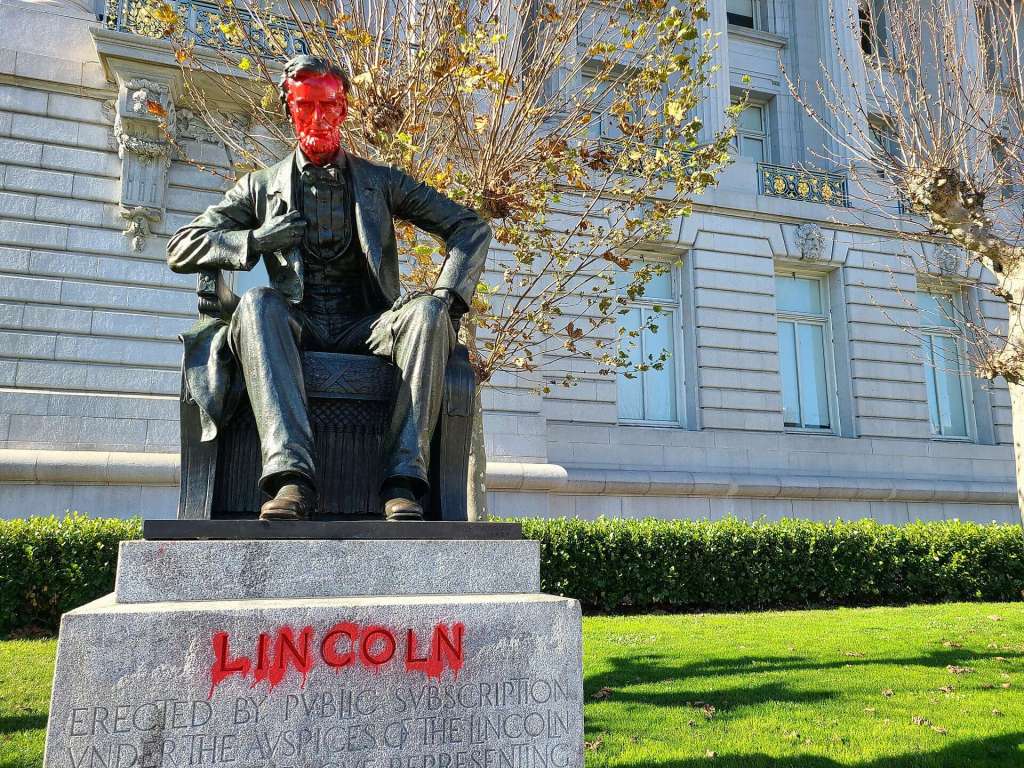
The Thoma family wandered into a discussion about President’s Day this past week at dinner. The nerd that I am, I interrupted the conversation with, “Did you know that Presidents’ Day is not the official name of the holiday?” I went on to nerdily explain that since its inception in the 1880s, it’s only ever been officially recognized legislatively as “Washington’s Birthday.” It wasn’t until the 1960s that a bill was introduced to move all federal holidays to Mondays, and one of the discussion points was to combine Abraham Lincoln’s birthday (February 12, which many states were already celebrating) and Washington’s birthday (February 22, which the whole country had long been celebrating) into a standard date. The combination was successful, becoming the third Monday in February. However, the name change for the holiday failed to pass. Officially, it’s still on the books as “Washington’s Birthday.”

I went on to ask, “Do you know why Congress ultimately failed to associate Lincoln’s name with the holiday formally?” I knew the answer to this question because I’d read some of the congressional floor discussions that encapsulated the essential argument.

As expected, there remained a strong ideological and regional opposition to Lincoln from southern Democrats. While the nation’s 16th president was revered by pretty much all of the northern states, he was still controversial throughout most of the South, even a hundred years after the Civil War. Essentially, and almost unanimously among Democrats, there remained a harbored resentment for Lincoln relative to the war and the national reconstruction that followed. In short, he wasn’t as beloved as you’d think, and it was often instinctual for the Democrats to slight his legacy whenever the opportunity presented itself.

As a result, while the bill’s consolidation efforts succeeded, any on-the-books remembrance of Lincoln failed. That said, the nation’s citizens adopted the name “Presidents’ Day” anyway, and when promoting and celebrating it, both Washington and Lincoln are almost always represented in its imagery. Stop by a furniture store that’s having a President’s Day sale. You’ll likely see images of Lincoln and Washington in its promotional posters.

I like that this is true. It speaks volumes. It’s a nod toward history’s eventual disregard for a government’s ideological foolishness, and it’s a defiant wink to the nitwits at the helm.

The Christian Church understands this contentious existence well, especially when it comes to its holidays. It seems the historical revisionists and liberal progressives have forever attempted to forget Christ, doing what they can to reshape or redefine the origins of Christian holidays. One needs only to consider Christmas and the forthcoming Easter celebration. Year after year, the Church anticipates attempts to impose confused narratives that diminish these holidays’ Christian foundations. In the end, the perpetrators only end up betraying their real intentions: an innate hatred for Christ; at least, it’s betrayed to those of us who’ve studied Christian history. That same history displays a pattern. Christ’s opponents either repackage His celebrations as pagan festivals or distract from them with secular innovations, coming up with goofy activist holidays like Kwanza.

And yet, despite these seemingly never-ending efforts, the revisionist interpretations put forth by truth’s opponents never seem to catch on. Human beings continue to celebrate Christmas as the birth of Christ and Easter as His resurrection, just as they have for centuries upon centuries. Across the world, they still say “Merry Christmas” and call to one another with “He is risen!”

While not precisely the same, this tendency is at least somewhat reflected in the Presidents’ Day celebration. No matter how much the overarching goodness inherent in Lincoln’s efforts was deliberately opposed, the American people appeared to know better, and as a nation, we have instinctively maintained a healthier understanding of the holiday, even calling it by its unofficial and ultimately rejected name.

I suppose one particularly worthwhile angle emerging from today’s rambling is that some things, it seems, are too deeply ingrained in the fabric of tradition and truth to be rewritten by ideological trends. Indeed, truth always has its day.

Are we experiencing this right now as a nation? Maybe. It sure seems like President Trump, a man who was accosted by unjust lawfare for years, is having his day. Musk and the Department of Government Efficiency certainly are having their day relative to long-hidden deviance in government. But that’s just it. Truth has a way of resurfacing and pushing back against worldly foolishness. This should be no surprise for Christians. Truth’s strength figures into our hope. Indeed, Jesus already told us, “For nothing is hidden that will not be made manifest, nor is anything secret that will not be known and come to light” (Luke 8:17). And so, whether in the Church’s steadfast preservation of its holy days or in the American people’s instinct to honor history rightly, truth remains a feisty contender. It refuses to be buried beneath the agendas of the moment.

I find this to be somewhat comforting. I know I live in a world bent on obscuring what is good, hoping to reshape reality itself. It calls a man a woman. It prefers workers based on gender (if they can figure out how to define it) and skin color rather than skill. It rewards liars and penalizes honesty. That said, history continues testifying that such efforts eventually fall short.

Again, this doesn’t surprise Christians. We have God’s Word, and so we know the “grass withers, the flower fades, but the word of our God will stand forever” (Isaiah 40:8). We know we “are afflicted in every way, but not crushed; perplexed, but not driven to despair; persecuted, but not forsaken; struck down, but not destroyed” (2 Corinthians 4:8-9). In other words, we know God’s Word remains, His truth prevails, and His people endure.

Applying this to life, whether it be the remembrance of faithful leaders, the celebration of our Lord’s birth and resurrection, or the whole of the very Gospel itself, no earthly power can rewrite what God has already written or undo what God has done. Jesus said, “It is finished” (John 19:30). And it is.

Active vs. Passive Learning

As you may already know, the Life Team here at Our Savior in Hartland, Michigan, (along with some help from “The Body of Christ and the Public Square”) orchestrated a substantial event entitled “An Evening for Life” featuring Seth Gruber. If you know anything about Seth, then you know he’s a caffeinated firehose of valuable information. That’s why it only took a little more than three weeks of promotion to get 206 attendees from all around the state on a cold Thursday evening, some willing to drive a few hours to be with us. However, referring to these visitors as “attendees” seems insufficient. “Active learners” is more appropriate. Craving information, they actually got into their cars and drove to an event.

Conversely, if there’s one thing that bothers me about typical information exchanges, it’s the tendency some folks have toward spoon-feeding. For example, I wrote and shared something on Facebook a few weeks back in which I discussed a somewhat controversial theological topic. Sometime afterward, I received a private message from someone asking me to explain some unfamiliar terms I used in the post. First, the person wasn’t on my friend list, so I elected not to reply. If you know anything about Facebook Messenger, then you know that if you reply to someone outside your network, you are granting him full Messenger access. I try not to do that. Ever. The times I have, I’ve inevitably needed to block the person.

Second, and putting the best construction on things, my guess is that the person asking for the explanations must live in a place without adequate internet time or resources. Perhaps he lives in a Kath Kuni in the Himalayas or a cave in Afghanistan? However, if neither of these describes his actual plight, then I assume he can research the terms for himself. With a few taps at the computer, followed by a click or two with the mouse, he’d be on his way to learning anything and everything he’d ever hoped to know about the terms he’d never heard before. Instead, he wanted me to spend time writing it all out for him.

He wanted to be spoon-fed.

Now, before I go any further, I’ll admit to doing the same thing on occasion. The Thoma family has a family calendar. It’s synced to my phone. Still, rather than looking at the calendar, I’ll ask my wife, Jennifer, “Is there anything on tonight’s schedule that I should know about?” When I do this, I’m demonstrating passive learning. I have access to the information, but rather than doing my own investigating, I make the mistake of expecting her just to tell me. It’s lazy practice. I admit it.

Genuine learning isn’t lazy. It’s an active process. It takes work. Sure, there are things we learn passively, which is to say, we learn them without active engagement. Infants learn many things that way. They’re human sponges. I suppose there’s an element of passive learning for infants relative to language. They learn to speak as language is brought to them. But it doesn’t take long for the infant to become an active learner in the process, eventually engaging in language exploration. They begin making noises and sounding out words. Indeed, any parent will tell you that infants are the epitome of active learning in almost everything. They see something and, no matter what it is, reach out to explore it in every way they can. And none of their five senses is off limits, not even taste. My grandson, Preston, when he discovered his toes, guess where he eventually decided to put them?

Thinkers are active learners. There’s a chance I’m not dealing with an active learner when, let’s say, I post on Facebook, “William Federer will be one of the speakers at our upcoming conference,” and someone replies, “I’ve never heard of him? Who is he?” A reply like this irritates me because it expects me to present a detailed biography. I certainly could have provided a link to one in the post. However, not every hand needs to be held.

This leads me to something else.

Relative to intellectual lethargy, could it be that we’ve arrived at a time in history where it’s no longer possible to actually convince or convert anyone to a position other than the ones they already hold? What I’m saying is that, for virtue’s sake, I get the sense that most people consider themselves open-minded. And yet, are they passively or actively open-minded?

A passively open-minded person listens to whatever is being said but is only willing to consider and embrace those parts that align with what they already believe is true. They don’t want to do any thinking work. They don’t want to get up from their mental couch to answer another perspective’s knocks at the door. An actively open-minded person knows what they believe, and yet, while listening, searches for breakdowns, loopholes, or contradictions in not only the speaker’s argument but also their own belief system relative to the argument. In other words, they get up from the couch, open the door, and let the perspective into the house for a conversation. As they do, they put in the interrogative work. They ask questions. They offer content and counterpoints. They examine the topic from more than just their perspective, giving and taking along the way.

I think active learning also insists on active open-mindedness.

I guess what I’m wondering out loud right now is why so many seem to lean so heavily on passive learning styles, especially at a time in history when having a grasp on what’s going on is not only incredibly important but, at the same time, we have instant access to so much information. A few weeks back, I shared some of these thoughts with the teachers in our congregation’s school during our regular study of the Book of Concord. One teacher supposed part of the problem could be the overwhelming flood of content we encounter daily. With so many things happening at once and so much content to process, it’s easy to choose the spoon-fed route, preferring extracts from trusted sources rather than taking the time to do a deeper dive. Considering the person I mentioned at the beginning of this particular meandering, perhaps he wanted me to feed him the information because he trusts me. If so, I’m flattered. But my gut tells me it’s more likely that because social media is so overrun with memes, news snippets, and soundbites, he’s been trained to skim rather than study. But therein lies part of the problem.

Dependency on others to think for you—to distill complex ideas into more easily digestible pieces—robs a person of genuine growth.

Most often, controversial or challenging topics are not easily digestible. They take a little extra work, especially if the intent is to understand the argument and then formulate a barrier of truth relative to it. Sure, you can have a sense that transgenderism is weird. You can even know that the Bible stands against it as a perversion. But do you know where the Bible says this, and can you provide a convincing argument for why the Bible might speak this way? Do you know the topic’s relation to natural law, essential societal structures, the nature of male and female, terms like Imago Dei, or the fertile imagery of the mystery of Christ, the Groom, and the Church, His bride? There’s a lot more to the discussion than saying, “I think it’s weird, and I’m against it.”

I know my writings are longer than most you’d find on the internet. But regardless of the “less is more” inclination, I prefer a thorough wrestling with most topics. Snippets are fun, but they rarely close the loopholes.

Again, passivity in learning can be problematic. It’s happy enough to pursue the “tell me what to think” approach rather than investigating and thinking through something for oneself. The first results in echo chambers that never go anywhere. The second is intent on locating truth while buffeted with a firmer grasp on what makes it true.

The distinction between these two approaches has a blast radius that ripples out into the broader cultural landscape. I’m sure, like me, you’ve experienced those conversations with people that have devolved into name-calling, mainly because the debaters couldn’t get any deeper than their emotions. For example, as soon as I mentioned that James Lindsay would be a speaker at this year’s conference, I had someone essentially calling me a rotten pastor for “platforming” someone he deemed an enemy of Christ. But James isn’t an enemy of Christ. Of course, snippets won’t teach this. A deeper dive will. Even better, an interrogative conversation with the man reveals his person. That said, I’ve eaten meals and consumed whisky with the man in my own home. We’ve talked about lots of things, many of which were faith-related. If anything, he’s more open to an introduction to Christ than most. Passive learning is self-centered, and it won’t learn this about James Lindsay.

By contrast, it seems to me that active learning is born from a sense of humility. It approaches others from the perspective, “I’m not perfect, and I don’t know everything. What can I learn from you?” It begins with knowing that objective truth is real, but to truly discover it means admitting oneself is flawed. From there, it’s willing to hear from others. In James’ case, formerly atheistic but now more so agnostic, he’s willing to sit at a clergy friend’s bar in his basement and entertain things of God, while simultaneously, that same friend is willing to hear from his expertise relative to various topics of interest. I’ve learned a lot from James Lindsay about how mainstream Christianity got to a condition in which rock shows are considered worship and lesbian bishops are ordained. If I’d written him off as merely an enemy of Christ, I’d never have learned these things, and my theological prowess would be far lesser.

Of course, as with most things, Christians always have the upper hand on humble learning. We know by faith that objective truth exists. We understand that every human being is terminally flawed in sin, and as a result, objective truth will never be discovered from within. From there, we can say that active learning is fundamental to the Christian life. It’s not like the Bible rarely encourages believers to seek wisdom and understanding. It does so throughout its pages. For example, a ready text is Proverbs 2:2-5. Here, Solomon actually emphasizes active learning, urging us to incline our ears to wisdom and seek it as one searches for hidden treasure. Treasure hunting requires effort. It requires digging deep into the strata. Relative to God’s Word, when we dig deeply, we are not only better equipped to defend the faith (1 Peter 3:15), but there’s something else that happens. Speaking only for myself, the more I dig into the Word of God, the more I sense my mind is attuned to the mind of Christ that Saint Paul talks about in Philippians 2:5.

Circling back to where I started, you need to know the Bible warns against intellectual laziness and the dangers of relying solely on others for understanding. Another prime example is found in Saint Paul’s commendation of the Bereans in Acts 17:11. He praises them for examining and measuring the Scriptures against everything they’ve been taught. By doing so, they were successful in verifying what was true and avoiding what was false. This is a demonstration of active learning, which is in sharp contrast with the passive learners who risk falling into deception or shallow thinking (Ephesians 4:14).

Don’t be a passive learner. Instead, with diligence, embrace your responsibility to think deeply, both for the sake of personal growth and, more importantly, for carrying the Gospel to the world around you in thoughtful, persuasive, and respectful ways, just as the Bible portrays the Apostles and Evangelists before us (1 Peter 3:15-16, 2 Timothy 2:24-25, Colossians 4:5-6, Acts 17:2-3, Jude 1:22-23, Proverbs 16:21, and so many more).

What’s on Your Mind? Well, Fear Not.

What’s on your mind this morning? Something likely is. Or better said, “somethings.” On my part, I just got some weightier news this morning, and so I have a lot on my mind. Still, I’ll try to keep this light, practical, and worth your while.

For starters, I’m overjoyed by President Trump’s inauguration. And his speech—wow! What an indictment of the Biden administration, even as the former president and his associates were sitting just over Trump’s left shoulder. Trump’s words were bold in the best way. While listening to the speech, I tried to imagine what Biden, Inc. was thinking. Considering what Trump said, I’m sure several in the bunch were just wondering how much longer it would be until they could leave.

I was also overjoyed this past week by President Trump’s pardoning of the pro-life protesters who were jailed last year. One of them, Heather Idoni, lives in my hometown of Linden, Michigan. She’s a 60-year-old grandmother who was indicted and sentenced by the Biden Justice Department to two years in prison for protesting at an abortion clinic. However, sentencing came only after having already sat in jail for five months. As you’d guess, the pro-abortion opponents have falsely accused this gentle woman, a mother of five and adoptive mother of ten, of outlandish viciousness. But then again, the Devil is a liar. Abortion is his holiest sacrament. He will do what he must to protect it.

Nevertheless, Heather was freed on Friday. Praise God for this. I’ll be talking with her soon. I indeed wonder what she was thinking while in prison. When it comes to someone willing to go to jail for faithfulness to Christ, such a person’s innermost thoughts are worth knowing. Knowing what I know about her, I suspect she kept her thoughts occupied by God’s Word and prayer.

I read an article a couple of weeks ago reporting that most folks have 6.5 thoughts per minute and around 6,000 every day. I only found the article because I was reading a different study about how 47% of our average awake time is spent free-thinking or daydreaming. The remaining 53% is spent being task-oriented. What I found interesting about the results is that the more people daydreamed, the less happy they were.

I didn’t believe that at first—until I thought about it for a moment.

A quick scan of the societal landscape will reveal a humanity that’s in constant distress. Most statistics point to rising rates of anxiety and depression across most demographics, particularly youth. Perhaps worse, the increase in these rates appears to be speeding up rather than slowing down. If that’s true, it makes sense that the more free time people have to wander around in their own heads, the more open they are to bombardment from the dreadful thoughts already living there. People who spend less time doing this—folks who keep busy actually doing something—they’re happier people. I guess there’s something to Henry Ward Beecher’s saying that it “is not work that kills men; it is worry. Worry is rust upon the blade.”

I don’t suffer from depression. But I know people who do. Although, I should correct my self-examination. As I’ve shared before, I’m all but certain I struggle with Seasonal Affective Disorder (SAD). Happiness is much harder for me during the winter months. That said, whether summer, fall, winter, or spring, I spend a lot of time in thought, and I can say that few, if any, of the supposed 6.5 thoughts that happen every minute involve anxiety or sadness. I do have negative thoughts. However, they rarely outweigh or overwhelm what I would consider as my essential human wondering at the world around me. My thoughts certainly don’t outmatch my imagination, whether I’m working on a task or daydreaming. In fact, I get the sense my brain doesn’t really care what I’m doing or not doing. It’s going to wander all over the place, looking for whatever is most interesting.

In other words, I can be working on something important while at the same time catching myself thinking about something else absurdly innocuous. For example, while changing my grandson Preston’s diaper a few weeks ago, a rather messy one requiring skill and precision, I remember wondering how many diapers I’ve likely changed across all four of my children. Thousands upon thousands, I’m sure. From there, I thought about how I used to time myself to see how long the diaper changes took and how proud I was when I’d beat my record. By the time I finished getting Preston back into the bottom half of his sleeper, I was thinking how ridiculous the Star Wars universe would seem in hindsight when artificial intelligence is eventually given complete control over all future cars, fighter jets, and such. Star Wars spaceships, the most technically advanced crafts ever delivered from the human imagination—ones that can cross galaxies—still require pilots. The Millennium Falcon is nothing without Han Solo and Chewbacca.

I thought about all those things while changing my squirming grandson’s diaper and singing the made-up song “Everyone Loves Butt Cream.”

Conversely, my daughter, Evelyn, is absolutely enamored with her new nephew. She wants to hold, play with, and love on Preston all day long. But she won’t change his diaper. She’s terrified by the task. When confronted with the prospect, all she can think about are the risks of getting dirty in ways she’s not willing to experience. And so, when it’s time to change Preston’s diaper, she runs for the hills.

In a way, that illustrates another interesting dynamic in human thinking. Evelyn’s hesitation highlights how thinking rooted in anxious fear can result in a type of physical paralysis, ultimately affecting a person’s ability to engage in what everyday life requires. I suppose that’s one of the real dangers of depression. People become so burdened that they can barely do anything. Depression keeps people locked in a room with an uncomfortably low ceiling. They find themselves held down by the task’s worrisome details before they can even get started, while others can walk into a messy situation with enough emotional overhead to be reasonably unaffected by any potential messes.

Looking back at what I’ve just written, there’s one more thing that comes to mind in all of this.

Part of the reason a diaper change is no big deal to me is because I’ve done thousands of them. The whole process is more than familiar. This fact resonates with Michel de Montaigne’s famous words, “Familiarity confounds all things. It makes the most natural and uncommon things seem ordinary.” In part, his point is that familiarity can be effectually beneficial. Relative to diaper changes, familiarity made the activity’s grossness almost unnoticeable, maybe even fun enough to sing a made-up song.

In light of everything mentioned so far, here’s an equation worth pondering: First, what if there was a way to take some of the free-thinking time that comprises 47% of our lives and convert it to task orientation? Second, what if I told you there is plentiful research showing that the people who regularly immerse themselves in worship and Bible study are much happier, more hopeful, and have better mental health?

In other words, could it be that deliberateness plus familiarity might equal something better? Of course, I’m going to consider all of this through the lens of God’s Word. I’m also thinking back to Heather Idoni’s time in prison and her likely immersion in God’s Word.

I didn’t know until recently that the phrase “Fear not” appears 365 times in the Bible. When I did learn this important fact, an obvious “first thought” came to mind: there’s one “Fear not” for every day of the year. That said, imagine what it would be like to hear God say to me through His Word every day, “Fear not.” Imagine what it would be like to hear Him tell me every day why I needn’t be afraid. Old Testament or New Testament, the epicentral purpose of His Word is to give Christ—the One who is our comfort and courage against every fearful thing this world might try to throw at us.

I suppose one of the funnier things about all this is that secularists will agree with my previous equation’s premise, except their first suggestion would be to occupy oneself with golf or woodworking or whatever. Those aren’t bad things. But if there’s any particular framework in which to anchor our thinking deliberately, Christians already know that the biblical framework is the best one. Using our free-thinking time immersed in God’s Word, we have what our hearts and minds need for waging war against the sinful flesh and its anxious thoughts leading to despair. We find the promises of God there, and with those promises comes the assurance of God’s perpetual grace in every time of need.

Now, before I wrap this up, there’s something I should mention. Golf doesn’t bring me joy. I don’t enjoy woodworking, either. But there is something I like to do on occasion. After I’ve changed Preston’s diaper, I’ve been known to go looking for Evelyn. When I find her, I’ll ask her to throw the diaper away for me while tossing it at her. She usually screams and runs away. Indeed, when burdened by the doldrum-inducing winter, tossing a diaper at my screaming daughter brings me great joy.

In the Shadows

Mark Zuckerberg, the CEO of Facebook, has announced he’s ridding the platform of third-party fact-checkers. In his own words, he wants to prioritize free speech. Interestingly, I was finally able to reclaim my Instagram account just last night. It was suspended a few years ago, so I eventually gave up on it. Maybe that’s a sign that Zuckerberg’s intentions are genuine. However, my New Year’s Day post was just removed from Facebook. Apparently, it offended someone and was reported. It seems that as 2025 begins, there’s something offensive about encouraging people to trust Christ rather than the world around them. It appears that Facebook still has some sinister, agenda-driven people keeping users’ speech from truly being free.

The post is in appeal. But truth be told, I’m yet ever to win a Facebook appeal.

In the meantime, California is on fire. Of course, we pray for everyone’s safety. Still, anyone familiar with the state’s politics will know this is only partly nature’s fault. An honest observer will agree that what’s happening was entirely preventable. However, those in leadership at the state level and those at the helm in these incinerated communities had other priorities. Water reservoirs that would typically be full were deliberately drained for negligible repairs, conservation, or climate change reasons. Never mind winter’s Santa Ana winds and the threat of wildfires. In addition, fire and rescue units were unprepared and understaffed, losing funding or being penalized because they weren’t diverse enough.

By the way, and I suppose unfortunately for the climate change religion and its elitist Hollywood priesthood, the current size and content of these residential fires have already released a hundred times more CO2 into the atmosphere in a few days than all of North America’s collective fossil fuel consumption in a typical year. But then again, I learned that a typical woodland wildfire, depending on the forest’s density, can release as much as three hundred times more than all the world’s industrialized countries combined.

As one would expect, the militant left is saying these things aren’t true. I already read two articles this morning in which various local leaders in Los Angeles essentially confirmed these details and yet diverted the discussion with irrelevant information, finally insisting that playing the blame game during tragedies is not helpful. However, these are the same folks who stand at the ready to blame conservatives within minutes of a school shooting. The irony so far is as thick as the flames devouring Palisades and Hollywood Hills.

Here’s another bit of irony. Joe Biden promised the Federal government would cover 100% of the California disaster’s expenses for the next six months. Estimates suggest that equates to as much as $150 billion. But aren’t there still people displaced and living in tents and campers in Western North Carolina following Hurricane Helene, many of whom barely received a dime? Why the massive pledge to Hollywood and not Appalachian America? In addition to this, Biden just authorized another $500 million for Ukraine. He ordered it sent before Trump takes office. Again, he’s done this even as people in various communities on the East Coast are still sleeping in tents in the middle of winter four months later. Several billions of dollars somehow swerved to miss them. Things get worse when you consider the Federal government’s wasteful spending. For example, it just gave a $12 million grant for pickleball courts in Nevada and $300,000 to help establish and promote “affinity groups” (more DEI garbage) among bird-watching communities. Did a flock of starlings complain to someone in Washington that there isn’t enough transgender representation among those watching them?

I say forget about the hundreds of billions of dollars for a moment. I wonder what even the pickleball and bird-watching grants could do to at least alleviate the suffering of Americans forced to live in tents during winter.

While I’ll admit I was hoping for a better start to 2025, I’m not surprised by any of these happenings. I suppose the only real surprise so far is that, somehow, President Trump hasn’t been blamed for all of it. Although, the nation took a noticeable turn on November 5, 2024, didn’t it? In fact, that’s what moved Zuckerberg to make changes at Facebook. He called the election a “national tipping point” away from current social and political trajectories.

That’s good. Still, we’ll see. Do I have hope that there’ll be a turnaround, that all the woke garbage that’s smothering so much of what makes America great will eventually dissipate? Well, first of all, anyone who knows me best will confirm that I’m always looking to the horizon with hope. In that sense, yes, I’m hoping for a turnaround.

On the other hand, while I hope for a national course correction, I don’t expect anything to change much for Christianity. For the most part, the Christian Church already exists in the shadows. This is in part by our own doing. I say this because we’ve allowed ourselves to be relegated to the sidelines. A generation ago, it wasn’t uncommon for the local pastor to give an invocation and prayer in the name of Jesus before the high school’s graduation ceremony. But those days are long gone. In the meantime, rather than holding the line on these things and engaging the culture, too many Christians have opted for comfortable security, leading to cultural conformity. And among such folks, we have pastors who insist on and actually preach disengagement—that it’s not in a Christian’s job description to engage in ways that preserve the Church’s ability to preach and teach the Gospel freely. In this, we’ve abandoned the public square and silenced the Church’s voice in so many arenas. What has been the result? A society that has lost its ability to see, let alone understand, that Christianity was and remains fundamental to Western civilization’s rise and success. Perhaps worse, society has given birth to its own version of Christianity, which is little more than secularism wearing a thin Christian veneer. Such Christianity claims God’s Word is only as true as the individual wants it to be. It exchanges the meat and potatoes of tradition for syrupy and saccharined religiosity—and people are hooked on it. Why? Because, again, it can be whatever you want it to be. It’s never about absolute faithfulness to Christ. It’s never about the Christian community of past, present, or future. It’s about what you prefer right now.

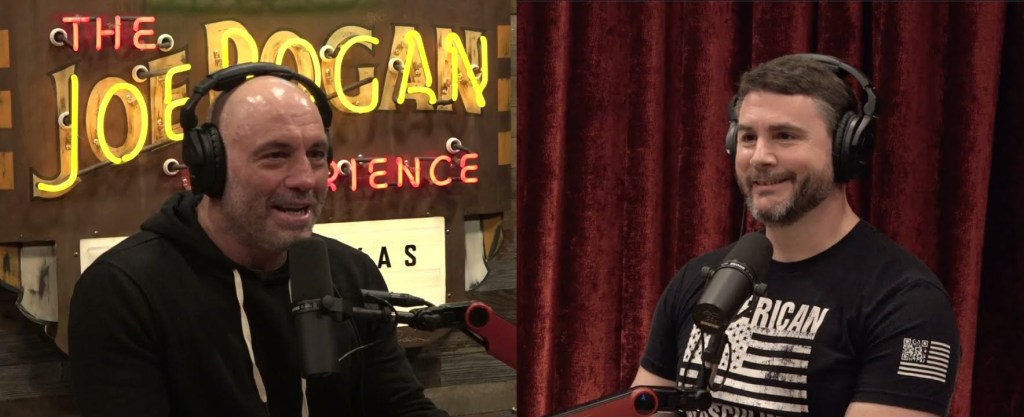
Until this monstrosity dies, the shadows will be home to genuine Christianity. The funny thing is that a light is best seen in the darkness. In that sense, while times might remain tough for creedal and confessionally minded Christians, there’s a sense that the Gospel will be better visible through them to those who need it most. When you get a chance, take a listen to Wesley Huff’s recent interview with Joe Rogan. I’ve been hoping for years that someone would end up on Joe’s show who could iterate genuine Christianity to and for Joe and his listeners. Personally, I think Huff did just that, especially concerning the authenticity and reliability of God’s Word. Convincing someone of the Word’s reliability matters when you’re laboring to introduce them to the Word made flesh, Jesus. Interestingly, Huff only made it onto Joe’s show because of a debate he had with a popular esoteric spiritualist named Billy Carson. Essentially, Huff proved Carson a fraud—and he did so in a gentlemanly way. Rogan, an incredibly open-minded man, heard about it, watched the debate, and invited Huff on his podcast.

I suppose as it relates to Huff and Carson, the real Gospel will always remain crisp in its definition from the shadows, not blurred or confused by quasi-spiritual nonsense swirling in its surroundings. Saying that, I guess the hope that genuine Christianity might emerge from the shadows could be misplaced. It really doesn’t matter where it is. It only matters that it is. From there, our task becomes one of faithful readiness. Whether it’s Joe Rogan or our neighbor next door asking us about the Gospel, the goal is not to retreat but to speak boldly, trusting that God will keep His promise to illumine those in desperate need of hope and redemption.

It’s Okay to Say No

We’re five days into the new year. I hope you had an opportunity to rest somewhat after Christmas. I kind of did. Well, it was more like a few idling moments in between the typical full-throttle busyness. Of course, I fool myself every year into thinking I’m going to get a break after Christmas to just hang around the house and do absolutely nothing for a few days. It seems those plans are forever foiled. The first day or two is usually spent being sick. After that, I get pockets of time—a few hours here and there in between needing to be somewhere doing something for someone. I’m not necessarily complaining. But I’m also looking at 2025 and admitting I’m not Superman.

I had a phone conversation with a friend in California before our New Year’s Eve worship service last Tuesday. He asked what my resolutions were for the new year. I shared one of them. He laughed when I told him. The humor prompted a related question. He asked, “If you were forced to give something up in the New Year—something you could never have or use again—what would it be?” I didn’t even hesitate.

“My mobile phone,” I said. “Although, ‘forced’ is not the right word. I’m tempted daily to throw it out the window at 70 miles per hour and let the highway do the rest. I absolutely despise my phone, if only for the texts and private messages I get all day long.”

He laughed again because of the conspicuous irony. He had reached out to me that afternoon by text to see if I had a minute to chat.

Acknowledging mobile phones and texting as society’s preferred forms of communication, arrangements that won’t be going away any time soon, I asked him the same question.

“I’d give up spicy food,” he replied. “I love it, but as I get older, there’s a terrible price to pay for a date with Sriracha.” He shared a brief description of the unfortunate results. I agree. He needs to give up spicy food.

Overall, the conversation had me thinking about how each new year brings opportunities for doing things differently, usually for the sake of betterment. But it also had me thinking about how personal betterment sometimes means there are things we shouldn’t be doing at all. In other words, we need to be able to say “no.”

But from where I sit, doling out yes’s and no’s is tricky business. I say this because I know how easily people are offended by the word “no,” especially when it comes from a pastor. I could sit here and type for hours about how telling someone “no” usually ends up being interpreted as me not caring about them, even when it’s as simple as not replying to a text or private message. Of course, that’s not true. I do care. Still, that’s the era in which we live. It’s very centripetal.

Unfortunately, that doesn’t change the fact that when I say “yes” to everything, it means I’m saying “no” to an awful lot of somethings. Usually, it’s my family. Additionally, it means I’m saying “no” to self-care, the kind that makes it possible for any normal person actually to give a darn about almost anything they’re doing. Interestingly, even as Jesus was completely outward-focused in every way, having never given up on His monumental task to save the world, he still set boundaries. Even when the crowds were clamoring, many among them calling for His immediate attention, He still took opportunities to step away for rest.

That’s one of my resolutions for the year—to say “no” more often. It’s not the resolution I shared with my friend that made him laugh. Although, as I mentioned, it is somewhat related.

I suppose what I’ve shared here isn’t necessarily for me alone. It’s a lesson for all of us. Whether it’s putting down the phone, giving up spicy food, or simply saying “no” when needed, we should take stock of what truly matters. As I look at just the forthcoming month of January, I can see it’s already brimming. Saying “no” will be a necessity, not a luxury.

For some, hearing the word “no” will sting, and I’ll suddenly be the worst pastor in the world. For others, they’ll be bothered because the “no” will mean “not right now,” and they’ll have to wait a few days for whatever it is they want. And yet, for plenty of others, they’ll understand. They’ll instinctively recognize that saying “no” isn’t a sign of failure but rather an act of stewardship. It’s to admit that you, me—all of us—are human, and we are limited in time, energy, and ability. That means we must be mindful of how we use the resources God has given.

When I think about the people who are counting on me, from my family to the people both inside and outside of my congregation, I realize that saying “no” at the right times is actually saying “yes” to being the kind of pastor God has called me to be. I’m by no means perfect at this. Nevertheless, as the new year unfolds, I’ll start each day as I always do—praying for the wisdom that only the Holy Spirit can provide. In particular, I’ll pray for the wisdom to know when to say “no” and the courage to let that be enough. I’ll do this remembering that even as Christ drives His sheep along from one place to the next, He doesn’t do so endlessly. He also delights in leading His flock to green pastures beside still waters.

New Year’s Day 2025

Welcome to the first day of 2025. On the way into the church office this morning to get ready for today’s New Year’s Day worship, I listened to a podcast interview with an executive from an artificial intelligence (AI) company. He said more than once he believes the new year holds much potential. My first thought was, “The potential for what?”

Of course, as someone betting on AI’s success, he noted only positives. He talked about its monumental efficiency relative to almost anything it does. He spoke about how it can reduce human error and increase safety. He mentioned its already incredible strides in the fields of medicine and education.

Frankly, he lost me at education. Actually, he’d already lost me with “much potential.”

It seems to me that the more AI does for us, the lazier we’re likely to become. As this meets with education, why bother learning the essential mechanics of a crucial calculation or digging deep within oneself for the best words in the best order when, in the end, AI can do the mathematics without your understanding or write one’s final paper without your grammatical skill? I know I’ve written in the past that Turnitin, a plagiarism and AI detecting tool, reported that of the two hundred million papers submitted in 2024, twenty-two million were at least 20% AI-created. Six million were over 80% AI-generated. That’s not good. Are we getting dumber and lazier? Maybe. Concerning “much potential,” we could be putting ourselves out of work. With AI’s increased capabilities, human potential may even become irrelevant entirely.

In a more profound sense, everything has potential. But is it good or bad? It was Winston Churchill who said, “Continuous effort—not strength or intelligence—is the key to unlocking our potential.” Churchill said things like that to inspire and unite his nation for what would be a long and dreadful war against the Nazis. Interestingly, Adolph Hitler said parallel things about potential, ultimately rallying the German people with fiery speeches geared toward similar resilience.

But these were two very different forms of potential being provoked.

I’m sure everyone has an opinion about this kind of stuff. However, it seems Churchill labored to preserve liberty as a universal principle. It may sound somewhat nerdy, but I’ve memorized several of Churchill’s speeches. From what I can tell, he wanted to awaken the nation’s potential for positive moral courage leading to action. He desired to enlist and then prove that potential’s limits during a time when he believed it was needed most. Hitler’s efforts were far different. He tapped into sinister potentials born from entirely different principles, ones that bolstered tyranny’s capacity and fostered unity around a national entitlement fixed on an assumed inherent racial superiority. Overall, his goal wasn’t to defend individual freedoms or lift Germany’s citizens to something better. His goal was to unite in the persecution of others while subjugating everyone and everything else.

I can already tell I’m about to wander into a much longer conversation. I don’t want to do that. And so, to get back on track, I guess what I’m pondering out loud is that 2025, like every year before it, has potential. But as Christians, there’s something fundamental that we already know about potential.

Christians know the world’s potential cannot be separated from human sinfulness. Saint Paul reminds us in Romans 3:23 that “all have sinned and fall short of the glory of God.” Aware of this, as long as we remain in this fallen world, every pursuit—technological, social, political, or even moral—will carry the burden of imperfection. This means that human achievements, no matter how grand or well-intentioned, always bear the possibility of ruin. Human or AI, it doesn’t matter. Humans are sinful. AI was created and is being developed by humans. It may streamline processes and expand our reach, but as a tool held by sin-stained fingers, like everything else, it is forever susceptible to misuse.

In short, Christians know that human potential untethered from godliness goes nowhere. They also know something else Saint Paul said about humans who’ve been grafted to Jesus. By divine inspiration, he assured us that “he who began a good work in you will carry it on to completion until the day of Christ Jesus” (Philippians 1:6). Unlike the fleeting ambitions of this world, Christian potential is anchored in something other than the human will. It’s not fixed to our abilities, efficiency, or productivity. It’s fixed to something—to someone—eternal.

Christians step into every new year, knowing their greatest potential is found in Christ. They know that to be shaped by His Word and aimed toward all circumstances sustained by His ceaseless love is to rest in His powerful potential. His potential offers a very different answer to the somewhat cynical question, “The potential for what?” The Lord’s potential is strength in the face of adversity, hope when hope appears nowhere to be found, joy amid sadness, and light in a darkened world in need of rescue.

I don’t know about you, but I prefer to start 2025 fixed on Christ’s potential, not my own. Doing so, I expect 2025 will be an outstanding year. Now, as I already mentioned, there’s a New Year’s Day Divine Service this morning at 10:00 AM here at Our Savior. What better way to begin a new year than by receiving from Christ through His Word and Sacrament everything I just described? I hope to see you here. You certainly have the potential.