
The Sacred Territory of Good Order

Spring is upon us. Do you want to know how I know this? Migraines.

Every year at this time, the migraines set in. I never experienced them growing up in Illinois. Here in Michigan, surrounded by the Great Lakes, the temperature and barometric changes are more drastic, making their probability and frequency more prevalent.

Do you want to know one of the places with the least barometric fluctuation resulting in migraines? Florida.

Yes, Florida is a peninsula, which means it’s surrounded by water. Still, coastal regions aren’t as chaotic when it comes to barometric changes. They’re relatively ordered. I suppose that’s why I feel great while there. In fact, my chronic back pain typically disappears, too.

I read that tropical regions near the equator are the best places to avoid migraines. However, moving to an off-the-grid village somewhere outside of a place like Macapá, Brazil, probably wouldn’t work for me. I know that stress levels play a part in migraines, and I’m guessing my first trip to the bodega for supplies could result in a new kind of headache. While I’m generally disinterested in material things, I do appreciate creature comforts, such as air conditioning and pasteurized milk. My stress levels would almost certainly increase when these things are only occasionally (if at all) accessible. It’s also why I’d last maybe three days before packing up and moving to a place with more reliable electricity and steady internet access. I need to impose my ramblings upon the world around me, if not for you but for me. My constant need to type something—anything—helps maintain my brain’s order. I’ve written before that my need to write is almost disease-like. It’s an itchy affliction. If I don’t scratch it, I’ll unravel.

I wasn’t sure where this was leading just yet, but I think I figured it out. I’m a man who appreciates good order. My body is in complete agreement, and my seasonal migraines are a reminder.

Jennifer insists among our children that they keep themselves in order with calendars, planners, and the like. Our oldest son, Joshua, is married now, has a son, and works a full-time job. It’s funny how he’ll hug his mom and say, “You were right about keeping things organized.” He has come to realize, as many of his age eventually do, that disorder breeds unrest. The Bible certainly affirms this. In fact, it interprets disorder as sin’s regular product.

Saint Paul insists somewhat plainly that rejecting God and His natural law results in a “debased mind,” which is little more than a condition of mental and moral confusion (Romans 1:21-22, 28). Saint James writes, “For where jealousy and selfish ambition exist, there will be disorder and every vile practice” (James 3:16). Isaiah offers, “Woe to those who call evil good and good evil, who put darkness for light and light for darkness” (Isaiah 5:20). The implication is that sin distorts moral clarity, ultimately confusing right and wrong.

Again, disorder is sin’s fruit.

Relative to this, I should say that I appreciate simplicity. Sinful humanity tends to complicate things. Sure, the mechanics of almost any issue are vast. In a way, I attested to that last week when I wrote about the need to read more, not less. Still, the point of sifting through the swirling details of any particular issue is to find a way through the confusion to something better. When we do find that way through, we often discover that the fix was not as complicated as we thought. It may be difficult getting there, but when we do, it won’t be hard to understand the what, why, and how of it all.

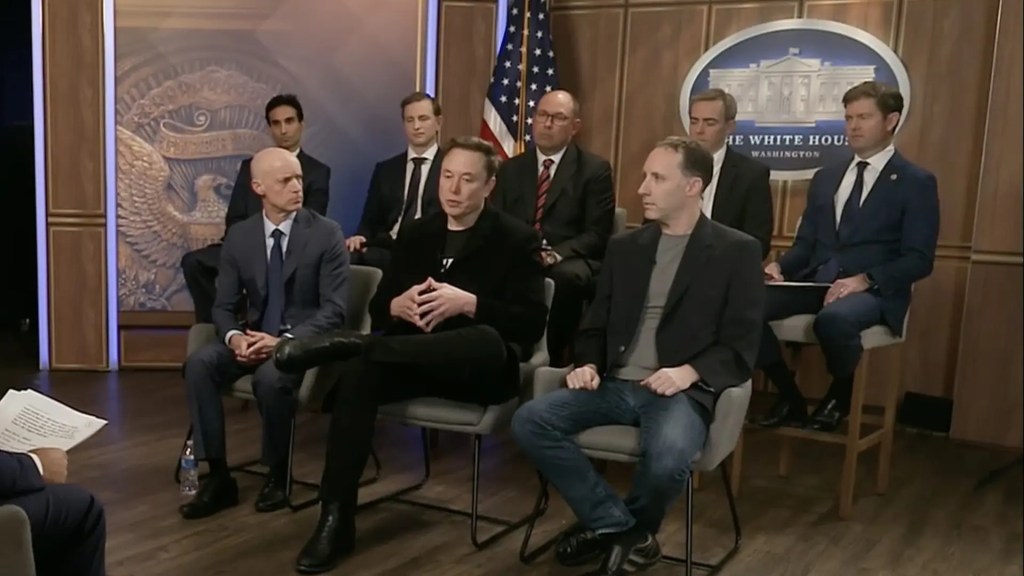
I wonder if this is why I’m oddly captivated by Elon Musk and his Department of Government Efficiency. While the United States government swirls with chaotic dysfunction, here’s a guy who has stepped into the middle of all of it and found a way to make its complicated mess into something crisp. His brainiacs have devised algorithms that can gather the chaos, sort it, identify the good and bad, and find a way through to an objective fix. When I observe this through a Gospel lens, there’s something strangely biblical about what Musk and his nerds are doing. No, not in the “mark of the beast” kind of way that the Revelation-twisting junkies and modern-day prophet-following weirdos try to suggest. First, I’m led to more of a David-and-Goliath image, where the unlikeliest champion throws a stone at the lumbering establishment, and the whole system wobbles. My second inclination goes far deeper.

Whether he realizes it or not, Musk has stumbled into sacred territory. A binding thread inherent to natural law is God’s desire for order. Saint Paul affirms this in 1 Corinthians 14:33 when he writes, “For God is not a God of confusion but of peace.” In Titus 1:5, he tells Titus to “set in order the things that are lacking” in the churches of Crete, making it clear that the Church itself requires structural clarity and good governance. Even in Acts 6, when the early Church faced the initial challenge of caring for widows, the Apostles responded with an administrative order. They appointed deacons to handle the task so that the administration of the Word remained central. It’s here (as it was with 1 Corinthians 14:33) that we see God’s deepest desire for order, which Saint Paul highlights in 1 Timothy 2:1-6 when he writes about the need for Christians to interface with earthly authorities. We do this to help maintain good order. And why? In verses 2 through 4, Paul says the goal is “that we may lead a peaceful and quiet life, godly and dignified in every way” (v. 2). He continues, “This is good, and it is pleasing in the sight of God our Savior, who desires all people to be saved and to come to the knowledge of the truth” (vv. 3-4).

The whole point of order is to provide a context in which the Gospel can be preached freely and without obstacle, all for the sake of saving souls.

With these things in mind, I realize it’s by no means coincidental that, right from the beginning, one of the first mandates God gave to Adam was to maintain order. In one of the most surprising acts of delegation ever recorded, God said, “Fill the earth and subdue it.” Next, He added, “and have dominion” (Genesis 1:28). This was a call to cultivate and maintain order in God’s creation. And so, we do. Certainly, this is an issue of faith relative to obedience. But as with all of God’s commands, there are practical fruits that come from holding to His divine commands. I already told you the most important one: the Gospel’s perpetuation. But there are others.

For example, order is inherent to a stable household. The Thoma family spent most of our dinnertime together on Friday talking about the blessings of a household that’s built in the way God designed it. A household established on God’s orderly design for marriage—a husband and wife—doesn’t just produce more humans. The sacred offices of husband and wife, becoming father and mother, create an ordered framework for children to understand love, responsibility, and many other aspects that make life truly enjoyable, just as God intended. If anything, a stable household becomes a training ground for carrying the kind of order that’s true to God’s heart into the broader world. It isn’t stifling. It nurtures growth while simultaneously instilling a crucial resilience to chaos, which is the space where confusion cooks up division, leading to broad-reaching and long-lasting harm.

As I said, observing through the Gospel’s lens, Musk and his team are in sacred space when they do what they’re doing, if only because they’re trying to bring order to chaos. They’re laboring to establish order’s honest clarity amid falsehood’s confusion.

To wrap this up, I mentioned at the beginning that migraines are a seasonal reminder. Keeping this ailment within the boundaries of God’s Word and beneath the shadow of the cross, my migraines are a natural protest against disorder—my body’s internal revolt against barometric chaos. In that sense, they’re a metaphor. They are proof that sin exists; it’s at work in my body (Romans 7:23). With it comes disorder. They also help me remember that God did not intend them by His design, and therefore, I’m not where I’m meant to be. In a mortal sense, even as I’m better suited for Florida’s climate, in the more extraordinary sense, I’m genuinely meant for the restored order of the new heaven and new earth (Revelation 21:1-5, Isaiah 65:17, 2 Peter 3:13) that Christ brings at the Last Day—the time when my whole self “will be set free from its bondage to corruption” (Romans 8:21).

Indeed, this world’s chaotic brokenness isn’t the final word. Genuine, actual, real restoration of order is coming. Christ has already seen to this by His life, death, and resurrection.

Deterrence

A lot is happening in our world right now. It has me thinking of the saying that goes something like, “Men are not hanged for stealing horses, but that horses would not be stolen.” I don’t remember who said it. I just know it makes sense viscerally right now.

For starters, and in a somewhat positive sense, it seems that many aspects of American life that had become chaotic are being restored. Criminals are being caught and punished. Documents are being unsealed, and truths are being made known. Wasteful fraud is being uncovered, and cuts are being made. But there’s something else happening, too. Many are relearning a seemingly long-forgotten factor relative to justice. It’s not merely about trials and verdicts leading to punishment. It’s also about deterrence. Here’s what I mean.

If there’s one thing I’ve learned as a parent, it’s that consistent and clear consequences function like guardrails on a road. They don’t just punish bad drivers with scrapes and dents. They keep vehicles from veering off course. Remove those guardrails, and people plummet off cliffs. Dismantle them, and the dividing lines between opposing lanes disappear. Sooner or later, someone crosses over and causes destruction. In this sense, deterrents are not merely judicial but protective. They don’t just correct individual behavior; they preserve societal peace by restraining chaos before it can even start.

This point was driven home again just this past week. Jennifer and I were watching the evening news when a segment came on about Venezuelan gang members being ordered back into the country after deportation. Without prompting, Jennifer asked, “What does it say when a federal judge orders the immediate return of violent criminals who’ve already been deported?” Less than ten seconds later, a guest on the segment echoed the same concern. They both recognized the same truth: that law and order don’t merely punish the wicked. They communicate to observers what will be tolerated and what won’t. They warn. They deter.

This is the precise situation that seems to be getting reset. Rather than enforcing the law and holding wrongdoers accountable, America has been seemingly overrun by emotionalized justice—punishing or pardoning not based on guilt or innocence but on political allegiances and ideological sympathies. Of course, we’re not out of the woods yet.

Take, for example, the ongoing vandalism and destruction of Teslas, a rage not driven by any wrongdoing of the vehicle’s owner but by hatred for Elon Musk and his efforts relative to DOGE. The idea that someone’s private property becomes fair game for destruction simply because of an ideological disagreement betrays an aspect of societal devolution. When this is the way a populace operates, it isn’t getting better. It’s getting worse. I have high hopes for Kash Patel and Pam Bondi, if only because they’re tough and because we’re living in a time when a man can execute an insurance company executive in broad daylight only to be cheered on by influencers and media personalities. Naturally, the result is that other potential villains see this, are emboldened, and the overall dreadfulness escalates. This is exactly why deterrents matter.

When the justice system demonstrates that wrongdoing will be tolerated, excused, or even praised by judges, legislators, media, or culture, wickedness is fostered.

In a conversation with my son, Harrison, about the federal judge ordering the return of the gang members, I told him I could accept how someone with a cognitive deficiency or a mental illness might be confused concerning the right and wrong of this situation. Nevertheless, for most normal people dealing with functioning moral faculties (because for believer and unbeliever alike, morality is written into the human heart [Romans 2:15, Jeremiah 31:33]), no matter how the narrative is framed, the facts are not complicated. These deportees are not struggling asylum seekers fleeing oppression in search of the American Dream. They are brutality-minded reprobates intent on terrorizing others. Even in their own words, they’ve come to inflict pain and suffering while perpetuating anything and everything (drugs, sex trafficking, and countless other dreadfulnesses) that destroy American families and culture. One gang member proudly described his tattoos, saying, “You only get these when you kill.” Still, the liberal progressive mind remains a strange one at this intersection. Led by the loudest among their bunch—people like Alexandria Ocasio-Cortez, Elizabeth Warren, Maxine Waters, and others—protests erupt over the Trump administration’s efforts to capture and deport these monsters. Most honest, everyday citizens observe these protests and wonder at the insanity. They can’t figure out why the Democrat Party would foster such ridiculousness.

To find the answer to the “why” question, my first inclination is to lean into the “cognitively deficient” argument I made before. As I said, cognitively deficient people cannot discern distinctions between right and wrong. However, it’s likely they do know the difference; it’s just that they willfully reject right and wrong altogether, maybe even refusing to believe they really exist (which I’ll come back to in a minute). When this is the case, logic is disrupted, and emotions fill the vacuum. With this, they inevitably virtue-signal, minimizing complex issues that they really don’t understand, ultimately interpreting and then naming their overall efforts as pro-immigrant, pro-choice, pro-LGBTQ, and such.

If this isn’t the answer to the question, then my second inclination is to assume they actually do understand the complexity of what’s going on, and if so, then something James Lindsay said to me makes sense.

As a parent, when I let my child do whatever he wants without consequences, I invite household chaos. Is it possible that someone would do this purposely? Well, if the person wanted to make home life so unbearable that it destroys his marriage, freeing him to replace his wife with another woman, he might. If you want a society’s current structure to slide into disarray so that you can replace it with something else, get rid of disarray’s deterrents. Don’t punish crime. Allow or even encourage and maintain it. The thing is, it’s almost as if some of our leaders are doing this. When Maxine Waters encourages protesters to accost opponents in restaurants and at their homes to ensure they have no rest, when a federal judge orders a plane deporting thugs to return to the United States, or legislators press for open borders and an illegal alien’s right to vote, or a former president pits his justice department against parents fighting to keep boys out of women’s locker rooms, the only logical reason for these behaviors that undermine stability is to perpetuate destabilization. What else could it be?

Before I forget, I said I was going to come back around to a point I was making before. Referring to progressive-minded people, I wrote above, “Cognitively deficient people cannot discern distinctions between right and wrong… maybe even refusing to believe they really exist.” What I really meant by “cognitively deficient people” was radical individualists. Radically individualized people, while they may pay lip service to law and order, inherently do not view it as beneficial but as oppressive. Radical individualism does not understand personal responsibility as objectively good but as outdated. And because a radically individualized person believes he can be, say, or do anything he wants without consequence (people can be cats, men can menstruate and have babies, and other mentally ill thoughts), any actual consequence, natural or imposed, is by default deemed unfair.

In a world where this is the rule, chaos reigns supremely. In such a world, people burn cars not because they have been wronged but because they can do so without fear of punishment. In that world, violent criminals are shielded from deportation while law-abiding citizens live in fear. In that world, dreadfulness leads to reward, and goodness is smothered. In that world, horses are stolen not because men are desperate but because they know that no one will stop them.

Christians, you know better.

I sent a private message to someone close to me last week. The person claims Christianity and yet shared an article that favored abortion. In the private message, I wrote, “A Christian man sharing a post in support of abortion is like a firefighter advocating for arson. The Christian faith upholds the sanctity of life from conception (Psalm 139:13-16, Jeremiah 1:5), while abortion is the deliberate taking of innocent life.”

Why did I send the message? First and foremost, a Christian’s responsibility in this world is not to remain silent when falsehood runs amok in the “household of faith” (Galatians 6:10). Beyond Christian fellowship, Christ calls His believers to be “the salt of the earth” and “the light of the world” (Matthew 5:13-14). We preserve truth. We are bright-beaming beacons in falsehood’s darkness. Of course, the Lord is referring specifically to the Gospel. Still, the Gospel is truth’s source because Christ is the Gospel’s source (John 14:6). From there, the Holy Spirit at work by that Gospel doesn’t make the one He inhabits dormant. He stirs Christians to know and confess that abortion is murder—that the guardrail of God’s holy Law against it is not bad but good. In the same way, a Christian citizen does not abdicate the role God has given him in society. He becomes someone willing to “rescue those who are being taken away to death; hold back those who are stumbling to the slaughter” (Proverbs 24:11). He understands that “if you say, ‘Behold, we did not know this,’ does not He who weighs the heart perceive it?” (v. 12).

As all of this relates to what I’ve shared so far, a Christian understands that the biblical mandate to love the neighbor (Mark 12:31) does not mean enabling lawlessness but ensuring that justice prevails so that our neighbors can live in safety and peace. And there’s a very important reason for this. Saint Paul urges believers to pray for and intercede with “kings and all who are in high positions, that we may lead a peaceful and quiet life, godly and dignified in every way” (1 Timothy 2:2). He goes on to say, “This is good, and it is pleasing in the sight of God our Savior, who desires all people to be saved and to come to the knowledge of the truth” (vv. 3-4). In other words, the preservation of law and order is not simply about maintaining civility. It is about protecting the Church’s ability to proclaim the Gospel without interference to a world that desperately needs it. A world with no law and order is a world without religious liberty. A society in disarray naturally stifles the Christian witness. Churches are inevitably threatened, and the Gospel is silenced beneath disorder’s weight.

God ordains governments to dispel chaos. That’s important to the Two Kingdoms doctrine. In its prescriptive sense, God established government (the kind we can rightly call “good”) to punish evildoers and reward those who live uprightly (Romans 13:3-4). When a government abandons this ordination, the Church cannot be silent. She speaks and acts against the forces attempting to destabilize and destroy society by undermining this crucial estate.

From Genesis to Revelation, God’s Word reveals that order, justice, and truth are not merely societal values—they are divine imperatives. Government exists to serve the good, and the Church must speak when that purpose is subverted. In that sense, the Church herself stands as a fixed deterrent. And by the way, this is not a definitively conservative or liberal position. It is, quite simply, natural law. It is how God designed His world. And His way is best.

Truth Always Has Its Day

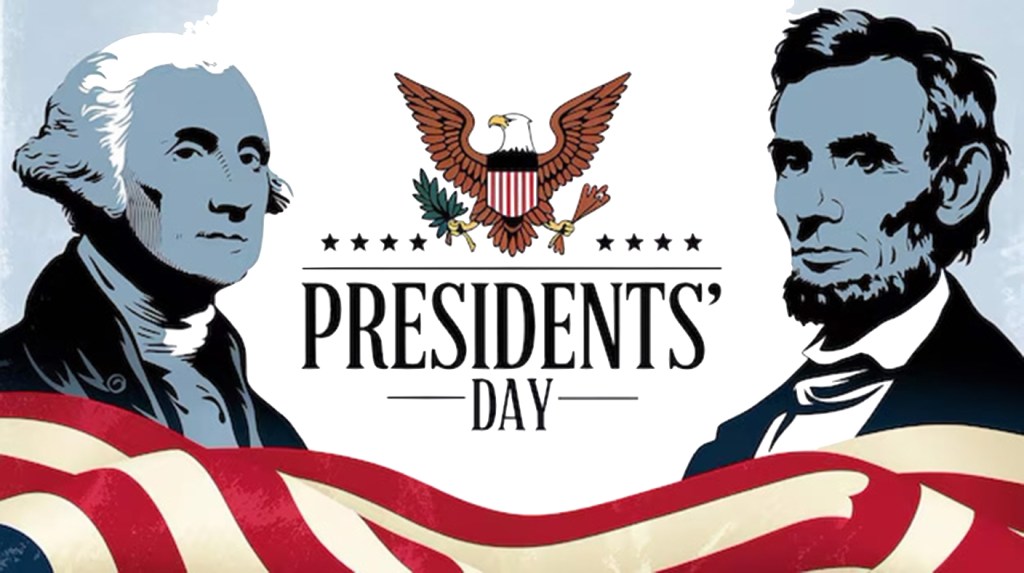
The Thoma family wandered into a discussion about President’s Day this past week at dinner. The nerd that I am, I interrupted the conversation with, “Did you know that Presidents’ Day is not the official name of the holiday?” I went on to nerdily explain that since its inception in the 1880s, it’s only ever been officially recognized legislatively as “Washington’s Birthday.” It wasn’t until the 1960s that a bill was introduced to move all federal holidays to Mondays, and one of the discussion points was to combine Abraham Lincoln’s birthday (February 12, which many states were already celebrating) and Washington’s birthday (February 22, which the whole country had long been celebrating) into a standard date. The combination was successful, becoming the third Monday in February. However, the name change for the holiday failed to pass. Officially, it’s still on the books as “Washington’s Birthday.”

I went on to ask, “Do you know why Congress ultimately failed to associate Lincoln’s name with the holiday formally?” I knew the answer to this question because I’d read some of the congressional floor discussions that encapsulated the essential argument.

As expected, there remained a strong ideological and regional opposition to Lincoln from southern Democrats. While the nation’s 16th president was revered by pretty much all of the northern states, he was still controversial throughout most of the South, even a hundred years after the Civil War. Essentially, and almost unanimously among Democrats, there remained a harbored resentment for Lincoln relative to the war and the national reconstruction that followed. In short, he wasn’t as beloved as you’d think, and it was often instinctual for the Democrats to slight his legacy whenever the opportunity presented itself.

As a result, while the bill’s consolidation efforts succeeded, any on-the-books remembrance of Lincoln failed. That said, the nation’s citizens adopted the name “Presidents’ Day” anyway, and when promoting and celebrating it, both Washington and Lincoln are almost always represented in its imagery. Stop by a furniture store that’s having a President’s Day sale. You’ll likely see images of Lincoln and Washington in its promotional posters.

I like that this is true. It speaks volumes. It’s a nod toward history’s eventual disregard for a government’s ideological foolishness, and it’s a defiant wink to the nitwits at the helm.

The Christian Church understands this contentious existence well, especially when it comes to its holidays. It seems the historical revisionists and liberal progressives have forever attempted to forget Christ, doing what they can to reshape or redefine the origins of Christian holidays. One needs only to consider Christmas and the forthcoming Easter celebration. Year after year, the Church anticipates attempts to impose confused narratives that diminish these holidays’ Christian foundations. In the end, the perpetrators only end up betraying their real intentions: an innate hatred for Christ; at least, it’s betrayed to those of us who’ve studied Christian history. That same history displays a pattern. Christ’s opponents either repackage His celebrations as pagan festivals or distract from them with secular innovations, coming up with goofy activist holidays like Kwanza.

And yet, despite these seemingly never-ending efforts, the revisionist interpretations put forth by truth’s opponents never seem to catch on. Human beings continue to celebrate Christmas as the birth of Christ and Easter as His resurrection, just as they have for centuries upon centuries. Across the world, they still say “Merry Christmas” and call to one another with “He is risen!”

While not precisely the same, this tendency is at least somewhat reflected in the Presidents’ Day celebration. No matter how much the overarching goodness inherent in Lincoln’s efforts was deliberately opposed, the American people appeared to know better, and as a nation, we have instinctively maintained a healthier understanding of the holiday, even calling it by its unofficial and ultimately rejected name.

I suppose one particularly worthwhile angle emerging from today’s rambling is that some things, it seems, are too deeply ingrained in the fabric of tradition and truth to be rewritten by ideological trends. Indeed, truth always has its day.

Are we experiencing this right now as a nation? Maybe. It sure seems like President Trump, a man who was accosted by unjust lawfare for years, is having his day. Musk and the Department of Government Efficiency certainly are having their day relative to long-hidden deviance in government. But that’s just it. Truth has a way of resurfacing and pushing back against worldly foolishness. This should be no surprise for Christians. Truth’s strength figures into our hope. Indeed, Jesus already told us, “For nothing is hidden that will not be made manifest, nor is anything secret that will not be known and come to light” (Luke 8:17). And so, whether in the Church’s steadfast preservation of its holy days or in the American people’s instinct to honor history rightly, truth remains a feisty contender. It refuses to be buried beneath the agendas of the moment.

I find this to be somewhat comforting. I know I live in a world bent on obscuring what is good, hoping to reshape reality itself. It calls a man a woman. It prefers workers based on gender (if they can figure out how to define it) and skin color rather than skill. It rewards liars and penalizes honesty. That said, history continues testifying that such efforts eventually fall short.

Again, this doesn’t surprise Christians. We have God’s Word, and so we know the “grass withers, the flower fades, but the word of our God will stand forever” (Isaiah 40:8). We know we “are afflicted in every way, but not crushed; perplexed, but not driven to despair; persecuted, but not forsaken; struck down, but not destroyed” (2 Corinthians 4:8-9). In other words, we know God’s Word remains, His truth prevails, and His people endure.

Applying this to life, whether it be the remembrance of faithful leaders, the celebration of our Lord’s birth and resurrection, or the whole of the very Gospel itself, no earthly power can rewrite what God has already written or undo what God has done. Jesus said, “It is finished” (John 19:30). And it is.