
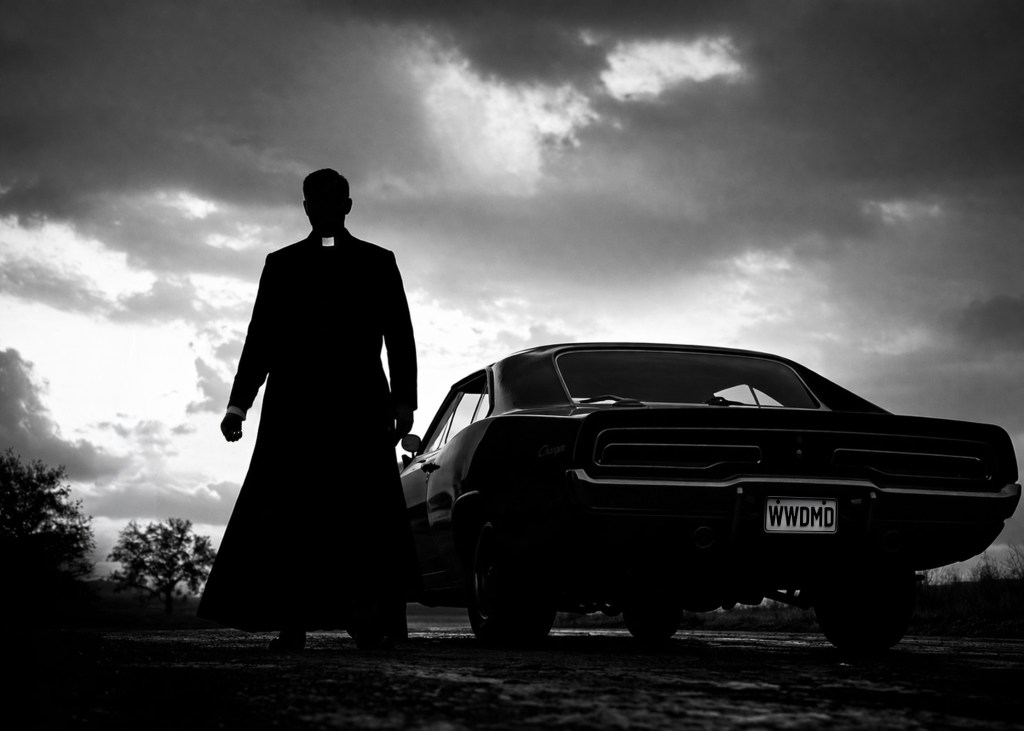
I’ll just warn you before I even get started this morning that my eyes are already tired and my brain is already fried. For those who may or may not care, I have started writing the sequel to Ashes to Ashes. I’ve been working on it off and on since October of last year. But by “working on it,” I mean tapping at it in between a thousand other things.
At this point, I have twenty-five good chapters of what already feels like it’ll be forty or more by the time I’m done. But as I already hinted, to do any of the work necessary to the story at any other time of the year than during summer’s only slightly accommodating pace is to invite a kind of mental collapse I am less and less equipped to survive as I get older.
I’m sure the other pastors out there reading my words know exactly what I mean. Seemingly, billions of big and small demands of ordinary vocation take up the better part of whatever strength many of us have to give in any particular day. And by the time morning comes around again, there’s usually enough left in me to do the work in front of me, though rarely enough to disappear into another world and bring back pages from it.
Add to the calculus that I’m relatively new to the fiction genre. It certainly doesn’t come about as easily as stuff like this. With this, I don’t have to plan. I just have to type. And with that, I can do a lot in a short period of time. I can’t do that with a story. Well, I suppose I could. But I can assure you it wouldn’t be any good.
I’ve learned a thing or two along the way. For starters, I’m assuming most fiction writers know that no matter what their original ideas might be before starting, they’ll almost certainly change as the work unfolds. I’ve learned that a story has a way of revealing itself. I heard Joe Rogan talk about his best creativity occurring in an almost disconnected way, describing it as something that happens apart from his intentions, steered more so by a “muse.”
That may or may not be true. Well, whatever.
In my world, it just seems like the characters press forward, themes deepen, certain scenes, once their details start forming, they arrive carrying more weight than I actually anticipated. Some come to mind while driving or eating lunch. Some arrived while I was mowing the yard this weekend. Sometimes the ideas translate into more pages. Sometimes it means I wrote way too much and, even though I might like it, I have to delete it.
That’s where I am right now—when I have the time.
Again, for those who may or may not care, much like the first installment, this one is being built in part from a playlist of songs. I’ll likely include that playlist somewhere near the beginning in a preface. I’ve already included some quotations from a few at the beginning of a few chapters. I may or may not keep them there. Just like Ashes to Ashes, the songs I’m listening to now do more than provide background noise while I write. They help form the register of the story. This time around, most of them are rock songs, and they fit this particular novel because they capture the lead character’s inner turmoil while, in some cases, also giving a sense of the force and movement behind what he does. You don’t need me to tell you that a song—a combination of music and lyrics—can sometimes say in three or four minutes what it takes fifteen pages to tell. It can carry anger, grief, memory, longing, and self-destruction all at once.
One song in particular attached itself to the work early on. In fact, it landed on me a month or two after I finished Ashes to Ashes. It’s “Rise” by The Cult.
I love rock music. But in all honesty, I was never a fan of that band. Also, I didn’t necessarily intend to write a sequel. But then other things started happening—and then I happened upon that song—and Daniel Michaels’ return almost felt inevitable. If you listen to the song, especially its chorus, I think you’ll get a sense for the book’s faster pulse.
Imagine a man surrounded in an alley. He’s been tricked into the space by some very bad people. Still, he’s the only one who makes it out. The song will give you such a character in motion.
If you’re listening to the song while a familiarity with Reverend Daniel Michaels is wandering around in your brain, you’ll hear a terrible kind of resolve gathering into purpose. You’ll see that dark alley, and you’ll sense that he’s coming, and he can’t be stopped. Again, it’s the chorus that does it for me.
“It’s the way that you feel. It’s the truth in your eye. ’Cuz you’re up against the world, and still you rise.”
By themselves, the words don’t quite fill in the gaps. You need the music, too. When you get a chance, listen to the song, especially if you know the character. It’ll be a foretaste of the energy driving the action you can expect.
But there’s also something more than action in what you’re hearing. There’s a sense of determination. Listen for it. I suppose the determination part is what matters most to me. Where is a person’s determination aimed?
When a question like that is asked, the Christian understanding of humanity doesn’t permit shallow explanations. That’s because we know better than to divide sin from its potential. We know we’re not dealing with minor flaws and manageable wounds. We’re dealing with a diseased heart capable of the worst kinds of destruction. Once that truth is understood, a story moving through darkness cannot be treated as merely a tale of heroes and villains. The man at the center of the story may hate evil for the right reasons and still become entangled in evil by the way he deals with it.
Among other things, I’m interested in that. But not only that. I’m also interested in the possibility of a trajectory toward something better. I say “trajectory” because stories like this are rarely about clean transformations. While I’m not necessarily new to reading stories like this, again, I’m fairly new to creating them, and I’ve learned they’re about collision, pressure, realization, and maybe even mercy arriving where mercy seemed all but impossible. They’re about humanity falling far enough into the habitual nature of darkness that we wonder if there are any real roads back from it all.
As a person who also writes sermons for a living, it’s nearly impossible for me to do any of this without noticing God’s Word standing somewhere in the background. God’s Word names things truthfully. It exposes and accuses and strips away all excuses. It tells the truth about evil in the world and the truth about evil within the “self.” That’s God’s Law doing its thing. But that’s not all there is to God’s Word. The Gospel is there, too, and it does something the Law cannot do. It shows us Christ. And as it does, it forgives and restores. It raises those who are dead in their trespasses and sins to new life—no matter who they are or what they’ve done.
The Gospel gives us Jesus. He’s the road out.
I don’t mean to sound vain, but I think what makes what I’ve written a little better than the Hallmark Channel type Christian fiction stuff that’s out there is that I’m willing to let the Law do its work. I’m more willing to let sin appear in its fuller ugliness than the folks at Angel Studios. I’m not saying they’re necessarily wrong for what they’re doing. I’m just saying I don’t want to rush past the damage people do to one another and to themselves without the reader sensing humanity’s genuine need for rescue. At the same time, I want to tease out how the Gospel might address those scenarios in real time. Because that’s where we live—in real dreadfulness in real time.
That, to me, is where the real weight of the better stories lives. Human struggle means more when sin is treated seriously, and redemption means more when mercy reaches someone who has no clean way of rescuing himself.
As you can imagine, I’ve re-read Ashes to Ashes several times while working on all this, if only to maintain the world and its style. Admittedly, the first book already carried these tensions in seed form. This sequel pushes them further. The darkness is deeper here. The wounds have been around a lot longer. Plenty of other things have happened, giving Daniel’s condition more time to harden. He carries grief and guilt, and I suppose also a grim sense of obligation, and all of it presses him forward in ways that are destructive even though he’s convinced himself they are necessary. He’s trying to answer evil. He’s trying to set things right. He’s trying, in his own damaged way, to act against what should never have been allowed to flourish in the first place. And yet, there it is, in all its ugliness. And when Daniel sees it, sometimes it’s more like looking in a mirror than observing through a window.
But that’s not at all where I want this story to end. With that, I’ll use the word “trajectory” again. Daniel’s trajectory must be one of hope. People should sense hope’s presence.
What I mean is that the strength of any good character (if the character is being written within genuine humanity’s honest boundaries in mind) won’t rest in his ability to think his way back into decency through sheer force of will. If that’s where the character’s hope is located, there’d be very little reason for hope at all, whether fiction or nonfiction.
I suppose that’s where the author, who is also a pastor, can benefit the story most. I can keep these things in mind, remembering that real hope rests where it has always rested: in the mercy of God in Christ, who still speaks into dead places and calls them back to life.
In other words, if there is any road out for a man like Daniel Michaels, it’ll have to be given to him. It will have to come from outside of him. It will have to arrive as mercy does, undeserved and unearned, but real all the same. And it’ll be located firmly in Jesus.
And so, wherever any of this finally goes, and however dark some of its roads may become along the way, I hope it’ll be hard to miss that even for someone as wounded and lost as Daniel, redemption is never out of reach, not with Christ.
That’s enough rambling for today.

