Let’s Be Honest About Death

Just yesterday (Saturday, February 20), the Life Team of Our Savior blessed our church and community by offering an “End of Life” seminar. It was well attended. I was glad for that.

The keynote speaker for the event was Genevieve Marnon, the Legislative Director for Right to Life of Michigan. I know Genevieve. She’s a great servant of the cause for life, and as you’d expect, she gave great insight into a multitude of things facing the Church in America when it comes to end-of-life decision making. All who took advantage of the day’s events were well fed.

We were also joined by Gary Borg from Lynch and Sons Funeral Home. I know the folks at Lynch and Sons well. Some years ago, Thomas Lynch, being the friend and writer that he is, wrote a kindly endorsement for my first volume of The Angels’ Portion. Knowing Tom’s directors to be top-notch, as expected, Gary’s words were valuable as he explained the funeral home’s role in the process, giving helpful tips to families for navigating what is likely to be a taxing and turbulent time.

I was tasked with kicking off the event. My topic: “How to Prepare for a Funeral Service and Beyond.” Of course, I did what I could to fulfill the expectations of this topic, being sure to talk about the nature and theology of a funeral service, as well as emphasizing and encouraging faithful practices. I talked about how to be proactive in planning one’s own funeral, and I went through the basic steps of what families should do when a loved one’s last breath occurs.

But before I could speak to any of these things, I felt the need to steer into an honest discussion of what sits at the core of the conversation.

Death.

There is the temptation to avoid the word “death” altogether. I, on the other hand, give the word a capital “D” in every sermon I write. Why? Because Death is no small thing. It’s owed our attention. It’s big. It’s powerful. When it’s lurking, you know it’s there. When it steps onto the scene, there’s no questioning its intentions. Shakespeare personified Death in this way, too, describing it as keeping court, as sitting and scoffing at the pomp of man, waiting for the inevitable moment (Richard II, III, ii, I, 160). When Death has passed through, the devastation is real. It leaves behind things that are tangible to each of the human senses. You can see its shadow in the pale skin of the deceased. You can touch and know the coldness of its labor. It even has its own smell. The people who’ve been powerless to stop its savage work on a loved one have red cheeks and bloodshot eyes. They’ve tasted the salt of their own tears. When there’s no more heavy breathing and the life-support machines have been stopped, the silence is thunderous.

W.B. Yeats once wrote that Man knows Death to the bone (Death, 1933). And he’s right. For the victim, it leaves nothing untouched. For those left behind, it cuts into the depths of their being, and its scars are long-lasting.

Against the overwhelming evidence of Death’s strangling might, in an attempt to be at peace with its inescapable work, I’ve heard some refer to Death as a friend, something to embrace as good. Yes, it’s true that an end to mortal suffering can be counted as a blessing. But the verity of such a statement isn’t so for the reasons the mortal flesh would conjure. Death is not a blessing. It’s a curse. It’s not natural. It’s completely foreign to God’s design for creation. He makes sure we understand these things in the Garden of Eden in Genesis 3:19. In 1 Corinthians 15:26, Saint Paul makes sure we never utter the words, “Death is a friend.” It’s not a friend. It’s the last bitterest enemy of Man.

Before we can even begin to fathom the glorious purpose and momentum of a Christian funeral, we need to be wise to what we’re actually dealing with. Death is everything I’ve described. It’s real, and it’s coming for all. Each of us will breathe our last and be returned to the bosom of the earth. We don’t know how or when it will happen, we just know that it will. And when it does, what will we do? What shall we expect from and for those around us? Where is our hope in the midst of the mess?

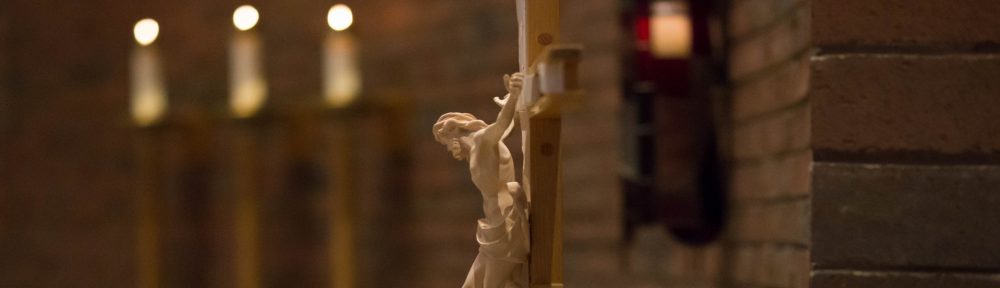
A Christian funeral beholds Christ right in the middle of it.

In the midst of the initial sadness—Christ. When the machines are being unplugged and rolled away—Christ. When the plans are being made at the funeral home—Christ. When the readings and hymns are being selected and the obituary is being crafted from memories—Christ. When the bell tolls and the service begins, when the casket is closed and the mortal remains are covered by the pall—Christ. When the sermon is ringing out to the listeners—Christ and more Christ! Yes, the loved-one in the casket will be remembered, and likely in some heart-warming ways. Nevertheless, none of these will rise to the prominent station of “most important.” At a Christian funeral, Jesus owns that spot. And so the unmistakable communiqué to be dispatched to the troubled community will be the Good News of Death’s cure—the great heralding of Death’s utter defeat at the hands of Christ.

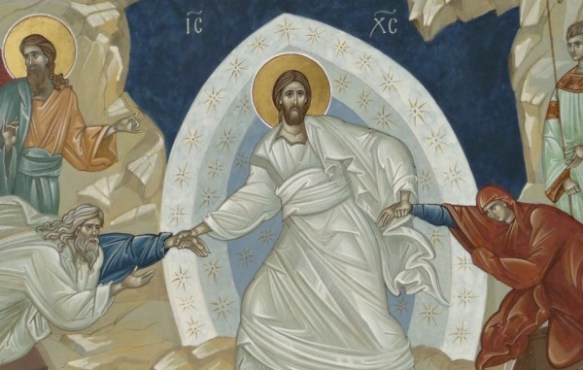
A Christian funeral is to be nothing less than the proclamation of this Gospel—the overabundant proclamation of the world-splitting news that Death no longer rules the spaces between heaven and hell because of the person and work of Jesus Christ. Because of Jesus, Death is no longer the believer’s lord. It is not the believer’s master. It is not the believer’s end. Jesus has seen to this. He said so Himself: “I am the resurrection and the life. Whoever believes in me, though he die, yet shall he live” (John 11:25). Trusting in the divine Son of God, the One who throttled Death by His own demise on Calvary’s cross, believers—both in the casket and in the pews—can be sure that Death has been remedied. The process itself, no matter how it may unfold, is now only for believers to close their eyes and exhale a last breath in mortality, and then to open their eyes and inhale the freshness of eternal life in the nearest presence of Christ in heaven.

Christ made sure of this.

If we don’t understand these things, a funeral can devolve into a circus sideshow very quickly. If we don’t empower our pastors to direct our funerals in a Godly way, being sure to leave behind very clear instructions for our families, then our own funerals very well could become less of what Christ would desire and more of what the unbelieving world would do to find peace, which ultimately means everyone in attendance will be left searching for hope in all the wrong places.

Lent is a good time to have a seminar like the one we had. This is true because Lent takes seriously what plagues humanity, knowing the immensity of the Lord’s work to save us from it, while at the same time knowing that Easter is on the very near horizon.

My prayer for you this day is that you would know the immensity of the Lord’s work, too, and that you would look to Him in all things, being assured of eternal life through faith in Him. Lent reminds us of the serious nature of the wage for Sin, which is Death. Easter reminds us that neither has a hold on Jesus. This being true, by faith in Him, they don’t have a hold on you, either.

The Shape of the Gospel — Ash Wednesday

The penitential season of Lent is soon to be upon us. It begins this week with Ash Wednesday.

So, who cares? Christians do. At least, they should. Although, it would seem many Christians—even some of the clergy—are preaching and teaching against it. I don’t know why. I did hear one say it’s some sort of innovation to the Church Year and therefore to be avoided. I heard another suggest it hinders the Christian’s ability to prepare for Easter with joy. That’s sad. One sure way to rob the victory of its joy is to be ignorant of what’s at stake in the war. Ash Wednesday offers a much-needed glimpse of the battlefield.

I find it strangely interesting that even the sensual (though unofficial) liturgies of something like Mardi Gras would portray a better awareness and care for Ash Wednesday and Lent, whether their partakers actually realize it or not. Even in the midst of a celebration that holds the well-deserved reputation for overindulgent debauchery, there is the sense that it must and will come to an end.

“Live it up,” its rites and ceremonies proclaim, “for after Fat Tuesday, it must all expire.”

And it does. What once was gives way to the ashen dust of death remembered by Ash Wednesday. Ash Wednesday is the proper headstone for all things carnal.

A day in the Church Year in which believers’ foreheads are marked with the ashes of what were once lively and verdant branches (the palms from the previous year’s Palm Sunday celebration), Ash Wednesday reveals that the Christian Church knows something of this world that the world itself cannot fully fathom. It knows the wage for Sin is Death—real and eternal Death. It knows this as it recalls God’s terrifying words to Adam and Eve after the fall into Sin. These words still reverberating, it hears the truth in them. It knows the necessity for their honest contemplation so that we would see the world as it ought to be seen. It knows to immerse itself in the depths of a solemnity that acknowledges the horror of the very real predicament that the entire human race is facing. The Church knows there’s so much more than just an end to things, but there’s also a terrible dreadfulness just over that end’s border for those who remain enslaved to the mess.

You can’t ignore it.

You can’t hide from it.

You can’t outrun it.

You can’t overpower it.

The inevitability of its reach is woven into the very fleshly fabric of every man, woman, and child who was ever born in the natural way.

It was with divine, and yet heartbroken, authority that God announced this to His world and its first inhabitants: “Because you have done this, cursed is the ground because of you…” (Genesis 3:17). Cursed things are put away from God. By this curse—this self-inflicted and permanent vexation—“you will return to the ground, since from it you were taken; for dust you are and to dust you shall return” (Genesis 3:19).

The thing about Ash Wednesday is that you can’t make your way into and through Lent without contemplating the veracity of the curse. Ash Wednesday has become a guardian of sorts at Lent’s contrite door, and it won’t let you into the forthcoming events without being stamped. The stamp it reaches out to give, it goes on your head and not your hand. Its dust crowns the human frame as the only appropriate coronation for someone born into the un-royal lineage of the Sin-nature. It adorns the skull that shields the corrupted human mind, the organ fed by a sinful heart so that it would calculate and then initiate every ungodly act of thought, word, or deed. The mark’s dirty-cold embers are the kind that distinguish Cain from Abel, openly identifying the murderer and reminding him of the dusty ground that opened up to swallow Godly innocence.

And yet, even as Ash Wednesday won’t let you forget the seriousness of the disease, it will be just as fervent with the cure.

Remember: That filthy mark is in the shape of a cross. It’s smeared onto the penitently-postured foreheads of Ash Wednesday’s observers who know their need for a Savior. It serves as a silent proclamation of God’s truest inclinations in our darkness. It’s the shape of the Gospel—the death of the Savior, Jesus Christ, for a cursed world. The Great Exchange—His righteousness for our unrighteousness. It tells of a birthright, not earned, but given in love. It beams through dusty grime the truth of an imperishable crown of blamelessness, not earned by the wearer, but won and granted by the Savior. Cain is marked and no one can touch him. God has been gracious. For us, even in that smeared cross’ quiet, there thunders above every human wearing it an otherworldly hope for eternal life through faith in the Savior who was nailed to it on Good Friday. The booming crack of its message drowns out the devil, the world, and the sinful flesh’s accusations to the contrary.

Ash Wednesday’s mark serves as a gentle reminder of something else in particular. It heralds rebirth.

That cross of ash will dot the same place where God first made the sign of the cross upon His Christians in Holy Baptism. If only for a few hours, it will make visible the invisible, leading each of its bearers back to the moment when God He put His own name on them, claiming them as His through the washing of water and the Word, thereby grafting them into the entirety of Christ’s self-submitting work to accomplish Mankind’s redemption (Romans 6:1-10).

It’s been said that the best opportunities are seldom labeled. This “best opportunity” of Ash Wednesday is, in fact, labeled. Its tag may be grimy, but it happens to be one of the most condensed opportunities in the entirety of the Church Year for a right understanding of our condition in Sin and our glorious rescue by the Son of God. Don’t keep it at arm’s length, but rather embrace the opportunity to gather with the faithful and sing as we do in the appointed tract, “He does not deal with us according to our sins, nor repay us according to our iniquities” (Psalm 103:10).

If you have any say in your evening activities, I encourage you to participate. Set aside 7:00pm this Wednesday. Make your way to Our Savior in Hartland, Michigan. Or go to your own church if it is offering a service. Either way, just don’t make the mistake of missing out on the powerful manner and message of the Ash Wednesday proclamation. You’ll be given the opportunity to look Sin and Death square in the eyes. You’ll see your mortality there. But you’ll see so very brightly and hear so very clearly the Good News of your brand new beginning through faith in the life, death, and resurrection of Jesus Christ, the compassion of God who took upon Himself human flesh and made His dwelling among us for our rescue.

Dying to Meet You

Do you have time for a quick story? Since you’re here, I’ll go ahead and share it.

We took a phone call here at Our Savior this past Friday. I didn’t answer it. Nikki, our Parish Administrator, did. It was someone calling to chat with me. Even though I wasn’t necessarily steeped in anything crucial, Nikki took a message for me. She does this because she knows that while technically Friday is my day off—and I probably shouldn’t tell you this—but I’m always in the office on Fridays. I have a few regularly scheduled appointments in the morning, and then after that, I use the rest of the day to catch up on things I didn’t have time for during the week. She runs block for me to let me do my thing.

Anyway, a woman called to let me know she didn’t appreciate the comparison I’d made in a recent radio bit equating Christians who justify skipping worship on a regular basis to so-called believers who justify voting for a candidate who favors abortion.

To be fair, the woman wasn’t rude with her critique—which was a welcomed difference in comparison to so many other calls or email messages I’ve received from metro-Detroit listeners. Instead, Nikki described her as someone who, with a conversational tone, was troubled “by likening someone absent from church to a Christian who’d support abortion,” and her hope was that I’d reconsider broadcasting the particular segment in its current form.

I’ll admit the association is a brutal one. And I’m more than willing to reconsider my words. The problem is, I didn’t write the script on this particular radio bit. My daughter did. Evelyn’s the one who made the observation and ultimately formed the comparative conclusion. I was so inspired by her insight, I wrote down what was spoken between us and together we recorded the 60-second radio spot right then and there. Again, I put into the microphone what I said. Evelyn put into it what she said. The brief conversation fit perfectly between the 15-second intro and the 15-second outro of my one-minute-and-thirty-seconds of airtime.

The context was simple. While waiting in my office before school, Evelyn was scanning the images from one of our previous church pictorial directories. Turning the pages, she stumbled upon the picture of someone she didn’t recognize. Second only to her dad, Evelyn practically lives here at Our Savior. She knows everyone’s name. And if she doesn’t know a member’s name, she certainly knows all the faces. Looking at a pictorial directory of people officially labeled as “members,” one holding the kindly faces of countless people she considers as members of her Christian family, it was natural for her to ask about someone she didn’t recognize. I didn’t say much at first, but I was careful not to be deceptive. Had I dodged her question, she would’ve known. Remember, like me, she’s here every Sunday. If she doesn’t recognize you, it’s probably because you don’t attend. That being the case in this particular instance, when she asked for the identity of the person, I said very nonchalantly, “She’s a member of the congregation, but she just doesn’t come to church very often.”

“Well, I’ve never seen her before in my life,” she replied, sounding somewhat concerned—just as I’d expect from this little girl with such a huge heart for her church family. “Does she work on Sundays?”

“No,” I answered, again trying not to give her any more information than she required.

“So, she could be here on Sundays?”

“I suppose.”

Evelyn thought for a moment, and then she laid the situation out unembellished. “How can she consider herself a member of a church she doesn’t even want to attend?”

My answer: “That’s a really good question, honey.”

Her next uninhibited reply, being the ardent pro-life girl that she is: “That’s kind of like people who call themselves Christian but support abortion. It just doesn’t make any sense.”

First of all, can you tell Evelyn is in tune with what’s going on around her, both in her church and her world? Second, there you have it. Even a child understands the inconsistency. How can we claim to be a devoted follower of someone we want nothing to do with? Using the same logic, how can we claim faith in Christ who is the Word made flesh (John 1:14), and yet be in opposition to the Word of God when it comes to topics like abortion?

It just doesn’t make any sense, and my little girl knew it.

Of course as adults, there will always be plenty of unknown angles to Evelyn’s observation that we’ll discover. COVID-19 has made things a little crazier these days. However, rest assured that the person in the picture was MIA long before COVID-19. That being said, be careful not to square the angles for escape from her scrutiny’s sting with whatever illegitimate excuses at whatever moment work best for you. And be sure to take even greater care not to overcomplicate or find offense in what’s been laid bare. If you do, you’re sure to miss a simple truth revealed by way of a simple faith, the same kind of child-like faith described by the Lord in Matthew 18:3 and now being demonstrated by a little girl who sees time with her Savior, concern for the members of her church family, and doing everything humanly possible to protect the lives of unborn children as essential and non-negotiable to the Christian life.

Her evaluation was simple, but it was a good one. I suppose in essence, it reminds us that even as our God cannot be in contradiction with Himself, He does not grant us space for being in contradiction with Him, either. This is built into the Lord’s announcement, “Whoever is not with me is against me, and whoever does not gather with me scatters” (Matthew 12:30).

Now, to begin wrapping all of this up, right after Nikki told me about the call on Friday, I posted on Facebook the very first thing that came to mind:

“I’m beginning to think that for some Christians, worship and Bible study are so precious they feel they need to ration them. Go to church.”

Yes, it was a sarcastic play on words.

“Well, I don’t support abortion, so don’t put my skipping church into the same category.”

But they are in the same category. Don’t have other gods. Don’t misuse God’s name. Don’t skip church. Don’t kill. Don’t lie. Don’t steal. These are all a part of the same list of things we do to thumb our noses at God, and ultimately, they’re things that keep us separated from Him. And yet, our Lord reaches to us by His Gospel. He empowers us there by His Holy Spirit for acknowledging our dreadful disobedience. Only by the power of the Gospel can we know to repent of these Sins and be changed to desire faithfulness (Romans 1:16).

I don’t necessarily know what many of the other churches around us are doing, but opportunities for holy worship are plentiful here at Our Savior. We have two Divine Services on Sunday. We enjoy the Office of Matins on Monday, another Divine Service on Wednesday, and an abbreviated Responsive Prayer (liturgics) service on Thursday.

And God is continually blessing all of our time together during these occasions for worship.

Dear Christians, there’s no need to ration your time with Christ. There’s an abundance! Indeed, the Lord is here, and His merciful gifts are overflowing all week long. Surely you can make it to one of those services to receive from the bounty that belongs to those who are His own? Wear your mask if you want to. Or don’t. No one is judging anyone in this regard. And why would we? The goal is simply to gather with the Lord and receive His care just as He desires to give it.

Quite honestly, I say all of this with a rather sizable concern in mind. For me personally, it’s one thing to be unrecognizable to Evelyn. Truthfully, if you are yet to meet her, you are missing out. But it’s a thing of far greater terror—the greatest terror there is—to be unrecognizable to Christ; to be one to hear Him say at one’s last hour, “I never knew you. Away from me…” (Matthew 7:23).

Go to church. You belong there. And even if you don’t feel like you belong just yet, go anyway. Christ is dying to meet you. Well, “died” to be more precise. And I know a church full of people who are eager to make the introduction.