The Gentle Man

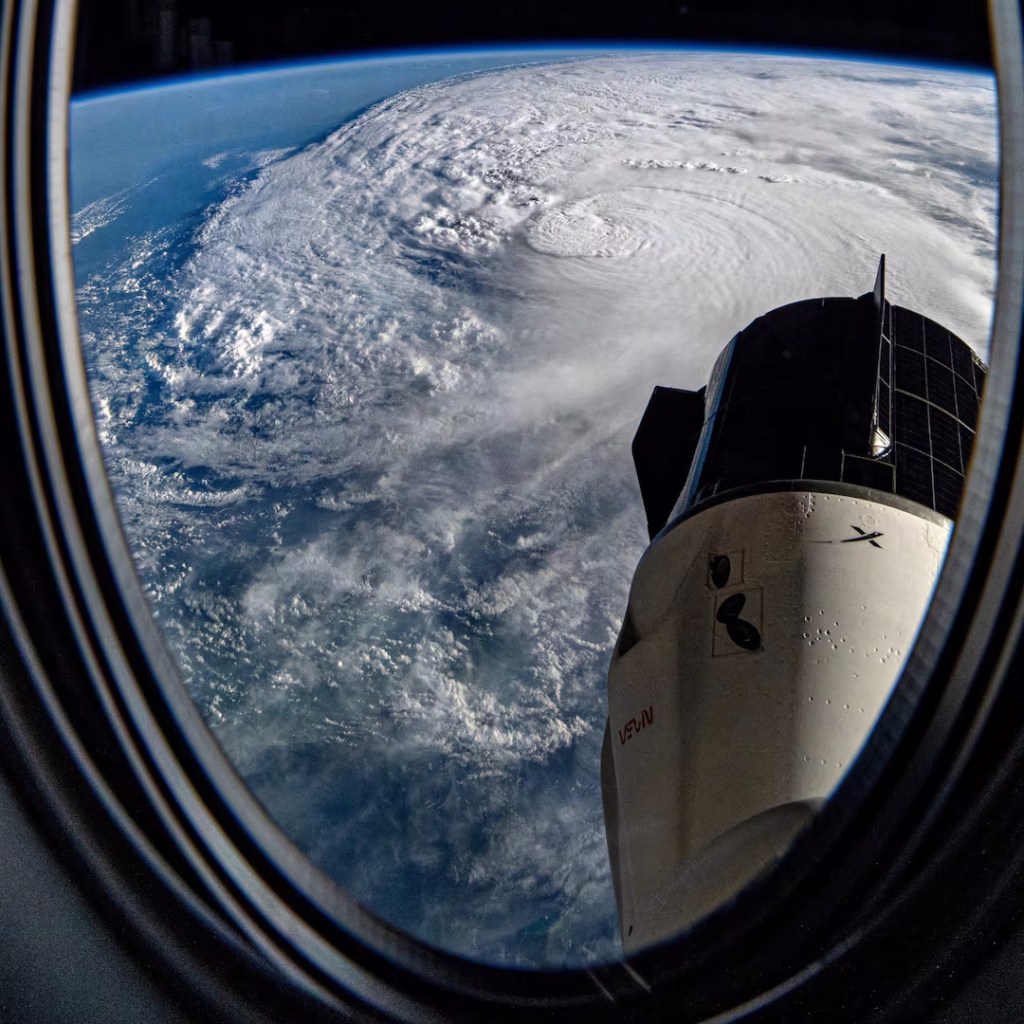
You likely need very little help from me to know the dreadfulness of Hurricanes Helene and Milton. From its center to its malicious extremities, Hurricane Helene was estimated to be 502,000 square miles in size. I did a little math. For perspective, that’s larger than France, Germany, and Italy combined. And then, with seemingly very little breathing room, Hurricane Milton—125,000 square miles of viciousness—tore through Florida in a little more than 24 hours. Thankfully, it weakened from a Category 5 to a Category 3 when it hit land. Nevertheless, it left more ruin in its obliterating wake.

I’m sure, like me, you were attuned to the events. I watched videos of the awful winds. I saw the overwhelming storm surges in Florida and swollen rivers sweeping away entire hillsides in North Carolina. I gave my fullest attention to the reporters visiting and describing the devastation. I listened to the tearful pleas from people who’ve lost everything in mere moments. And by everything, I mean family and friends. As of this morning, Helene claimed 260 lives. Milton took 17. It’s all very heartbreaking.

But there’s more to the story.

Even as the winds were still shaking walls and rattling glass, neighbors were helping neighbors. People were coming to one another’s aid. Everyday people cleared washed-out roads. Local business owners delivered generators. Strangers sheltered strangers from danger, giving them food, water, and a place to sleep.

All this happened long before FEMA arrived sharing online links to emergency loans to people with no internet access. All this continued even as Kamala Harris, the nation’s Vice President, went on Stephen Colbert’s show in full campaign mode for a “beer summit” and an opportunity to laugh about this and that, with no mention of the crisis. All this continued as President Biden, when asked by a reporter if the people in the storm zones were receiving the help they needed, fumbled to remember what the reporter meant by “storm zones.”

In all things political or civil, the ones who are so often piously “above it all” tend to lean on their favorite engagement escape hatch text, Psalm 146:3, which reads, “Put not your trust in princes….” In this case, they’re right to do so. The text refers to rescue. It refers to feeding the hungry and caring for the widows and the fatherless. Of course, the psalmist names God as the only trustworthy one when trouble strikes and needs are abundant. That said, Jesus told His listeners that when He returns in judgment on the Last Day, He will say to His believers, “Come, you who are blessed by my Father, inherit the kingdom prepared for you from the foundation of the world. For I was hungry and you gave me food, I was thirsty and you gave me drink, I was a stranger and you welcomed me, I was naked and you clothed me, I was sick and you visited me, I was in prison and you came to me” (Matthew 25:34-36). From there, Saint James offers rather straightforwardly concerning the Christian religion’s contours, “Religion that is pure and undefiled before God the Father is this: to visit orphans and widows in their affliction, and to keep oneself unstained from the world” (James 1:27).

To be clear, none of these things are teaching that salvation is dependent on our deeds. Good works are fruits of faith, and they are fully orchestrated by the Holy Spirit, who dwells in the believer (Ephesians 2:8-10). However, what we learn from these texts is that God regularly accomplishes the human care ascribed to Him in Psalm 146 through people. And so, I was by no means surprised to learn that neighbors were providing the initial and most crucial material and human resources, and in many cases, their help exceeded what the federal government was willing and able to provide. Where FEMA promised $750 to a hill-dwelling family to cover a catastrophic loss, churches both near and far, along with their denominational institutions, were already gathering funds to rebuild that same family’s home entirely.

Go figure. That’s what Christians do. We are the salt of the earth and the bright-beaming cities on this world’s hills. The deeds done are nothing more than the powerful glory of God at work through His people (Matthew 5:13-16).

I read very little modern fiction. However, someone who knows my appreciation for Lewis and Tolkien recommended I give Patrick Rothfuss a try. For the record, I probably won’t. Still, to investigate, I typed his name into Google. Along the way, I stumbled upon a potent quotation from his book The Name of the Wind. Rothfuss wrote, “There are three things all wise men fear: the sea in storm, a night with no moon, and the anger of a gentle man.”

That’s an intuitive sentence. The ferocity of nature, such as a stormy sea, is something a wise man fears because he knows its potential for danger. A moonless night of pitch-blackness provides cover for enemies and creatures we can’t see and yet would harm us. Therefore, a wise man avoids being out on such evenings. That same wise man also knows that when a person with an ordinarily gentle persona—someone from whom we’d only ever expect passivity and calm—when that person is moved to action, watch out. It’s likely an unstoppable conviction that’s driving him.

All of this prompts another thought. Well, actually, two.

First, I think we heard from the gentler man after the recent hurricanes. I think Helene and Milton juxtaposed the fire hose of billions of free-flowing cash to foreign countries with so many of our own citizens who couldn’t get the help they needed when they needed it. Because of this, I think the ordinarily quiet man is going to make himself heard in the forthcoming election. I think his voice will resonate long after. The hard truth is that people who just want to go to work, go to church, enjoy their lives and families, and all the things that a peaceful and dignified societal context provides are becoming frustrated. They don’t want to be forced to say a man is a woman when he isn’t. They’re tired of people like Gretchen Whitmer, Michigan’s governor, mocking sacred things like Holy Communion and then gaslighting them, saying what they saw is not what they saw. They’re tired of being forced to sit through DEI and CRT training at the office. They don’t want to feel as though they’re inherently and unforgivably racist because of the color of their skin. They don’t want their children’s teachers to indoctrinate them with confused sexual ideologies. They don’t want their parental rights stripped away. They don’t want their already exorbitant taxes to become monthly paychecks to illegal immigrants. They don’t want those taxes to pay for the same illegals to stay in posh New York hotels while their neighbors in North Carolina receive a few dollars during a disaster. They don’t want any of this.

Second, we heard another quiet man’s voice before, during, and after the hurricanes. We heard from those who live quiet lives of Christian conviction. Their faith proved capable of transforming fear into hope and ultimately showing a strength that could rival both the storms and the Federal government. Their Godly concern for genuine human suffering became a visible force that this sin-infected world and its princes just could not match.

I suppose Hurricanes Helene and Milton are reminders that while nature’s fury is something to be respected, there’s something else—or I should say someone else—far more awe-inspiring and worthy of our reverence: God. His rule has no limits, and His reign is forever, just as the Psalmist declared. More importantly, He cares. He is not distant. He’s close—closer than close can be. Faith knows that He’s so close that He’s often extending a helping hand through a friend or even a stranger. That moves us to thankfulness, first to Him and then to the agents of His manifested care.

Amid these current disasters, I’m not surprised the Christians have made an incredible showing. I bear Godly pride for my own Lutheran Church-Missouri Synod’s response. What a tremendous response from gathered Christians whose eyes are firmly fixed on Christ! But what else should I expect? That same Christ told us it would be this way. His servant, Saint James, did, too. God promised there would be people ready to step into the gaps—neighbors who would help when help was needed, who would ride out the storm while sheltering others through it, and then would remain in the aftermath to rebuild. We’re seeing this.

God be praised for His faithfulness!

Imperishable, Undefiled, and Unfading

One would think I should’ve been a weatherman because I’m so obsessed with the seasons. Although, it isn’t an obsession. It’s frustration. I live here, but I’m not meant for this climate, especially not the back-and-forth Michigan is currently enduring.

I dare say even the ones who adore autumn in this state will know what I’m talking about. The days are becoming wildly different.

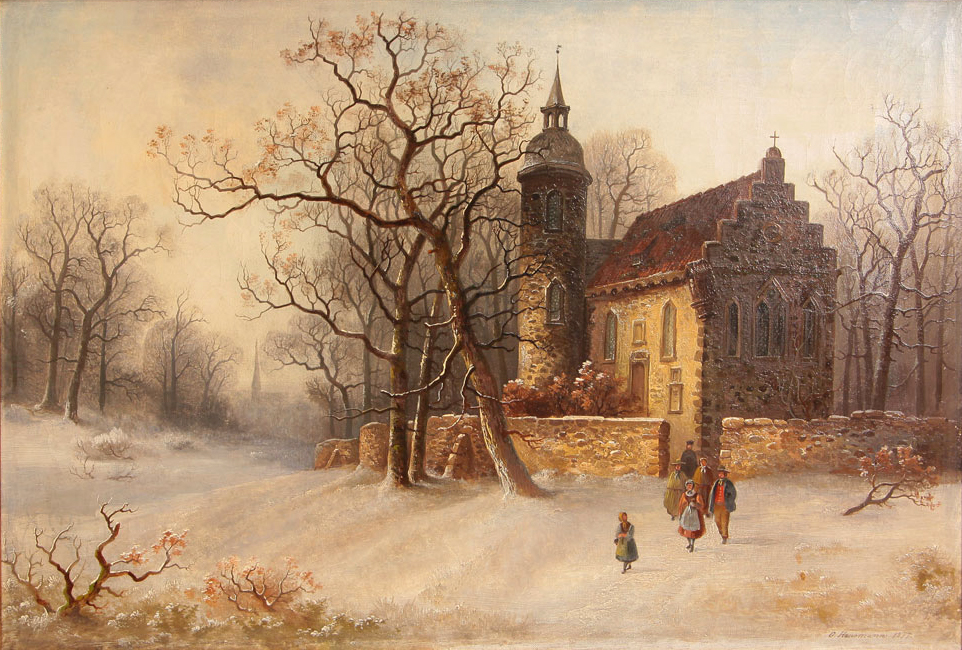
I suppose one way to describe this is to say that, indeed, summer is over, and as a faithful doorman, autumn is watching for winter, preparing to hold open the gates when it arrives. Until then, autumn fidgets. It keeps opening and closing the door, stepping out to scan the horizon for winter’s caravan, and then stepping back inside again to watch and wait. By this, autumn stirs wildly different weather, sometimes all in one day.

Again, Michiganders will know what I mean. One moment, the sky is clear, and the sun is shining, warming all within reach of its bright array. It’s as if August locked the door, barring September and its followers from entering. But with little more than a glance to the horizon, thick clouds are invited over and into view. The door is thrown open. The sun is nudged away, its beaming warmth exchanged with chilly darkness and drizzling rain. In other words, to endure Michigan’s autumn means to be in August one minute and then October the next. One moment, the sky’s sapphire happiness is vast and cheerful. The next, you’re in deep space, a hundred million miles from our solar system’s star.

But then winter finally arrives, and that’s that—no more confusion.

I began by saying I’m not meant for this climate. I mean that in more ways than one. Interestingly, one of those ways, in part, explains why I’d never willingly leave Michigan. In truth, physically, I’m suited for Florida. My body feels better when I’m there. My back feels better. I have fewer migraines. However, God put me in Michigan. This is where my vocation’s muscle is flexed. I’ve come to realize my vocation—my combined roles as a husband, father, pastor, and the like—are less about location and more about devotion. I really can live just about anywhere when I’m confident that God has me right where He wants me. Where He puts me is a part of what He wants for me. What He wants leads to eternal life (John 6:40), which is eternity’s joyful location—an inheritance far beyond this life’s comforts.

When a Christian trades interest in this life’s comforts for the joy of the life to come, it’s incredible what can be endured. This world, steeped in its undoneness, is seen for what it is. Still, even as we endure, it’s amazing how the sun perpetually shines when, by faith, you know you’re not an inheritor of this world but of an altogether different sphere.

Saint Peter referred to this inheritance as “imperishable, undefiled, and unfading, kept in heaven for you” (1 Peter 1:4). He went on to say that this remains true, even as we are “grieved by various trials, so that the tested genuineness of your faith—more precious than gold that perishes though it is tested by fire—may be found to result in praise and glory and honor at the revelation of Jesus Christ” (vv. 6-7). Luther explained:

“This means that our hope is not set on possessions or an inheritance present here on earth, but we live in the hope of an inheritance which is at hand and which is incorruptible, and which is undefiled, and that does not fade away. We possess this good eternally, only we cannot see it yet. … All things that are on earth, even though they may be as hard as iron and stone, are perishable and cannot last. Man, as he grows old, grows ugly; but the eternal good does not change, but remains fresh and green forever. On earth, there is no pleasure so great that it does not pall in time. We see that men grow tired of everything, but this good is of a different nature.” (Luther’s Works, Weimar Edition, 12:269.)

“…there is no pleasure so great that it does not pall in time.”

In this life, the seasons change. The cold moves in. The clouds pall the landscape. The light dims. And yet, eternal life’s season—our inheritance—remains unphased. It’s ready and waiting (John 14:2-6). It stands sturdy and cheerful and sure, beaming brightly beyond this world’s veil of tears (James 1:17). What’s more, as Luther remarked, not only do we know this, but we own its resplendence right now. “We possess this good eternally,” he wrote, “only we cannot see it yet.” It’s true. Our mortal eyes cannot see heaven’s glory. But faith sees it. And it’s aware that the light feeding heaven’s extraordinary brilliance—Jesus Christ—is alive with us right now, and He’s radiating luminously through us to a darkened world in dreadful need of rescue (John 8:12; Matthew 5:14-16).

For Christians, when life in this world becomes attuned to this hope-filled future, there’s little that the temporal darkness can disrupt. Knowing I’m not an inheritor of this world—that my time here is quite temporary—I see everything this life throws at me differently. More importantly, courage for faithfulness to Christ, my Savior, is within reach every moment of every day (Ephesians 6:10).

Having said all this, I need to be clear. I still intend to live in Florida one day. If God intends it, it’ll happen. Until then, I’m where I need to be.