Why am I sticking my nose in this? Why do I care about it? Not only because folks are taking time out of their apparently not-so-busy work day to come after me by email now, but because it matters.
What doesn’t matter is what Rob Reiner bemoaningly said about Donald Trump in the past. His name-calling does not matter. It also does not matter what he said about Rush Limbaugh’s death, no matter how cruel. None of those words supply anyone with moral permission to cheer someone’s murder.
But do me a favor and keep reading. Don’t skim. Read, because some are already sensing the urge to object to what I just wrote.
Yes, Reiner’s rhetoric probably helped fuel the kind of violence that got Charlie killed. Yes, words can inflame unstable people, and I have criticized that recklessness for, well, forever. But inherent to my point is that causal responsibility is not moral permission. Cruel or deceitful speech may be blameworthy, but it is never a license for murder. It’s certainly never grounds for celebrating it. And if you cannot discern these things, you are not dealing in moral clarity. You are trapped in an emotional tribalism, and you are a part of the Woke Right.
The Woke Right, just like the Woke Left, can decide that a man’s death is funny, or deserved, or useful, or whatever. But once you cross into that borderland, every protest that follows rings ridiculously hollow—because you’ve already proven that your moral claims only apply when it is your tribe member lying dead on the ground.
Interestingly, someone decided to email me and say something like, “Well, what about being glad about Hitler’s death? What if someone could’ve killed him to stop him? Can we cheer for that?” I’ll respond right here.
Yes, there are such things as stupid questions, and you just asked one. Why is it stupid? Because in this context, your question is an evasive attempt to justify your cheering for Reiner’s murder. How so? Because none of this is even remotely comparable to stopping (or being glad someone stopped) a man like Hitler while he was actively murdering millions. There is a categorical difference between restraining or killing someone in order to halt ongoing mass slaughter and cheering the death of a movie director because you despised what he said about the leader of your tribe. The former is tragic necessity in the face of evil. The latter is moral rot. And conflating the two is either careless and accidental, because you didn’t think it through, or you didn’t know any better, or it’s deliberately dishonest. Whatever the case may be, if you cannot tell the difference between preventing slaughter and celebrating murder, then the problem is not the complexity of the situation. It is your collapsed moral framework.
In the end, it’s pretty simple for me. If my commitment to human dignity evaporates the moment it costs my side something, then it was never a conviction at all. I’m not going to live that way. And that’s how I’m different than the folks coming after me. I don’t care what you’ve said about me. Your life still matters to me, and I’m going to do everything I can to protect it. Not because I like you, but because Christ considered you worthy of every single drop of blood in His holy veins, and I’m on His side.
There are very important moments when leadership is not measured by how loudly we speak, but by how carefully we choose our words. Rob Reiner was verbally cruel to President Trump. He had been for many years. No one argues this. But his and his wife’s rather gruesome deaths required words of reverent sobriety, not mockery.
This really could have been a time for President Trump to shine. Simplicity, or maybe even silence, would have been the wiser course. Of course, silence would’ve prompted backlash, so what’s the harm in a brief acknowledgment of loss? A recognition of grief, even for an outspoken enemy? That’s it. I mean, there is a time to argue, and there is a time to mourn.
I should say that I’ve stood before my congregation on countless occasions and in various contexts and shared the characteristics I appreciate most in people. Two in particular stand out right now. I think the best way to relay the first is to say that leadership isn’t always about how quickly a person responds in the middle of a crisis. It’s about whether the person actually understands the moment requiring a response. That said, the ability to exercise restraint when restraint is hardest—when emotion, and even a long history of provocation, seem to beg for a sharp response. Leadership we can call “good” knows when to tone down and hold back. Even better, I think it takes more guts to lower your voice than to shout one’s apparent vindication. That’s by no means a sign of weakness. It demonstrates strength under control.
Trump made a huge mistake. The moment called for restraint, and he blew it. That leads to another characteristic I admire in people. Those with the ability to admit to a mistake and seek to amend that mistake are the truly courageous among us. They are also the wisest, and I trust them above all others.
If I were advising Trump, I’d tell him an apology here would not weaken him. It would show that even a man accustomed to fighting understands when the fight needs to stop. It would communicate that there are moments when compassion must take precedence over score-settling. That kind of humility is already too rare in public life, which is precisely why it matters right now, and why it would strengthen President Trump, not weaken him.
Again, the strongest people I know can admit to being wrong and say, “I’m sorry.” They own their errors. And they correct course. When they do, they earn my trust rather than lose it. In this particular moment, a sincere apology would not erase what President Trump wrote, but it would demonstrate that he does, in fact, understand the gravity of the moment he first failed to recognize. I’ll pray that someone in his immediate circle encourages him to do this.
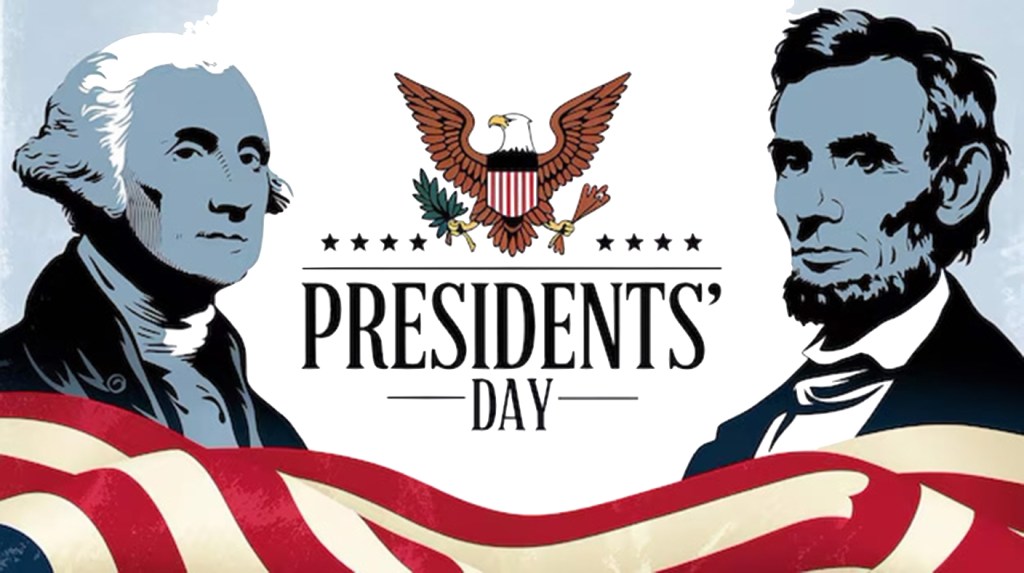
The Thoma family wandered into a discussion about President’s Day this past week at dinner. The nerd that I am, I interrupted the conversation with, “Did you know that Presidents’ Day is not the official name of the holiday?” I went on to nerdily explain that since its inception in the 1880s, it’s only ever been officially recognized legislatively as “Washington’s Birthday.” It wasn’t until the 1960s that a bill was introduced to move all federal holidays to Mondays, and one of the discussion points was to combine Abraham Lincoln’s birthday (February 12, which many states were already celebrating) and Washington’s birthday (February 22, which the whole country had long been celebrating) into a standard date. The combination was successful, becoming the third Monday in February. However, the name change for the holiday failed to pass. Officially, it’s still on the books as “Washington’s Birthday.”
I went on to ask, “Do you know why Congress ultimately failed to associate Lincoln’s name with the holiday formally?” I knew the answer to this question because I’d read some of the congressional floor discussions that encapsulated the essential argument.
As expected, there remained a strong ideological and regional opposition to Lincoln from southern Democrats. While the nation’s 16th president was revered by pretty much all of the northern states, he was still controversial throughout most of the South, even a hundred years after the Civil War. Essentially, and almost unanimously among Democrats, there remained a harbored resentment for Lincoln relative to the war and the national reconstruction that followed. In short, he wasn’t as beloved as you’d think, and it was often instinctual for the Democrats to slight his legacy whenever the opportunity presented itself.
As a result, while the bill’s consolidation efforts succeeded, any on-the-books remembrance of Lincoln failed. That said, the nation’s citizens adopted the name “Presidents’ Day” anyway, and when promoting and celebrating it, both Washington and Lincoln are almost always represented in its imagery. Stop by a furniture store that’s having a President’s Day sale. You’ll likely see images of Lincoln and Washington in its promotional posters.
I like that this is true. It speaks volumes. It’s a nod toward history’s eventual disregard for a government’s ideological foolishness, and it’s a defiant wink to the nitwits at the helm.
The Christian Church understands this contentious existence well, especially when it comes to its holidays. It seems the historical revisionists and liberal progressives have forever attempted to forget Christ, doing what they can to reshape or redefine the origins of Christian holidays. One needs only to consider Christmas and the forthcoming Easter celebration. Year after year, the Church anticipates attempts to impose confused narratives that diminish these holidays’ Christian foundations. In the end, the perpetrators only end up betraying their real intentions: an innate hatred for Christ; at least, it’s betrayed to those of us who’ve studied Christian history. That same history displays a pattern. Christ’s opponents either repackage His celebrations as pagan festivals or distract from them with secular innovations, coming up with goofy activist holidays like Kwanza.
And yet, despite these seemingly never-ending efforts, the revisionist interpretations put forth by truth’s opponents never seem to catch on. Human beings continue to celebrate Christmas as the birth of Christ and Easter as His resurrection, just as they have for centuries upon centuries. Across the world, they still say “Merry Christmas” and call to one another with “He is risen!”
While not precisely the same, this tendency is at least somewhat reflected in the Presidents’ Day celebration. No matter how much the overarching goodness inherent in Lincoln’s efforts was deliberately opposed, the American people appeared to know better, and as a nation, we have instinctively maintained a healthier understanding of the holiday, even calling it by its unofficial and ultimately rejected name.
I suppose one particularly worthwhile angle emerging from today’s rambling is that some things, it seems, are too deeply ingrained in the fabric of tradition and truth to be rewritten by ideological trends. Indeed, truth always has its day.
Are we experiencing this right now as a nation? Maybe. It sure seems like President Trump, a man who was accosted by unjust lawfare for years, is having his day. Musk and the Department of Government Efficiency certainly are having their day relative to long-hidden deviance in government. But that’s just it. Truth has a way of resurfacing and pushing back against worldly foolishness. This should be no surprise for Christians. Truth’s strength figures into our hope. Indeed, Jesus already told us, “For nothing is hidden that will not be made manifest, nor is anything secret that will not be known and come to light” (Luke 8:17). And so, whether in the Church’s steadfast preservation of its holy days or in the American people’s instinct to honor history rightly, truth remains a feisty contender. It refuses to be buried beneath the agendas of the moment.
I find this to be somewhat comforting. I know I live in a world bent on obscuring what is good, hoping to reshape reality itself. It calls a man a woman. It prefers workers based on gender (if they can figure out how to define it) and skin color rather than skill. It rewards liars and penalizes honesty. That said, history continues testifying that such efforts eventually fall short.
Again, this doesn’t surprise Christians. We have God’s Word, and so we know the “grass withers, the flower fades, but the word of our God will stand forever” (Isaiah 40:8). We know we “are afflicted in every way, but not crushed; perplexed, but not driven to despair; persecuted, but not forsaken; struck down, but not destroyed” (2 Corinthians 4:8-9). In other words, we know God’s Word remains, His truth prevails, and His people endure.
Applying this to life, whether it be the remembrance of faithful leaders, the celebration of our Lord’s birth and resurrection, or the whole of the very Gospel itself, no earthly power can rewrite what God has already written or undo what God has done. Jesus said, “It is finished” (John 19:30). And it is.
What’s on your mind this morning? Something likely is. Or better said, “somethings.” On my part, I just got some weightier news this morning, and so I have a lot on my mind. Still, I’ll try to keep this light, practical, and worth your while.
For starters, I’m overjoyed by President Trump’s inauguration. And his speech—wow! What an indictment of the Biden administration, even as the former president and his associates were sitting just over Trump’s left shoulder. Trump’s words were bold in the best way. While listening to the speech, I tried to imagine what Biden, Inc. was thinking. Considering what Trump said, I’m sure several in the bunch were just wondering how much longer it would be until they could leave.
I was also overjoyed this past week by President Trump’s pardoning of the pro-life protesters who were jailed last year. One of them, Heather Idoni, lives in my hometown of Linden, Michigan. She’s a 60-year-old grandmother who was indicted and sentenced by the Biden Justice Department to two years in prison for protesting at an abortion clinic. However, sentencing came only after having already sat in jail for five months. As you’d guess, the pro-abortion opponents have falsely accused this gentle woman, a mother of five and adoptive mother of ten, of outlandish viciousness. But then again, the Devil is a liar. Abortion is his holiest sacrament. He will do what he must to protect it.
Nevertheless, Heather was freed on Friday. Praise God for this. I’ll be talking with her soon. I indeed wonder what she was thinking while in prison. When it comes to someone willing to go to jail for faithfulness to Christ, such a person’s innermost thoughts are worth knowing. Knowing what I know about her, I suspect she kept her thoughts occupied by God’s Word and prayer.
I read an article a couple of weeks ago reporting that most folks have 6.5 thoughts per minute and around 6,000 every day. I only found the article because I was reading a different study about how 47% of our average awake time is spent free-thinking or daydreaming. The remaining 53% is spent being task-oriented. What I found interesting about the results is that the more people daydreamed, the less happy they were.
I didn’t believe that at first—until I thought about it for a moment.
A quick scan of the societal landscape will reveal a humanity that’s in constant distress. Most statistics point to rising rates of anxiety and depression across most demographics, particularly youth. Perhaps worse, the increase in these rates appears to be speeding up rather than slowing down. If that’s true, it makes sense that the more free time people have to wander around in their own heads, the more open they are to bombardment from the dreadful thoughts already living there. People who spend less time doing this—folks who keep busy actually doing something—they’re happier people. I guess there’s something to Henry Ward Beecher’s saying that it “is not work that kills men; it is worry. Worry is rust upon the blade.”
I don’t suffer from depression. But I know people who do. Although, I should correct my self-examination. As I’ve shared before, I’m all but certain I struggle with Seasonal Affective Disorder (SAD). Happiness is much harder for me during the winter months. That said, whether summer, fall, winter, or spring, I spend a lot of time in thought, and I can say that few, if any, of the supposed 6.5 thoughts that happen every minute involve anxiety or sadness. I do have negative thoughts. However, they rarely outweigh or overwhelm what I would consider as my essential human wondering at the world around me. My thoughts certainly don’t outmatch my imagination, whether I’m working on a task or daydreaming. In fact, I get the sense my brain doesn’t really care what I’m doing or not doing. It’s going to wander all over the place, looking for whatever is most interesting.
In other words, I can be working on something important while at the same time catching myself thinking about something else absurdly innocuous. For example, while changing my grandson Preston’s diaper a few weeks ago, a rather messy one requiring skill and precision, I remember wondering how many diapers I’ve likely changed across all four of my children. Thousands upon thousands, I’m sure. From there, I thought about how I used to time myself to see how long the diaper changes took and how proud I was when I’d beat my record. By the time I finished getting Preston back into the bottom half of his sleeper, I was thinking how ridiculous the Star Wars universe would seem in hindsight when artificial intelligence is eventually given complete control over all future cars, fighter jets, and such. Star Wars spaceships, the most technically advanced crafts ever delivered from the human imagination—ones that can cross galaxies—still require pilots. The Millennium Falcon is nothing without Han Solo and Chewbacca.
I thought about all those things while changing my squirming grandson’s diaper and singing the made-up song “Everyone Loves Butt Cream.”
Conversely, my daughter, Evelyn, is absolutely enamored with her new nephew. She wants to hold, play with, and love on Preston all day long. But she won’t change his diaper. She’s terrified by the task. When confronted with the prospect, all she can think about are the risks of getting dirty in ways she’s not willing to experience. And so, when it’s time to change Preston’s diaper, she runs for the hills.
In a way, that illustrates another interesting dynamic in human thinking. Evelyn’s hesitation highlights how thinking rooted in anxious fear can result in a type of physical paralysis, ultimately affecting a person’s ability to engage in what everyday life requires. I suppose that’s one of the real dangers of depression. People become so burdened that they can barely do anything. Depression keeps people locked in a room with an uncomfortably low ceiling. They find themselves held down by the task’s worrisome details before they can even get started, while others can walk into a messy situation with enough emotional overhead to be reasonably unaffected by any potential messes.
Looking back at what I’ve just written, there’s one more thing that comes to mind in all of this.
Part of the reason a diaper change is no big deal to me is because I’ve done thousands of them. The whole process is more than familiar. This fact resonates with Michel de Montaigne’s famous words, “Familiarity confounds all things. It makes the most natural and uncommon things seem ordinary.” In part, his point is that familiarity can be effectually beneficial. Relative to diaper changes, familiarity made the activity’s grossness almost unnoticeable, maybe even fun enough to sing a made-up song.
In light of everything mentioned so far, here’s an equation worth pondering: First, what if there was a way to take some of the free-thinking time that comprises 47% of our lives and convert it to task orientation? Second, what if I told you there is plentiful research showing that the people who regularly immerse themselves in worship and Bible study are much happier, more hopeful, and have better mental health?
In other words, could it be that deliberateness plus familiarity might equal something better? Of course, I’m going to consider all of this through the lens of God’s Word. I’m also thinking back to Heather Idoni’s time in prison and her likely immersion in God’s Word.
I didn’t know until recently that the phrase “Fear not” appears 365 times in the Bible. When I did learn this important fact, an obvious “first thought” came to mind: there’s one “Fear not” for every day of the year. That said, imagine what it would be like to hear God say to me through His Word every day, “Fear not.” Imagine what it would be like to hear Him tell me every day why I needn’t be afraid. Old Testament or New Testament, the epicentral purpose of His Word is to give Christ—the One who is our comfort and courage against every fearful thing this world might try to throw at us.
I suppose one of the funnier things about all this is that secularists will agree with my previous equation’s premise, except their first suggestion would be to occupy oneself with golf or woodworking or whatever. Those aren’t bad things. But if there’s any particular framework in which to anchor our thinking deliberately, Christians already know that the biblical framework is the best one. Using our free-thinking time immersed in God’s Word, we have what our hearts and minds need for waging war against the sinful flesh and its anxious thoughts leading to despair. We find the promises of God there, and with those promises comes the assurance of God’s perpetual grace in every time of need.
Now, before I wrap this up, there’s something I should mention. Golf doesn’t bring me joy. I don’t enjoy woodworking, either. But there is something I like to do on occasion. After I’ve changed Preston’s diaper, I’ve been known to go looking for Evelyn. When I find her, I’ll ask her to throw the diaper away for me while tossing it at her. She usually screams and runs away. Indeed, when burdened by the doldrum-inducing winter, tossing a diaper at my screaming daughter brings me great joy.
I’m guessing you’ve heard the saying, “Things are not always as they seem.” Truer statements have been made throughout history. Still, this is one worth remembering, especially now that artificial intelligence (AI) has become so prominent.
Relative to images of people, to gauge their authenticity, I’ve learned to look at the hands. It seems AI has difficulty creating human hands. There was an image of Trump going around not that long ago that seemed quite real. He was on his knees in prayer in a dimly lit church. It was defended as authentic and promoted with the byline, “This is what we want in a president.” Agreed, a praying president would be nice. The only problem is that the man in the picture had twelve fingers. I’ve shaken hands with President Trump. If he had such alien-like hands, I’m sure I would’ve noticed. Although a twelve-fingered, non-woke, pro-life extraterrestrial that affirms two genders, believes in secure borders, promotes religious liberty, and understands Critical Race Theory and Socialism as the devilish ideas they are, well, I might actually vote for such a creature.
I read an article several months ago about how 20 million of the 200 million writing assignments submitted in schools last year were as much as 80% AI-generated. That’s not good, especially since many of the assignments were university and research-level work. With this as education’s trajectory, could it be that, as a society, we’re not progressing but regressing? I wonder how many of those assignments were submitted in Michigan. U.S. News & World Report shared that Michigan is currently number 41 in education in the United States. Florida is number 1. Go figure.
Within the last year, I’ve seen occasional Facebook advertisements for sermon-generating software from a company called SermonAI. I’ve started reporting it to the Facebook overlords as sexually offensive. Why? Because there isn’t a “perverse” option, and when it comes to perverted behavior, a pastor preaching a sermon written by a machine seems pretty weird. Even if the resulting sermon’s content is good, it certainly stirs concerns relative to a pastor’s call. I mean, Jesus didn’t call ChatGPT to stand in His stead and by His command. He called a human man. He called a pastor.
A few weeks back, Elon Musk shared an AI-generated video of Kamala Harris. I half-laughed and half-cried through the whole thing. With a near-perfectly generated voice, the machine said things most already knew to be true. It confessed to knowing about Biden’s cognitive decline for many years, admitting the debate in June as proof the charade was over. It admitted to being a woke DEI candidate, which, technically, Harris already admitted during a sit-down conference conversation in 2017, saying, “We have to stay woke. Like, everybody needs to be woke. And you can talk about if you’re the wokest or woker, but just stay more woke than less woke.”
For clarification, woke means things like accepting that men can get pregnant, that the only way to conquer racism is with more racism, and that it’s reasonable to put people in jail for thought crimes. If you don’t know what thought crimes are, you should look up the term, especially if you have plans to travel to England.
The AI software even mimicked Harris’ word salad tendencies, which are the rambling go-nowhere speech patterns she often falls into during unscripted Q and A sessions. I looked up “word salad” to see if it had any clinical references. It does. It’s sometimes referred to as jargon aphasia, and across multiple sources, it appears to happen for one of three reasons. First, it’s an actual disorder, and the person speaking cannot communicate sensibly. Second, it can result from anxiety medication usage. Third, it’s a narcissistic defense mechanism. People in positions of authority who don’t know what they’re talking about will do it to make their listeners think they do. There’s no question Harris is a top chef when it comes to word salads. I’ll leave it to you to decide which of the three reasons fits.
While you’re deciding, one of my favorite Harris word salads involved an attempt at off-script intellectualism during a speech at Howard University. After some toothy cackling, Harris turned solemn, attempting intellectual eloquence, “So, I think it’s very important, as you have heard from so many incredible leaders, for us at every moment in time, and certainly this one, to see the moment in time in which we exist and are present, and to be able to contextualize it, to understand where we exist in the history and in the moment as it relates not only to the past but the future.”
What? That demonstrated genuine cognitive depth akin to a twelve-fingered Trump.
I could go on, showing how this message’s first premise haunts us. Indeed, things are not always as they seem. Knowing this, discernment is necessary. However, to get there, study is required. For example, did Trump really say that there’d be a bloodbath if he didn’t win the forthcoming election in November? Yes, he did. But what did he mean by it? Was he talking about a violent uprising, as the Democrats and media keep insisting, or was he referring specifically to the economy and the effects of certain trade agreements relative to American auto manufacturers? For the proper context, skip the baiting headlines and find the actual speech. You’ll have everything you need to decide.
How about the plot to kidnap Michigan’s Governor Whitmer? Was it really the brainchild of right-wing extremists? Look into it. Having graduated from the FBI Citizen’s Academy in June and experienced first-hand the Bureau’s prejudice against conservatives, I found it interesting that many in the extremist group were actually FBI informants or agents. The others were mostly exonerated. Those who weren’t—the handful who pled guilty—also pled entrapment, insisting they never would have come up with the idea, let alone acted on it, had it not been for the government’s influence. In other words, they were set up. Considering the timeline and its significance, the notably stalwart-against-right-wing extremism, Gretchen Whitmer, was handily re-elected, and both legislative chambers flipped from Republican to Democrat. A massive shift like that hasn’t happened in Michigan since 1983. It seems awfully Reichstag-like. What do I mean by that? Search “Reichstag Fire.” Even the first few paragraphs of the Wikipedia article will tell you everything you need to know.
How about the inconceivable idea that Planned Parenthood, as a commercial gimmick, might provide free abortions during the Democratic National Convention in Chicago next week? “That’s blatantly untrue,” were one friend’s stern online words. “That’s spreading misinformation!” Except, it isn’t. A Planned Parenthood branch—Green Rivers in Saint Louis—announced they’re taking their mobile clinic to Chicago, where they’ll park during the convention. “Here we come, Chicago!” they tweeted joyfully. “Our mobile health clinic will be in the West Loop… Aug 19-20, providing FREE vasectomies & medication abortion. EC [emergency contraception] will also be available for free without an appointment.” The post included a link for online reservations.
How about an easier one—a question that requires no investigation but instead begins with mere sensibility?
Should I trust the science? Should I get this vaccine and take that pill and wear this mask and have that procedure performed simply because the doctors and scientists—the experts—said I should? I wouldn’t even buy shoes without doing some research. I certainly wouldn’t do it simply because the shoe salesman—the product expert—said so.
In all things, investigate, discern, and then act. For Christians, the ultimate motivation for this is faithfulness to and alignment with God’s will. That’s the Bible’s uncomplicated direction. And why? Well, for one, only God truly has our best interest at heart. Therefore, we ought not to prefer above God those who can kill the body but cannot kill the soul (Matthew 10:28). We ought not to live in alignment with the world in ways that contradict His Word and trade away our eternal future (Mark 8:34-38). We must be “wise as to what is good and innocent as to what is evil” (Romans 16:19). Indeed, in all things, “we must obey God rather than men” (Acts 5:29).
Knowing this, we dig deeper. Inspired by the Holy Spirit, King Solomon urged, “The heart of him who has understanding seeks knowledge, but the mouths of fools feed on folly” (Proverbs 15:14). Fools post images of 12-fingered Trumps, vehemently arguing the image is real. Hosea insisted, “Whoever is wise, let him understand these things; whoever is discerning, let him know them; for the ways of the Lord are right, and the upright walk in them, but transgressors stumble in them” (Hosea 14:9). Saint John warned that Christians ought to test each spirit before believing it (1 John 4:1). Still, people blanketly believe that as an ELCA Lutheran, Tim Walz is a genuine Lutheran Christian. ELCA Lutheranism is more cult than Christian. It is in no way Lutheran. Genuine Lutheranism does not deny God’s Word is inspired, inerrant, and immutable. Genuine Lutheranism does not support nor promote abortion, transgenderism, social causes that fundamentally reject the Gospel while allowing cities to burn, and all the other leftist ideologies Walz and his beloved ELCA endorse.
The writer to the Hebrews described mature Christianity as the kind with “powers of discernment trained by constant practice to distinguish good from evil” (Hebrews 5:14). Saint Paul reminded the Church in Philippi to pursue the kind of love for God and one another that abounds in “knowledge and all discernment, so that you may approve what is excellent, and so be pure and blameless for the day of Christ” (Philippians 1:9-10). He said the same thing with fewer words in 1 Thessalonians 5:21, writing, “But test everything; hold fast what is good.”
I’ve already gone on long enough, and I think you get the point. So, how about I close with this?
Things are not always as they seem. Therefore, investigate. Become familiar with the characters’ names and the mechanisms’ histories. Read a transcript on occasion. Watch a congressional hearing. Read a little about the actual differences between LCMS and ELCA Lutheranism. Consider the various details you just can’t get in a two-paragraph article or a 30-second news clip. Finally, make sure you’ve answered your own nagging questions about whatever it is you’re investigating. Those questions may actually be unspoken warnings to keep digging.
When you’re finally ready, act. Put your knowledge to work. I’ve heard it said that knowledge must be put where people will trip over it. The Bible speaks similarly, noting that those who have the Word of God and the knowledge it gives will practice it. Those who do not ultimately deceive themselves in ways that could result in their unfortunate judgment (James 1:22, 2 Peter 2:21-22, Hebrews 10:26-30).
Investigate, discern, and then put your knowledge to work. Start tripping people with knowledge. And not only the identifiable (and beneficial) boundaries of right and wrong, truth and untruth, but also the better facts of sin and grace—namely, the life, death, and resurrection of Christ for the world’s rescue. As a Christian who knows stuff, you may only be working part-time if that’s missing from your efforts.
We arrived in Florida a little differently this year. Jennifer drove. She left a day early with Harry and Evelyn. I flew. Madeline went with me. It’s better that I flew to Florida and didn’t drive. My back is terrible. More than three hours in the car equals a few days of vacation ruined. That’s how long it takes me to recover, and I need every day I’m away to be as vacationy as possible. Indeed, I need two unscathed weeks of palm trees and a pool.
Unfortunately, when we landed, our phones exploded with the news that President Trump had been shot. Some of you texted me. Others left voicemail. Thanks be to God he’s okay. Now we pray for the families of the casualties and injured. Usually, I’d suggest praying for the perpetrator, except he’s already been neutralized. Now, he answers to eternity. Had his life been spared, we might know more. It’ll be a lot harder to get to the bottom of things now that he’s dead.
The White House noted that the FBI would be running the investigation. I wonder how Trump’s folks feel about that given the agency’s relative weaponization against him. By the way, I don’t say that lightly. I was nominated and accepted into an eight-week citizen’s training with the FBI this past spring. I learned firsthand just how partisan the agency has become. Passing jabs at conservatives was common. So were the excuses for “mostly peaceful” groups like Antifa, Black Lives Matter, LGBTQ, Inc., and Pro-choice extremists. I’m by no means inclined to believe the FBI has President Trump’s well-being in mind. They answer to ideologues who rile crowds, comparing Trump to Hitler and labeling him a “threat to democracy” and “the end of America.” Their boss, Joe Biden, rasped at a recent fundraiser, “It’s time to put Trump in a bullseye.”
It appears someone may have been listening.
I hope I’m wrong about the FBI. I hope I’m wrong about Biden and his administration. I hope they’ll get to the bottom of this. I also hope their gabbling is nothing more than campaign rhetoric. I hope the Democrats’ continued stoking of the so-called tolerant left and the subsequent assassination attempt are only coincidental. Either way, the images of Trump covered in Secret Service agents—a man who’s been through so much, the American flag now billowing above his blood-smeared face, his breaking through the agents’ shielding to fist-pump the word “Fight!”—this image was seared into the hearts and minds of billions worldwide. It will unify many.
This has me thinking of something else.
I began by saying there aren’t too many things I like more than palm trees and a pool. That said, there’s almost nothing more entertaining than an hour in an airport terminal watching passersby. You never know what you’ll see. A woman dragging her angry child by a leash a short distance across the airport floor, his shoes squeaking like well-worn brakes as he tries to hinder her momentum—an oblivious tween wearing headphones two paces behind the struggling mother. A heftier man with bleach blonde hair and fishnet over a bright t-shirt doing all he can to be a woman but without an ounce of success. Two clerics in flowing cassocks pulling bags, and one has a cane that he doesn’t appear to need for walking. A beeping trolley with an elderly woman in its passenger seat. An eager crowd of Florida-bound travelers waiting and watching a bedraggled ensemble disembark an arriving plane, their vacation has come to an end. Atop all of it, a bird that somehow found its way inside and is now flittering from steel beam to steel beam above the unsuspecting bustle.
Like the bird, an inconspicuously observing man with his own past, present, and future sitting beside his oldest daughter and thinking, “I wonder what else there is to these people.”
For as weird as the theater of humanity might be, I appreciate individuality. Each person is gifted and uniquely valuable, no matter who they are or what they believe. If this were not true, Christ would not have told Nicodemus about God’s love extending itself to the extremities of death for the whole world (John 3:16). He would not have told His disciples, “Look, I tell you, lift up your eyes, and see that the fields are white for harvest” (John 4:35), which was to say that every person in this world is worth laboring to retrieve.
Still, the importance of uniqueness has become misapplied, reaching a fever pitch in society. We currently exist in a culture hellbent on amplifying individualism above everything else, the result being extreme division. The attempt on Trump’s life is proof. Perhaps just as worse, society has learned to praise and protect abnormality while shaming normalcy. A person who wants to get married, have children, go to church, and live a relatively normal life is considered the epitome of mindless conformity. But a man who disrupts the community of “family” and “friends” by quitting his job, divorcing his wife, and leaving his children to embrace his most authentic self as a six-year-old girl is heralded as courageous. Get in his way, and you’ll be sorry. Try to help his family, and you’re a bigot to be canceled.
I’m reminded of something Rev. Henry Melville wrote. Unfortunately, his words are often misattributed to Herman Melville, the author of Moby Dick. Nevertheless, Rev. Melville insisted in a sermon he delivered in 1855, “Ye live not for yourselves; ye cannot live for yourselves; a thousand fibers connect you with your fellow men, and along those fibers, as along sympathetic threads, run your actions as causes, and return to you as effects.” This is sermonically reminiscent of Saint Paul’s warning, “The eye cannot say to the hand, ‘I don’t need you!’ And the head cannot say to the feet, ‘I don’t need you’” (1 Corinthians 12:21). And yet, society has grown to despise such a message, and now we have a mess of self-concerned, handless, and footless bodies. We have a mess of separate and nearly unnavigable identities, with more and more people inventing new ones every day, each highlighting its own supposed uniqueness. In short, it has become commendable to cut the fibers that bind us to community. It has become laudable to stand entirely apart.
Yes, we’re all unique, and our individuality is essential. But our sameness is, too. In fact, it’s individuality’s point. We have roles to play in something bigger. This is true in microscopic ways, such as individual talents and skillsets used to support an organization, but also in much grander ways. A man or woman is only one-half of the single most important society-perpetuating and stabilizing equation. Relative to the Church, it’s why Saint Paul wrote, “For as in one body we have many members, and the members do not all have the same function, so we, though many, are one body in Christ, and individually members one of another. Having gifts that differ according to the grace given to us, let us use them” (Romans 12:4-6).
Use them for what? For the benefit of the community. This is a divine nod to something significant.
The more radically individualized and disconnected from community and its normalcy we become, the more our society seals its doom. We’re already seeing airplane crashes because a more qualified engineer was overlooked for another with lesser skill but with 7% more Cherokee DNA. Even now, people are losing the will and ability to communicate in fundamental ways, having become utterly incapable of engaging in honest conversation for fear of using incorrect pronouns and offending someone’s made-up uniqueness.
While I’m people-watching, I certainly do wonder about individual backstories. However, in the end, I’ve realized I can only really do this through the lens of sameness. I suppose therein lies one of life’s greatest ironies, which I’ve heard phrased, “Each of us is different, just like everybody else.” The adults before me were all children once. I wonder about the uniqueness of their upbringing. They all eat food. I imagine their favorite meal. I also wonder about their struggles. Everyone has sins that they wrestle to keep hidden from others and themselves. White or black, tall or short, we’re all members of the fellowship of sinful human dreadfulness. Rich or poor, well-known or societally invisible, God does not show partiality and cannot be bribed (Deuteronomy 10:17), and, therefore, none among us is above or below the other relative to the need for a savior.
But here’s the thing: even as God formed each of us as unique individuals, His greatest gift took aim at our sameness. He sent a Savior for all. By the person and work of Christ—His life, death, and resurrection—the whole world’s redemption was accomplished. He didn’t do it one way for Americans and another way for Somalis. We’re all the same in this. No one stands beyond the blast radius of the cross. Only according to this perspective does a genuine uniqueness come to light.
Those who believe this Gospel of redemption become the truly exceptional ones. They’re made holy. To be holy means to be set apart. Believers are set apart from a world intent on self-promoting shouts of uniqueness from the mountaintops. This world is set on having things its way—on doing, saying, and being anything it wants without consequence, all the while expecting commendation for the insanity. The Gospel for faith changes this. It’s the only thing that really sets a person apart, while at the same time drawing the one it inhabits to a better frame of reference. Suddenly, a person’s uniqueness becomes consequential to more than just the self. It becomes less about the spotlight and more about community. It’s moved to enact selfless love for the neighbor. And still, it knows more. Concerning the Church, suddenly, the community’s boundaries and preservation become paramount. That’s one reason why I appreciate tradition so much. It’s why the historic liturgy and the creeds are so valuable. They help bind and fortify the eternal community across time and location.
To wrap this up, I suppose I’ll close by acknowledging my appreciation to God for your uniqueness. I also give thanks for the more spectacular sameness of God’s love in Christ that binds us together in community. This sameness testifies to our value as individuals in the only way that truly matters.
Yesterday was my daughter Evelyn’s 13th birthday, and I’m not kidding when I say she has been looking forward to the day for quite some time. Becoming a teenager is a memorable thing. It’s an even bigger deal for a girl who dearly loves her family and wants so much for them to share the moment with her.
Evelyn really is that kind of girl. If she is experiencing joy, she wants that same joy to be experienced by others. I think that’s one reason why she is so invested in her church family. She loves the Lord. He has blessed her through some pretty incredible challenges, and He’s done it in ways that have brought her tremendous joy. As a result, and firstly, she’s drawn toward being in worship with others in her church. What I mean is that even though she’s already in worship every Sunday, she also attends on Wednesdays—even though she doesn’t have to. When she was in midweek catechesis, she attended Wednesday evening worship by default because I brought her to school in the mornings, and then she’d stay through for her class, which happens right after evening worship. She’s confirmed now and no longer in midweek catechesis. But she still insists on staying with me all day to attend Wednesday evening worship. Secondly, she’s drawn toward making sure the place where worship happens is in good order—that the processional cross is in place, that the hymnals are straightened, that any scrap of out-of-place paper is removed. She wants the sacred spaces to be kept in a way that prevents others from being distracted from the joy God intends to give.
She’s also the kind of girl, as I said, who loves her immediate family—a family that, as the youngest in the bunch, she can see is beginning to spread its wings and fly in multiple directions, often making it difficult for everyone to be together. But she wants that togetherness. She so often wants nothing more than to have all of us in the same place at the same time. It bothers her when even one of us is missing. And rightfully so. Who wants to be apart from the ones they love the most? Not Evelyn. And her 13th birthday celebration all but guaranteed it. We’d all be there. And not only that, but we were all relatively commitment-free. She’d be able to spend the whole day at home with her family doing whatever she wanted, having set her sights on time with her siblings, the consumption of chili dogs (her requested meal), opening presents, and then plunging into some pie and ice cream a little later.
But then I got a call that threatened to jeopardize this greatest wish and a long-anticipated day.
The call came in on Thursday morning. I was asked to give the opening prayer at the Trump rally in Warren, Michigan, on Saturday afternoon. It was an honor to be asked, to be sure. It’s something that, if you say no, you never get asked again. I had a choice to make. I told the caller that I couldn’t say yes without checking on something else first, and I assured her I’d call her right back. As soon as I hung up, I called Jennifer. Like me, she knew the day belonged to Evelyn. With that, our conversation was brief. We agreed that while this was an incredible honor, whatever Evelyn preferred would determine my answer. She was most important to both of us, and quite simply, that was that.
I walked down to the school, peeked into Evelyn’s classroom, and motioned for her to join me in the hallway. Reminding her of something that needed no reminder—the arrival of her birthday in two days—I started to tell her about what I’d just been invited to do that same day. Before I could even begin to explain that she would have the final word and that I would be absolutely fine with saying no to the request, her eyes lit up, and she burst into, “Can I go with you?! Can I go?! Can I go?!” She took a quick breath and then, true to form, added, “Can we all go?! Can the whole family go?!”
“Of course, we can all go,” I said. “But it’s your birthday—and it’s an extra-special one. You’ve been looking forward to being home with the whole family and having an easy day. I want that to be what happens if that’s what you want. Whatever you want to do is what we’ll all do. Just know I intend to be with you on your 13th birthday. There’s absolutely no way I’d miss it.”
“Will I get to meet President Trump if I go?” she asked. “Can we all meet him together?” she continued, making sure the prospect of a unique birthday joy would be her family’s, too.
“Absolutely,” I said. “We’ll all meet the President together.”
“Really?!” she replied, sounding even more excited than before.
“Yes, really,” I said. “They’ll give our whole family special seats right up front. When it’s time, they’ll call me on stage to offer the prayer, and then sometime afterward, when President Trump arrives, they’ll come and get us and take us back to meet him before he goes up to speak. We’ll get to talk with him and take some pictures.”
“Oh, this is going to be the best birthday ever!” she exclaimed. “And we’ll all be together!”
And that’s pretty much where it ended. Evelyn gave me an incredibly tight hug, and then I shepherded her back to class. The rest is what it is. Walking back to my office, I called and said yes, even though I was fully prepared to say no and never to be asked again. With that, we all went together—sadly, except for Harrison. He had a very sore throat on Friday and felt terrible when he awoke on Saturday. He preferred to stay home and sleep. We all missed him, that’s for sure. Each of us said that more than once throughout the evening. Still, it was quite an eventful night. While waiting in the Green Room before my time on stage, I met and visited with a number of folks many of us only know from a distance—such as Mike Lindell and Margorie Taylor Green. One notable moment was spent with Dick Morris. Before the family and I were ushered back to meet the President, he leaned over to ask if I’d read Erik Metaxas’ book on Luther. I had. And so we talked somewhat superficially about its contents. Along the way, I mentioned Luther’s theology of the Two Kingdoms, and that led him to ask me to explain it. I did, and he seemed convinced. And why wouldn’t he? It is the best, most precise handling of biblical Church and State theology.
Still, and as Evelyn is likely to tell you with glee, the best moment for all of us is when she got a cheerful and welcoming “Happy Birthday, Evelyn!” from President Trump followed by a warm handshake and a few pictures together with her family.
Now, I suppose I felt moved to tell you about my initial interaction with Evelyn during school because it shaped what I would eventually say during the prayer before the more than 20,000 people in attendance. If you watched the broadcast, you’d remember that I prayed for many things—religious liberty and protection from unjust laws, courage among citizens, preservation of objective truth, an unraveling of the wickedness of abortion, and God’s mighty hand for crushing Proposal 3. I asked God for these things and more. But smack dab in the middle of visiting with these requests on paper, I was first moved to scribble that our gracious Lord would restore admiration for family. In essence, I asked that we, as a nation, would be reminded of just how wonderful the bond between a father, mother, and children truly is. I did this not only because I know very well the blessings that come from having a family of my own but because God is the generous architect of the human household, and He has put the estate of family in place as a fundamental underpinning for all societies of all time. When families break, communities get weaker. When families are redefined, institutions lose more of their grip on what is sure.
If a society is to endure, it must preserve families.
I’ve also written in other places that the human family forms the quintessential transmission lines for passing this knowledge along from one generation to the next. When families come undone, when these lines are torn down, again, societies lose touch with their very identities. Families are essential to a nation’s identity. Knowing this, if I can’t first choose my family over myself, I harm the ones I love and do my country and its future generations a terrible disservice. The decision to say yes or no to a request like this might not appear to be that impactful, but in the end, its blast radius reaches further into a future than any of us could ever know. The funny thing is, the love I have for my daughter and the love she has for me made it incredibly easy to see. The love my whole family has for each other made it even more apparent.
Remember that.
Wives, love your husbands. No matter what, choose them first. Husbands, love your wives. Prefer them above everything else. Parents, love your children. Embrace them before embracing the things you think might be most beneficial to you personally. Do these things and enjoy a sturdy family, a gift of the Lord well-protected from a culture seeking to divide it. Our floundering 21st-century society needs you to do this, now more than ever.