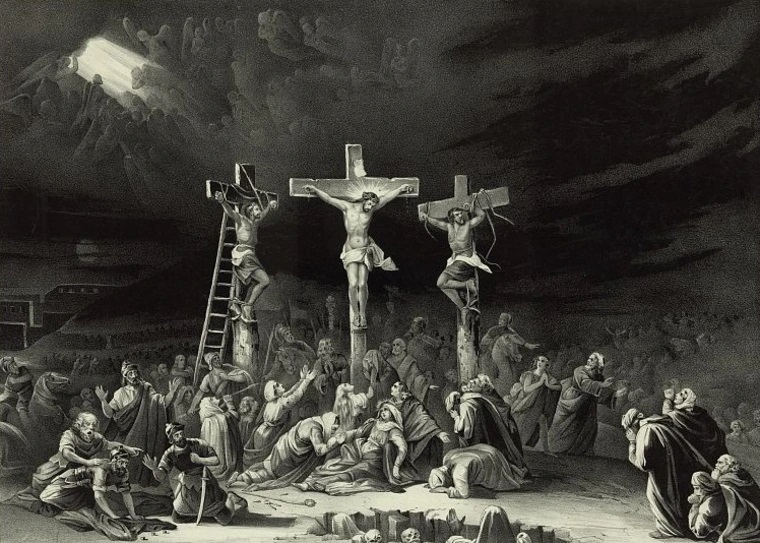

Wasting Away

You’re receiving this very early, I know. All I can say is that it’s been somewhat of a rough week, and this morning bears very little difference. I’ve been dreadfully sick for most of it.

I haven’t been this sick in a while. Also, when I have been unwell, I don’t remember past illnesses taking this long to overcome. Typically, I can bounce back in a day or two—at the absolute worst, three days. With a proper regimen of hot showers, Tylenol, whisky, and rest, I can usually turn things around relatively quickly, enough so that I don’t miss much. But I lost this whole week, from Monday to Sunday. And a few more days at home are undoubtedly in the cards.

I turned 51 this past Thursday. I spent the day wrestling with the same cerebrum-searing headache, body-riddling aches, and lung-tearing cough that I’d had since Monday evening. I did manage to visit a doctor on Friday morning. No COVID. His diagnosis? More or less what I’ve already told you. I’m sick.

That’ll be twenty dollars.

That said, I am willing to admit I’m not dying, although I’m not yet willing to say I’ll make it to 52. Of course, only the Lord knows for sure.

I suppose as I get older, I should expect my body to be less resilient. That’s part of Saint Paul’s point when he wrote that “our outer self is wasting away” (2 Corinthians 4:16). However, it’s not easy to accept, especially when mankind’s propensity is to see himself other than as he is. In other words, what I see in the mirror doesn’t match my self-perception. In many ways, I still feel like an unstoppable twenty-something, and I live as though “old age” will always be thirty years older than whatever age I might be at any moment. This past week was a reminder of just how untrue that perception is. Truth be told, it reminded me that I’m likely well into the last half of my life. Another truth be told, that feeling caught me off guard. That must have been the surprise Trotsky meant when he said something about how old age is the one thing that happens to a man that he least expects.

What I’m saying might seem negative, but I don’t necessarily mean to take it in that direction. Yes, I’m forever coming undone and realizing it more daily. Still, there remains a distinguishing reverence to getting older. God gives a kindly nod to it when he describes the grey hair of his eldest believers as a “crown of glory” (Proverbs 16:31) and when He acknowledges, “Wisdom is with the aged, and understanding in length of days” (Job 12:12). And Paul didn’t end his description with “wasting away.” He continued that “our inner self is being renewed day by day.” Perhaps inspired by texts like these, we’ve been blessed with lyrics from the likes of Joseph Campbell, who scribbled so eloquently:

As a white candle
In a holy place
So is the beauty
Of an aged face.

I think one of the most sublime thoughts on aging came from King David. His words are relatively simple. Still, they make for an insightful observation that he could only understand in his sunset years. He wrote by divine inspiration, “I have been young, and now am old, yet I have not seen the righteous forsaken” (Psalm 37:25).

His point is an easy one. Every age promises its challenges. Nevertheless, the Lord remains faithful. Young or old, He is with us. He will never leave nor forsake His people (Hebrews 13:5). This is a saying we can trust whether we’re 3 or 93. But when you really think about it, only the 93-year-old has the genuine perspective to comprehend and confirm it. The aged among us can look back across the expanse of life’s plentiful years to recall the events they were sure would destroy them but didn’t.

Accepting My Pastoral Fate

As is always the case following our “The Body of Christ and the Public Square” conference, I took some time to read the event evaluation forms submitted by the attendees. As in previous years, most took the time to fill one out, offering uplifting commendation and valuable information upon which to reflect. From the hundreds submitted, only three or four betrayed humanity’s jagged propensity to demand something beyond normal. In other words, every crowd always has a miserabilist or two. One shrew’s comment-pocked page threatened not to return if we didn’t upgrade the chairs to ones with cushioning. Another I received by email insisted that the event would be better if we offered a menu, perhaps expanding our food options to include pasta and possibly providing a more comprehensive array of desserts. I replied, “Thanks for the suggestions.” But that was after I typed and deleted, “That’s a great idea. And since we’ve decided to upgrade all our chairs to recliners, we thought we might hire some foot masseuses to go from attendee to attendee. There’s certainly nothing better than kicking back in a La-Z-Boy at an in-person conference with tier-one speakers while getting a foot massage and eating red velvet cake.”

Seth Dillon reminded the audience that foolishness needs to be ridiculed. Regardless of what some would say, foolishness needs pushback from equally foolish humor. He reminded his listeners that we often miss opportunities to redirect people away from untruth when we meet their folly with seriousness. By treating them seriously, we imply their ideology is worthy of consideration. If a man insists he is a woman, while mindfulness is necessary lest we underestimate the societal dangers, ridiculing the ideology is also an essential part of the resistance. Thus, Seth’s company, The Babylon Bee. The Babylon Bee is devoted to making fun of ideological idiocy—or, as Seth put it, he’s a professional troll.

We talked a little about this in the Sunday morning adult Bible study following the event. The story of Elijah and the Prophets of Baal came up. Elijah ridiculed the prophets, taunting them mercilessly. When you read his words in the biblical Hebrew, you know just how crass Elijah’s words were. Saint Paul does the same in Galatians 5:12, mocking the Judaizers who demand circumcision as a requirement of faith. When you can, look at what Paul says the Judaizers should do to themselves. It isn’t polite, but it is funny.

I told the Bible study group I intend to do more trolling. I’m certainly capable.

Regardless, I had something else on my mind when I sat down to tap on the keyboard this morning, most of which began forming last night during a dinner conversation with friends. There was another thread of commentary I discovered in several of the commending evaluation forms. Essentially, folks pleaded that I do more advertising in the churches, explaining that they only heard about the event from friends or shared social media posts.

Apart from my social media efforts, I sent direct mailings to 240 churches across three states. Less than twenty were returned as undeliverable. Each mailing had a brief letter of explanation and one (sometimes more) 11” x 17” color poster advertising the event’s particulars. Of the four-hundred-plus attendees, twelve were pastors from congregations that had either received those mailings or didn’t receive one only because they knew me personally and were promoting it on their own. Admittedly, I don’t know how many attendees were there due to those men.

The first thing I should say is that I know pastors are busy. I am one. If you knew my schedule, you’d think I own a teleportation device or I’ve somehow figured out how to clone myself. Just glancing at my schedule right now, I can assure you that every day is pretty much spoken for until Christmas Day. After Christmas, I have four days free before it all starts again. Anything added to the schedule until then is little more than fanciful dance moves employed to fill in its fast-fleeting cracks.

Second, I know that when it comes to anything sent to a congregation communicating events like ours, most folks in that congregation will only learn about it if their pastor chooses to share it. He’s the gatekeeper to such information, and rightly so. He’s deciding what goes on the bulletin board and what doesn’t. He’s deciding what gets shared in the announcements or newsletter and what doesn’t. Speaking for myself, such decisions often happen when I first get the information. If it’s a letter, I open the envelope, scan it, and either keep it or toss it into the trash. Then, I move on to the next item. If it’s an email, I read it. If I intend to pursue it, I tag and save it. If not, I delete it and move on.

More to my point. It’s not that I didn’t sufficiently advertise in the churches. It’s that the pastors withheld the information. Their reasons? I don’t know. At least, I should say I don’t know for sure. I have my suspicions.

If you watch the video of the panel discussion from our recent event, you’ll observe a question directed to the group that resulted in a near-unanimous expression of optimism. I said “near-unanimous” because I chose not to answer. Essentially, each panel member agreed that the tide is turning in America. People are waking up and pushing back against radicalized school boards, LGBTQ Inc.’s jackboot agenda, and countless other issues tearing at the fabric of this great nation. As the microphone was passed from panel member to panel member, you’ll notice James Lindsay leaning toward me to speak. He asked if I wanted to respond. I said no. Keep watching. You’ll see we spent those next few moments whispering to one another. I told him I agreed that things were looking better. People are sick and tired of leftists seizing control of and destroying everything. However, that’s not what I see among pastors in the Church. From my perspective, my circle continues to shrink. As a pastor intent on leading God’s people toward faithful engagement in the public square, I’m becoming more and more of an island unto myself. I’m going to shoot straight on why I think that is.

On the one hand, it could be because my reach is increasing. With that, I’m running into what has always been a more significant percentage of pastors holding an absolute separationist view of Church and State, which ultimately betrays a thin understanding of genuine American history and a weak grip on the Two Kingdoms doctrine. More will come on this when I finish my doctoral work.

I also get the sense there may be an inhibitive spirit of competition in the Church. In other words, promoting another congregation’s event, especially a prominent one, makes the pastor feel as though he could be doing more. Depending on what that pastor does all day, I won’t say if that feeling is right or wrong. I’ll just say I think it’s there. And it’s dangerous. Faithfulness is required, not achievement. But faithfulness is by no means lazy.

I most suspect pastors withhold the information because they are simply doing what people fearful of losing their jobs do. It could be as simple as knowing that if they hang a poster promoting an educational event that any one of their parishioners misinterprets as offensive, they might make enemies.

As a pastor, I know what happens when enemies are made in a congregation. People transfer to another congregation or self-dismiss. Attendance goes down. Giving goes down. And who gets blamed? I do. Please know that I’ve long since lost concern for these dynamics. In fact, after unsuccessful attempts at reconciliation, I’ve taken the lead on showing particular folks the door. In short, I know I’ll always teeter at the edge of offending people when it comes to preaching and teaching the Word of Truth, maintaining church discipline, defending the congregation’s identity, and preserving her integrity. Of course, I’m not trying to offend anyone. I don’t associate with any pastors who are trying. But it does happen. I’ve accepted that fate, and as a result, the Lord continues to bless these efforts in ways I only wish I had time to describe.

Many pastors haven’t accepted that fate. And the fear is crippling. It keeps them holding to far easier things while preventing them from helping their people navigate the harder things—the all-consuming dreadfulnesses destroying human lives, both physically and spiritually. Doing this, those pastors become caricatures of Hosea’s divine accusation: “For with you is my contention, O priest…. My people are destroyed for lack of knowledge; because you have rejected knowledge, I reject you from being a priest to me” (4:4,6).

I told Dr. Lindsay later that night while sharing samples from my various whiskeys that I’ve long since begun weaponizing this pastoral fear. Knowing that pastors are terrified of their people, I’ve turned to reaching their people. If the pastors are afraid, I’ll use that fear, not in a sinister way, but in an encouraging one. In other words, I urge the people visiting from other congregations to encourage their pastors to get in the game and lead the way. I plead with them to do this, first doing what they can to create opportunities for their pastors to use the skills they already possess. For example, folks could call the local paper and ask about sharing a portion of their pastor’s latest sermon as an editorial. When the paper’s editor agrees, ask the pastor to send it. Put the pastor right out in front of an issue. Another example might be for church members to invite their pastor to speak at a community event, such as a Right to Life rally, School Board meeting, or an education forum. Perhaps a parishioner might arrange for his pastor to be the invocator before a congressional session in the state capitol building.

It’s not exactly the same, but this reminds me of my whisky epiphany in the early 2000s. It took a deliberate introduction to a few fine whiskies during an out-of-the-ordinary visit to London, England, to realize I had strange facilities for sensing things in drams that others could not. Like most anything else, once a pastor realizes he has additional skills he never even considered relevant to his typical duties, it’s like a light switch being flipped on. Of course, most of his efforts occur in the Kingdom of the Right—the Gospel’s kingdom. Still, when he discovers that some of those same efforts meet with the Kingdom of the Left—the civil domain—he goes about his work with a broader awareness and a more profound capability for his vocation. Together, these only add to his service, and they do so in ways that serve the Gospel rather than detract from it.

I’ll keep working in this way. It continues to result in more and more Christians stepping up to push back. Perhaps along the way, more pastors will have no choice but to join their people—and maybe even lead them. We certainly need what they’ve been put in place to bring.

Context and Meaning

I spent some time last night walking on the treadmill and reading. Some of what I read was from a theologian named Stephen Paulson. You may know his name. He’s an ELCA pastor and Senior Fellow at 1517. I woke up this morning still troubled by what I’d read. But it also made me concerned for you. Here’s what I mean.

There’s a book I keep within reach of my office chair. I visit it on occasion if only to refresh my memory.

The book is Literary Theory: A Brief Insight by Jonathan Culler. The book’s ultimate goal is to ask and answer questions about writing’s purpose. I appreciate the book because it deals with the dangers of writing for public consumption. It also examines a writer’s duty to prospective readers. Believe it or not, a writer cannot just scribble whatever he or she wants without at least considering some of the ways it could be reasonably received. Culler shows similar concern for the reader, insisting that the reader must know something of the writer to connect more intimately with his or her meaning. Along the way, Culler points to context as the principal conduit. He suggests that the most precise meaning for anything written arises from context, insisting that “context includes rules of language, the situation of the author and the reader, and anything else that might conceivably be relevant” (p. 91). He goes on to say that when the writer or reader enlarges context, genuine meaning comes more into focus.

Culler’s words are insightful. Indeed, context is significant. I’ve occasionally written pieces that discourage people from swimming in the ocean. I’ve shared logical reasons. But a reader will only fully realize why I do it after learning a particularly sharky story from my youth. In other words, I have a very good reason for staying on shore. The more context I provide, the more readers can align with my intended meaning. It doesn’t mean they’ll agree. But they will, at least, grasp my objective rather than impose theirs.

As a writer, the Apostle Paul is the perfect candidate for this exercise. In certain ways, Saint Paul’s context is more significant than many realize. For one, Paul went into his role equipped with human qualities few of the other apostles had. His Roman citizenship was a crucial factor. Paul testifies to his citizenship fervently (Acts 9:11, 21:39, and 22:3), recalling his birth and upbringing in the metropolitan city of Tarsus, a prominent municipality—one that Paul himself would describe in Acts 21:39 as “no obscure city.” A relatively sizeable trade location on the Mediterranean coast, Tarsus was steeped in philosophical schools, classical literature, public orations, and other such things. Life in Tarsus offered pursuits unavailable to most others in the known world. Interestingly, a stadium was built in the city’s northern part to host Olympic-style games. It’s likely that Paul, like the rest of the city’s residents, attended the stadium’s events.

Based on these contextual details, it should be no surprise that Paul often illustrates his points the way he does. He quotes poetry. He quotes philosophers. Remarkably, while Saint James speaks of the Christian life in the traditional Judaic sense—that is, as testing (δόκιμος) leading to divine approval—Saint Paul often describes it as a race, or translated literally, stadium-running (σταδίῳ τρέχοντες). The context of his upbringing sheds light on why he wrote as he did. A grasp of the context gives us readier access to his letters—his narrative style, logic, humor, quotations, apologetics, and so much more.

And since Paul is a divinely inspired writer, I can better understand what God means to say through Paul when I know the broader array of details communicating his meaning.

Relative to meaning, however, the tables are drastically turning, especially in the 21st century, where there seems to be a limitless trajectory to what words actually mean to their recipients. The devil is behind this. He lives to twist language. Language is the chosen means for communicating God’s Word. If he can make the transmission between giver and receiver unreliable, he can ultimately confuse salvation itself.

It’s no coincidence that the word gender no longer means biological sex but instead means a subjective interpretation of personal identity. Indeed, in this peculiar sense, context is boundless, as Culler mentioned. And so, writers must be careful because there’s no telling the strange filter someone will use to interpret what’s been written. Knowing this, writing becomes a more complicated task—a minefield of sorts. Doing it for public consumption requires micro-managerial care.

I don’t necessarily know if I have that skill. I certainly do try.

This brings me closer to where I began with Paulson. I mentioned a writer’s duty to readers. I would argue that duty and responsibility are nearly the same thing. Von Goethe asked, “What, then, is your duty?” He answered himself, replying, “What the day demands!” I would say that each day’s duty requires that I be responsible with the talents and treasure God has given me—that I would care for my family, work diligently in my vocation, seek faithfulness to my Lord, and the like. Because I’m a writer at heart, one who writes hundreds if not thousands of pages of content each year, I also have a duty to readers to handle language responsibly. As this meets with the remaining 99% of our world who would never consider themselves writers, this means managing information intake honestly. It means doing everything you can to understand a speaker’s or writer’s intentions relative to his words and the context birthing them. One writer many should be examining very closely these days is Stephen Paulson.

Again, Paulson is becoming popular among Lutherans in particular. He uses words that often sound sanctified. But dig deeper into the broader contexts of his words. Suddenly, they no longer mean what we assumed they meant. For example, the Bible speaks of the atonement as Christ’s substitutionary sacrifice for humanity’s sin. He had to die. It was necessary for our salvation. From there, the Bible communicates faith as the avenue for receiving the merits of this great exchange. For Paulson, he sure does go out of his way to communicate the atonement as more of a display than a necessity. It’s less about Christ fulfilling the Law’s demands or assuaging the divine wrath aimed directly at sinners and more concerned with God’s ability to show His love and say to all who believe, “You are forgiven.” With this as the baseline for the atonement, who really needs the crucifixion? Apparently, not anyone. Jesus didn’t need to die. He merely did it to show us how much he loved us.

Does the Lord’s gruesome death show us just how much He loves us? Yes. I say that in sermons all the time. But is it the atonement’s deepest purpose? No. Confusing this, Paulson can ultimately claim that God completely “disregards the Law when He forgives sins.”

But He doesn’t do that. God’s Law is never irrelevant. It cannot just be disregarded as though, by His divine omnipotence, He’s somehow capable of turning a blind eye to what is innate to His nature. God is good. His Law is good. It is fixed. And it must be kept. Either we do it, or Jesus does it and applies the benefits to us. The thing is, we’re imperfect. We can’t do it. Jesus can. And He did. He lived perfectly in our place. Even though innocent, He suffered the consequences we deserved and died beneath their incredible weight. Faith believes and receives this. By the power of the Holy Spirit at work through this Gospel, we are recreated to love His Law—to want to keep it. That’s typically referred to as the Third Use of the Law. Believe it or not, the Third Use is not apart from genuine atonement theology.

When Paulson speaks of Jesus’s atoning work, his context is different. He’s using the same word, but has an entirely different meaning. He does not mean what the Bible means. As a result, we should expect other theologies he espouses to be just as confused. How could they not? To confuse the atonement even in the slightest is to confuse the entire Gospel, making phrases like “outlaw God” and “radical grace” suspect. In fact, in his latest article, Paulson claims Moses made up the doctrine of sanctification because he couldn’t understand how God could simply declare him righteous apart from the Law. That’s a stretch and then some. However, it makes sense when I know that God’s Law is more or less irrelevant to Paulson.

I suppose I’m trying to say that a reader can thwart this confusion and avoid this nonsense when better acquainted with the writer’s contextual meanings. Of course, discerning these things takes work. But preserving truth is a laborious trade. Writer or reader, Christians are called to deal in language’s stock exchanges. When we see misdealing (the deliberate or accidental redefining of words), we call it out, enlightening others of the potentially bankrupting information swap. When we see prized opportunities communicating beautiful truths, we herald them, encouraging others to reap the same lovely benefits we did.