It’s been several weeks since the “No Kings” protests. However, I just saw an online advertisement this morning for “No Kings 2.0” scheduled for the Fourth of July. I did some checking around, and it seems this is only a rumor.
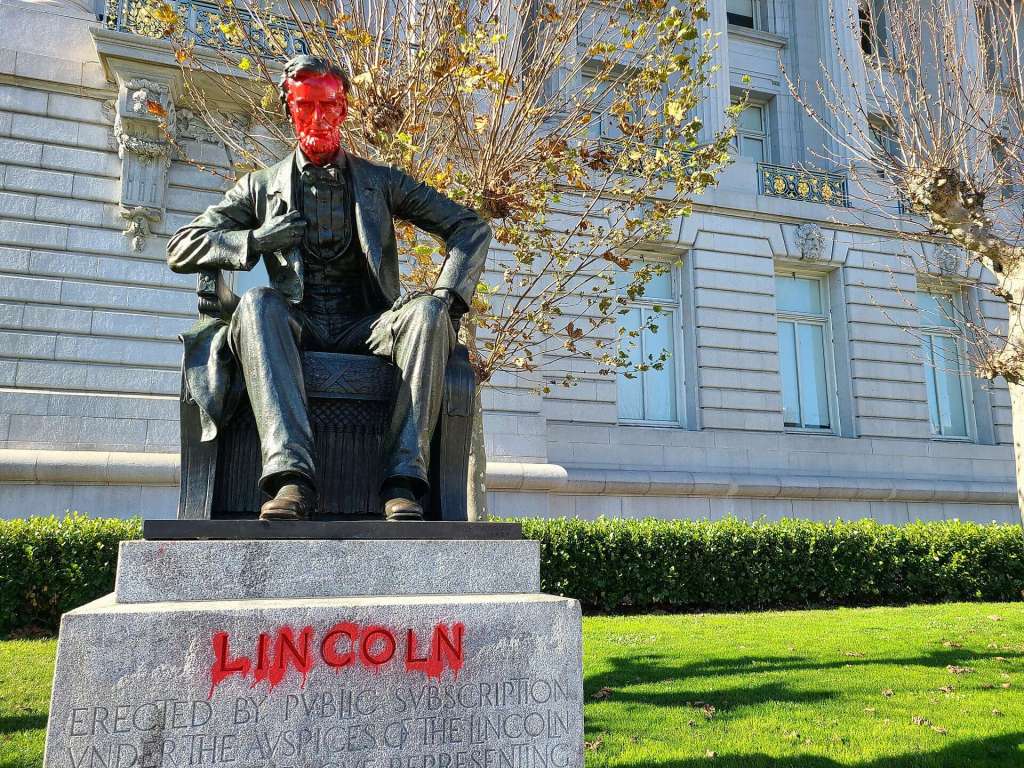
My daughter, Madeline, told me the group gathered in Fenton a few weeks ago for their first attempt. There were people there with signs and slogans. In Lansing, they gathered on the Capitol’s steps. I didn’t pay it much attention at the time, which is probably another reason why I’m only now offering commentary. I have plenty to keep me busy these days. And besides, the whole thing felt like just another performance of the usual twisted pageantry. I remember seeing an image of a sign from the Lansing event that displayed the slogan “86-47,” which is the not-so-subtle numerical code calling for the 47th president’s removal by any means necessary, including death. In other cities across America, people wearing all black and face coverings gathered in public places and spray-painted the “No Kings Here” mantra on historic monuments, essentially defacing memorials actually put into place as emblems against tyranny. That’s ironic, isn’t it? Still, the groups marched and chanted like voodoo shamans performing their dark rites and ceremonies.
If you’re not familiar with the relatively fizzled No Kings movement, as I already hinted, the essence is pretty predictable. Like most everything that bubbles up from the progressive left, it was just another resistance to President Trump. With this particular effort, they framed him as a self-coronated dictator. The organizers aimed to present the movement as a spontaneous, grassroots uprising, as though everyday Americans were uniting against what they claimed was an unprecedented crackdown on illegal immigration.
But in truth, it was and remains more of the same: a theater of outrage designed to imply that Americans are universally appalled by the dismantling of the so-called “woke” infrastructure—that we’re incensed President Trump refuses to pander during “Pride Month,” which LGBTQ, Inc. has claimed not merely as a season, but as a sovereign domain over the entirety of June itself.
In the end, it’s a familiar pattern. These are the same voices that rage not so much at what Trump does as that he remains entirely unmoved by their contempt. He doesn’t flinch. He simply continues forward undeterred and, perhaps most offensively to them, unbothered.
For the record, and as the saying goes, I voted for this.
Beyond these things, what I find most interesting is that while the protests wanted to appear organic, the entire operation was orchestrated and paid for by ideologically captured groups, nearly all of which are connected to George Soros.
Now, some will read that sentence I just typed out and say, “Uh-oh, Thoma is becoming a conspiracy theorist.” But I’m not. In fact, I don’t think I’ve ever mentioned Soros’ name in anything I’ve ever written. What’s the difference here? Well, the receipts are in. The documented funders of the “No Kings” protests included groups such as Indivisible, the ACLU, MoveOn.org, 50501, and various teacher unions and organized labor federations, all of which had received their funding for the effort from Soros’ Open Society Foundations. That’s not a conspiracy. That’s basic bookkeeping.
Setting the ledgers aside for a moment, while mindful of the effort’s truest geist, the irony of the No Kings protests—beyond the faux-revolutionary aesthetic and its TikTok theology—is that they presume to cast down the idea of kingship while fully prostrating before their own tyrants. They say they will not bow, and yet, they’re already on their knees in so many ways.
They slather praise on transgender activism as it tyrannically jackboots through female locker rooms and right into women’s sports. They still wear masks in their cars while declaring the unvaccinated to be “anti-science.” Their costumes are rainbow t-shirts that say, “Love is love,” while they do all they can to cancel anyone who would claim marriage is for one man and one woman. They converge on businesses, first emerging from vehicles with a “Coexist” bumper sticker ironically surrounded by other stickers with crass anti-conservative slogans. Then they march into the business offices wearing their government DEI badges, insisting that racism can only be quelled by applying more racism.
The authority they wield doesn’t come from thrones or castles but from 501(c)(3) and 501(c)(4) corporations. Their language isn’t regal, but it is rehearsed. Catchphrases have become decrees, and school boards have become their courts. And their reigns are no less absolute than the supposed tyrants they say they want to depose. Except, unlike the kings of old, they demand far more than taxes and loyalty. They want your mind. They require your memory and morals. They absolutely demand your children. And just try taking a public stand against their mandates. Try dissenting, even politely. You’ll discover how quickly the No Kings crowd finds its enforcement arm. In fact, I realized this firsthand in a place where I thought I’d be relatively safe from it.
This past Friday, during the convention of the English District of the LCMS, a lay delegate approached me during the morning break. His two-fold goal? To announce his pride in the Democrat Party and to accost me for my public opinions on abortion and LGBTQ issues. Think about that for a second. I was sitting alone at a triennial gathering for supposedly biblically minded clergy and laymen. This individual—a representative of a sister congregation sent to embody and, if possible, move the District according to its theological positions—sought me out of his own volition to assault biblical positions. Scary. Although the gathering onlookers (who did and said nothing, by the way) enjoyed quite the intermission at my expense.
Before I stray too far, I guess what I’m saying is that the No Kings folks are not really trying to rid the world of tyrants. Tyrannical ideologies already enslave them, and as such, they more or less prove they’re okay with kings, especially the ones who sanctify their sins. The ones willing to call their rebellion by name must be overthrown. In that sense, they don’t want freedom, at least, not like they’re saying. They’re after dominion. And I suppose in the most ironic twist of all, they cry “No kings!” while building a congregation of progressives, one formed by the gospel of “self” and served by priests in rainbow vestments intent on leading all of us in the new liturgy of control.
That’s not just cultural irony. It’s a theological tragedy. And that’s really the crux of it. As Christians, we know this isn’t just about politics or public policy. In the end, it’s not even about power. It’s about divine things.
God’s Word insists that every human heart has a throne, and every throne demands a king. If Christ is not seated there, someone else—or something else—will be. This isn’t conjecture. It’s reality. Saint Paul wrote, “You are slaves of the one whom you obey—either of sin, which leads to death, or of obedience, which leads to righteousness” (Romans 6:16). In other words, you will serve a master. Your heart will be devoted. You will bend the knee. This is because the heart is not some morally neutral chamber of vague intentions. It is, as the Bible says, the seat of human desire and its fruit. That’s why Solomon wrote, “Keep your heart with all vigilance, for from it flow the springs of life” (Proverbs 4:23). What fills the heart rules the life.
Interestingly, this principle doesn’t apply only to individuals. It seems to apply to entire societies. Indeed, every group has its creed. Every society bows before something. “They [entire generations of people] exchanged the truth about God for a lie,” Paul writes, “and worshiped and served the creature rather than the Creator” (Romans 1:25). But Paul doesn’t stop there. He later warns in 1 Corinthians 10:20–21 that our devotion never exists in a neutral zone. It is aimed either toward the divine or toward the demonic. There is no third option. There is no spiritual vacuum.
And so, to come back around to the No Kings crowd. They spray-paint their slogans in defiance, but they’re not really free. Sure, they declare autonomy, but it’s an illusion, if only because autonomy requires clarity of thought and freedom of conscience—neither of which survives long under the tyranny of hatred. Their obsession with Donald Trump—regardless of what he does—isn’t principled resistance. It’s programmed allegiance. And in that sense, they are not without a king. Their hatred has become their monarch and lord. It governs their emotions, their actions, and even their sense of righteousness. But hatred is a brutal master. It blesses confusion, punishes dissent, and demands unquestioning loyalty. So, no, their chants aren’t declarations of liberty. They’re the sound of spiritual captivity—liturgies offered to the ever-hungrier lords of the age.
As for me, I will not bow to these new kings making jumbled decrees from their cathedrals draped in “self.” Instead, I’ll bow to the One who wore a crown of thorns. I’ll do this while steering into our nation’s Fourth of July celebration with incredible thankfulness for the Founding Fathers and their extraordinary courage. Indeed, I am blessed to be an American. That said, I intend to love this nation, not as an idol, but as a gift worth serving and supporting, most especially as one forged in the understanding that true liberty means responsibility before God, not license to rebel against Him. I intend to be a citizen who remembers that even a constitutional republic can fall if its people forget that true freedom requires virtue, and virtue only endures when rooted in Christ.
So, to the No Kings folks, if you do decide to attempt a 2.0 effort, go ahead and do it if you must. March and chant and graffiti your slogans across the faces of the dead, doing so well-funded and furious as ever. But do not pretend you have no king. You do. The only question is who—or what—occupies your throne (Matthew 16:15).

 Cruciform Stuff