
In the Shadows

Mark Zuckerberg, the CEO of Facebook, has announced he’s ridding the platform of third-party fact-checkers. In his own words, he wants to prioritize free speech. Interestingly, I was finally able to reclaim my Instagram account just last night. It was suspended a few years ago, so I eventually gave up on it. Maybe that’s a sign that Zuckerberg’s intentions are genuine. However, my New Year’s Day post was just removed from Facebook. Apparently, it offended someone and was reported. It seems that as 2025 begins, there’s something offensive about encouraging people to trust Christ rather than the world around them. It appears that Facebook still has some sinister, agenda-driven people keeping users’ speech from truly being free.

The post is in appeal. But truth be told, I’m yet ever to win a Facebook appeal.

In the meantime, California is on fire. Of course, we pray for everyone’s safety. Still, anyone familiar with the state’s politics will know this is only partly nature’s fault. An honest observer will agree that what’s happening was entirely preventable. However, those in leadership at the state level and those at the helm in these incinerated communities had other priorities. Water reservoirs that would typically be full were deliberately drained for negligible repairs, conservation, or climate change reasons. Never mind winter’s Santa Ana winds and the threat of wildfires. In addition, fire and rescue units were unprepared and understaffed, losing funding or being penalized because they weren’t diverse enough.

By the way, and I suppose unfortunately for the climate change religion and its elitist Hollywood priesthood, the current size and content of these residential fires have already released a hundred times more CO2 into the atmosphere in a few days than all of North America’s collective fossil fuel consumption in a typical year. But then again, I learned that a typical woodland wildfire, depending on the forest’s density, can release as much as three hundred times more than all the world’s industrialized countries combined.

As one would expect, the militant left is saying these things aren’t true. I already read two articles this morning in which various local leaders in Los Angeles essentially confirmed these details and yet diverted the discussion with irrelevant information, finally insisting that playing the blame game during tragedies is not helpful. However, these are the same folks who stand at the ready to blame conservatives within minutes of a school shooting. The irony so far is as thick as the flames devouring Palisades and Hollywood Hills.

Here’s another bit of irony. Joe Biden promised the Federal government would cover 100% of the California disaster’s expenses for the next six months. Estimates suggest that equates to as much as $150 billion. But aren’t there still people displaced and living in tents and campers in Western North Carolina following Hurricane Helene, many of whom barely received a dime? Why the massive pledge to Hollywood and not Appalachian America? In addition to this, Biden just authorized another $500 million for Ukraine. He ordered it sent before Trump takes office. Again, he’s done this even as people in various communities on the East Coast are still sleeping in tents in the middle of winter four months later. Several billions of dollars somehow swerved to miss them. Things get worse when you consider the Federal government’s wasteful spending. For example, it just gave a $12 million grant for pickleball courts in Nevada and $300,000 to help establish and promote “affinity groups” (more DEI garbage) among bird-watching communities. Did a flock of starlings complain to someone in Washington that there isn’t enough transgender representation among those watching them?

I say forget about the hundreds of billions of dollars for a moment. I wonder what even the pickleball and bird-watching grants could do to at least alleviate the suffering of Americans forced to live in tents during winter.

While I’ll admit I was hoping for a better start to 2025, I’m not surprised by any of these happenings. I suppose the only real surprise so far is that, somehow, President Trump hasn’t been blamed for all of it. Although, the nation took a noticeable turn on November 5, 2024, didn’t it? In fact, that’s what moved Zuckerberg to make changes at Facebook. He called the election a “national tipping point” away from current social and political trajectories.

That’s good. Still, we’ll see. Do I have hope that there’ll be a turnaround, that all the woke garbage that’s smothering so much of what makes America great will eventually dissipate? Well, first of all, anyone who knows me best will confirm that I’m always looking to the horizon with hope. In that sense, yes, I’m hoping for a turnaround.

On the other hand, while I hope for a national course correction, I don’t expect anything to change much for Christianity. For the most part, the Christian Church already exists in the shadows. This is in part by our own doing. I say this because we’ve allowed ourselves to be relegated to the sidelines. A generation ago, it wasn’t uncommon for the local pastor to give an invocation and prayer in the name of Jesus before the high school’s graduation ceremony. But those days are long gone. In the meantime, rather than holding the line on these things and engaging the culture, too many Christians have opted for comfortable security, leading to cultural conformity. And among such folks, we have pastors who insist on and actually preach disengagement—that it’s not in a Christian’s job description to engage in ways that preserve the Church’s ability to preach and teach the Gospel freely. In this, we’ve abandoned the public square and silenced the Church’s voice in so many arenas. What has been the result? A society that has lost its ability to see, let alone understand, that Christianity was and remains fundamental to Western civilization’s rise and success. Perhaps worse, society has given birth to its own version of Christianity, which is little more than secularism wearing a thin Christian veneer. Such Christianity claims God’s Word is only as true as the individual wants it to be. It exchanges the meat and potatoes of tradition for syrupy and saccharined religiosity—and people are hooked on it. Why? Because, again, it can be whatever you want it to be. It’s never about absolute faithfulness to Christ. It’s never about the Christian community of past, present, or future. It’s about what you prefer right now.

Until this monstrosity dies, the shadows will be home to genuine Christianity. The funny thing is that a light is best seen in the darkness. In that sense, while times might remain tough for creedal and confessionally minded Christians, there’s a sense that the Gospel will be better visible through them to those who need it most. When you get a chance, take a listen to Wesley Huff’s recent interview with Joe Rogan. I’ve been hoping for years that someone would end up on Joe’s show who could iterate genuine Christianity to and for Joe and his listeners. Personally, I think Huff did just that, especially concerning the authenticity and reliability of God’s Word. Convincing someone of the Word’s reliability matters when you’re laboring to introduce them to the Word made flesh, Jesus. Interestingly, Huff only made it onto Joe’s show because of a debate he had with a popular esoteric spiritualist named Billy Carson. Essentially, Huff proved Carson a fraud—and he did so in a gentlemanly way. Rogan, an incredibly open-minded man, heard about it, watched the debate, and invited Huff on his podcast.

I suppose as it relates to Huff and Carson, the real Gospel will always remain crisp in its definition from the shadows, not blurred or confused by quasi-spiritual nonsense swirling in its surroundings. Saying that, I guess the hope that genuine Christianity might emerge from the shadows could be misplaced. It really doesn’t matter where it is. It only matters that it is. From there, our task becomes one of faithful readiness. Whether it’s Joe Rogan or our neighbor next door asking us about the Gospel, the goal is not to retreat but to speak boldly, trusting that God will keep His promise to illumine those in desperate need of hope and redemption.

Almost Winning

Ask my family, and they’ll tell you I don’t like to lose. I’m a “go big or go home” kind of guy. When I endeavor to do something, I expect to pursue and achieve it in a top-tier fashion. When an A is possible, a C is not an option. If my potential is not A-worthy, I’ll go sleepless until it is.

In a way, I demonstrated this personal boundary several Sundays ago during worship. My voice was struggling because of a lingering (but not contagious) cough. During the sacramental liturgy, when I arrived at the Words of Institution (which I usually chant), for the first time in a while, I elected to speak them. Why? Because I could feel the itch in my throat getting worse, and I knew it wouldn’t go well. Second-rate chanting is not edifying. It’s a distraction. I knew if I couldn’t do it well, I’d wait until I could.

Good or bad, this stickler mentality is one reason why the game of Monopoly is also relatively off-limits in our home. I’ve shared with you before that it can get pretty brutal. When it’s possible to buy every property on the Monopoly board and fill all but the utilities and railroads with hotels, why not do it? And while we’re at it, win big. Drain each player of every dime. Do not win some. Win all. Is there a strategy that accomplishes this? Yes? Then use it. Go big or go home.

But for as driven as any among us might be, a lesson I learned early in life is that losing is incredibly important. In other words, winning is nice, but almost winning is sometimes better. This is true because it often prompts self-analysis leading toward the determination needed to improve. Sure, hitting a home run may be the batter’s ultimate goal. Nevertheless, the road to home run hitting is one of insight and opportunity for actual betterment. Babe Ruth, a champion home run hitter, insisted that there was nothing so motivating as a bunch of strikes. In his words, every strike is one swing closer to a home run.

I watched a video last week while walking on the treadmill. It was a compilation of youthful progressives tearfully complaining about Trump’s victory. It was clear they simply could not process the loss. They just didn’t have the skills. As a result, one by one, they droned toward and over illogic’s cliff. For example, one insisted that anyone who opposed Trump was destined for a concentration camp. Another mentioned she was fearful she might have to spend time in prison for the multiple abortions she’s had. Still, another chimed in with Oprah Winfrey’s ridiculously obsolete warning that because Trump won, all future elections would cease. Humorously, some of the video’s teary-eyed characters threw their faces into pillows and screamed as loudly as they could. Honestly, I felt like I was watching a documentary about the participation-trophy generation—or a research study of toddlers who’ve only ever been told they’re the best of the best and can never lose.

As I watched, I was also reminded of something else.

An artificial victory is no victory. While occasionally playing a video game in “god mode” might be fun, there’s no invulnerability in real competition. In other words, the video game “Call of Duty” in no way compares to actual combat. I was listening to Joe Rogan interview a former CIA operative who executed countless missions in the Middle East. He told Rogan that when he had to go to the bathroom in a firefight, he went in his pants. That’s it. He didn’t say it, but I’m guessing he knew well enough that there’s no pressing pause in a firefight. There’s certainly no game reset button when you die.  Real victory is dangerous, and it is sometimes unpleasant. In all, it takes effort. It takes perseverance through struggle. It requires diligence even when diligence seems foolish.

Victory takes a whole lot of almost winning to reach.

People who somehow avoid second place’s more arduous road—whether it’s because they’ve insulated themselves against loss or because what they have was given to them without any effort or personal risk—are missing out on growth’s genuine joys. I suppose relative to faith, this leads me to something else.

For starters, don’t get me wrong. Salvation has nothing to do with our efforts. We do not earn it. Through the person and work of Jesus Christ, we actually do receive a magnificent “get out of jail free” card. However, after faith (or perhaps better said, because we’ve been grafted to Jesus [John 15:5, Romans 6:3-6]), some pretty unearthly struggles will likely come (Matthew 5:11-12, John 15:20, Mark 10:29-30, 2 Timothy 3:12, and countless more). Jesus did not hide this prospect from us. And yet, Saint Paul offers an intriguing perspective concerning these struggles. He writes in Romans 5:1-5:

“Therefore, since we have been justified by faith, we have peace with God through our Lord Jesus Christ. Through him we have also obtained access by faith into this grace in which we stand, and we rejoice in hope of the glory of God. Not only that, but we rejoice in our sufferings, knowing that suffering produces endurance, and endurance produces character, and character produces hope, and hope does not put us to shame, because God’s love has been poured into our hearts through the Holy Spirit who has been given to us.”

His first point is to make sure we understand that when bad things happen, we are not to think we’re somehow at war with God. He clearly states that we have been justified by faith in Jesus Christ and are at peace with God. His very next point is a crisp reminder that we exist now by God’s grace. This grace brings about something extraordinary.

First, we’re found capable of finding hope in the glory of God. Do you know what the “glory of God” is? It’s the gruesome death of Jesus for the sins of the world (John 12:23-28, Mark 10:35-38). It’s the absolutely dreadful cup of suffering that Jesus tipped back and gulped down in its entirety. Saint Paul insists we can rejoice in this glory primarily because Jesus endured it. The cup’s contents were ours to consume, but the Lord took them for us. However, even as Jesus made it clear that we could not endure absolute suffering’s cup—the kind that wins salvation—He did say we’d at least sip from it on occasion (Mark 10:39). That’s where Paul goes next. However, his tone remains constant. His mood is joyful. With a grammatical smile, he describes faith as having the ability to rejoice when rejoicing seems ridiculous.

Who can rejoice during suffering? Christians can. And this is where my previous thoughts about winning and losing come back into view.

Paul describes an essential process of spiritual maturation that can only occur through suffering. He describes suffering for Christ as a seed that produces endurance, character, and, ultimately, hope. But not just any hope. It’s the kind of hope that genuinely knows the value of the Lord’s work to save us. It’s a hope that knows the Lord’s road was not easy. It’s a hope that gathers more and more strength as our own roads become seemingly less and less navigable. It kind of reminds me of another video I happened upon demonstrating the properties of a substance called Oobleck. It’s a non-Newtonian fluid that, when pressure is applied, gets stronger. In the video, a person dips his hand into it like water. But then he punches it, and suddenly, the substance is like a rock. Oobleck might just be Christian hope’s best mascot. It steers through and meets the mortal journey’s end, and no matter how hard the world beats on it, the Lord continues bolstering it to stand victorious above shame, eventually receiving the gold medal of triumph gifted entirely by the love of God through the Holy Spirit for faith.

In short, God had no intention of making us earn our salvation. He did all of it. However, He does train us to embrace and live in its value. Before we receive Christ’s first-place prize, we should expect to spend a lot of time almost winning—or, in other words, enduring struggle. But again, the struggle is good for us. And we can rejoice through it. We keep our eyes on the prize, equipped with faith’s otherworldly tenacity for knowing that a home run is fewer strikeouts away today than it was yesterday.

What if Aliens Were Real?

Those who know me best are not surprised each year by my autumn discontent. The leaves fall, and with their pixie-like twirling, so goes a portion of my enthusiasm. Add to this autumn’s brisk breezes and its chilled and misty rains pulling down more and more of the landscape’s adornments, and it’s as if an unseen prison guard is escorting me to a dank and lightless cell. Michigan’s naked oak, maple, and dogwood trees surround and stretch skyward as its bars. My sentence? Six to eight months in the sunless cold.

I’m summer’s boy, and that’s that.

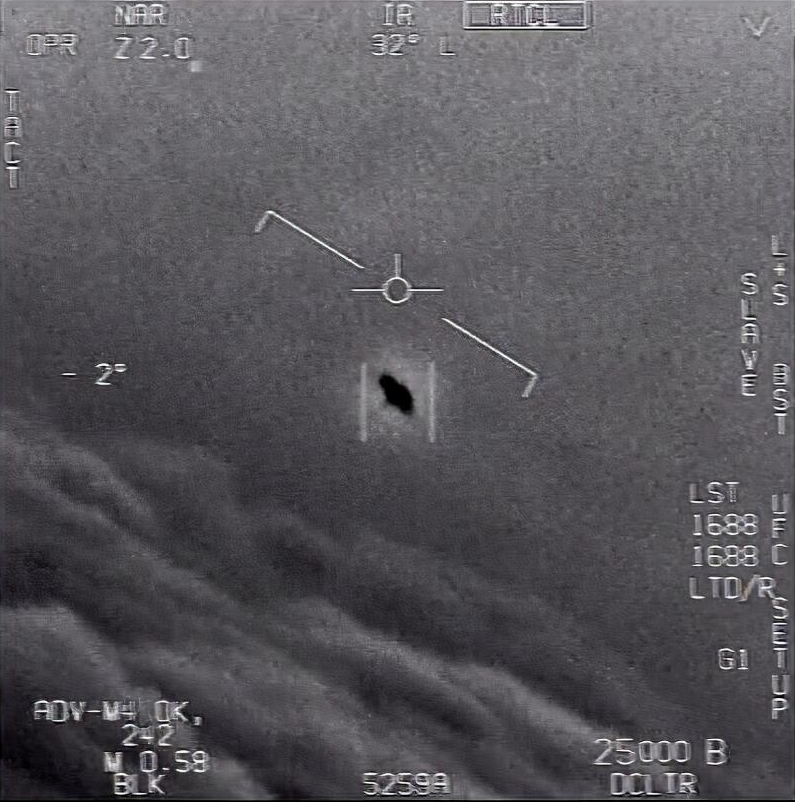
The thing is, I know it. And because I know it, I can war against the returning urge to pack up and move closer to the equator. Although, that reminds me of something. I had a phone conversation yesterday morning with one of our forthcoming conference speaker’s assistants. As is typical of many conversations, I was asked about the current weather. I was sure to mention my disdain for autumn and winter. The young woman I was talking with jokingly said she remembered hearing that space aliens appear to visit warmer regions more so than cold, which means my chances of abduction increase the closer to the equator I get. I told her I thought I’d heard the same thing from one of Joe Rogan’s podcast guests.

Familiar with Rogan, she noted his fascination with aliens, and then, to further the friendly conversation, she asked what I thought about the topic. I told her that while I appreciate sci-fi cinema, I don’t spend much time thinking about aliens, that is unless we’re talking about the millions of illegals crossing our southern border.

“What if they’re real, though?” she asked. “Then what?”

I knew what she meant. Even though we both considered the topic a relatively silly one, I could tell she had given it some thought. She wondered what the discovery of sentient beings from beyond our solar system might mean for Christianity. I think about lots of things, but I don’t spend much time thinking about things like this. Nevertheless, it certainly was an opportunity to shift gears in the way Saint Peter anticipated when he urged that we be “prepared to make a defense to anyone who asks you for a reason for the hope that is in you” (1 Peter 3:15).

My initial thoughts were that if extraterrestrial life was ever discovered, first, I don’t think its existence would obliterate Christianity in the ways so many atheists and agnostics assume. Faith doesn’t work that way. It’s far sturdier than onlookers may realize, and history proves it. Christianity has been through the proverbial ringer, the kind of turbulence that has undone so many other religions, and yet, it’s still here, and it’s encompassing the globe’s entirety. Extraterrestrial life’s existence would be interesting, but it would not disprove or smother Christianity. Of course, my ultimate baseline for saying this is that Christianity is true and all other religions are false. Truth withstands—falsehood crumbles.

From there, I went ahead and admitted to the widely held belief that alien encounters are likely spiritual in nature—but not the good kind. They’re probably demonic. I think Tucker Carlson believes this, too, which makes us kin to this perspective.

I know how that sounds, of course. It sounds relatively backwater. Nevertheless, I shared it openly. And so, you can see how unconcerned I am for being labeled “backwater.” So much of who I am and what I do so often gets that label, anyway. I believe a man cannot be a woman. For many, that’s the old way, the ignorant way. I believe all abortions are murder. That’s indeed becoming an outdated premise. It’s fashionable nowadays to grind both early and late-term infants into hamburger. I believe sin is actual. I believe Jesus was God in the flesh. I believe He suffered, died, and rose from the dead to rescue me from sin. To the onlooking culture, anyone believing these things is considered an intellectual dullard clinging to ancient myths and their accompanying superstitions.

Again, as you can see, I’m far more bothered by autumn and winter than I am by derogatory labels.

“For conversation’s sake,” she continued, wanting something more, “what if we actually discover they aren’t demons but real beings from another solar system? What then?”

Accepting her premise purely for discussion’s sake, I restated my initial premise. For me, it wouldn’t change anything about my faith. But then I went a little further. I told her just how important God’s Word is to me—that I believe every bit of it. I’m not a “Tim Walz” Lutheran.

Walz believes that while the Bible contains worthwhile but negotiable principles, it is, by no means, the inspired Word of God. In his view, we can take and leave whatever it says as we choose. I don’t believe that at all. I certainly believe it is far more than a guidebook. I absolutely believe it is divinely inspired. It is God’s revelation to man concerning salvation, and Jesus is the epicentral purpose of both its Old and New Testaments. I also believe the Bible is inerrant and immutable. It does not contain mistakes, and its doctrines do not change. If we find what we think is a mistake, then we’re not understanding it correctly. If any of its teachings don’t fit well with our time, culture, or modern understanding, then too bad. The Bible shapes us; we do not shape it. When God gave it through His inspired writers, He knew future generations would be reading it, and therefore, it applies to all of them.

Drenched in these qualities, the Bible sure does tell us a lot about God. He’s just. He’s loving. He’s redeeming. He’s not far away from us, but near. He cares. He creates. Concerning His work as the divine Author, one thing I can say for sure is that God is incredibly imaginative. Limited only by His nature, He can make whatever He wants. He’s God. And by limited, I mean things He cannot do, such as sin. Apart from that, look around at the countless varieties of life on Earth if you doubt His creativity. With every new documentary Jennifer and I watch (because most other shows are garbage), we’re both amazed to learn about new creatures we never even knew existed.

There’s something else I know relative to this. Within the Bible’s pages, God shows mankind to be His most prized work. In all the cosmos, He claims us as His beloved. That doesn’t mean we’re the only creatures He loves (Matthew 6:25-34). His love isn’t limited to us and nothing else. He loves and cares for the birds of the air and the lilies of the field, too (Matthew 6:25-34). It means that even as the birds and lilies are trapped alongside us in this sinful world, He didn’t take upon Himself human flesh and die to save them. His sights were set on us. He died to save us. Our rescue was His love’s aim. Our redemption was the purpose for His suffering and death. That’s a whole different kind of love—an extraordinary love, by comparison.

All of this together means two things to me. First, if we ever discover that aliens exist, God made them. I can say that because I’m in concert with all the Christians who’ve knowingly or unknowingly implied it for generations in the Nicene Creed. Together, we’ve been announcing God as the “maker of heaven and earth, of all things visible and invisible.” In other words, He made everything we can see and everything we can’t see, everything we know, and everything we are yet to discover.

Second, if there are aliens, like everything else God made, He loves them. Beyond that, all sci-fi-becoming-reality speculation ends for me.

Why am I sharing all this? Well, because it came to mind this morning, that’s why. Remember, I mentioned before that this whole conversation seemed a little silly. That’s because I think it is. It was a transitional interaction designed to carry two people from an introduction to the business at hand. But looking back, I can see its benefit. I was given the opportunity to think through and express my hope. Moreover, by measuring one of the strangest topics out there against Christianity’s deepest convictions, faith and its relationship to God’s inspired, inerrant, and immutable Word were hardened, not rattled.

In the end, no matter what’s going on around us, a Christian holds to the Bible as the sole source for faith, life, and practice. That’s because the Gospel of salvation through Christ is its core. Trust in this eternal truth is the fuel for Saint Paul’s confidence as he writes, “For I am sure that neither death nor life, nor angels nor rulers, nor things present nor things to come, nor powers, nor height nor depth, nor anything else in all creation, will be able to separate us from the love of God in Christ Jesus our Lord” (Romans 8:38-39).

Understand that “space aliens” fits into Paul’s phrase “nor anything else in all creation.”

Consistency

Do you listen to podcasts? I do. I know it betrays my slowness to the media streaming party, but I really only started doing so with any regularity within the last year. When I’m out and about in the car for long periods, my go-to for travel noise has always been news radio or music. I suppose everyone has their preferences.

I told my family during dinner last week that I know someone who prefers listening to operas while driving. As an art form, in my opinion, opera is just the musical’s fanciest form. I’m not knocking it. It’s just that when it comes to musicals, I’ve never been a fan. The easiest explanation for my disinterest would be that I’ve always struggled to grasp the concept of a character who, let’s say, after being mortally wounded, feels the need to sing about it. That’s just weird. It’s just too much of a break from its narrative reality.

“Well,” my eldest daughter, Madeline, interrupted, “Star Wars is a huge break from reality.”

“Yes,” I replied, “and had Luke started singing after Vader cut off his hand, or had a company of Imperial Guards performed a dance number behind Emperor Palpatine as he sang his evil plan, I’d ditch Star Wars, too.”

I know it’s an unpopular opinion. Many people adore musicals. Madeline is one of those people, and I’m pretty sure I won’t convince her to join me on the dark side of this conversation. But here’s the thing: even when it comes to my favorite sci-fi and horror films—movies that can be as weird as weird gets—the good ones have a baseline element of consistency that holds the weird stuff together. That baseline connectivity has its natural limits. That’s what’s meant by narrative reality. It’s what makes each of the story’s parts work together in harmony, even when they might not be entirely feasible. When an element of the story strays too far beyond the narrative reality’s boundaries, the story becomes harder to accept. Relative to Star Wars, there’s certainly a lot more flexibility in this regard because the narrative reality is already fantastical. Nevertheless, the rule still applies. The broader the disconnects, the harder it is to accommodate and ultimately accept the framework as a whole. It’s why so many of us Star Wars nerds had trouble with the midichlorian idea introduced in the prequels. As a scientific explanation of the Force, it strayed too far from the narrative’s mystical reality.

Now, a story set in the real world has far less flexibility. I just watched the movie Oppenheimer. Had the scriptwriter added kyber (the fictional crystal used to power a lightsaber) to J. Robert Oppenheimer’s designs, I’d have stopped the flick and moved on to something else. The idea is too far beyond believability’s boundaries. This is the trouble with musicals.

I just searched for and found a list of the highest-grossing musicals in America since 1982, and barring a few, nearly all had storylines written to exist according to ordinary human reality. The Phantom of the Opera, Les Misérables, The Sound of Music, and most others all take place in our natural world. For example, Grease is set in the 1950s. A bunch of high school guys in the 1950s building a car they can race against a rival gang is a scenario that exists in our reality. I’m just saying I’d be more inclined to watch it if, when Danny Zuko started singing and dancing in the garage, the other characters dropped their wrenches and looked at him strangely, asking, “What the heck are you doing?”

Again, I know much of this is entirely subjective. And, hopefully, you’ve sensed my playful mood this morning. I don’t necessarily prefer musicals. But I also don’t mind them. They can be great fun. I actually liked Grease. I absolutely loved The Little Shop of Horrors. Still, looking at what I’ve just written, even as I drifted into a subject I did not intend to discuss, the examination remains aligned with my original reason for mentioning podcasts. My primary intent was aimed at narrative consistency.

Something I’ve noticed while listening to podcasts, especially the longer ones in which someone is being interviewed, is that by the end of the discussion, the guest is rarely the same person he was at the beginning. I’ve been listening to Joe Rogan’s podcast quite a bit. It can be challenging sometimes because of his weird spirituality wrapped in foul language. Nevertheless, Rogan is a genuinely smart guy. I learn things listening to him. However, apart from James Lindsay’s, Riley Gaines’, and Elon Musk’s interviews with Rogan, many of his other guests have exhibited inconsistent personalities.

Because Rogan sits with each guest for several hours at a time, my first thought was that the inconsistencies likely occurred because most relaxed their guard and became more comfortable, thereby displaying a more genuine self. That can happen during lengthy conversations, and perhaps that’s what’s happening in this instance. For example, I sat beside Lara Trump at a dinner a few weeks ago. She was genuinely cordial at the beginning of our time together, but by the time she ascended the stage for her speech, she was funnier and more neighborly. Her unprotected self was different.

That said, it makes something else I’ve experienced relative to the lengthier podcasts so much more bizarre.

I’ve noticed I appreciate most guests at the beginning of the podcast more than I do at the end. In other words, I like their protected selves better. Their unprotected selves speak more crassly, less deeply, and oftentimes more vainly. Perhaps this is where my commentary on musicals applies.

I was listening to an interview with Mike Baker, a former CIA operative and the host of a reality show on Discovery+. I don’t remember the show’s name. Near the beginning of the interview, Baker spoke fondly of his own young children. Further along, he talked about the gender-confused craziness (and countless other horrors) children are being forced to endure in schools and universities and how we, as parents, need to do everything we can to protect them while modeling behaviors that demonstrate respect and concern for others without sacrificing truth. He kept the same message throughout. At the podcast’s beginning, I was nodding along with him. An hour into the episode, as he became more comfortable with the host, his premise became effortlessly draped in the grossest profanity. To hear his unprotected self using the f-word to describe raising children in a moral way was too distracting, too disjointed.

Parents model acceptable behavior for their children. The words we use are essential transfer mechanisms for whatever it is we want to teach. This is to say, words are critical to modeling. Profanity does not teach a child language forms that are capable of showing respect or concern for others. In fact, profanity is a gross demonstration of the absolute opposite. Not only is it communicatively lazy, but it shows everyone within earshot who and what’s most important to the speaker: the self.

I don’t remember who said it, but I once heard self-love—vanity—described as love’s grossest form. I agree with the sentiment, especially when considering the nature of Christ. Our Lord was not a self-lover. Everything He said or did was completely outwardly focused and for the benefit of others. That’s the Gospel’s essence. Jesus gave His all, sacrificing Himself in every way for everyone else.

I told Jen this past week that I learned a new word: orgiastic. It is as it sounds. Its root is the word “orgy,” and its purpose is to describe perverted behaviors. For example, sex is a gift from God. An orgy is sex’s perversion. Love is a gift from God. Self-love is its perversion. It is orgiastic. Writing to Timothy, Saint Paul lists self-love alongside pride, greed, slander, and so many other grave sins (1 Timothy 3:2-5). He spends more ink in 1 Corinthians 13:4-7 describing just how outwardly focused genuine Christian love must be. Returning to what I’ve been talking about so far, language is also a gift of God. Profanity is its perversion. Profanity is orgiastic.

In the end, this is nothing new for Christians. By the power of the Holy Spirit at work for faith, we naturally seek to guard God’s gifts against perversion. We strive to exist within His narrative reality. The Bible certainly deals with profane speech in the same way it does with self-love. For starters, Saint Paul addresses profanity on more than one occasion in his epistle to the church at Ephesus (Ephesians 4:29; 5:3-4). I’m guessing it must have been a problem there. The rest of the Bible deals with it, too, especially when it comes to showing how the spoken word reveals what’s in someone’s heart (Proverbs 4:24; Colossians 3:8-10; Matthew 12:36, 15:11; Luke 6:45; Proverbs 10:32; and the like). To close out this lengthier pondering, and for the sake of offering a final takeaway, I suppose a person concerned about raising moral children while describing the effort’s importance using the filthiest vocabulary just doesn’t make sense to me. In fact, it seems weirdly severed from sensibility altogether. It’s a lot like a story’s character getting shot in the chest and then breaking into song as he bleeds to death. It’s just too disconnected to be believable.