The Impact of God’s Love

Holy Week is upon us. God’s plan has been exacted.
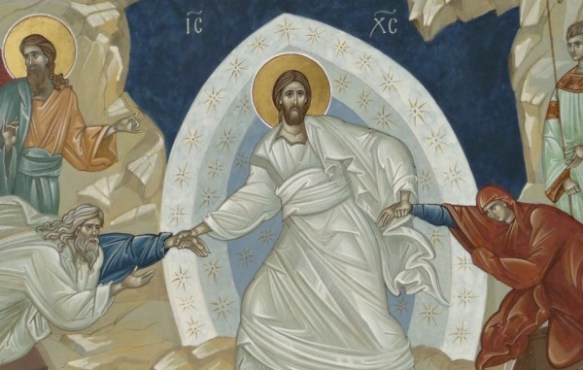
His plan for our redemption—which included the cosmic annihilation of Sin, Death, and the power of the devil—was established long ago. Its forthcoming object destined for impact was first announced in the Garden of Eden shortly after the fall into Sin.

He told the serpent that a Savior would land in his newly acquired dominion. In that moment, God established the event as the center point of history, charting the forthcoming object’s course as His Word told and retold of the inevitable arrival.

The Savior’s divine origins would prove the all-encompassing span of His reach. The momentum and trajectory of His work would be unstoppable. No human being would be spared from the blast radius of His love. No Sin-sick atom or darkly spirit feeding the flesh or its powerful lords—Eternal Death and Satan—would be safe from His terrible reach.

The worldwide flood and the rescue of eight believing souls in the ark would be a hint (Genesis 7—9:13). The testing of Abraham would provide a taste (Genesis 22:1-18). The betrayal of Joseph by his brothers, his rise to power, and his generous grace would foreshadow its contours (Genesis 37—50). The deliverance of Israel from bondage through the Red Sea would offer a substantial glimpse (Exodus 14:10-15:1). On and on from these, moments in history involving the likes of David, Isaiah, Jeremiah, Jonah, Job, Daniel, Shadrach, Meshach, and Abednego would all whisper a foretelling of His impending and powerful arrival.

He would make His way into our orbit through the words of an angel to a lowly virgin girl (Luke 1:26-38). He would enter our atmosphere nine months later on a cool night in the miniscule Judean town of Bethlehem (Luke 2:1-20). He would speed toward the surface with unrelenting force, all along the way burning up the constricting stratosphere of hopelessness through the preaching and teaching of the Gospel. He would vaporize the dusty debris of blindness, deafness, muteness, hunger, leprosy, dropsy, demon possession, paralysis, mortal Death itself, and so much more (Matthew 14:15-21; Mark 8:28-33; John 5:1-15; John 11: 1-46; and the like).

And then He would strike.

On Good Friday, the Savior—Jesus Christ—would render His life as He crashed into the earth’s surface by way of the cross. He would do this with a force equal to and more than what was needed to cleanse the world of its horribleness. The initial concussion—one of inconceivable magnitude—would see the rocks split, worldwide darkness, the temple curtain brought to tatters, and the dead shaken from their tombs. The shockwaves from Calvary’s crater would move out in all directions, rolling across the landscape of creation, going backward and forward in time, leaving nothing untouched.

The devil and his own would be scorched and left dying. Humanity would be given life, reconciled, made right with God.

Shortly thereafter, the smoky haze from the Lord’s sin-killing encounter would dissipate, and the bright-beaming light of hope would begin shining through to the planet. A completely new air of existence would breeze through and into the lungs of Mankind. A tomb would be empty, its former inhabitant found alive, and all who believe in Him would stand justified before the Father and destined for the same resurrection triumph.

All of this makes for the centrifugal and centripetal astronomy of Holy Week, the Triduum (Maundy Thursday, Good Friday, the Vigil of Easter), and Easter Sunday. I urge you to make these times in worship your own. Go to church. Be present where God dispenses the benefits of the world-altering event of His love. Hear His Word. Take in the preaching. Receive the Lord’s Supper. Be found standing in the crater of Christ’s victorious work—His cataclysmic demise and unbounded resurrection becoming your justifying right to eternal life in glory with Him forever.

Let’s Be Honest About Death

Just yesterday (Saturday, February 20), the Life Team of Our Savior blessed our church and community by offering an “End of Life” seminar. It was well attended. I was glad for that.

The keynote speaker for the event was Genevieve Marnon, the Legislative Director for Right to Life of Michigan. I know Genevieve. She’s a great servant of the cause for life, and as you’d expect, she gave great insight into a multitude of things facing the Church in America when it comes to end-of-life decision making. All who took advantage of the day’s events were well fed.

We were also joined by Gary Borg from Lynch and Sons Funeral Home. I know the folks at Lynch and Sons well. Some years ago, Thomas Lynch, being the friend and writer that he is, wrote a kindly endorsement for my first volume of The Angels’ Portion. Knowing Tom’s directors to be top-notch, as expected, Gary’s words were valuable as he explained the funeral home’s role in the process, giving helpful tips to families for navigating what is likely to be a taxing and turbulent time.

I was tasked with kicking off the event. My topic: “How to Prepare for a Funeral Service and Beyond.” Of course, I did what I could to fulfill the expectations of this topic, being sure to talk about the nature and theology of a funeral service, as well as emphasizing and encouraging faithful practices. I talked about how to be proactive in planning one’s own funeral, and I went through the basic steps of what families should do when a loved one’s last breath occurs.

But before I could speak to any of these things, I felt the need to steer into an honest discussion of what sits at the core of the conversation.

Death.

There is the temptation to avoid the word “death” altogether. I, on the other hand, give the word a capital “D” in every sermon I write. Why? Because Death is no small thing. It’s owed our attention. It’s big. It’s powerful. When it’s lurking, you know it’s there. When it steps onto the scene, there’s no questioning its intentions. Shakespeare personified Death in this way, too, describing it as keeping court, as sitting and scoffing at the pomp of man, waiting for the inevitable moment (Richard II, III, ii, I, 160). When Death has passed through, the devastation is real. It leaves behind things that are tangible to each of the human senses. You can see its shadow in the pale skin of the deceased. You can touch and know the coldness of its labor. It even has its own smell. The people who’ve been powerless to stop its savage work on a loved one have red cheeks and bloodshot eyes. They’ve tasted the salt of their own tears. When there’s no more heavy breathing and the life-support machines have been stopped, the silence is thunderous.

W.B. Yeats once wrote that Man knows Death to the bone (Death, 1933). And he’s right. For the victim, it leaves nothing untouched. For those left behind, it cuts into the depths of their being, and its scars are long-lasting.

Against the overwhelming evidence of Death’s strangling might, in an attempt to be at peace with its inescapable work, I’ve heard some refer to Death as a friend, something to embrace as good. Yes, it’s true that an end to mortal suffering can be counted as a blessing. But the verity of such a statement isn’t so for the reasons the mortal flesh would conjure. Death is not a blessing. It’s a curse. It’s not natural. It’s completely foreign to God’s design for creation. He makes sure we understand these things in the Garden of Eden in Genesis 3:19. In 1 Corinthians 15:26, Saint Paul makes sure we never utter the words, “Death is a friend.” It’s not a friend. It’s the last bitterest enemy of Man.

Before we can even begin to fathom the glorious purpose and momentum of a Christian funeral, we need to be wise to what we’re actually dealing with. Death is everything I’ve described. It’s real, and it’s coming for all. Each of us will breathe our last and be returned to the bosom of the earth. We don’t know how or when it will happen, we just know that it will. And when it does, what will we do? What shall we expect from and for those around us? Where is our hope in the midst of the mess?

A Christian funeral beholds Christ right in the middle of it.

In the midst of the initial sadness—Christ. When the machines are being unplugged and rolled away—Christ. When the plans are being made at the funeral home—Christ. When the readings and hymns are being selected and the obituary is being crafted from memories—Christ. When the bell tolls and the service begins, when the casket is closed and the mortal remains are covered by the pall—Christ. When the sermon is ringing out to the listeners—Christ and more Christ! Yes, the loved-one in the casket will be remembered, and likely in some heart-warming ways. Nevertheless, none of these will rise to the prominent station of “most important.” At a Christian funeral, Jesus owns that spot. And so the unmistakable communiqué to be dispatched to the troubled community will be the Good News of Death’s cure—the great heralding of Death’s utter defeat at the hands of Christ.

A Christian funeral is to be nothing less than the proclamation of this Gospel—the overabundant proclamation of the world-splitting news that Death no longer rules the spaces between heaven and hell because of the person and work of Jesus Christ. Because of Jesus, Death is no longer the believer’s lord. It is not the believer’s master. It is not the believer’s end. Jesus has seen to this. He said so Himself: “I am the resurrection and the life. Whoever believes in me, though he die, yet shall he live” (John 11:25). Trusting in the divine Son of God, the One who throttled Death by His own demise on Calvary’s cross, believers—both in the casket and in the pews—can be sure that Death has been remedied. The process itself, no matter how it may unfold, is now only for believers to close their eyes and exhale a last breath in mortality, and then to open their eyes and inhale the freshness of eternal life in the nearest presence of Christ in heaven.

Christ made sure of this.

If we don’t understand these things, a funeral can devolve into a circus sideshow very quickly. If we don’t empower our pastors to direct our funerals in a Godly way, being sure to leave behind very clear instructions for our families, then our own funerals very well could become less of what Christ would desire and more of what the unbelieving world would do to find peace, which ultimately means everyone in attendance will be left searching for hope in all the wrong places.

Lent is a good time to have a seminar like the one we had. This is true because Lent takes seriously what plagues humanity, knowing the immensity of the Lord’s work to save us from it, while at the same time knowing that Easter is on the very near horizon.

My prayer for you this day is that you would know the immensity of the Lord’s work, too, and that you would look to Him in all things, being assured of eternal life through faith in Him. Lent reminds us of the serious nature of the wage for Sin, which is Death. Easter reminds us that neither has a hold on Jesus. This being true, by faith in Him, they don’t have a hold on you, either.

The Shape of the Gospel — Ash Wednesday

The penitential season of Lent is soon to be upon us. It begins this week with Ash Wednesday.

So, who cares? Christians do. At least, they should. Although, it would seem many Christians—even some of the clergy—are preaching and teaching against it. I don’t know why. I did hear one say it’s some sort of innovation to the Church Year and therefore to be avoided. I heard another suggest it hinders the Christian’s ability to prepare for Easter with joy. That’s sad. One sure way to rob the victory of its joy is to be ignorant of what’s at stake in the war. Ash Wednesday offers a much-needed glimpse of the battlefield.

I find it strangely interesting that even the sensual (though unofficial) liturgies of something like Mardi Gras would portray a better awareness and care for Ash Wednesday and Lent, whether their partakers actually realize it or not. Even in the midst of a celebration that holds the well-deserved reputation for overindulgent debauchery, there is the sense that it must and will come to an end.

“Live it up,” its rites and ceremonies proclaim, “for after Fat Tuesday, it must all expire.”

And it does. What once was gives way to the ashen dust of death remembered by Ash Wednesday. Ash Wednesday is the proper headstone for all things carnal.

A day in the Church Year in which believers’ foreheads are marked with the ashes of what were once lively and verdant branches (the palms from the previous year’s Palm Sunday celebration), Ash Wednesday reveals that the Christian Church knows something of this world that the world itself cannot fully fathom. It knows the wage for Sin is Death—real and eternal Death. It knows this as it recalls God’s terrifying words to Adam and Eve after the fall into Sin. These words still reverberating, it hears the truth in them. It knows the necessity for their honest contemplation so that we would see the world as it ought to be seen. It knows to immerse itself in the depths of a solemnity that acknowledges the horror of the very real predicament that the entire human race is facing. The Church knows there’s so much more than just an end to things, but there’s also a terrible dreadfulness just over that end’s border for those who remain enslaved to the mess.

You can’t ignore it.

You can’t hide from it.

You can’t outrun it.

You can’t overpower it.

The inevitability of its reach is woven into the very fleshly fabric of every man, woman, and child who was ever born in the natural way.

It was with divine, and yet heartbroken, authority that God announced this to His world and its first inhabitants: “Because you have done this, cursed is the ground because of you…” (Genesis 3:17). Cursed things are put away from God. By this curse—this self-inflicted and permanent vexation—“you will return to the ground, since from it you were taken; for dust you are and to dust you shall return” (Genesis 3:19).

The thing about Ash Wednesday is that you can’t make your way into and through Lent without contemplating the veracity of the curse. Ash Wednesday has become a guardian of sorts at Lent’s contrite door, and it won’t let you into the forthcoming events without being stamped. The stamp it reaches out to give, it goes on your head and not your hand. Its dust crowns the human frame as the only appropriate coronation for someone born into the un-royal lineage of the Sin-nature. It adorns the skull that shields the corrupted human mind, the organ fed by a sinful heart so that it would calculate and then initiate every ungodly act of thought, word, or deed. The mark’s dirty-cold embers are the kind that distinguish Cain from Abel, openly identifying the murderer and reminding him of the dusty ground that opened up to swallow Godly innocence.

And yet, even as Ash Wednesday won’t let you forget the seriousness of the disease, it will be just as fervent with the cure.

Remember: That filthy mark is in the shape of a cross. It’s smeared onto the penitently-postured foreheads of Ash Wednesday’s observers who know their need for a Savior. It serves as a silent proclamation of God’s truest inclinations in our darkness. It’s the shape of the Gospel—the death of the Savior, Jesus Christ, for a cursed world. The Great Exchange—His righteousness for our unrighteousness. It tells of a birthright, not earned, but given in love. It beams through dusty grime the truth of an imperishable crown of blamelessness, not earned by the wearer, but won and granted by the Savior. Cain is marked and no one can touch him. God has been gracious. For us, even in that smeared cross’ quiet, there thunders above every human wearing it an otherworldly hope for eternal life through faith in the Savior who was nailed to it on Good Friday. The booming crack of its message drowns out the devil, the world, and the sinful flesh’s accusations to the contrary.

Ash Wednesday’s mark serves as a gentle reminder of something else in particular. It heralds rebirth.

That cross of ash will dot the same place where God first made the sign of the cross upon His Christians in Holy Baptism. If only for a few hours, it will make visible the invisible, leading each of its bearers back to the moment when God He put His own name on them, claiming them as His through the washing of water and the Word, thereby grafting them into the entirety of Christ’s self-submitting work to accomplish Mankind’s redemption (Romans 6:1-10).

It’s been said that the best opportunities are seldom labeled. This “best opportunity” of Ash Wednesday is, in fact, labeled. Its tag may be grimy, but it happens to be one of the most condensed opportunities in the entirety of the Church Year for a right understanding of our condition in Sin and our glorious rescue by the Son of God. Don’t keep it at arm’s length, but rather embrace the opportunity to gather with the faithful and sing as we do in the appointed tract, “He does not deal with us according to our sins, nor repay us according to our iniquities” (Psalm 103:10).

If you have any say in your evening activities, I encourage you to participate. Set aside 7:00pm this Wednesday. Make your way to Our Savior in Hartland, Michigan. Or go to your own church if it is offering a service. Either way, just don’t make the mistake of missing out on the powerful manner and message of the Ash Wednesday proclamation. You’ll be given the opportunity to look Sin and Death square in the eyes. You’ll see your mortality there. But you’ll see so very brightly and hear so very clearly the Good News of your brand new beginning through faith in the life, death, and resurrection of Jesus Christ, the compassion of God who took upon Himself human flesh and made His dwelling among us for our rescue.

Dying to Meet You

Do you have time for a quick story? Since you’re here, I’ll go ahead and share it.

We took a phone call here at Our Savior this past Friday. I didn’t answer it. Nikki, our Parish Administrator, did. It was someone calling to chat with me. Even though I wasn’t necessarily steeped in anything crucial, Nikki took a message for me. She does this because she knows that while technically Friday is my day off—and I probably shouldn’t tell you this—but I’m always in the office on Fridays. I have a few regularly scheduled appointments in the morning, and then after that, I use the rest of the day to catch up on things I didn’t have time for during the week. She runs block for me to let me do my thing.

Anyway, a woman called to let me know she didn’t appreciate the comparison I’d made in a recent radio bit equating Christians who justify skipping worship on a regular basis to so-called believers who justify voting for a candidate who favors abortion.

To be fair, the woman wasn’t rude with her critique—which was a welcomed difference in comparison to so many other calls or email messages I’ve received from metro-Detroit listeners. Instead, Nikki described her as someone who, with a conversational tone, was troubled “by likening someone absent from church to a Christian who’d support abortion,” and her hope was that I’d reconsider broadcasting the particular segment in its current form.

I’ll admit the association is a brutal one. And I’m more than willing to reconsider my words. The problem is, I didn’t write the script on this particular radio bit. My daughter did. Evelyn’s the one who made the observation and ultimately formed the comparative conclusion. I was so inspired by her insight, I wrote down what was spoken between us and together we recorded the 60-second radio spot right then and there. Again, I put into the microphone what I said. Evelyn put into it what she said. The brief conversation fit perfectly between the 15-second intro and the 15-second outro of my one-minute-and-thirty-seconds of airtime.

The context was simple. While waiting in my office before school, Evelyn was scanning the images from one of our previous church pictorial directories. Turning the pages, she stumbled upon the picture of someone she didn’t recognize. Second only to her dad, Evelyn practically lives here at Our Savior. She knows everyone’s name. And if she doesn’t know a member’s name, she certainly knows all the faces. Looking at a pictorial directory of people officially labeled as “members,” one holding the kindly faces of countless people she considers as members of her Christian family, it was natural for her to ask about someone she didn’t recognize. I didn’t say much at first, but I was careful not to be deceptive. Had I dodged her question, she would’ve known. Remember, like me, she’s here every Sunday. If she doesn’t recognize you, it’s probably because you don’t attend. That being the case in this particular instance, when she asked for the identity of the person, I said very nonchalantly, “She’s a member of the congregation, but she just doesn’t come to church very often.”

“Well, I’ve never seen her before in my life,” she replied, sounding somewhat concerned—just as I’d expect from this little girl with such a huge heart for her church family. “Does she work on Sundays?”

“No,” I answered, again trying not to give her any more information than she required.

“So, she could be here on Sundays?”

“I suppose.”

Evelyn thought for a moment, and then she laid the situation out unembellished. “How can she consider herself a member of a church she doesn’t even want to attend?”

My answer: “That’s a really good question, honey.”

Her next uninhibited reply, being the ardent pro-life girl that she is: “That’s kind of like people who call themselves Christian but support abortion. It just doesn’t make any sense.”

First of all, can you tell Evelyn is in tune with what’s going on around her, both in her church and her world? Second, there you have it. Even a child understands the inconsistency. How can we claim to be a devoted follower of someone we want nothing to do with? Using the same logic, how can we claim faith in Christ who is the Word made flesh (John 1:14), and yet be in opposition to the Word of God when it comes to topics like abortion?

It just doesn’t make any sense, and my little girl knew it.

Of course as adults, there will always be plenty of unknown angles to Evelyn’s observation that we’ll discover. COVID-19 has made things a little crazier these days. However, rest assured that the person in the picture was MIA long before COVID-19. That being said, be careful not to square the angles for escape from her scrutiny’s sting with whatever illegitimate excuses at whatever moment work best for you. And be sure to take even greater care not to overcomplicate or find offense in what’s been laid bare. If you do, you’re sure to miss a simple truth revealed by way of a simple faith, the same kind of child-like faith described by the Lord in Matthew 18:3 and now being demonstrated by a little girl who sees time with her Savior, concern for the members of her church family, and doing everything humanly possible to protect the lives of unborn children as essential and non-negotiable to the Christian life.

Her evaluation was simple, but it was a good one. I suppose in essence, it reminds us that even as our God cannot be in contradiction with Himself, He does not grant us space for being in contradiction with Him, either. This is built into the Lord’s announcement, “Whoever is not with me is against me, and whoever does not gather with me scatters” (Matthew 12:30).

Now, to begin wrapping all of this up, right after Nikki told me about the call on Friday, I posted on Facebook the very first thing that came to mind:

“I’m beginning to think that for some Christians, worship and Bible study are so precious they feel they need to ration them. Go to church.”

Yes, it was a sarcastic play on words.

“Well, I don’t support abortion, so don’t put my skipping church into the same category.”

But they are in the same category. Don’t have other gods. Don’t misuse God’s name. Don’t skip church. Don’t kill. Don’t lie. Don’t steal. These are all a part of the same list of things we do to thumb our noses at God, and ultimately, they’re things that keep us separated from Him. And yet, our Lord reaches to us by His Gospel. He empowers us there by His Holy Spirit for acknowledging our dreadful disobedience. Only by the power of the Gospel can we know to repent of these Sins and be changed to desire faithfulness (Romans 1:16).

I don’t necessarily know what many of the other churches around us are doing, but opportunities for holy worship are plentiful here at Our Savior. We have two Divine Services on Sunday. We enjoy the Office of Matins on Monday, another Divine Service on Wednesday, and an abbreviated Responsive Prayer (liturgics) service on Thursday.

And God is continually blessing all of our time together during these occasions for worship.

Dear Christians, there’s no need to ration your time with Christ. There’s an abundance! Indeed, the Lord is here, and His merciful gifts are overflowing all week long. Surely you can make it to one of those services to receive from the bounty that belongs to those who are His own? Wear your mask if you want to. Or don’t. No one is judging anyone in this regard. And why would we? The goal is simply to gather with the Lord and receive His care just as He desires to give it.

Quite honestly, I say all of this with a rather sizable concern in mind. For me personally, it’s one thing to be unrecognizable to Evelyn. Truthfully, if you are yet to meet her, you are missing out. But it’s a thing of far greater terror—the greatest terror there is—to be unrecognizable to Christ; to be one to hear Him say at one’s last hour, “I never knew you. Away from me…” (Matthew 7:23).

Go to church. You belong there. And even if you don’t feel like you belong just yet, go anyway. Christ is dying to meet you. Well, “died” to be more precise. And I know a church full of people who are eager to make the introduction.

Virtual Overlords and a Few Lessons Learned

So, what is there to talk about these days? Yeah, I know, right?

I don’t know about you, but the events of the past week have been concerning. And without sounding completely tone deaf, I should at least acknowledge that while I know what’s going on, I just don’t feel like visiting with it in the detail some may expect.

To be honest, with all of the conservatives on the news and social media platforms being rounded up and digitally executed, I think my time on certain networks is coming to an end. I’m not as active on Twitter as most, but I do have a few thousand followers, and so on Saturday night, just to see if I’d been affected by the mass cleansings, I discovered that about half of them were gone. I checked again later before the 12:30pm Divine Service on Sunday and saw that the number had risen to about two-thirds having gone MIA. Whether they’re leaving the platform or being punted, I think that’s a foretaste of what’s coming for guys like me who do what they can to bring the concerns of the Gospel to bear in the public square and culture.

Either way, no worries in this regard. I’m already in the process of closing my Twitter account as soon as I can get all of my data downloaded. Although I noticed that the Twitter overlords intend to craft the contours of that decision for me, too. Their archive downloading instructions read: “You can request a ZIP file with an archive of the data we think is most important to you.”

“…the data we think is most important to you.”

I can’t have all of my content. I can have what they decide I can have.

For the record, I’ve been trying to leave Facebook for a few years. Just ask my wife, Jennifer. She’ll tell you the only reason I’ve stayed as long as I have is because it’s been incredibly useful for introducing Our Savior Lutheran Church and School to the surrounding community—who we are, what we do, and why. Beyond that, everything else I write could just as easily be housed at one of my blogs: AngelsPortion.com or CruciformStuff.com.

But give it some time. Those might end up on the virtual book pyre in the next few weeks, too. I mean, I do scribe and share things on both sites that say horribly divisive things—like abortion is a no-no, and marriage is God’s property.

It should scare Americans that it’s only the conservative, pro-life, and Christian thinkers who are being booted, even as groups like “PornHub” (which, by the way, was successfully convicted of dealing in child pornography), most chapters of Antifa, and countless other liberal echo chambers are being allowed to stay and spread their doctrines. Interestingly, I read through Joe Biden’s presidential campaign donor report, and can you guess who some of the biggest donors were to his campaign? Yep. Big tech. He received lots of help from the likes of Jack Dorsey (Twitter), Jeff Bezos (Amazon), Mark Zuckerberg (Facebook), and Bill Gates (Microsoft).

Perhaps even more terrifying is that Amazon.com gave notice to Parler, which is a conservative competitor to Twitter, saying that unless Parler begins employing the same kind of draconian content policing policies that Twitter employs—which is code for cancelling conservatives and Christians—it’ll be dropped from their servers. I think the threat actually became reality last night. And both Apple and Google have already dropped the Parler mobile application from their stores so that no one else can join. They just don’t want conservatives to be able to communicate with mass momentum. I’ve read that MeWe, which is the conservative competitor to Facebook, is on the chopping block, too.

“That’ll never happen,” so many among us have said. “Just stay in your lane and leave it to God to handle.” Well, it’s happening. And oh, by the way, God handles these kinds of things through His people. There are countless portions of God’s Word urging us to be engaged in our communities and world. If the reader of these texts is being honest, then he’ll realize they’re nothing short of mandates for Christians to be who they are in the unavoidable areas of life. Stripping away rights, mass censoring of the conservative Christian voice, unjust fines and jail sentences, the murdering of the unborn, politics in general, and so much more—these topics are all born from the unavoidable areas.

Get in the game.

Now, I’ve already talked about this more than I wanted to when I sat down at the computer screen. But as I said, I didn’t want to sound tone deaf to the fact that we’re making our way into some serious times calling for solemn reflection and serious courage. Still, I’d rather steer in a different direction… that is, if you still have time this morning, because I have far more intriguing things that I’d still like to share.

Perhaps like me, at the beginning of every year you find yourself thinking on what you learned over the course of the preceding 365 days. If you don’t, I recommend making it a deliberate practice. I recommend grabbing a pen, a sheet of paper, and spending some time writing a list of the significant occurrences in your life from last year and what you garnered from them.

It’s not hard to do. I usually try to think of at least five, even though I know I could rake into a pile far more from the annals of my brain. I list these five events, giving each a title, and then beneath each one I write a short sentence—a summary statement of what I learned in that particular instance.

Sometimes it hurts to see what I’ve written. Sometimes it’s a joy. Either way, the result is that I can put a finger on and work to remember something I know now that I didn’t know before, and it continues to be a way to reach higher when it comes to being a better pastor, teacher, husband, father, friend, thinker, and all around human being.

One of the five things in this year’s list isn’t necessarily something I learned, but rather more of a recap. I was reminded that I am more than capable of lying to myself. I’ll give you an example.

There’s someone I know who, no matter what I say or do, just doesn’t seem to like me very much. Whether passively or with deliberate hostility, this person has proven a readiness to take anything I’ve said or done as a reason to lunge at almost any moment. Of course, it’s easy to see why this would bother me. No one wants to be treated this way. I certainly can’t think of too many people who enjoy being disliked. It’s painful. For me, it hurts even more because one of my New Year resolutions in 2020 was to make a genuine effort at bridging the gap of disdain between the two of us. And I did. But it seems each attempt only seemed to ricochet. In the end, however, the self-deception occurred, not in the sense that I was wrong in thinking I could better the relationship, but rather in thinking that it matters if the person genuinely likes me or not. The deception went deeper as I began believing that the person must actually be deranged for not liking me, because, I mean, how could anyone not like me? I’m so easy to get along with, and really quite wonderful in almost every single way.

Sure.

We all think this way sometimes, and with that, the poison of the lie begins seeping into our veins and arming us for retaliation—for giving us a false justification that gives us permission to despise them right back, and even worse, to act on that disposition.

Something else on the list of things I learned: Faithfulness means honesty, and honesty means responsibility, which is precisely why so many go out of their way to redefine faithfulness.

What I mean is that so many people appear to be able to keep their consciences clean while doing just about anything, just so long as they believe what they’re doing is okay with God. But the only way to do something like that is to set honesty aside in order to redefine faithfulness. For example, skipping church becomes acceptable as long as the core of our definition for faithfulness means that our actions are in some way divinely approved, or perhaps that true worship can happen in any form and anywhere. Or maybe we deliberately choose candidates in an election who support the murdering of babies in the womb because, in our thinking, the social welfare programs offered by those same candidates intend to lift far more from poverty, ultimately bettering far more lives than the ones they’d allow to be snuffed out. In other words, in the economy of good deeds, certainly God would be okay with that calculation because it helps more than it harms. Or how about shaming a person in a store for not wearing a mask. If one believes wearing a mask to be an unarguably virtuous cause, a moment spent showing some tough love to a maskless perpetrator in a grocery store can be internally translated as a brave display of righteousness that has as its goal the saving of lives.

I’m taking better care to be aware of these darkly maneuverings, especially among Christians. And as the days of 2021 unfold, I intend to continue probing such foolishness and being ready to respond.

I’ll share one more of my five-item list. Like the first one I shared, it isn’t anything new, but rather a re-learning of sorts.

Other than God, everything has a beginning and end, and if you can just give the stormy situation you’re in a little bit of time, some prayerful consideration, and if required, some careful conversation, eventually the situation will dissipate like a raincloud that has wept all its tears.

Even some of the worst situations I’ve ever experienced as a pastor have all quieted down at one point or another. “This, too, shall pass” is a well-worn phrase for a reason. Although, the phrase will never outmatch the value of Saint Paul’s words in 2 Corinthians 4: 17-18, where he reminds us that the troubles of this life are momentary, and in comparison to the eternal glory that is ours in Christ, they just can’t hold a candle.

To conclude, maybe give this exercise a try. Look back at 2020 and see what’s there. You may be surprised by what you discover. The Lord only knows what some of your lists might look like after the year’s remarkably unremarkable collection of insanity. Heck, even the last ten days of 2021 have been enough to generate those “Here, hold my beer” memes we all expected, and as a result, it’s likely you already have some items for next year’s list.

Still, whatever you discover (some of which I’m hoping will be Christian honesty, responsibility, and courage for faithfulness), as the knowledge of these discoveries flow from your heart and mind to the pen at the surface of the paper, as God’s child, be sure to keep in mind what He intends to teach you each and every new day: We needn’t be afraid of those who can harm us in this life but have no jurisdiction in the next (Matthew 10:28). God will never leave us nor forsake us (Deuteronomy 31:6). He is with us to the very end of all things (Matthew 28:20). His steadfast love never ceases; His mercies never come to an end; they are new every morning. Great is His faithfulness (Lamentations 3:22-23).