
Truth is Truth No Matter the Source

There it is again—that word. Autumn. Or “the fall.”

Isn’t it interesting how the season that leads into the deathliness of winter carries the same title as the moment the barrier between this world and sin was ruptured? I’m not surprised. With Autumn comes an increase in darkness. For me, that’s its most unfortunate part. I’m an early riser. In late spring through to summer, the sun awakens with me—sometimes even a little before me. I’ll be just opening my eyes, and I’ll see its radiance already beginning to sketch out the horizon behind our home. It’s as though if I started walking toward it, I’d eventually go over its edge and tumble into its embrace.

But those days are fleeting. The sun won’t rise today until 6:59 AM. In winter’s depth, it’ll be closer to 8:00 AM.

Can you tell my seasonal affective disorder is taking hold? It happens every year at this time, and I can’t even begin to describe the internal war I wage against it—how I crave sunshine and its warmth, and how I have to equip myself for the 285-day stretch that Michiganders go without it.

To take the edge off the long grayness, I find it’s best to distract myself. That means pouring myself into other things. It means doing so with deliberate focus on Christ. In the quieter, free-thinking moments like this one, it means an even deeper examination of my surroundings through the lens of the Gospel.

For example, since I’ve already mentioned the word “fall,” thereby having wandered into the realm of homonyms—words that are spelled the same but have different meanings—how about the word light? It’s a homonym, too. It describes not only the brilliance that scatters the darkness, but also the opposite of heaviness. How does the Gospel reflect on this?

Easy. Christ offers us rest, ensuring us His burden is light (Matthew 11:28–30). He also says, “I am the light of the world” (John 8:12). In English, the word light bears two different meanings, and yet can combine to reveal the fullness of our Lord. He’s the radiant burden-bearer who dispels all darkness.

For another mental distraction, take the word cross. It is the shape of suffering, and it is also the action of being “crossed”—to oppose, to offend, to stir wrath. Indeed, the cross of Christ offends the world (1 Corinthians 1:18, 23), even as it saves the world (Galatians 6:14). It will forever frustrate me when I hear or read the words of Christians saying how we should focus less on the cross. Fewer sayings are more ignorant when poured from a believer’s lips.

The word grave is a homonym, too. It’s the tomb that holds a body, yes, but it’s also a word we use for something serious that demands our attention. Christ’s tomb demands our attention. While ultimately empty of His body, it was not empty of meaning. It was a serious thing that Christ suffered, died, and was placed in a grave that, in the end, could not hold him. The grave, something usually filled with death, was emptied of death (Luke 24:1–6; 1 Corinthians 15:54–57).

These layered words remind us that God wastes nothing relative to His Gospel, not even language. I appreciate this. And for a guy like me, especially during fall and winter’s depths, words provide the best distractions. As far as I’m concerned, they are open windows letting in the sun, so long as I’m paying attention.

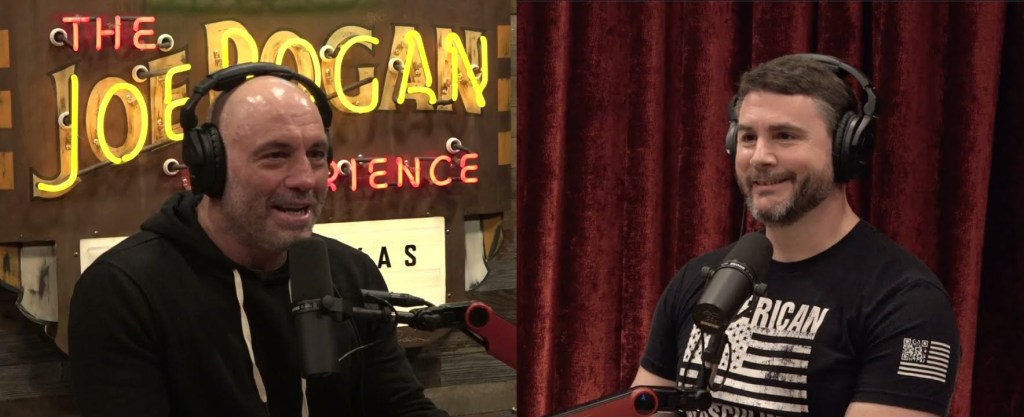
It is here that I find a meaningful connection to someone who is, perhaps surprisingly, a human homonym: Dr. James Lindsay. He is an avowed agnostic, which means he does not share the faith that undergirds my life. Still, he’s a friend, and he’s someone who knows words. More importantly, he knows how words have been twisted, redefined, and repurposed in our age to smuggle in new creeds and new “gospels.”

James knows a lot about a lot. In particular, he’s a skilled troublemaker among secularists. For one, he uses his expertise in Marxism and, most especially, Gnosticism, to show elitists their inherent foolishness. He bears a thoroughness in this regard that very few can rival. Best of all, he understands Gnosticism’s modern offspring—“woke” ideology—better than most Christians do. He understands how, like the ancient Gnostics, today’s ideologues claim access to a kind of hidden knowledge that ordinary people cannot see until they are “awakened.” He points out how the language of “wokeness” mimics the Gnostic division of the world into the enlightened and the unenlightened, the knowers and the blind.

In Gnosticism, the material world was seen as corrupt and evil, something to be transcended through secret knowledge. In the same way, the woke framework teaches Marxist materialism underpinned by the belief that society is systemically corrupt—shot completely through with oppression, privilege, and hidden power structures—and that only through redistribution and initiation into its special vocabulary can one begin to see the truth. The Gnostics divided people between the “spiritual” and the “carnal.” The woke do the same, dividing people between the “oppressed” and the “oppressors.” Both set up hierarchies of purity and enlightenment that, ironically, only end up deepening divisions between the haves and the have-nots.

And just as the Gnostics denied the goodness of creation and the incarnation of Christ, woke ideology denies the givenness of created reality—especially in matters of the body, sexuality, and identity—recasting even biological facts as oppressive constructs.

Men can be women and women can be men. In fact, both can be neither, both, or something altogether yet undiscovered. It’s a spiritual thing—an identity thing—accessible in a sphere of understanding that only the truly enlightened can enter.

James knows all of this stuff inside and out. This is why his voice is so important. He has traced these parallels with clarity. And while he does not confess Christ, he’s more than an expert witness relative to things Christians need to know. He helps Christians see that the battle we are facing is not new. The names have changed. The vocabulary is updated. But the heart of the heresy—the very same things Saint Paul and Saint John wrote against in the New Testament (Colossians 2:8–9; 1 Timothy 4:3; 1 Corinthians 15; 1 John 4:2–3; 2 John 7; John 1:14)—remains the same.

That said, it’s right about this time every year that the criticisms begin arriving at my door for inviting speakers like James to participate in our annual “The Body of Christ and the Public Square” conference. But my reply is always the same: First, don’t get your panties in a bind. It’s a conference. Second, if I were on trial for murder, my chief concern wouldn’t be whether the expert witnesses testifying on my behalf were Christians. I’d want the best in the field. And regardless of anyone’s pious pomposity, Christians are not experts in everything. And when someone like Dr. James Lindsay has peered into the shadows of false religion, having tracked the corruption of language and belief as intently as he has, ignorant Christians like me should listen. Regardless of his confession, God is clearly using his talents in a very particular way.

I’m guessing He’s using our friendship in a particular way, too.

And so, let the critics rage. They will anyway, no matter the speaker. Personally, I think it’s some sort of weird jealousy. But that’s another eNews message for a different day. In the meantime, let them scoff. My answer will remain the same. The situation before us is too urgent to waste time on pious posturing. The woke gospel is nothing less than old Gnosticism with a fresh coat of paint, and it is devouring our institutions, our families, and even our churches. If a man like James Lindsay can map these lies with surgical clarity—and his map is accurate—then shame on those who throw stones and plug their ears because they dislike the messenger. Even Saint Paul quoted the pagan poets and philosophers when their words were true (Titus 1:12 [from Epimenedes’ Cretica]; and Acts 17:28 [a combination from Aratus’ Phaenomena and either Epimenedes’ Cretica or Cleanthes’ Hymn to Zeus.])

In other words, truth is not less true because it comes from an uncomfortable source, nor does it lose its weight when it is shouted down by a mob with good intentions.

In the end, God has always used unlikely instruments to shame the wise and awaken the complacent. In my humble opinion, we don’t need any more critics hiding behind pews. We need a few more folks on the field, willing to see, to listen, and to do the heavy lifting. The fall is here. The nights are long. But Christ is the Light—and the darkness will not overcome Him.

Now, take your place on the wall. And perhaps, I’ll see you at the conference. Visit here to register: https://bodyofchristandthepublicsquare.org.

Accepting My Pastoral Fate

As is always the case following our “The Body of Christ and the Public Square” conference, I took some time to read the event evaluation forms submitted by the attendees. As in previous years, most took the time to fill one out, offering uplifting commendation and valuable information upon which to reflect. From the hundreds submitted, only three or four betrayed humanity’s jagged propensity to demand something beyond normal. In other words, every crowd always has a miserabilist or two. One shrew’s comment-pocked page threatened not to return if we didn’t upgrade the chairs to ones with cushioning. Another I received by email insisted that the event would be better if we offered a menu, perhaps expanding our food options to include pasta and possibly providing a more comprehensive array of desserts. I replied, “Thanks for the suggestions.” But that was after I typed and deleted, “That’s a great idea. And since we’ve decided to upgrade all our chairs to recliners, we thought we might hire some foot masseuses to go from attendee to attendee. There’s certainly nothing better than kicking back in a La-Z-Boy at an in-person conference with tier-one speakers while getting a foot massage and eating red velvet cake.”

Seth Dillon reminded the audience that foolishness needs to be ridiculed. Regardless of what some would say, foolishness needs pushback from equally foolish humor. He reminded his listeners that we often miss opportunities to redirect people away from untruth when we meet their folly with seriousness. By treating them seriously, we imply their ideology is worthy of consideration. If a man insists he is a woman, while mindfulness is necessary lest we underestimate the societal dangers, ridiculing the ideology is also an essential part of the resistance. Thus, Seth’s company, The Babylon Bee. The Babylon Bee is devoted to making fun of ideological idiocy—or, as Seth put it, he’s a professional troll.

We talked a little about this in the Sunday morning adult Bible study following the event. The story of Elijah and the Prophets of Baal came up. Elijah ridiculed the prophets, taunting them mercilessly. When you read his words in the biblical Hebrew, you know just how crass Elijah’s words were. Saint Paul does the same in Galatians 5:12, mocking the Judaizers who demand circumcision as a requirement of faith. When you can, look at what Paul says the Judaizers should do to themselves. It isn’t polite, but it is funny.

I told the Bible study group I intend to do more trolling. I’m certainly capable.

Regardless, I had something else on my mind when I sat down to tap on the keyboard this morning, most of which began forming last night during a dinner conversation with friends. There was another thread of commentary I discovered in several of the commending evaluation forms. Essentially, folks pleaded that I do more advertising in the churches, explaining that they only heard about the event from friends or shared social media posts.

Apart from my social media efforts, I sent direct mailings to 240 churches across three states. Less than twenty were returned as undeliverable. Each mailing had a brief letter of explanation and one (sometimes more) 11” x 17” color poster advertising the event’s particulars. Of the four-hundred-plus attendees, twelve were pastors from congregations that had either received those mailings or didn’t receive one only because they knew me personally and were promoting it on their own. Admittedly, I don’t know how many attendees were there due to those men.

The first thing I should say is that I know pastors are busy. I am one. If you knew my schedule, you’d think I own a teleportation device or I’ve somehow figured out how to clone myself. Just glancing at my schedule right now, I can assure you that every day is pretty much spoken for until Christmas Day. After Christmas, I have four days free before it all starts again. Anything added to the schedule until then is little more than fanciful dance moves employed to fill in its fast-fleeting cracks.

Second, I know that when it comes to anything sent to a congregation communicating events like ours, most folks in that congregation will only learn about it if their pastor chooses to share it. He’s the gatekeeper to such information, and rightly so. He’s deciding what goes on the bulletin board and what doesn’t. He’s deciding what gets shared in the announcements or newsletter and what doesn’t. Speaking for myself, such decisions often happen when I first get the information. If it’s a letter, I open the envelope, scan it, and either keep it or toss it into the trash. Then, I move on to the next item. If it’s an email, I read it. If I intend to pursue it, I tag and save it. If not, I delete it and move on.

More to my point. It’s not that I didn’t sufficiently advertise in the churches. It’s that the pastors withheld the information. Their reasons? I don’t know. At least, I should say I don’t know for sure. I have my suspicions.

If you watch the video of the panel discussion from our recent event, you’ll observe a question directed to the group that resulted in a near-unanimous expression of optimism. I said “near-unanimous” because I chose not to answer. Essentially, each panel member agreed that the tide is turning in America. People are waking up and pushing back against radicalized school boards, LGBTQ Inc.’s jackboot agenda, and countless other issues tearing at the fabric of this great nation. As the microphone was passed from panel member to panel member, you’ll notice James Lindsay leaning toward me to speak. He asked if I wanted to respond. I said no. Keep watching. You’ll see we spent those next few moments whispering to one another. I told him I agreed that things were looking better. People are sick and tired of leftists seizing control of and destroying everything. However, that’s not what I see among pastors in the Church. From my perspective, my circle continues to shrink. As a pastor intent on leading God’s people toward faithful engagement in the public square, I’m becoming more and more of an island unto myself. I’m going to shoot straight on why I think that is.

On the one hand, it could be because my reach is increasing. With that, I’m running into what has always been a more significant percentage of pastors holding an absolute separationist view of Church and State, which ultimately betrays a thin understanding of genuine American history and a weak grip on the Two Kingdoms doctrine. More will come on this when I finish my doctoral work.

I also get the sense there may be an inhibitive spirit of competition in the Church. In other words, promoting another congregation’s event, especially a prominent one, makes the pastor feel as though he could be doing more. Depending on what that pastor does all day, I won’t say if that feeling is right or wrong. I’ll just say I think it’s there. And it’s dangerous. Faithfulness is required, not achievement. But faithfulness is by no means lazy.

I most suspect pastors withhold the information because they are simply doing what people fearful of losing their jobs do. It could be as simple as knowing that if they hang a poster promoting an educational event that any one of their parishioners misinterprets as offensive, they might make enemies.

As a pastor, I know what happens when enemies are made in a congregation. People transfer to another congregation or self-dismiss. Attendance goes down. Giving goes down. And who gets blamed? I do. Please know that I’ve long since lost concern for these dynamics. In fact, after unsuccessful attempts at reconciliation, I’ve taken the lead on showing particular folks the door. In short, I know I’ll always teeter at the edge of offending people when it comes to preaching and teaching the Word of Truth, maintaining church discipline, defending the congregation’s identity, and preserving her integrity. Of course, I’m not trying to offend anyone. I don’t associate with any pastors who are trying. But it does happen. I’ve accepted that fate, and as a result, the Lord continues to bless these efforts in ways I only wish I had time to describe.

Many pastors haven’t accepted that fate. And the fear is crippling. It keeps them holding to far easier things while preventing them from helping their people navigate the harder things—the all-consuming dreadfulnesses destroying human lives, both physically and spiritually. Doing this, those pastors become caricatures of Hosea’s divine accusation: “For with you is my contention, O priest…. My people are destroyed for lack of knowledge; because you have rejected knowledge, I reject you from being a priest to me” (4:4,6).

I told Dr. Lindsay later that night while sharing samples from my various whiskeys that I’ve long since begun weaponizing this pastoral fear. Knowing that pastors are terrified of their people, I’ve turned to reaching their people. If the pastors are afraid, I’ll use that fear, not in a sinister way, but in an encouraging one. In other words, I urge the people visiting from other congregations to encourage their pastors to get in the game and lead the way. I plead with them to do this, first doing what they can to create opportunities for their pastors to use the skills they already possess. For example, folks could call the local paper and ask about sharing a portion of their pastor’s latest sermon as an editorial. When the paper’s editor agrees, ask the pastor to send it. Put the pastor right out in front of an issue. Another example might be for church members to invite their pastor to speak at a community event, such as a Right to Life rally, School Board meeting, or an education forum. Perhaps a parishioner might arrange for his pastor to be the invocator before a congressional session in the state capitol building.

It’s not exactly the same, but this reminds me of my whisky epiphany in the early 2000s. It took a deliberate introduction to a few fine whiskies during an out-of-the-ordinary visit to London, England, to realize I had strange facilities for sensing things in drams that others could not. Like most anything else, once a pastor realizes he has additional skills he never even considered relevant to his typical duties, it’s like a light switch being flipped on. Of course, most of his efforts occur in the Kingdom of the Right—the Gospel’s kingdom. Still, when he discovers that some of those same efforts meet with the Kingdom of the Left—the civil domain—he goes about his work with a broader awareness and a more profound capability for his vocation. Together, these only add to his service, and they do so in ways that serve the Gospel rather than detract from it.

I’ll keep working in this way. It continues to result in more and more Christians stepping up to push back. Perhaps along the way, more pastors will have no choice but to join their people—and maybe even lead them. We certainly need what they’ve been put in place to bring.