
Surely This Must Be Satire

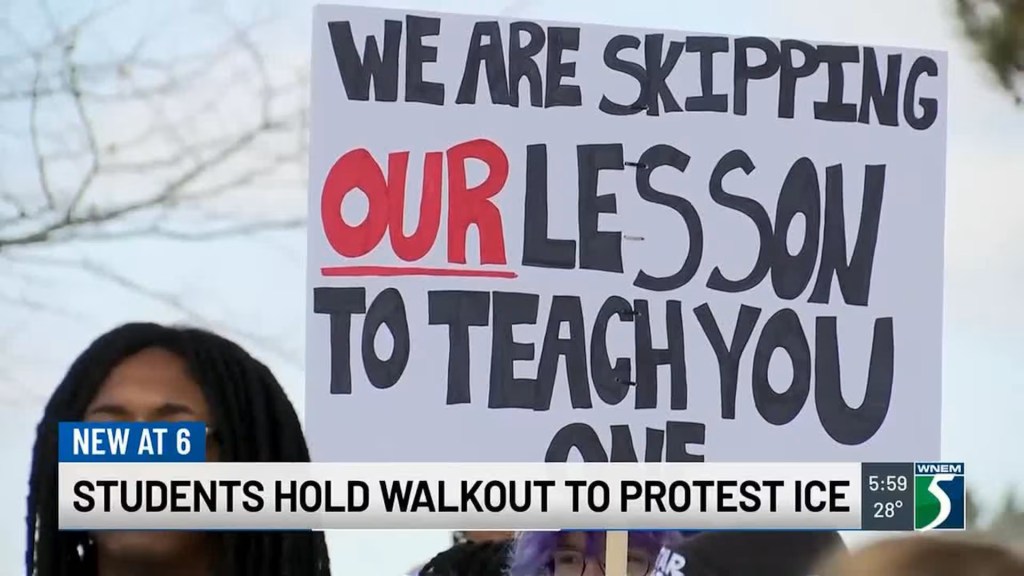
I’ve seen a few letters circulating from local school districts about student walkouts protesting ICE. Beyond our own communities’ borders, there’ve been other stories and accompanying images about students pouring out of school buildings, holding signs, chanting slogans, and presenting themselves as voices for compassion and justice.

At first glance, these walkouts—misspelled signs and all—can seem admirable to some, maybe even virtuous. I’ve read plenty of comments from folks in various Linden forums praising the students for exercising their right to protest. That said, there are plenty of others in those forums tippety-tapping my thoughts, making it so I don’t have to write a single word. On my part, I’m not convinced a majority of the participating students actually understand or even care about the actual protest itself, if only because there are so many reports of kids joining them just to skip school. Some of the parents in one particular forum admitted as much, saying their kids flat out told them they see it as a way to take a day off.

Still, I’m sure some sincerely believe they are standing up for people being mistreated. But even with that, I’m in relative disagreement. Apart from the fact that the events in Minnesota gave birth to the walkouts—and it’s only after $9 billion in fraud was discovered in the Somali community, thereby serving as the perfect, all-encompassing distraction—the whole situation has been framed entirely by emotion. There isn’t a single thing about it that suggests actual thought. It has “knee-jerk” in its soul. And if there’s one thing I know for sure, it’s that people have always been drawn to causes framed in emotional language—most especially youth.

When I say emotional language, I mean just that. Even the forum commentary surrounding all of this was perpetually framed in simple emotional terms. It was stuff like compassion versus cruelty, inclusion versus exclusion, justice versus oppression. These are powerful categories, and they resonate emotionally. And yet, the reality of immigration policy, law enforcement, and perhaps most importantly, national sovereignty, is far more complex than a misspelled protest sign allows.

The plain fact is that a nation, like pretty much anything, cannot function without order. Laws exist not merely to punish but to create stability and fairness. When students walk out of school to protest the enforcement of existing laws, they might “feel” they are expressing compassion or inclusion. But what are they doing implicitly? They’re arguing that the law itself should be disregarded when its necessary enforcement becomes uncomfortable.

But again, all of that said, I remain unconvinced that most of the students participating in these protests are even capable of reaching that conclusion without some help, which I assume the teachers and administrators who appear to be egging them on are disinterested in providing. I read one comment from a teacher implying that it brings her joy to see her students embrace anything that stands against Donald Trump.

That’s not helping students think through complex issues. That’s not teaching. That’s propagandizing. That’s the imposition of ideology.

Now, I’m not saying all protests are inherently bad. I stopped shopping at Target when they started letting men use the women’s restrooms. When they corrected course, I returned. But what I am saying is that public demonstrations—the kinds with people holding signs and marching and shouting—they are, by design, built on emotion. There’s no room for discussion or reflection in such demonstrations. The loudest voices, the most extreme slogans, and the simplest narratives that can be repeated as mantras tend to dominate. All nuance disappears. The quiet but necessary work of examining—of learning, reasoning, and weighing competing ideas is replaced entirely by chanting and the inevitable social media applause.

Which makes student walkouts like these somewhat satirical.

First of all, a human brain isn’t even fully developed until the mid-twenties. There are plenty of studies about how cognitive capability is inhibited until that point. So, my point about these kids not understanding what they’re doing remains fixed. I suppose secondly, education is meant to form the mind. Assuming a school is actually doing this, when students leave classrooms to protest rather than study, they are, by default, putting aside the very tools they need to grow into thinkers who understand the world they hope to change.

Notice I prefaced by saying “assuming a school is actually doing this.” There’s a reason homeschooling and classical/parochial education are booming right now. The modern American education system seems incapable of fulfilling its charter, especially given the results. America’s scores, compared to those of other countries, prove we are no longer leaders of the intellectual pack. But we’ve mastered gender confusion. We’ve graduated to “2+2=4” being racist. We most certainly excel at woke, and we’ve become top-tier engineers of Marxism-inspired social justice.

I suppose this stirs the question of responsibility. Schools are not ideological training camps. At least they’re not supposed to be. I suppose in their mineral form, they’re institutions entrusted with preparing young people for adulthood. One of the most important skills students must develop is the ability to think critically and to act responsibly as adults. When a school’s leadership allows a walkout—or worse, fosters and praises it—at a minimum, it risks teaching that obligations and responsibilities can be set aside whenever a person feels like it. That is not a lesson that serves students well in the long run.

For example, if I, as a parent, allowed my daughter to skip school or basketball practice because she felt more like going shopping, I would be teaching her that commitments are conditional and responsibilities are negotiable. I’d be setting her up to fail as an adult.

In adult life, obligations rarely disappear simply because you’d rather be doing something else. Learning to weigh convictions, fulfill duties, and perhaps, as it meets with these walkouts, to choose appropriate times and means to make one’s voice heard is part of becoming a mature and responsible person. Regardless of whether we like it, the fact remains that schools share in the task of teaching that lesson.

I guess what I’m saying is that any student who walks out should be treated the same way any other student who leaves school without permission is treated. The absence should be marked unexcused, missed work should have to be made up according to school policy, and whatever ordinary disciplinary measures apply—detention or suspension or whatever—should be imposed consistently. Rule enforcement like this does not mean administrators are cruel or that students should be forbidden from having opinions. To believe otherwise is to let one’s emotions steer. The lesson is that rules are important, and they only mean something when they are applied evenly.

The unfortunate thing is that many schools wouldn’t even consider doing this. And why? Because they’d become living contradictions. From what I’ve read, it sure seems that a significant number of teachers and administrators want the kids to protest. They want them to embrace progressive ideologies and demonstrate adjacent behavior. Holding them to school policies, especially in this instance, risks accidentally teaching that law enforcement is, at its core, about the rule of law. A school cannot function if its rules are treated as suggestions, obeyed only when convenient, and ignored when they aren’t. By holding students accountable to the school’s own rules, educators would be demonstrating how a lawful system—whether a classroom, entire school, or much larger society—is actually supposed to work.

Concerning immigration laws and ICE’s enforcement of them, they risk accidentally teaching that a school—or nation—that does not enforce its laws should not expect to remain for long.
Will the Modern American Church Survive?

It’s becoming harder to pretend that things out there aren’t coming apart at the seams. I mean, people are no longer joking about civil war. Some commentators and podcasters have already jumped ahead to predicting how such a war would end. Of course, the media continues doing its part to up the ante.

CNN admitted last week that it adjusted Alex Pretti’s image to make him look more attractive in order to stir sympathy for his death. CNN also had to backtrack after leaving out that Pretti had initiated a violent interaction with ICE a week earlier, resulting in broken ribs. In other words, federal agents already knew Pretti. They knew he was dangerous. And so, when he leaned into the officers that day, when he pushed into them, when he spit on them as they tried to get away from him and into their vehicles (as the videos show), and when he ultimately died in the scuffle, which was unfortunate—but it was no surprise to the agents that he was carrying a loaded weapon with two additional magazines. But the thing is, CNN knew all this stuff, too. And yet, they reported everything but these details. And CNN’s original narrative is still out there, gaining traction. All wars have their martyrs.

Other media outlets carried the “ICE is detaining children” headline as far as they could before eventually retracting it. And yet, it turns out the child in the widely circulated image had been abandoned by his illegal father, and his mother refused to claim him. Rather than simply sending the child back into the world alone—a world in which kids like him are almost always trafficked—he was kept in federal custody. He wasn’t locked in a cage. He was being protected, which is most certainly the government’s job when it comes to little ones left to a world of wolves. But again, the thing is, the news outlets knew this, and yet they elected to foster a completely different narrative, stoking embers and adding kindling to an already blue-hot climate. Add to this the irony of a progressive left that would butcher children in the womb while weeping over a child rescued from the wolves, but only because the rescuer wore an ICE uniform rather than an abortionist’s surgical gown.

And so, again, “civil war” is a term showing up in my feed more than I’d prefer. But what should any of us expect? So many are actively laboring to make the climate perfect for one.

Having said all this, civil war is not necessarily my chief concern. Yes, what’s happening culturally and politically is troubling. Still, I’m thinking ecclesially. I’m wondering if American Christianity would even survive such a thing, especially a conflict in which Christianity is a primary target for the opposition. The progressive left is already doing everything it can to snuff the faith (John 15:18-19). What would happen if that side were to win an armed conflict? I guess I’m just wondering out loud if anything in the modern faith is still fixed enough to be confessed in a way that would survive through such an event.

For the record, this weekly message goes out in various forms to about 7,000 folks worldwide. I don’t pretend to have a comprehensive map of global Christianity, and so, I don’t necessarily know the liturgical practices of most of the churches and people who may be reading this. But I do know my own church. And I know what kind of Christianity formed it.

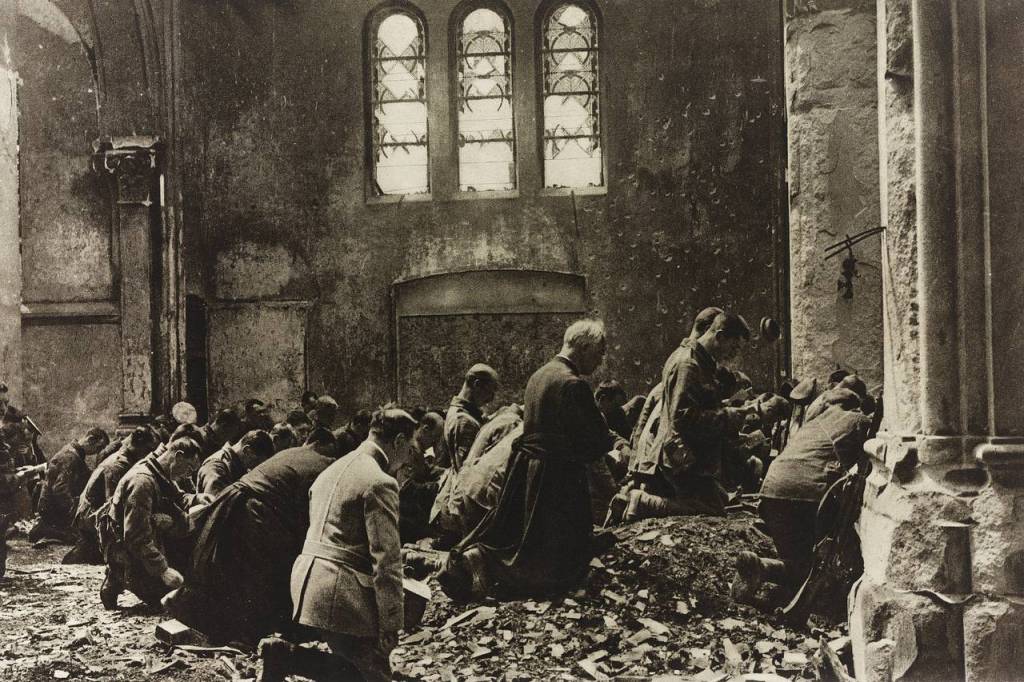
Our Savior Evangelical Lutheran Church in Hartland, Michigan, and the Lutheran Church-Missouri Synod with which we maintain fellowship, is creedal in nature. Creedal Christianity did not emerge from comfort. It was forged under pressure. It survived being surrounded by hostile empires, wars, internal heresies, and, most importantly, competing visions of who Jesus was allowed to be. Creedal Christianity is a faith maintained by precise statements—what we believe and what we don’t, why we do what we do, why we’re distinctly different from the world around us. Regardless of what the more fashionable Christian influencers may have told you, these things are not relics of an overly philosophical age. They are the Church’s collective memory, crystallized at the very points in history where the fires were hottest, where the culture was hell-bent on consuming and assimilating us, and where losing our identity would have meant losing Christ altogether.

While studying the Church’s creeds with the kids in confirmation over the years, I’ve often told them that confessional statements like the ecumenical creeds (the Apostles’, Nicene, and Athanasian Creeds) are very important guardrails that protect our inheritance. What I mean is that by these confessional statements, the Church was essentially saying to the world, “We heard what you’ve said about Jesus, and we’re banning that interpretation from our midst forever.” They didn’t do that because the Church is allergic to questions, but because some interpretations—some answers to very important questions about God—can kill the faith (Galatians 1:6-9). The creeds exist precisely because the Church learned, often through blood, that not every version of Jesus is compatible with the Gospel.

For example, Arius, a bishop in Alexandria, came along offering a Jesus who was inspirational but not eternal. He insisted that Jesus was not God from eternity, but rather the first and greatest of God’s created beings. To be exalted, yes. But by no means divine in the sense that He is of the same substance as the Father. In reply, the Council of Nicaea (A.D. 325) gave birth to the Nicene Creed, which said, essentially, “Um, no. He is the only-begotten Son of God, begotten of His Father before all worlds, God of God, Light of Light, very God of very God, begotten, not made, being of one substance with the Father, by whom all things were made….”

This response was not a modern branding exercise. It certainly didn’t come from thin air. It came from God’s Word (John 1:1-3, Colossians 2:9, and countless others). It was an important clarification made to preserve the one true faith that saves. I mean, what’s the point of confessing faith in Jesus—even being willing to die for Him—if the Jesus you confess is false? Creeds are in place precisely for this reason—to preserve a right confession of faith (1 John 2:22-23).

Even better, creedal Christianity never just remained on paper. Creedal Christianity was always ritualized Christianity. What the Church confessed with her mouth, she inevitably enacted with her body. I should pause here for a moment and admit that resistance to rites and ceremonies has always struck me as weird. Enacting what we believe is natural. We already do this instinctively in ordinary life. When people love one another, they don’t merely say it. They demonstrate it. They show up, they make vows, they give gifts, they mark anniversaries. When a nation believes in its sovereignty, it doesn’t just write a constitution, and then that’s it. It raises flags, sings anthems, swears oaths, and builds monuments that enshrine it. Belief naturally seeks embodiment. It inevitably embraces postures and practices that make the invisible visible. In the same way, the rites and ceremonies that emerged were the Church’s way of training the faithful to live inside the truth they confessed, week after week, year after year. It was a very natural way for the body and mind to remain in stride with what the heart confessed to be true (James 2:17).

When this kind of synchronization happens, the Christian faith becomes incredibly resistant to drift. Without them, almost anything can influence direction.

I suppose the thrust of my concern is that this is precisely what much of contemporary church culture has abandoned. Mainstream American Christendom seems to thrive on elasticity—on keeping Jesus just vague enough not to offend anyone and flexible enough to serve every demographic.

The irony in this is that it’s meant to promote growth. And yet, the American Church has been in free fall for decades. This free-floating, syrupy, confessionless, “deeds not creeds” landscape has not resulted in growth. It has resulted in massive erosion. But that’s what happens when your Jesus is more life coach than the eternal Son of God who comes again in glory to judge both the living and the dead (Acts 17:31).

Interestingly, even as creedal Christianity isn’t so much about growth as it is continuity, the early Church did grow—and quite rapidly. Why? Could it be because it refused what American Christianity is all too eager to embrace? The early Church did not survive persecution by becoming more appealing to Roman tastes. It survived by becoming more precise—more dogmatic, more confessional, and in my humble opinion, more liturgical. By its faith, life, and practices, it told the surrounding empires in no uncertain terms, in effect, “We will not adjust Christ to fit your world. You will have to adjust your world to Christ.”

Creedal Christianity can speak this way because it’s anchored in otherworldly things. It is, therefore, by design, capable of surviving this world’s storms. It doesn’t roll over when the challenges come. It can and does remain fixed in place even as everything else tries to pull it apart.

I know I’ve already gone on long enough. I’m guessing the skimmers left five minutes ago. For those who stayed to the end, I suppose I’ll circle back to where I started.

I’ll just say, again, that civil war is not my chief concern. Empires rise and fall. Cultures always burn themselves out eventually. Still, the real danger is not whether America fractures entirely. I’m just wondering if the American Church still possesses a faith sturdy enough to remain standing through it.

I don’t have this concern for creedal Christianity. It’ll survive. History has already more than proven that when and where the pressure mounted, a Church built on crisp confession remained immovable. Our Savior in Hartland is an heir to this hope-filled reality, and so, we enjoy that future. This is true because Christ did not promise His Church an easy path, but He did promise that the gates of hell would not prevail against the fixed Gospel confession that Jesus is the Christ, the Son of the living God (Matthew 16:16-18). That’s a creedal statement, and where such confessions remain, so does the Church and the Lord who preserves her.

Live and Let Live?

Unsurprisingly, what I wrote about last Sunday played out similarly this past week when protestors stormed a church in Minneapolis, demanding that the Christians within embrace their obnoxious crusade against ICE. And when they didn’t, they were shouted down and shamed. Like rainbow armbands in sports—an ideological symbol being imposed in this or that form, all with the threat of punishment if refused—the demands placed on the Christians in that church followed the exact same pattern.

I hope New York’s new mayor, Zohran Mamdani, is watching this stuff. These two scenarios—the athletes refusing to comply and the Christians in Minneapolis doing the same—while different on the surface, reveal the same underlying dynamic. The shunning common to both betrays collectivism’s innermost spirit. Mamdani did say he intended to replace the frigidity of rugged individualism with the warmth of collectivism. Well, we’re watching historic Marxist collectivism being paraded in real time.

Essentially, forcing anyone under threat of punishment to submit to ideologies and their symbols is a distinctly Marxist, and therefore a readily socialist, impulse. Mamdani is an avowed socialist. He believes that the “warmth of collectivism” is the subordination of the individual conscience to the demands of the collective, and it must be enforced not by persuasion but by institutional pressure. Marxist warmth, in practice, always comes with enforcement, because collectivism only works when dissent is treated as a problem to be punished.

Taking this a step further, what I’m really thinking about right now is the symbols themselves. What’s the harm in wearing a rainbow patch on your jersey? What’s the trouble with a church’s pastor raising a fist alongside protestors to stem trouble? What’s the trouble with driving a company car with a BLM or an ICE-out sticker on its bumper?

Well, for starters, the first thing I’ll say is that every movement in history revealed its true ambitions not first through laws, but through symbols. In that sense, symbols are rarely neutral. You know as well as I do that they train the eye and discipline the conscience. Symbols have a way of testing allegiance long before force is ever required. That’s why armbands, flags, and gestures matter, even before they are compulsory. They are never just a thing.

Since I’ve already sort of wandered near to what I was concerned about last Sunday, you’ll remember that rainbow armbands, jerseys, and other such things have been forced into soccer, basketball, volleyball, football, and so many other sports. When I say forced, I mean it. They’re always framed as harmless signs of “tolerance.” And yet, the countless stories of athlete after athlete being shunned or punished for refusing to wear one expose the deeper truth. Tolerance, by definition, allows dissent. But what we’ve witnessed is enforcement against dissent. Participation is no longer optional. If a person refuses, he or she becomes an example of moral failure and must be shamed accordingly. The only way forward for such a reprobate is total annihilation in the form of cancellation.

History teaches us to pay attention when ideological movements do this—especially when they migrate from persuasion to enforced uniformity. The comparison to past regimes is uncomfortable, but symbols worn on the arm (or, thinking back to COVID, maybe on one’s face) have long functioned as tools of social sorting. Everyone is identifiable. The ones wearing the symbols of compliance are safe. The ones without it are suspect. Again, the purpose is not merely expression but visibility.

But I think it gets even worse still.

I’ve long thought that the LGBTQ, Inc. movement’s use of a flag was bad news. The same goes for the BLM flag. This is true because flags never really originated as tools of personal expression. They were militaristic. They began as tribal identifiers—markers of people, allegiance, and territorial claim. They were carried by nations and armies not just to establish sovereignty, but often to impose that sovereignty’s will on others. Historically, when a flag was raised where another flag once flew, it signaled conquest—one culture replacing another, one authority displacing a rival. When I saw that Minnesota had changed its state flag, making it eerily similar to Somalia’s flag a few years ago, I wondered about displacement. When I started to hear about the billions in fraud orchestrated by the Somali community, to which the Minnesota government largely turned a blind eye, the flag’s redesign made a little more sense. It was a quiet announcement of who’s now in charge in the state.

Of course, in the modern age, flags have been repurposed for everything from corporations to clubs, but that does not erase their original meaning. A flag still signals a collective identity that believes its vision and mission, good or bad, must be announced and then carried into the world, and maybe in ways that will assure it finds a footing as the governing one. Even General Motors would love to see its flag being flown at a Ford building.

But what if it suddenly became a cultural expectation that Ford must fly GM’s flag? That would be extremely telling.

When a group’s flag moves from voluntary display to institutional expectation—on school walls, corporate labels, in movie and TV scripts, on government buildings and athletic uniforms, or wherever and whatever—it stops functioning as a gesture of tolerance and becomes an advancing army’s sovereign demand for submission instead. I spoke in terms of war in last week’s note. Indeed, when what I described starts happening, you know a very real conflict is underway. It’s no longer a debate, but instead, warfare is underway, and territories are being taken. The occupying nation now marks its seized lands. In these territories, dissent can only be treated as resistance.

I think this is a crucial distinction often obscured in public debate. And so, again, I think one of the best forms of resistance is to refuse to display the LGBTQ Inc. flag, which more and more people are choosing to do, especially among the youth—most assuredly among young men. In one sense, I think that’s happening because common sense is making somewhat of a comeback. On the other hand, “Not the Bee,” the Babylon Bee’s source for non-satirical news, reported a study suggesting Americans are pretty much sick of the LGBTQ, Inc. agenda. America has grown tired of the stuff being shoved down our throats day in and day out. The study noted that most Americans seem to have realized it was never about “live and let live.” It was always about something more. One line in the article stood out. It said, “[Young people] have been told they are ‘bigots’ if they believe [unnatural sexual relations are not okay] … but even if they tried not to be ‘bigots,’ they were told they were bigots anyway…” Maybe another way to think of this is to say, as I already did, that common sense is making a comeback. Common sense knows that a person can affirm human dignity while also rejecting ideological compulsion. The former is humane. The latter is totalitarian and dehumanizing.

From another perspective, I should return to that “live and let live” thought. It sure seems most ideologies seeking dominance began by insisting they merely wanted to be left alone, when that’s not at all what they really wanted. The eventual enforcement of their imposed symbols made it clear.

And so, I suppose the question before us is no longer about tolerance and treating people with respect. The question is whether any movement, however well-intentioned it claims to be, has the right to force individuals and institutions to accept its ideology publicly. The Minneapolis church and the shunned athletes sure seem to suggest that this question is no longer theoretical but is already being answered in practice. The moment you are required to display allegiance before you’re allowed to belong, you are no longer living in a free society. You are living under occupation.