The Gentle Man

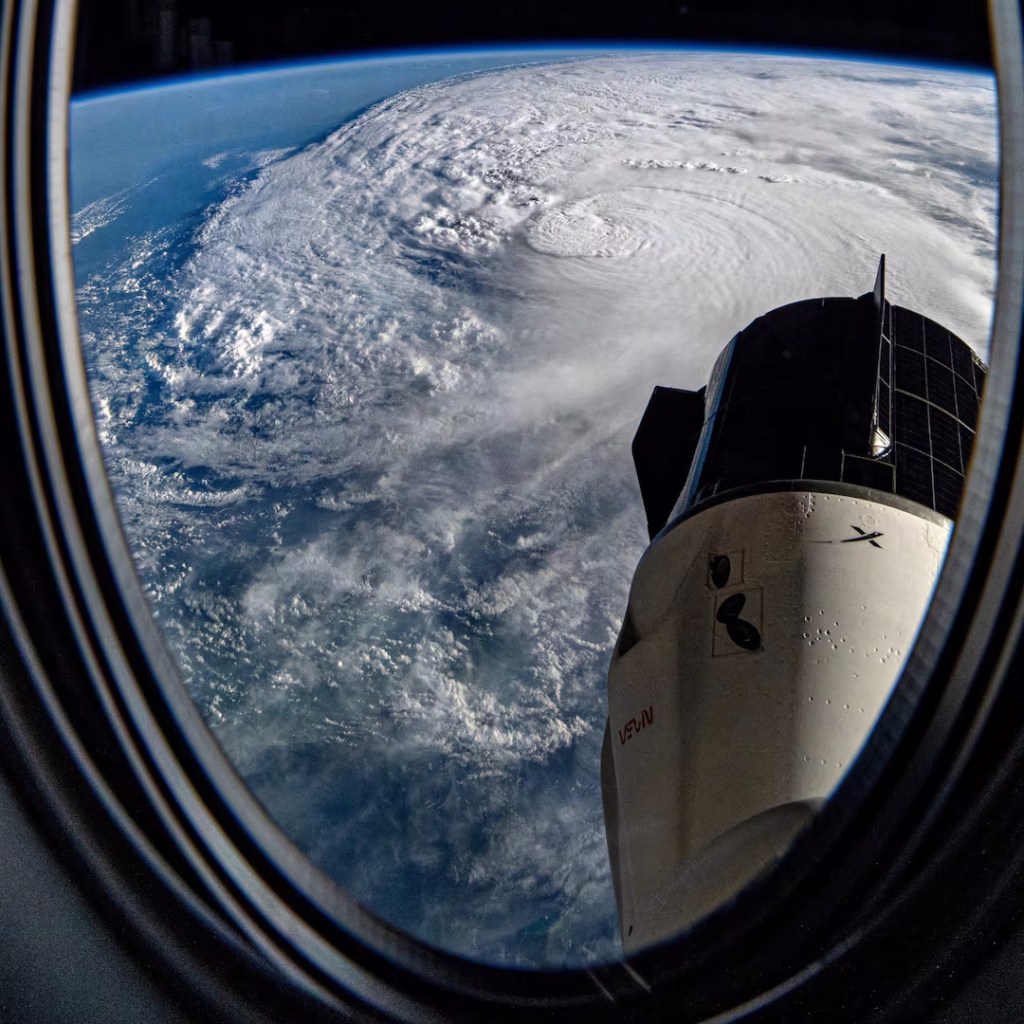
You likely need very little help from me to know the dreadfulness of Hurricanes Helene and Milton. From its center to its malicious extremities, Hurricane Helene was estimated to be 502,000 square miles in size. I did a little math. For perspective, that’s larger than France, Germany, and Italy combined. And then, with seemingly very little breathing room, Hurricane Milton—125,000 square miles of viciousness—tore through Florida in a little more than 24 hours. Thankfully, it weakened from a Category 5 to a Category 3 when it hit land. Nevertheless, it left more ruin in its obliterating wake.

I’m sure, like me, you were attuned to the events. I watched videos of the awful winds. I saw the overwhelming storm surges in Florida and swollen rivers sweeping away entire hillsides in North Carolina. I gave my fullest attention to the reporters visiting and describing the devastation. I listened to the tearful pleas from people who’ve lost everything in mere moments. And by everything, I mean family and friends. As of this morning, Helene claimed 260 lives. Milton took 17. It’s all very heartbreaking.

But there’s more to the story.

Even as the winds were still shaking walls and rattling glass, neighbors were helping neighbors. People were coming to one another’s aid. Everyday people cleared washed-out roads. Local business owners delivered generators. Strangers sheltered strangers from danger, giving them food, water, and a place to sleep.

All this happened long before FEMA arrived sharing online links to emergency loans to people with no internet access. All this continued even as Kamala Harris, the nation’s Vice President, went on Stephen Colbert’s show in full campaign mode for a “beer summit” and an opportunity to laugh about this and that, with no mention of the crisis. All this continued as President Biden, when asked by a reporter if the people in the storm zones were receiving the help they needed, fumbled to remember what the reporter meant by “storm zones.”

In all things political or civil, the ones who are so often piously “above it all” tend to lean on their favorite engagement escape hatch text, Psalm 146:3, which reads, “Put not your trust in princes….” In this case, they’re right to do so. The text refers to rescue. It refers to feeding the hungry and caring for the widows and the fatherless. Of course, the psalmist names God as the only trustworthy one when trouble strikes and needs are abundant. That said, Jesus told His listeners that when He returns in judgment on the Last Day, He will say to His believers, “Come, you who are blessed by my Father, inherit the kingdom prepared for you from the foundation of the world. For I was hungry and you gave me food, I was thirsty and you gave me drink, I was a stranger and you welcomed me, I was naked and you clothed me, I was sick and you visited me, I was in prison and you came to me” (Matthew 25:34-36). From there, Saint James offers rather straightforwardly concerning the Christian religion’s contours, “Religion that is pure and undefiled before God the Father is this: to visit orphans and widows in their affliction, and to keep oneself unstained from the world” (James 1:27).

To be clear, none of these things are teaching that salvation is dependent on our deeds. Good works are fruits of faith, and they are fully orchestrated by the Holy Spirit, who dwells in the believer (Ephesians 2:8-10). However, what we learn from these texts is that God regularly accomplishes the human care ascribed to Him in Psalm 146 through people. And so, I was by no means surprised to learn that neighbors were providing the initial and most crucial material and human resources, and in many cases, their help exceeded what the federal government was willing and able to provide. Where FEMA promised $750 to a hill-dwelling family to cover a catastrophic loss, churches both near and far, along with their denominational institutions, were already gathering funds to rebuild that same family’s home entirely.

Go figure. That’s what Christians do. We are the salt of the earth and the bright-beaming cities on this world’s hills. The deeds done are nothing more than the powerful glory of God at work through His people (Matthew 5:13-16).

I read very little modern fiction. However, someone who knows my appreciation for Lewis and Tolkien recommended I give Patrick Rothfuss a try. For the record, I probably won’t. Still, to investigate, I typed his name into Google. Along the way, I stumbled upon a potent quotation from his book The Name of the Wind. Rothfuss wrote, “There are three things all wise men fear: the sea in storm, a night with no moon, and the anger of a gentle man.”

That’s an intuitive sentence. The ferocity of nature, such as a stormy sea, is something a wise man fears because he knows its potential for danger. A moonless night of pitch-blackness provides cover for enemies and creatures we can’t see and yet would harm us. Therefore, a wise man avoids being out on such evenings. That same wise man also knows that when a person with an ordinarily gentle persona—someone from whom we’d only ever expect passivity and calm—when that person is moved to action, watch out. It’s likely an unstoppable conviction that’s driving him.

All of this prompts another thought. Well, actually, two.

First, I think we heard from the gentler man after the recent hurricanes. I think Helene and Milton juxtaposed the fire hose of billions of free-flowing cash to foreign countries with so many of our own citizens who couldn’t get the help they needed when they needed it. Because of this, I think the ordinarily quiet man is going to make himself heard in the forthcoming election. I think his voice will resonate long after. The hard truth is that people who just want to go to work, go to church, enjoy their lives and families, and all the things that a peaceful and dignified societal context provides are becoming frustrated. They don’t want to be forced to say a man is a woman when he isn’t. They’re tired of people like Gretchen Whitmer, Michigan’s governor, mocking sacred things like Holy Communion and then gaslighting them, saying what they saw is not what they saw. They’re tired of being forced to sit through DEI and CRT training at the office. They don’t want to feel as though they’re inherently and unforgivably racist because of the color of their skin. They don’t want their children’s teachers to indoctrinate them with confused sexual ideologies. They don’t want their parental rights stripped away. They don’t want their already exorbitant taxes to become monthly paychecks to illegal immigrants. They don’t want those taxes to pay for the same illegals to stay in posh New York hotels while their neighbors in North Carolina receive a few dollars during a disaster. They don’t want any of this.

Second, we heard another quiet man’s voice before, during, and after the hurricanes. We heard from those who live quiet lives of Christian conviction. Their faith proved capable of transforming fear into hope and ultimately showing a strength that could rival both the storms and the Federal government. Their Godly concern for genuine human suffering became a visible force that this sin-infected world and its princes just could not match.

I suppose Hurricanes Helene and Milton are reminders that while nature’s fury is something to be respected, there’s something else—or I should say someone else—far more awe-inspiring and worthy of our reverence: God. His rule has no limits, and His reign is forever, just as the Psalmist declared. More importantly, He cares. He is not distant. He’s close—closer than close can be. Faith knows that He’s so close that He’s often extending a helping hand through a friend or even a stranger. That moves us to thankfulness, first to Him and then to the agents of His manifested care.

Amid these current disasters, I’m not surprised the Christians have made an incredible showing. I bear Godly pride for my own Lutheran Church-Missouri Synod’s response. What a tremendous response from gathered Christians whose eyes are firmly fixed on Christ! But what else should I expect? That same Christ told us it would be this way. His servant, Saint James, did, too. God promised there would be people ready to step into the gaps—neighbors who would help when help was needed, who would ride out the storm while sheltering others through it, and then would remain in the aftermath to rebuild. We’re seeing this.

God be praised for His faithfulness!

Take Hold

Have you ever had one of those days when no matter how hard you tried to interpret life through the lens of positivity, there was an itinerant itch of crankiness that just wouldn’t let it happen? Of course you’ve had such days. You’re a human being. I know I’ve had days like that. I just had one last week, which I guess is why I’m bringing it up—and why I’m about to examine it.

I remember feeling the grouchy cogs begin to turn when I heard that we were likely to get a few inches of snow. I know for a fact I whispered the words, “I want to move to Florida.” Following those words with a bit of daydreaming, I was so easily undercut by the harsh reality that I have neither the funds nor the general flexibility for being in Florida for any great length of time beyond the twelve or so days we, the Thoma family, enjoy there each summer. The futility of this harsh realization began draping my world in negative hues almost immediately, and the subsequent events of the day bore witness to it.

I was easily frustrated by other drivers on the road. Little mistakes in my everyday labors became sizable. I lost interest in things that might normally bring me joy. I found myself scrutinizing humanity with far less grace. For example, I found myself in conversation with a fellow clergyman regarding Church and State issues. As we talked, I recalled silently the familiar thought that dialogue is indeed dead, that general conversation involving differing viewpoints has become illusionary, that the modern exchange of ideas has evolved into little more than crisscrossing monologues between people incapable of actually listening to anyone but themselves.

I don’t like feeling this way. I don’t like viewing the world this way. It’s a hard way to go about life, and in the end, it can do little more than to devolve into sadness. So, how does one get free from this?

Well, for me it wasn’t anything I was able to do, but rather the doings of others. It was an unexpected email from a friend offering some encouragement. A little later that afternoon, it was an unanticipated and bright-eyed “Hey, Pastor!” coupled with a high-five from one of the second-graders passing in the school hallway. That night it was an enjoyable conversation during a game of pool with my son, Harrison. Before bed, it was an exceptionally tight and lengthy hug and “I love you” from my daughter, Madeline, followed by the same from Evelyn.

In a sense, I didn’t find a way out of the gloom. I was lifted out.

There is the saying that there is no tomorrow when a friend asks today. This means that when a friend is in need, there is nothing in our future that we can’t put off until we’ve attended to that friend. But sometimes that friend can’t ask. Sometimes he doesn’t even know he needs to ask. Sometimes he is unaware he’s been slow-boiled into his darkest identity, and with this, he doesn’t realize the identity is consuming him.

We all know people like this, folks whose essential personalities were one way, but then when we encountered them again after some time apart, they were noticeably different. They had changed. Their happiness had somehow become muted and the vibrancy of their light had become a little dimmer.

I wonder if this is becoming more common in a society shaped by digital communication and social distancing. Well, to be honest, I’m certain it is. While plenty of studies have provided mounds of data inferring it, as a pastor, I can see it for myself. I don’t really need the studies to confirm what’s right in front of my face. Having interacted with people here at Our Savior who, previously, hadn’t been out of the house or come to worship in over a year, it was easy to see the change. Yes, they were glad to be back, but it was a reserved gladness held in check by a foreign specter—almost as if it had convinced them to reconnect only because the inevitable “death by virus” was better than insanity in seclusion.

You may question this interpretation, which is fine, but I’m here to tell you that if you thought the world was becoming a negative place before the pandemic, COVID has hit the gas pedal on society’s emotional downturn toward instability.

Thinking back to what raised me from my own melancholy sulk, it was the people around me who did the heavy lifting. From that casual example, I sure hope you realize just how much you need to be with other people on a regular basis—how humans need not only to see each other’s faces, but to experience each other’s physical presences. Regular togetherness is no small thing to God, and so He urges His Church to gather for worship, making sure we’re not “neglecting to meet together, as is the habit of some, but encouraging one another, and all the more as you see the Day drawing near” (Hebrews 10:25). Of course He does this for the sake of giving Himself to His people through the richest of fare—Word and Sacrament ministry. But there are other reasons hovering in the realm of practicality that He has in mind, too.

We’re human. He knows what this means better than we do. He scribbled togetherness into our framework. Individuals were not designed to be alone in seclusion (Genesis 2:18). We’re meant to be out and among others. And why? Well, it’s the reason that before Adam gave Eve her formal name, God called her “helper.” God knows that when we’re together—whether it be in a marriage, a family, a friendship, a bible study group, serving on a board at church, or any other situation involving human togetherness—there will always be those around us who are in tune with our real selves and who will be ready to reach out to lift us up when they sense we are falling. In fact, God said this very thing about togetherness rather precisely in Ecclesiastes 4:10: “For if they fall, one will lift up his fellow. But woe to him who is alone when he falls and has not another to lift him up.”

I didn’t expect that email from the friend who sent it. But he noticed something about me on Sunday that left him thinking he should. I get tight hugs from my daughters all the time, but I didn’t expect the tight hug from Madeline that lasted three-times as long as normal. In that moment, for some reason, she was moved to give me a little extra love, and it helped. And as God would so generously provide through such faithful Christians, these happenings arrived at just the right moment, ultimately beginning the Lord’s divine effort to begin holding back the wave of negativity that was making its way toward my spiritual shore and, quite possibly, pull me out into the inescapability of deeper waters.

I pray you’ll consider these words and take them to heart. The first of which to take in is that if you sense someone is falling down or slipping away, reach out to help them. A gentle word will do. An act of kindness will help, too. A confident explanation of the courage Christ gives will prompt.

Second, if you’ve been away from your church family for a while, maybe it’s time to start making your way back. At the time of this writing, it’s been over four-hundred days since the first of the lockdown and mask mandates. It’s been over four-hundred days since a smile and a friendly embrace have been openly available between people without shame. It’s been over four-hundred days since people started unnaturally touching elbows instead of reaching out to make bare human contact by shaking hands. It’s been over four-hundred days since almost everything humanly personal about mankind since the beginning of time was relegated to the impersonal and dead-spaced world of Zoom meetings and virtual learning. Maybe it’s time to reconsider what’s separating you, not only from the places and means by which God is pleased to dwell and operate, but from the ones God has put into place as the hands and feet of His care and intended community in your life. Maybe it’s time to admit that perhaps—just perhaps—God isn’t a fan of what the last four-hundred days has produced: skyrocketing depression, a spike in suicides and domestic violence, and so much more. Perhaps God isn’t happy about what the last four-hundred days has so easily convinced us to accept as either virtuous or shameful, of the division the last four-hundred days has produced among His people, a body of believers who claim to confess Christ and the certainty against Death that faith by the power of the Holy Spirit gives. That’s what Easter is all about—which means that, if anything, you’re in a church season that is most certainly nudging you in this regard right now.

Yes, get vaccinated if you want. Wear a mask—or two, even. Social distance. Do whatever. But maybe consider that it’s time to come back.

Whatever conclusion you come to, I can assure you that you’re missed, even if you’ve somehow convinced yourself you’re not. We have on average about 250 people here in worship every Sunday, and I promise they are asking about and missing those who’ve been away. The negative feelings suggesting you need to continue to stay away or that you haven’t been missed are nothing more than slow-boiled changes in your identity. The devil is fooling you. They’re most certainly not anything being emitted by your church family.

Come back. Be together with the rest of us. Know that when we see you, it’ll stir the joy you’d expect from Christian friends intent on drawing you close and not pushing you away. And on your part, be ready to be overwhelmed with the delight such a reunion will provide. It truly is a magnificent elation that togetherness in the Lord unleashes. Plenty have experienced it. I bet you will, too.