
Make no mistake. I’m a man of many flaws and inabilities. I know this. Truly, there are things I do regularly that I wish I didn’t, and there are things I wish I could do more or better. This is one reason why I appreciate New Year’s resolutions. Every year, I want to do better.
Looking back to the season before Easter for a quick second, Lent’s tendency toward self-examination provided an annual platform for measuring this reality, too, but for far better reasons than a transitioning calendar might stoke. For starters, Lent feeds into us the substance of Ash Wednesday’s appointed Epistle Reading. It’s been a few weeks since we heard it. Still, with apostolic eloquence, Saint Peter encourages his readers to “make every effort to supplement your faith with virtue, and virtue with knowledge, and knowledge with self-control, and self-control with steadfastness, and steadfastness with godliness….” (2 Peter 1:5-6). In other words, actively pursue becoming a good tree that produces good fruit (Matthew 12:33). Peter goes on to suggest that if these qualities increase, an awareness occurs that can see Christ and the surrounding world in the proper perspective (vv. 8-10).
Saint Paul is no slouch here, either. He gives abundant encouragement to fight the flesh for the sake of faithfulness. In Galatians 5:16-17, he describes the ongoing battle between the flesh and the Spirit in the believer’s life. In Romans 8:13, he urges believers to resist their sinful nature through the power of the Holy Spirit. In 1 Corinthians 9:27 and Colossians 3:5, he comes right out in full force, highlighting self-discipline and mandating that Christians actively “put to death” sinful tendencies.
I’m guessing that any sincere Christian wants the perspective Peter described. I sure do. Also, like Paul, I want to put my sinful tendencies in a grave. To do this, an honest examination is required. When one does so, it’s pretty incredible what can turn up. Captured by Lent’s annual gaze, I always find something to fix. For example, here’s something I learned. It’s maybe not that big of a deal. Still, it has the potential to negatively impact my personal relationships.
To be candid, I struggle to remember names. I always have. I can recall conversations almost word-for-word. I can recite entire speeches. I can quote from various poets. I can remember historical events and their significant contextual details that led to other events. I can remember dates and statistics. I can tell you what I learned from a book, documentary, or presentation. In other words, for the most part, I can retain content. Conversely, however, it might take me a minute or two to remember the author of a quotation. Sometimes, I can’t recall a movie character’s name, even after watching the film multiple times. This has long been a frustration of mine. Honestly, it really had me on edge before my doctoral defense last year. To defend a thesis, you not only need to know the content, but you need to have a ready grasp of your field’s primary authors and researchers. I was more than ready with this information during my defense. Still, I promised myself I’d look into it and try to fix this personal deficiency. It certainly can be an exasperating kink in my life.
Lent provided a focused time for this type of relational betterment.
It turns out there is a cognitive phenomenon for this very frustration known as “anomic aphasia” (or “nominal aphasia”). While it typically refers to difficulty recalling specific words in general, for some people, it’s more acutely relative to names. When this is true, it’s sometimes called “proper name anomia” or “nominal dysphasia.” Essentially, it is as I described. A person can remember events, conversations, and details about a situation, but struggles to recall the names of the people involved. Physiologically, this is because names are stored and retrieved differently in the brain than contextual details. Strangely, the brain files and processes proper names more arbitrarily, making them harder to recall. On the other hand, because the various stories and content of life come together to form our existence’s fuller narrative, the content is more closely associated with meaning and is, therefore, filed in a way that’s more readily available.
Perhaps a simplified example would be if a person asks a friend for directions, that friend is going to tell the person which roads to take. He isn’t going to tell him the name of the person who built the road. It’s likely the name of the person isn’t essential for getting from point A to point B.
I don’t want to bore you with this stuff. Instead, I want to return to something I wrote before: “Any sincere Christian wants the perspective Peter described.” This means observing frailty through the Gospel lens. From there, I’m not only trying to push back against and correct my shortcomings, but I want to see Jesus throughout the process.
In this instance, there’s already a glorious contrast becoming visible.
In a broad sense, while I’m plagued by frailties, God has none. In a narrow sense, I can rest assured that God never forgets my name. He never struggles to recall who I am. And by no means is the narrative of my life—the crumbling roads I constructed from my deeds—of most importance to Him. The Gospel is the narrative that matters to God. That’s the story of most importance. Through faith in Christ, the Lord’s narrative becomes my life’s narrative.
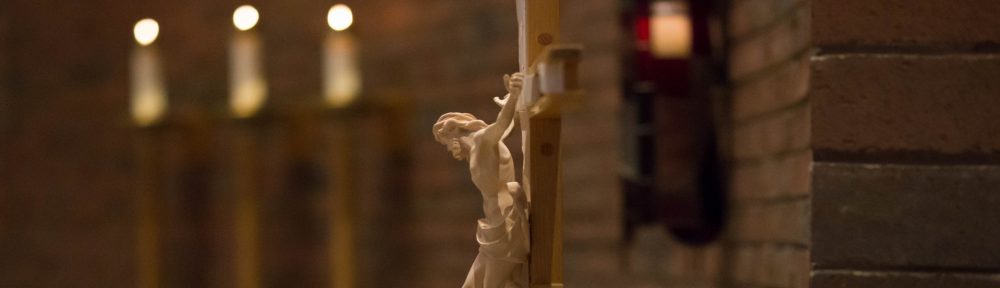
Interestingly, Isaiah 43:1 reads, “Fear not, for I have redeemed you; I have called you by name, you are mine.” A little further along, Isaiah 49:16 tells us, “Behold, I have engraved you on the palms of my hands.” One of the ways I can start overcoming my forgetfulness with names is to start writing them down soon after learning them. God claims us by name. To remember us, He engraves us in His hand. Engraving is a far different form of recollection than simple writing. It cuts into the material. Engraving a hand would be painfully unforgettable. And yet, for anyone with Peter’s perspective—a view attuned to Christ—a verse like Isaiah 49:16 is awfully reminiscent of the Lord’s crucifixion. He knew our names, even as He was carved up and pierced on the cross.
One more thought comes to mind.
Just as remarkable as what God remembers relative to my name is what He forgets. Hebrews 8:12 assures me, “For I will be merciful toward their iniquities, and I will remember their sins no more.” God, who is omniscient, forgets His believers’ dreadfulness. He does not recall what can potentially condemn us; instead, His perfect perspective is that of the Gospel. He sees us through the righteousness of His Son, and the result is that our sins are accounted as far as the East is from the West (Psalm 103:12). This is the stunning reality of God’s grace. When we are forgiven, our sins are not filed away in some dark corner of God’s mind, waiting to be dredged up again. They are gone. Forgotten. Forever erased.
I suppose, in the end, human memory may be frail and selective. I may forget names. I may struggle to recall details I wish I could summon instantly. But the God of all creation does not forget His own, and in His mercy, He refuses to remember the sins that once defined us. In that, I find both comfort and the courage to keep striving toward the perspective Peter described—to see Christ and the world rightly, trusting in the One who calls me by name and clothes me in His righteousness.
 Cruciform Stuff