
In the Shadows

Mark Zuckerberg, the CEO of Facebook, has announced he’s ridding the platform of third-party fact-checkers. In his own words, he wants to prioritize free speech. Interestingly, I was finally able to reclaim my Instagram account just last night. It was suspended a few years ago, so I eventually gave up on it. Maybe that’s a sign that Zuckerberg’s intentions are genuine. However, my New Year’s Day post was just removed from Facebook. Apparently, it offended someone and was reported. It seems that as 2025 begins, there’s something offensive about encouraging people to trust Christ rather than the world around them. It appears that Facebook still has some sinister, agenda-driven people keeping users’ speech from truly being free.

The post is in appeal. But truth be told, I’m yet ever to win a Facebook appeal.

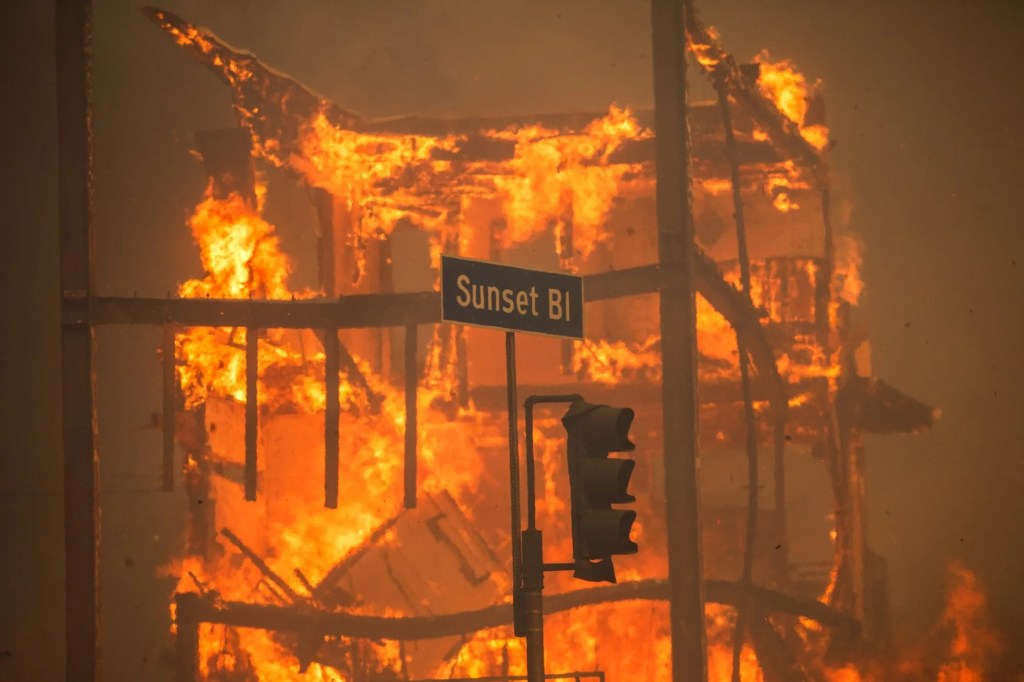
In the meantime, California is on fire. Of course, we pray for everyone’s safety. Still, anyone familiar with the state’s politics will know this is only partly nature’s fault. An honest observer will agree that what’s happening was entirely preventable. However, those in leadership at the state level and those at the helm in these incinerated communities had other priorities. Water reservoirs that would typically be full were deliberately drained for negligible repairs, conservation, or climate change reasons. Never mind winter’s Santa Ana winds and the threat of wildfires. In addition, fire and rescue units were unprepared and understaffed, losing funding or being penalized because they weren’t diverse enough.

By the way, and I suppose unfortunately for the climate change religion and its elitist Hollywood priesthood, the current size and content of these residential fires have already released a hundred times more CO2 into the atmosphere in a few days than all of North America’s collective fossil fuel consumption in a typical year. But then again, I learned that a typical woodland wildfire, depending on the forest’s density, can release as much as three hundred times more than all the world’s industrialized countries combined.

As one would expect, the militant left is saying these things aren’t true. I already read two articles this morning in which various local leaders in Los Angeles essentially confirmed these details and yet diverted the discussion with irrelevant information, finally insisting that playing the blame game during tragedies is not helpful. However, these are the same folks who stand at the ready to blame conservatives within minutes of a school shooting. The irony so far is as thick as the flames devouring Palisades and Hollywood Hills.

Here’s another bit of irony. Joe Biden promised the Federal government would cover 100% of the California disaster’s expenses for the next six months. Estimates suggest that equates to as much as $150 billion. But aren’t there still people displaced and living in tents and campers in Western North Carolina following Hurricane Helene, many of whom barely received a dime? Why the massive pledge to Hollywood and not Appalachian America? In addition to this, Biden just authorized another $500 million for Ukraine. He ordered it sent before Trump takes office. Again, he’s done this even as people in various communities on the East Coast are still sleeping in tents in the middle of winter four months later. Several billions of dollars somehow swerved to miss them. Things get worse when you consider the Federal government’s wasteful spending. For example, it just gave a $12 million grant for pickleball courts in Nevada and $300,000 to help establish and promote “affinity groups” (more DEI garbage) among bird-watching communities. Did a flock of starlings complain to someone in Washington that there isn’t enough transgender representation among those watching them?

I say forget about the hundreds of billions of dollars for a moment. I wonder what even the pickleball and bird-watching grants could do to at least alleviate the suffering of Americans forced to live in tents during winter.

While I’ll admit I was hoping for a better start to 2025, I’m not surprised by any of these happenings. I suppose the only real surprise so far is that, somehow, President Trump hasn’t been blamed for all of it. Although, the nation took a noticeable turn on November 5, 2024, didn’t it? In fact, that’s what moved Zuckerberg to make changes at Facebook. He called the election a “national tipping point” away from current social and political trajectories.

That’s good. Still, we’ll see. Do I have hope that there’ll be a turnaround, that all the woke garbage that’s smothering so much of what makes America great will eventually dissipate? Well, first of all, anyone who knows me best will confirm that I’m always looking to the horizon with hope. In that sense, yes, I’m hoping for a turnaround.

On the other hand, while I hope for a national course correction, I don’t expect anything to change much for Christianity. For the most part, the Christian Church already exists in the shadows. This is in part by our own doing. I say this because we’ve allowed ourselves to be relegated to the sidelines. A generation ago, it wasn’t uncommon for the local pastor to give an invocation and prayer in the name of Jesus before the high school’s graduation ceremony. But those days are long gone. In the meantime, rather than holding the line on these things and engaging the culture, too many Christians have opted for comfortable security, leading to cultural conformity. And among such folks, we have pastors who insist on and actually preach disengagement—that it’s not in a Christian’s job description to engage in ways that preserve the Church’s ability to preach and teach the Gospel freely. In this, we’ve abandoned the public square and silenced the Church’s voice in so many arenas. What has been the result? A society that has lost its ability to see, let alone understand, that Christianity was and remains fundamental to Western civilization’s rise and success. Perhaps worse, society has given birth to its own version of Christianity, which is little more than secularism wearing a thin Christian veneer. Such Christianity claims God’s Word is only as true as the individual wants it to be. It exchanges the meat and potatoes of tradition for syrupy and saccharined religiosity—and people are hooked on it. Why? Because, again, it can be whatever you want it to be. It’s never about absolute faithfulness to Christ. It’s never about the Christian community of past, present, or future. It’s about what you prefer right now.

Until this monstrosity dies, the shadows will be home to genuine Christianity. The funny thing is that a light is best seen in the darkness. In that sense, while times might remain tough for creedal and confessionally minded Christians, there’s a sense that the Gospel will be better visible through them to those who need it most. When you get a chance, take a listen to Wesley Huff’s recent interview with Joe Rogan. I’ve been hoping for years that someone would end up on Joe’s show who could iterate genuine Christianity to and for Joe and his listeners. Personally, I think Huff did just that, especially concerning the authenticity and reliability of God’s Word. Convincing someone of the Word’s reliability matters when you’re laboring to introduce them to the Word made flesh, Jesus. Interestingly, Huff only made it onto Joe’s show because of a debate he had with a popular esoteric spiritualist named Billy Carson. Essentially, Huff proved Carson a fraud—and he did so in a gentlemanly way. Rogan, an incredibly open-minded man, heard about it, watched the debate, and invited Huff on his podcast.

I suppose as it relates to Huff and Carson, the real Gospel will always remain crisp in its definition from the shadows, not blurred or confused by quasi-spiritual nonsense swirling in its surroundings. Saying that, I guess the hope that genuine Christianity might emerge from the shadows could be misplaced. It really doesn’t matter where it is. It only matters that it is. From there, our task becomes one of faithful readiness. Whether it’s Joe Rogan or our neighbor next door asking us about the Gospel, the goal is not to retreat but to speak boldly, trusting that God will keep His promise to illumine those in desperate need of hope and redemption.
Virtual Overlords and a Few Lessons Learned

So, what is there to talk about these days? Yeah, I know, right?

I don’t know about you, but the events of the past week have been concerning. And without sounding completely tone deaf, I should at least acknowledge that while I know what’s going on, I just don’t feel like visiting with it in the detail some may expect.

To be honest, with all of the conservatives on the news and social media platforms being rounded up and digitally executed, I think my time on certain networks is coming to an end. I’m not as active on Twitter as most, but I do have a few thousand followers, and so on Saturday night, just to see if I’d been affected by the mass cleansings, I discovered that about half of them were gone. I checked again later before the 12:30pm Divine Service on Sunday and saw that the number had risen to about two-thirds having gone MIA. Whether they’re leaving the platform or being punted, I think that’s a foretaste of what’s coming for guys like me who do what they can to bring the concerns of the Gospel to bear in the public square and culture.

Either way, no worries in this regard. I’m already in the process of closing my Twitter account as soon as I can get all of my data downloaded. Although I noticed that the Twitter overlords intend to craft the contours of that decision for me, too. Their archive downloading instructions read: “You can request a ZIP file with an archive of the data we think is most important to you.”

“…the data we think is most important to you.”

I can’t have all of my content. I can have what they decide I can have.

For the record, I’ve been trying to leave Facebook for a few years. Just ask my wife, Jennifer. She’ll tell you the only reason I’ve stayed as long as I have is because it’s been incredibly useful for introducing Our Savior Lutheran Church and School to the surrounding community—who we are, what we do, and why. Beyond that, everything else I write could just as easily be housed at one of my blogs: AngelsPortion.com or CruciformStuff.com.

But give it some time. Those might end up on the virtual book pyre in the next few weeks, too. I mean, I do scribe and share things on both sites that say horribly divisive things—like abortion is a no-no, and marriage is God’s property.

It should scare Americans that it’s only the conservative, pro-life, and Christian thinkers who are being booted, even as groups like “PornHub” (which, by the way, was successfully convicted of dealing in child pornography), most chapters of Antifa, and countless other liberal echo chambers are being allowed to stay and spread their doctrines. Interestingly, I read through Joe Biden’s presidential campaign donor report, and can you guess who some of the biggest donors were to his campaign? Yep. Big tech. He received lots of help from the likes of Jack Dorsey (Twitter), Jeff Bezos (Amazon), Mark Zuckerberg (Facebook), and Bill Gates (Microsoft).

Perhaps even more terrifying is that Amazon.com gave notice to Parler, which is a conservative competitor to Twitter, saying that unless Parler begins employing the same kind of draconian content policing policies that Twitter employs—which is code for cancelling conservatives and Christians—it’ll be dropped from their servers. I think the threat actually became reality last night. And both Apple and Google have already dropped the Parler mobile application from their stores so that no one else can join. They just don’t want conservatives to be able to communicate with mass momentum. I’ve read that MeWe, which is the conservative competitor to Facebook, is on the chopping block, too.

“That’ll never happen,” so many among us have said. “Just stay in your lane and leave it to God to handle.” Well, it’s happening. And oh, by the way, God handles these kinds of things through His people. There are countless portions of God’s Word urging us to be engaged in our communities and world. If the reader of these texts is being honest, then he’ll realize they’re nothing short of mandates for Christians to be who they are in the unavoidable areas of life. Stripping away rights, mass censoring of the conservative Christian voice, unjust fines and jail sentences, the murdering of the unborn, politics in general, and so much more—these topics are all born from the unavoidable areas.

Get in the game.

Now, I’ve already talked about this more than I wanted to when I sat down at the computer screen. But as I said, I didn’t want to sound tone deaf to the fact that we’re making our way into some serious times calling for solemn reflection and serious courage. Still, I’d rather steer in a different direction… that is, if you still have time this morning, because I have far more intriguing things that I’d still like to share.

Perhaps like me, at the beginning of every year you find yourself thinking on what you learned over the course of the preceding 365 days. If you don’t, I recommend making it a deliberate practice. I recommend grabbing a pen, a sheet of paper, and spending some time writing a list of the significant occurrences in your life from last year and what you garnered from them.

It’s not hard to do. I usually try to think of at least five, even though I know I could rake into a pile far more from the annals of my brain. I list these five events, giving each a title, and then beneath each one I write a short sentence—a summary statement of what I learned in that particular instance.

Sometimes it hurts to see what I’ve written. Sometimes it’s a joy. Either way, the result is that I can put a finger on and work to remember something I know now that I didn’t know before, and it continues to be a way to reach higher when it comes to being a better pastor, teacher, husband, father, friend, thinker, and all around human being.

One of the five things in this year’s list isn’t necessarily something I learned, but rather more of a recap. I was reminded that I am more than capable of lying to myself. I’ll give you an example.

There’s someone I know who, no matter what I say or do, just doesn’t seem to like me very much. Whether passively or with deliberate hostility, this person has proven a readiness to take anything I’ve said or done as a reason to lunge at almost any moment. Of course, it’s easy to see why this would bother me. No one wants to be treated this way. I certainly can’t think of too many people who enjoy being disliked. It’s painful. For me, it hurts even more because one of my New Year resolutions in 2020 was to make a genuine effort at bridging the gap of disdain between the two of us. And I did. But it seems each attempt only seemed to ricochet. In the end, however, the self-deception occurred, not in the sense that I was wrong in thinking I could better the relationship, but rather in thinking that it matters if the person genuinely likes me or not. The deception went deeper as I began believing that the person must actually be deranged for not liking me, because, I mean, how could anyone not like me? I’m so easy to get along with, and really quite wonderful in almost every single way.

Sure.

We all think this way sometimes, and with that, the poison of the lie begins seeping into our veins and arming us for retaliation—for giving us a false justification that gives us permission to despise them right back, and even worse, to act on that disposition.

Something else on the list of things I learned: Faithfulness means honesty, and honesty means responsibility, which is precisely why so many go out of their way to redefine faithfulness.

What I mean is that so many people appear to be able to keep their consciences clean while doing just about anything, just so long as they believe what they’re doing is okay with God. But the only way to do something like that is to set honesty aside in order to redefine faithfulness. For example, skipping church becomes acceptable as long as the core of our definition for faithfulness means that our actions are in some way divinely approved, or perhaps that true worship can happen in any form and anywhere. Or maybe we deliberately choose candidates in an election who support the murdering of babies in the womb because, in our thinking, the social welfare programs offered by those same candidates intend to lift far more from poverty, ultimately bettering far more lives than the ones they’d allow to be snuffed out. In other words, in the economy of good deeds, certainly God would be okay with that calculation because it helps more than it harms. Or how about shaming a person in a store for not wearing a mask. If one believes wearing a mask to be an unarguably virtuous cause, a moment spent showing some tough love to a maskless perpetrator in a grocery store can be internally translated as a brave display of righteousness that has as its goal the saving of lives.

I’m taking better care to be aware of these darkly maneuverings, especially among Christians. And as the days of 2021 unfold, I intend to continue probing such foolishness and being ready to respond.

I’ll share one more of my five-item list. Like the first one I shared, it isn’t anything new, but rather a re-learning of sorts.

Other than God, everything has a beginning and end, and if you can just give the stormy situation you’re in a little bit of time, some prayerful consideration, and if required, some careful conversation, eventually the situation will dissipate like a raincloud that has wept all its tears.

Even some of the worst situations I’ve ever experienced as a pastor have all quieted down at one point or another. “This, too, shall pass” is a well-worn phrase for a reason. Although, the phrase will never outmatch the value of Saint Paul’s words in 2 Corinthians 4: 17-18, where he reminds us that the troubles of this life are momentary, and in comparison to the eternal glory that is ours in Christ, they just can’t hold a candle.

To conclude, maybe give this exercise a try. Look back at 2020 and see what’s there. You may be surprised by what you discover. The Lord only knows what some of your lists might look like after the year’s remarkably unremarkable collection of insanity. Heck, even the last ten days of 2021 have been enough to generate those “Here, hold my beer” memes we all expected, and as a result, it’s likely you already have some items for next year’s list.

Still, whatever you discover (some of which I’m hoping will be Christian honesty, responsibility, and courage for faithfulness), as the knowledge of these discoveries flow from your heart and mind to the pen at the surface of the paper, as God’s child, be sure to keep in mind what He intends to teach you each and every new day: We needn’t be afraid of those who can harm us in this life but have no jurisdiction in the next (Matthew 10:28). God will never leave us nor forsake us (Deuteronomy 31:6). He is with us to the very end of all things (Matthew 28:20). His steadfast love never ceases; His mercies never come to an end; they are new every morning. Great is His faithfulness (Lamentations 3:22-23).