
Christmas Day 2024

You should have figured I’d sit down to write something to you this morning. How could I not? You’re family, and if there’s anything that families almost certainly do together at Christmas, it’s sit and remember, finding joy in familiar things and the memories they stir. Indeed, familiar things are often comforting things. We know them well. We know their sounds and scents. We know how they feel in our hands. And when we interact with them, we are strangely at ease. Christmas has a way of introducing and reintroducing this sensation every year. It did so for me last week. Let me tell you how, and in the best way I know how—by telling you a story.

My Grandma Thoma had a small candy bin on a side table near her couch that she kept filled with the chalky pink mints you might find at a bank or funeral home. Of course, as kids, we didn’t care. Candy was candy. Anyway, the round bin, about as big as a coffee mug, was by no means an extravagant vessel. Rough and unpainted, its old metal was worn. Its hinged top was challenging to open. Even worse, it screeched like a haunted mansion’s front door, assuring that any would-be candy thieves were swiftly apprehended. Still, whenever the grandchildren came for a visit, we were allowed to pass it between us, each taking a piece of its contents for ourselves.

One year at Christmas, having received the required wink of approval from Grandma, my brother and I opened the bin and found striped peppermints instead of the usual chalky pastels. We smiled. She smiled. I still remember that relatively insignificant Christmas moment.

I haven’t seen the candy bin in decades. I don’t know what happened to it after she died. My guess is that someone in the family—an aunt, uncle, or cousin—took it home and has it sitting somewhere on a shelf. At least, I hope it is. Either way, why am I telling you this? Because for some strange reason, this Christmas memory of my Grandma and her candy bin returned during last week’s Children’s Christmas service here at Our Savior. The recollection started just as the children began singing the familiar Christmas hymn “The Angel Gabriel from Heaven Came.”

Somehow, the hymn’s beautiful familiarity triggered the equally familiar scene with my Grandma. It’s as if the image swept in with Gabriel’s grand entrance in stanza one, his “wings as drifted snow, with eyes as flame.” There, on the lectern side of the chancel, somewhat hidden behind our congregation’s glistening Christmas tree, the setting itself conjured an intersection of comfort, familiarity, and ease—a thread of reminiscence resonating through the sacred spaces and carried on the voices of children.

But that’s not all. Throughout the rest of the midweek service’s “Lessons and Carols” portion, more memories arrived. I started thinking about the snow forts my brother and I built in our side yard near the neighboring tavern. Then, suddenly, I was transported to the hospital room the day my brother died. But I didn’t stay there for long. My thoughts turned to something else.

I recalled hooking my childhood dog, an Alaskan Malamute named “Pandy,” to a sled to pull my little sister, Shelley, around the yard. I remembered Pandy wasn’t too interested. I thought of summer days on my bike, cruising the neighborhood with friends. I remember jumping a ramp we set up. It did not end well. I crashed and was pretty skinned up. But still, there was more.

I could see as clearly as if it were yesterday, a wintry evening with my son, Joshua. We built a snowman that managed to remain upright and smiling for several weeks. I also remember how concerned I was as we struggled to keep our house warm.

Flickering like candles in my mind, I recalled summertime basketball with the kids in the driveway. I remembered lifting Madeline from the ground to get her as close to the rim as possible so she could finally make a basket. I remembered doing this while Harrison and Evelyn tooled through and around on tricycles or scooters. I recalled how concerned I was when Harrison ended up in the hospital with a staph infection that nearly took his life and how Jennifer and I essentially lived in the hospital with him until, after several surgeries, he could finally go home. I remembered the same when Evelyn was diagnosed with Type 1 diabetes. I remembered sitting with Jennifer on our front porch, admiring the hostas she worked so hard to cultivate. I recalled coming out the following day to discover that the deer had eaten all of them.

In all, I thought of good times and harder times, joy-filled and terrifying.

Now, someone might be tempted to say, “It sure sounds like your mind was wandering during the carols and hymns. Shouldn’t you have been listening to the words? Shouldn’t you have been thinking of Jesus?”

I was listening to the words. In fact, anyone watching would’ve seen I was singing along. And I was definitely thinking of Jesus. More importantly, I was thinking of how He is forever thinking of me. Immersed in the Christmas hymnody’s glorious familiarity, more than once that night, it was so easy to whisper things like, “Thank you, Lord. You’ve been so good to me.”

Still, what would prompt the memories and whispers? Well, singing “What Child Is This” certainly played a part. If done right, it’s a moving hymn. I preached as much at last night’s Christmas Eve service, reminding the listeners of that particular moment in the lullaby that requires us to confront the reason for the divine Child’s birth. We sing, “Nails, spear shall pierce Him through, the cross be borne for me, for you.”

There were other moments wafting on the children’s glad Christmas sounds with the same potency. In “Of the Father’s Love Begotten,” when the congregation joined the children to exclaim, “Pow’rs, dominions, bow before Him, and extol our God and King. Let no tongue on earth be silent, every voice in concert ring, evermore and evermore!” Even better, the hymn’s final Trinitarian verse! Listen for yourself to the recording: https://www.oursaviorhartland.org/wp-content/uploads/2024/12/REC12-18-24.wav. It’s not the best audio capture. But still, did the angels suddenly decide to join us? Was the recorder clipping at the end, or was that divine applause?

I don’t know about anyone else, but those moments pulled me like a tractor beam into times that mattered—both good and bad—all wrapped in God’s unmistakable grace. My thoughts weren’t wandering. They were enslaved by the thrilling joy of Christ’s incarnation—Immanuel, God with us!—and what that means for my past, present, and future.

So, where am I going with all of this? Well, as always, I’m thinking it through on my keyboard.

Looking back at what I’ve written so far, I suppose there’s a basic nature to what I’ve described. In other words, familiar things have a way of anchoring us—an innate way of reminding us who we are and where we’ve been. A Christmas hymn sung by children reminded me of being a child and visiting my Grandma at Christmas. Along with it came an object any child would remember: a candy bin. But as the hymns continued, more moments came into view. Admittedly, Christmas is already second to none when it comes to sentimentality’s sense and the basic nature I described. And yet, for Christians, there’s still more to this.

As the secular world is moved by pristinely wrapped presents, evergreen and cinnamon smells, and Frosty the Snowman, I suppose I’m also saying that for Christians experiencing the same sentimentality, we can actually reach Christmas’s truest destination. We know its purpose: the incarnation of God’s Son to rescue us from Sin, Death, and hell. With that in sentimentality’s hand, we can grasp at the fragments of our lives, assured that the moments of joy, sorrow, struggle, and triumph form a tapestry of God’s grace. They’re not bygone moments. They all bear reminders that God, in His infinite love, came into our world not only to save us but to walk with us through every season of life—that all along the way, and still to this day, Jesus is thinking of us.

I guess I’ll just leave it at that. I need to start preparing for this morning’s service.

That said, may today’s Christmas celebration and all its comforting familiarities be more for you than holiday jingles and opening presents. May the festival of Christ’s birth be an anchor fixed to God’s wonderful promises. Indeed, unto us, a child is born! Unto us, a son is given! It’s Jesus! O come let us adore Him, Christ the Lord! Merry Christmas to you and yours!

Settling in with Christ

Glancing around my office while sitting here, if you were to ever stop by for a visit, apart from the books on my shelves, you’d also discover a strange variety of things scattered across the space, eye-candy type things I keep on display that make me smile.

Of course, I have things you’d expect—crucifixes and various Christian images, both on the walls and on the shelves. But I also have a few full-sized Star Wars helmets. These are accompanied by statuettes of Winston Churchill, the Ark of the Covenant, R2D2, and other things sharing space with matryoshka dolls, wood carvings, and Russian military hats. I have a replica of a 9th century Teutonic knight’s helmet serving as a bookend to my books on the liturgy. A few paces away and perched beside my computer printer is a Yautja’s bio mask from the film “Predator.” A few feet from that is a disposable M72 shoulder-fired rocket launcher from the Vietnam era—no longer usable, of course. Strewn among all these things are watercolor portraits my wife has painted, pictures of my family, photos with friends, and greeting cards from so many people I cherish.

Let it be said, there’s a lot in my office besides books to explore and enjoy. And while it might all appear somewhat out of place and weirdly disconnected, together it forms a comfortable matrix for me—a peaceful asylum, of sorts—a physical context apart from the world’s swirling spaces where it so often feels like everything is coming undone. It’s a place where I can settle in and get my bearings for keeping my head about me.

Amusingly, it was Jean Kerr who wrote in her splendid little book Please Don’t Eat the Daisies, “If you can keep your head when all about you are losing theirs, it’s possible you haven’t grasped the situation.” I find Kerr’s words so funny because in their context, they’re spoken by someone who just can’t understand how certain people can be so calm during times of crisis. Her satirical answer: They must not fully comprehend what’s going on around them. Her words are even funnier when you realize their broader insinuation, which is that unless you have a frantically unsettled mind like everyone else, you’re weird.

By this definition, Christians are noticeably weird. At least we’re supposed to be. On one hand, God calls for us to be fully aware of the world’s treacheries—to be actively engaged, and in some circumstances, found steering right into the heart of its tempests. We are not to be ignorant of the seriousness of it all. And yet at the same time, God promises we will know and exhibit a peace that surpasses all understanding, no matter what we are facing or what our mortal futures may hold.

Saint Paul says the axis of this peace is Jesus (Philippians 4:6-7). But that’s just one item among many on the Biblical shelf.

Looking around, we see it was Jesus who so gently encouraged believers not to be anxious about life in this world (Matthew 6:25; John 16:33). He did this by reminding us of the Heavenly Father’s careful concern for those who are His by faith in the life, death, and resurrection of His Son on their behalf. With Jesus Himself not only being the actual embodiment of God’s Word, but also its absolute centerpiece, it makes sense, then, that we’d continue to find this same comforting reminder taking various shapes and sizes, and being scattered across the bookshelves of the entire Bible. Every single book of the Bible, though each may be unique in its details and style, will at some point along the way bring the light of divine encouragement to the darkness of concern. Together, these reassurances make a space for us to settle in, get the proper bearings, and keep our heads about us.

If I could be certain that you’d take time to read a longer than usual note from me, I’d provide an illustration from every single book. That being said, I can at least provide a few samples.

Starting with Genesis, we’re barely into the Bible before the comforting promise of a Savior is given (Genesis 3:15). Further in, Moses records God’s heart-strengthening pledge that He will not abandon His people (Deuteronomy 31:8). Randomly glancing from shelf to shelf, we see Isaiah proclaiming peace to all whose minds are fixed on the Lord (Isaiah 26:3). Jeremiah delivers the promise that, like a green leaf in the middle of drought, God will calm the anxious hearts of His believers (Jeremiah 17:7-8). The Book of Proverbs is absolutely brimming with the same assurances (Proverbs 3:5-6; 29:25). The Psalms are, too, with so many of them being in place to lift and sustain the fearful (Psalm 23, 27, 34, 46, 56, and others). Of course, the Gospel writers never fail to keep this same comfort before us (Matthew 11:28-30; Mark 13:11; Luke 10:41-42; John 14:27). How could they not, since they bring to us the very narrative of salvation through the person and work of Jesus Christ. Saint Paul continues this powerful cadence by his epistles (Romans 8:38-39; Hebrews 13:6; Colossians 3:15; 1 Corinthians 10:13; 2 Thessalonians 3:16). Saint Peter and Saint John do the same (1 Peter 5:7; 1 John 4:18; Revelation 21 and 22).

As I said, I could list countless more, venturing from cover to cover, but I think you get the idea.

In the end, and I suppose as it was sparked by observing the various smile-inducing knick-knacks I keep in my office, the promises of God’s ever-present care given in various circumstances throughout His Word join to form the only sure place we can go to truly get our bearings and keep our wits about us in this world’s turbulence. Without God’s Word of comfort in Christ, we would be without hope.

But we’re not without hope. For Christians, hope is the key ingredient for keeping a level head in any situation of concern. It’s something that will forever be a species of divine confidence that can exist in any environment, no matter the climate or terrain. My prayer for you today is that this same hope born from faith in Christ will be yours in the days ahead.

Gospel Dominance

For those whose Easter is little more than an annual go-round with chocolate rabbits and painted eggs, the fanfare of the celebration has come and gone. Not so for the Christian Church. For us, it remains. We actually live each day in the wake of the ultimate enemy’s defeat.

Death has been conquered. Jesus has done it. Therefore, Death no longer has standing among us. No room for mastery. No room for terrorizing. No room for demands. No room for negotiation. It really is finished. Easter is the proof. And now through faith in Christ, we are His and He is ours. Living in that redemption, what’s left to frighten us?

Nothing.

The more I experience life in this fallen world, the more and more I become glad for this wonderful reality born from a Gospel of great power. It’s a Gospel that changes me. It changes the way I see the world. It changes the way I understand people. It changes the way I maneuver from task to task each new day. It changes the way I suffer during struggle. It alters the way I endure hatred from others.

By the loving promise of Death’s defeat, I can steer into all of these knowing that while I might not pass through them unscathed, I won’t go into them or come out on the other side without hope. Christ has cemented my hope, and with that, I can be content. I can have joy.

Before this contentment took root in me, it wouldn’t have been uncommon for me to get worked up in caustic situations. Not so much anymore. Take for example a recent circumstance in which my reputation was being maligned by deliberate deceit. In the past I might have run headlong into the fray to defend myself. Not so much anymore. I don’t feel the need to do so. I have a dominance in those situations that’s hard to unseat.

Yes, dominance.

There’s a saying that people only talk behind the backs of those who are dominant. Whatever that proverb might mean to the world, for me it has been reinterpreted by the Gospel. Yes, I am in a seat of dominance. But it’s a dominance that has been granted to me—a dominance of contentment in Christ. It’s a certainty that drives away worry, leaving me to know I’m completely surrounded by the Lord’s loving care. Even as I’m behind His flag, He’s also covering any and all of my exposed flanks. With this assurance in hand, I really can say, “World, do your worst.” I am content to live according to the promise of the Easter Gospel. This means that even when things seem their darkest and I begin to feel the blunt end of injustice, even if things don’t turn around in this life, one thing remains true: I’m not an inheritor of this world. I’m an inheritor of the world to come—an inheritance won by Jesus, one in which He is sure to flip the switch of the divine lights and expose all things done in darkness. In the meantime, I can be at peace in all circumstances, strengthened for continuing forward in faithfulness.

Once again, the resurrection Gospel imputes this. It imputes it today. It’ll be there imputing it again tomorrow. And the next day. That’s the promise. If the last enemy, Death, has been conquered, what else is there to concern or harm us?

Believers know the answer to this question as they go about their lives in the perpetual sunshine of Easter, and the world will squirm with frustration around us as we do.

I want you to know that when I go to the altar of God this week at Our Savior to pray privately for His people, this will be the precision of my petitions. I will pray on your behalf, asking God that in the coming days, by the power of the Holy Spirit, He will grant for you to remember these things. My prayer will be for you to be emboldened by the same Gospel that emboldens me, that you will have taken into yourself the joyful promise of the Lord’s mighty resurrection for your justification before the Heavenly Father, which is also an ultra-confident—nay, dominant—slap in the face of Death itself.

By faith, all of this is certainly yours for the taking.

Backroad Cemeteries

It’s very early, 5:30am to be precise. I’m writing this note from Cantrall, Illinois. Again, to be precise, I’m at Camp CILCA, which is just outside of Springfield.

A summer camp I attended in my youth, I know this place well. Even better, I eventually became CILCA’s head counselor in the early nineties, having held the position for four consecutive summers. I should add that during those same years I was also the head lifeguard, music leader, sports director, and weekend maintenance assistant to a wonderful man I’ll forever consider a friend, Derald Sasse, may his soul rest in peace.

I stayed here at CILCA this weekend, having spoken last night at the camp’s annual banquet at Our Savior Lutheran Church in Springfield. I received a kindly invitation last fall from the current Camp Director, Reverend Joshua Theilen, to be the banquet keynote speaker. I was certainly glad to accept. And of course, the topic being something along the lines of Christian engagement in the public square, I was certainly ready to drive down and prattle on about such things. I pray my words last night were of benefit to the people in attendance.

Interestingly, I’m staying in the Christian Growth Center here at the camp, which back in my day, was the only building on the camp property with air conditioning. The funny thing is, in all my years here at CILCA, I never once spent a night in this building. I maintained it. I helped clean the rooms for various groups that came through. I fixed broken windows and repaired faulty electrical outlets, but I never actually enjoyed the fruits of my labor. And yet, here I am twenty-five years later. Life is weird that way, I guess.

As soon as I finish typing this note, I’ll be hopping into the Jeep and heading back to Michigan. To get here to Illinois, I took the backroads. I’ll probably do the same thing going home. I like driving the backroads. While they’re pleasantly uneventful, there’s plenty to see. Driving along through the sleepy farmlands provides more than enough opportunities for thoughtful observation. Thinking back to these travels a few days ago, I can think of at least two things I remember pondering.

The first thing I spent some travel time thinking about was the Old Testament reading from Genesis 22 appointed for the Fifth Sunday in Lent, which tells the story of God commanding Abraham to take his son, Isaac, to a yet undisclosed place and sacrifice him. I’d call this event dreadful if I didn’t already know its substance and ultimate conclusion. As a father, could I follow through as Abraham did? And yet, if the listener is paying attention as Abraham speaks, the comfort of trust in the promises of God is woven into the narrative. Once Abraham and Isaac arrived at the place God commanded, Abraham told the servants who journeyed with them that he and his son were going to go and worship God and then return to them.

That moment is a clue as to what Abraham knew would happen. He would unreservedly follow God’s commands already knowing something of God.

God promised Abraham that Isaac would be the one through whom the Messiah would come. God assured Abraham of this. Abraham knew that God doesn’t break His promises, and so no matter what approached from the horizon, Isaac would be fine. Abraham trusted this. If you doubt this analysis, then take a look at Hebrews 11:17-19. The writer to the Hebrews acknowledges this as he digs a little deeper into Abraham’s faith, describing him as knowing full well that if he was indeed forced to follow through with the frightful deed, God would give Isaac back to him alive. He’d have to. God would reverse Death, and preserve Isaac’s life.

This is a very rich moment, both emotionally and theologically, especially as we prepare to wrap up Lent and rejoice in the Easter celebration of Christ’s resurrection. I suppose that thinking about these things probably influenced the second thing I remember pondering along the way.

While tooling along through the farmlands of Indiana and Illinois, I noticed something familiar to each of the little towns along the way. They all have conspicuous cemeteries.

Now, you might be thinking that just about every city or town in America has a cemetery. Believe it or not, they don’t. But these backroad towns do, and each is noticeably prominent, often pitched on a hill at the edge of the city, perhaps adorned with an elderly oak tree or two. And if the cemetery isn’t standing guard at the edge of town, it’s situated somewhere along the town’s main street, making it impossible for anyone to miss while passing through. In either, the collection of headstones is a community of both old and new, and from a reasonable distance, against a setting sun, their mutual silhouette looks almost city-like.

I remember when I was a kid in the seventies and eighties, my friends and I would hold our breaths when passing a cemetery. The lore was that by breathing, there was a chance we might make a wandering spirit jealous. Another version of the myth claimed that you might accidentally inhale a spirit and become possessed. Silly, I know. Good thing I know better, because now that I’m far from those youthful fooleries, I passed a particularly lengthy cemetery on Saturday evening near Lincoln, Illinois as I was making my way to Cantrall from Morton, Illinois, where my parents and sister live. Had I held my breath as I passed, I might have ended up unconscious and in a ditch. Or worse, in a cemetery.

And yet, having said this, the fact that every town has its cemetery is a reminder that at some point, my body will end up in one. There’s no avoiding it. Read the poets. Christian or not, they get the inevitability of Death. Percy Shelley called Death the veil that is finally lifted during the deepest sleep. John Donne described Death as mighty and dreadful, and yet without pride, portraying it as simply doing what it does almost boringly even as it is unstoppable. Robert Browning describes the knowledge of unavoidable Death as motivation for living life fully. Emily Dickinson, of course, is famous for portraying Death as unstoppable, being the carriage that will one day arrive for all. And when it knocks at your door, you will be unable to keep from opening it.

Since I’ve suddenly shifted to considering the poets this morning, I’ll admit to appreciating Lord Tennyson’s description of Death:

Sunset and evening star,
And one clear call for me!
And may there be no moaning of the bar,
When I put out to sea.

Tennyson doesn’t describe Death fearfully. Instead, he sets it before his reader as something of a story’s ending. It’s the sunset to an eventful day. It is an open sky with a view to the evening star. It is a clear call of his name, and a drawing to a vessel setting sail into the open sea, a place that he loved.

I don’t know what influenced Tennyson’s perspectives on things, but I’ll say his consideration of Death is comforting. It evokes the Lord’s even more so reassuring words throughout the Gospels.

Now, don’t misunderstand the Lord’s position on Death. Jesus knows full well it’s a big deal. He knows it isn’t pretty. He knows Death is an ugly ordeal, that it’s a terrorizing power. Following His lead, Saint Paul describes it as the worst of all enemies of Man. But pretty much all of the biblical writers go out of their way to make sure we know that through faith in Christ, we don’t need to be afraid of Death. We don’t need to be fearful because Christ has defeated it. Like Abraham, we can face off with its dreadfulness with the promises of God well in hand. And so the Lord can say to Lazarus’ sisters that whoever lives and believes in Him, will live even though he dies. Saint Paul can mock Death, courageously poking at it with the Word of God’s promises, asking, “Where is your sting?” Job can speak so joyfully that even in the midst of Death, at the last, he will stand and behold God with his own eyes of flesh.

I like Tennyson’s description because he has this similar verve. It’s almost as if he’s equipped with the knowledge of faith, which we as Christians know by the power of the Holy Spirit through the Gospel enables us to see Death for what it has now become for the believer: a turning from one page to the next.

And the next page holds an unending chapter that is far better than any that came before it.

I like that. And again, the season of Lent is certainly teaching this very point, making sure we’re ready to fully embrace the significance of the Lord’s resurrection—His conquering of Death—all for us!

To use Tennyson’s imagery, Easter is the clear call. Easter doesn’t allow for moaning of the bar. Easter sets sail for the unending horizons of eternal life through faith in the One who was crushed and killed for our iniquities, and yet was found alive on the third day, having wrestled Death and won.

Here in a few moments I’ll be packing up my car and making my way back to Michigan. I’ll be passing many of those same cemeteries I encountered on the way here. I won’t be holding my breath when I pass, just as I won’t be looking on them as fearful markers signifying hopelessness. I’ll observe them as Abraham looked upon Isaac. God is faithful to His promises. He is our hope in the midst of Death. Through that lens—the lens of faith—each of the tombstones whizzing past me will herald particular truths. The first is that unless the Lord returns first, I will die someday. There’s no way of getting around that fact. The second is that even as Death would come calling, it is not my master. Christ has won my eternal life. I am not consigned to the grave forever, but rather with my last breath, I will set sail into the joys of eternal life with my Lord at the helm.

Guilt

The season of Lent is a powerful time in the Church Year. Throughout its forty days, if there’s one thing in particular it draws out and defines with its penitential crispness, it’s the authenticity of human guilt.
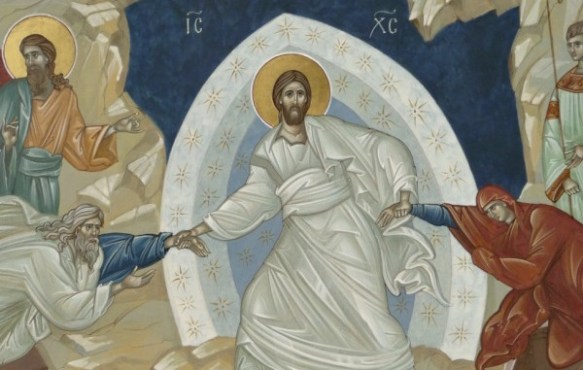
Guilt is an incredibly palpable thing, isn’t it?

It’s thick. It’s strong. It’s voracious.

A terrible task-master, guilt binds its victims, keeping them in chains, all the while haunting every square inch of its chosen domain. As a pastor, I’ve learned to recognize guilt in people—and not because I exist in some sort of sphere of unimpeachable innocence, but because I know and have met my own dreadfulness of thoughts, words, and deeds. I am very familiar with guilt’s shape and stamina, and like you, I can be found wrestling with it, too.

As a pastor who is fully prepared to admit this, that means I’m a lot harder to fool when it comes to guilt.

It’s so often easy enough to see it peering back from its victim’s eyes like a shadowy knight in the watchtower of a guarded fortress. It can be sensed in a person’s physical presence. It disturbs human posture and is betrayed by facial expressions. On the phone or in person, its grip alters the human voice. By email or text message, it chooses certain words and repeats certain phrases that reveal its in-dwelling.

Guilt is by no means shy in these regards. It isn’t necessarily concerned by the possibility of its own notoriety. Admittedly, however, it would prefer to dwell in the peace of secrecy, hoping its host will deny its existence and thereby miss the telltale traces of its acidosis. This is true because it knows that to deny its presence is to preserve and protect the master that planted it—Sin. The denial of Sin’s guilt is the embracing of wickedness. It is to justify it, and to find the license for willfully employing it.

But again, for guilt’s host to be aware of its existence is just as acceptable, too. It quite enjoys its castle adorned in the paraments of hopelessness, fear, anxiety, and depression.

Whether it’s outright disavowal or fearful seclusion to avoid being found out, guilt is happy to live in the pitch black darkness of either. It will do anything to protect its domain, anything to smother the approaching lantern of Truth’s messenger, anything to prevent the invasion of a better, chain-shattering, Lord.

From purely a human perspective, Shakespeare’s Hamlet is a great place for seeing the examination of these two natures of guilt. For example, Queen Gertrude says so frankly of strong denial, “The Lady doth protest too much, methinks” (III, ii). This is hinting that to so boldly defend one’s absolute incorruptibility—to make excuses for or justify one’s bad behavior—is itself evidence of self-deception in relation to guilt. Further into the play, Shakespeare takes aim at the futility of concealing guilt for fear of being found out, saying that eventually it “spills itself in fearing to be spilt” (Act 4, Scene V). In other words, the continued filling of guilt’s ever-swelling balloon can only last for so long before it bursts, ultimately spattering its gore across the landscape of a person’s life. Things will get messy. Little episodes will become big. Plans will come undone.

So, what to do?

There’s a reason Jesus said on occasion, “He who has ears to hear, let him hear” (Matthew 11:15). He knows that the Word of God—namely, the proclamation of the Gospel—brings what’s needed for Sin. This cure is also, by God’s design, a medicine for the ousting of paralyzing guilt. The first pill in its prescribed regimen of truth is big and hard to swallow, and yet it delivers directly to our insides the very important knowledge-filled remedy that “all have sinned and fall short of the glory of God” (Romans 3:23).

The course continues along in a way that moves from concern to sweetness, first urging us not to deny or be fearful of our guilt (1 John 1:8). Both are self-deceptions leading to eternal harm. Instead, we are invited to confess our truest selves and our failings, knowing that God is faithful and just, and He will wash the guilt away (1 John 1:9). His faithfulness is embodied by Jesus, who did not come to condemn us, but to save us (John 3:17). Through faith in Him, we have full access to the throne of God’s grace in every time of need (Hebrews 4:16), being certain that God will receive us—that He will not shame us in our guilt, but rather will help us by taking it away (Isaiah 50:7; Psalm 103:12).

This wonderful routing of guilt from the fortress of Man is on full display in the person and work of Jesus Christ—His cross and empty tomb. It’s there that we see our guilt being heaped upon His shoulders. It’s there that we see our fear and shame infused with His divine body. It’s there that our hope is born, and by faith in His sacrifice and victory, the gates of fault’s domain are kicked open and guilt is dragged to its eternal demise.

You don’t have to be afraid to say you’ve done wrong. God forgives. And by the power of the Holy Spirit at work in His people, offended Christians are prepared to forgive in return.

Let this Gospel be of comfort to you. Better yet, be empowered by it to put away the need to hide your guilt. And whatever you do, don’t deny its existence. Besides, God already knows it’s there, and He desires for us to own this truth, too. Even better, He doesn’t want to leave us in it. He would have us look to and know the One He sent for our rescue—Jesus Christ—and in Him discover the mettle for coming clean, for real repentance, for the real receiving of the mercy won for us on Calvary’s cross. It is by confession of Sin and faith in Christ that guilt’s shame is turned back on itself and made into nothing.

Lent is teaching us these things. Lent is leading us to Good Friday and Easter—those eternal moments on the mortal timeline that seal the deal on this wonderful news.

Let’s Be Honest About Death

Just yesterday (Saturday, February 20), the Life Team of Our Savior blessed our church and community by offering an “End of Life” seminar. It was well attended. I was glad for that.

The keynote speaker for the event was Genevieve Marnon, the Legislative Director for Right to Life of Michigan. I know Genevieve. She’s a great servant of the cause for life, and as you’d expect, she gave great insight into a multitude of things facing the Church in America when it comes to end-of-life decision making. All who took advantage of the day’s events were well fed.

We were also joined by Gary Borg from Lynch and Sons Funeral Home. I know the folks at Lynch and Sons well. Some years ago, Thomas Lynch, being the friend and writer that he is, wrote a kindly endorsement for my first volume of The Angels’ Portion. Knowing Tom’s directors to be top-notch, as expected, Gary’s words were valuable as he explained the funeral home’s role in the process, giving helpful tips to families for navigating what is likely to be a taxing and turbulent time.

I was tasked with kicking off the event. My topic: “How to Prepare for a Funeral Service and Beyond.” Of course, I did what I could to fulfill the expectations of this topic, being sure to talk about the nature and theology of a funeral service, as well as emphasizing and encouraging faithful practices. I talked about how to be proactive in planning one’s own funeral, and I went through the basic steps of what families should do when a loved one’s last breath occurs.

But before I could speak to any of these things, I felt the need to steer into an honest discussion of what sits at the core of the conversation.

Death.

There is the temptation to avoid the word “death” altogether. I, on the other hand, give the word a capital “D” in every sermon I write. Why? Because Death is no small thing. It’s owed our attention. It’s big. It’s powerful. When it’s lurking, you know it’s there. When it steps onto the scene, there’s no questioning its intentions. Shakespeare personified Death in this way, too, describing it as keeping court, as sitting and scoffing at the pomp of man, waiting for the inevitable moment (Richard II, III, ii, I, 160). When Death has passed through, the devastation is real. It leaves behind things that are tangible to each of the human senses. You can see its shadow in the pale skin of the deceased. You can touch and know the coldness of its labor. It even has its own smell. The people who’ve been powerless to stop its savage work on a loved one have red cheeks and bloodshot eyes. They’ve tasted the salt of their own tears. When there’s no more heavy breathing and the life-support machines have been stopped, the silence is thunderous.

W.B. Yeats once wrote that Man knows Death to the bone (Death, 1933). And he’s right. For the victim, it leaves nothing untouched. For those left behind, it cuts into the depths of their being, and its scars are long-lasting.

Against the overwhelming evidence of Death’s strangling might, in an attempt to be at peace with its inescapable work, I’ve heard some refer to Death as a friend, something to embrace as good. Yes, it’s true that an end to mortal suffering can be counted as a blessing. But the verity of such a statement isn’t so for the reasons the mortal flesh would conjure. Death is not a blessing. It’s a curse. It’s not natural. It’s completely foreign to God’s design for creation. He makes sure we understand these things in the Garden of Eden in Genesis 3:19. In 1 Corinthians 15:26, Saint Paul makes sure we never utter the words, “Death is a friend.” It’s not a friend. It’s the last bitterest enemy of Man.

Before we can even begin to fathom the glorious purpose and momentum of a Christian funeral, we need to be wise to what we’re actually dealing with. Death is everything I’ve described. It’s real, and it’s coming for all. Each of us will breathe our last and be returned to the bosom of the earth. We don’t know how or when it will happen, we just know that it will. And when it does, what will we do? What shall we expect from and for those around us? Where is our hope in the midst of the mess?

A Christian funeral beholds Christ right in the middle of it.

In the midst of the initial sadness—Christ. When the machines are being unplugged and rolled away—Christ. When the plans are being made at the funeral home—Christ. When the readings and hymns are being selected and the obituary is being crafted from memories—Christ. When the bell tolls and the service begins, when the casket is closed and the mortal remains are covered by the pall—Christ. When the sermon is ringing out to the listeners—Christ and more Christ! Yes, the loved-one in the casket will be remembered, and likely in some heart-warming ways. Nevertheless, none of these will rise to the prominent station of “most important.” At a Christian funeral, Jesus owns that spot. And so the unmistakable communiqué to be dispatched to the troubled community will be the Good News of Death’s cure—the great heralding of Death’s utter defeat at the hands of Christ.

A Christian funeral is to be nothing less than the proclamation of this Gospel—the overabundant proclamation of the world-splitting news that Death no longer rules the spaces between heaven and hell because of the person and work of Jesus Christ. Because of Jesus, Death is no longer the believer’s lord. It is not the believer’s master. It is not the believer’s end. Jesus has seen to this. He said so Himself: “I am the resurrection and the life. Whoever believes in me, though he die, yet shall he live” (John 11:25). Trusting in the divine Son of God, the One who throttled Death by His own demise on Calvary’s cross, believers—both in the casket and in the pews—can be sure that Death has been remedied. The process itself, no matter how it may unfold, is now only for believers to close their eyes and exhale a last breath in mortality, and then to open their eyes and inhale the freshness of eternal life in the nearest presence of Christ in heaven.

Christ made sure of this.

If we don’t understand these things, a funeral can devolve into a circus sideshow very quickly. If we don’t empower our pastors to direct our funerals in a Godly way, being sure to leave behind very clear instructions for our families, then our own funerals very well could become less of what Christ would desire and more of what the unbelieving world would do to find peace, which ultimately means everyone in attendance will be left searching for hope in all the wrong places.

Lent is a good time to have a seminar like the one we had. This is true because Lent takes seriously what plagues humanity, knowing the immensity of the Lord’s work to save us from it, while at the same time knowing that Easter is on the very near horizon.

My prayer for you this day is that you would know the immensity of the Lord’s work, too, and that you would look to Him in all things, being assured of eternal life through faith in Him. Lent reminds us of the serious nature of the wage for Sin, which is Death. Easter reminds us that neither has a hold on Jesus. This being true, by faith in Him, they don’t have a hold on you, either.

The Shape of the Gospel — Ash Wednesday

The penitential season of Lent is soon to be upon us. It begins this week with Ash Wednesday.

So, who cares? Christians do. At least, they should. Although, it would seem many Christians—even some of the clergy—are preaching and teaching against it. I don’t know why. I did hear one say it’s some sort of innovation to the Church Year and therefore to be avoided. I heard another suggest it hinders the Christian’s ability to prepare for Easter with joy. That’s sad. One sure way to rob the victory of its joy is to be ignorant of what’s at stake in the war. Ash Wednesday offers a much-needed glimpse of the battlefield.

I find it strangely interesting that even the sensual (though unofficial) liturgies of something like Mardi Gras would portray a better awareness and care for Ash Wednesday and Lent, whether their partakers actually realize it or not. Even in the midst of a celebration that holds the well-deserved reputation for overindulgent debauchery, there is the sense that it must and will come to an end.

“Live it up,” its rites and ceremonies proclaim, “for after Fat Tuesday, it must all expire.”

And it does. What once was gives way to the ashen dust of death remembered by Ash Wednesday. Ash Wednesday is the proper headstone for all things carnal.

A day in the Church Year in which believers’ foreheads are marked with the ashes of what were once lively and verdant branches (the palms from the previous year’s Palm Sunday celebration), Ash Wednesday reveals that the Christian Church knows something of this world that the world itself cannot fully fathom. It knows the wage for Sin is Death—real and eternal Death. It knows this as it recalls God’s terrifying words to Adam and Eve after the fall into Sin. These words still reverberating, it hears the truth in them. It knows the necessity for their honest contemplation so that we would see the world as it ought to be seen. It knows to immerse itself in the depths of a solemnity that acknowledges the horror of the very real predicament that the entire human race is facing. The Church knows there’s so much more than just an end to things, but there’s also a terrible dreadfulness just over that end’s border for those who remain enslaved to the mess.

You can’t ignore it.

You can’t hide from it.

You can’t outrun it.

You can’t overpower it.

The inevitability of its reach is woven into the very fleshly fabric of every man, woman, and child who was ever born in the natural way.

It was with divine, and yet heartbroken, authority that God announced this to His world and its first inhabitants: “Because you have done this, cursed is the ground because of you…” (Genesis 3:17). Cursed things are put away from God. By this curse—this self-inflicted and permanent vexation—“you will return to the ground, since from it you were taken; for dust you are and to dust you shall return” (Genesis 3:19).

The thing about Ash Wednesday is that you can’t make your way into and through Lent without contemplating the veracity of the curse. Ash Wednesday has become a guardian of sorts at Lent’s contrite door, and it won’t let you into the forthcoming events without being stamped. The stamp it reaches out to give, it goes on your head and not your hand. Its dust crowns the human frame as the only appropriate coronation for someone born into the un-royal lineage of the Sin-nature. It adorns the skull that shields the corrupted human mind, the organ fed by a sinful heart so that it would calculate and then initiate every ungodly act of thought, word, or deed. The mark’s dirty-cold embers are the kind that distinguish Cain from Abel, openly identifying the murderer and reminding him of the dusty ground that opened up to swallow Godly innocence.

And yet, even as Ash Wednesday won’t let you forget the seriousness of the disease, it will be just as fervent with the cure.

Remember: That filthy mark is in the shape of a cross. It’s smeared onto the penitently-postured foreheads of Ash Wednesday’s observers who know their need for a Savior. It serves as a silent proclamation of God’s truest inclinations in our darkness. It’s the shape of the Gospel—the death of the Savior, Jesus Christ, for a cursed world. The Great Exchange—His righteousness for our unrighteousness. It tells of a birthright, not earned, but given in love. It beams through dusty grime the truth of an imperishable crown of blamelessness, not earned by the wearer, but won and granted by the Savior. Cain is marked and no one can touch him. God has been gracious. For us, even in that smeared cross’ quiet, there thunders above every human wearing it an otherworldly hope for eternal life through faith in the Savior who was nailed to it on Good Friday. The booming crack of its message drowns out the devil, the world, and the sinful flesh’s accusations to the contrary.

Ash Wednesday’s mark serves as a gentle reminder of something else in particular. It heralds rebirth.

That cross of ash will dot the same place where God first made the sign of the cross upon His Christians in Holy Baptism. If only for a few hours, it will make visible the invisible, leading each of its bearers back to the moment when God He put His own name on them, claiming them as His through the washing of water and the Word, thereby grafting them into the entirety of Christ’s self-submitting work to accomplish Mankind’s redemption (Romans 6:1-10).

It’s been said that the best opportunities are seldom labeled. This “best opportunity” of Ash Wednesday is, in fact, labeled. Its tag may be grimy, but it happens to be one of the most condensed opportunities in the entirety of the Church Year for a right understanding of our condition in Sin and our glorious rescue by the Son of God. Don’t keep it at arm’s length, but rather embrace the opportunity to gather with the faithful and sing as we do in the appointed tract, “He does not deal with us according to our sins, nor repay us according to our iniquities” (Psalm 103:10).

If you have any say in your evening activities, I encourage you to participate. Set aside 7:00pm this Wednesday. Make your way to Our Savior in Hartland, Michigan. Or go to your own church if it is offering a service. Either way, just don’t make the mistake of missing out on the powerful manner and message of the Ash Wednesday proclamation. You’ll be given the opportunity to look Sin and Death square in the eyes. You’ll see your mortality there. But you’ll see so very brightly and hear so very clearly the Good News of your brand new beginning through faith in the life, death, and resurrection of Jesus Christ, the compassion of God who took upon Himself human flesh and made His dwelling among us for our rescue.