We conservatives love to grumble about the indoctrination of children. I know I do. And why wouldn’t I? Every other week, there’s another headline about this dreadful thing and that horrible thing happening in a classroom somewhere, followed by another outraged post or podcast about how schools these days are poisoning our children.
Trust me, I get it. I’m frustrated, too. It’s why I do everything in my power to serve and maintain our tuition-free Christian school here at Our Savior in Hartland. I figure that apart from caring for my own family, the best way that I can help is to provide an alternative for the community—and not just a substitute, but something truly exceptional that puts Christ and His Word front and center as the chief interpreter to all that we are and will ever be.
That said, there remains an uncomfortable truth that everyone else out there is afraid to say out loud. Public schools are shaping our children because parents stopped doing it first.
We wring our hands over what the public schools are teaching about sexuality, identity, history, morality, or whatever. But the average Christian home spends more time watching Netflix in one evening than it does talking or teaching about Christ in a year. We shout at the school board about why our children are disrespectful, but the school didn’t raise them. We did, along with that glowing rectangle that’s been in their hands since they were two years old.
There’s a vacuum. The world is only doing what the world does to fill it. That’s not hard to see. Still, we take some strange comfort in blaming a system that’s true to its nature rather than taking a long, hard look at the parent in the mirror. We let the world form our children. And why? I think it’s because we’ve forgotten how. Or perhaps worse, we’ve decided we shouldn’t have to. Moral formation has become a subcontracted task—outsourced first to the church (if we have time to attend one). But for the most part, we leave it to whoever stands in front of the classroom—or the most popular TikTok influencer. And when the results disappoint us, we demand reform.
How about parental repentance first?
I just read a study saying that American parents, on average, will spend ten hours a week driving their kids to sports, at least four hours scrolling social media, and maybe—just maybe—a minute or two discussing what they learned at church—again, if they even go, because only around 22% of Americans attend church weekly. Only 33% attend at least monthly.
I think the truth in all of this is really pretty simple. You cannot demand values you yourself have never been willing to establish and maintain. You cannot expect anyone or anything to build character on a foundation you never laid.
I began this rant talking about public education. If you haven’t figured it out, that was just the lead-in to my frustration. Although, don’t get me wrong. I’m not excusing the failures of public education. It’s a hellscape of dreadfulness in many paces, filled with ideologies that are sending our children into moral and conceptual death spirals that many simply cannot escape. But that’s mostly because they cannot navigate it. Ultimately, that translates into any parental outrage without serious self-examination being nothing more than self-deception.
So, how about this… Before you get an itch in your craw to do all you can to tear down a Marxist curriculum, how about you also work on rebuilding the family dinner table? Before you demand traditional moral character formation in the classroom, how about you monitor the morality of your own mouth and behavior in the living room? Using the F-word in front of the kids, if ever at all, is not good parenting. Sorry to have to break this to you.
And so, before you go off to fight for your kids’ souls in a public forum, how about shepherding those souls at home? If we want a different outcome, we need different parents. Period. It’s not just that the schools stopped teaching our values. It’s that we stopped teaching them first.
The news out of Mystic, Texas, was shocking. The flash floods brought more than water. They brought terrible sadness. I just checked. As of only a few hours ago, forty-three people are dead. Fifteen of them are children. The Associated Press article I was reading reported that “27 girls from Camp Mystic, a riverside Christian camp for girls in Hunt, Texas, still were unaccounted for about 36 hours after the flood.”
There’s something especially jarring about the death of children. It’s a primal ache. The little ones among us are meant to be protected. I can only imagine how helpless the parents of those children are feeling right now. They sent them to camp, expecting them to return. But in the middle of the night, a cabin of eight-year-olds was swept away.
Tragedies like this awaken something deep in us. They are reminders that being an adult is, in part, about standing guard. Even when, as children, we resisted the watchfulness, something changed the moment we became parents ourselves. We began to understand. We realized that protecting children is one of the most fundamental callings written into the human frame.
At least, you’d think it was. It seems more and more that this essential truth has been blurred by design. It seems that deliberate choices are being made by adults that not only fail to protect children but actually drop them right into the rising ideological deluge, insisting it’s for their good, even as the current pulls them under.
A long-time friend of mine, Martha, stopped by my office this past Wednesday while in town on business. It was good to see her. We spent a little over an hour catching up.
When it comes to what’s going on in the world, she’s a lot like me. She wonders how things got so backward. At one point along the way, we touched briefly on the recent U.S. Supreme Court decision upholding the Tennessee law. Essentially, the law bans transgender hormone treatments and surgeries for minors. I was glad for the 6-3 decision. Martha was, too. At its core, the law is a step toward protecting children from irreversible harm.
I mentioned to her in passing that Michigan has similar legislative efforts in motion. For example, House Bill 4190 would prohibit doctors from prescribing hormones or puberty blockers to minors. It also bans gender reassignment surgery on kids. My friend, Jason Woolford, is the one behind this worthwhile piece. He is an example of someone willing to step into the gap and defend children where others hesitate. I don’t think I mentioned the like-minded Senate bills that would criminalize healthcare providers while giving parents the right to sue for damages. One is Senate Bill 291.
These are all noble efforts, for sure. Still, I told Martha that someone should at least consider drafting a bill identical to Tennessee’s law. Make it word for word. I realize that with Governor Gretchen Whitmer at the helm and the Democrats controlling the State Senate, it’s unlikely that anything will get through and become law. Nevertheless, a shift in power could be on the very near horizon. And so, push the identical bill. Tennessee’s law has already been stress-tested in the nation’s highest court.
I’m sure not everyone agrees with this approach. Some might argue that simply copying another state’s legislation overlooks the subtleties of Michigan’s political landscape. I wonder if that’s part of the problem. Perhaps we’ve become too concerned with tailoring bills to conciliate rather than to confront. In fact, the longer I stand at the intersection of Church and State, the more convinced I become that we’re overcomplicating things. Too often, bills are laced with endless nuances, providing this exception and that concession, all in hopes of pleasing as many as possible, and yet resulting in the legislation being neutered before it even reaches the Governor’s desk. The more I see this, the more I question whether the bill drafters truly grasp the dangers posed by the ideologies they’re supposedly trying to address.
Chiseling away at devilish ideologies is virtuous, but only insofar as truth continues to meet squarely against anti-truth. To do this requires both unwavering clarity and legislative precision. When it comes to radical gender ideologies in particular, anything else risks the grotesqueness embedding itself deeper into our schools, our medical systems, our laws, and our souls.
Now, I should probably steer preemptively into two critiques I expect to receive from what I’ve just written.
First, I have plenty of friends in government who’ll step from my seemingly simple-mindedness, calling me naïve—that I don’t know how things work in Lansing, or, bigger still, Washington, D.C. I expect that assessment. And to some extent, they’d be right. However, I would respond by saying that if political realism leads to bills that ban surgery but affirm the worldview behind it, even if only a little, then perhaps a little naïveté is exactly what’s needed.
That said, rest assured, I’m not ignorant of the legislative process. I am aware that the political world involves negotiation, committees, amendments, and such. Rest assured also that I’m not necessarily an absolutist. Like Jesus during His earthly ministry, I’m more of an incrementalist. Indeed, divine absolutism will eventually play out, and everyone everywhere will know when it does (Philippians 2:10–11). On that day, “He will judge the nations with justice and the peoples with equity” (Psalm 98:9). Meanwhile, the Lord didn’t reach into this world, taking upon Himself human flesh, and instantly demanding complete comprehension from those He encountered (John 1:9-14). He preached, He taught, and He walked with people (Luke 24:27; Matthew 4:23; John 3:2). He led them step by step into His identity and truth—patiently, deliberately, and with perfect clarity (Mark 4:33–34; John 16:12–13).
But take note: He did this, never compromising truth’s substance for the sake of palatability (John 6:60–66).
That’s the balance I prefer. I want to do everything I can to move the ball down the field, avoiding any plays that risk giving up ground. In other words, incrementalism must never become appeasement. I’ve seen how the slow erosion of truth so often hides behind the phrase “what’s politically possible.” Refusing to give ground is the only respectable posture.
But that means we must first understand and then acknowledge just how backward things are. Until we do, we’ll remain a society that embraces madness, the kind that creates bills that still allow exceptions in some instances for surgically mutilating its citizens under the banner of compassion.
The second thing I should probably steer into is likely to come from a now former friend (unfortunately) who I can hear saying something like, “Look, no one wants to see kids suffer. But we need to get the government out of this altogether. We need to let families and doctors make these deeply personal decisions without government interference.”
And that, right there, is a big part of the problem.
Even apart from Christianity’s boundaries, personal liberty has never equated to moral neutrality. Liberty understands that truth exists and that citizens must be free to seek, speak, and live according to that truth without fear of coercion or punishment. But liberty untethered from truth is no longer liberty—it’s radical individualism. When radical individualism invokes the Declaration of Independence’s “pursuit of happiness” phrase to justify the mutilation of children, then freedom has become a twisted version of itself. We end up using our nation’s founding documents, not in pursuit of truth, but as permission-granting sources for redefining it. And again, it’s the children who pay the highest price for such redefinitions. They are both the battlefield and the collateral.
“But that’s more or less a spiritual argument, Pastor Thoma.”
In a sense, yes. But so is the counterargument. Right now, the prevailing narrative in our world says that someone can be “born in the wrong body.” Having spent enough time around Dr. James Lindsay, I’ve realized this is a deeply Gnostic concept—one that severs the soul from the body and declares the physical form irrelevant or even hostile to the true self.
The Christian faith insists otherwise. Body and soul are not at war but in union, created by God in perfect harmony (Genesis 2:7). Our Lord took on flesh, not as a costume to be shed, but as the very substance of our redemption (John 1:14). Christ’s incarnation affirms the goodness of the human body—male and female—as God designed it (Genesis 1:27). To mutilate that body in the name of self-actualization is not compassionate liberation. It’s a spiritual act, and a desecrating one at that (1 Corinthians 6:19–20). To slice away organs or pump anyone, child or adult (because age does not sanctify the level of one’s error), with cross-sex hormones in pursuit of an impossible transformation is not compassion or the pursuit of happiness. It is bodily harm, sanctified by pseudo-Gnostic jargon cloaking a lie, one that is easily detected in Natural Law (Romans 1:25).
Ultimately, I hope that future generations will look back on this time in America as a dark age. I hope everything that’s happening relative to so-called “gender-affirming care” will be remembered with the same horror as lobotomies. Whether such somber reflection will ever occur, I don’t know. What I do know is that a generation of legislators did not defeat slavery with bills that allowed “grandfather” exceptions.
There’s one more critique I should probably address before wrapping up, mainly since much of this has focused on gender dysphoria.
Per usual, I will be accused of hatred for what I’ve written. I will be told that I just don’t understand and that I am invalidating someone’s identity. Someone may even wield dissenting Supreme Court Justice Sonia Sotomayor’s argument that my position is nothing short of advocacy for suffering.
To that, I suppose I might say, “Yes, I am advocating for suffering. Just not the kind you think.”
I’m advocating for what we Lutherans call the “Theology of the Cross,” a path marked by humility, struggle, and self-denial. It’s what Jesus meant by saying, “If anyone would come after me, let him deny himself and take up his cross and follow me” (Matthew 16:24). The one following Jesus is less interested in worldly accommodation, but instead, is inclined to suffer all things, even suffering against internal desires, rather than be separated from Him and His redemptive work on the cross. All this stands in stark contrast to the world’s “Theology of Glory,” which seeks affirmation and comfort at any cost.
Every human being is born with backward desires. That’s the reality of sin. Taking up the cross in life’s combat, some fight against lust. Others wage war against drinking. Others fight dysphoric tendencies. Right now, we live in a culture more inclined to affirm and celebrate these disorders rather than restrain them. Still, Christ bids us to follow Him, not the “self.” It is not dangerous or unloving to say this. It is, however, unloving to affirm a lie, and it’s risky to give it room.
In the end, I expect to be called hateful for my positions. However, in every aspect of life, the courage to suffer for the sake of truth is the only way forward. It’s the best levee for holding back the water. That’s because its strength lies in a divine kind of love that brings truth, even when it costs something. Look to Jesus on the cross and see for yourself. There, love and truth are not in conflict but are inseparably joined—and in the most wonderfully protective way.
Do you listen to podcasts? I do. I know it betrays my slowness to the media streaming party, but I really only started doing so with any regularity within the last year. When I’m out and about in the car for long periods, my go-to for travel noise has always been news radio or music. I suppose everyone has their preferences.
I told my family during dinner last week that I know someone who prefers listening to operas while driving. As an art form, in my opinion, opera is just the musical’s fanciest form. I’m not knocking it. It’s just that when it comes to musicals, I’ve never been a fan. The easiest explanation for my disinterest would be that I’ve always struggled to grasp the concept of a character who, let’s say, after being mortally wounded, feels the need to sing about it. That’s just weird. It’s just too much of a break from its narrative reality.
“Well,” my eldest daughter, Madeline, interrupted, “Star Wars is a huge break from reality.”
“Yes,” I replied, “and had Luke started singing after Vader cut off his hand, or had a company of Imperial Guards performed a dance number behind Emperor Palpatine as he sang his evil plan, I’d ditch Star Wars, too.”
I know it’s an unpopular opinion. Many people adore musicals. Madeline is one of those people, and I’m pretty sure I won’t convince her to join me on the dark side of this conversation. But here’s the thing: even when it comes to my favorite sci-fi and horror films—movies that can be as weird as weird gets—the good ones have a baseline element of consistency that holds the weird stuff together. That baseline connectivity has its natural limits. That’s what’s meant by narrative reality. It’s what makes each of the story’s parts work together in harmony, even when they might not be entirely feasible. When an element of the story strays too far beyond the narrative reality’s boundaries, the story becomes harder to accept. Relative to Star Wars, there’s certainly a lot more flexibility in this regard because the narrative reality is already fantastical. Nevertheless, the rule still applies. The broader the disconnects, the harder it is to accommodate and ultimately accept the framework as a whole. It’s why so many of us Star Wars nerds had trouble with the midichlorian idea introduced in the prequels. As a scientific explanation of the Force, it strayed too far from the narrative’s mystical reality.
Now, a story set in the real world has far less flexibility. I just watched the movie Oppenheimer. Had the scriptwriter added kyber (the fictional crystal used to power a lightsaber) to J. Robert Oppenheimer’s designs, I’d have stopped the flick and moved on to something else. The idea is too far beyond believability’s boundaries. This is the trouble with musicals.
I just searched for and found a list of the highest-grossing musicals in America since 1982, and barring a few, nearly all had storylines written to exist according to ordinary human reality. The Phantom of the Opera, Les Misérables, The Sound of Music, and most others all take place in our natural world. For example, Grease is set in the 1950s. A bunch of high school guys in the 1950s building a car they can race against a rival gang is a scenario that exists in our reality. I’m just saying I’d be more inclined to watch it if, when Danny Zuko started singing and dancing in the garage, the other characters dropped their wrenches and looked at him strangely, asking, “What the heck are you doing?”
Again, I know much of this is entirely subjective. And, hopefully, you’ve sensed my playful mood this morning. I don’t necessarily prefer musicals. But I also don’t mind them. They can be great fun. I actually liked Grease. I absolutely loved The Little Shop of Horrors. Still, looking at what I’ve just written, even as I drifted into a subject I did not intend to discuss, the examination remains aligned with my original reason for mentioning podcasts. My primary intent was aimed at narrative consistency.
Something I’ve noticed while listening to podcasts, especially the longer ones in which someone is being interviewed, is that by the end of the discussion, the guest is rarely the same person he was at the beginning. I’ve been listening to Joe Rogan’s podcast quite a bit. It can be challenging sometimes because of his weird spirituality wrapped in foul language. Nevertheless, Rogan is a genuinely smart guy. I learn things listening to him. However, apart from James Lindsay’s, Riley Gaines’, and Elon Musk’s interviews with Rogan, many of his other guests have exhibited inconsistent personalities.
Because Rogan sits with each guest for several hours at a time, my first thought was that the inconsistencies likely occurred because most relaxed their guard and became more comfortable, thereby displaying a more genuine self. That can happen during lengthy conversations, and perhaps that’s what’s happening in this instance. For example, I sat beside Lara Trump at a dinner a few weeks ago. She was genuinely cordial at the beginning of our time together, but by the time she ascended the stage for her speech, she was funnier and more neighborly. Her unprotected self was different.
That said, it makes something else I’ve experienced relative to the lengthier podcasts so much more bizarre.
I’ve noticed I appreciate most guests at the beginning of the podcast more than I do at the end. In other words, I like their protected selves better. Their unprotected selves speak more crassly, less deeply, and oftentimes more vainly. Perhaps this is where my commentary on musicals applies.
I was listening to an interview with Mike Baker, a former CIA operative and the host of a reality show on Discovery+. I don’t remember the show’s name. Near the beginning of the interview, Baker spoke fondly of his own young children. Further along, he talked about the gender-confused craziness (and countless other horrors) children are being forced to endure in schools and universities and how we, as parents, need to do everything we can to protect them while modeling behaviors that demonstrate respect and concern for others without sacrificing truth. He kept the same message throughout. At the podcast’s beginning, I was nodding along with him. An hour into the episode, as he became more comfortable with the host, his premise became effortlessly draped in the grossest profanity. To hear his unprotected self using the f-word to describe raising children in a moral way was too distracting, too disjointed.
Parents model acceptable behavior for their children. The words we use are essential transfer mechanisms for whatever it is we want to teach. This is to say, words are critical to modeling. Profanity does not teach a child language forms that are capable of showing respect or concern for others. In fact, profanity is a gross demonstration of the absolute opposite. Not only is it communicatively lazy, but it shows everyone within earshot who and what’s most important to the speaker: the self.
I don’t remember who said it, but I once heard self-love—vanity—described as love’s grossest form. I agree with the sentiment, especially when considering the nature of Christ. Our Lord was not a self-lover. Everything He said or did was completely outwardly focused and for the benefit of others. That’s the Gospel’s essence. Jesus gave His all, sacrificing Himself in every way for everyone else.
I told Jen this past week that I learned a new word: orgiastic. It is as it sounds. Its root is the word “orgy,” and its purpose is to describe perverted behaviors. For example, sex is a gift from God. An orgy is sex’s perversion. Love is a gift from God. Self-love is its perversion. It is orgiastic. Writing to Timothy, Saint Paul lists self-love alongside pride, greed, slander, and so many other grave sins (1 Timothy 3:2-5). He spends more ink in 1 Corinthians 13:4-7 describing just how outwardly focused genuine Christian love must be. Returning to what I’ve been talking about so far, language is also a gift of God. Profanity is its perversion. Profanity is orgiastic.
In the end, this is nothing new for Christians. By the power of the Holy Spirit at work for faith, we naturally seek to guard God’s gifts against perversion. We strive to exist within His narrative reality. The Bible certainly deals with profane speech in the same way it does with self-love. For starters, Saint Paul addresses profanity on more than one occasion in his epistle to the church at Ephesus (Ephesians 4:29; 5:3-4). I’m guessing it must have been a problem there. The rest of the Bible deals with it, too, especially when it comes to showing how the spoken word reveals what’s in someone’s heart (Proverbs 4:24; Colossians 3:8-10; Matthew 12:36, 15:11; Luke 6:45; Proverbs 10:32; and the like). To close out this lengthier pondering, and for the sake of offering a final takeaway, I suppose a person concerned about raising moral children while describing the effort’s importance using the filthiest vocabulary just doesn’t make sense to me. In fact, it seems weirdly severed from sensibility altogether. It’s a lot like a story’s character getting shot in the chest and then breaking into song as he bleeds to death. It’s just too disconnected to be believable.
Did you know there’s an aspect of human development called childhood amnesia? I didn’t. At least, not until I went looking for information on childhood memory formation. Essentially, childhood amnesia is as it sounds. So many things happened to us when we were little that we just cannot remember. As we grow, a pool of various experiences becomes more and more accessible to memory recall. Scientists used to think that this happened around the ages of seven or eight. Now they believe it happens much earlier, closer to two or three years old.
And so, here’s what prompted my memory-formation search.
The Thoma family enjoys assembling puzzles. On occasion, Jennifer will fetch one from our shelved collection and dump it on the island in the kitchen. Within minutes, one, two, three, and then all of us are digging through the fragments, looking for the most important startup pieces—the edge pieces. The 1,000-piece puzzle currently occupying our countertop is one I had custom-made as a Christmas gift for the family a few years ago. It’s a wintertime family image taken in front of some pine trees at our former home. The kids were still very young at the time. For perspective, Evelyn is now fourteen. She was a toddler, barely three years old, when the photo was taken.
While assembling herself in the puzzle, Evelyn mentioned that she remembered the image’s moment well. To prove her recollection, she described the event in detail. She remembered Jennifer using one of our old wooden barstools as a camera stand. She remembered her mother taking test shots to sort out the camera’s timer. She remembered snuggling into Harrison beside her. Her ability to recount the details was impressive.
Standing beside her at the puzzle, I attempted silently to conjure my earliest memories. The first that came to mind was sitting in worship at Trinity Lutheran Church in Danville, Illinois. I remember sitting next to my brother, Michael, near the front. I remember flipping through the pages of a book with a red cover. I remember wondering why the people around me said they were “hardly sorry” for their sins. As it would go, that was the 1941 edition of The Lutheran Hymnal, and the word wasn’t “hardly” but “heartily.”
Another that came to mind was being in the bed of a truck at a drive-in. I don’t remember the movie that was showing. Although, I remember explorers, an island, and dinosaurs. It wasn’t King Kong. Kong is hard to forget. If I had to guess, it was The Land that Time Forgot, a film that was instinctively familiar when I discovered it on TV as a Sunday matinee. Concerning the drive-in, I remember a magnificent screen, an expanse of cars, and the tinny sound from a tiny speaker.
There are more memories I could share. I’m sure you have your own, too. What struck me about mine and Evelyn’s is that our earliest memories felt like primitive echoes of who we are today. For example, when it comes to family, Evelyn is all in. She loves her family. If we plan to do anything, the discussion is irrelevant if the whole family cannot participate. This rule remains even now that Josh is married. Interestingly, one of Evelyn’s first memories is a family event captured in a photo. Relative to my first conjurable memories, I’m a Lutheran pastor, and I absolutely love movies, especially the kinds meant to scare.
It’s no secret that a person’s childhood experiences are foundational. Like the puzzle Evelyn and I were putting together, they’re crucial pieces to what will become a more complete picture. I suppose I’m speculating that a child’s first memories mark childhood experiences that had incredibly formative power.
This past week, I had these things in mind while rehearsing with our school children for the children’s Christmas service. The kindergarten and first-grade students, the children who are likely emerging from the amnesia stage right now, sat closest to me. I watched them. As I did, I wondered which among them might have as a first memory what they were currently experiencing. Would any among them remember the twinkling décor adorning every corner of their church’s massive worship space? Would they recall the church’s mighty pipe organ lifting their joyful voices to the very threshold of heaven? Would they one day reminisce about how they were so excited to sing “Joy to the World” that they kept singing too soon? Would they remember their teachers whispering at times, “Just wait, not yet,” gently quieting them for the appropriate moment to start singing? Would little Isabella, a first-grader sitting where she could spy Pastor Thoma behind the Christmas tree, remember how he smiled and winked at her every chance he could and how she smiled so brightly back?
I hope so.
One thing is certain, though. Children kept from such things won’t have these memories. Ever. And this doesn’t just apply to the more fanciful time of Christmas. It’s true all year long. If parents don’t bring their children to church, it should be expected that a desire for Christ and His gifts will be foreign to their future selves. In other words, it’s more likely the puzzle pieces at the edge of their identities will border a future image that doesn’t include Jesus.
Unfortunately, it’s during these crucial developmental stages that parents are most tempted to stay away from worship. Apart from the dreadful poison of outright unbelief, what would keep a Christian parent from bringing their children to the Lord’s house? Well, that’s an easy one. It’s the struggle. Every parent who has (or had) toddlers knows it. Indeed, the toddling stage is simultaneously the most demanding, and yet, the most fertile.
I wrote a piece in 2020 after seeing something occur during Sunday morning worship here at Our Savior in Hartland. It was the all-too-familiar scene of a young mother wrestling with her toddlers. In short, she got more of a cardio workout in worship that day than she could have at the gym. Still, for as wild as the scene may have been, she was an inspiration to many. I told her as much, being sure to give her glowing encouragement. The very next day, I wrote and posted the note to parents I’ve included below. If you’d like to read (and share) the original, you may do so by clicking here. I ask one thing of you, though. As you read it, keep the “first memories” thought in mind. Remember that every minute of the day for our little ones has first-memory potential. Make it so that times with Jesus in worship will be more than one of them. Make sure they start with these pieces of the puzzle.
___________
Dearest Christian Parents struggling with little children during worship,
I know you feel like a mess on Sunday mornings.
I know you feel like every resonating sound in the church nave is coming from your pew. I know you feel like every eye is aimed at you in disgust. I know you feel like everything you are doing is useless and that the little ones in your care just can’t seem to settle in. I know you feel like you’re not getting anything from worship because you’re just too busy doing everything you can to ensure your children and, perhaps, the people in your immediate blast radius are getting the barest scraps between fidgety whines.
I know you feel overwhelmed—like the struggle is never-ending. I know you’re often teetering at the edge of calling it quits before you even roll out of bed.
But don’t.
Know that your children belong right where they are. Sure, take the kids out when it’s clear they need recalibrating, but get them back into the service as soon as you can. Do this knowing that you’re being faithful. Know that the struggle will end one day, and as you venture toward that day, your kids need you to do what you’re doing right now. Know that your gracious God promises to bless your every effort all the way there.
Know that you are being fed in worship. It may not feel like it but know that you are. Know that all of us—an assembly of people with countless distractions unavailable to human senses—are gathered by faith into the presence of our gracious Savior, assured that His reaching into us with His loving kindness hardly depends on our acumen. Again, rest assured, He’s at work there for you just as much as He is for everyone else in the room.
Finally, you need to know that your pastor is rooting for you. I’ve got your six. I’m watching the folks watching you, and if I ever get the sense they have forgotten what it was like to be in your shoes, I’ll be there in a heartbeat to remind them of the Lord’s words to “Let the little children come to me and do not forbid them,” and to steer them to the familiar relief they experienced when others gave encouragement rather than scowls.
Again, don’t give up. Your laboring—worked by the Holy Spirit for faithfulness to Christ and in love for your children—is by no means in vain.
With gladness, appreciation, and admiration, Your Pastor
School is back in full swing. I know this not only because I see youthful academia’s vibrant commotion swirling into, through, and around every square inch of this church’s school building but also because I can most certainly hear it. Summertime is a quiet time around here. Autumn is not. It’s audibly occupied.
Perhaps the most notable sound is the laughter. Melancholy stands little chance when gleeful children are laughing. And the younger the child, the more potent his or her laughter is. A laughing baby is a room’s own sunshine. Anyone caught in the child’s sparkling beams will be swept up into laughter, too. Even a deaf person will experience it. That’s because a laughing child isn’t just heard but sensed. Anyone unmoved while children are laughing is either unconscious or paralyzed. There can be no other explanation.
Laughter is nuanced, though, isn’t it? It arrives in multiple carriages. I’ve always believed you can learn a lot about people by what they find funny. Life provides plentiful opportunities for humor. Laughing is healthy (Proverbs 15:15, 17:22). Still, a man drawn to filthy humor, laughing at sexually explicit, curse-word-laden comedy rather than disgusted by it, tells you something about him. Unfortunately, there is no age restriction relative to laughter’s sinister side. A playground of happy children running and jumping is one thing. A child who shoves another child and then points and laughs at her scraped knee is another. In such moments, laughter betrays humanity’s darker inclinations.
Since I’m already pondering these dichotomous things, I think smiles work the same way.
Speaking only for myself, a smile offered by a random passerby almost always brings me joy. No matter how I feel before receiving it, a chance smile can only nudge me toward better spirits. I don’t have to know why the person did it. The act is all that was needed.
This changes in other circumstances. Parents know it. While one child endures a parent’s reprimand, a nearby sibling smiles. Something else is happening in those moments. Through the character Donalbain, Shakespeare describes such scenes intuitively, saying, “There’s daggers in men’s smiles.” Sometimes, a smile communicates a gladness for our demise.
I suppose this means that a smile can also serve as a veil. It can be inexact or precise. A person trying to hide disappointment might do so through a passive smile. Staring, arms crossed, and tapping one foot, a smiling wife communicates disgust with her husband’s announced plans for a guys’ night out on her birthday.
The Bible doesn’t say much about God smiling. At least, I don’t know of texts that speak specifically of God smiling. Many folks use the phrase “God smiled on me,” and there are plenty of texts in which His smile might be implied. For example, the Aaronic Benediction in Numbers 6:24-26 comes to mind. There, God promises to shine His face on His people. This certainly has the sense of God’s gracious smile accompanying His compassionate care. Still, the word for shine (אוֹר) really only means to illuminate. In that sense, knowing that Christ is the Light of the world, I’m more inclined to say that God smiles on His people through His Son. Jesus is God’s friendliest glance and kindliest gesture. To see Jesus is to know God’s desire that we would be His friends, not His enemies.
On the other hand, the Bible does tell us that God laughs. Unfortunately, the Lord’s laughter is typically stirred by human foolishness. Indeed, we can be a funny bunch. King David describes sinful humanity’s pompous bellowing and God’s subsequent amusement (Psalm 59:7-8). In other words, God will sometimes laugh (שָׂחַק) at the ones who believe (as the saying goes) they’re “all that and a bag of chips” before Him. These same people tend to act viciously against God’s people, often thinking they’ve gotten the upper hand on us. As a result, God laughs, knowing a final day for vindication is coming (Psalm 37:12-13).
Whether smiling or laughing, the one thing we need to know is that God is not rooting for our destruction or doom (Ezekiel 18:32; Ezekiel 33:11; 1 Timothy 2:4-6; 2 Peter 3:9; Titus 2:11). With that, He does not find enjoyment in our pain. He does not grin at our sadness. He does not delight in losing us. It hurts Him as nothing we’ll ever fully know. This brings us back to Jesus.
God smiled at us at Golgotha when He frowned at Jesus, giving His Son over and into Sin’s deepest dreadfulness. God did this to make us righteous (2 Corinthians 5:21). He did this so that we would, by faith in Christ’s sacrifice, know the truest joys found only among heaven’s laughter (Philippians 3:20-21; Romans 6:23).
There’s indeed nothing like the laughter of children. However, nothing will compare to the ruckus made by the joyful children of God wandering the halls of eternal life’s mansion (John 14:2).
Genuine, joy-filled smiles.
Triumphantly authentic laughter.
By the person and work of Jesus Christ, these are guaranteed, and it’ll be impossible not to join in when you get there.
While I can’t quite see the Florida sun from where I’m sitting, I know it’s there. Its morning beams have already gone out to paint the sky like flower girls scattering petals before the bride in a wedding procession. Sunrise is coming. It’s at the day’s gate.
Every year I say I will not write any eNews messages while on vacation, that I will leave everything behind and simply simmer in the joy of minimal obligation. But then I end up doing it anyway. I told Jennifer yesterday at the airport that perhaps I’d fight the urge this year. Truth be told, I had another factor prompting today’s early morning rise. In the house where we’re staying, the same place we visit every summer, the owners got a different mattress for the master bedroom—a horribly cheap mattress. I don’t know why. What I do know is that I have a terrible back, and the new mattress has got to be the worst, most pain-inducing one I’ve ever slept on in my entire life. I’ll try one of the other beds tonight. I’ll sleep on the dining room table if they’re all the same. Or a lounge chair near the pool. Or the bathtub.
Since today is Father’s Day, I certainly have the gem-filled occasion in mind this morning as I sip my coffee and down some ibuprofen. I’ve learned a few things as a dad, many of which have only come to fuller bloom in recent years. For example, as the father of two daughters, I’ve learned that, in a way, I’ll always be my girls’ first love. I mean that they’ve likely learned the type of man they want to marry from observing the man I’ve been. I can promise you the day either of them stands beside a husband-to-be at the Lord’s altar will be a conflicted moment of joy and sadness. I’ll be happy, trusting the Lord’s promise to bless them. But I’ll also be sad, foolishly convinced that no one will ever love my daughters like me.
As the father of two sons, I’ve learned a similar lesson. I’ve learned that any words of advice I’ve given them through the years are of fractional value compared to the things they’ve seen me do. Again, the day my sons become husbands—and by God’s grace, fathers—will be a day of mixed emotions. I’ll be blissful, trusting in the same blessings of God. And yet, I’ll be torn. I’ll know I’ve reached a certain point of irrelevancy in their lives. In other words, they’ll have set sail. Once at sea, a ship’s builder is no longer needed.
I suppose these concerns are ridiculous. Of course, someone can love my daughters like me. Maybe even better. And certainly, I won’t be irrelevant to my sons. They’ll meet with situations that, even as husbands and fathers themselves, will prompt them to ask their own dad’s perspective. I know these things. And I know they’re all a part of one generation carrying on to the next.
“…one generation carrying on to the next.”
Now and then, when I write something, I must examine my own words. Plenty in God’s Word describes how that carrying on is to happen. There is plenty more revealing what a parent’s truest goal in the process must be, namely, to raise their children in the faith. Still, one text resonates more with me this morning than the others. Psalm 103:13 reads, “As a father shows compassion to his children, so the Lord shows compassion to those who fear him.”
Firstly, an underpinning of this text has to do with demonstration, of learning behaviors from someone else. Secondly, the text isn’t teaching a single step in a broader course but instead is looking at every stage and showing what’s necessary to each—what’s actually binding each of life’s efforts to the next. Interestingly, it does this by way of three assumptions. The first assumes that fathers will show compassion. The second considers the Lord’s compassion as the standard to replicate. The third believes the Lord’s compassion will be given to those who put their faith in Him. That’s His promise, and it can be trusted.
At the root of the denominative verb used for “shows compassion” is the noun “racham.” Chasing this word around the Old Testament for a few minutes this morning, I discovered other interesting uses relative to sympathy, nurturing, brotherly fellowship, and the like. One of the more unique connections has to do with a mother’s womb and the reality of birth. This connection matters most to me this morning, especially as a parent with a mind for Father’s Day. Although, it might not be for the reason you’re thinking.
I think it matters most because, even though I’m the one God put in place to shepherd my children, I’m no different from them regarding human birth. We’re all born into the sinful predicament of human dreadfulness (Romans 5:12-18). As a dad, when I observe their failings, I must be aware of my own. I must recall my place beside my children in this rumpled and grimy world, where I own just as much Sin-stained guilt as the next person. In other words, I must parent them, realizing we’re in this together. We’re standing before God on the same footing and need something.
Admitting this, I’m drawn to remember what that “something” is. Nicodemus’ conversation with Jesus in John 3:1-21 frames it. It was there Jesus told Nicodemus—a man who’d soon experience faith’s stirring to defend Jesus in John 7:50-52 and then assist in His burial after the crucifixion in John 19:38-42—that even as one is born of the flesh, God is compassionate, and a rebirth is possible. Most people today use the phrase “born again,” but it’s really better translated as “born from above” (γεννηθῇ ἄνωθεν). In other words, just as a child can’t choose to be born, the rebirth of faith is God’s laboring. He births us into His family. It’s no wonder the same disciple who recorded this interaction with Nicodemus also wrote in 1 John 4:7 that a believer who truly demonstrates Godly love—a person who shows compassionate care—proves “out of God he has been born” (ἐκ τοῦ θεοῦ γεγέννηται).
I was born in the flesh, but I was also reborn in faith. From this vantage, I can clearly see the Lord’s fatherly demonstration of compassion, and I can carry that demonstration to my children. God did not give me what was owed for my crimes. He loved me. He had mercy, and He birthed me for something better. Child or adult, did I suffer the natural consequences of certain behaviors? Yes. But am I eternally condemned by them? Have I crossed beyond the border of God’s compassion? No. That’s the most reliable assumption woven into Psalm 103:13. For those who, by repentance and faith, know their Sin, they’ve been reborn to know a God who stands ready to receive them, One who promises never to leave nor forsake them (Hebrews 13:5). He is compassionate. He demonstrated it fully through the person and work of His Son, Jesus Christ. He moves Godly fathers to emulate the same compassionate care, principally as they introduce their children to Christ for the sake of salvation but also as they demonstrate the humility of repentance and trust in Him. It’s God’s will for this powerful Gospel display to surge forth from one generation of fathers to the next.
I want to instill these reliable assumptions in my children, both in their relationship with Christ and in their relationship with me. The time is coming—very soon, in fact—when they’ll work to instill the same unfailing assumptions in their own families. God willing, I’ll be here to help when they ask and for as long as the Lord allows.
Happy Father’s Day. I pray it’s an enjoyable one for all.
It has begun. Multiple times a day, the Thoma children announce how many days remain until the last day of school. I bet they’d be ready with the hours, minutes, and seconds if I asked any of them. I’m certainly not annoyed when they do this. I know why they do it. For youth, summer and freedom are synonyms. Besides, I did it, too. As a kid, I counted the days until my only schedule-consuming responsibilities would be jumping ramps on my bike, hunting crawdads in muddy creeks, playing army in the forest behind my best friend’s house, participating in socially recalibrating neighborhood scuffles, watching late-night scary movies, and just about anything else summer could conjure.
Thinking back to those days, even though I stayed up pretty late almost every night, I don’t really remember sleeping in the following day. I remember wanting to get as much from my summer as possible. And so, I’d hop out of bed no later than 8:00 or 9:00 a.m., throw on the cleanest clothes from my floor, have a bowl of cereal, and then fly out the back door to the rusty shed where I kept my bike. I’d throw up a dust trail speeding down our gravel driveway or go off-roading through our bumpy backyard, my bike clanking and rattling all the way. But whichever direction I went, the horizon’s possibilities were limitless.
Some of the summer’s possibilities were great. Others, not so much. I remember one summer hearing that my friend, Todd Smart, fell from the tree in his front yard and died. It was July of 1983. I was ten years old at the time. My dad told me the news. I certainly knew the tree. I’d climbed it, too. If I had to guess, I’d say it was at least twenty feet tall. Although, things seemed so much bigger when you were a kid. As the story goes, Todd had just about reached its peak when the branch he was standing on broke, and he fell to the ground, hitting branch after branch all the way down. A couple of days later, my friend, John, told me he’d heard Todd looked like a pinball bouncing off the bumpers as he fell. Oddly, John and I had that conversation about ten feet from the ground in a tree near my grandmother’s apartment.
It’s strange the things one remembers from childhood. Before telling me the news about Todd, I remember the look on my dad’s face. It was uniquely unordinary. I knew I was going to hear something I didn’t expect. I remember the tree near my grandmother’s apartment. I remember which branches a kid needed to grapple with to climb it. I remember my friend John’s home phone number. I just typed it into Google. A woman with an extraordinary name—Drewcylla—appears to own it now.
Whether winter, spring, summer, or fall, each season holds more across its horizon’s boundary than what’s right in front of us at any given moment. What we experience in those lands will be with us well into the future—well into forthcoming seasons. Some things we’ll remember in detail. Other parts we’ll forget. Some we’ll observe from this side of life and realize how we didn’t fully comprehend the event’s particulars because of our immaturity at the time. Remember, my friend died climbing a tree, and a few days later, another friend and I discussed the tragedy while climbing a tree. I’m well past ten years old, and I only recognized the irony just now as I typed this. Still, the Christopher Thoma tapping on this keyboard this morning is the same one who dangled from that tree near Valleyview Heights Apartments in Danville, Illinois, forty years ago. And yet, I’m not the same person. I’m entirely different after meeting each season’s moments. That’s life. That’s development. That’s growth. And it’s normal.
Seasonally speaking, I’m absolutely certain that growing up in the 1970s and 80s barely compares to childhood today. For one, I don’t remember any of my classmates identifying as cats. (Honestly, the neighborhood scuffles I mentioned before would’ve fixed that weirdness in a hurry.) I don’t remember any of my teachers encouraging me to explore my gender identity or encouraging anyone I knew to consider gender reassignment surgery. The 70s and 80s could get crazy, but not this kind of crazy. I certainly don’t recall any of my teachers attempting one of the worst kinds of crazy: to undermine my Christian faith or divide me from my parents. For example, my son, Harrison, came to me this past week to tell me that his AP US History teacher at Linden High School overheard him talking to a friend about a scene from the Monty Python film “The Life of Brian.” Harrison hasn’t seen the movie, but I have shown him a few of its more hilarious scenes. The conversation unfolded something like this:
“Isn’t your dad a priest or something?”
“He’s a Lutheran pastor,” Harrison answered.
“He actually let you watch that movie?” the teacher pressed.
“No, I haven’t seen it. I’ve only seen a few scenes. They don’t really want me watching it.”
“Of course not,” the instructor replied. “He probably doesn’t want you watching it because it’ll challenge what he’s taught you to believe and teach you another way to look at the Christian religion.”
Nice try. But most certainly a hit and a miss. Jennifer and I haven’t kept the movie from Harrison because we’re his cruel overlords. Thankfully, he knows this. And thankfully, he talks to us openly about things like this. For the record, Mr. History Teacher, his mother and I don’t want him to watch the movie because it employs a few choice words we’d prefer for him to avoid and has full frontal male and female nudity. Other than that, it’s hilarious. And if anything, the “I want to be called Loretta” scene makes you and your dreadfully woke automaton colleagues look imbecilic by comparison.
Right now, even as Harrison is sixteen, he’s developing. It’s our job to help him along. We do this by ensuring he knows we love him more than anything, second only to Christ. When Harrison’s beyond this season of our responsibility, we’ll be happy to let him take the helm. That’s how it works. He’s already proving his ability to make his way without us. He’s already showing that he’s seeing and enjoying the world in ways far different than what the world would prefer. I’ll come back to this in a second.
In the meantime, as sure as I am of the vast differences between the 1970s/80s and today, I’m just as confident that the nature of humanity hasn’t changed all that much. Kids are developing—spiritually, socially, physically, and psychologically. What happens right now—how we talk to them, what we allow to happen to them, whom we allow in their circles, whom we allow to teach or influence them—all these things might seem irrelevant in the moment. And yet, like it or not, every one of the atom-sized occurrences relevant to each situation is affecting them. Twenty years, thirty years, forty years from now, each situation’s truest impact will be remembered and likely demonstrated. As I already said, that’s life. That’s development. That’s growth. And it’s normal.
But know this: The Lord’s normal differs from the world’s normal. And so, with Christ as one’s north star, “normal life” itself is affected. Both the good and bad seasons meet first with the One who promises to go before us, pledging to never leave nor forsake those who are His own (Deuteronomy 31:8). With that, all things meet the child quite differently. In any given moment, recognizable or not, this Gospel will be doing what our faithful God says it’ll do: cultivating joy, resilience, and a necessary endurance that will only strengthen as one matures toward a final breath and then enters eternal life (Proverbs 22:6; Deuteronomy 6:7; Isaiah 54:13; Jeremiah 29:11; Matthew 19:4; 2 Timothy 3:14-17; and the like). As parents, we bear no insignificant role in this exchange. God included us in His baptismal mandate, insisting that we teach our little ones the Christian faith and support them in it (Matthew 28:19-20).
I suppose one reason I’m probably thinking about these things leads back to where I began. We’re coming to the end of the school year. My kids are counting down. As I look around at the children in this congregation’s school, I’ll bet they are, too. Even so, I’m hopeful for their forthcoming summers. I can be. For any of our good or bad seasons (which every community experiences), each child and his or her family has enjoyed the opportunity to meet first with the Gospel of our faithful Savior. Myriads of parents and children in countless schools worldwide don’t enjoy that. In our little corner, on this fractional portion of each of our students’ developing timelines, they do—and in abundance. Forty years from now, when I’m ninety—if I’m still alive—I expect to hear retellings of the memories associated with these things. I’m sure it’ll make me smile then, just as it does right now.
I recently listened to a new album from a band I’d been introduced to a few years ago. One particular song told the tragic story of a young girl stuck in a life of prostitution and drugs, leading to her eventual death. Along the way, the singer blamed the absent father, reminding the listener that it wasn’t the girl’s fault he wasn’t around to guide her—to teach her right from wrong, protect her, and love her like the precious gift that she was. The song ended. Another of the same band’s songs started. The new song spoke of carefree sex, and it did so in an encouraging way. The singer—a man and father—referred to himself as enjoying the activity with multiple people from various walks of life and in countless places.
Do you get it? If not, how about this?
I don’t watch much TV. But I happened to plop down in my usual chair while one of my kids watched an episode of “Castle.” It’s a typical cop show with a twist. The main character, Richard Castle, is a famous author who collaborates with a hard-nosed detective, Kate Beckett, to solve murder cases. As the seasons unfold, the handsome Castle and the beautiful Beckett become an item. Eventually, she moves in with him, and of course, the two begin engaging in everything you’d expect from such a situation.
I happened to sit in my chair during an episode in which Castle’s teenage daughter, Molly, had met and started dating a young boy. Of course, the episode portrayed Castle as a bumbling father wrestling with how nosey he should be with the relationship, getting all his advice from Beckett. More than once, Castle spoke aloud about how he didn’t want Molly to do anything she shouldn’t do. In other words, he didn’t want her to have premarital sex.
Again, do you get it? Not yet? Well, how about this one?
I’d gotten home late, and as is my custom, no matter the time, I took to the treadmill. Just as I pressed the start button, my cell phone rang. I usually try to avoid taking calls at such a late hour, especially when the person isn’t a member of my congregation—which this caller wasn’t. Still, I’d failed to return the person’s call earlier in the day, so I owed the caller a moment of my time. The heart of the caller’s concern was essentially this: “How do I get my sexually confused child to understand the importance of living biblically?” My first inquiry was, “Where’s your home church, and how often do you attend?” The person couldn’t claim a home church. When pressed for history, the caller admitted to barely a handful of visits to church over the years.
Do you get it? I sure do. In fact, after experiencing the series of comparative examples I described, I understand what the American poet, Amy Lowell, meant when she wrote, “Youth condemns; maturity condones.” She indicated that we often hold different standards for our children than we do for ourselves—double standards that prove our iniquitous nature. In other words, we don’t want promiscuity for our children even as we might practice it. The point: If you don’t want your child to do something, then don’t do it yourself. When you do it, you condone it.
Don’t use swear words if you want your child to avoid and condemn swearing. If you’re going to be crass, they’ll be crass, too. If you smoke weed, it’s likely they will, too. If you act abusively toward others, they will, too. If you gossip about others, it’s expected they will, too. If going to church means very little to you, it’ll also mean very little to them.
The premise really isn’t that hard to understand. In a way, I made the point in a brief social media post I wrote years ago. In fact, I pinned it to the top of my “Rev. Christopher Thoma” Facebook page. I wrote:
Go to church. And take your children. Yes, yes, I know that, in general, children are not very good at listening or sitting still, and this can make worship very challenging. Still, I say go to church—and take your kids—because, for the record, there is something that children do magnificently. They imitate adults.
The Scriptures certainly weigh in on the discussion. Solomon’s child-rearing advice in Proverbs 22:6 lends substance to it. Hebrews 12:11 points out that while it can be challenging for parents to hold the line for godliness, in the end, doing so produces immeasurable blessings for both the parents and children. In 1 Corinthians 15:33, Saint Paul reminds his readers that bad associations (ὁμιλίαι κακαί) result in corrupt habits (φθείρουσιν ἤθη). The word he uses for “habits” is from the root word “ethos.” A person’s ethos is the storehouse of his core beliefs. It supplies his character, which is demonstrated through action. Paul’s point is that a poisoned ethos will produce poisoned behavior. That’s how it works. And lest you doubt him, Paul begins this admonition by urging, “Do not be deceived.” In other words, don’t fool yourself into thinking it could ever be otherwise.
These things said, it’s unfortunate how adults are so often the “bad associations” Paul is describing—the hypocrites we so often accuse others of being. The Scriptures are pretty clear that how a person lives in front of others influences them (Proverbs 12:26, 13:20, Matthew 5:13-16, and others). It’s no secret that parental behavior shapes children. The way a parent lives in front of little ones will impact them, eventually forming how they live in front of their children—good or bad—and so on.
Do what you can to be mindful of this. And when you fail to demonstrate godliness for your children, the best advice? Confess your failing. Do it openly. What does a child learn from a hypocritically impenitent person? They learn to reject Christ. What do they learn from a penitent one? They learn to live within the better sphere of Christ’s mercy, holding fast to His grace.
But there’s another practical benefit to this, which helps make families even stronger, especially when the parents feel like they have no authority to lead the child because they’re guilty of some of the same harmful behaviors they’re trying to prevent.
For example, parents who lived together before marriage instructing their child to avoid doing the same thing presents an apparent contradiction that naturally negates their authority to steer the child in this circumstance. But if the parents admit that what they did was counter to God’s design—that they’ve repented, been forgiven, and are glad to be living in that grace—their parental authority is restored. The child cannot say, “Well, you did it, so why can’t I?”
“Yes, we did,” will be the parents’ answer. “We’ve confessed to this. God has forgiven us fully. Having been lifted from this self-defeating behavior, it’s our job as parents to help you avoid it altogether. We do this because we love our Lord, and because we love you.”
This is the way of things in a Christian family. We labor to help keep ourselves and each other fixed firmly to Christ. Living this way, neither the family’s victories nor defeats can crush it because every situation becomes an opportunity to demonstrate the Gospel of forgiveness. And it’s this same Gospel that, by the strength of the Holy Spirit, stirs an equally powerful desire to demonstrate faithfulness.
For one, it’s proof that my congregation’s littlest children are listening—really listening—to what’s being preached and taught. This should be an assurance for anyone among us who’d question our Christian school or the rites and ceremonies of our liturgies. Our children, more than supported by faithful parents, are taking God’s Word into themselves in the richest ways—ways that equip them not only for steadfastness but for communicating the Gospel with substance. In other words, we’re raising our children to be far more than “Jesus loves you” Christians. They’re ones who can speak of God’s love and then go further into the person and work of Christ, the substance of that love.
Proof of this can be seen in a series of pictures I received after worship last Sunday. The images, five in all, depict the events of Holy Week and the Triduum—from Palm Sunday to Easter. Giselle Graney made them for me. And oh, how wonderful they are!
For the record, Giselle is eight years old. But don’t let that distract you. It’s clear she knew what she was doing. By the way, I went down to the school to ask her about a few of the images’ details just to be sure. I learned she was at home feeling a little under the weather, so I called her mom, Kerry. I asked her to check with Giselle. Sure enough, Giselle was intentional, even with the seemingly inconsequential details. And by the way, what she put into the portraits proves a theological prowess that extends far beyond many adults—the kind of artistic demonstration of Christological depth that one usually only sees among the greats like Caravaggio and Rembrandt.
Give me a minute or two, and I’ll walk you through a few of Giselle’s images. I know you’ll be as blessed. But before I share, there’s one more thing to keep in mind: the rule of interpretation.
A line in The Picture of Dorian Gray comes to mind. This is likely because I recently spent some time in the book looking for another line that fit a paper I was writing. In the volume’s preface, Oscar Wilde writes, “All art is at once surface and symbol. Those who go beneath the surface do so at their peril.” In other words, when looking at art, you see the details that are actually there. That’s the surface. But there’s always more to it. There’s meaning. Art attempts to make meaning visible. That involves interpretation. That requires the viewer to dig deeper into what he sees. It also involves prerequisite knowledge. Together, there in the substratum, knowledge and meaning challenge the viewer, just as the artist would have it. Giselle has done this masterfully. What’s more, she’s been paying attention to everything she’s heard so far throughout Lent. These images prove her heart is already cemented for the events circling Golgotha’s terrifying hill. And yet, she’s making her way there (and now, she’s taking all of us along) with a firm grasp on everything Golgotha itself makes sure. Even at eight years old, Giselle is demonstrating the heart-shaping power of the Gospel.
She gave me five pictures. I’m only going to talk about four. And I’ll share each before I describe it.
The first one depicts Palm Sunday. What do I like about it? First of all, this is the only picture she drew with Jesus in it—which I’ll get to in a minute. Until then, know she gets Jesus right. It seems most Palm Sunday images are inclined to portray Jesus as jubilant and smiling. And yet, Luke’s Gospel tells us He was crying, saddened that people had no idea what was actually happening, that He was riding forth to die, and that their rejection of Him as the Savior could and would only end dreadfully (Luke 19:28-44). Giselle’s Palm Sunday roadway is festively bright with colorful cloaks and palm branches. But her Jesus is tearfully sad. (See the cropped image above.) Giselle has been paying attention to the intricate details being preached to her. She didn’t just roll along in the usual pace of a springtime smiling Jesus—which I imagine is preferable to many. She showed us the Lord’s concerned heart, even when the world around Him expected an entirely different kind of king. This matters more to the Palm Sunday story than most folks might know.
Another of her portraits that caught my eye was the one detailing Gethsemane. Strangely, as I mentioned before, Jesus is not in it. Then I realized why. Jesus has already been arrested and taken away by the guards. At the picture’s top, there’s a star-filled sky. But beneath this sky, the theme is clearly darkness, as it should be. This is the beginning of hell’s onslaught against Him. Jesus said as much when the troupe approached to take Him away. Giselle heard her Lord say this last Wednesday during midweek worship. “This is your hour,” He said, “and the power of darkness” (Luke 22:53).
Still looking for Jesus somewhere else in the Gethsemane picture, the viewer only sees where He’s been. On one side, a blood-pocked portion of grass is found beside a tree. That’s where He knelt and prayed, His sweat becoming blood (Luke 22:44). On the other side, a rooster (Matthew 26:34), a sword and a bloody ear (John 18:10), and thirty pieces of silver (Matthew 26:14-16). Beneath those images, the words: “Jesus shines butier than any star.”
Did you catch that?
Intentionally or unintentionally, Giselle did two things there. First, she combined beautiful and brighter into a single word. When writers do things like that, it’s for emphasis—to draw attention to something. Intentionally or unintentionally, Giselle highlighted a profound point: what Jesus has endured—the betrayal, the suffering, the road to a grisly death—these make for the brightest, most beautiful demonstration of God’s glory (John 12:23-29; Mark 10:35-40). Indeed, Jesus displays a glory that is butier by far than any spinning celestial in the endless sky.
Another image depicts Good Friday. Again, no Jesus. But a moment of reflection determines His location. It is finished (John 19:30). The cross at the center is empty. Jesus is in the sealed tomb to one side. The rest of the portrait reveals a blackened sky (Matthew 27:45), the Father’s hand extended as He gives Jesus over as payment for Sin (Romans 8:32), a torn temple curtain (Matthew 27:51), dice used for casting lots (Matthew 27:35), the centurion’s helmet reverently removed in the presence of God’s Son (Matthew 27:54), a wilting flower (Isaiah 40:8, Romans 8:22) beside other rich images relative to the Lord’s powerful sacrifice. Displayed most prominently are the words, “Father, forgive them” (Luke 23:34). These are the first of the seven last words Jesus spoke from the cross. I just preached on these particular words two weeks ago. Giselle was there. She heard the reason they’re first. Amid the gory details, the forgiveness of sins rests at the heart of the terrifying but butier event. That’s why Jesus is doing what He’s doing. He’s winning our forgiveness. It’s His goal. The “them” isn’t just the people attacking Him. It’s us, too. And He never loses sight of us throughout the ordeal. This sentence leads His final string of sentences, serving as the heart for each.
Giselle gets this.
The last image I’ll talk about is incredibly rich. It’s Giselle’s portrait of Easter. Again, no Jesus. But by now, I think I get Giselle’s broader theme, intentional or unintentional. First of all, while we can’t see Him, the risen and ascended Christ has promised, “Behold, I am with you always, to the end of the age” (Matthew 28:20. But more important to the Easter narrative’s cadence, Jesus is always a step ahead of His beloved. In other words, the Lord is always out in front, accomplishing what none of us could or would if left to ourselves. We can only follow and discover His wonderful work. Here, in particular, the tomb is open. The sun is shining. The flowers are blooming beneath a beautiful blue sky. Scribed across the skyline are the words announcing what He’s already done, “He I Risen Allauilla!”
Now, before you criticize Giselle’s spelling, give the eight-year-old artist her due. She’s already proven her masterful ways. Did she really misspell some words, or did she find a way to avoid using one in particular since we’re still in Lent? As many who celebrate Lent already know, tradition sets the word aside until Easter. We don’t sing, say, or write it. (Notice, I didn’t use it in this paragraph.) Also, notice it’s not “He is risen,” but “He I risen.”
Okay. She probably misspelled both words. Nevertheless, here’s a chance to apply interpretation born from what’s already been a faithful demonstration of the Gospel. The words she gave us, even if by accident, are asking to be mined more deeply.
Start with “He I risen.” That’s easy. Jesus and Giselle. That’s John 14:19. Because He lives, she will live also. As far as the other, when I saw “Allauilla,” I saw Latin. My Latin is more than rusty, but I think a case could be made for “Alla uilla!” to be translated as “Come on, to the village!” Thinking this way, remember, everything Giselle has presented so far was born from childlike faith listening to and receiving God’s Word. Staying the course, “Come on, to the village!” seems awfully familiar to Easter. If not, then you’ve forgotten Matthew 28:5-8. It’s there we read:
The angel said to the women, “Do not be afraid, for I know that you seek Jesus who was crucified. He is not here, for he has risen, as he said. Come, see the place where he lay. Then go quickly and tell his disciples that he has risen from the dead, and behold, he is going before you to Galilee; there you will see him. See, I have told you.”
Do you know what I’d say in a moment like that? “Alla uilla! Come on! Let’s go to wherever Jesus is going and find Him!” And sure enough, Jesus is found on the way to the village of Emmaus (Luke 24:13-35) and then again later that same day in the upper room in Jerusalem (Luke 24:36-49).
Giselle has given me so much through these images. I’ll cherish them until I meet face-to-face with the One who inspired them. That being said, I hope you realize how significant the investment for faith made in this little girl has been, not only by her faithful parents but by a congregation intent on preserving the pure preaching and teaching of God’s Word and the right administration of the Sacraments. A church holding to this is invaluable. A Christian school serving as an extension of such a congregation is priceless. I’m absolutely sure that’s Our Savior Evangelical Lutheran Church in Hartland, Michigan. Behold Giselle’s demonstration and know the labor among us is not in vain.
I’ll just start off by saying that last week was a bit challenging on a personal level. A lot happened in my allotted portion of the globe. Although, I’d say Vacation Bible School, being the starting pistol to each morning that it was, had me launching into each day by way of an invigorated sprint. As it is every year, I was called upon to lead the children (100+ in all) in the opening devotion, taking about twenty minutes or so each morning to sing some fun songs and share a little about the day’s Bible lesson. It’s always a busy exchange, but it’s also refreshing.
I don’t know about you, but I’ve always been a people-watcher. I’ve always been the kind of guy who could go to any particular event—a basketball game, parade, social gathering, or whatever—and find just as much, or even more, entertainment by watching the crowd. It’s the same with Vacation Bible School. Even as I may be leading the children, I’m observing them, too, and as I do, I’m forever being reminded that children perceive things much differently than adults.
For example, on Tuesday of last week, just before leading the children through the first song of the morning, I took a quick moment to teach the children how and why a Christian might make the sign of the cross before praying, and as I did, I joked about being careful not to poke oneself in the eye while attempting to do it for the first time. Most of the kids laughed, but I noticed one little girl in the front row nodding her head and leaning toward a friend to say with all seriousness, “I’m going to be very careful when I do this.” And she was careful. She took what I said literally and really rather earnestly.
I see things like this and I’m prompted to consider the bracing simplicity within a child’s heart.
Do you know who did a great job with capturing such scenes literarily? Lewis Carroll. A writer of children’s stories, Carroll masterfully captured by his characters the childlike matter-of-factness that can be had in everyday conversations between people. That moment on Tuesday morning brought to mind a comical moment between Alice and the White King in Carroll’s Through the Looking Glass:
“I see nobody on the road,” said Alice.
“I only wish I had such eyes,” the King remarked in fretful tone. “To be able to see Nobody! And at that distance, too! Why, it’s as much as I can do to see real people by this light.”
Children operate this way. Not only do they have the potential for taking hold of our words and actions, ultimately revealing to us that each is a stand-alone piece with precise implications, but they often surprise us with just how naturally easy it is for them to do it. Interestingly, in Matthew 18:1-3, Jesus refers to children as the greatest in the kingdom of heaven because of this uncanny ability, namely in relation to faith.
“At that time the disciples came to Jesus, saying, ‘Who is the greatest in the kingdom of heaven?’ And calling to him a child, he put him in the midst of them and said, ‘Truly, I say to you, unless you turn and become like children, you will never enter the kingdom of heaven.’”
Jesus wants the adults—the ones who, in most circumstances, think they know better by their reason and sensibility—to hear and believe the Gospel as a child hears it. He wants them to hear Him in the same way the White King heard Alice—simply, uncomplicatedly, unquestionably.
When a child hears that Jesus loves her, she doesn’t necessarily ask why. An adult is more likely to need a good reason. An adult is more likely to establish a sensible scale of “right” and “wrong,” “good” and “bad,” and from there gauge his or her value to Jesus. Unfortunately, this can leave a person wondering how it is that Christ can actually love such a scoundrel; or worse, set a person up to think that the Lord’s love is due to an exceptional life of good deeds.
But Jesus loves you because that’s who He is. It doesn’t begin with you. It begins with Him. And that’s a good thing.
Being around the VBS children this week has served my heart well in this regard. Each day began with a recalibrating glimpse into the simple joys found in being God’s child. As a result, I was better able to meet the week’s challenging work, not so much inclined toward worrying about how I was going to fix this or navigate that, but rather I was ready at every turn to say, “I am your servant, Lord. I trust you. Lead me, and I’ll follow.”
One last thing to keep in mind…
Knowing that our children so intuitively hear and see what we say and do and then trustingly run in the direction we are leading them, imagine the implications of regular swearing in front of our kids. Imagine the implications of cruel words or actions to a spouse. Imagine the implications of lying, or shredding someone’s reputation, while the kids are listening. Perhaps worst of all, imagine the implications of using excuse after excuse to justify time away from Christ in worship.
I wrote and shared a post on my Facebook page a while ago affirming just how difficult it can sometimes be for parents with children in worship. Interestingly, the children themselves are often the excuse used by parents for staying away. The little ones get antsy, and they struggle to behave. But the point of the post was to make clear what I’ve already shared above. For all the things kids have trouble doing, there’s one thing in particular they do very well: They imitate adults.
But they can’t learn to imitate what we won’t display. Keep in mind that the secular world never sleeps in this regard. It’s always ready to lead our children. One thing I’ve learned as a parent who’s aware of the secular world’s influence is that the more exhausted I become with the process of raising my children to be Godly people, the firmer my resolve and the greater my courage must be in the fight for their eternal futures. I know that a mere portion of a Sunday morning in comparison to the never-ending stimuli bombarding our children the rest of the week doesn’t seem like much. But remember: Don’t overcomplicate things. Just believe Jesus. Remember the Sabbath by keeping it holy. There are infinite blessings attached to this loving mandate. Keep in mind that your time in worship with Him is a powerful portion fitted with otherworldly might. The secular world has nothing on God in this regard. You can be sure that not only will you and your family be blessed, but as your children are engaged in it with you—watching and listening and learning from your displayed devotion to the Savior—they’ll note by their God-given intuitiveness your distinct contrast to the world around them. They’ll learn what’s most important as you display it. They’ll know to trust and follow who you trust and follow. The implications to be had by this are boundless.




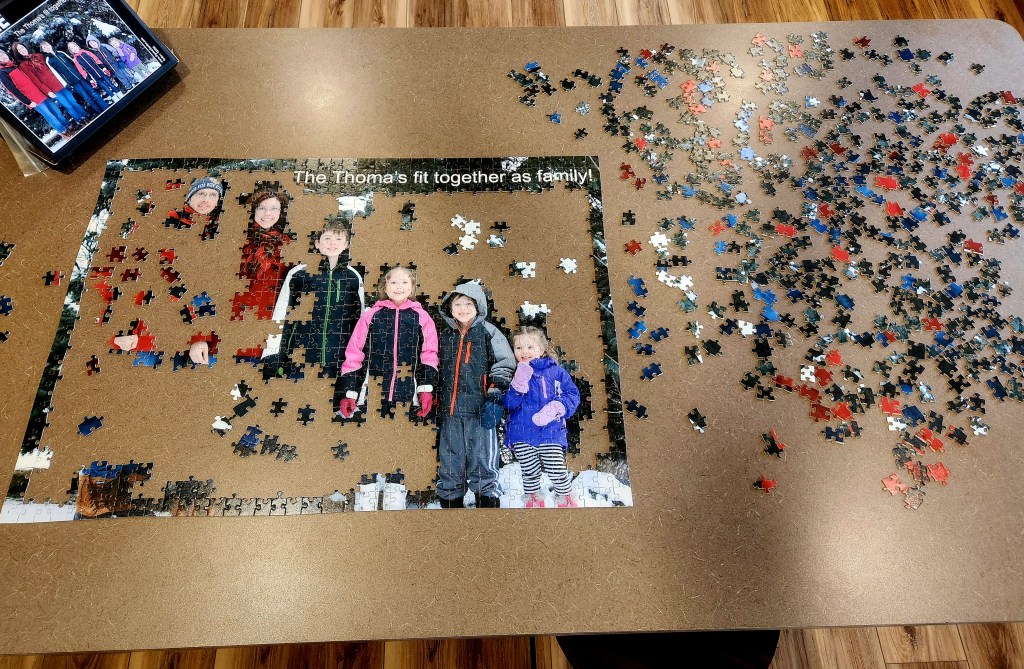




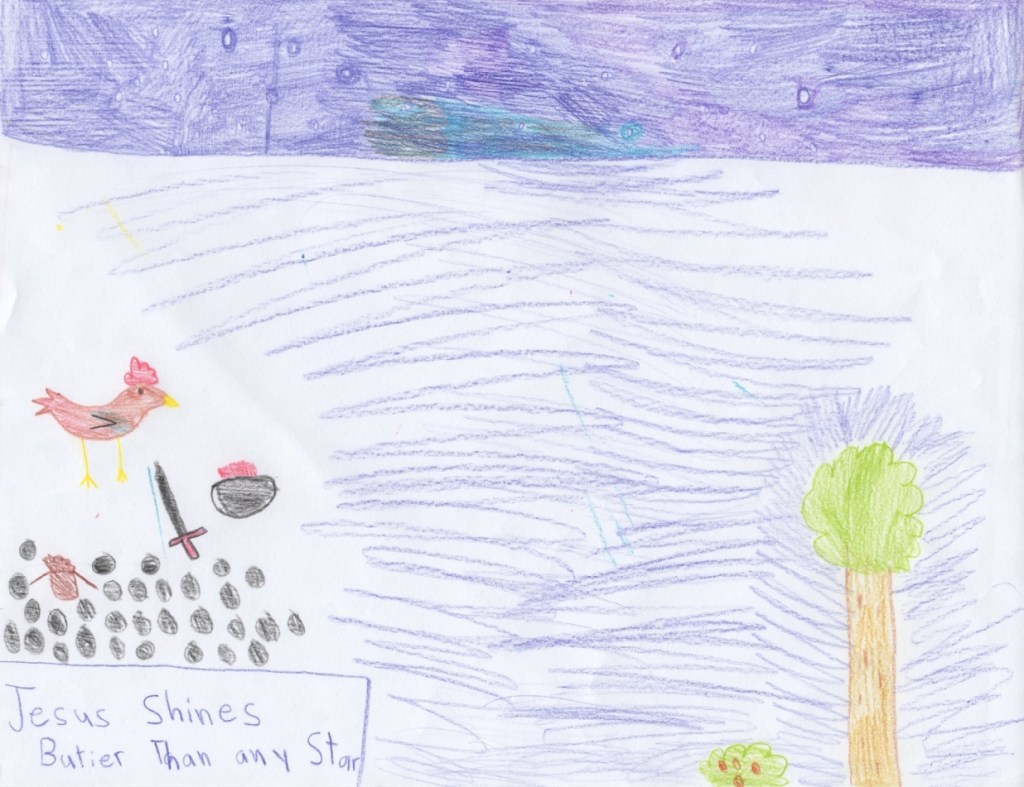

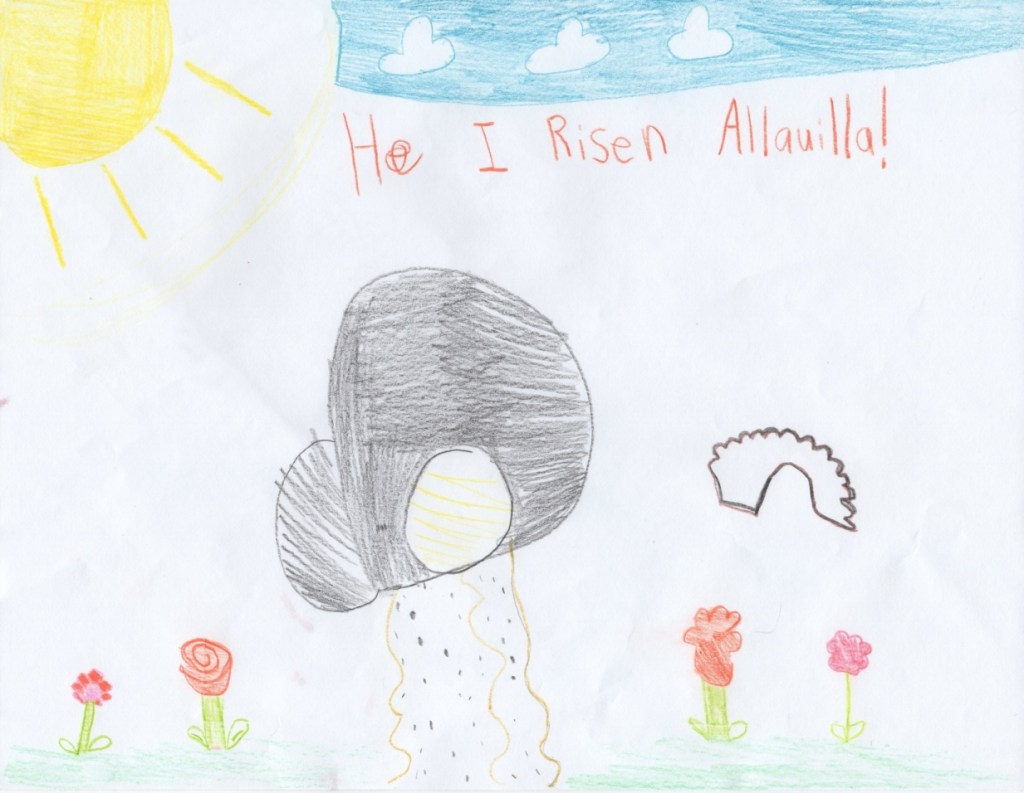

 Cruciform Stuff