Truth is Truth No Matter the Source

There it is again—that word. Autumn. Or “the fall.”

Isn’t it interesting how the season that leads into the deathliness of winter carries the same title as the moment the barrier between this world and sin was ruptured? I’m not surprised. With Autumn comes an increase in darkness. For me, that’s its most unfortunate part. I’m an early riser. In late spring through to summer, the sun awakens with me—sometimes even a little before me. I’ll be just opening my eyes, and I’ll see its radiance already beginning to sketch out the horizon behind our home. It’s as though if I started walking toward it, I’d eventually go over its edge and tumble into its embrace.

But those days are fleeting. The sun won’t rise today until 6:59 AM. In winter’s depth, it’ll be closer to 8:00 AM.

Can you tell my seasonal affective disorder is taking hold? It happens every year at this time, and I can’t even begin to describe the internal war I wage against it—how I crave sunshine and its warmth, and how I have to equip myself for the 285-day stretch that Michiganders go without it.

To take the edge off the long grayness, I find it’s best to distract myself. That means pouring myself into other things. It means doing so with deliberate focus on Christ. In the quieter, free-thinking moments like this one, it means an even deeper examination of my surroundings through the lens of the Gospel.

For example, since I’ve already mentioned the word “fall,” thereby having wandered into the realm of homonyms—words that are spelled the same but have different meanings—how about the word light? It’s a homonym, too. It describes not only the brilliance that scatters the darkness, but also the opposite of heaviness. How does the Gospel reflect on this?

Easy. Christ offers us rest, ensuring us His burden is light (Matthew 11:28–30). He also says, “I am the light of the world” (John 8:12). In English, the word light bears two different meanings, and yet can combine to reveal the fullness of our Lord. He’s the radiant burden-bearer who dispels all darkness.

For another mental distraction, take the word cross. It is the shape of suffering, and it is also the action of being “crossed”—to oppose, to offend, to stir wrath. Indeed, the cross of Christ offends the world (1 Corinthians 1:18, 23), even as it saves the world (Galatians 6:14). It will forever frustrate me when I hear or read the words of Christians saying how we should focus less on the cross. Fewer sayings are more ignorant when poured from a believer’s lips.

The word grave is a homonym, too. It’s the tomb that holds a body, yes, but it’s also a word we use for something serious that demands our attention. Christ’s tomb demands our attention. While ultimately empty of His body, it was not empty of meaning. It was a serious thing that Christ suffered, died, and was placed in a grave that, in the end, could not hold him. The grave, something usually filled with death, was emptied of death (Luke 24:1–6; 1 Corinthians 15:54–57).

These layered words remind us that God wastes nothing relative to His Gospel, not even language. I appreciate this. And for a guy like me, especially during fall and winter’s depths, words provide the best distractions. As far as I’m concerned, they are open windows letting in the sun, so long as I’m paying attention.

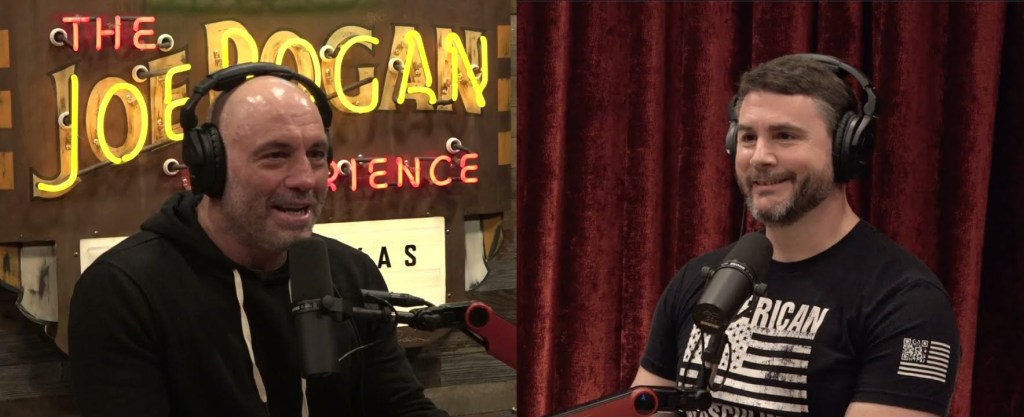
It is here that I find a meaningful connection to someone who is, perhaps surprisingly, a human homonym: Dr. James Lindsay. He is an avowed agnostic, which means he does not share the faith that undergirds my life. Still, he’s a friend, and he’s someone who knows words. More importantly, he knows how words have been twisted, redefined, and repurposed in our age to smuggle in new creeds and new “gospels.”

James knows a lot about a lot. In particular, he’s a skilled troublemaker among secularists. For one, he uses his expertise in Marxism and, most especially, Gnosticism, to show elitists their inherent foolishness. He bears a thoroughness in this regard that very few can rival. Best of all, he understands Gnosticism’s modern offspring—“woke” ideology—better than most Christians do. He understands how, like the ancient Gnostics, today’s ideologues claim access to a kind of hidden knowledge that ordinary people cannot see until they are “awakened.” He points out how the language of “wokeness” mimics the Gnostic division of the world into the enlightened and the unenlightened, the knowers and the blind.

In Gnosticism, the material world was seen as corrupt and evil, something to be transcended through secret knowledge. In the same way, the woke framework teaches Marxist materialism underpinned by the belief that society is systemically corrupt—shot completely through with oppression, privilege, and hidden power structures—and that only through redistribution and initiation into its special vocabulary can one begin to see the truth. The Gnostics divided people between the “spiritual” and the “carnal.” The woke do the same, dividing people between the “oppressed” and the “oppressors.” Both set up hierarchies of purity and enlightenment that, ironically, only end up deepening divisions between the haves and the have-nots.

And just as the Gnostics denied the goodness of creation and the incarnation of Christ, woke ideology denies the givenness of created reality—especially in matters of the body, sexuality, and identity—recasting even biological facts as oppressive constructs.

Men can be women and women can be men. In fact, both can be neither, both, or something altogether yet undiscovered. It’s a spiritual thing—an identity thing—accessible in a sphere of understanding that only the truly enlightened can enter.

James knows all of this stuff inside and out. This is why his voice is so important. He has traced these parallels with clarity. And while he does not confess Christ, he’s more than an expert witness relative to things Christians need to know. He helps Christians see that the battle we are facing is not new. The names have changed. The vocabulary is updated. But the heart of the heresy—the very same things Saint Paul and Saint John wrote against in the New Testament (Colossians 2:8–9; 1 Timothy 4:3; 1 Corinthians 15; 1 John 4:2–3; 2 John 7; John 1:14)—remains the same.

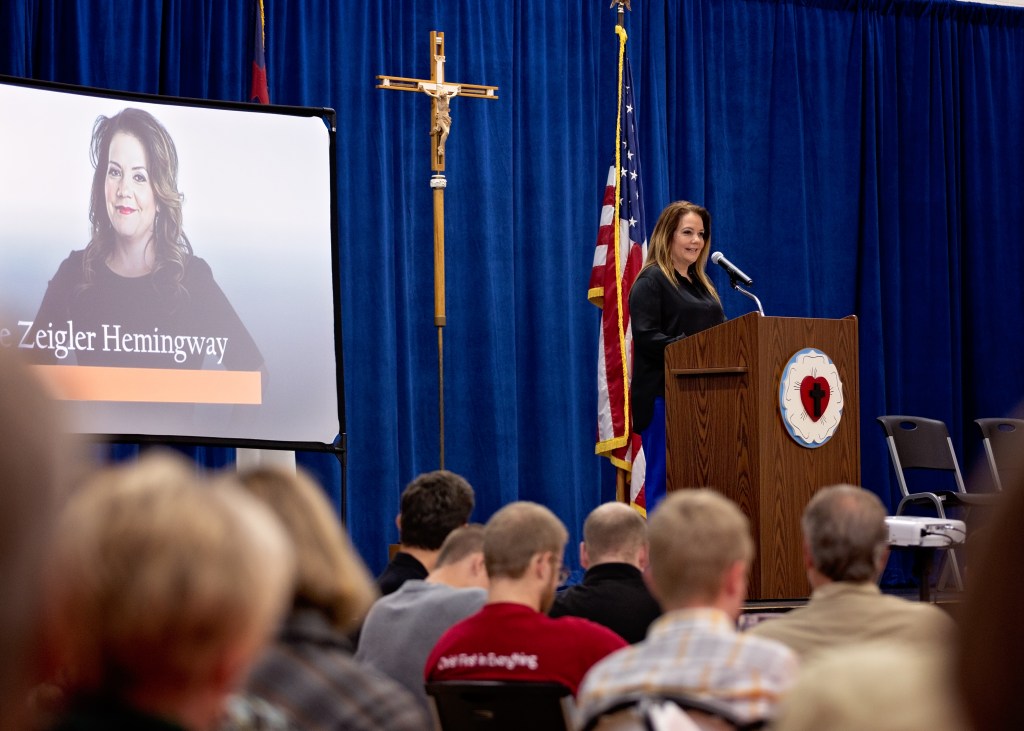
That said, it’s right about this time every year that the criticisms begin arriving at my door for inviting speakers like James to participate in our annual “The Body of Christ and the Public Square” conference. But my reply is always the same: First, don’t get your panties in a bind. It’s a conference. Second, if I were on trial for murder, my chief concern wouldn’t be whether the expert witnesses testifying on my behalf were Christians. I’d want the best in the field. And regardless of anyone’s pious pomposity, Christians are not experts in everything. And when someone like Dr. James Lindsay has peered into the shadows of false religion, having tracked the corruption of language and belief as intently as he has, ignorant Christians like me should listen. Regardless of his confession, God is clearly using his talents in a very particular way.

I’m guessing He’s using our friendship in a particular way, too.

And so, let the critics rage. They will anyway, no matter the speaker. Personally, I think it’s some sort of weird jealousy. But that’s another eNews message for a different day. In the meantime, let them scoff. My answer will remain the same. The situation before us is too urgent to waste time on pious posturing. The woke gospel is nothing less than old Gnosticism with a fresh coat of paint, and it is devouring our institutions, our families, and even our churches. If a man like James Lindsay can map these lies with surgical clarity—and his map is accurate—then shame on those who throw stones and plug their ears because they dislike the messenger. Even Saint Paul quoted the pagan poets and philosophers when their words were true (Titus 1:12 [from Epimenedes’ Cretica]; and Acts 17:28 [a combination from Aratus’ Phaenomena and either Epimenedes’ Cretica or Cleanthes’ Hymn to Zeus.])

In other words, truth is not less true because it comes from an uncomfortable source, nor does it lose its weight when it is shouted down by a mob with good intentions.

In the end, God has always used unlikely instruments to shame the wise and awaken the complacent. In my humble opinion, we don’t need any more critics hiding behind pews. We need a few more folks on the field, willing to see, to listen, and to do the heavy lifting. The fall is here. The nights are long. But Christ is the Light—and the darkness will not overcome Him.

Now, take your place on the wall. And perhaps, I’ll see you at the conference. Visit here to register: https://bodyofchristandthepublicsquare.org.

A Tiny but Divine Juggernaut

The feeling is always the same. The day after the conference here at Our Savior, there’s a lingering sense of exhilaration and anticipation. For most in attendance, I’d say the exhilaration erupts not only from the opportunity to meet people they usually only see on TV but also from a newfound passion to engage in the world for the sake of preserving our nation’s founding ideals, which is nothing less than the societal context Saint Paul insists that Christians pray for and intercede to maintain (1 Timothy 2:1-6). He said we do this so that “we may lead a peaceful and quiet life, godly and dignified in every way” (v. 2). But to what end? Again, Paul helps us, writing that such a context “is good, and it is pleasing in the sight of God our Savior” (v. 3) because He “desires all people to be saved and to come to the knowledge of the truth” (v. 4).

All of this is to say that when religious liberty is secure, the freedom to preach and teach the most important message the world has ever known is more widely available. And what is that message? Paul tells us: “For there is one God, and there is one mediator between God and men, the man Christ Jesus, who gave himself as a ransom for all, which is the testimony given at the proper time” (vv. 5-6).

There’s an excitement that comes with playing a role in this preservative action, especially when it so often seems at every turn that Christians have their backs up against the wall. Of course, we’re not inserting ourselves because we somehow think God needs our help to maintain His world. We engage because He invites us to. Interestingly, the same Gospel we’re supporting has already moved us to love Him in ways that embrace His invitations, no matter where they may lead. Luther referred to this Spirit-driven compliance as a believer’s duty. In his explanation of the First Article of the Apostles Creed in the Small Catechism, he wrote that in response to God’s “divine goodness and mercy, without any merit or worthiness in me… it is my duty to thank and praise, serve and obey Him.”

Indeed, this is most certainly true. And so, we do.

I talk with a lot of people at our conference every year, and each conversation is an enlightening one. I learn something from every person I meet. One particular takeaway from this year’s conversations happened after everything had concluded and we were cleaning up. I spoke with a woman who expressed feeling helpless to change things for the better in America. But no sooner than she said this did she thank God for what she received from our conference, describing it as superbly educational and, thereby, motivational. And then, as if wrestling with her own premise while speaking, she found herself insisting that even the slightest, most insignificant effort to engage has a way of eclipsing that helpless feeling.

I grew happier as she spoke. Why? Because without even referencing it, she essentially reiterated the conclusion to the speech I’d given only a few hours prior. She was even now digesting what was said and talking herself toward the realization that faithful engagement comes in different shapes and sizes. The size and shape are determined by God and the gifts He gives.

Stepping from this point of origin into the public square, worry’s inevitable hopelessness is overshadowed by hope’s possibilities born from God’s gracious care.

That’s what I meant at the beginning of this note when I mentioned the lingering sense of exhilaration and anticipation. Again, the exhilaration comes from getting into the game and playing hard. The anticipation is the perpetual hopefulness that, while I might not be the best player by any worldly league’s standards, God still put me on His team. His squad is not made from this world’s muscle. If you doubt this, consider Saint Paul’s perspective in 1 Corinthians 1:26-30:

“For consider your calling, brothers: not many of you were wise according to worldly standards, not many were powerful, not many were of noble birth. But God chose what is foolish in the world to shame the wise; God chose what is weak in the world to shame the strong; God chose what is low and despised in the world, even things that are not, to bring to nothing things that are, so that no human being might boast in the presence of God. And because of him, you are in Christ Jesus, who became to us wisdom from God, righteousness and sanctification and redemption, so that, as it is written, ‘Let the one who boasts, boast in the Lord.’”

Paul isn’t just implying that each and every Christian is on God’s team by faith, lest any of us think that our salvation is based on deeds. He’s also making sure we understand that to look in the mirror and determine one’s value or potential for service to His kingdom according to worldly standards is to make a grave error. God doesn’t work that way. If He did, then the innocent Son of God would not have been given over to death for the sins of the guilty. He’d have left us behind right after the events in Eden, inevitably allowing us to get what we deserve. Instead, Jesus, the epitomizing demonstration of God’s backward way—God’s Son pinned to a cross in what appears to be pathetic weakness—is the mightiest of death blows to Sin, Death, and Satan.

This Gospel is itself the muscle and skillset that outmaneuvers our wisest and strongest opponents. It strengthens its team to suffer the heaviest tackles while still getting up and getting back into formation. It is, by all means, the best play in God’s playbook—the one that, since the beginning of time, Satan and his knuckleheads just can’t seem to figure out how to stop.

We are on God’s team. We didn’t get there by trying out. He baptized us into our respective positions. He has endowed us with what’s necessary for making a difference. And so, we play as hard as we can. We use the gifts God has seen fit to grant us, putting them to work to move the ball down the field toward the goal.

The after-conference conversation I mentioned began with a sense of individual irrelevance and ended with courageous invigoration. For as challenging as it is to assemble and administer a conference like ours, I’ll be forever glad that we do it if only to be reminded that, as the saying goes, where there’s one, there are another five. In other words, my momentary conversation partner—a relatively small woman by human measurements—was by no means the only one refreshed for gameplay. And the thing is, if God continues maneuvering as He does (which I know He will), the world is never going to see this tiny but divine juggernaut coming.

A Commendation

A Commendation to God’s People at Our Savior in Hartland

————–

I must confess that our “The Body of Christ and the Public Square” conference (which we just enjoyed yesterday) is both a highlight and a burden for our lives each year. It’s a burden because much work is necessary for its success. We plan all year for a single day’s labor. Precious time and resources are given. Sweat is spent. In short, it does not happen unless we fully put our backs into it. For me, its burdens include occasional verbal beatings from friends and foes alike. To be clear, I’m not complaining. This is one of the price tags attached to the chances I take. Thomas Jefferson said something about how anyone who assumes a public role must inevitably consider himself public property. I get it. Anyone putting himself out for public consumption should expect to be chewed on from time to time. I certainly get my fair share.

Pondering the highlights, I assure you that our conference efforts always prove themselves well worth the exertion. Over the last ten years, spanning twenty educational events, big and small, this congregation’s determination to communicate a right understanding of Church and State engagement has been unquestionably fruitful across countless denominational boundaries. Without being too bold, I dare say the handful of Christians who call Our Savior in Hartland, Michigan, their church home has influenced local and national landscapes in ways few other churches of a much larger size can claim. This isn’t boasting. It is a fact. God has used these efforts to effect significant change while holding the line on what’s good.

Along those same lines, I suppose it isn’t far from some who volunteer at the event to thank God for the unique opportunities to work alongside guest speakers most folks only know from a distance. For example, my son and future daughter-in-law shepherded Riley Gaines through her time with us, ensuring she made it to and from the event. I can understand the excitement of being near one of history’s boldest. Even better, something must be said for building genuine relationships with national policy architects and influential newsmakers. After the conference, I spent a few hours at my basement bar with Dr. James Lindsay. We chatted about anything and everything—politics, philosophy, theology, you name it. It was indeed an exceptional time, feeling more like minutes than hours. We parted company as new and better friends, intent on reconnecting whenever we might find ourselves within one another’s vicinity.

Of course, as starstruck as anyone might be with these folks, we don’t idolize them. If there’s anything I’ve learned from these relationships, they are people like the rest of us. Nevertheless, I also know that to live according to the tenets of faith (1 Timothy 2:2-6), ultimately protecting the Church’s freedom to preach and teach the Gospel apart from the shadows, these people are part of the calculus in twenty-first-century America. They’re included in Saint Paul’s phrase “πάντων τῶν ἐν ὑπεροχῇ”—all who are in high positions (1 Timothy 2:2). To influence them is to influence the public square and, as a result, to have a role in steering the outcome of the game. To what end? Again, to the preservation of what Saint Paul continues to describe in verses 2 through 4: “that we may lead a peaceful and quiet life, godly and dignified in every way. This is good, and it is pleasing in the sight of God our Savior, who desires all people to be saved and to come to the knowledge of the truth.”

We’ve been blessed with those relationships as an organization, so we form, maintain, and enjoy them accordingly.

As the pastor at Our Savior, I’m glad for God’s people here. Seeing your vigor in all of this certainly makes me smile. Moreover, your joy in the task is one of the reasons I’ll likely continue to take the punches. Your joy brings me joy. Truly. You’re forever proving their commitment to Christ. For one, you’re miles beyond mere words. You’re not willing to simply rah-rah from the bench, saying to those who need help, “Be warm and well fed” (James 2:16-17). You’re in the game, and you’re playing hard. With or without accolades, you’re moving the ball down the field in ways that serve even your detractors and will resonate for generations.

Unfortunately, as I’ve already hinted, we often do this to our peril. I’ll give you an example.

I had a conversation yesterday with someone who, no matter how gently she explains religious liberty’s benefits to her liberal family members, is viciously attacked as a mean-spirited and bigoted conservative who wants to force her opinions on others. I did what I could to encourage her. Apart from sharing God’s Word relative to the matter, at one point, I shared a thought Ralph Waldo Emerson once penned. He wrote about how there will always be a certain meanness to conservatism. Unfortunately for conservatism’s opponents, the meanness always comes bearing superior logic and facts. In other words, it brings truth. Relative to her conversations with family members, confining someone with anything will always seem restrictive, inhibiting, and mean. Still, as mean as truth’s confinement might seem, it’s good.

What’s more, the only people we should trust are the ones calling to us from within truth’s boundaries. Those people are not trying to keep us from living; they’re beckoning us to a life endowed with the greatest access to truth’s arsenal of facts—to what makes truth true. As biblically conservative Christians, we have this in spades.

Quite simply, truth—whether it be moral or natural law—is unphased by opinion; or, as I heard first-hand from Ben Shapiro long before it ever became a bumper sticker, facts don’t care about your feelings.

This congregation gets it. You know it isn’t an easy road. Still, it’s a road you want to travel because you know the One who is Truth in the flesh—Jesus Christ. He is the way of eternal life. Those who cling to Him have been set free from Sin’s foolish desires to trust anyone or anything beyond truth’s borders. You want others to know this, so you do what you can to preserve the Church’s freedom to preach and teach it. Our conference is one way you do this.

By the way, we’re already taking aim at next year’s effort. As was mentioned yesterday at the conference’s end, it looks as though Tucker Carlson will be with us in October of 2024. And Jim Caviezel is in tow for an after-Easter event of some sort. I haven’t sorted the details yet, but rest assured that I will.