What if Aliens Were Real?

Those who know me best are not surprised each year by my autumn discontent. The leaves fall, and with their pixie-like twirling, so goes a portion of my enthusiasm. Add to this autumn’s brisk breezes and its chilled and misty rains pulling down more and more of the landscape’s adornments, and it’s as if an unseen prison guard is escorting me to a dank and lightless cell. Michigan’s naked oak, maple, and dogwood trees surround and stretch skyward as its bars. My sentence? Six to eight months in the sunless cold.

I’m summer’s boy, and that’s that.

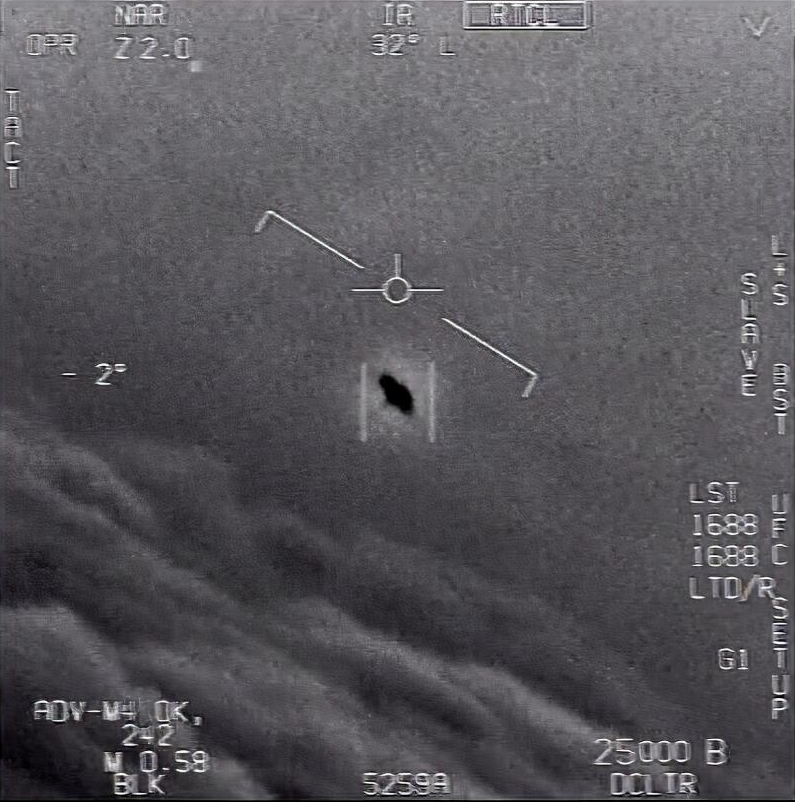
The thing is, I know it. And because I know it, I can war against the returning urge to pack up and move closer to the equator. Although, that reminds me of something. I had a phone conversation yesterday morning with one of our forthcoming conference speaker’s assistants. As is typical of many conversations, I was asked about the current weather. I was sure to mention my disdain for autumn and winter. The young woman I was talking with jokingly said she remembered hearing that space aliens appear to visit warmer regions more so than cold, which means my chances of abduction increase the closer to the equator I get. I told her I thought I’d heard the same thing from one of Joe Rogan’s podcast guests.

Familiar with Rogan, she noted his fascination with aliens, and then, to further the friendly conversation, she asked what I thought about the topic. I told her that while I appreciate sci-fi cinema, I don’t spend much time thinking about aliens, that is unless we’re talking about the millions of illegals crossing our southern border.

“What if they’re real, though?” she asked. “Then what?”

I knew what she meant. Even though we both considered the topic a relatively silly one, I could tell she had given it some thought. She wondered what the discovery of sentient beings from beyond our solar system might mean for Christianity. I think about lots of things, but I don’t spend much time thinking about things like this. Nevertheless, it certainly was an opportunity to shift gears in the way Saint Peter anticipated when he urged that we be “prepared to make a defense to anyone who asks you for a reason for the hope that is in you” (1 Peter 3:15).

My initial thoughts were that if extraterrestrial life was ever discovered, first, I don’t think its existence would obliterate Christianity in the ways so many atheists and agnostics assume. Faith doesn’t work that way. It’s far sturdier than onlookers may realize, and history proves it. Christianity has been through the proverbial ringer, the kind of turbulence that has undone so many other religions, and yet, it’s still here, and it’s encompassing the globe’s entirety. Extraterrestrial life’s existence would be interesting, but it would not disprove or smother Christianity. Of course, my ultimate baseline for saying this is that Christianity is true and all other religions are false. Truth withstands—falsehood crumbles.

From there, I went ahead and admitted to the widely held belief that alien encounters are likely spiritual in nature—but not the good kind. They’re probably demonic. I think Tucker Carlson believes this, too, which makes us kin to this perspective.

I know how that sounds, of course. It sounds relatively backwater. Nevertheless, I shared it openly. And so, you can see how unconcerned I am for being labeled “backwater.” So much of who I am and what I do so often gets that label, anyway. I believe a man cannot be a woman. For many, that’s the old way, the ignorant way. I believe all abortions are murder. That’s indeed becoming an outdated premise. It’s fashionable nowadays to grind both early and late-term infants into hamburger. I believe sin is actual. I believe Jesus was God in the flesh. I believe He suffered, died, and rose from the dead to rescue me from sin. To the onlooking culture, anyone believing these things is considered an intellectual dullard clinging to ancient myths and their accompanying superstitions.

Again, as you can see, I’m far more bothered by autumn and winter than I am by derogatory labels.

“For conversation’s sake,” she continued, wanting something more, “what if we actually discover they aren’t demons but real beings from another solar system? What then?”

Accepting her premise purely for discussion’s sake, I restated my initial premise. For me, it wouldn’t change anything about my faith. But then I went a little further. I told her just how important God’s Word is to me—that I believe every bit of it. I’m not a “Tim Walz” Lutheran.

Walz believes that while the Bible contains worthwhile but negotiable principles, it is, by no means, the inspired Word of God. In his view, we can take and leave whatever it says as we choose. I don’t believe that at all. I certainly believe it is far more than a guidebook. I absolutely believe it is divinely inspired. It is God’s revelation to man concerning salvation, and Jesus is the epicentral purpose of both its Old and New Testaments. I also believe the Bible is inerrant and immutable. It does not contain mistakes, and its doctrines do not change. If we find what we think is a mistake, then we’re not understanding it correctly. If any of its teachings don’t fit well with our time, culture, or modern understanding, then too bad. The Bible shapes us; we do not shape it. When God gave it through His inspired writers, He knew future generations would be reading it, and therefore, it applies to all of them.

Drenched in these qualities, the Bible sure does tell us a lot about God. He’s just. He’s loving. He’s redeeming. He’s not far away from us, but near. He cares. He creates. Concerning His work as the divine Author, one thing I can say for sure is that God is incredibly imaginative. Limited only by His nature, He can make whatever He wants. He’s God. And by limited, I mean things He cannot do, such as sin. Apart from that, look around at the countless varieties of life on Earth if you doubt His creativity. With every new documentary Jennifer and I watch (because most other shows are garbage), we’re both amazed to learn about new creatures we never even knew existed.

There’s something else I know relative to this. Within the Bible’s pages, God shows mankind to be His most prized work. In all the cosmos, He claims us as His beloved. That doesn’t mean we’re the only creatures He loves (Matthew 6:25-34). His love isn’t limited to us and nothing else. He loves and cares for the birds of the air and the lilies of the field, too (Matthew 6:25-34). It means that even as the birds and lilies are trapped alongside us in this sinful world, He didn’t take upon Himself human flesh and die to save them. His sights were set on us. He died to save us. Our rescue was His love’s aim. Our redemption was the purpose for His suffering and death. That’s a whole different kind of love—an extraordinary love, by comparison.

All of this together means two things to me. First, if we ever discover that aliens exist, God made them. I can say that because I’m in concert with all the Christians who’ve knowingly or unknowingly implied it for generations in the Nicene Creed. Together, we’ve been announcing God as the “maker of heaven and earth, of all things visible and invisible.” In other words, He made everything we can see and everything we can’t see, everything we know, and everything we are yet to discover.

Second, if there are aliens, like everything else God made, He loves them. Beyond that, all sci-fi-becoming-reality speculation ends for me.

Why am I sharing all this? Well, because it came to mind this morning, that’s why. Remember, I mentioned before that this whole conversation seemed a little silly. That’s because I think it is. It was a transitional interaction designed to carry two people from an introduction to the business at hand. But looking back, I can see its benefit. I was given the opportunity to think through and express my hope. Moreover, by measuring one of the strangest topics out there against Christianity’s deepest convictions, faith and its relationship to God’s inspired, inerrant, and immutable Word were hardened, not rattled.

In the end, no matter what’s going on around us, a Christian holds to the Bible as the sole source for faith, life, and practice. That’s because the Gospel of salvation through Christ is its core. Trust in this eternal truth is the fuel for Saint Paul’s confidence as he writes, “For I am sure that neither death nor life, nor angels nor rulers, nor things present nor things to come, nor powers, nor height nor depth, nor anything else in all creation, will be able to separate us from the love of God in Christ Jesus our Lord” (Romans 8:38-39).

Understand that “space aliens” fits into Paul’s phrase “nor anything else in all creation.”
A Hope-filled Sprig

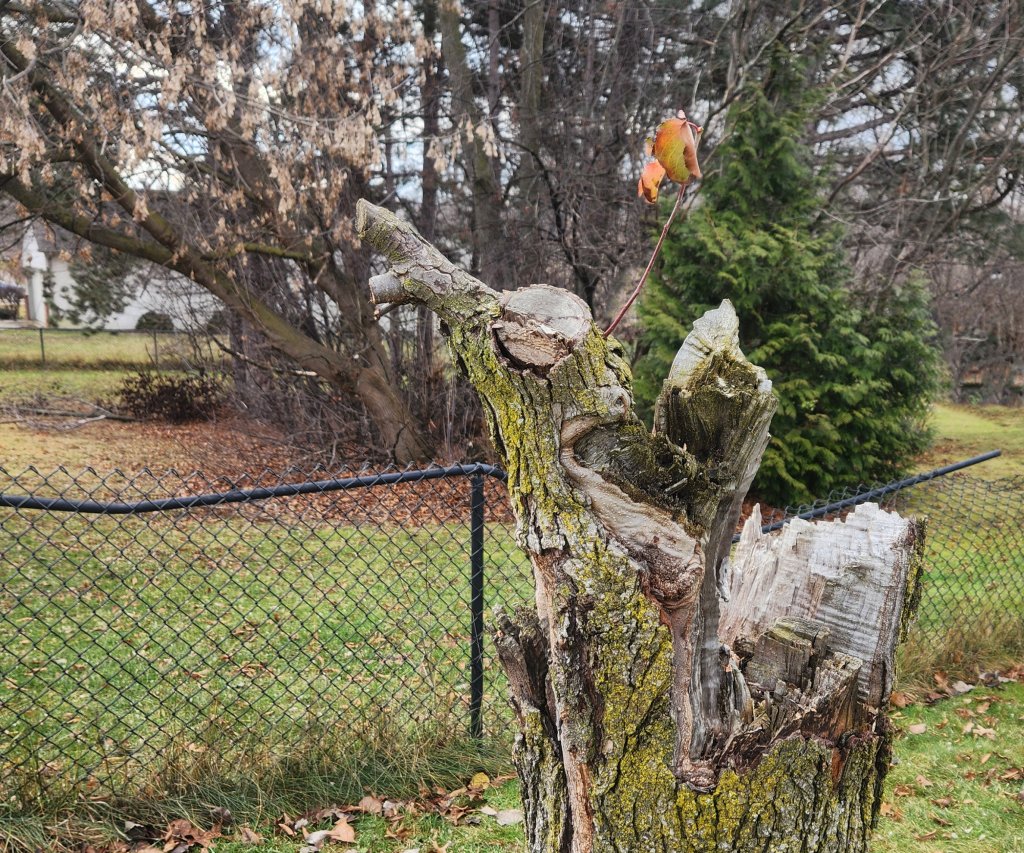
There’s a tree in a yard just down the street from my home that toppled twice this past year during two separate storms. The first was a windstorm that swept through last spring. By the time the ruckus had passed, one of the three stems ascending from the tree’s primary trunk broke free and crushed a nearby fence. The second gale was a late summer thunderstorm that brought equally powerful wind. When it finally quieted, the other two stems had fallen and destroyed another portion of the same fence. All that remained was a four-foot trunk with a splintered top.

It wasn’t long after either storm that the property owners cut and removed the debris, eventually leaving what is now a grayed and seemingly dead stump. I drive past it every day. For me, even in its obtusely pathetic state, the stump has faded into the neighborhood’s landscape, becoming something I no longer even notice.

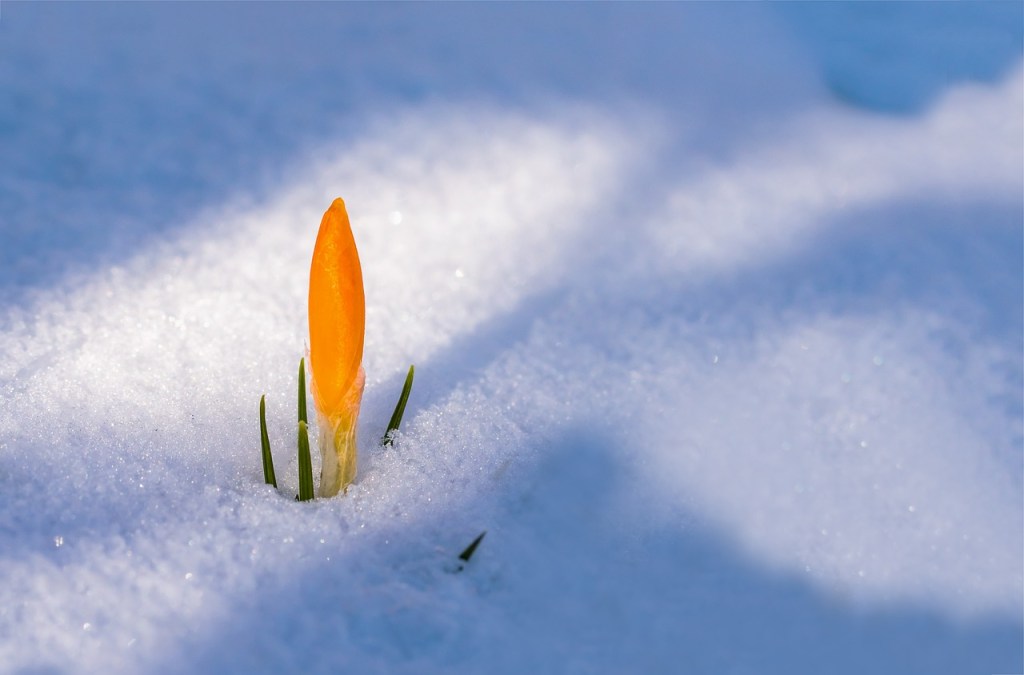
But then one day last week, I did notice it. Even in mid-winter, it had a shoot growing from its top. Astounded, I circled back around and stopped to take a picture.

I’m not an arborist. Still, I know most deciduous trees in Michigan hibernate in winter. Essentially, they go to sleep at the end of summer. They slip into their dormancy stage, locating their essential nutrients in their roots. Doing this helps to keep them healthy and ready to bloom again in the spring. That’s why the leaves fall in autumn. The trees are shutting down the supply lines to everything but the roots, starving its skyward limbs and keeping the food where it’s needed most.

But this tree is not sleeping. It’s awake and growing in winter. Wearing only a slightness of green on one of its two leaves, a passerby can see by its sprig that it’s struggling against the elements. Its tiny, outstretched appendages are tinged with shades of autumn’s hues. Still, there it is, pushing up from a seemingly lifeless trunk, attempting to snatch every bit of Michigan’s occasional wintertime sunlight.

While barely anything at all, it’s an inspiring scene. Against the bleakest landscape, while everything else around it has given up and gone to sleep, it is awake, as if reaching up from hope’s nutrients with an unwillingness to forfeit.

Seeing this, as a Christian, I suppose my first inclination was to experience echoes of Isaiah 11:1, which reads, “There shall come forth a shoot from the stump of Jesse, and a branch from his roots shall bear fruit.” Isaiah’s words are forward-looking. They refer to Jesus. He is the One who, even as all mortal muscle for rescue was beyond spent, arrived bearing life. There He is. God did not leave us. He acted. He sent His Son, just as He said He would. Hope against all hope has been fulfilled. The Son has brought new life into what seemed to be Death’s dooming winter. And joy of joys! From His person and work, branches emerge and grow where no one thought they could. And this happens no matter life’s seasons, each shoot bearing extraordinary fruit (John 15:5).

I had a before-worship conversation on New Year’s Day with the chairman of our Board of Elders, Harry. Analyzing the societal landscape, we predicted that the forthcoming year would likely be far bumpier than the previous one. For the record, we weren’t being pessimistic but realistic, and in a sense, we were admitting to our need for the fruits that can only be plucked from Christ’s tree. In the New Year, we’re going to need the fruits of love, joy, peace, patience, kindness, goodness, faithfulness, gentleness, and self-control (Galatians 5:22-23). We’re going to need fortitude, the kind that wholeheartedly owns the title “Christian” (James 1:2-4; John 16:1-4). We’re going to need endurance (Romans 5:1-5). We’re going to need wisdom, the kind that can’t be duped by evil disguised as good (Ephesians 5:15-17). We’re going to need persevering strength to follow Jesus when doing so might appear to make very little sense (Hebrews 12:1; Luke 5:4).

We’ll need to be hope-filled sprigs against this world’s dismal backdrop (Romans 15:3).

But there’s another thought to be had. As a perpetual watchman for summer, the tree’s lonely sprig was a “consider the lilies of the field” moment (Matthew 6:28). It had me thinking about how God loves and cares for His people. Taking the stump’s picture, I spoke out loud to myself, “Storms will come, people will cut down the lilies, but nothing can stop spring from coming.” Christians will know what I meant.

No matter how the world rages, God’s promises will not be stopped (Romans 8:31-39). He’s caring for us now. As He does, we know the springtime of eternal life is coming. This means that even in the face of persecution and Death, believers have a limitless wellspring of hope. Like the stump’s sprig, what the world might expect from us in the darker moments is not what we’ve been recreated to do. The world will bear down on us with icy impositions, expecting that we’ll shrink into self-preserving hibernation. But instead, we reach up to the heavens as sprigs in winter. We stretch out in stark contrast to the surrounding world, bringing even the littlest bit of color into the sin-sick grays of this passing world.

We endure when enduring seems impossible.

This is my continued prayer for you in the New Year. God grant it.

A Springtime Sprig

I don’t mean to distress anyone within my relative vicinity. Still, I read that Michigan is number seven on the list of cloudiest states in the U.S. Apparently, 43 other states in the union have more sunshine than we do. Parsing the details, Michigan averages only 65 bright-beaming days during its 365-day trek around the sun. This means that 82% of our year is shrouded in gray.

I shared this information with the 7th and 8th-grade students in my Tuesday morning religion class. Within seconds, a handful spoke of their parents’ open disdain for Michigan’s seemingly unfair allotment of gloomy days. One even said something like, “My dad is like you, Pastor Thoma. He wants to live in Florida.”

Every year at this time, I feel compelled to communicate just how much I crave sunshine. I’ve never been officially diagnosed, and yet, having read the Cleveland Clinic’s definition of Seasonal Affective Disorder (SAD), I sometimes wonder if I bear some of the condition’s determiners. The affliction is “triggered by the change of seasons and most commonly begins in late fall. Symptoms include feelings of sadness, lack of energy, loss of interest in usual activities, oversleeping, and weight gain.”

I think I do experience a heightened sense of melancholy through the autumn and into the winter. I believe the dreariness causes less interest in a number of things I might usually enjoy. I don’t necessarily oversleep. My body is its own alarm clock. I go to bed. I wake up. I get started with my day. I would gain weight if I didn’t wage a conscious war against the gloom through exercise. However, I struggle to care much about exercising during the winter months. I often feel so drained that I don’t even want to look at the treadmill. It isn’t this way in the spring or summer.

A more pronounced sadness, check. Lack of energy, check. Loss of interest in usual activities, check. Three of five. Uh oh.

The clinic’s definition continues that “seasonal depression gets worse in the late fall or early winter before ending in the sunnier days of spring.”

“The sunnier days of spring.” That sounds nice. But that’s a long way from where we are on the calendar. Technically, December 1 was the first day of winter, even though many put winter’s beginning at the solstice on December 21. Either way, winter is just beginning here in Michigan. Its frigid clock has been tightly wound. Its chilled hands are ticking steadily from one number to the next. It will be some time before the clock slows, its time having eventually run out.

But it will run out.

I appreciate poetry. Relative to my doctoral studies, I’ve been reading a lot more of it. James Riley was thinking clock-like when he wrote of winter, “O, it sets my heart a-clickin’ like the tickin’ of a clock, when the frost is on the punkin and the fodder’s in the shock.” In other words, his heart’s hopeful timepiece begins ticking when he sees winter’s frosty specter beginning to pall the landscape, covering the pumpkin fields and the shocked fodder (the dried cornstalks bundled together and propped). He knows winter is coming, but he also knows it won’t be a forever thing. It has limited time to employ its dreadfulness.

I visited my dear friend, Sue, in the hospital this past Tuesday. Somehow, the details concerning Michigan’s cloudiness ranking came up. She doesn’t mind winter as much as I do. Still, she was surprised. During our time together, I read to her the Gospel lesson appointed for the Second Sunday in Advent: Luke 21:25-36. After reading it, we considered the Lord’s words. Along the way, I was reminded of another poet’s observation. Percy Shelley jotted, “If winter comes, can spring be far behind?” I shared Shelley’s rhetorical question with Sue.

“No, it can’t,” she replied. We smiled together.

Ah, the sunnier days of spring—those easing days when the naked landscapes become green again, teasing the forthcoming and golden expanse of summer, a time we both thoroughly enjoy.

But no matter what the poets say, Jesus truly calibrates our perspective.

Relative to my feelings for winter, I’m in good company. Jesus more than nodded to winter as a symbol of this world’s sin-plagued drudgery in the text from Luke 21. Referring to His return in glory on the Last Day, He instructed His disciples, “Look at the fig tree, and all the trees. As soon as they come out in leaf, you see for yourselves and know that summer is near” (vv. 29-30). Crucial to His point, like winter’s grim unpleasantness, this world’s current season of undoneness is not permanent. Jesus is coming back, and when He does, He will make all things new (Revelation 21:5), bringing with Him the spring and summer seasons of eternal life. If we lose sight of this, even the tiniest springtime sprig can serve as a Gospel reminder.

As someone who takes extra Vitamin D and keeps a sun lamp on the shelf beside his desk to help defend against the gravity of winter’s gloom, I do well to keep certain things in mind. In a broad sense, no matter what’s happening, I must remember that Christ has not abandoned me in some cosmic orphanage, having left me to fend for myself. He has promised His presence and the joy that comes with it (Matthew 28:20). He insists He will never leave nor forsake me (Hebrews 13:5). While I await His return in glory to bring me into His nearest presence, even if my deceptively sinful emotions have me somehow feeling forsaken, I can look to the cross. That’s the springtime (literally) sprig above all other sprigs emerging from the earth. When I see the cross, I can rejoice with childlike gladness. Perhaps this is what Edgar Guest meant when he rhymed:

“Spring’s greatest joy beyond a doubt
is when it brings the children out.”

The spring and summer of eternal life will bring God’s children out from this gray world’s wintry seclusion into the bright days of unending joy. How do I know this? Because Jesus said so, and His Word is sure. Look back at Luke 21:25-36, and you’ll see. Just after He directed our attention to the fig tree, He reminded us that all things will pass away, yet His words won’t (v. 33).

Believe Him. Be comforted by Him. He meant what He said; we can take Him at His word. This world’s wintry bondage will end. A divine spring and summer will arrive. It’s only a matter of time.

A Better Season

October has essentially come and gone. November is at the door. With it comes Novembery things. Into the trash, the weeks-old jack-o-lanterns will go. In exchange, some Thanksgiving décor will adorn front porches, bookshelves, and kitchen windowsills. Some among us won’t be able to resist putting out a few Christmas-leaning decorations, not necessarily a fully decorated tree. Maybe just a miniature Dickens-style village here and a snowman character there. Perhaps a wreath on the front door.

Henry David Thoreau called November the calendar’s mite, reminiscent of the gift given by the widow in Mark 12:41-44. He implied it doesn’t give much, but what it does offer—the last yellowing lights of autumn—are “more warming and exhilarating than any wine,” ultimately making it “equal in value to the bounty of July.” I’m not so sure I agree, being the summer man I am. July offers a steady repertoire of pleasantries that few other months can match. Although I suppose following Thoreau’s poetic lead, if I did have to compare November with July, one thought does come to mind. I’d say July gives us one particular day with a splash of color: Independence Day. The annual fireworks celebrations typically conclude with a minutes-long sky-filling grand finale. Autumn renders a far lengthier and much more extravagant array of colors, and November is its grand finale. Until the first snow pulls what’s left of autumn to the ground, November will spend its days bursting with fantastical hues.

The only other real praise I’m willing to give to November is for my wife’s birthday. I’m thankful in that regard.

Still, apart from playing a role in my wife’s entrance into this world, I prefer to look past November. Better yet, I prefer to look past winter altogether. Although, it’s been said that if you’re always looking to the future, you’ll ruin the present. Or maybe it’s the other way around. Either way, the autumn and winter months weigh heavily on me. They have me wishing for sun-beaming warmth pouring down from cloudless skies, days when I need to be more concerned about sunburn than bone-stinging windchill.

As you may already know, I was pretty sick for almost two weeks. I didn’t start feeling like myself again until this past Friday night. I went to bed at 10:30 p.m. and woke up twelve hours later. It was obvious I needed the sleep. I share this because I spent almost every day during this recent illness looking to the future, continually reminding myself, “This is only a season. Another season is coming, a better season. Tomorrow will be better.” This was not an exercise in the power of positive thinking. I would speak this way only after praying to my Lord for the hope He alone can provide. In other words, my regular exercise was one of anticipating something better.

I know I can only reach spring and eventually enter summer once I have first traveled the blustering valley of winter. Similarly, I know I must pass through the harder seasons of mortality before entering something better. But no matter the circumstance, whether the melancholy of actual winter or the failing flesh in sickness, I’ll have no strength to endure anything this world wields against me without the hope Christ provides. And each challenge will be nothing less than a microcosmic image of God’s promised grace in struggle and deliverance for eternal life. This is the ongoing exercise of Christian hope, a challenging but powerful regimen. It not only teaches us to trust that God has us well in hand right now, but it has eyes for a far better tomorrow, one where hope is no longer necessary because it has been completely fulfilled in the glories of eternal life.

Considering Titus 2:13, Luther described it this way:

“But how long shall we wait for that blessed hope? Will it remain but a hope forever, and will it never be fulfilled? No, [Saint Paul] says, our blessed hope will not always remain a hope, but it will eventually be made manifest, so that we shall no longer only hope and wait for it, but what we now believe and hope for will then be made manifest in us, and we shall possess with full certainty what we now await. But meanwhile, we must wait for that blessed hope until it be revealed.” (Sermons from the Year 1531, W.A. 34. II. 117.)

The waiting is the hard part. It’s life’s winter. It’s the season of bodily illness, job loss, dysfunctional families, persecution, and so much more. Still, we know by faith we bear an otherworldly strength that can “rejoice in our sufferings, knowing that suffering produces endurance, and endurance produces character, and character produces hope, and hope does not put us to shame, because God’s love has been poured into our hearts through the Holy Spirit who has been given to us” (Romans 5:3-5).

I pray you are well and enduring whatever the world insists on throwing at you right now. Winter is coming. But it’s only a season. Another season is coming, a better season.

Imperishable, Undefiled, and Unfading

One would think I should’ve been a weatherman because I’m so obsessed with the seasons. Although, it isn’t an obsession. It’s frustration. I live here, but I’m not meant for this climate, especially not the back-and-forth Michigan is currently enduring.

I dare say even the ones who adore autumn in this state will know what I’m talking about. The days are becoming wildly different.

I suppose one way to describe this is to say that, indeed, summer is over, and as a faithful doorman, autumn is watching for winter, preparing to hold open the gates when it arrives. Until then, autumn fidgets. It keeps opening and closing the door, stepping out to scan the horizon for winter’s caravan, and then stepping back inside again to watch and wait. By this, autumn stirs wildly different weather, sometimes all in one day.

Again, Michiganders will know what I mean. One moment, the sky is clear, and the sun is shining, warming all within reach of its bright array. It’s as if August locked the door, barring September and its followers from entering. But with little more than a glance to the horizon, thick clouds are invited over and into view. The door is thrown open. The sun is nudged away, its beaming warmth exchanged with chilly darkness and drizzling rain. In other words, to endure Michigan’s autumn means to be in August one minute and then October the next. One moment, the sky’s sapphire happiness is vast and cheerful. The next, you’re in deep space, a hundred million miles from our solar system’s star.

But then winter finally arrives, and that’s that—no more confusion.

I began by saying I’m not meant for this climate. I mean that in more ways than one. Interestingly, one of those ways, in part, explains why I’d never willingly leave Michigan. In truth, physically, I’m suited for Florida. My body feels better when I’m there. My back feels better. I have fewer migraines. However, God put me in Michigan. This is where my vocation’s muscle is flexed. I’ve come to realize my vocation—my combined roles as a husband, father, pastor, and the like—are less about location and more about devotion. I really can live just about anywhere when I’m confident that God has me right where He wants me. Where He puts me is a part of what He wants for me. What He wants leads to eternal life (John 6:40), which is eternity’s joyful location—an inheritance far beyond this life’s comforts.

When a Christian trades interest in this life’s comforts for the joy of the life to come, it’s incredible what can be endured. This world, steeped in its undoneness, is seen for what it is. Still, even as we endure, it’s amazing how the sun perpetually shines when, by faith, you know you’re not an inheritor of this world but of an altogether different sphere.

Saint Peter referred to this inheritance as “imperishable, undefiled, and unfading, kept in heaven for you” (1 Peter 1:4). He went on to say that this remains true, even as we are “grieved by various trials, so that the tested genuineness of your faith—more precious than gold that perishes though it is tested by fire—may be found to result in praise and glory and honor at the revelation of Jesus Christ” (vv. 6-7). Luther explained:

“This means that our hope is not set on possessions or an inheritance present here on earth, but we live in the hope of an inheritance which is at hand and which is incorruptible, and which is undefiled, and that does not fade away. We possess this good eternally, only we cannot see it yet. … All things that are on earth, even though they may be as hard as iron and stone, are perishable and cannot last. Man, as he grows old, grows ugly; but the eternal good does not change, but remains fresh and green forever. On earth, there is no pleasure so great that it does not pall in time. We see that men grow tired of everything, but this good is of a different nature.” (Luther’s Works, Weimar Edition, 12:269.)

“…there is no pleasure so great that it does not pall in time.”

In this life, the seasons change. The cold moves in. The clouds pall the landscape. The light dims. And yet, eternal life’s season—our inheritance—remains unphased. It’s ready and waiting (John 14:2-6). It stands sturdy and cheerful and sure, beaming brightly beyond this world’s veil of tears (James 1:17). What’s more, as Luther remarked, not only do we know this, but we own its resplendence right now. “We possess this good eternally,” he wrote, “only we cannot see it yet.” It’s true. Our mortal eyes cannot see heaven’s glory. But faith sees it. And it’s aware that the light feeding heaven’s extraordinary brilliance—Jesus Christ—is alive with us right now, and He’s radiating luminously through us to a darkened world in dreadful need of rescue (John 8:12; Matthew 5:14-16).

For Christians, when life in this world becomes attuned to this hope-filled future, there’s little that the temporal darkness can disrupt. Knowing I’m not an inheritor of this world—that my time here is quite temporary—I see everything this life throws at me differently. More importantly, courage for faithfulness to Christ, my Savior, is within reach every moment of every day (Ephesians 6:10).

Having said all this, I need to be clear. I still intend to live in Florida one day. If God intends it, it’ll happen. Until then, I’m where I need to be.

Absence

It’s happening. The days are getting shorter.

Those of you who read these meanderings regularly will know that I struggle at summer’s end every year. It’s not so much that the longed-for season of effortless schedules is leaving (although this summer has been anything other than easy), but instead, it’s that the sun begins making less time for us. Moving into autumn, the sun makes drastic changes to its schedule. For one, it gets up late and goes to bed far earlier. Some of us will go days without experiencing its presence, traveling to and from the office in the pitched blackness of its absence. On an occasionally cloudless day, you’ll see it pass by the window—but only if you have a window. If not, it’ll be as if the sun used to exist but does so no longer.

My stomach turns just thinking about it.

Jen posted something on social media last week. It was a snippet from our family’s after-dinner cleanup. Essentially, Evelyn asked, “Momma, did you know there is something called S.A.D.? It’s when people get very sad when summer ends.” She was referring to Seasonal Affective Disorder. And before she even finished her testimony, I was already answering, “Yes. And would you like me to explain it to you?” I wasn’t being snarky. The moment was a jesting one. However, looking back on the moment, I wonder if she planted the question. She knows how disjointed I become in the perpetual darkness of the sun’s absence. I get the feeling she asked Jennifer the question to spare me a momentary cloud while also showing me she is paying attention and understands. She’s like that. She’s mindfully caring.

It usually takes me a few weeks to get into autumn’s rhythm. In fact, by the time I discover myself finally beginning to appreciate fall’s colorful detonation, the snow arrives and covers it. Gripping summer’s absence tightly, I put myself at a disadvantage, resulting in being a step behind other opportunities for joy. Admittedly, I am forever learning a lesson from these things.

Honestly, absence is a tricky thing. John Dryden said that when you love someone or something so much, an hour of absence is like a month, and a day is like a year. Jennifer and I were talking about this one night last week before bed. She mentioned that family dinners will soon be very different. She’s right. Like a curious organism, absence will grow. Right now, dinners together as a family are quintessential to our lives. We do everything we can to ensure all six of us attend. But life’s seasons are changing. Soon six will be five, five will be four, and then four will be three. And then it’ll just be Chris and Jen. For the Thoma family, that’s a big deal. We’re knitted very closely together. When one is absent, it’s as if the world has suddenly become strangely uninhabited.

I get it. At least, I’d better get it. The day is surely drawing near when Chris and Jen will be Chris or Jen. Some of you already know what I’m talking about. Absence—the experience of being apart and missing that person so incredibly much—can be devastatingly palpable. I miss the sunshine during winter. Still, that’ll be nothing compared to an empty nest—or Jen’s empty chair. Personally, and in a selfish way, I hope my chair is found vacant first.

Having said these things, there’s something else to the topic of absence. Christians know what it is.

For some, absence means loss. Not just any kind of loss, but permanent loss, as if the person they miss is forever out of reach. One of my favorite texts from God’s Word is “The last enemy to be destroyed is death” (1 Corinthians 15:26). I like it because it serves as a capstone statement to Paul’s previous preaching in the chapter that Christ has conquered all things, and by His resurrection, the seemingly impossible obstacle that brings ultimate separation—Death—has itself been massacred and tossed aside in the cosmic contest for our eternal future. As a result, no other enemy stands between us and our God. Christ saw to it. His resurrection proved it handily. From this vantage, one of Death’s offspring—permanent human separation from God and each other—is included in the list of enemies defeated by Christ’s work. In other words, because of Christ’s victory against Death, Christians can’t really even speak of a loved one who died in the faith as absent in the sense of being lost or gone for good. Those who are no longer with us, while absent from us, are not absent from the Church’s eternal fellowship. This means we’ll be with them again in person. Right now, they’re with Christ, and according to His plan, their time of physical separation from us is already on a trajectory of reversal. Their mortal absence might indeed stir sadness. Still, we really can’t justify the kind of sadness relative to permanent absence or being lost. The absence is not permanent. Believers are with Christ in His nearest presence. And if you know right where a person is, how can he or she be lost?

Indeed, in natural time, the sun goes away during autumn and winter. Likewise, the day is coming when either I’ll be without Jen or she’ll be without me. But only for a time. The spring and summer sun will return. Believers won’t be apart from our loved ones who’ve died in the faith for long. Soon enough, there will be an eternal sunrise in an unending time of togetherness outside of time. That’s Christ’s promise to His faithful. Until then, the faithful have another powerful guarantee. The same risen Christ vowed He would never leave or forsake us (Hebrews 13:5). He promised He is with us always, even to the end of all things (Matthew 28:20). That promise meets with right now. While ten thousand sermons could be preached on either of these two texts, all with unique renditions of Christ’s beautiful assurances, each would bear a common thread of consequence: You’ve been won by the person and work of Christ, and now, by faith, no matter what, you are never alone. Interestingly, you can be confident of this because of something Christ cannot do. He cannot break His promises, and therefore, He cannot be absent from those who are His own.

To close, remember these two things during autumn’s darker days, whether that autumn is seasonal or human: Human absence is not our forever, and in Christ, you are never alone.

Summer is Coming

In case you were wondering, at the time of this writing, there are 184 days until the first official day of summer. You might think I’m saying this because I’m already exhausted by winter. The only problem with your assumption is that winter doesn’t officially begin for two more days. Technically, we’re still in the fall.

Interestingly, to say “still in the fall” is to speak a phrase with more than one connotation, and no matter which you mean, the evidence of its actuality is there in support.

Take a look outside. The trees are bare. The leaves are scattered and damp beneath a recent layer of snow. The air is frigid. The sky is palled with clouds. There’s no arguing that the earth’s current position in relation to the sun is more than a few spins on the planet’s axis away from summer—half a year, to be exact. For me, this is a tiresome knowledge that can only be moderated through artificial means or by deliberate distraction. I keep a sun light in my office. Its light is weirdly simulated, but in the middle of a soul-dampening season that sees the sun disappearing completely sometimes as early as 5:00pm, it helps, even if only a little. In tandem, I stay busily distracted. I find that if I’m not thinking about the sky’s blue potential, I’m not necessarily missing it, and I’m less affected by its current grays.

Of course, there’s another meaning to “still in the fall” that we shouldn’t overlook. It hearkens back to the terminally unfortunate moment recorded in Genesis 3; that swift instant when, through self-inflicted grievousness, Mankind destroyed God’s perfect creation and positioned himself as far from God as physically and spiritually possible. The evidence mirroring this fall is plentiful. It’s all around us, sometimes subtly, and other times obviously. But either way, it is as discoverable as the seasonal image I described before.

It was subtly visible to me a few nights ago while working on a puzzle with Jennifer and the kids. We’d finished a 1,000-piece puzzle, and after a day or so of admiring the fruits of our long-suffering work, within a few minutes, we’d taken it apart and put it back in the box. In other words, what took days to complete was destroyed in seconds. Similarly, it was obvious to all of us by what happened in Mayfield, Kentucky, a town founded in 1824 and home to countless generations of families. In only a few minutes, the town was all but wiped from the map by a tornado.

To be “still in the fall” means that we exist in a world that continues to prove, not only that it is horribly infected by the destructive powers of Sin and Death, but that both it and its inhabitants are completely impotent against being consumed by them. It’s a place where this often plays out in subtle, but sinister, reversals. It’s a place in which one can claim Christianity, but be perfectly fine with cohabitation. Or perhaps cohabitation is admittedly offensive, but so is telling a Christian he or she is a walking contradiction for claiming Christ but only attending worship at Christmas and Easter. This same world is a place in which the bad we hear about someone is easily believed and the good is suspicious. It’s a place where lies easily outpace what’s objectively true. It’s a place where devout self-interest outguns concern for the neighbor. It’s a place in which one little disagreement can cause long term relationships and everything that goes with them to fall like leaves from an autumnal tree, having become completely disposable. It’s a place in which so many things unfold before us as reminders that this world exists in darkness, and no matter how hard we try, there’s no man-made light that can pierce its blanketing madness. There’s no artificial distraction vivid enough to keep its dreary sorrows apart and contained.

Only the real summer sun will do.

The official season of fall will end in a few days. When it does, we’ll cross over into the deathly hibernation of winter. It’s appropriate for Christmas to arrive at this precipice. Right in the middle of a downward dismalness anticipating and becoming Death, a Son is born. And not just any son, but rather the One God promised to send who would free Mankind from Sin, Death, and the devil’s ghastly grip (Genesis 3:16). Only this Son will do. He is God in the flesh. He is the incarnational invasion of God’s summertime love for a dying world filled with inert sinners. His presence is the incontestable assurance of a springtime restoration leading to eternal life—which He intends to be fully realized in the summer-like joy of paradise.

Jesus of Nazareth is this Gospel Son.

I suppose I should end by pointing out that our lives are not absent these wonderful Gospel images during the fall and winter. Sometimes obvious, and sometimes subtle, they’re there. An evergreen is a perfect example. Something that has become an emblem of Christmas, evergreen trees and bushes are subtle reminders accessible to us no matter the season. They remain thickly verdant with life all year long—just like a Christian’s hope born from the promise fulfilled in the Christ-child of Bethlehem. But then there are the obvious snapshots of the Gospel, too: the Word taught and proclaimed, the Absolution of Sins, Holy Baptism, the Lord’s Supper. Although, “snapshot” is probably not the best word to explain these things. These wonderful gifts of God are far more than images. They are tangible invasions of the most holy God—moments He has instituted, moments doused in the divine forgiveness that not only serves us while we are “still in the fall,” but also in place to prepare and then tie us to the promise of an eternal future in God’s heavenly summer.

I pray you will remember these things as you make your way into the Christmas celebration—and the rest of the Church Year, for that matter. Know that God loves you. Know that the Savior born of Mary is the proof. Know by this wonderful celebration that the winter of Sin and Death is not permanent. Summer is coming.

Autumn through a Christian Lens

As is always the case, when I arrive at the church early on Sunday mornings, I dive into my usual routine. The first part of that routine is to do a little bit of reading from a smattering of sources. Of course, I always start by visiting God’s Word, but after that, I take a few minutes with the news, maybe a short portion from a book, perhaps a quick dip into email, but always a scan of social media. As those who know me best might guess, it’s from any or all these moments a morning epistle to all of you emerges.

I am, for the most part, disinterested in talking about the first thing I stumbled across on social media this morning, which was a back-and-forth between two mostly like-minded people throttling one another’s individual views on the Afghanistan withdrawal. But I will briefly confess to having observed and learned something about human character, and strangely, it’s something we can actually thank social media for uncovering. Having met these people in person, I learned by their online exchange that perhaps you don’t really absorb as much as you might think of a person’s character through face-to-face conversations. However, it seems you may be able to tell a lot more from his or her swiftly typed responses threaded together with misspelled words and doled out during a sketchy online argument. These remarks seem to be written in a hurry, and most likely, reflect a person’s first thoughts, making them an unobstructed window of sorts.

Still, I don’t really feel like going any further with that lesson, and so, take from the observation what you will. I’d rather talk about what I see through a different window.

Apart from the unusually summer-like warmth of the early morning air, it would appear that a handful of leaves on the bush just outside my office window are beginning to tinge with red. You know what that means, right? It means the changing of seasons is once again upon us.

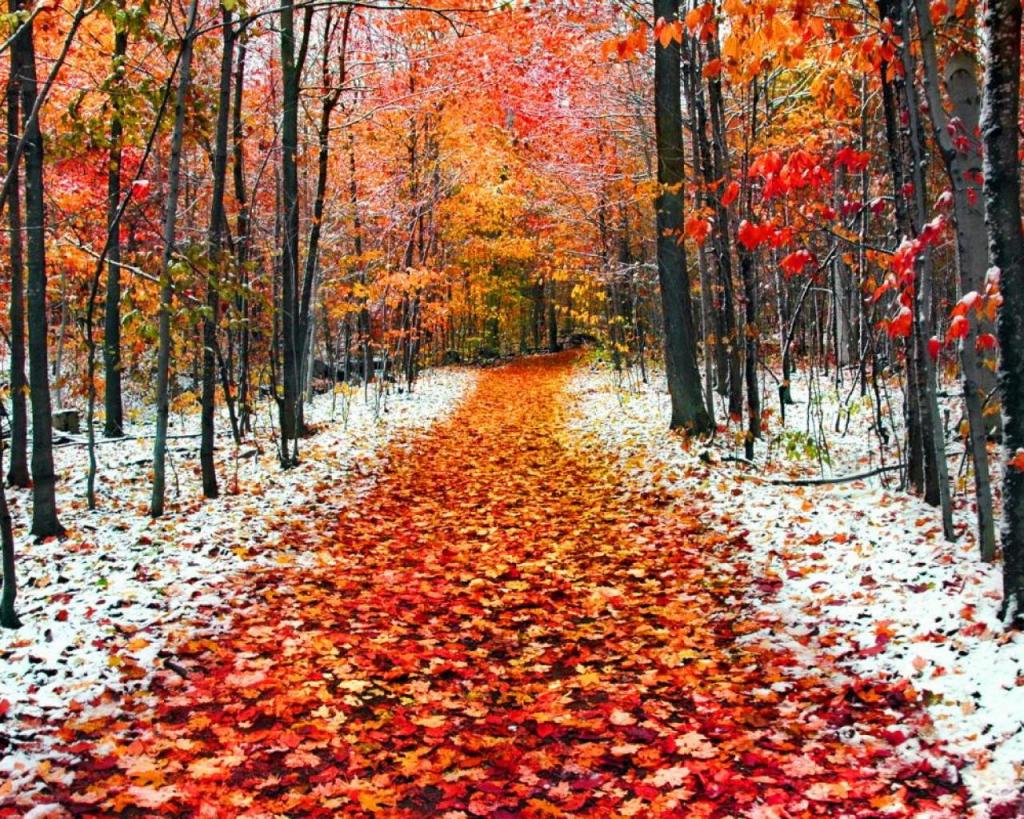
For all my talk of love for the summertime sun, I’ll admit there remains in my heart a secret compartment devoted to autumn. A minute or two examining its landscapes are all that’s needed for understanding why. Every year it’s an ensemble of visual delights—abundant greens having turned to variations of bright yellows through to deep scarlets, flowers that were once reaching skyward now bent and hidden beneath leaves being kissed by a cooler autumn sun, those same leaves often being stirred up suddenly in a swirl by a wailing wind, as if following along on the tail of an invisible kite. For anyone willing to consider the beauty of God’s well-ordered world, even in its tiniest parts, autumn’s scenes are moving.

There’s an emotional richness to autumn, too. It carries in its frosty breezes a strange combination of melancholy and gladness. It bears the crisply hollow feeling of something’s absence. Take a stroll through one of fall’s naked forests and you’ll see. Life itself seems to be sleeping so deeply that nothing can wake it, and all around is damp and dying. And yet, visit that same scene wearing your favorite hat and your coziest coat. Be ready to sense the child-like urge to kick through a leaf pile before leaving to visit the nearby orchard for cider, cinnamon doughnuts, and a chance at picking the best pumpkin for carving.

Autumn is made paradoxically thick by these competing portraits. Through the lens of the Christian faith, perhaps more so than any other season, I’d say autumn silently communicates some of the most important things about life in this world.

For example, autumn more than presents the fall into Sin and the cruel nakedness of regret. It brings the indisputable reminder that our shame is uncovered. It tells us everything has changed and it’s completely beyond our capacity for returning things to what they once were. It whispers the sweeping reality of Death—the inescapability of its laying all things bare before the Creator, its far-reaching aim toward an oncoming winter of eternal condemnation, its frosty residue of guilt that covers everything it touches along the way, the penetrating chill of its finality that can shiver any and all of us to tears.

These are the stanzas of autumn’s dirge-like song. That is, unless you have Jesus. Again, through the lens of faith in Christ, autumn’s singing can turn to something altogether different.

By the power of the Holy Spirit through the Gospel, believers know they are not without Jesus in these autumnal-like moments of bleakness. He’s with them (Matthew 28:20; Psalm 23:4; Joshua 1:9; Hebrews 13:5; Romans 8:38-39). He’s strolling alongside, countering gloom with hope, drawing Christian eyes to His glorious purposes nestled and germinating among the leaves, clothing His people in a thickly warm baptismal robe of righteousness that covers Sin and repels the wrath that Sin deserves, exchanging their melancholy for joy, and promising the certainty of a heavenly spring—the resurrection from Death.

Side by side with Christ, trusting in His life, death, and resurrection for our transgressions, we know in all of our naked forests and rotting leaf piles the same thing we know while drinking cider, eating cinnamon doughnuts, and carving pumpkins: Spring is coming. It cannot be stopped. It’s approaching like a juggernaut from another sphere and it will break through winter’s borders, consuming the entirety of its kingdom. It’s only a matter of time.

While the world keeps spinning, and the people in it continue to reveal the disappointing character of Sin’s nature, isn’t it wonderful how the Gospel for faith can bring a reminder of Christian hope simply by way of a few tinted leaves outside an office window? Indeed, the Bible rings true regarding the assertion of God’s love ever-resonating even among His well-ordered creation (Matthew 6:25-33; Psalm 19:1; Psalm 96:11-12; Romans 8:19).

May God grant you comfort by these words.