
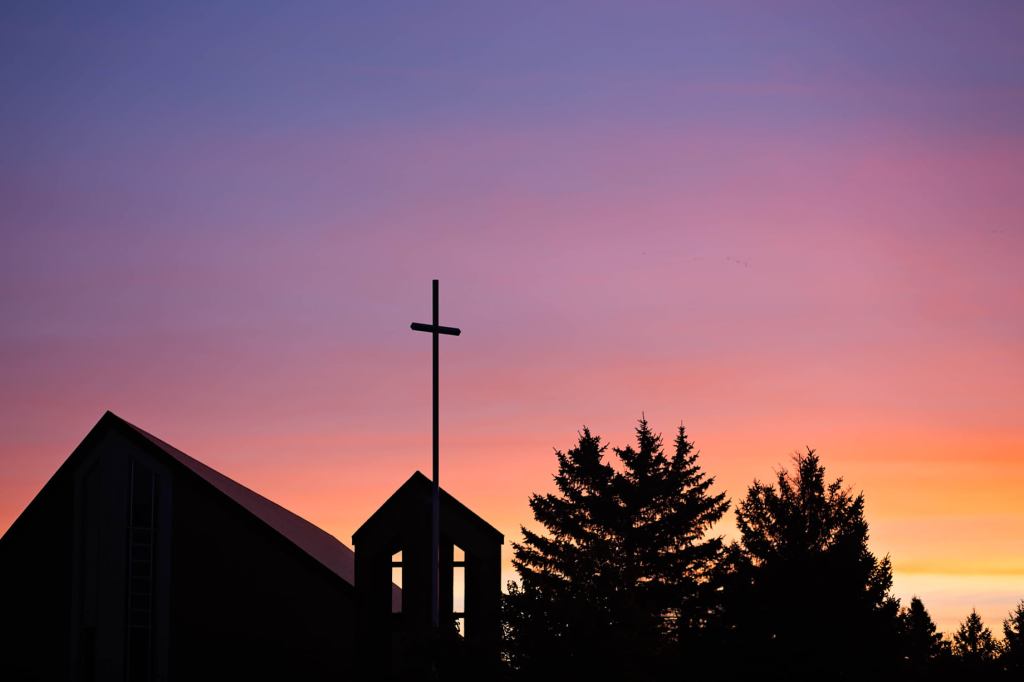
The only thing I have to share this morning is gratitude for the congregation I serve.
I’ll start by saying something that most who follow me already know. I despise Michigan’s climate. I despise the long gray months. Right about this time, rest assured, I’ve already lost all patience for the Michigan cold that seems to settle into my body, making it ache in far too many places. I just told Jennifer on Thursday morning that I despise the way winter in Michigan overstays its welcome, and that, for me, spring and summer feel more like rumors native Michiganders recall from ages past than experiences they actually have each year. Truly, if geography were the only factor for my presence here, I would have departed years ago for someplace warmer, brighter, and far less committed to seasonal suffering.
And yet, I will never leave. I say that knowing the paradoxical nature of the sentence, because I eventually will leave. You can count on it. But the thing is, even if I leave, I’ll never be gone. Not really. That’s because I love Our Savior Evangelical Lutheran Church and School in Hartland, Michigan—the congregation I’ve been blessed to serve since the very beginning of my pastoral ministry. I’ve been the pastor here for almost twenty years now. Even after I eventually retire and find a little place in Florida (or wherever Jen agrees to settle) with a few nearby palm trees adorning a no-big-deal pool, this will remain my real home—the penultimate gathering of a family I love so very much. And I do mean penultimate. It’s second only to heaven.
I could spend all morning telling you why I feel this way. And you know I could, too. You know I’m a wordy guy. Trust me when I say that twenty years of service in this place have not gone by unnoticed. It’s a very “real” community in every sense of the term. It’s by no means a bunch of folks gathered around a religious product designed to scratch their itching ears (1 Timothy 4:3). It’s a living body—Christ’s body—made of real people bound together by Word and Sacrament ministry, and standing beside one another in both a common need and a common confession.
It might sound strange at first, but I love that this is a congregation that knows how to struggle. Trust me when I say that we’ve endured some really tough times. And regardless of those who’ve since departed our humble confines, offering dire predictions on the way out door, this congregation remains, and continues to do so, having never forfeited its soul.
That said, I can promise you, there are stories in these pews that could humble even the most fearless. They’re stories of extreme betrayal and massive loss. But they’re also ones that sing a perpetual song of hopefulness—of fortitude, and of repentance and faith. They’re the kinds of tales that cost something very real but were sung anyway.
That’s because life together here at Our Savior has never been about the absence of pain. It’s about Christ and His ever-present mercy. When that’s the heart of a congregation, its pulse can only ever remain steady. It can only ever keep a confident tempo through both comfort and discomfort.
When I see this in real time—when I’m really paying attention—I realize I’m seeing real Christians, not performing what they believe, but living it. And they’re doing so sincerely, without getting duped by some disrupter’s false narrative. I’m surrounded by people who really are looking for and trusting what’s true—trusting that God is at work, even when it seems like the evidence for continuing with Him in the work is pretty thin.
In fact, just recently, I was reminded of how visible that faithfulness actually is. Our Savior was harshly criticized online several weeks ago for the way our security team diligently protects this place. Let the reader understand. We have a school. We do not take unexpected presences and questionable actions lightly. And we will do what’s necessary to protect the innocent among us. Add to that, even more recently, we endured more online venom for what we believe, teach, and confess concerning our funeral practices. A non-member family was somewhat peeved that we would not accommodate each and every detail they required. We will help however we can. However, Our Savior in Hartland is not a religious fast-food restaurant. You cannot stop in to order up a baptism, wedding, funeral, or whatever. Again, let the reader understand.
Indeed, the world’s viciously ignorant comments can sting on occasion, even when you expect them. Nevertheless, these moments are always extraordinarily clarifying for me, if only because they remind me of something important.
A congregation that takes both truth and responsibility seriously is bound to draw criticism from a world that finds them offensive or inconvenient. And far from discouraging me, the hateful comments only deepened my gratitude as the pastor of a congregation willing to be misunderstood and thoroughly misrepresented by the world rather than be found unfaithful to its Savior. This congregation knows that caving to the culture is never the better choice. Holding to faithfulness is always best, even when it means being insulted, or, perhaps worse, being painted unfairly before onlookers.
I suppose from another perspective, I love this congregation because it has taught me what pastoral ministry actually is. Yes, the seminary is good for this, too. Peter Scaer wrote a piece last week about the cruciality of seminary training. He’s right, it’s essential. But it’s here in the trenches that you learn what being a pastor is really all about. You learn it alongside God’s people in hospital rooms and at kitchen tables. I just experienced this with a friend on Thursday, a member of this congregation I truly adore. Even as we rejoiced together in Word and Sacrament, we sat and talked about anything and everything before she left for a medical appointment. That’s what family does.
I love this congregation because it has allowed me into these spaces, and in doing so, they’ve shown me what it means to stand in the stead and by the command of Christ more clearly than any book or classroom ever could.
From that vantage point, I could never see my job here as some sort of professional assignment from the seminary placement office. Concordia Theological Seminary in Fort Wayne, my alma mater, did a wonderful job in this regard. I was taught to know these moments are so much more. This is where I’ve been called. I belong to this place. And in that belonging, I have found not only my vocation—what God had in store for me long before I ever knew what I wanted for myself—but also a deep and enduring gratitude for the people who “are” the place in which I eventually ended up. They remind me each and every day of the week why the Church, even when it’s fumbling through life in general, will always be one of God’s most gentle and enduring gifts to the world.
I love Our Savior Evangelical Lutheran Church and School in Hartland, Michigan. I love the people. I love being called their pastor. I love the work, even though, as I already said, it can get choppy. And I suppose by choppy, I mean personally challenging, too, even to the point of mental and emotional fracture. But again, I’m with family. That can happen in a family. Still, I can promise you that I love this place and the work the Lord entrusted to me here. He put me squarely in the middle of people who confess Christ—who show up when it would be easier to stay home, who know the seriousness of engaging with the surrounding world, and who keep praying and trusting through it all.
There is a kind of demonstrated holiness in that persistence, one that shows the ordinary rhythm of the Christian life.
That’s Our Savior in Hartland, Michigan. That’s my church. Well, not my church. She’s the Lord’s church. And I’m blessed to be a part of it. And as I said at the beginning, no matter where I exist physically, Our Savior in Hartland, Michigan, will always be my home. It will always be my family.
I suppose that’s my simplest confession this morning. Indeed, when it comes to the weather, I’d much rather live anywhere else but Michigan. And yet, I thank God for placing me here. This is where He wants me, and that’s more than enough for me to want to be here, too.
And if I may add one final word, especially for my fellow pastors who might read what I’ve written here. Feel free to say this kind of thing out loud to your own people on occasion. Don’t assume they already know it. Don’t wait for anniversaries or crises or your eventual retirement sermon. Tell them you love them right now. Tell them you’re grateful. Tell them what it means not only to be the one called to serve them, but what it means to stand alongside them in the same need for Word and Sacrament. Tell them you appreciate all the little moments that’ll never be remembered in detail just as much as the ones that’ll make your monthly newsletter’s front page. Certainly, it’s the pastor’s job to tell the people in his care that Christ loves them—and what a privilege it is! But it’s also a pretty great thing to tell them how much you love them, too. I’m guessing it probably matters more than most realize.

 Cruciform Stuff