
Those who know me best are not surprised each year by my autumn discontent. The leaves fall, and with their pixie-like twirling, so goes a portion of my enthusiasm. Add to this autumn’s brisk breezes and its chilled and misty rains pulling down more and more of the landscape’s adornments, and it’s as if an unseen prison guard is escorting me to a dank and lightless cell. Michigan’s naked oak, maple, and dogwood trees surround and stretch skyward as its bars. My sentence? Six to eight months in the sunless cold.
I’m summer’s boy, and that’s that.
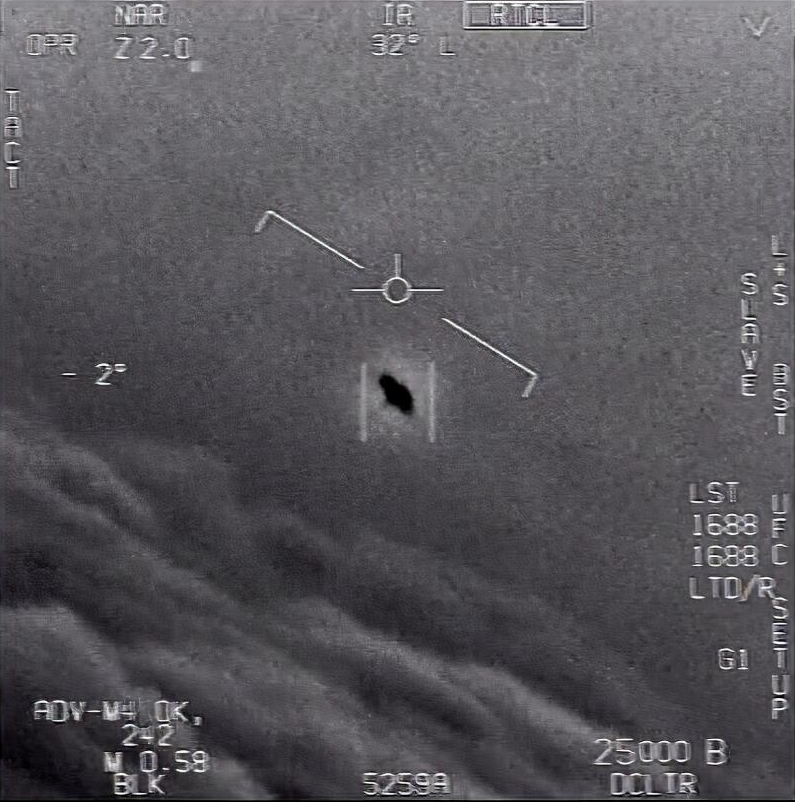
The thing is, I know it. And because I know it, I can war against the returning urge to pack up and move closer to the equator. Although, that reminds me of something. I had a phone conversation yesterday morning with one of our forthcoming conference speaker’s assistants. As is typical of many conversations, I was asked about the current weather. I was sure to mention my disdain for autumn and winter. The young woman I was talking with jokingly said she remembered hearing that space aliens appear to visit warmer regions more so than cold, which means my chances of abduction increase the closer to the equator I get. I told her I thought I’d heard the same thing from one of Joe Rogan’s podcast guests.
Familiar with Rogan, she noted his fascination with aliens, and then, to further the friendly conversation, she asked what I thought about the topic. I told her that while I appreciate sci-fi cinema, I don’t spend much time thinking about aliens, that is unless we’re talking about the millions of illegals crossing our southern border.
“What if they’re real, though?” she asked. “Then what?”
I knew what she meant. Even though we both considered the topic a relatively silly one, I could tell she had given it some thought. She wondered what the discovery of sentient beings from beyond our solar system might mean for Christianity. I think about lots of things, but I don’t spend much time thinking about things like this. Nevertheless, it certainly was an opportunity to shift gears in the way Saint Peter anticipated when he urged that we be “prepared to make a defense to anyone who asks you for a reason for the hope that is in you” (1 Peter 3:15).
My initial thoughts were that if extraterrestrial life was ever discovered, first, I don’t think its existence would obliterate Christianity in the ways so many atheists and agnostics assume. Faith doesn’t work that way. It’s far sturdier than onlookers may realize, and history proves it. Christianity has been through the proverbial ringer, the kind of turbulence that has undone so many other religions, and yet, it’s still here, and it’s encompassing the globe’s entirety. Extraterrestrial life’s existence would be interesting, but it would not disprove or smother Christianity. Of course, my ultimate baseline for saying this is that Christianity is true and all other religions are false. Truth withstands—falsehood crumbles.
From there, I went ahead and admitted to the widely held belief that alien encounters are likely spiritual in nature—but not the good kind. They’re probably demonic. I think Tucker Carlson believes this, too, which makes us kin to this perspective.
I know how that sounds, of course. It sounds relatively backwater. Nevertheless, I shared it openly. And so, you can see how unconcerned I am for being labeled “backwater.” So much of who I am and what I do so often gets that label, anyway. I believe a man cannot be a woman. For many, that’s the old way, the ignorant way. I believe all abortions are murder. That’s indeed becoming an outdated premise. It’s fashionable nowadays to grind both early and late-term infants into hamburger. I believe sin is actual. I believe Jesus was God in the flesh. I believe He suffered, died, and rose from the dead to rescue me from sin. To the onlooking culture, anyone believing these things is considered an intellectual dullard clinging to ancient myths and their accompanying superstitions.
Again, as you can see, I’m far more bothered by autumn and winter than I am by derogatory labels.
“For conversation’s sake,” she continued, wanting something more, “what if we actually discover they aren’t demons but real beings from another solar system? What then?”
Accepting her premise purely for discussion’s sake, I restated my initial premise. For me, it wouldn’t change anything about my faith. But then I went a little further. I told her just how important God’s Word is to me—that I believe every bit of it. I’m not a “Tim Walz” Lutheran.
Walz believes that while the Bible contains worthwhile but negotiable principles, it is, by no means, the inspired Word of God. In his view, we can take and leave whatever it says as we choose. I don’t believe that at all. I certainly believe it is far more than a guidebook. I absolutely believe it is divinely inspired. It is God’s revelation to man concerning salvation, and Jesus is the epicentral purpose of both its Old and New Testaments. I also believe the Bible is inerrant and immutable. It does not contain mistakes, and its doctrines do not change. If we find what we think is a mistake, then we’re not understanding it correctly. If any of its teachings don’t fit well with our time, culture, or modern understanding, then too bad. The Bible shapes us; we do not shape it. When God gave it through His inspired writers, He knew future generations would be reading it, and therefore, it applies to all of them.
Drenched in these qualities, the Bible sure does tell us a lot about God. He’s just. He’s loving. He’s redeeming. He’s not far away from us, but near. He cares. He creates. Concerning His work as the divine Author, one thing I can say for sure is that God is incredibly imaginative. Limited only by His nature, He can make whatever He wants. He’s God. And by limited, I mean things He cannot do, such as sin. Apart from that, look around at the countless varieties of life on Earth if you doubt His creativity. With every new documentary Jennifer and I watch (because most other shows are garbage), we’re both amazed to learn about new creatures we never even knew existed.
There’s something else I know relative to this. Within the Bible’s pages, God shows mankind to be His most prized work. In all the cosmos, He claims us as His beloved. That doesn’t mean we’re the only creatures He loves (Matthew 6:25-34). His love isn’t limited to us and nothing else. He loves and cares for the birds of the air and the lilies of the field, too (Matthew 6:25-34). It means that even as the birds and lilies are trapped alongside us in this sinful world, He didn’t take upon Himself human flesh and die to save them. His sights were set on us. He died to save us. Our rescue was His love’s aim. Our redemption was the purpose for His suffering and death. That’s a whole different kind of love—an extraordinary love, by comparison.
All of this together means two things to me. First, if we ever discover that aliens exist, God made them. I can say that because I’m in concert with all the Christians who’ve knowingly or unknowingly implied it for generations in the Nicene Creed. Together, we’ve been announcing God as the “maker of heaven and earth, of all things visible and invisible.” In other words, He made everything we can see and everything we can’t see, everything we know, and everything we are yet to discover.
Second, if there are aliens, like everything else God made, He loves them. Beyond that, all sci-fi-becoming-reality speculation ends for me.
Why am I sharing all this? Well, because it came to mind this morning, that’s why. Remember, I mentioned before that this whole conversation seemed a little silly. That’s because I think it is. It was a transitional interaction designed to carry two people from an introduction to the business at hand. But looking back, I can see its benefit. I was given the opportunity to think through and express my hope. Moreover, by measuring one of the strangest topics out there against Christianity’s deepest convictions, faith and its relationship to God’s inspired, inerrant, and immutable Word were hardened, not rattled.
In the end, no matter what’s going on around us, a Christian holds to the Bible as the sole source for faith, life, and practice. That’s because the Gospel of salvation through Christ is its core. Trust in this eternal truth is the fuel for Saint Paul’s confidence as he writes, “For I am sure that neither death nor life, nor angels nor rulers, nor things present nor things to come, nor powers, nor height nor depth, nor anything else in all creation, will be able to separate us from the love of God in Christ Jesus our Lord” (Romans 8:38-39).
Understand that “space aliens” fits into Paul’s phrase “nor anything else in all creation.”
 Cruciform Stuff