
The Place Where Only Christians Can Live

I would usually sleep on the cot in my office at the church on a snow-laden day like today. But not this time. I slept in my own bed at home last night.

For one, I prefer to make sure everything remains in good working order throughout the night, namely, that the heat and power continue uninterrupted. I also prefer not to be the only one out on the unplowed roads at 4:00 in the morning. And that’s precisely what they were on the way in. As the years go by, it seems less thought is given to the churches—to the fact that God’s people are still gathering, still trying to make their way to worship. I get the sense that Sunday morning simply isn’t factored into anyone’s plans anymore, certainly not the folks deciding what gets plowed first.

Still, in all of Our Savior Evangelical Lutheran Church in Hartland, Michigan’s 70 years, we’ve never canceled a service. Not once. And it certainly isn’t going to happen on my watch. So, rest assured, the lights are bright. The heat is on. The Lord’s gifts of Word and Sacrament will be given, no matter how many gather to receive them.

The holy season of Advent begins today. That means Christmas is coming. And yet, last weekend at an event anticipating Christmas—a Christmas tree-lighting ceremony in downtown Chicago—shots rang out, resulting in one dead and eight seriously wounded. That same night, in Concord, North Carolina, another tree-lighting ended in gunfire. Four were shot. Three of the victims are still in critical condition.

Violence in Chicago is a pretty standard thing. It’s one of the most dangerous cities in America. Concord, North Carolina, not so much. In fact, it ranks among the safest cities in America. Safe or not-so-safe, what makes all of this stand out is the setting. Although Christmas trees no longer mean to most what they’re supposed to mean. The whole point of a Christmas tree is Jesus—or at least it used to be, way back when Christian communities looked to the evergreen as a reminder of life in Christ during winter’s deathly season. But now, it’s little more than a seasonal prop stripped entirely of its sacred center. Still, public tree-lighting ceremonies continue to be celebratory opportunities, and if anything, a warm assumption of community. That’s nice. But it obviously isn’t enough. Not when dreadfulness suddenly intrudes. And in the end, that may be the most sobering point of all. Whether you live in a city known for violence or one praised for its safety, dreadfulness always finds a way in. And then what? I only ask this question having read some of the words from victims’ families, which I’ll get to in a moment.

In the meantime, I’ll simply say that sin can and will fracture anything devoid of Christ. When Christ is removed, wherever He once was is instantly hollow. An empty object is a fragile object. It certainly has no power to restrain real darkness. But that’s because Christ is missing, and He’s the only One who can carry us through times of need. In this sense, last weekend’s violence during the Christmas tree-lighting ceremonies served as a kind of grotesque sermon, reminding all of us how Christological substance is desperately needed in our lives, and how humanity just cannot manufacture it, not even through seasonal civic ceremonies that look and feel nice but in truth are entirely devoid of real meaning. This brings me back to Advent.

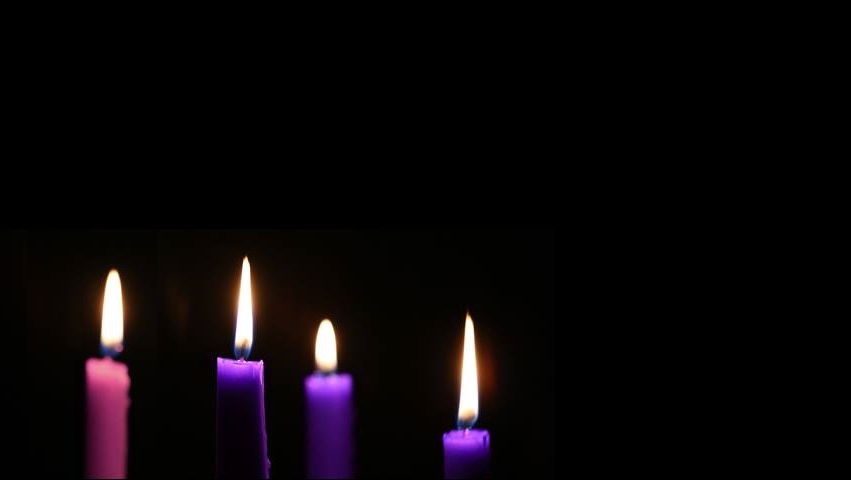
For the churches that observe Advent—and I mean, actually observe it—we know the centuries-old pre-Christmas season is by no means hollow. We know its language and sense. It’s a penitential time, one that acknowledges sin’s dreadful grip. And yet, Advent stakes a firm claim in hope as it simultaneously looks backward to the Rescuer who came at Christmas, and also forward to that same Rescuer’s promised return at the end of days. As we Confessional Lutherans tend to say, it’s the kind of hope that knows the fullness of God’s promises in the “right now” but also the “not yet,” all at the same time.

This weird tension is essential to Advent. It names sin honestly. It knows the situation is dire and, therefore, refuses to minimize the brokenness responsible for the violence we saw last weekend. But it does this while anchored in what Christ has done, is doing now, and will continue to do. That’s Christian hope. Christian hope is not some hollow form of vague optimism. That’s what happens at civic tree-lighting ceremonies. Advent’s longing is a deliberate, time-spanning trust that the same Savior who entered history will keep His promises, one of which is to return to set everything right. That makes Advent far more than a season that’s waiting for Christmas, but one filled with holy confidence rooted in history, promise, and unquestionable fulfillment.

That’s a place where only Christians can live.

By the way, this is not a claim of moral superiority. It’s one of theological location. To live in the “right now but not yet” requires faith. Only those who have heard God’s promise in Christ and, by the power of the Holy Spirit, believe, can stand in the middle of that tension without being crushed by it. It is a narrow place. But in its narrowness, there’s a freedom the world cannot replicate. It tries. But it just can’t do it.

Remember, Christians started all this decorating stuff. We decorated evergreens, lit candles, and hung lights. We sang ancient hymns that communicated the Gospel’s backward and forward perspective. We still do it. The world has similar traditions this time of year. It decorates evergreens, puts up light displays, and sings its holiday songs. But between the two spheres is a strict separation. Buffeted only by the world’s empty décor, culture’s residents experience what happened in Chicago and North Carolina, and suddenly, their holiday is tainted with despair. I read an interview with one of the Chicago victim’s family members. The woman being interviewed said she may never celebrate Christmas again. Essentially, the memory is too terrible, and now the holiday is, too.

I get how that could be true, especially when your only framework is a sentimental, once-a-year version of joy tied to things that can be ripped away at any moment. When that’s the case, then any tragedy is enough to make every twinkling light or holiday tune feel forever poisoned.

But from the Christian perspective, with Advent’s Gospel in mind and heart, we light candles and hang lights, not to deny the darkness, and not even because the darkness might be scary. We know it is. But we also have no intention of granting the darkness final authority. We keep singing our joy-filled hymns, not necessarily to cope, as though we’re in some starry-eyed form of denial, but as an act of genuine defiance against sin, death, and the devil. We sing because the Gospel has the upper hand, not the darkness, and we know it. And so, we are perpetually hopeful.

I guess one thing I’m saying is that Christian rituals like these, no matter how the world might twist or imitate them, will forever be Christian property. We own them. And because we know better, they’ll always be acts of resistance rather than seasonal sentiment. The evergreen—a plant that keeps its green even when all life around it has come to a frozen halt—for Christians, it’s a visible confession that death does not have the final word. A candle is not mere ambiance for us. It’s a proclamation that Light has entered the world and cannot be overcome. The hymns are not background music, but instead longstanding confessions of the one true faith that has survived the worst this world could throw at it. In fact, the chief hymn appointed for the First Sunday in Advent is proof alone. “Savior of the Nations, Come” was written by Ambrose of Milan. He lived from 340 to 397. And still, here we are, age after age of dreadful violence and persecution, and we’re still singing this great hymn of incredible hope, one that tells the entire Gospel story in eight beautiful stanzas.

This is proof that we own Advent and Christmas.

And so, while the world scrambles to make sense of yet another demonstration of human awfulness, the Church stands where it has always stood at this time—right in the middle of human ruin, all the while holding tightly to God’s promises. We stand there unshaken, proclaiming that this world’s terrors cannot overcome us. The Light of the World has come and is coming again. We know that everything around us is temporary, yet the forthcoming King and His kingdom are eternal. That divine knowledge shapes the entirety of our reality. And that’s that.

Indeed, the world is experiencing a sentimental countdown to a holiday. But that’s not us. Christians continue taking to a sacred battlefield, knowing the ultimate victory has already been accomplished and that the final victory is at hand. And the churches that observe Advent—and I mean, actually observe it—their senses are being honed to this truth.

Reverend Doctor Advent

The Advent season is upon us. Not Christmas, but Advent.

“So, what’s the difference?”

Well, there’s a big difference, actually. A person can understand the difference by first admitting that not all teachers are human. Seasons are professors, too. If we’re paying attention, even the earth’s varying seasons teach us something. Ralph Waldo Emerson described summer as a time that teaches us to swim and to drink in the wild air, which is to say, it’s a time for getting out and occupying creation. Conversely, John Steinbeck noted that the value of summer is best known in the depth of winter. Shakespeare added to the wintry lesson, “Here feel we the penalty of Adam, the season’s difference; as, the icy fang.” In other words, we can blame the devilish serpent and Adam for winter.

Again, seasons teach.

I’ll add that the Christians who jump straight from Thanksgiving to Christmas without experiencing the season of Advent are truly missing out on something extraordinary.

Advent means “coming.” When you know someone or something is on the way, you prepare. No small part of the Advent season’s purpose is to stir thoughtful anticipation and to refresh Christianity’s two-fold longing for the arrival of Christ. Here’s what I mean by “two-fold.”

If an Advent pilgrim is paying attention, he’ll first sense Advent’s deep concern for a savior from the perpetual nighttime of Sin and Death. He’ll notice the season’s explicit call to contemplate this unfortunate predicament, and he’ll be urged to look toward a little city with a manger. He’ll be prompted to prepare for Jesus, the One whose incarnation was the very inbreaking of God to save us. He’ll also notice an underlying promise: the One who first came in lowliness won’t return in the same condition. The next time He comes, it will be in glory as the divine Judge over all things. When He returns, He’ll set all things right and take His people to be with Him forever.

Advent ponders these two arrivals. The season is in place to help us, mainly because if left to ourselves, we’ll be enticed toward the first of the two—and this will happen for all the wrong reasons. Setting aside the reality that we are not inheritors of this world but of the world to come, we’ll begin to see Christmas for everything that it isn’t—an opportunity to accumulate things. It becomes little more than a glittering season of commercialism, inevitably resulting in fast-fleeting joy. Advent, by contrast, is designed to exchange the superficial for the depth of a divine event—the breathtaking moment when God actually entered our world to fulfill His promise of salvation, claiming us as His own, and inaugurating a hope and a future that extend far beyond what this temporary world could ever promise or give.

By the way, I should interject and say it’s entirely fine to put up a Christmas tree, string lights on the front porch, and decorate our homes in jolly anticipation during Advent. Some would disagree. I’m not one of those folks. The Thoma family put up their festive decorations the weekend before Thanksgiving. For one, we had to. It was the only weekend we’d all be around to help accomplish it. Besides, I’m not so rigid as to think these traditions are incapable of adding to the anticipation. They can help prompt the warmth and expectation I mentioned. Still, even as the Christmas tree twinkles and the tiny Dickens-like villages adorn our fireplace mantles, Advent calls us to make sure our hearts remain focused on something that glistens with a brighter shine. Advent’s appointed lessons keep our gaze steady, reminding us that everything we see—the tree, the lights, the gifts we receive at Christmas, whether wrapped or unwrapped—all have an expiration date on them. We might not be able to see it, but it is there. Indeed, this world is passing away (1 John 2:15-17, Matthew 6:19-20, James 4:14, 1 Corinthians 7:31, and the like), and while the surrounding décor might represent a sense of our joy, it’ll only ever be a hint at the unsurpassed joy Christ brought in His birth and will bring again in its fullest at the Last Day.

Advent zeros in on these things. It whispers to the soul, “Prepare in this world for the next. Prepare not just your home but your heart.” It readies us for Jesus, the Divine Gift that does not fade, the Hope that does not diminish, and the Joy that is truly everlasting.

Give Before Taking

Advent has begun. If you’re paying attention—if you’re attending a Church that’s paying attention—its purpose is easy enough to understand. The depraved world needed a Savior. That Savior was born in Bethlehem. He submitted Himself into the vulgar crassness that rots humanity to its core. In the filth of a manger, He was born the kindliest servant of all—born to redeem the whole world from Sin. That Savior, Jesus, is coming back again in glory. When He does, it won’t be in meekness but rather in great might. He’ll come as the Judge—the Pantocrator. And just as the Creeds declare, His kingdom—all cases determined, and the one world-consuming verdict announced—will have no end. Those who are His own will be with Him in eternal glory. Those who are not won’t.

These are the converging views of Advent. Both are vistas of promise. Both bear features of warning.

Inherent to warning is preparation. Advent prepares us, which is one reason it serves as the first season in the new Church Year. One needs only to consider the Gospel reading for the First Sunday in Advent—Matthew 21:1-9—the account of Christ’s entrance into Jerusalem on Palm Sunday. Here the Church Year’s lens is polished, and we see clearly what each event throughout the rest of the year means. Jesus came to die. Why? Because we needed God to act. We needed Him to send help. And so, He did. He sent His Son to take upon Himself human flesh. The Old Testament more than alerted us. Saint Matthew did, too. He saw its fulfillment and then reminded, “Behold, your king is coming to you, humble, and mounted on a donkey, and on a colt, the foal of a beast of burden” (Matthew 21:5 [Zechariah 9:9]). Saint Matthew says on the First Sunday in Advent, “There He is. There’s your King. God is moving. He’s acting. In a few days—Good Friday—you’ll see the fullest measure of His concern for the world. He’ll go to war. It’ll be bloody. But He’ll win, and the whole world will be bought back from the brink of lostness.”

If you are at all familiar with what I’ve written in the past, then you’ll know it’s a regular thing that I urge Christians to view the world through this lens. Observing the world through the sacrifice of Christ is more than revealing. It’s world-altering. In an Advent sense, it’s preparatory.

For one, when we know the seriousness that caused God’s action on our behalf, we become aware of the dreadful cause’s subtle trajectories in life. I’ll give you an example that came to mind last week.

Right after Thanksgiving, the world celebrated Black Friday—a day that ushered humanity into a long weekend of buying and then buying some more. Several days of non-stop purchasing faded into Cyber Monday, another day devoted to getting and consuming more.

Now, I know the innards of these days-long events are multifaceted. Some people use them to buy for themselves everything they’ve ever wanted. Others take advantage of the discounts in preparation for Christmas gift-giving. Some do a little bit of both. Keeping these things in mind, I’m less concerned with reading the hearts of consumers as I am the order of things. The world betrays its need for a Savior when you consider the sequence of its priorities.

Over several days, we take, take, take before arriving at Giving Tuesday—a singular day set aside for charitable giving. In perspective, it’s estimated that $20.4 billion was spent this year from Black Friday to Cyber Monday. $3.1 billion was exchanged on Giving Tuesday. It also appears that end-of-year tax deductions were a “determining factor” to more than half who gave. In other words, many might not have given at all without the self-interested “taking” of personal tax benefits, making the giving much smaller.

Again, the point isn’t to judge hearts. It’s to observe. Clearly, taking outweighed giving. But now, consider the order of things.

God gives. He does this first. And even when He’s found taking, His giving far outpaces it. The wonderfulness of this generous love establishes a standard: first fruits giving (Numbers 15:20-21, 18:12-18; Romans 16:5; 1 Corinthians 16:2, 15; and the like). We give, then we take. In other words, perfect love first aims outwardly before it ever thinks to aim inwardly. Jesus is the epitome of this standard. Saint Paul calls Christ the first fruit (1 Corinthians 15:20). Saint James does the same (James 1:18). By faith, having been remade into the likeness of Jesus, Christians are made aware of this better order. And so, by the power of the Holy Spirit at work within us, we know to give before getting (2 Corinthians 5:17). We know it is better to give than to receive (Acts 20:35).

The world has reversed this, once again betraying its need for rescue. “Self” is loved before others. Sinful man takes before giving. When you think about it, this mirrors the earliest events in Eden. Eve fell into Sin. As a result, the natural order for exchanging things shifted. She first got what she wanted, and then she gave to Adam. She took before she gave. From there, her giving—and all humanity’s giving—would be naturally contaminated.

The point: our need for a Savior runs deep. Not only do we see and experience it in the more apparent horrors of life, but it’s found churning in the guts of the so-called good things we do (Isaiah 64:6). There are traces of it in our charity. Even our charity needs fixing.

If you’re paying attention, Advent’s first image—the Son of God’s Palm Sunday procession toward the cross—preaches this, too. Jesus traveled along through the streets awash in praise. Those praises so easily turned vicious. Still, Advent is preparing our hearts for celebrating this ever-determined Lord’s arrival in Bethlehem to reverse the course of this gross tendency in all of us. It does this while also preparing us for the Lord’s final return in what promises to be an eternity-piercing moment capping the complete reversal of Sin’s destruction once and for all.

It was Saint Ignatius Loyola who prayed so devoutly, “Teach us, good Lord… to give and not to count the cost; to fight and not to heed the wounds; to toil and not to seek rest; to labor and not to ask for any reward, save that of knowing that we do Thy will.”

Those are substantive words. Those are Advent words. They’re a description of the One who came to accomplish them, and they’re hoped-for fruits of faith among God’s people—a desire to give faithfully and generously, to serve before being served, to love before being loved, to give before taking. We do this while we await the Lord’s return in glory.

We can only arrive at this better view of giving through the Gospel. May this view be yours, both now and always.

Soli Deo Gloria

I wanted to take a quick moment to say thank you. It’s certainly appropriate to do so, not only because we’re still in the Thanksgiving mood, but because, like the man who wrote the chief hymn we’ll be singing today (“Savior of the Nations Come”), Saint Ambrose once said, “No duty is more urgent than that of returning thanks.”

I’ve shared that quotation with you before. Sitting here at the church early on Thanksgiving Day morning, I took a quick stroll through previous Thanksgiving Day messages to the people of God at Our Savior in Hartland. In the note I sent last year, I shared the familiar quotation from Ambrose. Curious about its origin, I tracked it down. But before I get to that, let me continue the thread of sentiment I already started.

To the faithful here at Our Savior in Hartland—and in all the churches—you’re owed a debt of gratitude. Speaking as the pastor here, I should say that this congregation—how she operates, what she accomplishes, where she’s going—happens because of the faithful.

Now, don’t for one second think that I’m straying from our wonderful Lutheran legacy which knows to call out “Soli Deo Gloria” (to God alone be the glory)! I’m not. I’m simply doing what Saint Paul does with regularity throughout his epistles (Romans 1:8, Ephesians 1:16, 1 Corinthians 1:4, Philippians 1:3, Colossians 1:3, Philemon 1:4, 1 Thessalonians 1:2, 2 Thessalonians 2:13, and countless others). My thanksgiving to you is an acknowledgment that God has used (and continues to use) you for some pretty incredible things, all of which join to form a singular, bright beaming light of constancy streaming from this place. It pierces a shadowy world in desperate need of the Gospel. As your pastor, I thank you for your diligence in this. I owe this gratitude to you.

There’s another reason this is your due, and again, we consider Saint Ambrose. That same great Bishop of Milan wrote the words I quoted not long after the unexpected passing of his brother, Satyrus. Interestingly, if you read my Thanksgiving Day note sent out last Tuesday, you’ll see my words emerged from thoughts of my brother’s death, too. Reading most of Ambrose’s eulogy this morning, I can see he experienced the same nagging sense as me. Standing at the grave of his brother, he encounters a particular awareness. Ambrose understands that none among us knows the hour of our final moments together (Ecclesiastes 9:12). No one knows what his or her last words given or received in this mortal life will be. Will they be loving? Will they be cruel? Will they be inconsequential? Will they be thankful? Whatever they are, Ambrose acknowledges the finality of Death, and as a result, he writes something familiar to those of us who’ve lost someone close:

“To die is gain to me, who, in the very treatise in which I comfort others, am incited as it were by an intense impulse to the longing for my lost brother, since it suffers me not to forget him. Now I love him more, and long for him more intensely. I long for him when I speak, I long for him when I read again what I have written, and I think that I am more impelled to write this, that I may not ever be without the recollection of him.”

Now that Satyrus is gone, Ambrose feels the deepest sting of Death’s separating power. It makes sense, then, that he would urge the rest of us toward genuine thanksgiving in the here and now—that we would be glad to God for each other and that we would share this same tiding with the people in our lives. He calls it our duty. And we can agree, especially as we’re prompted by another sense hovering among Ambrose’s words. He knew something about his brother, something that stirred him to cry out, “You have caused me, my brother, not to fear death, and only would that my life might die with yours!”

Ambrose thanked his brother for being an example of faithfulness, even in Death. For a second time, this brings me back around to where I started. I’m grateful for your enduring devotion, just as Ambrose wrote that his brother “saw [Christ’s] triumph, he saw His death, but saw also in Him the everlasting resurrection of men, and therefore feared not to die as he was to rise again.”

Thank you for being a congregation filled with Christians who emit this Gospel truth in so many ways. Some of you do it through financial support of the mission’s efforts. Others do it through hands-on service. So many do it through regular prayer. Countless do it in simple conversation. All of you do it by the power of the Holy Spirit in faith. Truly, you know the value of what we have in this place—historic liturgy, binding creeds, rites and ceremonies that reach far beyond the here and now, a sturdy backbone for enduring an ever-encroaching world—things that so many churches are dismissing as unfriendly, socially stiff, or culturally irrelevant. But you know better. You’ve learned from those who’ve gone before you. Even Plato knew that “learning is a process of remembering.” And so, like Satyrus for Ambrose, you remember. You’ve learned from the examples of others to live by faith in Jesus Christ, trusting just as Ambrose did that “Death is not, then, an object of dread, nor bitter to those in need, nor too bitter to the rich, nor unkind to the old, nor a mark of cowardice to the brave, nor everlasting to the faithful nor unexpected to the wise.”

If the world had the capacity for genuine gratitude, it would owe its gratefulness to God and His Christians throughout history. Established in shiftless ways as this world’s salt and light—God’s gifts to the world in human form—the sour darkness of this life is made flavorful and bright (Matthew 5:13-15). Acknowledging this does not negate a heritage of “Soli Deo Gloria!” Why not? Well, let Jesus answer. He’s the One who said that through the faithfulness of Christians—the ones reflecting His light—the needful world around us will “see your good works and give glory to your Father who is in heaven” (v. 16).

To God alone be the glory for all you are and do and say in service to His Gospel.

Again, thank you for your faithfulness. Know you are loved and admired by your pastor. But not only me. By others, too. Come to think of it, may I suggest something? When you arrive for worship, take a chance at putting your arms around a fellow Christian or two you’ve not visited with in a while. Tell them just how thankful you are that they’re in your life. Remind them how their example of faithfulness is not only a delightful blessing of comfort amid so many life-terrorizing things, but it is also a simple and ongoing demonstration of Saint Paul’s words to “encourage one another and build one another up” (1 Thessalonians 5:11).

Being together in the Lord to receive His gifts, and taking the opportunity while we still can to commend one another for that togetherness, is a blessing once again remembered not only at Thanksgiving, but every time we gather together in the Lord’s house to receive His wonderful gifts of forgiveness. I’m glad for that. And I’m glad to celebrate it with all of you.

The Helplessness Isn’t Permanent

Advent begins today.

It’s unfortunate that far too many churches these days have jettisoned the traditional observance of Advent. I’d say they’re missing out on a lot. Historically, the Church revisits her course at this moment, making sure her heading is sound and her crew is ready.

For all of the cultural twinklings surrounding it, Advent is a darker season dealing in two contrasting images.

The first is the darkness of penitential concern. It’s a time for recalling the very real predicament facing the world because of Sin’s infection.

With this in mind, Advent takes aim at Mankind’s impotence in relation to Sin’s chief product, which is Death. It also anticipates the final day when the Lord returns to judge both the living and the dead. Together in these, all time and opportunities will have ended. A last breath will have happened, or the Last Day will have arrived, and you will go. The time for even the most foolish negotiating will have passed. There will be no discussing or bending the standards. There will be no convincing God to your side with explanations that you did your best to keep the Law (the Ten Commandments). You won’t find room between the two of you for slight disagreement on what was acceptable and what wasn’t. Advent strips away all hope for leniency by works of the Law. It helps to remind us that “in Adam, all men die” (1 Corinthians 15:22). It puts before us the divine cue that the Law silences everyone, holding all humans accountable to God’s perfect standards (Romans 3:19). And lest we forget, Advent reminds us of the inescapable predicament of the Sin-nature in all of us. Standing beside the Law’s requirements, we’ll discover the impossibility of ever being counted righteous by our deeds (v. 20).

Advent teaches the hopelessness of human effort against all that plagues us when moving from this sphere to the next.

Advent also teaches that this dark night of helplessness isn’t permanent. Not only will it come to its completion at the Last Day, but Advent carries us back to the day the solution to the Sin problem was given—when Death was put on notice, and all of the long-foretold promises of God were completed in the God-man born to a virgin in Bethlehem. Advent looks to Christmas. It brings us back to the same sense of anticipation that’s ours as we await our last breath or we await the Last Day, except by faith, this time it’s fearless. It reminds us that the midnight concern of our lostness more than faded away in the sunrise of the Savior’s birth.

This is hope. Advent preaches this. It keeps before us the effervescent fact that God’s love moved Him to send His Son, Jesus, to save us, and faith’s grip on the merits of Jesus will, without question, see the believer through to eternal life. For believers, even though we die, yet shall we live (John 11:25). The One born on Christmas morn said this. In the same way, for believers, the Last Day will be like the celebration of Christmas. It won’t be a moment of terror, but rather a moment of bright-eyed joy. In fact, it will be a moment of familiarity, one that recalls the angels’ words to the shepherds about peace being accomplished between God and Man through the oncoming work of the newborn Christ. In that final moment before the returning Christ, such peace will be experienced as never before, and it will wash over us as we hear the voice of the One who once laid in a manger say, “Come and receive the inheritance prepared for you from the foundation of the world” (Matthew 25:34).

Thanksgiving and God’s Smile

After fifty-two long weeks of travel, having visited all of the distant landscapes of the Church Year, we’ve come full circle and arrived once again at Advent. We’ve come home.

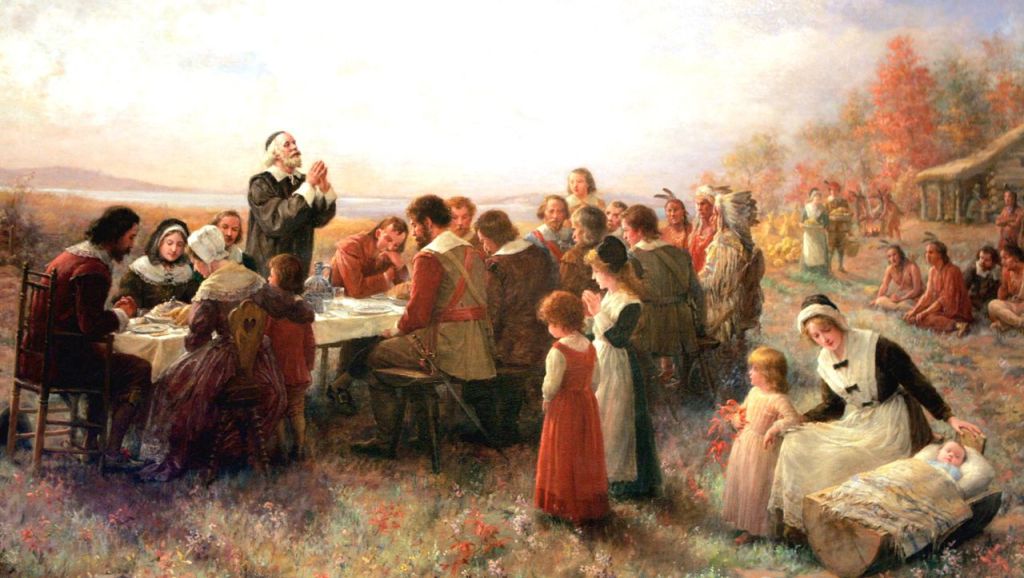
Still somewhat afar off, there’s a plain between us and Advent’s perpetual twilight eve of waiting—an oasis of sorts. It’s always been there. We just didn’t necessarily notice it until a handful of our nation’s most thoughtful carved it from the landscape, cultivated it, and made it a more prominent vista. They named this lush borderland “The National Day of Thanksgiving.”

Strangely, some of the Church Year’s travelers have been long-bothered by the demarcation of this day. Each year at this time, they share their concerns for such a day instituted by this world’s princes and celebrated by the Church. And so, passing through its parcel, they say it doesn’t belong—that the Last Sunday of the Church Year is well enough equipped for delivering us into the new Church Year, and the Day of National Thanksgiving needn’t be one of the Church’s events. I’d say these fellow travelers are right, if only by their humbug commentary they didn’t demonstrate a bizarre disposition against one more opportunity for thankfulness. Doing this, perhaps they prove, even more so, the National Day of Thanksgiving’s necessity.

I agree with them in the sense that thankfulness is already written into each and every stop along the Church Year’s way. This is true because it’s written into the souls of believing travelers by the power of the Holy Spirit through the Gospel. This means thankfulness is a fruit of faith that cannot be kept from sprouting from the soil of the Church’s collective heart, reaching up toward the sunlight of God’s grace, and rejoicing in His wonderfully sustaining love.

As this meets with the National Day of Thanksgiving, perhaps a day set aside and focused specifically on giving thanks works quite well between the Last Sunday of the Church Year and the First Sunday in Advent. The journey has ended, another is beginning, and both are born from the fact that God is always faithful all along the way. In between the two, thankfulness just seems natural. It’s what any normal traveler does when his journey has ended and he’s found himself at home’s doorstep. He does not wisp a thankless sigh, a sound made because he’s annoyed by home’s obligation. He sighs with thankful relief. He’s glad. And so, he falls to his knees—or perhaps he goes right inside to fall into his favorite chair, or into the arms of a loved one—and he gives thanks to the One who took careful notice of each of his steps along the way, being sure to guard and protect him through to the end of one journey, and into the brief respite granted before beginning another.

Saint Ambrose said so exactly: “No duty is more urgent than that of returning thanks.” In a radically individualized society filled with takers, I probably don’t need to explain Ambrose’s words to you.

With that, I say a day set aside that takes aim at thankfulness can do little, if anything, to harm our nation, let alone a Christian, no matter who established it. Besides, Christian thankfulness is already attuned within us. It’s always on the lookout for ways to show itself to a thankless culture. We need it to show itself. It certainly knows how. It knows far better than the world. Again, this is true because Christian thankfulness is powered by the right kind of joy—the kind born from the Gospel of salvation through faith in Jesus Christ. It is well-equipped for seizing every opportunity for gratitude in this life as we await the next. Christian thankfulness exists through sunshine and rain, warmth and cold, happiness and sorrow.

Just imagine how Christian thankfulness must leap for joy when it sees it has its own day on the calendar.

I suppose you don’t need to imagine it. Our Savior in Hartland is not a congregation that ignores the National Day of Thanksgiving. We’re glad for it, and we embrace it. It seems natural to do so. Perhaps even better, it seems only right. Come and see for yourself. Join the thanks-filled gathering of Christians here at Our Savior on November 25 at 10:00am. Join us as we take hold of the National Day of Thanksgiving and use it in a way that makes God smile; which, by the way, doesn’t necessarily mean we’re gathering to give anything to or do anything for Him that He needs. We gather because of what He gives and does, and we have hearts for receiving more. We desire His soul-strengthening gifts of forgiveness through Word and Sacrament ministry. We want to receive this heavenly bounty whenever we can, and after each opportunity, to be sent out by His smile, which is the gracious benediction of His face shining upon us and giving us peace.

Indeed! O, give thanks unto the Lord; for He is good, and His mercies endure forever (Psalm 136:1)!

God bless and keep you, my friends, and may you have a wonderfully happy Thanksgiving. I hope to see you in worship. And, if I do, I’ll have one more reason to give thanks to my faithful God, not only for His grace, but also for your faithfulness.