

Reverend Doctor Advent

The Advent season is upon us. Not Christmas, but Advent.

“So, what’s the difference?”

Well, there’s a big difference, actually. A person can understand the difference by first admitting that not all teachers are human. Seasons are professors, too. If we’re paying attention, even the earth’s varying seasons teach us something. Ralph Waldo Emerson described summer as a time that teaches us to swim and to drink in the wild air, which is to say, it’s a time for getting out and occupying creation. Conversely, John Steinbeck noted that the value of summer is best known in the depth of winter. Shakespeare added to the wintry lesson, “Here feel we the penalty of Adam, the season’s difference; as, the icy fang.” In other words, we can blame the devilish serpent and Adam for winter.

Again, seasons teach.

I’ll add that the Christians who jump straight from Thanksgiving to Christmas without experiencing the season of Advent are truly missing out on something extraordinary.

Advent means “coming.” When you know someone or something is on the way, you prepare. No small part of the Advent season’s purpose is to stir thoughtful anticipation and to refresh Christianity’s two-fold longing for the arrival of Christ. Here’s what I mean by “two-fold.”

If an Advent pilgrim is paying attention, he’ll first sense Advent’s deep concern for a savior from the perpetual nighttime of Sin and Death. He’ll notice the season’s explicit call to contemplate this unfortunate predicament, and he’ll be urged to look toward a little city with a manger. He’ll be prompted to prepare for Jesus, the One whose incarnation was the very inbreaking of God to save us. He’ll also notice an underlying promise: the One who first came in lowliness won’t return in the same condition. The next time He comes, it will be in glory as the divine Judge over all things. When He returns, He’ll set all things right and take His people to be with Him forever.

Advent ponders these two arrivals. The season is in place to help us, mainly because if left to ourselves, we’ll be enticed toward the first of the two—and this will happen for all the wrong reasons. Setting aside the reality that we are not inheritors of this world but of the world to come, we’ll begin to see Christmas for everything that it isn’t—an opportunity to accumulate things. It becomes little more than a glittering season of commercialism, inevitably resulting in fast-fleeting joy. Advent, by contrast, is designed to exchange the superficial for the depth of a divine event—the breathtaking moment when God actually entered our world to fulfill His promise of salvation, claiming us as His own, and inaugurating a hope and a future that extend far beyond what this temporary world could ever promise or give.

By the way, I should interject and say it’s entirely fine to put up a Christmas tree, string lights on the front porch, and decorate our homes in jolly anticipation during Advent. Some would disagree. I’m not one of those folks. The Thoma family put up their festive decorations the weekend before Thanksgiving. For one, we had to. It was the only weekend we’d all be around to help accomplish it. Besides, I’m not so rigid as to think these traditions are incapable of adding to the anticipation. They can help prompt the warmth and expectation I mentioned. Still, even as the Christmas tree twinkles and the tiny Dickens-like villages adorn our fireplace mantles, Advent calls us to make sure our hearts remain focused on something that glistens with a brighter shine. Advent’s appointed lessons keep our gaze steady, reminding us that everything we see—the tree, the lights, the gifts we receive at Christmas, whether wrapped or unwrapped—all have an expiration date on them. We might not be able to see it, but it is there. Indeed, this world is passing away (1 John 2:15-17, Matthew 6:19-20, James 4:14, 1 Corinthians 7:31, and the like), and while the surrounding décor might represent a sense of our joy, it’ll only ever be a hint at the unsurpassed joy Christ brought in His birth and will bring again in its fullest at the Last Day.

Advent zeros in on these things. It whispers to the soul, “Prepare in this world for the next. Prepare not just your home but your heart.” It readies us for Jesus, the Divine Gift that does not fade, the Hope that does not diminish, and the Joy that is truly everlasting.

Give Before Taking

Advent has begun. If you’re paying attention—if you’re attending a Church that’s paying attention—its purpose is easy enough to understand. The depraved world needed a Savior. That Savior was born in Bethlehem. He submitted Himself into the vulgar crassness that rots humanity to its core. In the filth of a manger, He was born the kindliest servant of all—born to redeem the whole world from Sin. That Savior, Jesus, is coming back again in glory. When He does, it won’t be in meekness but rather in great might. He’ll come as the Judge—the Pantocrator. And just as the Creeds declare, His kingdom—all cases determined, and the one world-consuming verdict announced—will have no end. Those who are His own will be with Him in eternal glory. Those who are not won’t.

These are the converging views of Advent. Both are vistas of promise. Both bear features of warning.

Inherent to warning is preparation. Advent prepares us, which is one reason it serves as the first season in the new Church Year. One needs only to consider the Gospel reading for the First Sunday in Advent—Matthew 21:1-9—the account of Christ’s entrance into Jerusalem on Palm Sunday. Here the Church Year’s lens is polished, and we see clearly what each event throughout the rest of the year means. Jesus came to die. Why? Because we needed God to act. We needed Him to send help. And so, He did. He sent His Son to take upon Himself human flesh. The Old Testament more than alerted us. Saint Matthew did, too. He saw its fulfillment and then reminded, “Behold, your king is coming to you, humble, and mounted on a donkey, and on a colt, the foal of a beast of burden” (Matthew 21:5 [Zechariah 9:9]). Saint Matthew says on the First Sunday in Advent, “There He is. There’s your King. God is moving. He’s acting. In a few days—Good Friday—you’ll see the fullest measure of His concern for the world. He’ll go to war. It’ll be bloody. But He’ll win, and the whole world will be bought back from the brink of lostness.”

If you are at all familiar with what I’ve written in the past, then you’ll know it’s a regular thing that I urge Christians to view the world through this lens. Observing the world through the sacrifice of Christ is more than revealing. It’s world-altering. In an Advent sense, it’s preparatory.

For one, when we know the seriousness that caused God’s action on our behalf, we become aware of the dreadful cause’s subtle trajectories in life. I’ll give you an example that came to mind last week.

Right after Thanksgiving, the world celebrated Black Friday—a day that ushered humanity into a long weekend of buying and then buying some more. Several days of non-stop purchasing faded into Cyber Monday, another day devoted to getting and consuming more.

Now, I know the innards of these days-long events are multifaceted. Some people use them to buy for themselves everything they’ve ever wanted. Others take advantage of the discounts in preparation for Christmas gift-giving. Some do a little bit of both. Keeping these things in mind, I’m less concerned with reading the hearts of consumers as I am the order of things. The world betrays its need for a Savior when you consider the sequence of its priorities.

Over several days, we take, take, take before arriving at Giving Tuesday—a singular day set aside for charitable giving. In perspective, it’s estimated that $20.4 billion was spent this year from Black Friday to Cyber Monday. $3.1 billion was exchanged on Giving Tuesday. It also appears that end-of-year tax deductions were a “determining factor” to more than half who gave. In other words, many might not have given at all without the self-interested “taking” of personal tax benefits, making the giving much smaller.

Again, the point isn’t to judge hearts. It’s to observe. Clearly, taking outweighed giving. But now, consider the order of things.

God gives. He does this first. And even when He’s found taking, His giving far outpaces it. The wonderfulness of this generous love establishes a standard: first fruits giving (Numbers 15:20-21, 18:12-18; Romans 16:5; 1 Corinthians 16:2, 15; and the like). We give, then we take. In other words, perfect love first aims outwardly before it ever thinks to aim inwardly. Jesus is the epitome of this standard. Saint Paul calls Christ the first fruit (1 Corinthians 15:20). Saint James does the same (James 1:18). By faith, having been remade into the likeness of Jesus, Christians are made aware of this better order. And so, by the power of the Holy Spirit at work within us, we know to give before getting (2 Corinthians 5:17). We know it is better to give than to receive (Acts 20:35).

The world has reversed this, once again betraying its need for rescue. “Self” is loved before others. Sinful man takes before giving. When you think about it, this mirrors the earliest events in Eden. Eve fell into Sin. As a result, the natural order for exchanging things shifted. She first got what she wanted, and then she gave to Adam. She took before she gave. From there, her giving—and all humanity’s giving—would be naturally contaminated.

The point: our need for a Savior runs deep. Not only do we see and experience it in the more apparent horrors of life, but it’s found churning in the guts of the so-called good things we do (Isaiah 64:6). There are traces of it in our charity. Even our charity needs fixing.

If you’re paying attention, Advent’s first image—the Son of God’s Palm Sunday procession toward the cross—preaches this, too. Jesus traveled along through the streets awash in praise. Those praises so easily turned vicious. Still, Advent is preparing our hearts for celebrating this ever-determined Lord’s arrival in Bethlehem to reverse the course of this gross tendency in all of us. It does this while also preparing us for the Lord’s final return in what promises to be an eternity-piercing moment capping the complete reversal of Sin’s destruction once and for all.

It was Saint Ignatius Loyola who prayed so devoutly, “Teach us, good Lord… to give and not to count the cost; to fight and not to heed the wounds; to toil and not to seek rest; to labor and not to ask for any reward, save that of knowing that we do Thy will.”

Those are substantive words. Those are Advent words. They’re a description of the One who came to accomplish them, and they’re hoped-for fruits of faith among God’s people—a desire to give faithfully and generously, to serve before being served, to love before being loved, to give before taking. We do this while we await the Lord’s return in glory.

We can only arrive at this better view of giving through the Gospel. May this view be yours, both now and always.

The Helplessness Isn’t Permanent

Advent begins today.

It’s unfortunate that far too many churches these days have jettisoned the traditional observance of Advent. I’d say they’re missing out on a lot. Historically, the Church revisits her course at this moment, making sure her heading is sound and her crew is ready.

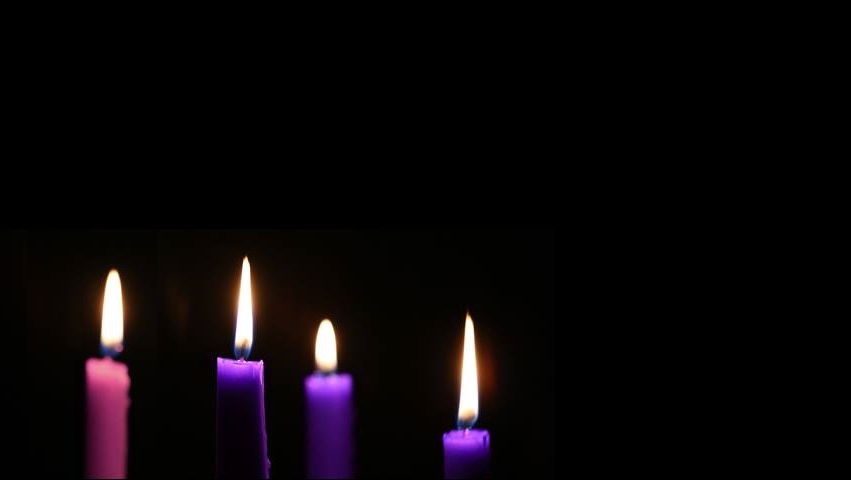
For all of the cultural twinklings surrounding it, Advent is a darker season dealing in two contrasting images.

The first is the darkness of penitential concern. It’s a time for recalling the very real predicament facing the world because of Sin’s infection.

With this in mind, Advent takes aim at Mankind’s impotence in relation to Sin’s chief product, which is Death. It also anticipates the final day when the Lord returns to judge both the living and the dead. Together in these, all time and opportunities will have ended. A last breath will have happened, or the Last Day will have arrived, and you will go. The time for even the most foolish negotiating will have passed. There will be no discussing or bending the standards. There will be no convincing God to your side with explanations that you did your best to keep the Law (the Ten Commandments). You won’t find room between the two of you for slight disagreement on what was acceptable and what wasn’t. Advent strips away all hope for leniency by works of the Law. It helps to remind us that “in Adam, all men die” (1 Corinthians 15:22). It puts before us the divine cue that the Law silences everyone, holding all humans accountable to God’s perfect standards (Romans 3:19). And lest we forget, Advent reminds us of the inescapable predicament of the Sin-nature in all of us. Standing beside the Law’s requirements, we’ll discover the impossibility of ever being counted righteous by our deeds (v. 20).

Advent teaches the hopelessness of human effort against all that plagues us when moving from this sphere to the next.

Advent also teaches that this dark night of helplessness isn’t permanent. Not only will it come to its completion at the Last Day, but Advent carries us back to the day the solution to the Sin problem was given—when Death was put on notice, and all of the long-foretold promises of God were completed in the God-man born to a virgin in Bethlehem. Advent looks to Christmas. It brings us back to the same sense of anticipation that’s ours as we await our last breath or we await the Last Day, except by faith, this time it’s fearless. It reminds us that the midnight concern of our lostness more than faded away in the sunrise of the Savior’s birth.

This is hope. Advent preaches this. It keeps before us the effervescent fact that God’s love moved Him to send His Son, Jesus, to save us, and faith’s grip on the merits of Jesus will, without question, see the believer through to eternal life. For believers, even though we die, yet shall we live (John 11:25). The One born on Christmas morn said this. In the same way, for believers, the Last Day will be like the celebration of Christmas. It won’t be a moment of terror, but rather a moment of bright-eyed joy. In fact, it will be a moment of familiarity, one that recalls the angels’ words to the shepherds about peace being accomplished between God and Man through the oncoming work of the newborn Christ. In that final moment before the returning Christ, such peace will be experienced as never before, and it will wash over us as we hear the voice of the One who once laid in a manger say, “Come and receive the inheritance prepared for you from the foundation of the world” (Matthew 25:34).