
Returning from vacation always puts me in a contemplative form.
When we landed yesterday at Detroit Metro Airport, having returned from our annual two weeks in Florida, I can assure you that I had one of those invisible moments where even the “ding” sound as the overhead seatbelt light went out seemed to carry a lot of weight.
Things were going to be very different from what they were only moments before.
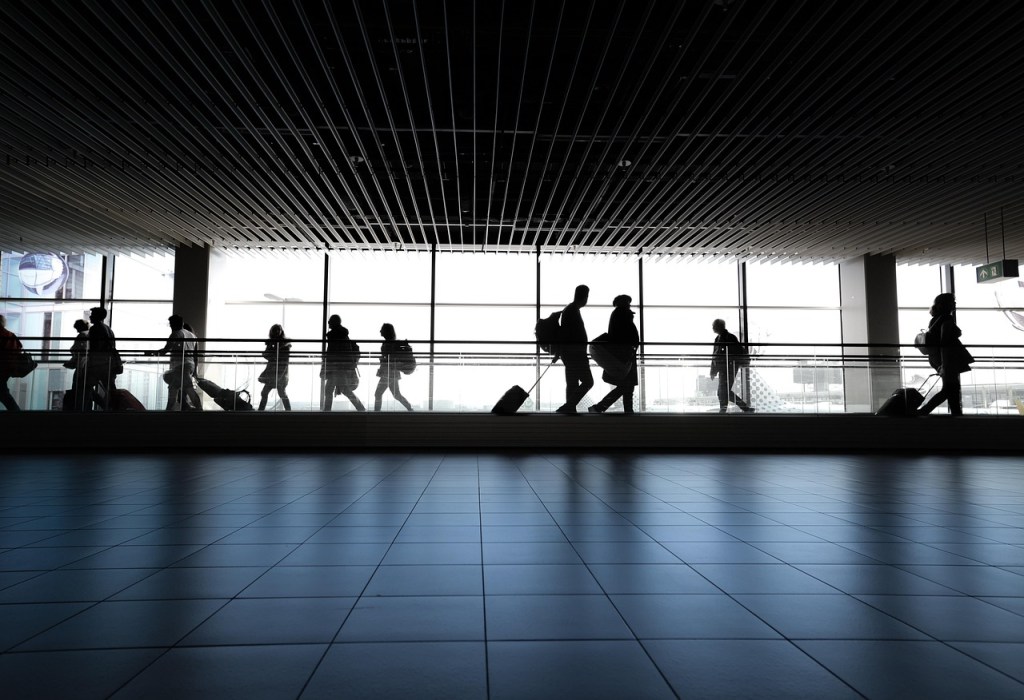
And then there’s the aura inside the airport. Sheesh. Maybe it’s just me, but the people departing are far different than the people returning. The people preparing to board for vacation look bright-eyed and ready. Among those returning, some are wearing flip-flops and theme park shirts. Others are carrying totes probably filled with things they bought while away. All are carrying the quiet resignation of a settling reality. They’re sort of shuffling through the terminal, not like the people who are getting ready to leave. Those folks are eager for what’s next. The returning folks aren’t so eager for what’s next. Although they’re not resisting it, either. They appear to know that a vacation is precious. However, it can only be held for so long before you have to let go.
I suppose in a culture dominated by the relentless pursuit of pleasure, vacations run the risk of feeling a little bit like a secular salvation. That’s probably why resorts market themselves as paradises promising renewal through pleasure-seeking. Secularism pretty much champions the idea of this kind of escape. It suggests that genuine rest comes from detaching oneself entirely from the reality of responsibility, feeding the myth that fulfillment can only be achieved far away from who or what we actually are in the lives we regularly inhabit.
While waiting for our luggage at carousel 3, a man walked by in all black and high heels. He was trying his best to be womanly. He wasn’t fooling anyone, except maybe himself.
I share this because it’s an easy example. The modern push of transgenderism seems like an embodied form of what I’m describing. It’s driven by the notion that someone’s identity is actually apart from biological realities, and therefore, satisfaction can be attained by remaking oneself according to personal desire, rather than embracing the givenness and goodness of what’s real—of what God has designed.
In both cases, whether with gender or with the more benign realm of vacation marketing, the cultural message is the same: “Escape who you are. Reinvent yourself. That’s where fulfillment lies.”
But is any of this really true? While I can appreciate a resort’s marketing allure, I also recognize that a vacation’s escape is indeed a marvelous thing, but perhaps not in the way our culture imagines.
Vacations make space for things that generally have to wait. There’s more time for anything and everything, or nothing at all. It’s a moment in time to do whatever might ease life’s usual burdens. In the meantime, bills wait. Work waits. Life’s duties wait.
But here’s the thing. The duties do not wait idly. They wait hungrily. When we got home, I saw that the weeds in the flower beds continued to grow. The grass did, too. I found that one of our cars sat and leaked a steady stream of transmission fluid for two straight weeks, all over the driveway. The pre-vacation refrigerator that was emptied had to be refilled. The milk we forgot to dump was quite the clumpy sight. The house had that strange, unlived-in scent, and dust had settled on things that were cleaned before we left, reminding us of our absence.
And yet, even as I came home to these things, I’m not so bothered by them. There’s a goodness in them, too.
The dinner table was ours again last night. We all sat in our usual spots. Well, four out of the five of us did. Harry went to see some friends. And admittedly, we were all very tired. We woke Saturday morning at 2:30 AM to catch a 6:00 AM flight home. Either way, the discussion was as it always is. It wasn’t the novelty of vacation. It was something more rooted. By way of another example, I can say I experienced what I’m doing my best to describe when Jen and I drove back from a quick visit last night with Josh, Lexi, and Preston. Passing through town, I mentioned Linden’s landscape—its trees and such. They look and sound nothing like the manicured palm trees and flora in Florida. And while I didn’t say it, they looked and sounded more like home than paradise ever could.
That’s because Linden is home. And perhaps it is precisely this feeling that helps me understand why God’s Word might speak of rest—of vacationing—not as an abandonment of reality, but as a renewal within it (Matthew 11:28-30; Hebrews 4:9-11). Jesus, when tired, often withdrew to quiet places (Luke 5:16; Mark 1:35). He certainly didn’t do it to escape the burden He knew He would bear (Matthew 26:39, 42). He did it as a very real and very human in-between for re-engaging with strength (Mark 6:30-32). Unlike the secular goal of continually fleeing responsibility, God’s Word reassures us that work and rest, engagement and withdrawal, each have their sacred roles (Ecclesiastes 3:1-8). They are not opposed. Instead, they weave together to form a life that can actually be very good.
I think there’s something holy about returning to your place in the world, even if the transition is difficult. You belong there. You are needed there. I think if you’re listening closely enough, something around you may even whisper, “Welcome back. It’s good to have you home. And now, let’s get back to work.”
Don’t get me wrong. You’ll never hear me say that coming home from a vacation is easy. It isn’t. In fact, for the Thoma family, it’s one of the most challenging transitions there is. I can assure you there were tears. With as busy as our lives can be, vacation sees that busyness out the door for a little while.
However, I think we can all admit there’s something wonderfully reassuring about stepping back into the familiar spaces. As much as we crave what vacations can offer, there’s relief in sleeping in our own beds again. There’s reprieve in reclaiming the familiar routines that, in some ways, define us. After all, home isn’t just a building to which we return. It’s far more than that. It’s where the richness of our story unfolds. That story is layered. Within those layers, we experience the ordinary rhythm of work and rest.
As I’ve already more or less said, for as good as “paradise” may feel, there’s a holiness in the “ordinary.” In the end, coming home from vacation isn’t so much about losing something precious as it is rediscovering the beauty of that ordinary. For me, it’s a precise moment on the timeline when I’m forced to remember that rest doesn’t mean escape. Indeed, God sets something better—actually, something extraordinary—right in front of me every single day. Looking through that Gospel lens, I can make it through to next year’s getaway 365 days from now.
 Cruciform Stuff