Truth is Truth No Matter the Source

There it is again—that word. Autumn. Or “the fall.”

Isn’t it interesting how the season that leads into the deathliness of winter carries the same title as the moment the barrier between this world and sin was ruptured? I’m not surprised. With Autumn comes an increase in darkness. For me, that’s its most unfortunate part. I’m an early riser. In late spring through to summer, the sun awakens with me—sometimes even a little before me. I’ll be just opening my eyes, and I’ll see its radiance already beginning to sketch out the horizon behind our home. It’s as though if I started walking toward it, I’d eventually go over its edge and tumble into its embrace.

But those days are fleeting. The sun won’t rise today until 6:59 AM. In winter’s depth, it’ll be closer to 8:00 AM.

Can you tell my seasonal affective disorder is taking hold? It happens every year at this time, and I can’t even begin to describe the internal war I wage against it—how I crave sunshine and its warmth, and how I have to equip myself for the 285-day stretch that Michiganders go without it.

To take the edge off the long grayness, I find it’s best to distract myself. That means pouring myself into other things. It means doing so with deliberate focus on Christ. In the quieter, free-thinking moments like this one, it means an even deeper examination of my surroundings through the lens of the Gospel.

For example, since I’ve already mentioned the word “fall,” thereby having wandered into the realm of homonyms—words that are spelled the same but have different meanings—how about the word light? It’s a homonym, too. It describes not only the brilliance that scatters the darkness, but also the opposite of heaviness. How does the Gospel reflect on this?

Easy. Christ offers us rest, ensuring us His burden is light (Matthew 11:28–30). He also says, “I am the light of the world” (John 8:12). In English, the word light bears two different meanings, and yet can combine to reveal the fullness of our Lord. He’s the radiant burden-bearer who dispels all darkness.

For another mental distraction, take the word cross. It is the shape of suffering, and it is also the action of being “crossed”—to oppose, to offend, to stir wrath. Indeed, the cross of Christ offends the world (1 Corinthians 1:18, 23), even as it saves the world (Galatians 6:14). It will forever frustrate me when I hear or read the words of Christians saying how we should focus less on the cross. Fewer sayings are more ignorant when poured from a believer’s lips.

The word grave is a homonym, too. It’s the tomb that holds a body, yes, but it’s also a word we use for something serious that demands our attention. Christ’s tomb demands our attention. While ultimately empty of His body, it was not empty of meaning. It was a serious thing that Christ suffered, died, and was placed in a grave that, in the end, could not hold him. The grave, something usually filled with death, was emptied of death (Luke 24:1–6; 1 Corinthians 15:54–57).

These layered words remind us that God wastes nothing relative to His Gospel, not even language. I appreciate this. And for a guy like me, especially during fall and winter’s depths, words provide the best distractions. As far as I’m concerned, they are open windows letting in the sun, so long as I’m paying attention.

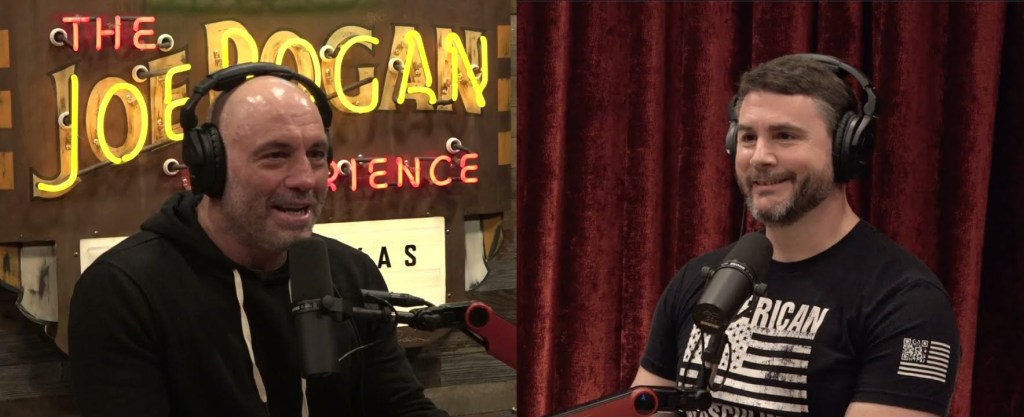
It is here that I find a meaningful connection to someone who is, perhaps surprisingly, a human homonym: Dr. James Lindsay. He is an avowed agnostic, which means he does not share the faith that undergirds my life. Still, he’s a friend, and he’s someone who knows words. More importantly, he knows how words have been twisted, redefined, and repurposed in our age to smuggle in new creeds and new “gospels.”

James knows a lot about a lot. In particular, he’s a skilled troublemaker among secularists. For one, he uses his expertise in Marxism and, most especially, Gnosticism, to show elitists their inherent foolishness. He bears a thoroughness in this regard that very few can rival. Best of all, he understands Gnosticism’s modern offspring—“woke” ideology—better than most Christians do. He understands how, like the ancient Gnostics, today’s ideologues claim access to a kind of hidden knowledge that ordinary people cannot see until they are “awakened.” He points out how the language of “wokeness” mimics the Gnostic division of the world into the enlightened and the unenlightened, the knowers and the blind.

In Gnosticism, the material world was seen as corrupt and evil, something to be transcended through secret knowledge. In the same way, the woke framework teaches Marxist materialism underpinned by the belief that society is systemically corrupt—shot completely through with oppression, privilege, and hidden power structures—and that only through redistribution and initiation into its special vocabulary can one begin to see the truth. The Gnostics divided people between the “spiritual” and the “carnal.” The woke do the same, dividing people between the “oppressed” and the “oppressors.” Both set up hierarchies of purity and enlightenment that, ironically, only end up deepening divisions between the haves and the have-nots.

And just as the Gnostics denied the goodness of creation and the incarnation of Christ, woke ideology denies the givenness of created reality—especially in matters of the body, sexuality, and identity—recasting even biological facts as oppressive constructs.

Men can be women and women can be men. In fact, both can be neither, both, or something altogether yet undiscovered. It’s a spiritual thing—an identity thing—accessible in a sphere of understanding that only the truly enlightened can enter.

James knows all of this stuff inside and out. This is why his voice is so important. He has traced these parallels with clarity. And while he does not confess Christ, he’s more than an expert witness relative to things Christians need to know. He helps Christians see that the battle we are facing is not new. The names have changed. The vocabulary is updated. But the heart of the heresy—the very same things Saint Paul and Saint John wrote against in the New Testament (Colossians 2:8–9; 1 Timothy 4:3; 1 Corinthians 15; 1 John 4:2–3; 2 John 7; John 1:14)—remains the same.

That said, it’s right about this time every year that the criticisms begin arriving at my door for inviting speakers like James to participate in our annual “The Body of Christ and the Public Square” conference. But my reply is always the same: First, don’t get your panties in a bind. It’s a conference. Second, if I were on trial for murder, my chief concern wouldn’t be whether the expert witnesses testifying on my behalf were Christians. I’d want the best in the field. And regardless of anyone’s pious pomposity, Christians are not experts in everything. And when someone like Dr. James Lindsay has peered into the shadows of false religion, having tracked the corruption of language and belief as intently as he has, ignorant Christians like me should listen. Regardless of his confession, God is clearly using his talents in a very particular way.

I’m guessing He’s using our friendship in a particular way, too.

And so, let the critics rage. They will anyway, no matter the speaker. Personally, I think it’s some sort of weird jealousy. But that’s another eNews message for a different day. In the meantime, let them scoff. My answer will remain the same. The situation before us is too urgent to waste time on pious posturing. The woke gospel is nothing less than old Gnosticism with a fresh coat of paint, and it is devouring our institutions, our families, and even our churches. If a man like James Lindsay can map these lies with surgical clarity—and his map is accurate—then shame on those who throw stones and plug their ears because they dislike the messenger. Even Saint Paul quoted the pagan poets and philosophers when their words were true (Titus 1:12 [from Epimenedes’ Cretica]; and Acts 17:28 [a combination from Aratus’ Phaenomena and either Epimenedes’ Cretica or Cleanthes’ Hymn to Zeus.])

In other words, truth is not less true because it comes from an uncomfortable source, nor does it lose its weight when it is shouted down by a mob with good intentions.

In the end, God has always used unlikely instruments to shame the wise and awaken the complacent. In my humble opinion, we don’t need any more critics hiding behind pews. We need a few more folks on the field, willing to see, to listen, and to do the heavy lifting. The fall is here. The nights are long. But Christ is the Light—and the darkness will not overcome Him.

Now, take your place on the wall. And perhaps, I’ll see you at the conference. Visit here to register: https://bodyofchristandthepublicsquare.org.

It’s No Surprise

I’m sure you’ve heard about the shooting in Minneapolis by now. I waited to write something until this morning, if only because I wanted more information first. But now I know the dreadful details in full.

A 23-year-old man, Robert Westman—his transgender name, Robin—opened fire during Annunciation Catholic School’s morning mass. Two children are dead. Eighteen more were wounded.

Why did he do it?

Well, he left a thorough manifesto behind. The theme scribbled through its pages: hate. He hated Trump. He hated Christians. It seems he hated anyone unwilling to embrace and perpetuate his dysphoric condition. Strangely, he wrote of hating children. He fantasized about killing them, ultimately writing across his weapon, “This is for the children,” and “Where is your God?”

I heard political commentators asking last night, “What normal person dreams of killing the most vulnerable among us?” I thought to myself, “Well, abortion and transgender rights are fundamental planks in the progressive left’s platform. With that, the hatred of children is not as strange as it might sound.”

I say that because, within these ideological places, a devilish concoction is being brewed.

First, someone like Robert likely grew up learning that life in the womb is disposable, therefore making him more than capable of interpreting children outside the womb with the same diminished value. Then mix in a child’s natural lack of acceptance for things that are obviously ridiculous. In other words, children see things with a kind of uncluttered honesty—able to distinguish a man from a woman without mental gymnastics or political jargon. I can imagine that when Robert went out and around as “Robin,” children stared. Children do that when they see something weird. Understanding this, it’s not that hard to see why Robert, a deranged transgender, would hate and therefore target them. Anyone who can pierce through self-made illusions and preferred confusion with the plain light of truth becomes, by nature, an enemy.

And then, of course, relative to truth, we’d expect him to hate Christians. In these situations, that detail never surprises me.

The question he wrote on his gun’s magazine—“Where is your God?”—isn’t surprising either. That same question echoes through history whenever tragedy strikes. The psalmist wrote, “My tears have been my food day and night, while they say to me continually, ‘Where is your God?’” (Psalm 42:3). Evil has always taunted God’s people, daring us to believe that He is absent, indifferent, or even nonexistent when trouble comes. It is Satan’s go-to sneer. It is his preferred avenue for mockery.

But what Satan tends to forget is that the One inside of us is so much stronger than the one in the world (1 John 4:4). And so, the witness of God’s Word, and therefore, Christ himself, remains something far different than what this godless world would propose.

By the power of the Holy Spirit at work in us for faith, given through the Gospel (Romans 1:16), a Christian knows God is by no means absent. He is in no way blind. The Gospel proclaims (and imputes the capability to believe) that at the cross of Jesus, we see God in the flesh entering into our suffering, bearing the fullest weight of sin and death (Isaiah 53:4–6; 1 Peter 2:24). The question, “Where is your God?” finds its answer there: our God is with us, even in the valley of the shadow of death (Psalm 23:4; Matthew 1:23). He is not far off—He is present, even grieving, and ultimately, redeeming this confused and fallen world (John 11:35; Revelation 21:4).

The hope Christians bear in these moments is not that evil will never strike, but that evil will never own the last word (John 16:33; Romans 8:18). Christ’s resurrection is the exclamation point of Christian hope. Death itself has been defeated (1 Corinthians 15:54–57). And now, through all moments of darkness, Christ—the light of the world—forever shines, and the darkness cannot overcome Him (John 1:5).

For a time, this may be incredibly difficult for the families and friends of Annunciation Catholic School’s community to grasp. It may be difficult for many of us, too. Still, that’s the hope we’re given. It’s also the message we’re charged with bringing. Indeed, Christ is the answer to Westman’s question. Christ is the answer to every question that requires hope. That’s because in Jesus, we behold a God who comes near (John 1:14), who suffers with us (Hebrews 4:15), and who promises to make all things new (Revelation 21:5).

May God bless and keep you in this as you pray for and serve the victims of this tragedy. But don’t stop there. Jesus declared, “Love your enemies and pray for those who persecute you” (Matthew 5:44). That command is never easy, but it is essential. It reminds us that no one is beyond the reach of God’s mercy, and that our battle is not against flesh and blood but against the powers of darkness (Ephesians 6:12).

So while you pray for grieving families and a wounded community, also pray for those on the left who are already blaming conservative Christians for Westman’s actions, directing their ire at “conservative intolerance” or whatever. Pray that the light of Christ would break through their foolishness. Pray that God’s mercy might yet turn their visceral hatred into genuine repentance. Pray that the Gospel would consume their confusion and instill faith.

Because only the love of Christ can truly silence the enemy’s mockery and answer once and for all the question, “Where is your God?”

A Steady Voice

Typically, by the time I’ve arrived at my office on Sunday morning, I already know what I want to write about. When I arrived this morning, I wasn’t sure. I thought I might scribble something about the wedding I preached at yesterday. But it only took a moment for something else to catch my attention, and if you’ll bear with me, you’ll understand why something so simple could be so important.

I’d only been in my office a few minutes when I heard a bird singing somewhere outside my window. Well, singing might not be the best description. It was calling out, and its voice was distinctly rhythmic. It made the same sounds in the same patterns for quite some time. Essentially, it made two longer calls followed by six shorter ones. Three or four seconds would go by before it repeated the pattern exactly.

It started as little more than background noise. Birds sing in the morning. And others were. Who cares? But then, it became more distinct among the other birds’ tunes. And because I know very little about birds, after a minute of focused listening, I went outside to find the one that had my attention.

There, on one of the tree branches not far from my office window, was a cardinal. I tried to get a little closer, but he stopped mid-song and flittered away.

I went back inside and did a quick Google search on cardinals and their reasons for singing. It turns out that cardinals typically sing in the morning, often well before the sun rises. Their chirping serves one of two purposes—either to attract a mate, which usually happens in the spring, or to announce their presence in their territory, sending a clear message to any rivals that they’ve staked an official claim on the space.

Now, as I tap away at my keyboard, I realize that seemingly small melody was far more than part of the landscape’s noise, random and of little interest to me. First, it was deliberately communicative, carrying a message of invitation or warning. As a preacher, that’s familiar to me. Second, even though more than a few birds were singing, the cardinal’s message remained steady and consistent. That’s familiar to me, too. Third, I suppose the cardinal wasn’t necessarily concerned with whether I, or anyone else, was actually listening. Still, it sang because it had a reason to sing, and it kept singing until its message had been delivered to the right audience. Again, something very familiar to me.

In one sense, I suspect all of this suddenly mattered to me because I just told someone on Friday that I sometimes feel like my words are little more than background noise being drowned out by the louder, flashier sounds of everyday life. I imagine many pastors feel that way. The culture shouts. Entertainment blares. So many things clamor for attention. When it comes to what pastors are to be, do, and deliver, temptations to compete with these things increase tenfold.

Maybe we should change worship styles to be more entertaining. Perhaps we should shorten the sermon, or at least deliver it in a way that seems more like a TED talk than preaching. Maybe we should thin out the Gospel a little, too, so that it’s less offensive. I mean, preaching about a God who was crucified isn’t all that attractive. It just doesn’t seem to compete with the world’s message of success. In fact, maybe we should avoid speaking about sin while we’re at it. Preaching repentance can get somewhat uncomfortable. Perhaps we should first focus on attracting the crowd. We should trade theological depth in doctrine and practice for a less demanding piety. Even better, maybe we shouldn’t be so creedal, so strict with our boundaries. The culture will never accept us if our expectations are too rigid—if we require the culture to assimilate into us rather than the other way around. The same goes for consistency. Everyone knows that flexibility and innovation and newness are the ways to keep people interested.

But then there’s the cardinal. He simply is what God has made him to be.

The cardinal doesn’t change his tune depending on who’s listening. He doesn’t speed it up to keep up with the noise around him. He doesn’t change his pattern. He sings of warning and invitation, sin and grace, Law and Gospel. He sings the song he’s meant to sing, over and over again. It’s as if he does it without concern for the results—as if he’d been sitting on a tree branch listening when the Lord said, “He who has ears to hear let him hear” (Matthew 11:15).

In the same way, the truth a pastor speaks—whether in the pulpit, in a counseling session, across the table with someone at lunch, or before this world’s kings—doesn’t have to out-shout the chaos (1 Corinthians 2:1–2). This morning, the cardinal was a reminder that consistency definitely matters more than volume (Galatians 6:9). The call that seems ignored in one moment may be heard by exactly the right ears later.

In the end, my calling as a pastor—and in a sense, yours as a Christian parent, friend, co-worker, or neighbor—is to be clear, steady, and faithful to God’s Word. We may feel small or irrelevant, but our task is not to dominate the air. It’s to fill it with the sounds—His Word—trusting that He will make sure the right ears hear it at the right time. Interestingly, some will receive the words as invitation. Others will hear them as warning. But either way, the message will reach its hearers and cut through the noise (Hebrews 4:12). How could it not? The Gospel is the most potent message there is. That’s because it isn’t just words. It’s the means by which the Holy Spirit works to convert and convince the human heart and instill faith (Romans 1:16, 1 Corinthians 2:4–5, Romans 10:17). Unlike all other messages, its delivery is actual presence, and its truth marks very real territory.

To close, I suppose I’ll simply say that while the world may shift its tune a hundred times over, the Gospel never changes (Galatians 1:8–9, Hebrews 13:8)—and neither should the voices that carry it. Sing it in season and out of season (2 Timothy 4:2), in joy and in hardship (Philippians 4:12–13), in full confidence that the Lord who gave you the song will see to it that, in His time, it will be heard (Isaiah 55:11).

Alignment

Maybe you heard recently that the Earth’s rotation appears to have sped up a little. Jennifer laughed at me when I told her. But that’s only because I was in the early stages of a migraine when I mentioned it, and I blamed my crackling brain on the whole world suddenly accelerating.

Apparently, scientists have been tracking the phenomenon for years. It seems that some days have been ending a fraction of a millisecond sooner than they used to. Like a gazillion other wonders in the natural world, they still don’t know why it’s happening. Some say it’s because of changes in ocean currents. Others suggest it’s due to variations in atmospheric pressure (which I’m certain is responsible for my migraines). But whatever it is, in the end, it’s not something any of us would actually notice while making breakfast or driving to work. However, in the more precise world of atomic clocks, even these tiny shifts are enough to spark curiosity.

Of course, it’s easy to laugh at these things as whimsical. But it’s obscure bits of information like these that remind me just how fascinating God’s handiwork really is. Our planet is not a static stage beneath our feet. It’s part of a vast choreography, spinning, tilting, and gliding through space in concert with the sun, moon, planets, and stars.

Based on something Jennifer shared with me recently, it seems that every so often, the great dancers of our solar system move into rare, harmonious formations that catch our attention and, perhaps, set before us in unmistakable terms the divine order woven into the chaos. What I mean is that just this past week, on August 10, six of our solar system’s planets gathered along a single line, forming a planetary alignment. To the naked eye, it appeared as if these distant worlds had agreed on a meeting place, shining together in the same stretch of sky like old friends who rarely get to visit together. I looked it up. A planetary alignment is not necessarily unprecedented. They happen from time to time. The next one is February 28, 2026. Seven planets will align on that day.  Still, the rarity lies in their visibility and timing. For me, a guy who is consciously looking at everything through the lens of the Gospel, it’s another reminder that so much around me is keeping a schedule that I didn’t set, and yet it’s one that, even if I wanted to push against it, I’m inevitably bound to follow.

If you’ve ever stood beneath a dark, unpolluted sky and just looked, I’d be willing to bet you were moved in some way. It’s hard not to be. Jennifer and I went out onto our deck and took pictures of the Northern Lights last spring, and then again in June. Admittedly, it was pretty amazing. Especially when you realize what’s causing those multihued streaks. They happen when charged particles from the sun, carried along on solar winds, slam into Earth’s magnetic field and collide with the atmosphere’s protective layers. The collisions become bursts of light in greens, pinks, purples, and reds, painting the sky like an undulating canvas. It’s already breathtaking from our deck in Linden. And yet, Jennifer wants to visit a dark park, which is a reserved area where artificial light is largely restricted, set aside for seeing the night sky free from light pollution. Jen showed me images taken in dark parks. We’re so used to light pollution, we don’t know what we’re missing until we see it. And when we do, it’s breathtaking.

For me, I’m not necessarily moved by the vastness of space. I’m more astounded that the heavens above me are not random. They operate under laws that have held since the beginning, laws that both govern and reveal the Creator’s design. These are the same laws that govern the tides, the seasons, the migrations of birds, and probably so many other things we’ll never even know.

But this carries me further, especially as we get closer to our forthcoming conference on October 4. Along with folks like Trey Gowdy, Dr. James Lindsay, and William Federer, we’ll also hear from Chloe Cole.

Now, before I say anything more about her, it’s worth noting that what I’ve written so far, whether about planets or humans, ultimately comes down to the same foundation: natural law. Just as the heavenly bodies move according to fixed principles, so too does human life. And both flourish when aligned with natural law’s order. Sure, we can ignore that order, setting aside laws we don’t like for this or that ridiculous reason—say, we don’t want to use Kepler’s Law because someone named Kepler once hurt our feelings. But do this while engineering a satellite and you’re destined for failure. Your plans might look neat on paper, but in reality, you’re going to end up designing something that’ll likely get destroyed before leaving the Earth’s atmosphere. And if it does make it into space, it’ll immediately become nothing more than a piece of space junk hurling toward who knows what.

In other words, your opinions do not affect reality. Reality is constant, steady, and unshaken by what it carries in its calculations.

As a young teenager, Chloe began questioning her gender identity, and instead of being guided with care and patience, she was rushed into “gender-affirming care.” This included puberty blockers, cross-sex hormones, and ultimately a double mastectomy—all while she was still a developing child. At the time, she was assured these interventions would solve her struggles and bring her peace. Instead, they left her with deep regret, permanent physical changes, and a realization that she had been led down a path built on ideology rather than truth.

Now, still only twenty years old, Chloe has become one of the most outspoken voices in the nation, warning about the dangers of pushing minors into irreversible medical procedures. She speaks with a rare combination of clarity, courage, and compassion—sharing not only her own painful experience, but also urging others to protect children from similar harm. Her testimony is more than a cautionary tale. It’s a living and breathing example of what happens when a society rejects the natural order God has established.

It’s also a demonstration of the hope inherent in returning to it.

For those who will hear her in person, I think that the impact will go far beyond what anyone might normally experience from headlines or soundbites. Chloe’s presence among us—her vulnerability, and also her ability to speak truth without bitterness, even as she continues to be relentlessly attacked for her detransition—it gives her story a weight that must be experienced in person. Essentially, she embodies everything I just described. She’s living proof that when we live in step with God’s design, not in defiance of it, there is hope for restoration, even after deep hurt—even after it seems like we’ve already hurled our satellite into deep space. Her journey reminds us that truth isn’t an abstract principle. In fact, in her case, it not only governs her existence, but God also put it in place as a lifeline. She reached out to grab what was real and found her way back to a better life.

Now she wants that for others who are suffering from the same dysphoria. By God’s grace, she has discovered a world she didn’t know existed, and yet, was already there. In that world—the real world of faith—she was pulled into Christ’s gravitational embrace. And within that embrace, she discovered a courage to reach out and pull others in, too.

In the end, whether we’re talking about the Earth’s rotation, the precise timing of planetary orbits, or the moral order woven into human existence, the truth remains the same. Reality is fixed because its Author is unchanging (Hebrews 13:8). The heavens declare this with every sunrise and celestial alignment (Psalm 19:1). And lives like Chloe’s affirm the otherworldly blessings and strength God grants to those who, by the power of the Holy Spirit given by the Gospel, turn to Him in repentance and faith, choosing to walk in His ways rather than their own (Isaiah 40:31, Proverbs 3:5–6). It’s this loving God, the One who keeps the planets in motion and the seasons in balance (Genesis 8:22, Job 38:33), who is also holding our lives in His hands (Isaiah 41:10), desiring us to live in harmony with His design (Micah 6:8). And when we do, whether in the wonder of a night sky or the courageous witness of a life recalibrated, we find ourselves anchored in His truth and, ultimately, aligned with His eternal purpose: the salvation of our soul (2 Corinthians 4:18, John 3:16-17, John 6:40).

If you have yet to register for the conference, you can do so by visiting: https://www.bodyofchristandthepublicsquare.org. Do so soon. Space is limited.

Gospel Friends

Most who know me—at least those who know me well—will affirm that I’m a people watcher. Though I spend much of my life standing in front of rooms, I’m far more comfortable sitting in the back, watching others in motion. I might contribute to the conversation on occasion. But more often than not, I’m content to absorb rather than radiate.

This past Thursday, I was given the chance to do just that.

Our Savior’s Stewardship Committee hosted its first-ever Golf Outing and Silent Auction at Dunham Hills Golf Course in Hartland. If you weren’t there, I mean it when I say—you missed something extraordinary. Not just because the food was good or the auction items impressive. Not even because the day couldn’t have been sunnier and the venue more beautiful. But because something profound happened, and I was privileged to behold it.

Let me start by saying I don’t play golf. I’ve been known to tee up with the kids and launch a few into the wetlands behind our house. In truth, it’s been almost 25 years since I’ve stepped foot on a course. It’s not that I wouldn’t. It’s just that golf is an all-day thing, at least it is for me, and I don’t usually have all day for anything. And besides, knowing my abilities, folks should consider themselves blessed that I didn’t sign up to be on any of the teams. I’m with Mark Twain, who said something about how a round of golf is the best way to ruin a walk in the woods, which is where I’d most likely end up.

So, in short, I didn’t play this past Thursday. But I did attend the banquet afterward. Indeed, I am far more skilled with a fork than I am with a sand wedge. And it was with a fork in hand that I did what I do best: observe. While watching, I absorbed something far more meaningful than a hole-in-one ever could be.

First, a casual glance around the room revealed people I simply adore. And I don’t say that lightly. I would die for the people at those tables. That may sound dramatic, but I mean it. “Greater love has no one than this,” Jesus said, “that someone lay down his life for his friends” (John 15:13). It was that kind of room, and it was that kind of evening. We’ve been through a lot as a congregation over the years. And yet, there we were, laughing across tables and recalling our togetherness with joy. Even better, as familiar friendships were celebrated, and in some cases rekindled, I watched newer church members (and some non-member guests) welcomed into the family as though they’d been there for decades. That alone was extraordinary.

I should say it doesn’t surprise me. Our Savior in Hartland is that kind of place to begin with.

In the meantime, I think a second, more important thing I took from the event was that I saw a number of individual “teams” come together as a single team and dedicate themselves to something important: our tuition-free school. They were there, not for the self, but rather, they were all in for something and someone else—namely, to preserve the Gospel’s legacy for children they might never even meet.  

That kind of selflessness stands in stark contrast to the culture swirling around us.

In most corners of the world, it seems people don’t often gather with selfless intentions. Unfortunately, I can say this is true, even in the Church. I’ve noticed it at conferences. Some, not all, but some gather to compete. They gather to be seen. They gather in a posture of self-promotion. Beyond such things, you can certainly see it on social media, where platforms meant to connect now primarily serve as stages for applause. I’m a member of a few Facebook groups relative to Linden schools, and from what I can tell, too often the driving force isn’t mutual care but mutual comparison.

I didn’t see any of that on Thursday.

There were no cliques. No undercurrents of competition. No one was keeping score of who contributed what. In fact, I heard more golf stories akin to Paul’s “Chief of sinners” theme. In other words, I believe that for everyone in the room, there was only one scorecard that mattered—and it wasn’t in anyone’s pocket. It was being carried in the hearts of people who gave, not to get, but to build and preserve something lasting, something sacred, which is precisely what we have at Our Savior in Hartland.

Again, that’s not how the world typically works. You know as well as I do that the world teaches that fulfillment often comes through accumulation. Gather wealth. Stack your achievements. Build your platforms. Be more important than everyone else. But Christ moves His people in an altogether different direction. “Whoever would be great among you must be your servant, and whoever would be first among you must be slave of all” (Mark 10:43–44).

That’s what I saw at Dunham Hills. It was true greatness, and it was forged in humble faith.

I suppose that’s why the event grabbed hold of me enough to write about it this morning. As a pastor, I’m forever concerned for the spiritual strength of the people God has placed into my care. In fact, I thought a lot about it while on vacation the last two weeks. So much so, that I spent time formulating some new Bible study ideas instead of leaving that all behind me until I returned home.

Then I came home, and the first church event I was privileged to attend was the “Fairway to Heaven” golf outing. Wow.

In a world of algorithms and noise, of hustle and burnout, of spiritually draining clutter, I returned to something infinitely more powerful. Sure, we talk about our churches and the friendships they naturally accommodate. But here it was for real. The friendships I saw weren’t just byproducts of church membership. The Gospel created these friendships—made them family—and it gave rise to a far better byproduct. It was and is the kind that can stand at the gate, lock arms, and be generous with its muscle. And not for anyone’s own glory, but for the sake of the same Gospel that established it, and from there, for the benefit of parents and children, we may never know this side of heaven’s fairway.

I suppose to close, if you have a moment, take a look at the promotional video we made a few months ago for our school. You can watch it here:

I’m sharing it because a few lines from it were shared before the meal. I’m glad they were. They were more than appropriate to what I was seeing.

Initially, the video was created and then sent to me with some text overlays—short theological and educational phrases that appeared intermittently over scenes with music. It was nice. But as I watched, I sensed it needed more, a clearer heartbeat. So, I sat down and wrote a short script—a few minutes to scribble a few lines that I felt captured what our school truly is. I recorded it in one take using my computer’s microphone. Nothing polished. Nothing flashy. I didn’t intend for it to be used exactly as it was. It was just my tired voice from an already long day of orchestrating and maintaining what the video would eventually promote more publicly. Still, I wanted others to know why it mattered so much to me, to the people of Our Savior—why so many of us pour ourselves into the work and then give it away to the community for free. Because, make no mistake, the world doesn’t give its content away. Whether it’s entertainment, education, or influence, there’s always a price. You pay for it, and increasingly, the price is your soul. But the Church, when it’s actually being the Church, flips that economy on its head. We give it away—truth, grace, the love of Christ—not because it’s worthless, but because it’s priceless.

The video’s director ended up using what I sent. He didn’t change anything, except to have his audio team clean up my less-than-quality recording.

Again, if you have a moment, watch it. It’s only a minute and thirty-five seconds long. If you listen closely, I think you’ll hear elements of the same theme that filled the banquet room at Dunham Hills: selflessness. You’ll hear me say how we’re doing all we can at Our Savior to lift up generations of children who know something better than what the world gives, and with that knowledge, are equipped to go out and be the kind of people I saw gathered at the golf outing on Thursday.

I saw Christian people who know what is objectively and immutably true. I bore witness to human beings shaped by the Gospel trying to make it so others could be, too. They were standing shoulder to shoulder, not for applause, but for a Godly purpose. For a people watcher like me, it was one of the most beautiful things I’ve seen in a long time, and I can’t wait for next year’s event. I have a feeling it’s only going to get bigger and better.

Rest and Responsibility

Returning from vacation always puts me in a contemplative form.

When we landed yesterday at Detroit Metro Airport, having returned from our annual two weeks in Florida, I can assure you that I had one of those invisible moments where even the “ding” sound as the overhead seatbelt light went out seemed to carry a lot of weight.

Things were going to be very different from what they were only moments before.

And then there’s the aura inside the airport. Sheesh. Maybe it’s just me, but the people departing are far different than the people returning. The people preparing to board for vacation look bright-eyed and ready. Among those returning, some are wearing flip-flops and theme park shirts. Others are carrying totes probably filled with things they bought while away. All are carrying the quiet resignation of a settling reality. They’re sort of shuffling through the terminal, not like the people who are getting ready to leave. Those folks are eager for what’s next. The returning folks aren’t so eager for what’s next. Although they’re not resisting it, either. They appear to know that a vacation is precious. However, it can only be held for so long before you have to let go.

I suppose in a culture dominated by the relentless pursuit of pleasure, vacations run the risk of feeling a little bit like a secular salvation. That’s probably why resorts market themselves as paradises promising renewal through pleasure-seeking. Secularism pretty much champions the idea of this kind of escape. It suggests that genuine rest comes from detaching oneself entirely from the reality of responsibility, feeding the myth that fulfillment can only be achieved far away from who or what we actually are in the lives we regularly inhabit.

While waiting for our luggage at carousel 3, a man walked by in all black and high heels. He was trying his best to be womanly. He wasn’t fooling anyone, except maybe himself.

I share this because it’s an easy example. The modern push of transgenderism seems like an embodied form of what I’m describing. It’s driven by the notion that someone’s identity is actually apart from biological realities, and therefore, satisfaction can be attained by remaking oneself according to personal desire, rather than embracing the givenness and goodness of what’s real—of what God has designed.

In both cases, whether with gender or with the more benign realm of vacation marketing, the cultural message is the same: “Escape who you are. Reinvent yourself. That’s where fulfillment lies.”

But is any of this really true? While I can appreciate a resort’s marketing allure, I also recognize that a vacation’s escape is indeed a marvelous thing, but perhaps not in the way our culture imagines.

Vacations make space for things that generally have to wait. There’s more time for anything and everything, or nothing at all. It’s a moment in time to do whatever might ease life’s usual burdens. In the meantime, bills wait. Work waits. Life’s duties wait.

But here’s the thing. The duties do not wait idly. They wait hungrily. When we got home, I saw that the weeds in the flower beds continued to grow. The grass did, too. I found that one of our cars sat and leaked a steady stream of transmission fluid for two straight weeks, all over the driveway. The pre-vacation refrigerator that was emptied had to be refilled. The milk we forgot to dump was quite the clumpy sight. The house had that strange, unlived-in scent, and dust had settled on things that were cleaned before we left, reminding us of our absence.

And yet, even as I came home to these things, I’m not so bothered by them. There’s a goodness in them, too.

The dinner table was ours again last night. We all sat in our usual spots. Well, four out of the five of us did. Harry went to see some friends. And admittedly, we were all very tired. We woke Saturday morning at 2:30 AM to catch a 6:00 AM flight home. Either way, the discussion was as it always is. It wasn’t the novelty of vacation. It was something more rooted. By way of another example, I can say I experienced what I’m doing my best to describe when Jen and I drove back from a quick visit last night with Josh, Lexi, and Preston. Passing through town, I mentioned Linden’s landscape—its trees and such. They look and sound nothing like the manicured palm trees and flora in Florida. And while I didn’t say it, they looked and sounded more like home than paradise ever could.

That’s because Linden is home. And perhaps it is precisely this feeling that helps me understand why God’s Word might speak of rest—of vacationing—not as an abandonment of reality, but as a renewal within it (Matthew 11:28-30; Hebrews 4:9-11). Jesus, when tired, often withdrew to quiet places (Luke 5:16; Mark 1:35). He certainly didn’t do it to escape the burden He knew He would bear (Matthew 26:39, 42). He did it as a very real and very human in-between for re-engaging with strength (Mark 6:30-32). Unlike the secular goal of continually fleeing responsibility, God’s Word reassures us that work and rest, engagement and withdrawal, each have their sacred roles (Ecclesiastes 3:1-8). They are not opposed. Instead, they weave together to form a life that can actually be very good.

I think there’s something holy about returning to your place in the world, even if the transition is difficult. You belong there. You are needed there. I think if you’re listening closely enough, something around you may even whisper, “Welcome back. It’s good to have you home. And now, let’s get back to work.”

Don’t get me wrong. You’ll never hear me say that coming home from a vacation is easy. It isn’t. In fact, for the Thoma family, it’s one of the most challenging transitions there is. I can assure you there were tears. With as busy as our lives can be, vacation sees that busyness out the door for a little while.

However, I think we can all admit there’s something wonderfully reassuring about stepping back into the familiar spaces. As much as we crave what vacations can offer, there’s relief in sleeping in our own beds again. There’s reprieve in reclaiming the familiar routines that, in some ways, define us. After all, home isn’t just a building to which we return. It’s far more than that. It’s where the richness of our story unfolds. That story is layered. Within those layers, we experience the ordinary rhythm of work and rest.

As I’ve already more or less said, for as good as “paradise” may feel, there’s a holiness in the “ordinary.” In the end, coming home from vacation isn’t so much about losing something precious as it is rediscovering the beauty of that ordinary. For me, it’s a precise moment on the timeline when I’m forced to remember that rest doesn’t mean escape. Indeed, God sets something better—actually, something extraordinary—right in front of me every single day. Looking through that Gospel lens, I can make it through to next year’s getaway 365 days from now.