
The Holy Spirit is No Skeptic

At the men’s Bible study in my home two weeks ago, we wandered into a momentary discussion concerning the necessity of sound doctrine. I don’t remember how it happened. We’re currently studying the Book of Acts, and I think it came up while making our way further into Chapter 2. I do remember that it stirred something from Luther’s Bondage of the Will, which I did my best to recall. Here’s what Luther wrote:

“Christians must know for sure what they believe and must witness to their belief. Therefore, if you take away that certain affirmation so that Christians are no longer sure of what they believe, they have ceased to be Christians, and you have taken away their faith. For the Holy Spirit is given to them from heaven in order that He may sanctify the hearts of the faithful and make them firm and sure in their witness to Christ so that they will live and die for it. And is not this the greatest certainty if I stand so firmly by my yes that I am ready to die for it? Yes, it is. The Holy Spirit is no skeptic. He has not written an uncertain delusion in our hearts, but a strong, great certainty, which does not let us waver, and may it please God, will not let us waver, but praise be to God, makes us as sure as we are that we are now alive and that two and three make five.”

My favorite line in the paragraph is, “The Holy Spirit is no skeptic.” Of course, He isn’t. When you know truth in its entirety, there are no in-between spaces of uncertainty. You can move along unfettered, assured that what’s true is true and what’s false is false.

Indeed, the Holy Spirit does not wrestle with ambiguous skepticism.

Part of Luther’s essential point was, first of all, that Christians are only Christians because the Holy Spirit has been given to and abides in them for faith. That said, the faith the Holy Spirit brings isn’t a garment sewn from flimsy fabric. It isn’t a wobbly dwelling built from fragile materials. It certainly isn’t formed from ever-shifting human opinion. It is constructed from divine, knowable, and affirmable doctrines that, no matter the world’s erratic ideas, remain steady and true. Take these doctrinal foundations away, and faith becomes shaky. In fact, Luther warns that without them, faith ceases to exist entirely. That’s what he meant when he said, “Therefore, if you take away that certain affirmation so that Christians are no longer sure of what they believe, they have ceased to be Christians, and you have taken away their faith.”

What does this free-floating anti-dogma ignorance look like in real-time?

Well, it translates into a societal context in which people are susceptible to beliefs that sound Christian doctrine steers to avoid. They become capable of believing pretty much whatever they want while still considering themselves faithful. And I’m not just talking about some of the more ridiculous things, like thinking that people become angels when they die, which I intend to mention during this morning’s sermon. I mean some truly dreadful things that separate them from God altogether—like denying the Holy Trinity or rejecting the premise that Christ was God in the flesh.

Self-constructed Christianity has other dreadful potentials, too. It produces people who believe abortion is something about which Christ smiles. It mistakenly prattles on social media that Jesus forbade judging anyone or anything. It heralds innumerable genders while encouraging irreversible surgeries for children. Speaking of children, it produces a pope fit for a millstone (Matthew 18:6) as he tells a young boy in Singapore that “all religions are a path to God… and each of us has a language to arrive at God. Some are Sheik, Muslim, Hindu, Christian, and they are different paths to God.”

Regardless of how Pope Francis’ handlers are spinning what he supposedly meant to say, his actual words measured against sound biblical doctrine proved themselves the heresy of religious pluralism, which rejects the essential teaching that Christ is the only way of salvation (John 14:6). Christians do not subscribe to religious pluralism. However, there may be one young boy in Singapore who does now, especially since he heard it from someone who’s supposed to know for sure.

Thinking about last week’s Epistle reading from Ephesians 4:1-6 appointed for worship here at Our Savior, I think Saint Paul indirectly weighed in on these things when he wrote, “I, therefore, a prisoner for the Lord, urge you to walk in a manner worthy of the calling to which you have been called…” (v. 1). Paul says three things here.

First, he insists on faithful abidance in “the calling to which you have been called.” In other words, you’ve been called to something—the Christian faith. That something has a walkway—faithful doctrine. Walk accordingly in it. When you wander past its edges, repent, and go back because the terrain beyond ends in destruction (Matthew 7:13-14).

Second, the walking is to be done in a worthy way. In one sense, it is demonstrative. People will see and hear. A young boy in Singapore saw and heard. Therefore, Paul instructs Timothy, “Watch your life and doctrine closely. Persevere in them, because if you do, you will save both yourself and your hearers” (1 Timothy 4:16).

Finally, Saint Paul already implied from his own situation, which he mentions specifically in Ephesians 4:1, that walking according to our calling could get a Christian into trouble. Behold, Paul was a prisoner for doing what he was even now urging his readers to do.

But here’s the thing.

Neither ease nor trouble affected the stepping stones of sound doctrine for Paul. The path was the path. What’s true was true, and what’s false was false. And so, he walked, and his faith was secure. In fact, it was armor-like. It could lean into and withstand the enemy’s thrusts along life’s way. It became fortress-like. Its resident could stand at the walls and confess truth before the barraging legions that surrounded it, even when standing where the enemy could see him meant imprisonment and eventual death.

Luther’s life was similar. Our lives are, too. And yet, together we have, as Luther described, a faith that is not an “uncertain delusion,” but instead, is a “strong, great certainty, which does not let us waver….” We can bear whatever the world brings our way, even a death sentence, and still retain the same kind of unshakeable trust in Christ that’s as simple as believing that “two and three makes five.” Indeed, that’s a simple analogy Luther made. And yet, it’s profoundly powerful. Even better, it’s unarguably true.


Self-Deceit

Lying to others is wrong. Lying to oneself is deadly. These were just a few of several recurring thoughts I experienced while watching the film Gender Transformation: The Untold Story, which the Life Team here at Our Savior in Hartland, Michigan, presented during a public forum this past Friday. Our world is right now living the dreadful compounding of lie upon lie to others and to self concerning God’s magnificent design of male and female.

But here’s the thing. While perhaps not as conspicuously awful or with such unalterably horrible results as the deceit presented in the film, we all lie to others and ourselves. If we believe we don’t, then we’ve already proven we’re self-deceived.

I think one reason we end up self-deceived is because of the way we so often prefer to process reality. We have interpretive filters. We experience something, and as we do, rather than its meaning simply being its meaning, we wittingly or unwittingly recraft it to fit us more comfortably.

For example, have you ever said something you intuitively knew was hurtful, and even as you meant the words to cut your opponent, when they did, to protect yourself from feeling bad, you insisted he or she misunderstood you? That was an interpretive filter you used. Specifically, it’s called gaslighting. Most folks might say gaslighting is more others-deceptive than it is self-deceptive. Perhaps. Either way, it’s a self-insulating barrier preventing what’s real from getting through as it should.

But enough psychoanalysis. The better exercise is figuring out why things are this way and what to do about it.

The “why” is easy. The Bible says it’s because of Sin (Psalm 51:5, Romans 3:23-24, Ephesians 2:3, etc.). Concerning self-deception, Saint John digs into the why’s soil and discovers the contaminant’s results, writing, “If we say we have no sin, we deceive ourselves, and the truth is not in us” (1 John 1:5). Paul digs beside John and finds more ruined soil: “For if anyone thinks he is something when he is nothing, he deceives himself” (Galatians 6:3). Shovel in hand, James hops into the hole and discovers the same, adding: “But be doers of the word, and not hearers only, deceiving yourselves” (James 1:22).

Again, the why is easy. But now, the harder part. What do we do about it?

I have two things to say in this regard. The first is Christological. We must always start with Christ and His Word.

As John, Paul, and James went deeper into the strata, other discoveries were made. Right after discovering Sin’s potential for self-deception, John also found the fertile soil of God’s gracious invitation, noting, “If we confess our sins, [God] is faithful and just to forgive us our sins and to cleanse us from all unrighteousness” (1 John 1:9). Paul found something else, too. Back in Galatians 3:11, he wrote, “Now it is evident that no one is justified before God by the law, for ‘The righteous shall live by faith.’” James made the same discovery. After nudging his readers from complacency, urging them to be more than just hearers but also doers of what the Lord desires, he dusted off a glistening stone etched with the words “the perfect law, the law of liberty” (James 1:25), which is James’ rhetorical way of pointing his readers to Jesus, the One who is the law’s perfection, the One who sets us free from the law’s burden so that we can be those who not only hear His Word but keep it (Luke 11:28).

While the three dig deeper still, the Psalmist arrives singing a faith-filled work song, one that asks God for help against deceit. The Psalmist sings, “Put false ways far from me…” (Psalm 119:29), and “Save me, O Lord, from lying lips and from deceitful tongues” (Psalm 120:2).

The second thing I want to say is as practical as it is Christological. Essentially, the Gospel nuggets are enough for faith (Romans 1:16). The faith it produces results in repentance. That’s what it does. The word “repent” (μετανοήσατε) literally means to turn around and go the other way—to change the direction of one’s mind or purpose. From a human angle, repentance is incredibly self-analytical. It wants to rid itself of faulty filters. It wants to remove anything that might deceive the self. It wants to boil things down to their mineral elements, see what’s actually there, and fix what’s broken.

For example, consider the following scenario.

Let’s say one of my daughters was troubled about something and asked for a moment of my time, but I reasonably replied, “I’m sorry, honey, but maybe later. I just don’t have time right now.” I had a sermon to write. I had a phone call to make. I had a meeting to attend. Repentance removes the filters and sees the situation for what it is. Relative to this situation, among the long and varied list of things a person should do, repentance understands the role of priority. And so, it hears what was said as, “I’m sorry, honey, but you’re just not a priority to me right now.”

Saying it that way doesn’t feel so good. That’s true, in part because of repentance’s natural direction. Remember, repentance is a reversal. The process of going one way becomes one of moving in the opposite direction. As a preacher, I think there’s more than one way to experience this reversal’s impact. Similar to exchanging the phrase “I don’t have time” for “you’re not a priority,” the same astonishing swap is possible when we invert our language, saying out loud the opposite of what’s actually true. Here’s another example.

I mentioned to Jennifer last week that one day, I’m going to preach a sermon in which everything I say is the exact opposite of what the listeners would expect me to say. The reason? It’s one thing for the average pew-sitter to make excuses for sinful behavior. But what if those same excuses were being commended from the pastor’s mouth? I can only imagine the congregation’s response to me preaching that presence in worship isn’t all that important. How startling would it be to hear me say from the pulpit that fidelity to Christ is just as important as fidelity to all the other things taking up space on our calendars? Would there be wide eyes as I say there’s nothing wrong with putting God’s Word in the back seat on occasion? Would there be gasps when I say God knows we sometimes need a break from Him and that He’s perfectly content playing second fiddle in our lives?

I’d go on and on, never once saying what you’d expect from a Christian pastor. I think the language reversal would be overwhelmingly eye-opening. Like telling my daughter she’s not a priority, it just wouldn’t feel right.

The people here at Our Savior will undoubtedly know if and when I attempt this. Until then, think about what you’ve read so far. Ask yourself, “Do I have interpretive filters that make lying to myself easier? Do I shield myself with excuses that do little more than keep me comfortable doing the things I know I shouldn’t?” If the answer is yes, then contemplate the dangers of insulating yourself in this way and repent. Turn around and go the other way. If the answer is no, then consider that you may already be self-deceived and don’t know yourself as well as you think you do. And then, as with the first answer, repent.

A Little Bit About Grace

Grace is an amazing thing, especially when you are fully aware you need it and yet, in every way, are undeserving of it. If you don’t know what I mean, then the only thing I can think to say is that you’re a textbook narcissist who’ll never know grace’s fuller impact because you sense no need for it. That’s unfortunate. Most normal people know the downcast feeling of causing harm. Most folks likely even sense the need to admit it. When they’re all alone with their thoughts, they experience the familiar urge to ask themselves, “Why did I do that? What on earth was I thinking?”

It’s also likely that most normal people know the overwhelming exhilaration that comes from expecting retribution but receiving grace instead. I’ve certainly had my share of moments when, whether in a flurry of imposed frustration or I was just being me, I acted in ways I later regretted. I said something I wish I hadn’t. I did something I wish I hadn’t. I remember once saying something to one of my children that I felt so bad about later that I nearly couldn’t sleep for a week. I felt so terrible afterward. Still, on the very same day of my crime, there was no lack of love bestowed upon me by the one I hurt. I was treated graciously, even hugged, long before a lowly father’s sad heart materialized with a verbal apology.

Yes, grace—undeserved kindness—is an amazing thing. When you experience it, you’re different afterward.

I read somewhere that grace is proof that a person means more to you than what he or she did to you. I suppose that’s another way of saying you love them no matter what. Mark Twain wrote something somewhere about how forgiveness is the fragrance a flower leaves on the boot that crushed it. If I had the power to recraft Twain’s words, I’d swap “forgiveness” with “grace.” Grace and forgiveness are two very different things. Grace—undeserved kindness—can be extended to both the penitent and the impenitent. Forgiveness is the actual removal of sin from the sinner (Psalm 103:12). God won the whole world’s forgiveness through the person and work of Jesus. It’s there and available. Penitent faith receives it. A person who is not penitent sees no need for forgiveness. In that sense, it remains apart from him. In the meantime, grace more than sets and maintains the stage for it. When we show grace, we’re showing patient love. We’re making it so that when penitence emerges, we’re ready to bestow the kind of forgiveness that knows the full removal of guilt and the beginning of a brand new day.

Lots of folks disagree with me on this point. They point to texts like Matthew 6:15, Ephesians 4:32, and so many others. I would argue they’re missing the penitent undertow of the texts. In other words, these texts understand we ought never to withhold forgiveness from anyone desiring it. If they request forgiveness, we give it, no matter if we think the penitence is real or fake.

There’s an element of this in Jesus’ answer to Peter’s question about how many times he was required to forgive a penitent brother. “Lord,” he asked, “how often will my brother sin against me, and I forgive him? As many as seven times?” Jesus essentially responds by saying people who ask for it get from us as much as they want. “I do not say to you seven times, but seventy-seven times” (Matthew 18:21-22). That’s hyperbole. It means we never stop doling it out.

In Luke’s version of the same narrative, Jesus turns the challenge back upon the forgiver. He says, “Pay attention to yourselves! If your brother sins, rebuke him, and if he repents, forgive him, and if he sins against you seven times in the day, and turns to you seven times, saying, ‘I repent,’ you must forgive him” (Luke 17:3-4). The point here is that we should determine our own motives in the exchange. We’re not in the business of reading a person’s heart. We’re not the ones to determine if the person genuinely desires reconciliation. We’re also not in the business of making it hard for someone to be forgiven. No matter how mad at them we may be, or how much we want to get them back for their crimes, or what we think their motives might be, we get out of forgiveness’ way. We stand infinitely ready to forgive, no matter how many times they reach out to us for it.

That said, can forgiveness be given to someone who sees no need for it or, worse, rejects it outright? Knowing that human-to-human forgiveness is to be an imitation of God’s forgiveness, is that how it works between us and God (Colossians 3:13, Matthew 6:14-15)? The text from Luke 17:3-4 assumes no. John 20:23 assumes no, too, saying, “If you forgive the sins of any, they are forgiven them; if you withhold forgiveness from any, it is withheld.” The doctrine of excommunication taught in Matthew 18:15-18 and Titus 3:10-11 assumes the same. So does 1 John 1:8-9.

“But what about the Lord’s words from the cross?”

Even the Lord’s words to His Father from the cross to “forgive them for they know not what they do” (Luke 23:34) is not an insistent decree that those who were murdering Him in absolute unbelief should somehow be granted the privilege of skirting unbelief’s result. For starters, the word here for forgive is ἄφες, and it’s equally translatable in this context as “dismiss” or “disregard.” In fact, a language scholar and commentator I trust, R.C.H. Lenski, wrote concerning this verse:

 “‘Forgive’ is not expressive enough: ‘remit,’ ‘dismiss,’ ‘send away’ render the true sense. The object is not stated but is plain from the added clause: dismiss ‘what they are doing.’”

Essentially, Christ is asking His Father to be what He already knows He is: gracious. He is asking Him to put aside His wrath at this moment, knowing full well that if there was ever a time for wrath, it was now. Still, the Lord tearfully pleads for the Father to look away, to dismiss what they’re doing, to let this one go by unpunished.

By the way, grammatically, the pronoun “them” refers to the Roman soldiers performing the crucifixion. They’re its antecedent, not the Pharisees and crowd demanding the Lord’s torture and death. That’s no small detail.

In the end, this is not complicated. Christ did not upend what we know of forgiveness. He simply continued doing what He always did during His earthly ministry. He was gracious, continuously showing concern for others before the self. On the cross, He unwaveringly emitted this others-focused grace perfectly, wanting the Father to look away, perhaps even giving His fiercest enemies time to come to their senses. Again, why? Because the Lord knows better than all of us the truest nature of Sin. He knows that humanity is influenced and held captive by something we cannot fully grasp. Indeed, far too often, we do not know what we do.

I think some of my theological critics—the ones who will say I’m mistaken in this regard—believe as they do more so because pop psychology’s understanding of forgiveness has been so ingrained in our post-modern psyche. For many therapists, forgiveness is more about personal healing and the ability to move on with a normal life. For example, forgiveness has come to mean that to get beyond a traumatic marriage, a woman must learn to forgive her abusive husband. I read a story last spring about a mother who confronted her son’s smirking murderer in court, saying, “I forgive you for what you’ve done.” The killer was by no means sorry. In fact, he was glad he did it. Can he lay claim to the forgiveness she offered? No.

But her grace can be imposed on him, whether he wants it or not.

The mother can pray for her son’s killer, asking the Heavenly Father to grant him what’s necessary to come to his senses and repent. She can write Gospel-rich letters to him in prison, knowing that the Gospel is “the power of God unto salvation” (Romans 1:16). She can visit him in prison, too, and share that Gospel face-to-face. She can show him that, as a human being, he means more to her than what he did to her son. That’s grace, and it smears a perpetrator’s filthy bootheel with the kind of scent that can lead a person to the One who, ultimately, bestows the only kind of compassion capable of instilling repentance and faith (Matthew 5:13-16, 43-45; John 13:35).

I’m sure you have situations in your life to which this little rambling might be applied. We all do. The Lord knows we’re neck-deep in a political season that’s going to require a lot of grace between so many. Of course, to those who wrong you, don’t be a pushover. Make sure they know what they’ve done. Beyond that, be gracious, and then step back and see what happens. You may be surprised. There may come a time when you hear them say with sincerity, “I’m sorry.” And because you were still immersed in grace’s patience, what a joy it will be to say, “I forgive you.”

What if Aliens Were Real?

Those who know me best are not surprised each year by my autumn discontent. The leaves fall, and with their pixie-like twirling, so goes a portion of my enthusiasm. Add to this autumn’s brisk breezes and its chilled and misty rains pulling down more and more of the landscape’s adornments, and it’s as if an unseen prison guard is escorting me to a dank and lightless cell. Michigan’s naked oak, maple, and dogwood trees surround and stretch skyward as its bars. My sentence? Six to eight months in the sunless cold.

I’m summer’s boy, and that’s that.

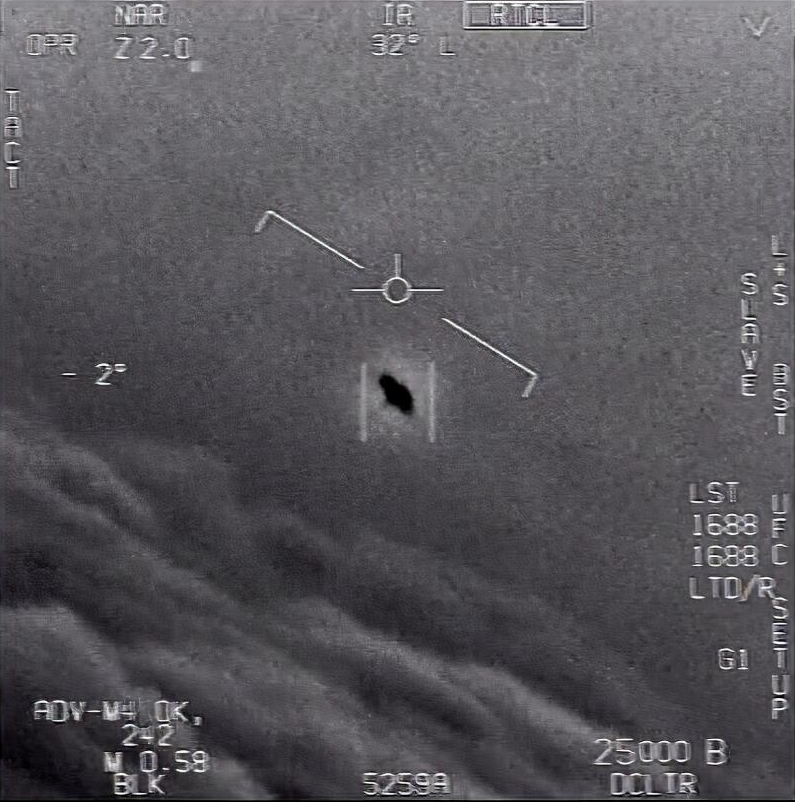
The thing is, I know it. And because I know it, I can war against the returning urge to pack up and move closer to the equator. Although, that reminds me of something. I had a phone conversation yesterday morning with one of our forthcoming conference speaker’s assistants. As is typical of many conversations, I was asked about the current weather. I was sure to mention my disdain for autumn and winter. The young woman I was talking with jokingly said she remembered hearing that space aliens appear to visit warmer regions more so than cold, which means my chances of abduction increase the closer to the equator I get. I told her I thought I’d heard the same thing from one of Joe Rogan’s podcast guests.

Familiar with Rogan, she noted his fascination with aliens, and then, to further the friendly conversation, she asked what I thought about the topic. I told her that while I appreciate sci-fi cinema, I don’t spend much time thinking about aliens, that is unless we’re talking about the millions of illegals crossing our southern border.

“What if they’re real, though?” she asked. “Then what?”

I knew what she meant. Even though we both considered the topic a relatively silly one, I could tell she had given it some thought. She wondered what the discovery of sentient beings from beyond our solar system might mean for Christianity. I think about lots of things, but I don’t spend much time thinking about things like this. Nevertheless, it certainly was an opportunity to shift gears in the way Saint Peter anticipated when he urged that we be “prepared to make a defense to anyone who asks you for a reason for the hope that is in you” (1 Peter 3:15).

My initial thoughts were that if extraterrestrial life was ever discovered, first, I don’t think its existence would obliterate Christianity in the ways so many atheists and agnostics assume. Faith doesn’t work that way. It’s far sturdier than onlookers may realize, and history proves it. Christianity has been through the proverbial ringer, the kind of turbulence that has undone so many other religions, and yet, it’s still here, and it’s encompassing the globe’s entirety. Extraterrestrial life’s existence would be interesting, but it would not disprove or smother Christianity. Of course, my ultimate baseline for saying this is that Christianity is true and all other religions are false. Truth withstands—falsehood crumbles.

From there, I went ahead and admitted to the widely held belief that alien encounters are likely spiritual in nature—but not the good kind. They’re probably demonic. I think Tucker Carlson believes this, too, which makes us kin to this perspective.

I know how that sounds, of course. It sounds relatively backwater. Nevertheless, I shared it openly. And so, you can see how unconcerned I am for being labeled “backwater.” So much of who I am and what I do so often gets that label, anyway. I believe a man cannot be a woman. For many, that’s the old way, the ignorant way. I believe all abortions are murder. That’s indeed becoming an outdated premise. It’s fashionable nowadays to grind both early and late-term infants into hamburger. I believe sin is actual. I believe Jesus was God in the flesh. I believe He suffered, died, and rose from the dead to rescue me from sin. To the onlooking culture, anyone believing these things is considered an intellectual dullard clinging to ancient myths and their accompanying superstitions.

Again, as you can see, I’m far more bothered by autumn and winter than I am by derogatory labels.

“For conversation’s sake,” she continued, wanting something more, “what if we actually discover they aren’t demons but real beings from another solar system? What then?”

Accepting her premise purely for discussion’s sake, I restated my initial premise. For me, it wouldn’t change anything about my faith. But then I went a little further. I told her just how important God’s Word is to me—that I believe every bit of it. I’m not a “Tim Walz” Lutheran.

Walz believes that while the Bible contains worthwhile but negotiable principles, it is, by no means, the inspired Word of God. In his view, we can take and leave whatever it says as we choose. I don’t believe that at all. I certainly believe it is far more than a guidebook. I absolutely believe it is divinely inspired. It is God’s revelation to man concerning salvation, and Jesus is the epicentral purpose of both its Old and New Testaments. I also believe the Bible is inerrant and immutable. It does not contain mistakes, and its doctrines do not change. If we find what we think is a mistake, then we’re not understanding it correctly. If any of its teachings don’t fit well with our time, culture, or modern understanding, then too bad. The Bible shapes us; we do not shape it. When God gave it through His inspired writers, He knew future generations would be reading it, and therefore, it applies to all of them.

Drenched in these qualities, the Bible sure does tell us a lot about God. He’s just. He’s loving. He’s redeeming. He’s not far away from us, but near. He cares. He creates. Concerning His work as the divine Author, one thing I can say for sure is that God is incredibly imaginative. Limited only by His nature, He can make whatever He wants. He’s God. And by limited, I mean things He cannot do, such as sin. Apart from that, look around at the countless varieties of life on Earth if you doubt His creativity. With every new documentary Jennifer and I watch (because most other shows are garbage), we’re both amazed to learn about new creatures we never even knew existed.

There’s something else I know relative to this. Within the Bible’s pages, God shows mankind to be His most prized work. In all the cosmos, He claims us as His beloved. That doesn’t mean we’re the only creatures He loves (Matthew 6:25-34). His love isn’t limited to us and nothing else. He loves and cares for the birds of the air and the lilies of the field, too (Matthew 6:25-34). It means that even as the birds and lilies are trapped alongside us in this sinful world, He didn’t take upon Himself human flesh and die to save them. His sights were set on us. He died to save us. Our rescue was His love’s aim. Our redemption was the purpose for His suffering and death. That’s a whole different kind of love—an extraordinary love, by comparison.

All of this together means two things to me. First, if we ever discover that aliens exist, God made them. I can say that because I’m in concert with all the Christians who’ve knowingly or unknowingly implied it for generations in the Nicene Creed. Together, we’ve been announcing God as the “maker of heaven and earth, of all things visible and invisible.” In other words, He made everything we can see and everything we can’t see, everything we know, and everything we are yet to discover.

Second, if there are aliens, like everything else God made, He loves them. Beyond that, all sci-fi-becoming-reality speculation ends for me.

Why am I sharing all this? Well, because it came to mind this morning, that’s why. Remember, I mentioned before that this whole conversation seemed a little silly. That’s because I think it is. It was a transitional interaction designed to carry two people from an introduction to the business at hand. But looking back, I can see its benefit. I was given the opportunity to think through and express my hope. Moreover, by measuring one of the strangest topics out there against Christianity’s deepest convictions, faith and its relationship to God’s inspired, inerrant, and immutable Word were hardened, not rattled.

In the end, no matter what’s going on around us, a Christian holds to the Bible as the sole source for faith, life, and practice. That’s because the Gospel of salvation through Christ is its core. Trust in this eternal truth is the fuel for Saint Paul’s confidence as he writes, “For I am sure that neither death nor life, nor angels nor rulers, nor things present nor things to come, nor powers, nor height nor depth, nor anything else in all creation, will be able to separate us from the love of God in Christ Jesus our Lord” (Romans 8:38-39).

Understand that “space aliens” fits into Paul’s phrase “nor anything else in all creation.”

Truth Does Not Fear Scrutiny

The piece I wrote a few weeks ago about the Olympic boxers, unlike most others I’ve written, had me feeling less like I’d shared my thoughts concerning a troubling situation and more like I’d turned over the detritus of our culture’s forest floor. You know what happens when you kick over a rotten log, right? The creatures living in its decay suddenly scatter. Some scurry to find other dank places to dwell, aware that they’ve been discovered. However, the more territorial residents attack their rot’s disturber. That also happened in this instance.

The initial disturbance brought a steady stream of hate-filled termites with caps-locked keyboards and the foulest vernacular. I spent a good part of the week that followed blocking content and profiles from hundreds of “tolerant” intolerants. So much for my typical “post and ghost” policy. Although, I suppose it’s good that I hadn’t yet turned off notifications for the post. I was able to run a measure of defense.

For the most part, they swarmed me through private messaging. They chirped and trilled and clicked their usual angry sounds, calling me ignorant, bigoted, and so many other names adorned with vile adjectives. Thankfully, their stingers were words and nothing more.

I experienced only one venomous spray that seemed to invite conversation, even as I knew how that conversation might go if I engaged. So, I didn’t. All the others were colorfully uninviting. Few were spelled correctly. Seriously, if you’re going to speak viciously, the least you can do is run your savagery through Grammarly. It would appear far too many believe the word “bigot” has more than one “g.”

The grammatical ignorance was enough for me to turn off overall messaging access. After deleting a number of equally vicious remarks, I also changed the comment access for the post.

There was one private message that interested me, but only because it seemed to capture the hive logic used by so many of the others. Concerned by a relatively inconsequential detail the person thought was inaccurate, the message read something like, “If you can’t even get this one thing right, then you don’t deserve to call yourself a reverend.”

Two things about this.

First, imagine if one mistake—real or supposed—was enough to strip any of us of our livelihoods or identity completely. Of course, some mistakes, even simple ones, can have life-altering consequences. Something as simple as forgetting to use your turn signal can result in someone’s death. But the reality is that most often, our typical mistakes don’t produce those results. They’re merely incidentals along life’s imperfect way, all serving as reminders of a deeper need, a deeper incapacity in Sin. That said, there’s a reason that forgetting to put the milk carton back into the refrigerator isn’t a punishable crime. In the scheme of things, it’s not important.

But imagine if it was a punishable offense. Imagine if such a simple slip was enough to condemn you. I had a professor in my doctoral program who accidentally parsed a Greek verb incorrectly in the comments on one of my papers. Being attuned to language, especially in what has become an overly-emojied society, I remember such errors, and so I remember the mistake vividly. However, did the error prove his credentials empty? By it, did he forfeit all rights to the title “professor”? The cancel-culture insects perpetuating society’s rot would say yes.

Second, they’d say yes because forgiveness is not a part of their world. Whatever falls to the dark forest floor is eaten. But forgiveness drops light into the darkness. Indeed, its light offends the dark spaces ruled by death and decay. Still, forgiveness—the Gospel’s divine lifeblood—is meant for and goes into these spaces. It goes there understanding everyone’s dreadful imperfections while announcing promises that draw all toward the sunshine of God’s grace—a grace that gives mistake-makers what they do not deserve. Mercilessness and condemnation comprise the Gospel’s anti-nature. It is the sum and substance, the body and soul, of cancel culture. One mistake, one misstep apart from rot’s narrative, brings irrevocable imprisonment.

If this describes you, then I dare to offer two more diagnoses.

First, likely, you are so ideologically captured that you’ve become incapable of receiving information and navigating disagreements in ways beneficial to societal stability. I’m convinced one of the inevitable demonstrations of ideological imprisonment is when one is entirely oblivious to self-contradiction. An ideologically captured person willfully embraces two incompatible or inconsistent premises simultaneously and yet cannot see their incompatibility. What does that look like in real time? Well, one example might be the group “Queers for Palestine.” Homosexuality is illegal in Palestine, and I’m guessing these folks missed the news story about the 25-year-old gay Palestinian man whose decapitated torso was found in the West Bank city of Hebron. Another example might be the folks praising Kamala Harris for potentially being the first female president while also pummeling anyone who dares define what a woman is. They inevitably target with vitriol someone like me who boils the definition down to its mineral elements—the science of XY and XX chromosomes. These same people do this while demanding that folks “trust the science.” How can this be? Because when someone is ideologically captured, the only consistency that matters is one’s subscription to the narrative. Everything else, even facts, becomes pliable, and if not pliable, then irrelevant or labeled as misinformation.

Second, cancel-culture tactics prohibit the exchange of ideas, resulting in societal rot. Cancel-culture’s goal is to ostracize, boycott, and crush others into silence because of their opposing viewpoints. By default, this hinders open discussion and the free exchange of ideas. Why? Because humans are survivalists. When onlookers see a person viciously canceled for expressing his or her views, no matter how controversial or disagreeable they may be, others become fearful of speaking freely. Such an environment produces rot, which is the gradual decline or decay of essential values and mechanisms that bind a thriving society together. In a cancel culture, society suffers and inevitably comes undone because it loses the ability to challenge ideas or events that require refining or preservation.

If you are inclined to cancel others, then I encourage you to reconsider your heading. For as virtuous as you might believe yourself to be, to work this way is to be a part of the problem, not the solution. Are your ideas better? Put them into the arena for testing. We’ll see. However, if there’s one thing I know, it’s that natural law—God’s beautifully designed framework for life in this world—will always be the final determiner, even if society makes an epic mistake. Natural law will forever trounce a man who jumps from a three-story building because he’s ideologically convinced he’s a bird. Natural law promises him a painful landing. Natural law will forever complicate the biology of a person undergoing hormone therapy because he believes he was born in the wrong body. No matter how many surgeries he might have, his chromosomes and everything they’re in place to determine will never be or do anything other than what their design requires. Natural law will do what it’s constructed to do, and we’ll always be kept within its boundaries, even when we believe otherwise.

To conclude, I’ll simply say this—and maybe consider it a basic rule of thumb. If you find yourself resorting to insults, threats, or unhinged attempts to go after and silence others entirely, you might pause to consider whether your position is as strong as you think it is. Another thing to keep in mind: Truth doesn’t fear scrutiny; it thrives on it. And in the end, it will win. In one sense, that’s why Christians will always have the upper hand in life. We already know we’re mistake-makers, and yet, we’re attached to the One who is the way, the truth, and the life. The entirety of this spectacular trifecta comes together in the Gospel. Christians live in the sphere of forgiveness. Jesus lives there, too. He is the “way” of forgiveness. He is forgiveness’s epicentral “truth.” He is forgiveness’s best result—eternal “life”!

By faith, we know these things, and we’re more than familiar with the wonderful byproducts of this grace. The blessings of humble repentance stirred by an overabundance of forgiveness given by God are not lost on us. We’re glad for the newfound ability to amend our lives and share that same forgiveness with others. Ultimately, these are spirit-freeing mechanisms for courage and confidence. They lift believers above rot’s capture to the grace-drenched treetops, where we can see the world as it truly is and be quite comfortable describing what we see.